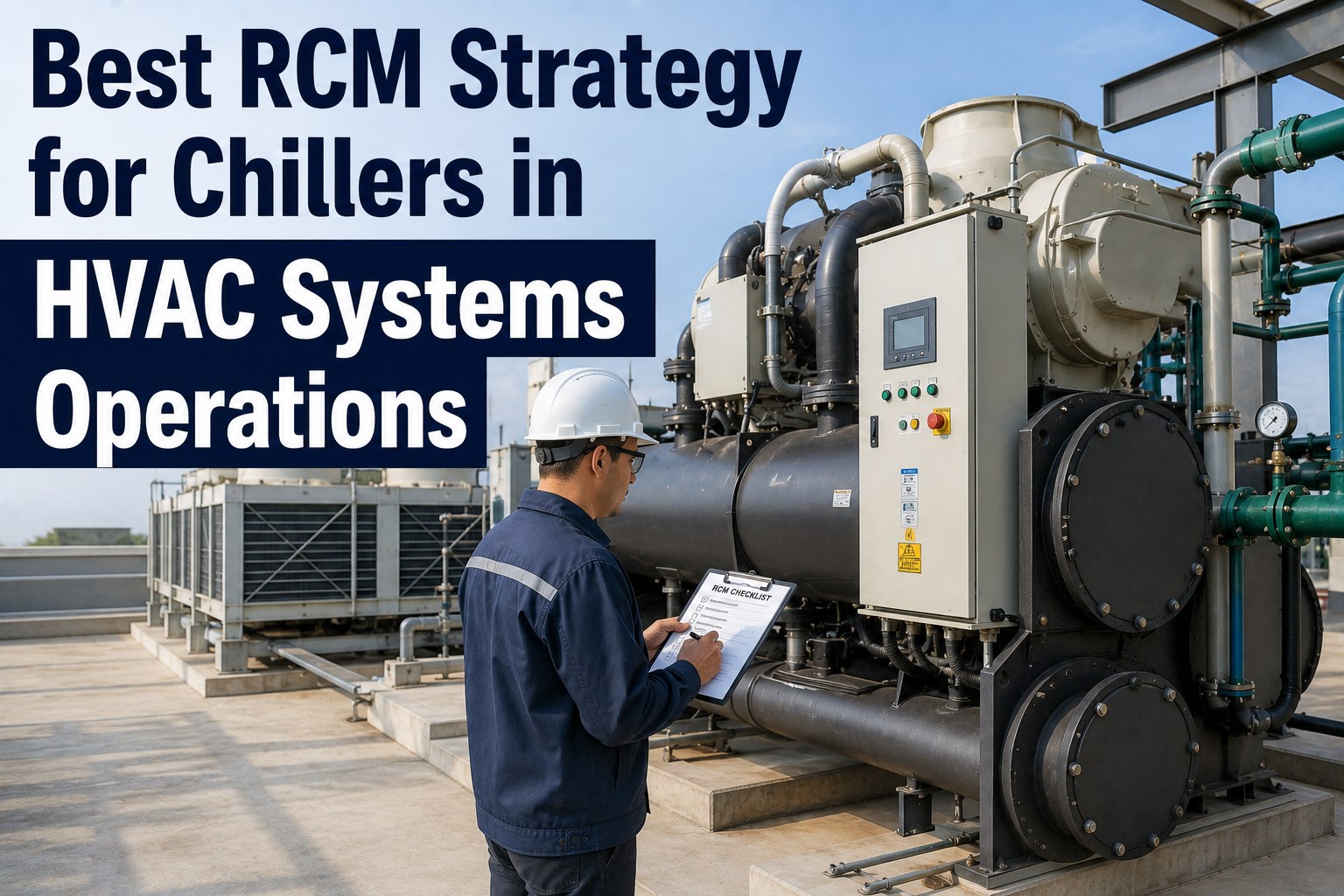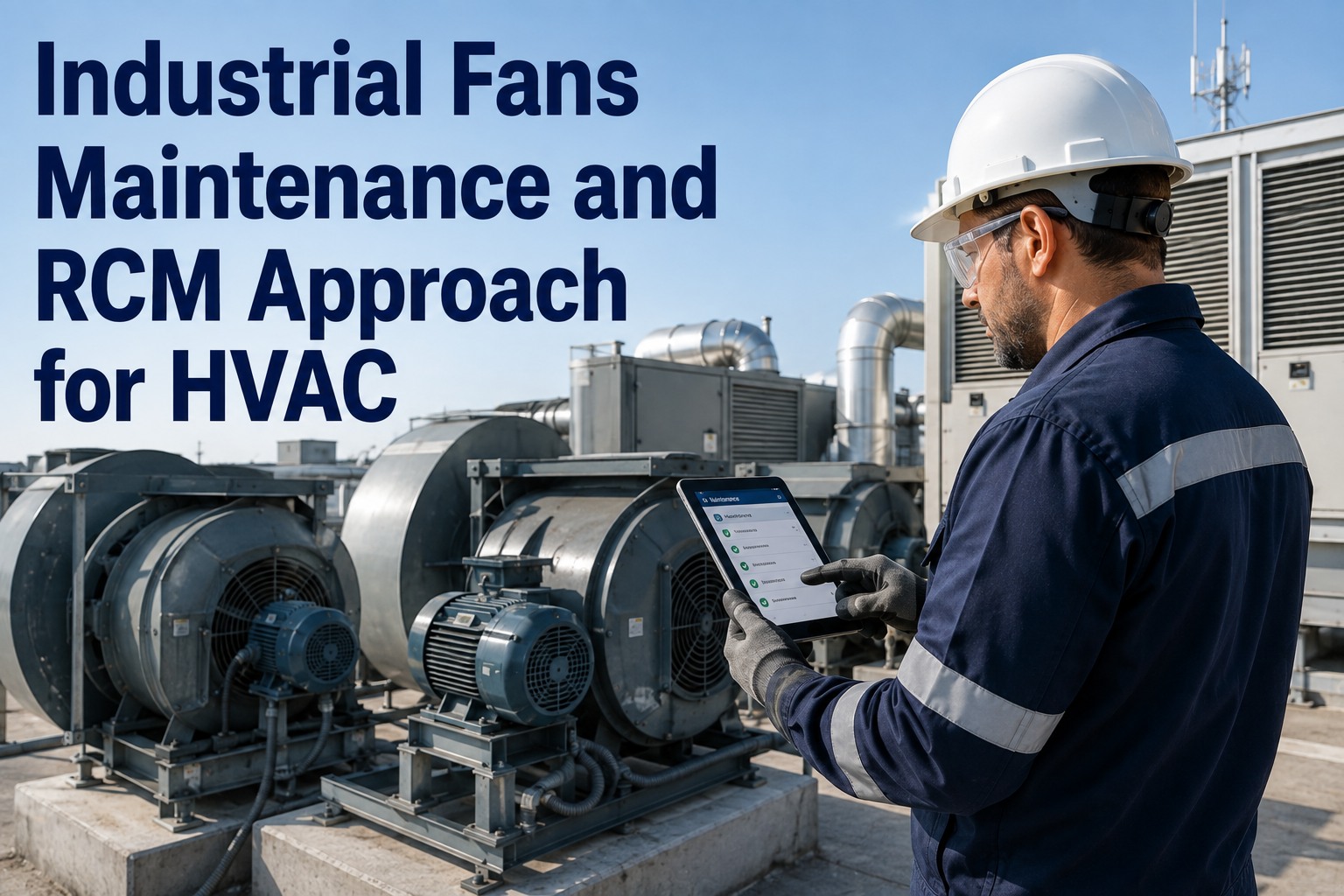
Reliability-Centered Maintenance (RCM) for industrial fans and blowers in HVAC and building systems is the systematic process of identifying failure modes—like bearing degradation, impeller imbalance, and belt slippage—and matching them to the most effective maintenance strategy, whether predictive, preventive, or run-to-failure. Facilities that implement a structured RCM approach for their air handling units and exhaust systems typically reduce unplanned HVAC downtime by 30–50% while cutting emergency repair spend by up to 25%. By moving from reactive firefighting to controlled condition monitoring, maintenance teams extend asset lifecycles, optimize energy consumption, and ensure continuous occupant comfort. OxMaint's AI-powered CMMS platform is built specifically to operationalize this framework, translating complex RCM strategies into automated PM schedules, real-time condition alerts, and streamlined work orders. Ready to modernize your building systems maintenance? You can Start Free Trial today.
What if you could predict the next bearing failure before it halts your entire HVAC system?
A single unplanned failure on a critical air handling unit can cost a 100,000-sq-ft facility over $12,000 in emergency labor, replacement parts, and downstream production or comfort loss. Moving to an RCM strategy for industrial fans and blowers stops the domino effect. Stop reacting to catastrophic failures, and start monitoring asset health with precision.
Industrial Fans & Blowers Failure Modes in HVAC and Building Systems
Over 70% of catastrophic HVAC fan failures stem from just four mechanical and electrical failure modes. Identifying these vulnerabilities is the first step in the RCM process, allowing maintenance teams to deploy targeted industrial fans and blowers monitoring strategies before small defects cascade into system-wide shutdowns.
Bearing Wear & Lubrication Breakdown
Inadequate lubrication and seal degradation generate excessive friction and heat. Without ultrasonic or vibration monitoring, this silent killer will eventually seize the shaft, destroying the motor and impeller assembly.
Impeller Imbalance & Fouling
Dust accumulation, moisture, or foreign object debris alters the fan wheel's center of mass. The resulting vibration accelerates bearing fatigue and stresses the structural mounting, drastically reducing the Mean Time Between Failures (MTBF).
Belt Slippage & Misalignment
Worn sheaves and improperly tensioned V-belts cause slippage, robbing the blower of RPM and decreasing airflow. Left uncorrected, friction buildup can degrade the belt rapidly and introduce severe torsional shock loads to the drive shaft.
Motor Electrical Faults
Stator winding insulation breaks down due to thermal stress and voltage transients. Motor Current Signature Analysis (MCSA) and thermography are critical RCM tools to detect rotor bar issues and phase imbalance before a catastrophic short occurs.
Building an RCM Strategy for Industrial Fans & Blowers in HVAC
A true RCM industrial fans & blowers HVAC and building systems strategy does not treat every component equally. It applies a rigorous decision logic to match failure modes with the most cost-effective maintenance task, balancing risk, asset criticality, and available resources.
| Failure Mode | Failure Effect | RCM Task Category | Recommended Interval | Monitoring Method |
|---|---|---|---|---|
| Bearing Lubrication Breakdown | Shaft seizure, motor burnout | Time-Directed (PM) | 3,000 run hours | Ultrasound, grease analysis |
| Impeller Imbalance | High vibration, bearing fatigue | Condition-Directed (PdM) | Continuous / Monthly | Vibration analysis (accelerometer) |
| Belt Degradation | Airflow loss, sheave wear | Time-Directed (PM) | Quarterly | Visual, tension gauge |
| Winding Insulation Failure | Catastrophic motor short | Condition-Directed (PdM) | Bi-annually | IR Thermography, MCSA |
| Filter / Duct Fouling | Static pressure spike, motor overload | Condition-Directed (PdM) | Pressure drop triggered | Differential pressure sensor |
HVAC and Building Systems Industrial Fans & Blowers Best Practices & Inspection
Standardizing your industrial fans & blowers inspection for HVAC and building systems is the most effective way to enforce failure prevention. Use this tiered checklist to guide both daily operator rounds and deep-dive reliability engineering audits.
Operational Inspections (Daily / Weekly)
- Verify operating temperatures and pressures against baseline baselines.
- Listen for abnormal acoustic signatures indicating early bearing distress.
- Inspect drive belts for visible fraying, glazing, or improper tension.
- Check motor amperage draw to detect overloading and phase imbalance.
Predictive & Preventive (Monthly / Quarterly)
- Perform vibration spectrum analysis on all critical fan bearings.
- Conduct infrared thermography on motor control centers and junctions.
- Lubricate bearings with calculated grease volumes to prevent over-lubrication.
- Verify fan tracking, clean impellers, and replace degraded air filters.
The Cost of Reactive vs. RCM-Driven Fan Maintenance
Consider a mid-sized commercial facility operating 180 industrial fans and blowers. Spending $42,000 annually on reactive repairs, emergency labor, and expedited parts, the facility suffers an average of 140 hours of unplanned HVAC downtime per year. By implementing an RCM strategy supported by OxMaint, the math changes rapidly.
Ready to eliminate unplanned fan failures and expensive emergency repairs?
See OxMaint on your assets — book a 30-min demo and learn how to automate your RCM strategy today.
How OxMaint Drives Industrial Fans & Blowers Reliability in HVAC
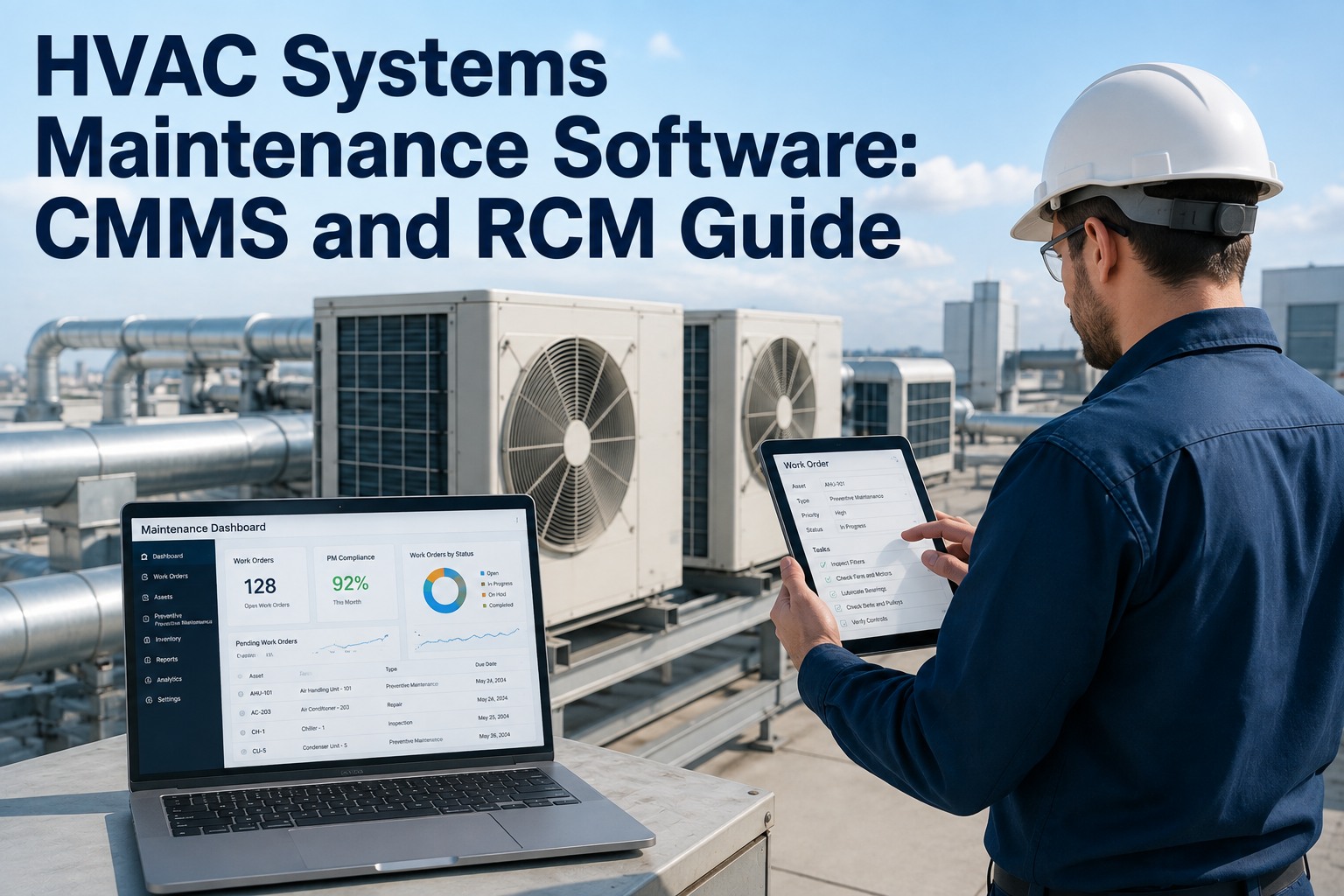
Executing an RCM strategy across dozens or hundreds of building assets is impossible with spreadsheets and paper work orders. OxMaint's AI-powered CMMS and EAM platform operationalizes your maintenance framework, ensuring the right task happens on the right asset at the exact right time.
Predictive Condition Monitoring
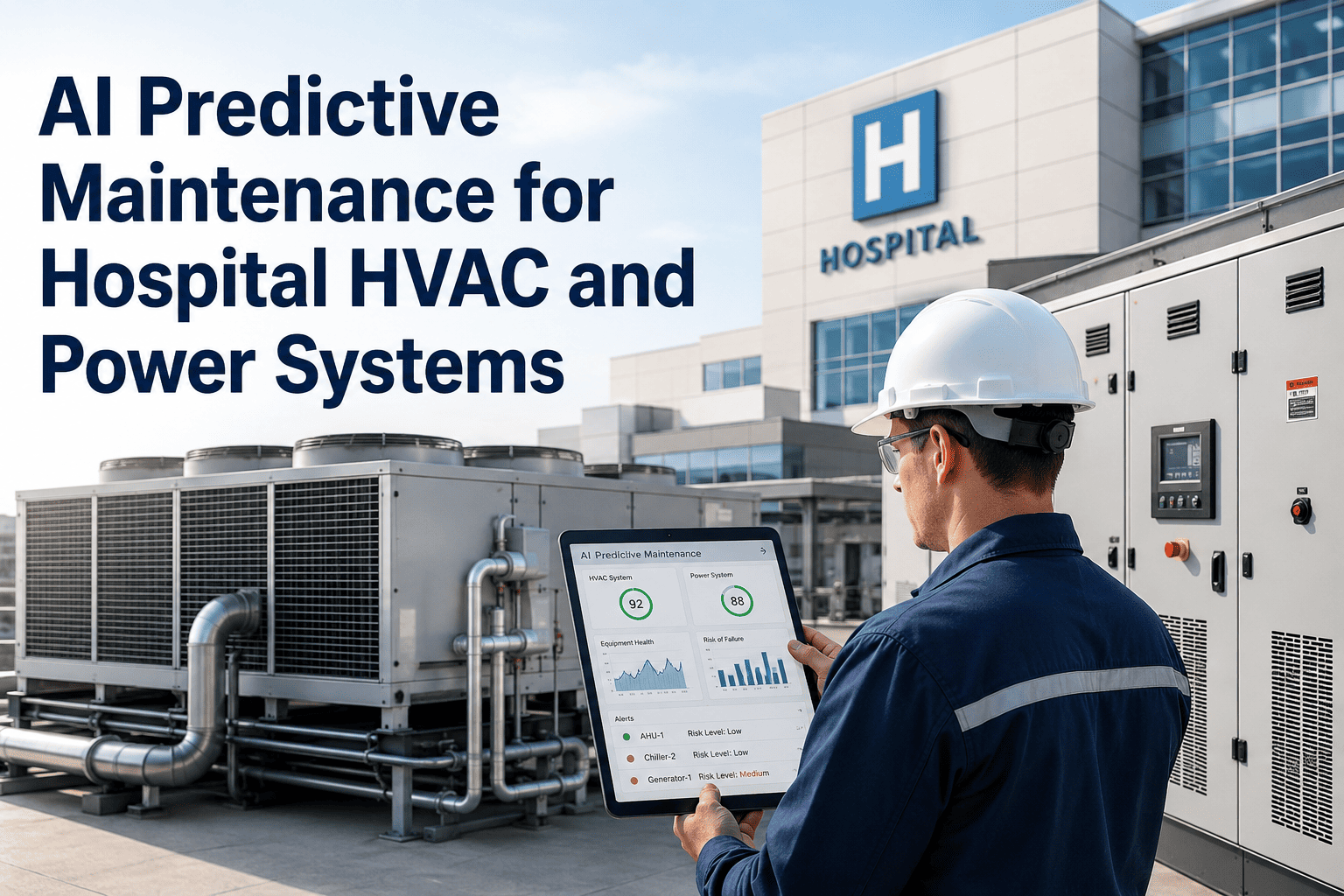
Ingest vibration, temperature, and ultrasound data directly into OxMaint. Our AI flags anomalies in fan bearings and motors days or weeks before failure, automatically generating corrective work orders so you can fix it during planned downtime.
Automated PM Scheduling
Build industrial fans & blowers PM schedules for HVAC and building systems based on run-hours, calendar days, or condition triggers. OxMaint auto-assigns lubrication, inspection, and belt-tension tasks to technicians via the mobile app, eliminating missed maintenance intervals.
Asset Hierarchy & Criticality
Map your entire building system—from chillers down to individual exhaust fans—into a precise asset hierarchy. OxMaint tracks individual asset history, MTBF, and repair costs, giving reliability engineers the exact data needed to refine RCM decision logic.
RCM Industrial Fans & Blowers Maintenance FAQs
What is RCM for industrial fans & blowers in HVAC and building systems?
RCM (Reliability-Centered Maintenance) is a structured methodology used to identify the specific failure modes of HVAC fans—such as bearing wear or motor faults—and apply the most effective maintenance task to mitigate them. Instead of blindly replacing parts on a fixed schedule, RCM uses condition monitoring and criticality analysis to ensure industrial fans and blowers reliability is maintained at the lowest possible cost. You can Start Free Trial to map your asset hierarchy today.
How often should industrial fans and blowers be inspected in HVAC systems?
Basic operational inspections should occur weekly, checking for abnormal noise, vibration, and temperature changes. Deep-dive preventive maintenance, including vibration analysis and thermography, should be conducted monthly or quarterly depending on the asset's criticality and run hours.
What are the most common failure modes for industrial fans and blowers?
The most frequent failure modes include bearing lubrication breakdown, impeller imbalance from fouling, belt slippage or misalignment, and motor electrical faults like winding insulation degradation. Addressing these proactively through industrial fans & blowers failure prevention tactics is critical to avoiding unplanned downtime.
How does condition monitoring improve HVAC fan reliability?
Condition monitoring uses tools like accelerometers, ultrasound, and thermal imaging to detect physical changes in the fan's operation long before a functional failure occurs. This allows maintenance teams to shift from reactive repairs to planned interventions, extending asset lifecycles and reducing emergency spend.
Can a CMMS automate RCM strategies for HVAC maintenance?
Yes, an AI-powered CMMS like OxMaint is essential for scaling RCM. It automates PM scheduling, triggers work orders based on condition monitoring data, and tracks asset history and costs, making it easy to execute complex industrial fans & blowers best practices without administrative bottlenecks.
Transform Your HVAC Maintenance Strategy with OxMaint
Join the reliability leaders who use OxMaint to predict failures, automate work orders, and cut maintenance costs. Book a personalized demo to see how our CMMS maps directly to your building systems.
Free 14-day trial · No credit card