Smart Factory Maintenance: Industry 4.0 CMMS Solutions
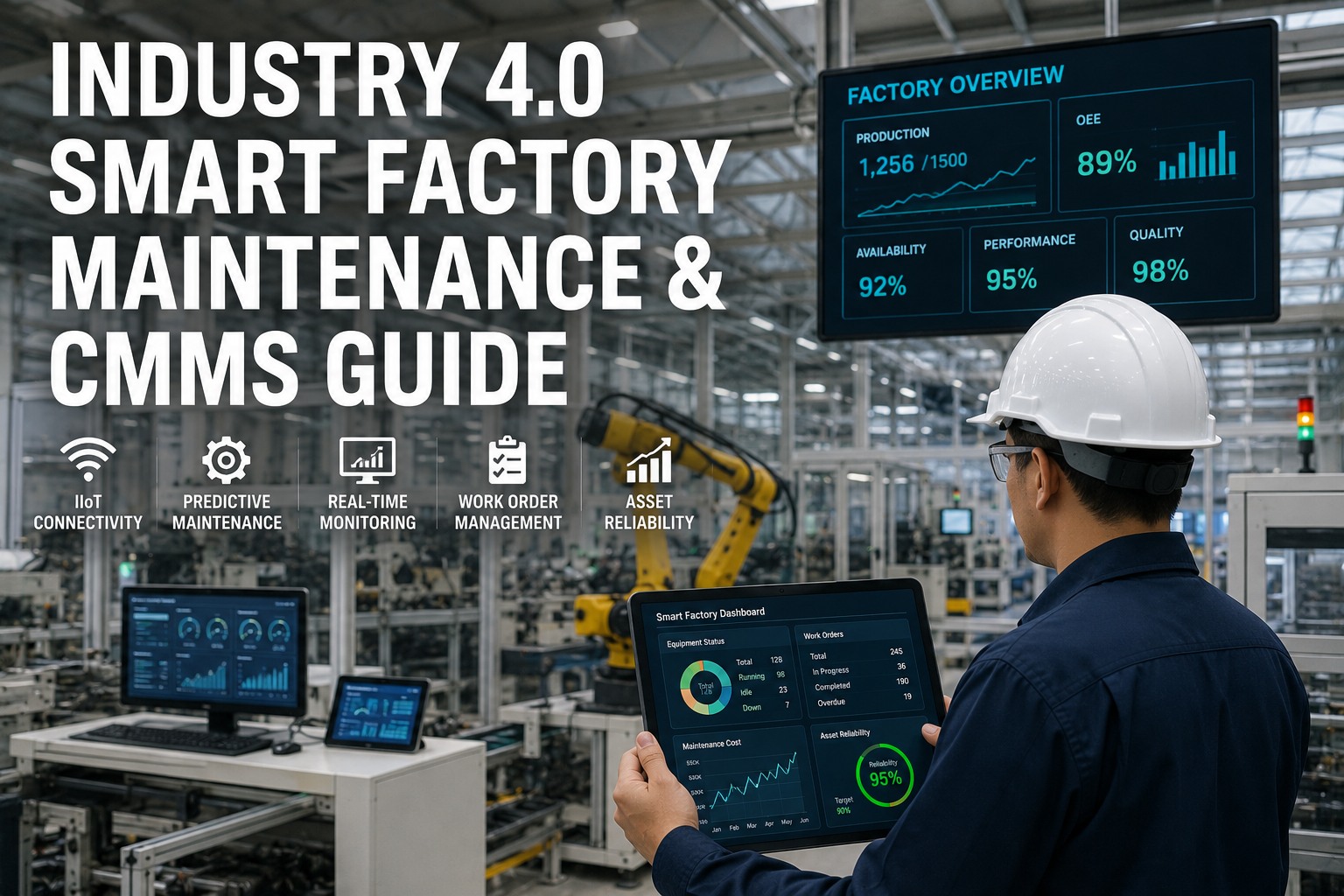
The factory of 2026 does not wait for equipment to break. It senses degradation weeks in advance, routes a work order to the nearest qualified technician, verifies parts availability before the job starts, and updates the asset's digital twin when the repair is complete — all without a single manual step from a maintenance coordinator. This is not a vision. It is how top-quartile manufacturers are operating today. Start your Industry 4.0 transformation with Oxmaint free — no sensors required to begin.
Industry 4.0 CMMS Platform
Maintenance That Thinks
Before You Ask
Connect your sensors, PLCs, and production systems to Oxmaint's AI analytics engine. Predict failures weeks before they happen. Route work orders automatically. Track every asset from a single intelligent platform.
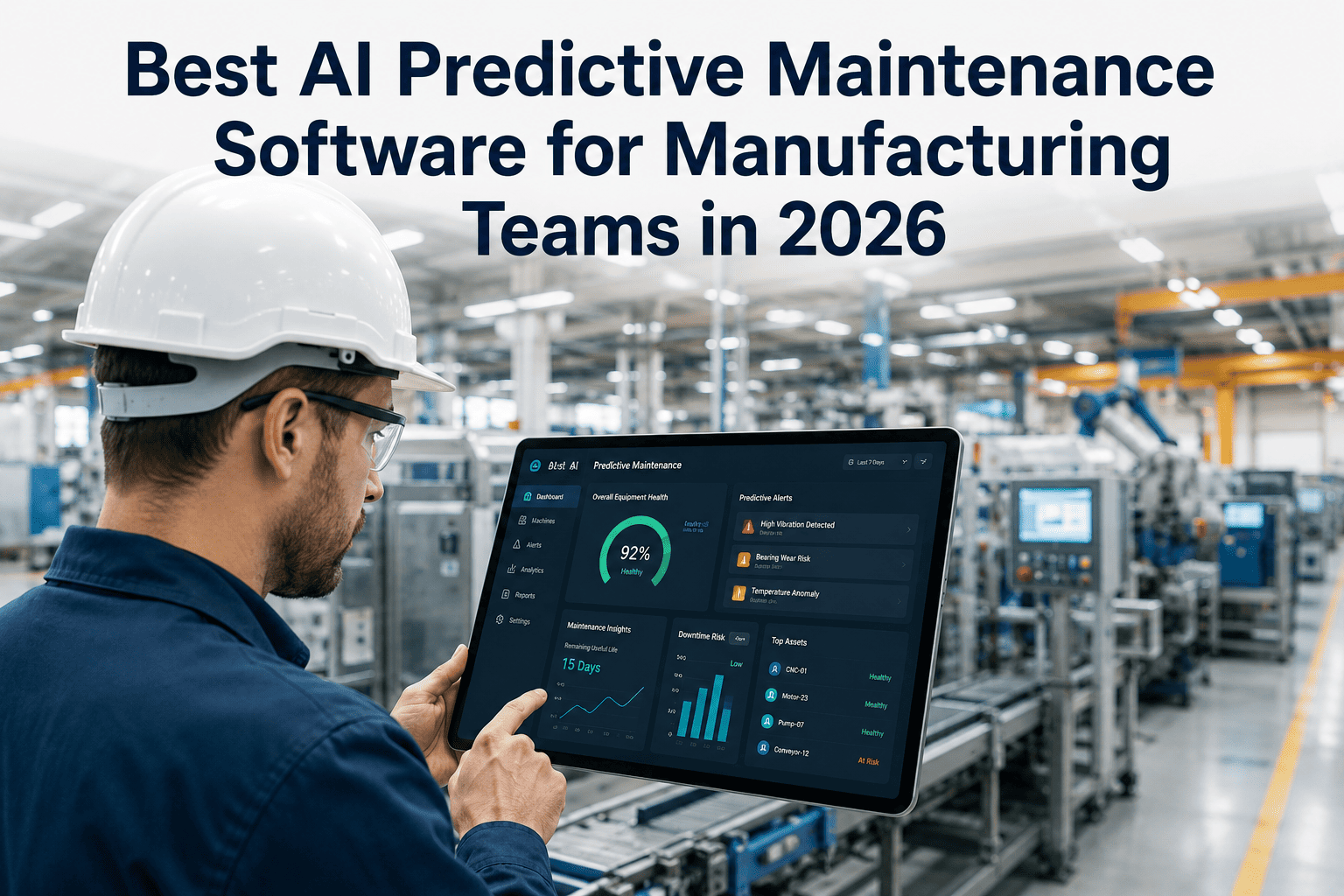
Predictive alert — Pump #4 bearing 34 days to failure
Work order auto-created — assigned to J. Martinez
The Five Pillars of an Industry 4.0 Maintenance Program
Industry 4.0 maintenance is not a single technology — it is the integration of five capability layers that each multiply the value of the others. Deploying sensors without AI analytics gives you data you cannot act on. Deploying AI without connected work orders gives you predictions that never become actions. Oxmaint integrates all five layers in a single platform — deployable in weeks, not years. Book a demo to see all five layers active in a live manufacturing environment.
01
Connected Sensors and IIoT
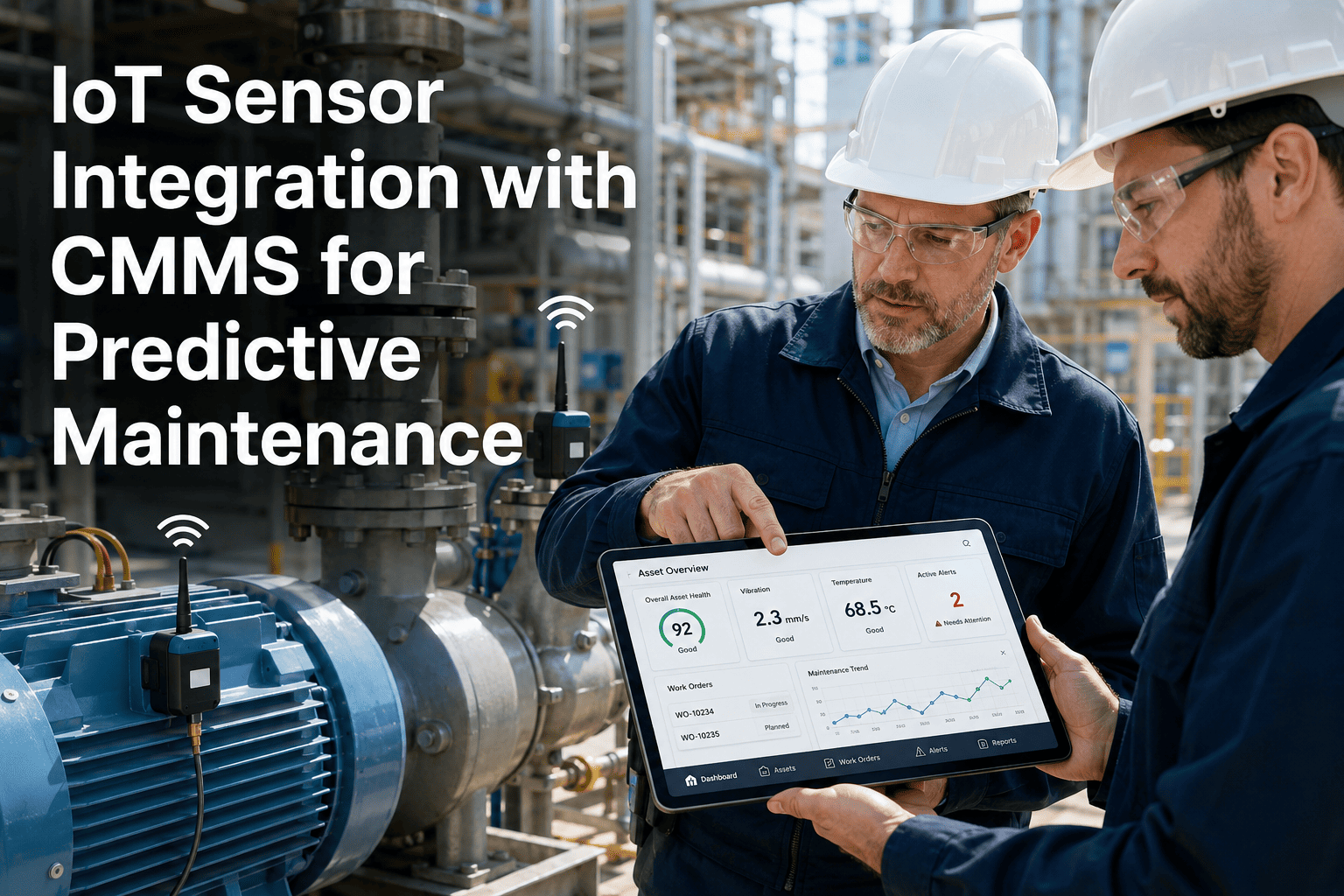
Vibration, temperature, pressure, current draw, and acoustic sensors feeding continuous condition data into Oxmaint via OPC-UA, MQTT, and REST API. Compatible with all major industrial sensor manufacturers. Wireless sensor deployment requires no control system modification — operational in hours.
OPC-UAMQTTWireless sensorsEdge computing
02
AI Failure Prediction
Machine learning models trained on your equipment's specific sensor signatures build a baseline of normal behavior and detect the subtle pattern shifts that precede failure weeks in advance. Failure probability score (0–100) updated continuously — configurable alert thresholds per asset criticality tier.
ML anomaly detectionFailure scoringPattern recognition
03
Automated Work Order Routing
When the AI model crosses a configured threshold, Oxmaint auto-creates a work order — pre-populated with failure description, affected asset, recommended action from the failure mode library, required parts (verified against stock), and nearest qualified technician. Human approval is optional, not required.
Auto-assignmentParts verificationSkills matching
04
Digital Twin Integration
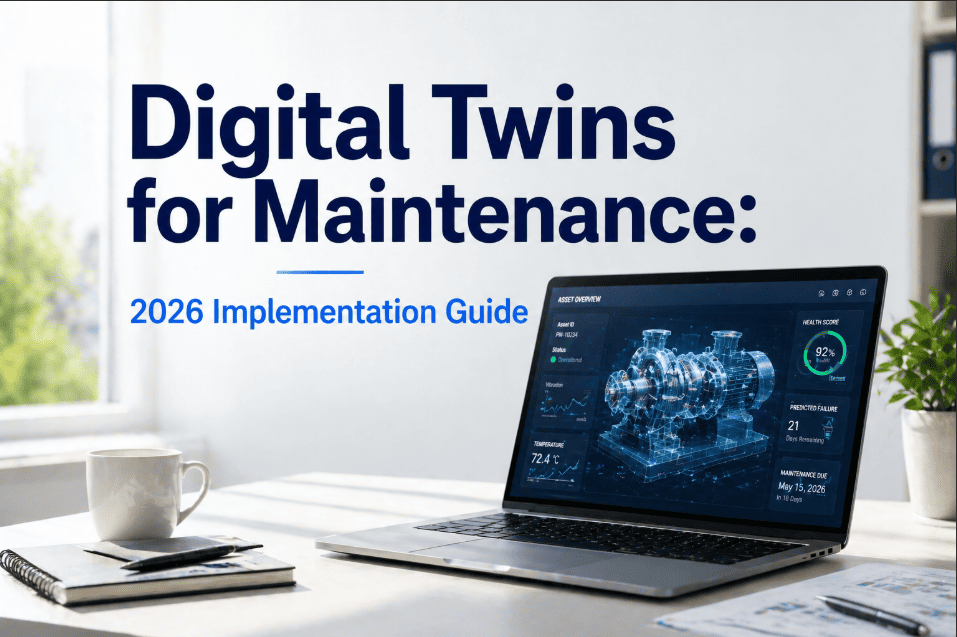
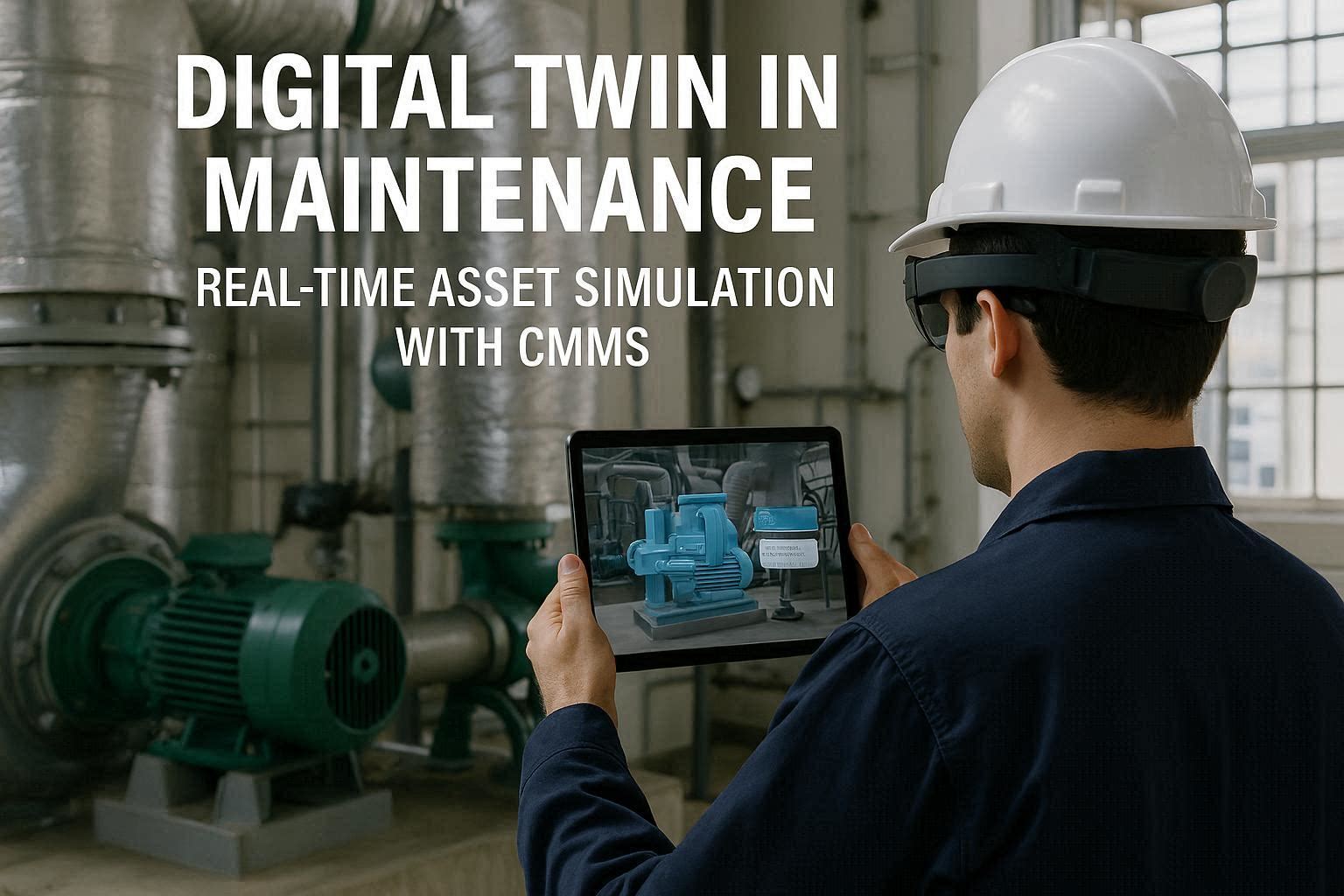
Every asset in Oxmaint is a living digital twin — its record updates with every sensor reading, every work order completed, every inspection result. The twin accumulates the complete maintenance and condition history that enables increasingly accurate failure predictions as data matures. Capital planning is driven by twin data, not engineering estimates.
Asset digital twinLifecycle trackingHistory accumulation
05
Closed-Loop Analytics
Oxmaint measures the accuracy of every AI prediction — when a predicted failure is confirmed by actual repair data, the model improves. When a predicted failure does not materialise, the model learns what distinguished that signature from genuine failures. The system becomes more accurate over time without manual re-training.
All five pillars are active in Oxmaint from a single platform deployment.
No separate IoT platform, no separate AI tool, no separate analytics license.
PM intervals based on OEM calendar — most work done too early or too late
Downtime root cause identified after production loss
Spare parts ordered reactively — emergency premiums routine
Capital decisions based on age and gut feel — not data
58–68% OEE · $28–$42/tonne maintenance cost
vs
Industry 4.0 with Oxmaint
AI detects failure pattern 2–6 weeks before breakdown — maintenance acts on prediction
PM intervals driven by actual condition data — work done exactly when needed
Sensor anomaly triggers investigation work order — production loss prevented
Auto-reorder triggered by prediction timeline — parts arrive before work order opens
Digital twin lifecycle cost drives capital decisions with full audit trail
85–92% OEE · $12–$18/tonne maintenance cost
Implementation Path: From Current State to Smart Factory in 90 Days
Most Industry 4.0 maintenance implementations fail because they try to deploy everything simultaneously — sensors, AI, integrations, and process change at once. Oxmaint's structured deployment starts with work order digitization (value in week one), adds condition monitoring (value in month two), and activates AI prediction (compounding value from month three). Start your deployment with the free plan — upgrade as your data matures and your team is ready for each next layer.
Weeks 1–2 · Foundation
Digital Work Orders and Asset Register
Deploy Oxmaint mobile to maintenance team. Build asset register with criticality ratings. Replace paper work orders with digital. Baseline KPIs established — planned ratio, PM compliance, MTTR. Most teams see their first improvement in reactive call volume within 2 weeks as PM schedule visibility increases.
Value delivered: Baseline data live, PM compliance tracking started, emergency call reduction begins
Month 2 · Connectivity
Sensor Integration and Condition Monitoring
Connect existing sensors or deploy wireless vibration + temperature monitors on Tier A assets. PLC data feeds activated for OEE and production availability tracking. First condition-based work orders generated automatically from threshold breaches. Parts inventory linked to asset records — auto-reorder points configured.
Value delivered: First condition-based failures detected in advance, OEE visible in real time, emergency procurement decreasing
Month 3 · Intelligence
AI Prediction Models Activated
With 60+ days of sensor baseline accumulated, Oxmaint's AI models activate on Tier A assets. Failure probability scores begin updating. First predictive work orders generated — typically 2–6 weeks before any manual detection would have identified the same developing failure. The first confirmed prediction is usually the moment the business case is closed internally.
Value delivered: First AI-predicted failure prevented, ROI case evident from single avoided event
Months 4–12 · Scale
Full Smart Factory Operation
Expand sensor coverage to Tier B assets. Activate ERP and MES integrations for full production-maintenance coordination. AI models improve accuracy as failure history accumulates. OEE improvement compounds as both reactive failures and scheduled maintenance duration decrease. Digital twin lifecycle data drives first capital replacement decisions with documented ROI evidence.
Value delivered: Top-quartile KPIs, documented ROI for board reporting, smart factory status achieved
$1.5M
Year-one savings at a steel manufacturer after connecting vibration sensors on critical assets to Oxmaint AI prediction — single largest saving from one prevented bearing failure cascade
34 days
Average advance warning time before failure on Tier A assets with Oxmaint AI monitoring — compared to zero warning time in the previous reactive maintenance program
88 days
Time from Oxmaint deployment to first AI-predicted failure confirmed — from signed contract to first prevented emergency event at a European automotive components manufacturer
Your smart factory starts with a free Oxmaint account. Connect your first sensor, deploy your first digital work order, and start building the data layer that powers AI prediction — all before any budget commitment.
Do we need to replace our existing automation systems to implement Industry 4.0 maintenance with Oxmaint?
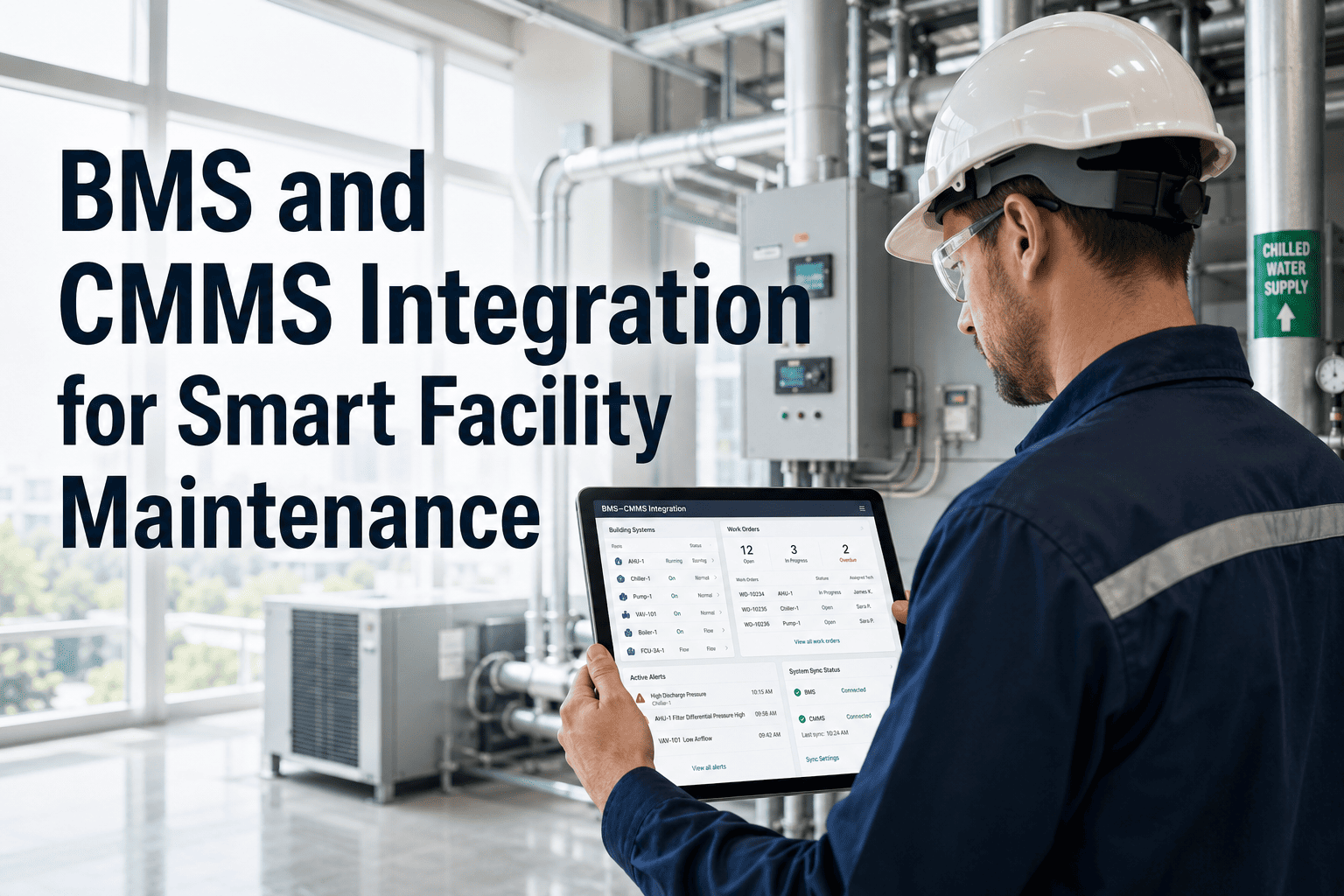
No. Oxmaint integrates with your existing PLCs, SCADA systems, and historians through standard industrial protocols (OPC-UA, MQTT, REST API) — it does not replace your automation layer, it connects to it. Most facilities can activate data feeds from existing infrastructure in 1–3 days without any control system modification. For assets with no existing sensors, wireless IoT devices can be deployed in hours without integration work. Start Oxmaint free and our integration team will scope your specific automation environment at no cost.
How much sensor data does the AI model need before it generates reliable failure predictions?
Oxmaint's models require 30–60 days of continuous sensor data to establish the normal operating baseline for a new asset. Early anomaly detection begins within the first week — initial alerts may have higher false-positive rates, which the model reduces automatically as baseline accuracy improves. For assets with existing work order history in Oxmaint, the failure pattern library accelerates the learning phase significantly. Most facilities see their first high-confidence predictive alerts in weeks 6–8 of sensor deployment. Book a demo to see the prediction accuracy curve for your asset types.
What is the difference between Oxmaint's Industry 4.0 approach and a traditional standalone CMMS?
A traditional CMMS is a record-keeping system — it stores work orders, PM schedules, and asset information that maintenance teams create manually. Oxmaint's Industry 4.0 platform is a decision-making system — it ingests sensor and production data automatically, generates work orders from AI predictions without human initiation, and continuously refines its failure models from the outcomes of each completed job. The practical difference: traditional CMMS users look at the system after problems occur; Oxmaint users receive alerts before problems occur. The underlying data model is the same — work orders, assets, and parts — but the intelligence layer running on top of it transforms maintenance from a reactive department into a predictive function.
Build Your Smart Factory Maintenance Program Today
Industry 4.0 maintenance does not require a multi-year transformation project. Start with Oxmaint's free plan, connect your first sensor, and let the AI model start learning your equipment's failure patterns — the first prediction that prevents an emergency event makes the entire investment self-evident.