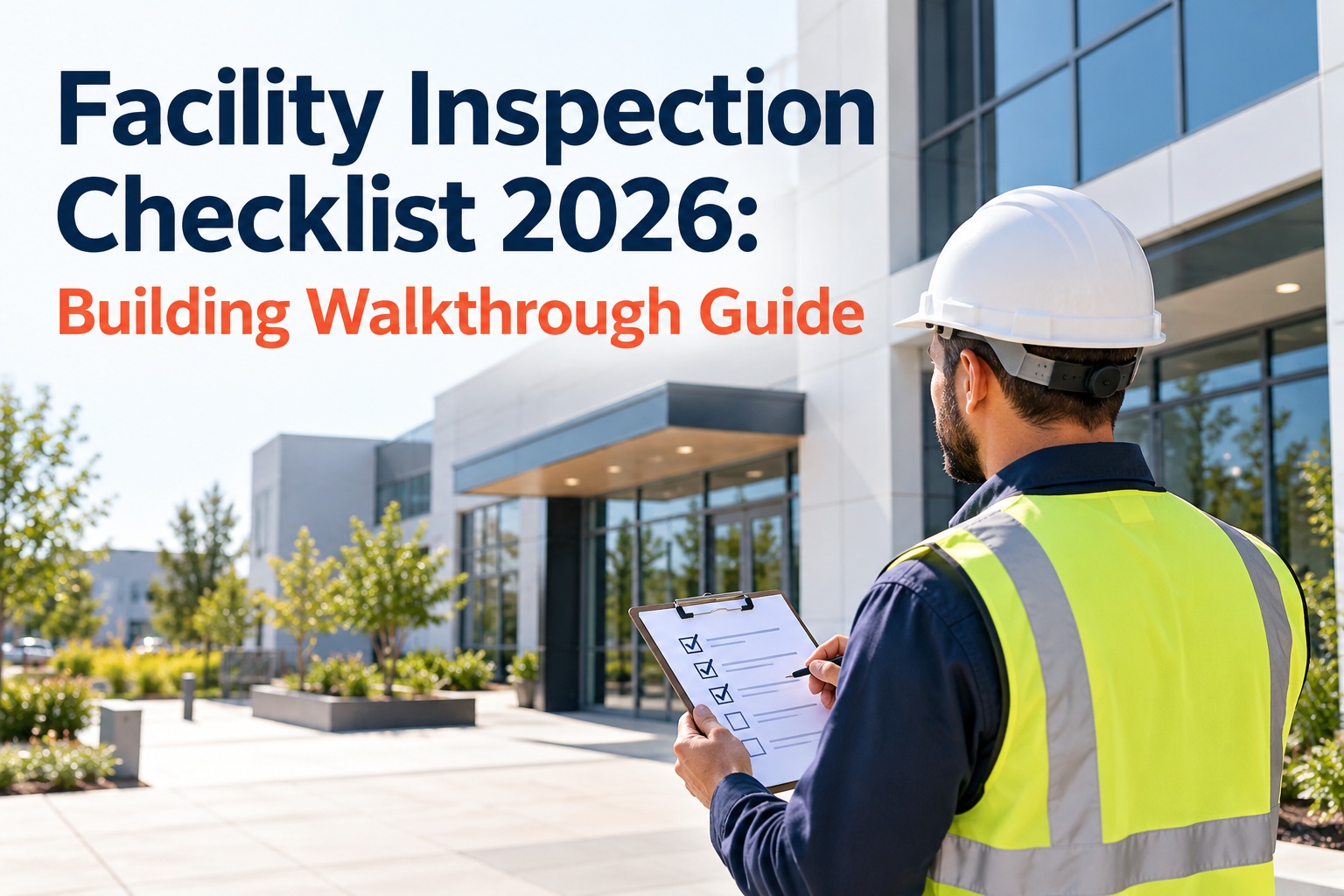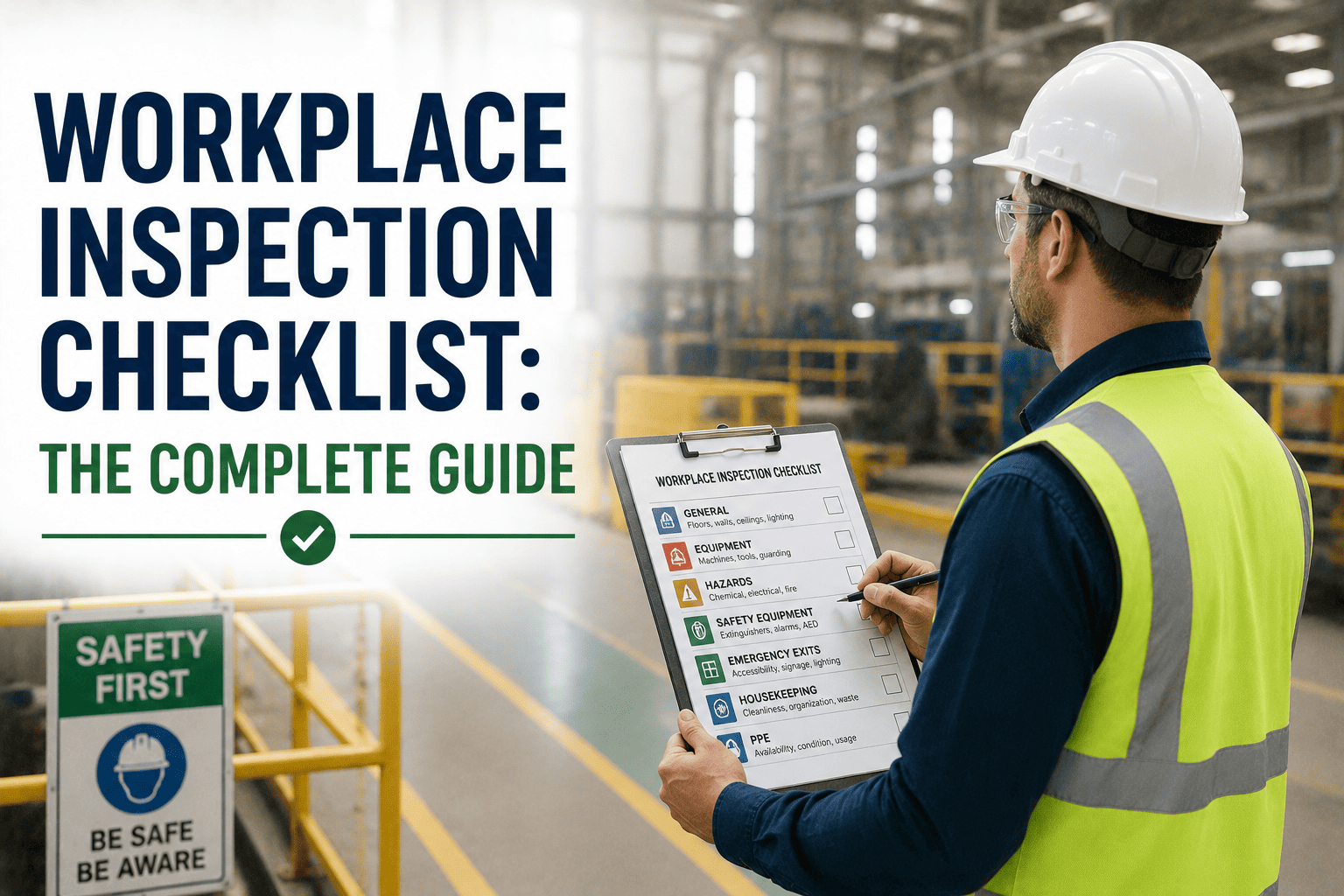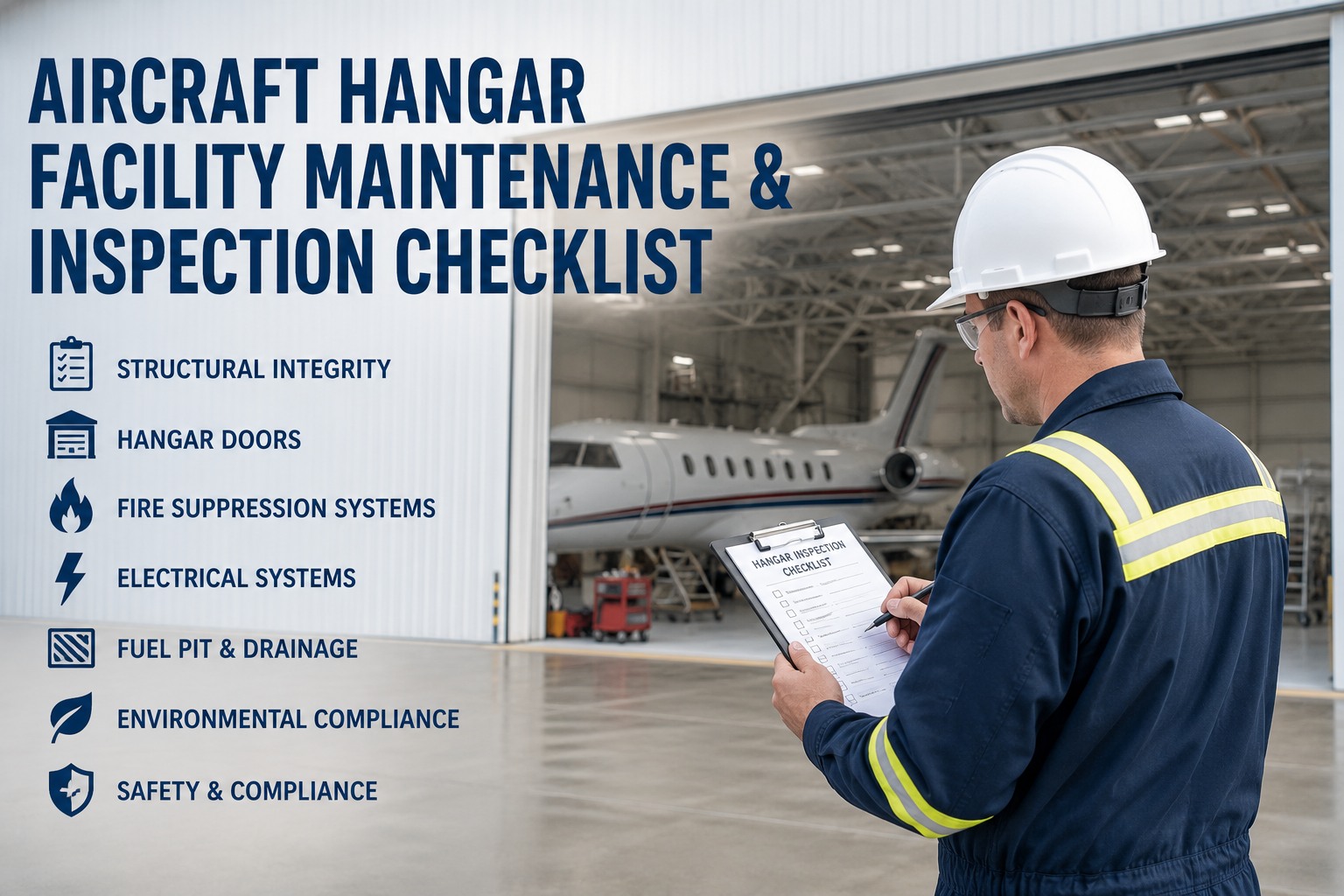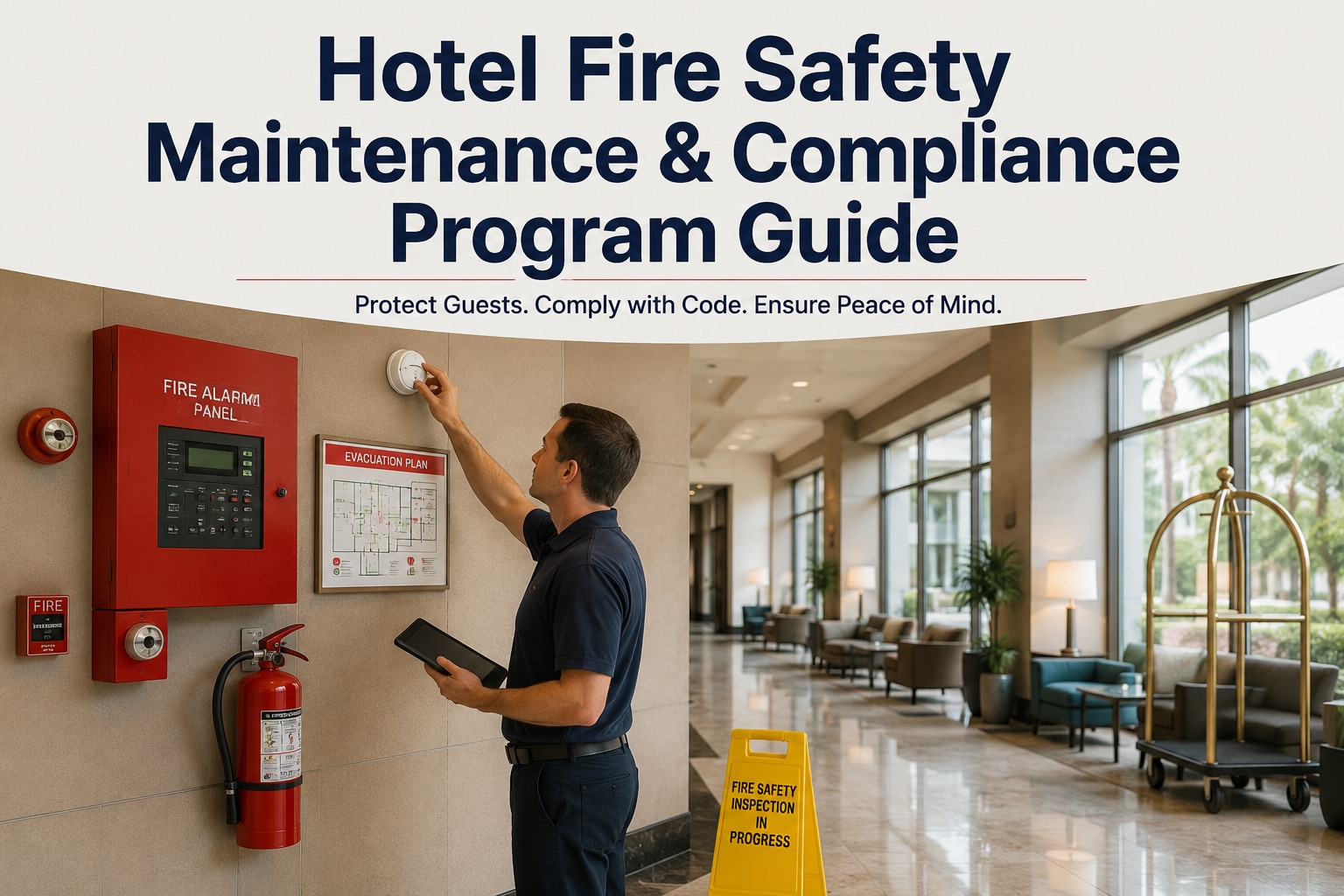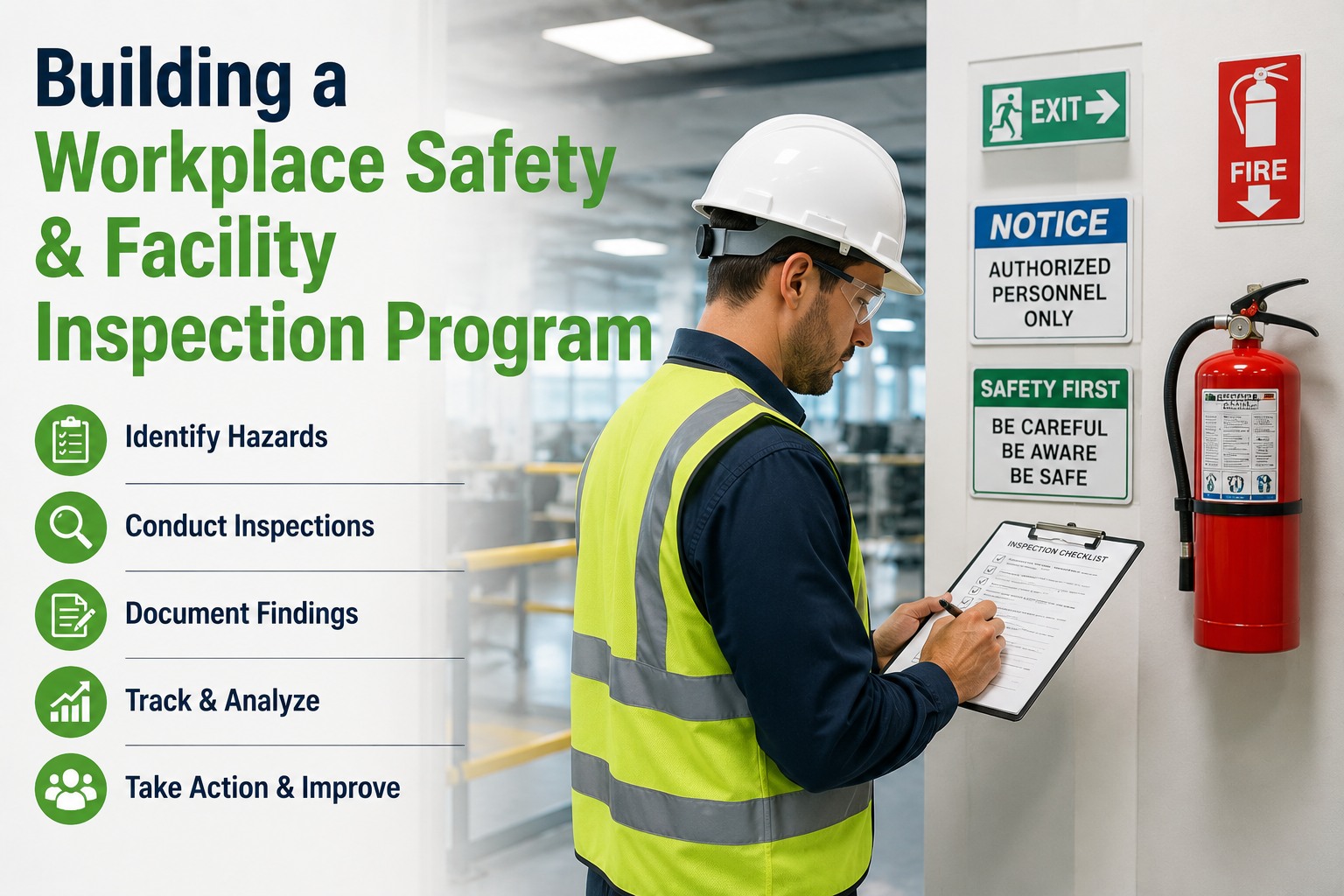
A facility safety inspection program is the operational discipline that keeps building occupants safe, assets compliant, and audit findings to zero — but only when inspections are scheduled, executed, documented, and acted upon as a single closed loop. A workplace safety inspection covers everything from slip-and-fall hazards and electrical panels to fire suppression and life safety inspection requirements under OSHA, NFPA, and local AHJ rules. The most common failure point isn't the checklist itself; it's the gap between spotting a deficiency and actually completing the corrective work order. OxMaint closes that gap by turning every facility inspection into automated, traceable, CMMS-backed work — so teams can Start Free Trial and operationalize safety in days, not quarters.
Every inspection logged. Every deficiency turned into a work order. Every audit ready in minutes.
Design inspection cadences, deploy mobile checklists to the floor, and automatically convert flagged deficiencies into prioritized corrective work — all inside one CMMS built for OSHA-defensible facility compliance.
What a defensible facility inspection program actually includes
OSHA's general-duty clause and 29 CFR 1910 standards expect employers to inspect, document, and correct hazards — not merely to have a building safety program on paper. A workplace safety facility program that holds up under audit consists of five coordinated tiers, each mapped to a frequency, an owner, and a corrective-work path.
Hazard & Walkthrough Inspections
Daily or weekly floor sweeps for slip hazards, blocked egress, housekeeping, and PPE compliance. Assigned to shift leads, completed on mobile, time-stamped with photo evidence.
Preventive Equipment Safety Checks
Monthly inspections of machine guarding, LOTO stations, emergency stops, eyewash showers, and electrical panel clearance — tied directly to asset records in the CMMS.
Fire & Life Safety Inspection
Monthly and annual checks of extinguishers (NFPA 10), fire alarms, sprinkler systems, exit signs, and emergency lighting — with full deficiency-to-work-order automation.
Regulatory & Compliance Audits
Quarterly OSHA facility compliance reviews, hazardous-material storage inspections, and annual third-party life safety evaluations — all documented and retrievable in seconds.
Corrective Action & Closeout
Every flagged deficiency generates a prioritized work order with due date, assignee, and parts reservation — tracked through completion, verification, and sign-off.
Analytics & Audit Readiness
Live dashboards showing on-time completion rates, open deficiencies by severity, mean-time-to-correct, and one-click audit export for any date range or inspector.
How often should each facility safety inspection be performed?
Inspection frequency is driven by risk level, regulatory code, and equipment criticality. The table below maps the most common facility compliance inspection types to their recommended cadence, governing standard, and responsible role — the same structure OxMaint uses to auto-generate recurring inspection schedules.
| Inspection Type | Cadence | Governing Standard | Typical Owner | Deficiency Action |
|---|---|---|---|---|
| Slip / trip / fall walkthrough | Daily – Weekly | OSHA 1910.22 | Shift Supervisor | Immediate or 24-hr work order |
| Fire extinguisher inspection | Monthly + Annual | NFPA 10 | Facility / Safety Mgr | Parts + service WO |
| Emergency exit & egress | Monthly | OSHA 1910.37 / NFPA 101 | Facility Team | Corrective WO (high priority) |
| Electrical panel clearance | Quarterly | OSHA 1910.303 | Maintenance Tech | WO + housekeeping task |
| Emergency lighting test | Monthly + Annual | NFPA 101 / 110 | Facility Team | Battery / fixture WO |
| Sprinkler system inspection | Quarterly + Annual | NFPA 25 | Life Safety Vendor | Vendor work order |
| LOTO & machine guarding | Quarterly | OSHA 1910.147 | Maintenance Lead | Corrective WO + tag-out |
| Full facility safety audit | Annual | OSHA / ISO 45001 | EHS Manager | Multi-WO corrective plan |
A 180-asset manufacturing facility running inspections on paper and spreadsheets typically completes only 61% of required monthly safety checks on time. When a missed extinguisher inspection leads to a failed audit, the average OSHA penalty reaches $15,625 per violation — and a serious violation can exceed $156,000. OxMaint customers in similar environments lift on-time inspection completion above 95% within the first 90 days.
From spreadsheet chaos to a closed-loop facility safety program
OxMaint replaces clipboard inspections and disconnected email follow-ups with an AI-powered CMMS that automates the full inspection lifecycle — schedule, execute, flag, correct, verify, and report. Here is how four core capabilities map directly to your facility safety outcomes.
Automated Inspection Scheduling
Generate recurring workplace inspection tasks from a single cadence template — daily, weekly, monthly, quarterly — auto-assigned to the right technician with checklists pre-loaded on their mobile device.
Mobile Inspection Workflow
Technicians complete facility safety inspection checklists on phones or tablets — capturing pass/fail, photos, notes, and GPS stamps even in offline zones. No paper, no transcription, no lost forms.
Deficiency-to-Work-Order Automation
When an inspector flags a failed item, OxMaint instantly generates a corrective work order — auto-prioritized by severity, assigned to the right team, and linked to the original inspection record for full traceability.
Audit-Ready Analytics & Reporting
Live dashboards track completion rates, open deficiencies, MTTC, and compliance scores by facility, zone, or inspector. Export a full facility safety audit trail — with photos and signatures — in one click for any OSHA or insurance reviewer.
What changes when a facility moves from clipboards to OxMaint
Consider a 120,000-sq-ft distribution center with 45 fire extinguishers, 12 emergency exits, 8 electrical rooms, and 30 dock-leveler safety checks — previously managed on a shared spreadsheet updated by three shift supervisors. Within 90 days of deploying OxMaint, the facility saw measurable, compounding improvements.
See OxMaint on your assets — book a 30-minute demo
Walk through a live facility safety inspection program built for your building: schedules, mobile checklists, deficiency-to-work-order automation, and audit-ready dashboards.
Workplace safety inspection questions, answered
What is a facility safety inspection and why is it required?
A facility safety inspection is a systematic, documented walkthrough of a building and its equipment to identify hazards, verify that safety systems function correctly, and confirm compliance with OSHA, NFPA, and local fire codes. OSHA's general-duty clause requires employers to provide a workplace free from recognized hazards, which means inspections must be performed on a regular cadence, documented, and acted upon — a facility compliance inspection that isn't recorded effectively didn't happen in the eyes of an auditor.
How often should a workplace safety inspection be conducted?
High-traffic and high-risk areas should be inspected daily or weekly (slip hazards, egress, PPE stations). Fire extinguishers require monthly visual inspections under NFPA 10 plus an annual maintenance check. Emergency lighting, exits, and sprinkler systems follow monthly-to-quarterly cadences governed by NFPA 101 and NFPA 25. A full building safety inspection program should be audited annually at minimum, with corrective actions tracked to closure inside a CMMS like OxMaint.
What should be included in a safety inspection checklist for a facility?
A comprehensive facility safety inspection checklist covers four domains: walking-working surfaces (slips, trips, housekeeping under OSHA 1910.22), fire and life safety (extinguishers, alarms, sprinklers, exits, emergency lighting), equipment safety (machine guarding, LOTO, emergency stops, electrical panel clearance), and emergency preparedness (eyewash stations, signage, evacuation routes). Each item should have a pass/fail field, a photo-capture option, and an automatic work-order trigger for failures.
How does a CMMS improve facility life safety inspections?
A CMMS like OxMaint transforms life safety inspections from a paper exercise into a closed-loop system by auto-scheduling recurring inspections, delivering mobile checklists to technicians, instantly converting flagged deficiencies into prioritized corrective work orders, and maintaining a time-stamped, photo-backed audit trail. Facilities typically lift on-time completion above 95% and cut mean-time-to-correct from two weeks to under two days — book a 30-minute demo to see the workflow live.
What are the most common OSHA facility compliance violations found during inspections?
The most frequently cited facility compliance issues include blocked or unmarked exit routes (1910.37), inadequate walking-working surface conditions (1910.22), missing or expired portable fire extinguisher inspections (1910.157), electrical panel clearance violations (1910.303), and insufficient lockout/tagout program documentation (1910.147). Each of these is preventable with a structured facility inspection program that schedules the check, documents the result, and auto-generates corrective work orders before an inspector arrives.
Build your facility inspection program in days, not quarters
Deploy inspection schedules, mobile checklists, and deficiency-to-work-order automation across every building, every zone, every shift — with an audit trail that's ready in one click.
Free 14-day trial · No credit card