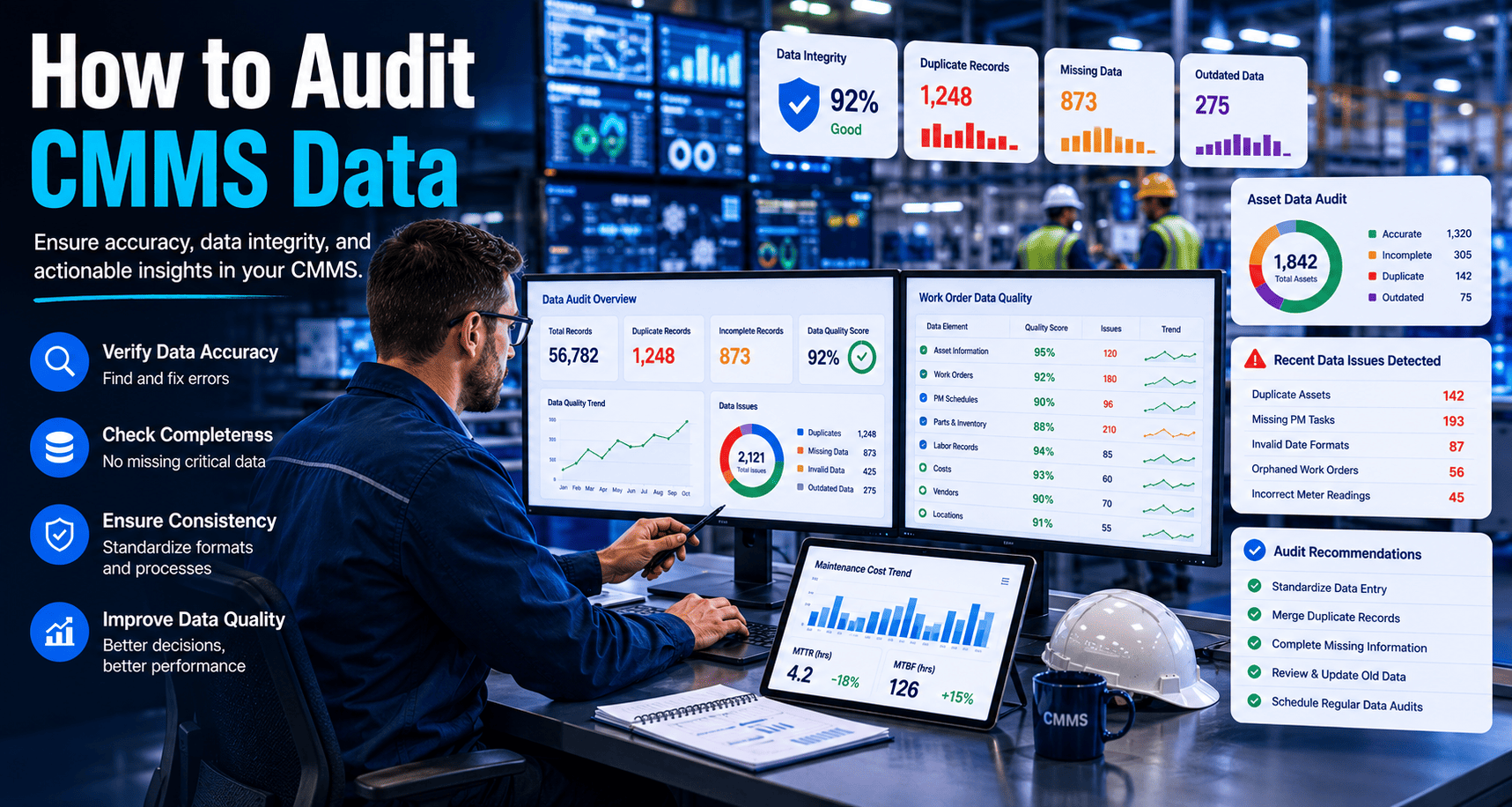
A CMMS is only as accurate as the data inside it. Most maintenance teams spend months configuring their system, loading assets, and building PM schedules — then slowly watch the data quality degrade as the team grows, assets change, and record-keeping shortcuts accumulate. By the time a facility manager tries to run a meaningful maintenance report, the numbers are unreliable, the asset list has duplicates, and the work order history is full of gaps that make trend analysis impossible. This guide covers exactly how to audit your CMMS data so your reporting actually reflects reality.
How to Audit CMMS Data for Accurate Maintenance Reporting
Dirty data produces dirty decisions. A structured CMMS data audit restores the accuracy your maintenance reports depend on — and reveals the cost leaks hiding in your records.
Your Reports Are Only as Honest as Your Records
A CMMS data audit is a systematic review of every record in your maintenance system — assets, work orders, PM schedules, parts inventory, and vendor records — against a defined quality standard. The goal is not perfection. The goal is fitness for purpose: are your records accurate enough to produce the maintenance reports, KPI dashboards, and CapEx forecasts your operation depends on?
Most facilities need a data audit after the first 12 months of CMMS use, then annually thereafter. The triggers are predictable: maintenance costs track differently in the system than in the accounting records, PM completion rates look suspiciously high but breakdown frequency has not changed, or an asset replacement decision is questioned because the condition history looks incomplete. These are all data quality signals.
Oxmaint's reporting dashboards include built-in data completeness indicators that flag assets with missing critical fields, work orders with no closure documentation, and PM schedules that have drifted from their configured frequency — start a free trial to see how data quality monitoring works in practice, or book a demo to see the audit reporting tools for your asset portfolio.
8 Data Categories Every CMMS Audit Must Cover
Every asset needs: location, make, model, serial number, installation date, warranty expiry, and current condition score. Missing any one of these corrupts downstream reporting.
Duplicates inflate asset counts, distort cost-per-asset metrics, and create ambiguity in PM scheduling. Audit by serial number and location to identify and merge.
Open work orders that were actually completed are one of the most common data errors. Audit for WOs open beyond 30 days and verify status against technician records.
PM frequencies drift when assets are modified, usage patterns change, or OEM recommendations are updated. Review every schedule against current manufacturer specs annually.
Phantom inventory — parts listed as in stock that are not physically present — creates emergency procurement surprises. Physical spot checks against system records quarterly.
Labor and parts costs must be attributed to the correct asset and work order for cost-per-asset reporting to be meaningful. Unattributed costs corrupt budget planning data.
Expired vendor certifications, outdated contact information, and missing service agreements create compliance gaps. Audit vendor records alongside asset records annually.
If MTTR or PM compliance rates are tracked, the underlying data feeding these metrics must be accurate. Inflated PM completion rates from incomplete data distort every KPI.
What Bad CMMS Data Actually Costs You
When asset costs are misattributed or missing, annual maintenance budgets are built on fiction. The variance between projected and actual spend erodes leadership's trust in maintenance reporting entirely.
A PM marked complete without documented findings looks identical in the system to one with a full inspection record. Inflated completion rates hide inspection gaps that create real liability exposure.
Without accurate condition history and cost-per-asset data, replacement decisions are based on gut feel rather than evidence. The result is either premature CapEx or preventable failures on aging assets.
When regulatory auditors or insurance inspectors request maintenance records, incomplete or internally inconsistent CMMS data is worse than no data. It signals negligence rather than gaps in record-keeping.
Operations that schedule quarterly data audits eliminate 70% of reporting credibility issues before they reach leadership — start a free trial and see how Oxmaint's built-in data health flags surface problems before they compound.
Data Quality Tools Built Into Every Layer of the Platform
Every asset in Oxmaint carries a data completeness score based on critical fields populated. Incomplete assets are flagged in dashboards so teams can prioritize which records need attention first.
Work orders open beyond configurable thresholds are automatically flagged to managers. This prevents the ghost WO problem where completed work sits open indefinitely and corrupts completion rate reporting.
Oxmaint tracks actual PM completion dates against scheduled frequency and flags schedules that have drifted beyond acceptable variance — surfacing schedule accuracy problems before they become compliance gaps.
Labor and parts costs logged against work orders are validated against the asset registry in real time. Costs without valid asset attribution are flagged before they corrupt maintenance spend reporting.
Quarterly data audit reports export in formats ready for finance review, regulatory submission, and insurance documentation — no manual compilation required from raw database exports.
For multi-site operations, Oxmaint shows data health by site and by asset class — so portfolio managers can see which locations have reporting quality issues before they aggregate into misleading portfolio numbers.
What Changes When Your CMMS Data Is Clean
| Reporting Area | Before Data Audit — Dirty Records | After Data Audit — Clean Records |
|---|---|---|
| Asset Cost Reports | Costs spread across duplicates, misattributed, averages distorted | Per-asset cost accurate, budget variance explainable |
| PM Compliance Rate | Inflated by open WOs never formally closed | Reflects actual inspection completion with documentation |
| MTTR Calculation | Missing closure timestamps make MTTR meaningless | Accurate open-to-close timestamps on all WOs |
| CapEx Forecasting | Condition scores missing, replacement cycles guesswork | Condition history complete, 5–10 year model credible |
| Compliance Documentation | Gaps in inspection records, vendor certifications expired | Complete, attributed, timestamped, audit-ready |
| Leadership Confidence | Reports questioned in every budget review meeting | Maintenance numbers trusted as organizational data source of truth |
What Clean CMMS Data Delivers in Real Numbers
The most underutilized leverage point in maintenance operations is not a new PM schedule — it is the accuracy of the data those schedules are built on — book a demo to see Oxmaint's data health tools in action across a real multi-site portfolio.
CMMS Data Audit — Practical Questions Answered
How often should a CMMS data audit be performed?
What is the fastest way to identify the worst data quality problems?
Can CMMS data audit results be used for insurance or compliance purposes?
How does Oxmaint help prevent data quality from degrading over time?
Stop Reporting on Numbers You Do Not Trust
Oxmaint gives your team the data quality tools to keep maintenance records accurate, complete, and ready for any report — budget review, compliance audit, or board presentation.
- Real-time asset data completeness scoring
- Automated work order aging alerts
- Portfolio-level data health dashboards
Live in days. No data science team required. Works across multi-site portfolios.
Identify Hidden Cost Leaks Instantly
Start Free Trial Book a Demo