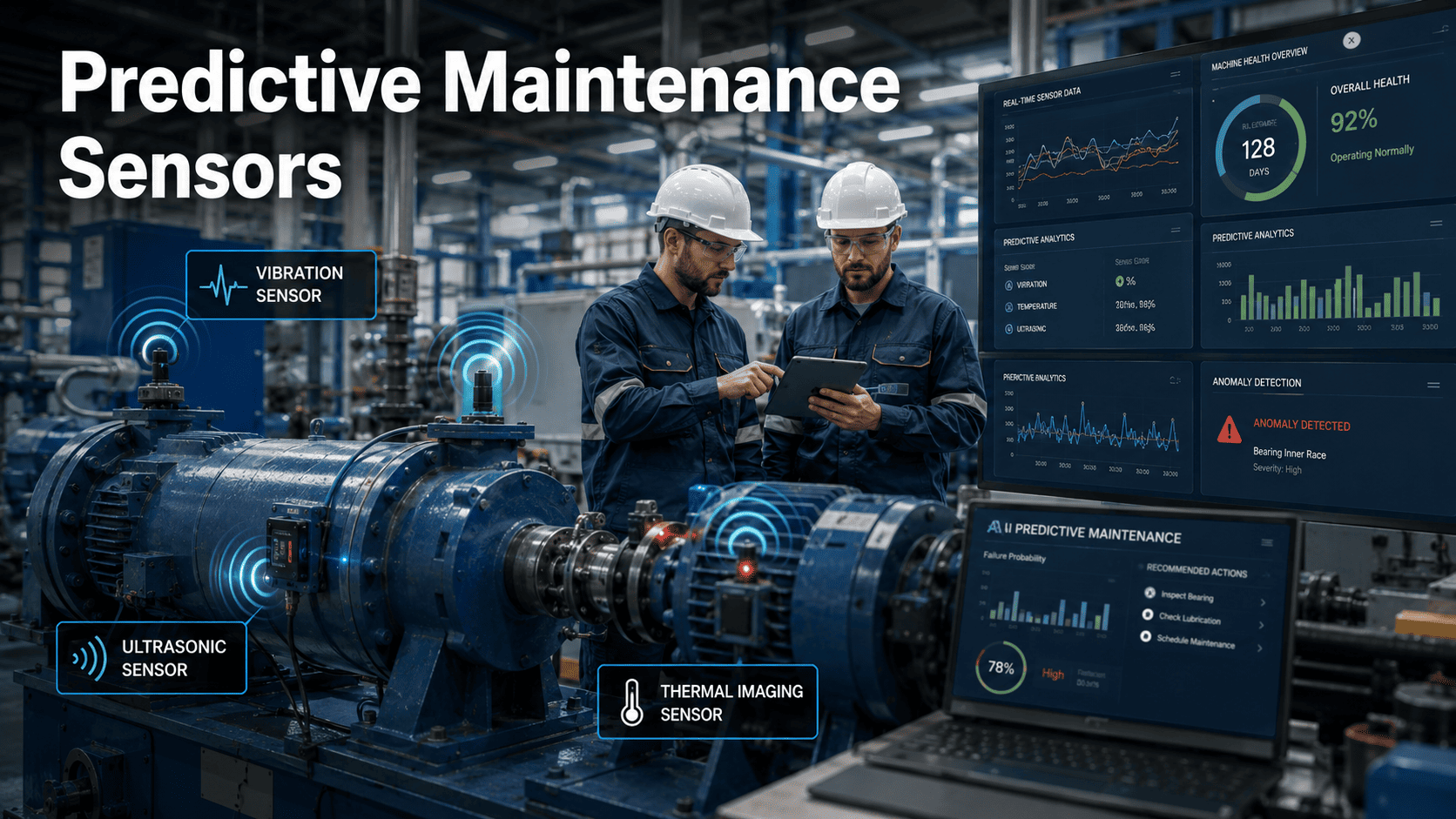
Predictive maintenance sensors are the nervous system of modern industrial reliability — yet most maintenance teams are running blind, reacting to failures that the right sensor could have flagged three weeks earlier. A single unplanned failure costs manufacturing facilities an average of $260,000 per hour in lost production, and 82% of equipment failures are random — they do not follow a predictable age-based curve. The only way to intercept them is with continuous condition data from sensors that never sleep, never guess, and never miss a trend. Choosing the wrong sensor type for your equipment is not just a technical error — it is a budget leak you cannot see until the bearing seizes or the transformer overheats. This guide covers every major predictive maintenance sensor category, what each one measures, what it misses, and how to match sensor type to asset criticality so your program delivers real ROI rather than a pile of data no one acts on. If you want to see how AI connects sensor data to automated work orders on your actual assets, start a free trial or book a demo with the Oxmaint team.
See which sensor types match your critical assets — and how AI turns raw sensor data into work orders before failures happen.
- Real-time AI condition monitoring across all sensor feeds
- Predictive failure alerts weeks before breakdown
- Auto-generated work orders routed to the right technician
Trusted by 1,000+ maintenance teams managing 10,000+ assets · Live in days, not months
What Are Predictive Maintenance Sensors?
Predictive maintenance sensors are devices that continuously measure physical parameters — vibration, temperature, ultrasound, electrical current, oil viscosity — to detect developing faults before they become failures. Unlike preventive maintenance, which replaces parts on a fixed schedule whether needed or not, sensor-driven predictive maintenance intervenes only when data shows a real degradation trend, cutting unnecessary maintenance spend by up to 30% while reducing unplanned downtime by 62%.
The core principle: every failure leaves a measurable signature weeks or months before catastrophe. A bearing wearing out generates higher vibration frequencies. An overloaded motor runs hotter. A developing leak emits ultrasound at 40 kHz. Sensors capture these early signals; AI platforms like Oxmaint's predictive maintenance engine analyze the trends and fire work orders before you lose a shift — or a line.
The Six Core Predictive Maintenance Sensor Types
Vibration Sensors (Accelerometers)
Measure acceleration, velocity, and displacement across multiple axes. Industry workhorses for rotating equipment — motors, pumps, fans, gearboxes, compressors. Detect imbalance, misalignment, looseness, bearing defects, and gear wear with 94% prediction accuracy at 2–8 weeks lead time.
Temperature Sensors (RTDs, Thermocouples, IR)
Contact sensors track bearing and winding temperatures; infrared (IR) thermal cameras scan panels, switchgear, and refractory surfaces without contact. A motor running 10°C above baseline is burning efficiency. A hot spot on a distribution panel is a fire waiting to happen.
Ultrasonic Sensors
Detect high-frequency sound (35–45 kHz) emitted by compressed air leaks, steam traps failing, early bearing defects, and partial electrical discharge — all inaudible to humans. Industrial facilities lose 20–30% of compressed air to leaks; ultrasonic sensors find them without shutting down the system.
Current and Power Quality Sensors
Clamp-on CTs and power analyzers monitor motor current signature, voltage harmonics, power factor, and load imbalance. Motor current analysis can detect mechanical looseness, rotor bar defects, and developing bearing faults without ever touching the machine — purely from the electrical signature.
Oil and Fluid Analysis Sensors
Inline sensors measure oil viscosity, water contamination, particle counts, and dielectric strength in real time. Gear boxes, hydraulic systems, and turbines speak through their oil — metal particles in the fluid are direct evidence of accelerating wear before any vibration signature appears.
Corrosion and Thickness Sensors
Ultrasonic thickness gauges and electrochemical corrosion probes measure pipe wall loss, vessel corrosion rates, and structural degradation continuously. Critical for refineries, chemical plants, and water treatment facilities where a failed pipe can trigger a regulatory incident and extended shutdown.
Matching the right sensor to the right asset is where most programs fail — too many teams deploy vibration sensors on everything and wonder why they miss electrical faults and steam leaks. Oxmaint's predictive maintenance platform connects all sensor types into a single AI analytics layer — start a free trial to see how your asset fleet maps to the right monitoring strategy.
Four Pain Points Killing Your PdM Program Before It Starts
Data Silos, No Action
Sensor dashboards generate readings; nobody turns them into work orders. Studies show 70% of PdM programs fail not from bad sensors but from poor alarm-to-action workflows. The data is there — it just never reaches a technician in time.
Wrong Sensor for the Asset
Vibration sensors on slow-speed gearboxes below 100 RPM produce noise, not insight. IR cameras on assets obscured by insulation give false confidence. Sensor mismatches burn budget and destroy trust in the whole program within the first year.
No Baseline, No Context
A vibration reading of 4.5 mm/s means nothing without a baseline. Teams that skip the asset health baselining phase spend the next 12 months chasing false alarms and tuning thresholds instead of preventing failures. Good asset management starts before the first sensor is installed.
Compliance Gaps at Audit Time
ISO 55000, OSHA PSM, and insurance auditors want documented evidence of condition monitoring — not just "we have sensors." Manual spreadsheets holding sensor logs fail audits routinely. Digital inspection management creates the audit trail automatically. Book a demo to see it.
How Oxmaint Turns Sensor Data Into Maintenance Action
IoT and PLC Integration — Every Sensor Feed, One Platform
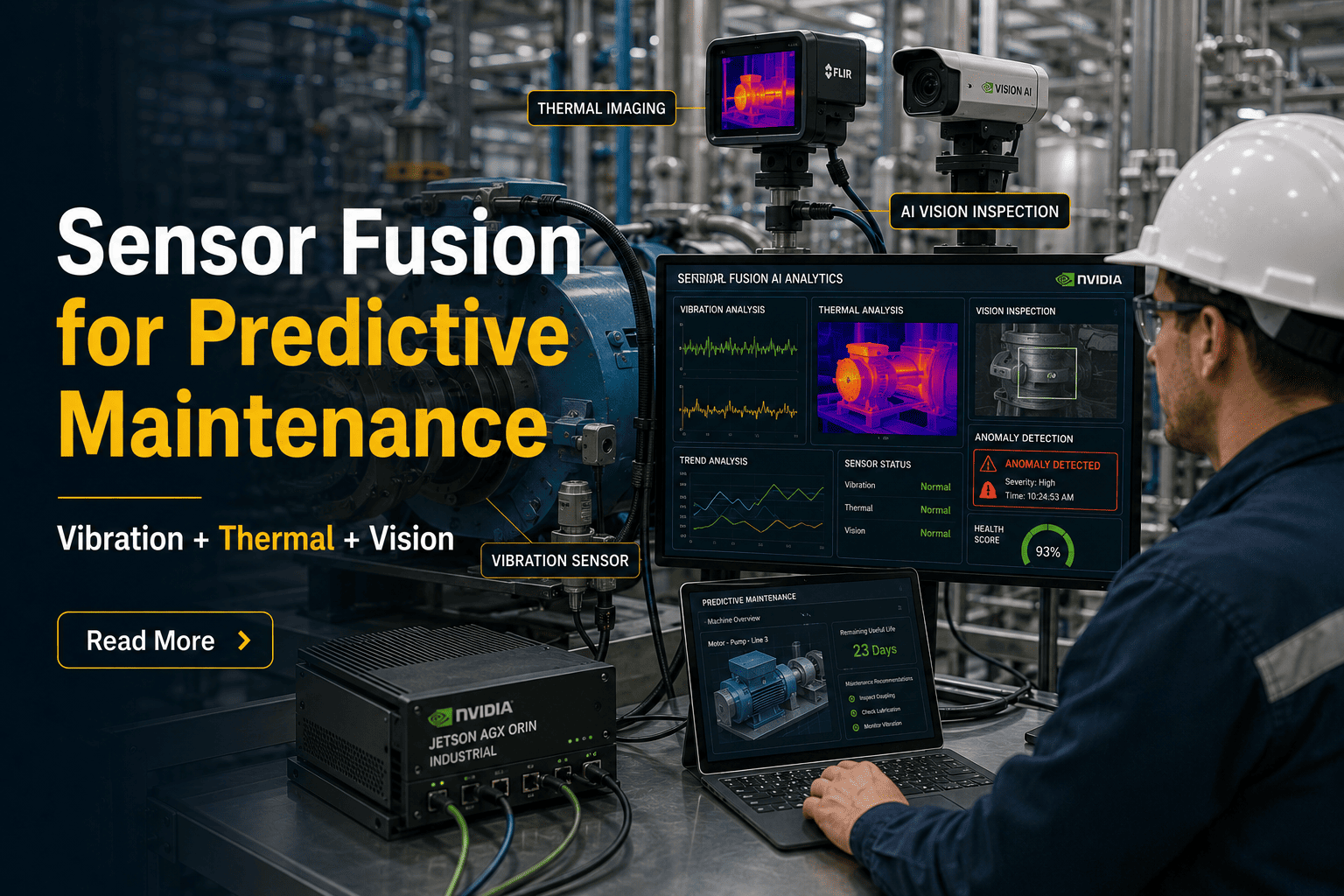
Oxmaint connects to vibration sensors, thermal cameras, current monitors, and PLC data streams via standard protocols. No custom middleware. AI automation normalizes data from mixed sensor types into a single asset health score per equipment node.
94% Accurate Failure Prediction — Weeks in Advance
The AI engine analyzes sensor trends — not just single-point thresholds — to flag developing faults 2–6 weeks before failure. When vibration trend and temperature trend diverge from baseline simultaneously, that pattern triggers an alert, not individual threshold breaches that generate false positives.
Auto-Generated Work Orders — Zero Manual Translation
When the AI flags an anomaly, work orders are created automatically with asset history, sensor readings, recommended action, and parts needed — routed to the nearest certified technician. No email chains, no whiteboard notes, no missed alerts overnight.
Compliance-Ready Sensor Logs — Always Audit-Ready
Every sensor reading, every alert, every work order linked to a sensor anomaly is timestamped and stored with full traceability. ISO 55000, OSHA, and insurance audits pull a report — not a stack of spreadsheets. Analytics and reporting surfaces the data your auditor wants before they ask for it.
Sensor Type vs Equipment: Matching Guide
| Equipment Type | Primary Sensor | Secondary Sensor | What You Are Catching |
|---|---|---|---|
| AC Motors (>15 kW) | Vibration (accelerometer) | Current signature + temperature | Bearing defects, rotor imbalance, winding faults |
| Centrifugal Pumps | Vibration (accelerometer) | Ultrasonic (cavitation detection) | Cavitation, seal wear, impeller imbalance |
| Gearboxes (low speed) | Ultrasonic | Oil particle sensor | Gear wear, oil degradation, metal contamination |
| Electrical Panels / Switchgear | Infrared thermal camera | Ultrasonic (partial discharge) | Loose connections, hot spots, arc flash risk |
| Steam Traps | Ultrasonic | Temperature (upstream/downstream) | Failed open/closed, steam blowthrough |
| Hydraulic Systems | Oil particle + viscosity sensor | Temperature + pressure | Contamination, fluid degradation, pump wear |
| Compressed Air Systems | Ultrasonic (leak detection) | Pressure/flow differential | Leaks costing 20–30% of energy budget |
| Process Pipework / Vessels | UT thickness gauge | Corrosion probe (electrochemical) | Wall thinning, corrosion rate, failure point |
This matching table is a starting point — actual sensor selection depends on operating speed, criticality class, environment (hazardous area, washdown, outdoor), and the total maintenance budget available per asset. Use Oxmaint's ROI calculator to see the financial case for each sensor category on your specific equipment mix, or book a demo and we will map it to your plant.
ROI: What Sensor-Driven PdM Actually Delivers
Oxmaint clients across manufacturing and facilities report a 62% reduction in reactive emergency maintenance within the first 12 months of deployment
PdM programs replacing time-based schedules with sensor-triggered interventions eliminate unnecessary part replacements and overtime labor
Oxmaint's AI engine predicts equipment failures with 94% accuracy, giving maintenance teams credible, actionable alerts — not alarm fatigue
AI Vision Camera combined with IoT sensors cuts manual inspection rounds by up to 80% — the same team covers more assets with less walking time
These numbers represent what teams running connected sensor programs through a proper CMMS achieve. The data does not come from sensors alone — it comes from sensors connected to an AI platform that closes the loop from reading to repair. Start a free trial and connect your first sensor feed in under a day.
Frequently Asked Questions
What is the best sensor for predicting motor bearing failure?
How often do predictive maintenance sensors need to be replaced or recalibrated?
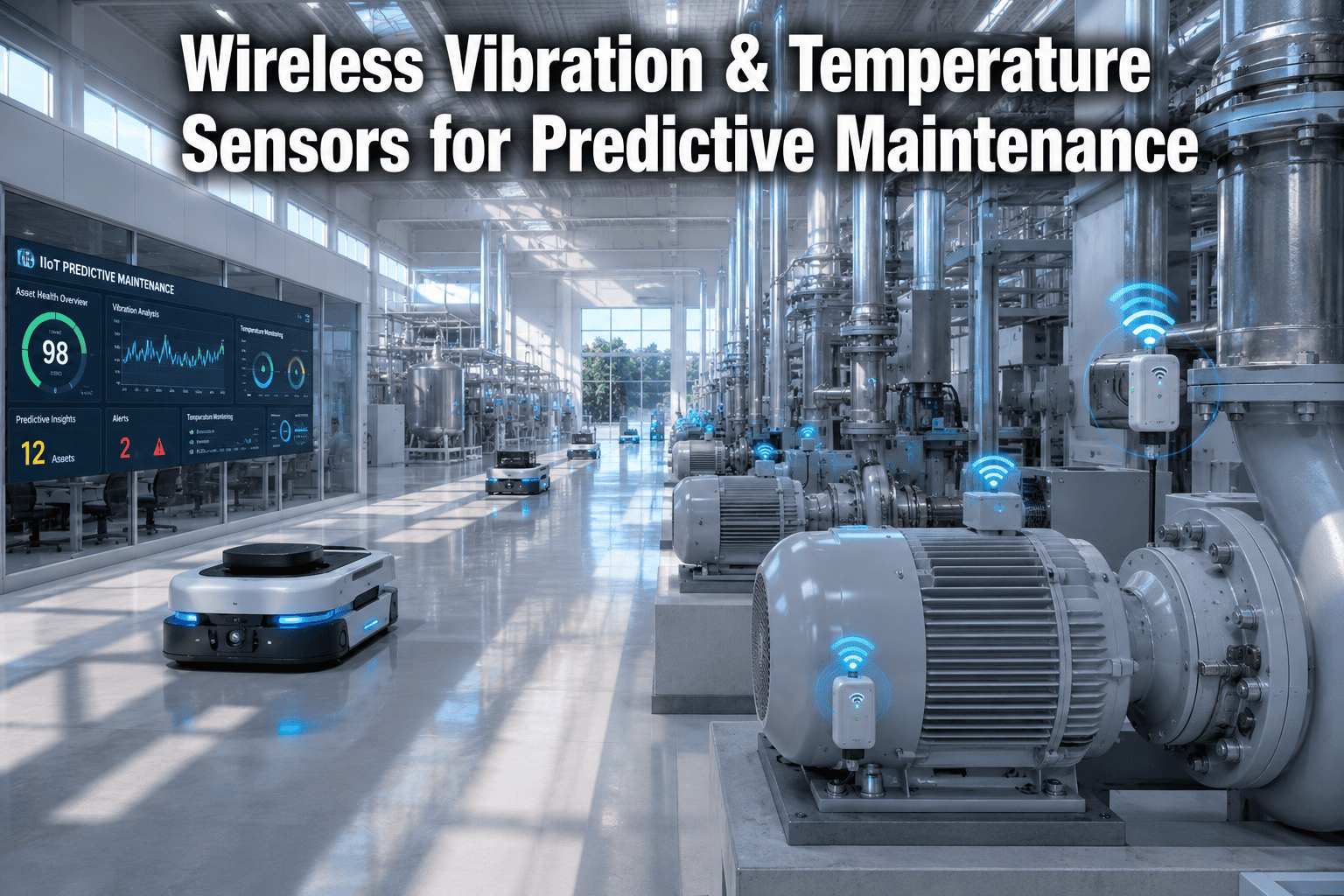
Can wireless IoT sensors replace wired vibration monitoring systems?
How does Oxmaint connect to existing PLC and sensor systems?
Stop Reacting. Start Predicting.
Your Predictive Maintenance Sensors Need an AI Brain Behind Them
Raw sensor data does not stop failures. An AI platform that connects sensor readings to work orders, parts inventory, and technician routing does. Oxmaint closes the loop from signal to repair — on every sensor type, every asset class, every shift.
- 94% prediction accuracy across vibration, thermal, and IoT data feeds
- Auto-generated work orders from sensor anomalies — no manual translation
- Compliance-ready audit trail for ISO 55000, OSHA, and insurance reviews
Trusted by 1,000+ maintenance teams · 62% less unplanned downtime · Live in days



.png)
