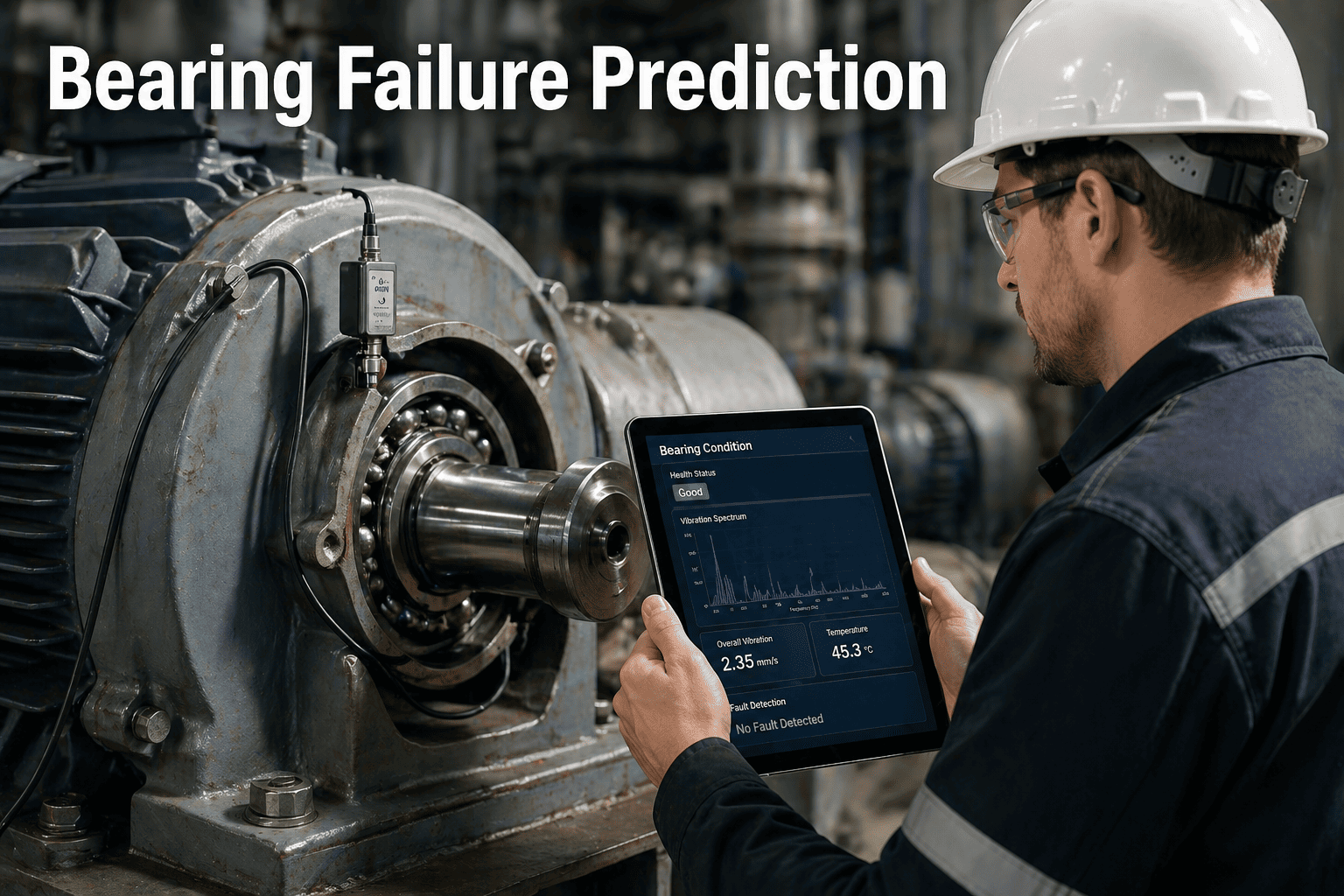
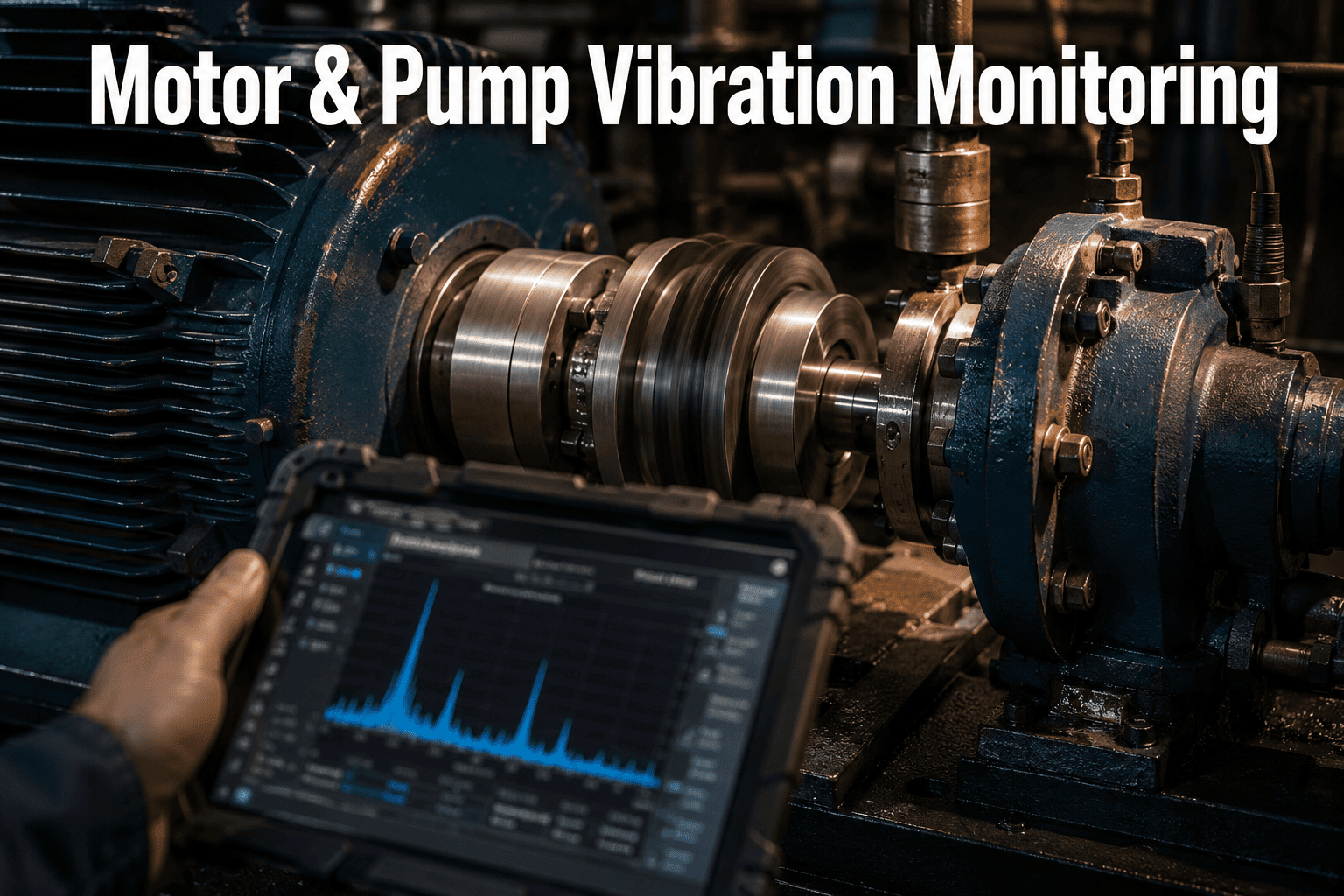
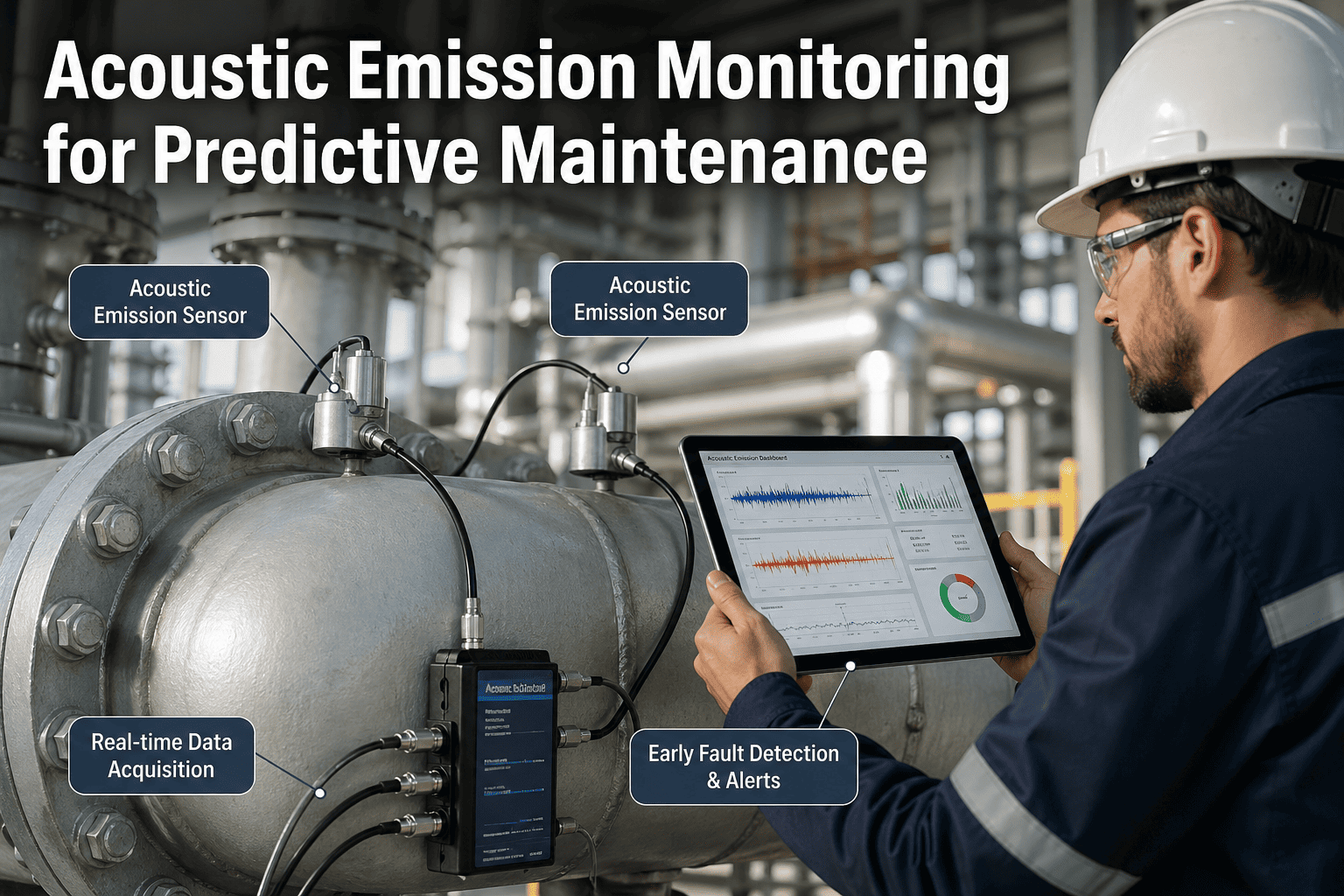
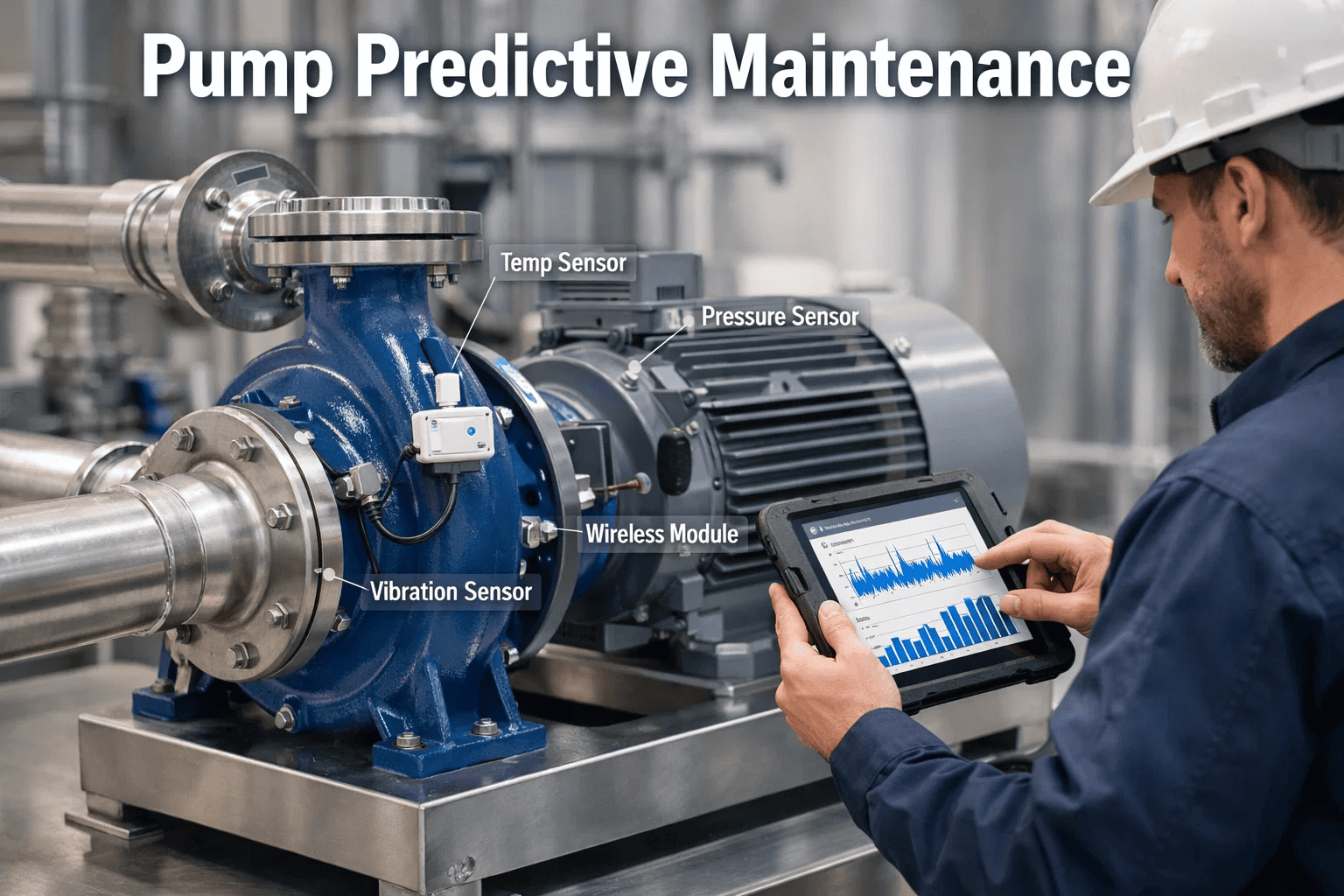
Bearings are the most replaced component in rotating equipment and the most preventable failure in a well-run maintenance program. The problem is not that bearings fail without warning. The problem is that most facilities lack the sensor infrastructure and CMMS workflow to act on the warnings that exist weeks before catastrophic failure. Stage 1 bearing defects emit ultrasonic signals at 20,000-60,000 Hz frequencies invisible to standard vibration monitors but detectable with the right sensors. By Stage 4, the bearing has already caused secondary damage to shafts, housings, and adjacent components. Every stage you miss costs more. The difference between a $200 planned bearing replacement and a $15,000 emergency repair plus production loss is a CMMS connected to the right sensors. See how Oxmaint structures bearing monitoring into automated maintenance workflows start a free trial or book a demo today.
Bearing Failure Prediction Sensors CMMS Integration Predictive Maintenance
Bearing Failure Prediction: Sensors, Stages & CMMS Integration Guide
Bearing failures follow four predictable stages each detectable with the right sensor. This guide covers the complete framework from Stage 1 ultrasonic detection to CMMS-automated work orders that prevent catastrophic failure.
Bearing Failure Stages
Stage 1
Ultrasonic weeks to months
Stage 2
Natural frequency days to weeks
Stage 3
Visible damage days
Stage 4
Catastrophic immediate shutdown
20-50%
Reduction in downtime with bearing PdM programs
20-40%
Maintenance cost savings from predictive bearing monitoring
4.8x
Emergency repair cost vs planned bearing replacement
90%
AI-assisted bearing fault prediction accuracy
The 4 Failure Stages
The Four Stages of Bearing Failure and When to Act
Bearing failure is not sudden it progresses through four measurable stages over weeks or months. The key insight is this: the cost of intervention rises dramatically with each stage. Acting at Stage 1 costs a bearing and 30 minutes of labor. Waiting until Stage 4 costs the bearing, the shaft, the housing, adjacent components, and multiple shifts of production. Your CMMS determines when you act. Start a free trial with Oxmaint to see how stage-based bearing monitoring maps to automated work order escalation, or book a demo.
Stage 1
Incipient Failure Ultrasonic Zone
20,000 60,000 Hz
Sub-surface fatigue and micro-pitting begin. No audible noise, no vibration anomaly detectable by standard sensors. Only ultrasonic monitoring detects stress wave emission at this stage. Weeks to months of remaining useful life.
Action: Schedule lubrication check or condition monitoring intensification
Stage 2
Micro-Pitting Natural Frequency Ring
500 2,000 Hz
Bearing defects begin resonating at natural frequencies. Small pits visible on races under inspection. Vibration spectrum shows bearing defect frequencies (BPFI, BPFO, BSF). Weeks of remaining useful life. Ideal stage for planned repair on critical assets.
Action: Schedule planned bearing replacement within current maintenance window
Stage 3
Visible Damage Harmonic Sidebands
Harmonics + sidebands visible
Significant damage confirmed. Harmonic frequencies and sidebands clearly visible in vibration spectra. Physical inspection reveals spalling, pitting, or race damage. Days of remaining useful life. Immediate maintenance required to prevent Stage 4 cascade.
Action: Urgent priority work order bearing replacement within 24-72 hours
Stage 4
Catastrophic Noise Floor Spike
Random broadband energy spike
Bearing near total failure. High-frequency noise floor spikes as bearing geometry disintegrates. Standard vibration frequencies may paradoxically decrease. Secondary damage to shaft, housing, and adjacent equipment imminent. Immediate shutdown required.
Action: Immediate shutdown do not continue operation
Sensor Selection
Best Sensors for Each Stage of Bearing Failure Detection
No single sensor type covers all four bearing failure stages effectively. A complete bearing monitoring program pairs ultrasonic sensors for Stage 1 detection with vibration accelerometers for Stage 2-3 and temperature sensors for late-stage confirmation. Oxmaint integrates all three sensor types against a single bearing asset record so technicians get the full picture, not three disconnected dashboards. Start a free trial or book a demo to explore bearing monitoring setup.
Ultrasonic
20-60 kHz Range
Best: Stage 1 Detection
Detects sub-surface fatigue and lubrication deficiency weeks to months before vibration anomalies appear. Essential for high-speed bearings and slow-speed equipment where vibration analysis is ineffective.
Accelerometer
Vibration Analysis
Best: Stage 2-3 Detection
Detects bearing defect frequencies (BPFI, BPFO, BSF, FTF) as surface damage develops. Primary method for trending bearing condition from normal through advanced fault stages. Works on bearings above 200 RPM.
Temperature
RTD / Thermocouple
Best: Stage 3-4 Confirmation
Bearing temperature rises sharply as friction increases in Stage 3-4. Useful as a secondary alarm confirmation but provides insufficient lead time alone. Best used alongside ultrasonic and vibration sensors.
Current Analysis
MCSA / ESA
Best: Inaccessible Bearings
Motor current modulation from bearing mechanical forces enables non-invasive detection from the MCC panel. Ideal for motors in hazardous areas or confined spaces where physical sensor access is restricted.
Before vs After
Reactive Bearing Maintenance vs Predictive CMMS-Driven Program
| Dimension | Reactive Approach | Predictive with Oxmaint CMMS |
|---|
| Failure Detection Point | Stage 3-4 audible noise or production stoppage | Stage 1-2 weeks before failure symptoms appear |
| Repair Type | Emergency replacement during unplanned stoppage | Planned replacement during scheduled maintenance window |
| Repair Cost | 4.8x higher includes overtime, expedited parts, secondary damage | Bearing + scheduled labor only |
| Secondary Damage | Shaft, housing, seals, and adjacent components affected | No secondary damage intervened before Stage 3 |
| Production Impact | Unplanned stoppage full shift or multiple shifts lost | Scheduled downtime during planned maintenance window |
| Parts Availability | Emergency procurement 2-5x standard cost, days of delay | Parts pre-ordered against CMMS work order forecast |
| Maintenance Record | Manual log, often incomplete or missing | Full digital history per bearing timestamped in CMMS |
| CapEx Visibility | Unknown replacement forced by crisis | 5-10 year bearing replacement forecast from condition trend |
How Oxmaint Solves It
How Oxmaint CMMS Drives a Complete Bearing Monitoring Program
Oxmaint connects bearing sensor data, maintenance schedules, spare parts inventory, and technician workflows into a single platform so the right action happens at the right stage, every time. Start a free trial to build your bearing monitoring program, or book a demo for a full walkthrough.
Condition Monitoring
Sensor-to-CMMS Threshold Alerts
Configure vibration, ultrasonic, and temperature thresholds per bearing. When Stage 2 vibration levels are reached, Oxmaint auto-generates a scheduled work order. Stage 3 triggers priority escalation. Stage 4 triggers immediate shutdown alert.
Asset Records
Full Bearing History Per Asset
Every bearing has its own record with installation date, running hours, lubrication history, sensor readings, and replacement records giving technicians full context and enabling remaining useful life estimation.
Parts Inventory
Bearing Stock Tied to Work Orders
Oxmaint links spare parts inventory to bearing asset records. When a Stage 2 work order is generated, the system checks stock and flags procurement needs ensuring parts are available before the planned replacement date.
CapEx Forecasting
Rolling Replacement Forecasts
Bearing condition trends feed Oxmaint's 5-10 year CapEx forecasting models converting reactive crisis spending into planned capital budgets that operations managers can defend to ownership and finance teams.
ROI and Results
What a CMMS-Driven Bearing PdM Program Delivers
20-50%
Less Unplanned Downtime
Predictive bearing programs consistently cut unplanned stoppage events by 20-50% converting emergency failures into scheduled maintenance windows.
20-40%
Lower Total Maintenance Cost
Stage 1-2 intervention eliminates secondary damage repair, emergency parts premiums, and overtime labor reducing total bearing-related maintenance costs by 20-40%.
4.8x
Emergency vs Planned Repair Cost Multiple
A $200 bearing replaced at Stage 2 versus a $15,000+ emergency event at Stage 4 that cost ratio is consistent across industries and equipment types.
90%
AI Prediction Accuracy
AI and ML applied to combined sensor data achieves 90% bearing fault prediction accuracy reducing false alarms while catching the faults that matter before they cascade.
Frequently Asked Questions
Bearing Failure Prediction Common Questions
How early can bearing failure be detected before it becomes catastrophic?
With ultrasonic monitoring at Stage 1, bearing defects can be detected weeks to months before mechanical failure enough lead time to schedule planned replacement during a regular maintenance window. Stage 2 detection via vibration analysis typically provides 1-3 weeks of lead time. Stage 3 provides days. The goal of a CMMS-driven bearing monitoring program is to act at Stage 1 or 2 never reach Stage 3 or 4.
Book a demo to see how Oxmaint stages bearing alerts.Which sensor is most effective for slow-speed bearing monitoring?
Ultrasonic sensors (20-60 kHz range) are the most effective for slow-speed bearings below 200 RPM. Standard vibration accelerometers lose sensitivity at slow speeds because the energy levels are too low for reliable frequency analysis. Ultrasonic monitoring detects the high-frequency stress waves generated by surface contact even at very slow rotational speeds making it the preferred method for kilns, mixers, and conveyor bearings.
How does Oxmaint integrate bearing sensor alerts with work order management?
Oxmaint integrates bearing sensors via API and IoT gateway connections. Vibration thresholds, ultrasonic amplitude limits, and temperature setpoints are configured per bearing asset. When readings cross a threshold, Oxmaint automatically generates a work order with the appropriate priority level attached to the bearing's full history, parts requirements, and technician instructions. No manual monitoring handoff required.
Start a free trial to connect your first bearing sensor.Can Oxmaint track bearing lubrication history and schedule condition-based greasing?
Yes. Oxmaint maintains full lubrication history per bearing asset grease type, quantity, date, and technician. When combined with ultrasonic monitoring that detects lubrication deficiency at Stage 1, Oxmaint can trigger condition-based greasing work orders automatically eliminating both over-greasing (a leading cause of bearing failure) and under-greasing from missed schedule intervals.
Bearing Failure Prediction Sensor Integration CMMS Automation Free to Start
Catch Bearing Failures at Stage 1. Replace on a Schedule. Stop Paying for Stage 4 Emergencies.
Oxmaint connects ultrasonic, vibration, and temperature sensor alerts to staged work order escalation ensuring the right intervention happens at Stage 1 or 2, not when the bearing destroys the shaft. Full bearing history, parts inventory, and CapEx forecasting included. Go live in under 60 minutes.