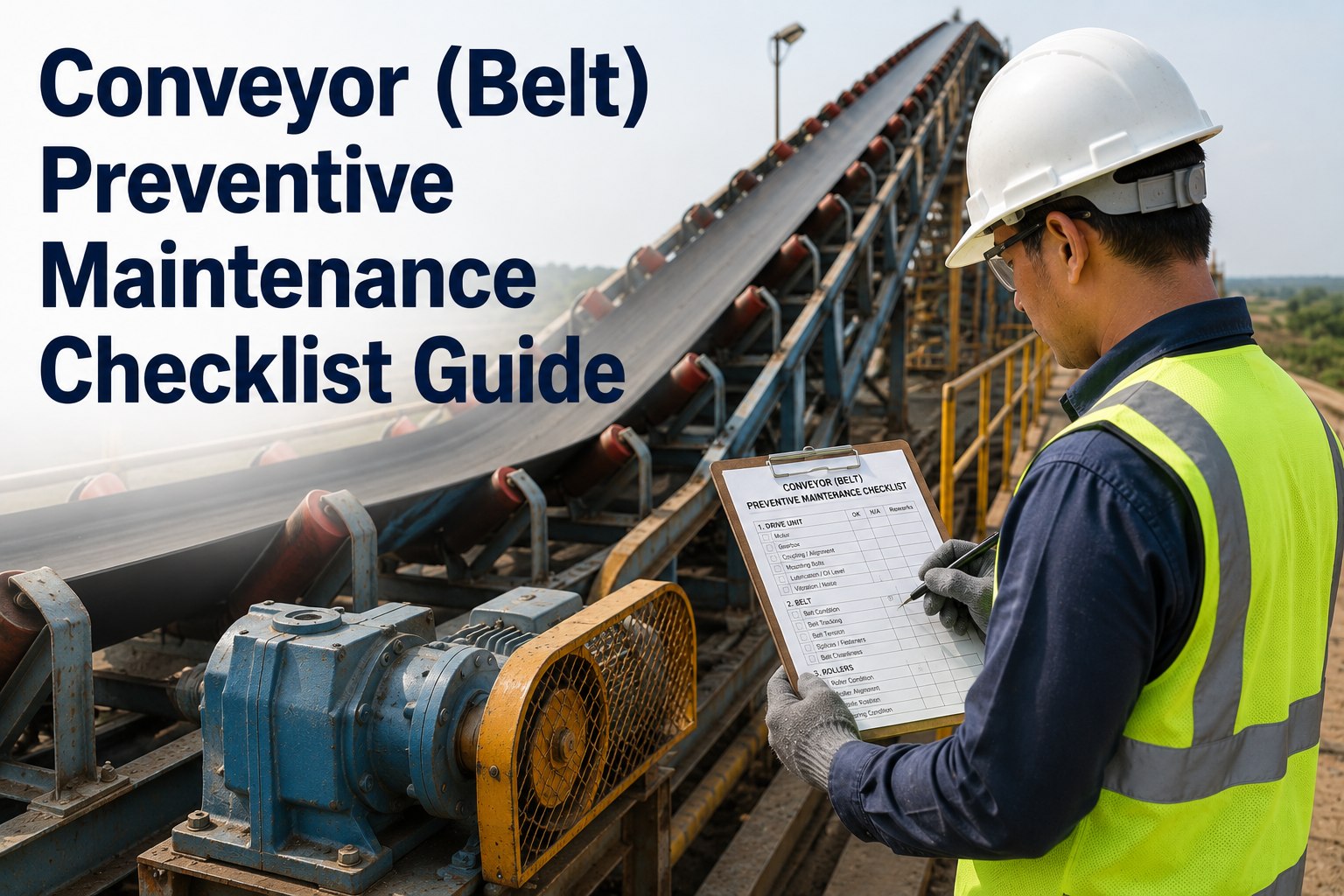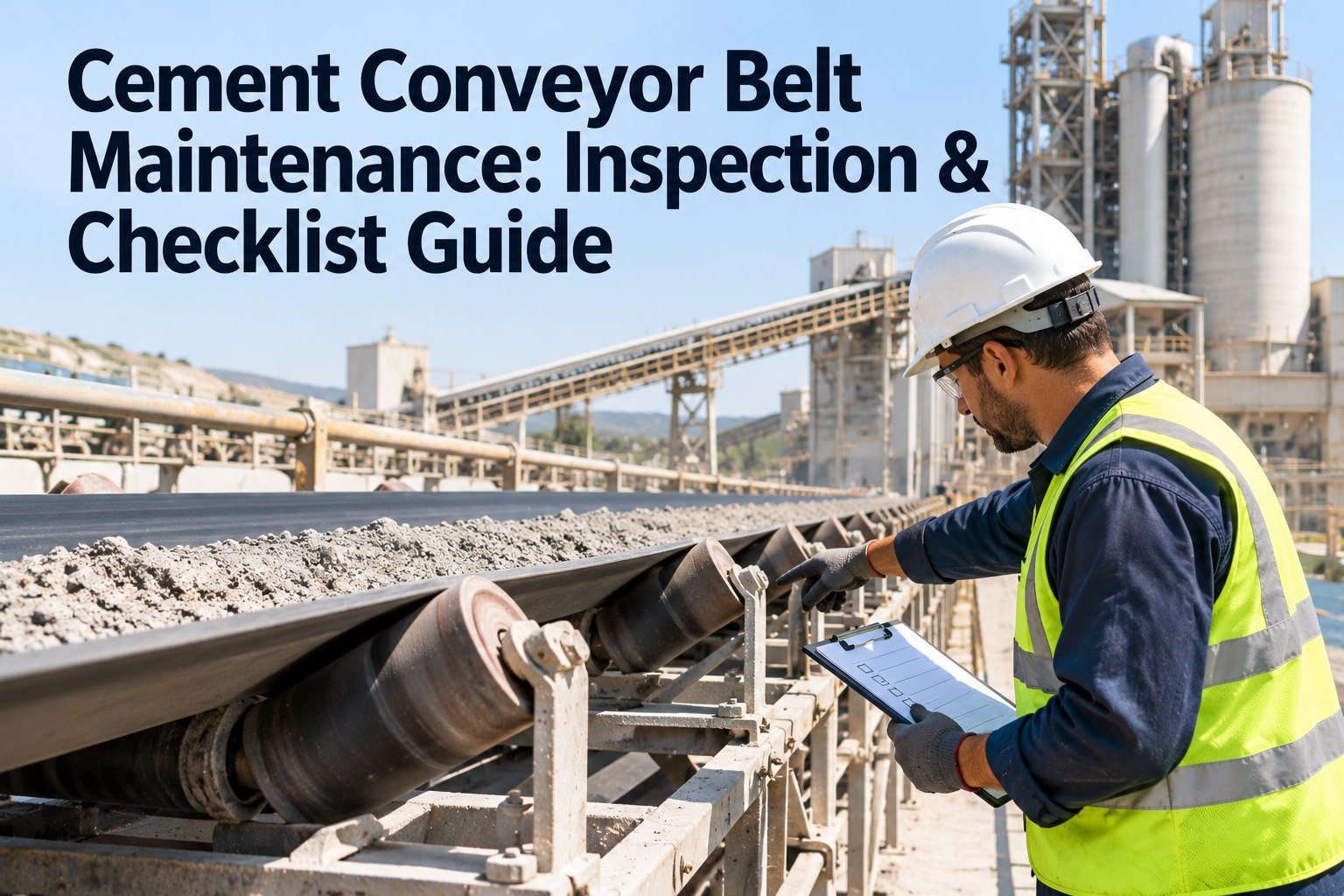
In a cement plant, one stopped belt can stop everything behind it. Limestone stops arriving, the kiln feed runs short, and clinker or cement piles up with nowhere to go. Conveyors also take more punishment than almost any other asset: heavy tonnage, abrasive material, constant dust, and temperature swings. Most belt failures don't arrive without warning. They start as a belt drifting off-center, a squealing idler, a worn pulley lagging, or a small pile of spillage that nobody logged. The fix is a disciplined walk-through, with every finding written down and turned into a repair before it becomes a breakdown. Below is a zone-by-zone inspection map and four ready-to-use checklists. OxMaint AI maintenance management software puts those checklists on phone, so every failed check opens a work order against the exact belt, pulley, or idler.
Cement Conveyor Belt Maintenance: Inspection & Checklist Guide
Walk the belt zone by zone, tick the checks, and catch tracking, spillage, and wear problems early. OxMaint AI turns each flagged item into a tracked work order, so small defects get fixed before they stop the line.
The Conveyor Inspection Map: 8 Zones to Cover
Group the checks by where the problem lives. This keeps your round short, logical, and impossible to skip. Start free and build each belt as a set of zones in OxMaint AI.
Your Four Inspection Rounds
Match the depth of the check to how often you do it. Shift checks are quick and visual, and monthly and shutdown checks go deeper. Tick items as you go. Book a demo to run these as mobile checklists.
Belt Tracking & Misalignment: Symptom, Cause, First Check
Misalignment is the root of edge damage, spillage, and structure strikes. Don't just steer the belt back. Read how it drifts and check the likely cause first. Start free and log tracking defects against the belt.
| What you see | Likely cause | Check first |
|---|---|---|
| Drifts the same way along the whole run | Pulley misalignment or a skewed belt | Head and tail pulley alignment, take-up position |
| Drifts when material is wet or sticky | Buildup on pulleys and idlers | Belt cleaners, lagging, return rollers |
| Chronic damage on one edge | Training idlers stuck or structure contact | Training idlers, guards, structure clearance |
| Mistracks only when loaded | Off-center loading from the chute | Chute position, feed direction, skirt seals |
| Belt slips at the head pulley | Worn lagging or low tension | Lagging condition, take-up tension |
Spillage & Dust Control: Fix the Four Sources
Spilled material is more than housekeeping. It buries idlers, grows into carryback, adds dust, and hides other defects. Most cement conveyor spillage traces back to the same four causes. Book a demo to track spillage root causes.
A Paper Checklist Records the Problem. A Work Order Fixes It.
When a technician marks a seized idler or a worn blade, OxMaint AI opens a work order against that exact component, assigns it, and tracks it to closure. Nothing sits on a clipboard waiting for someone to notice.
When to Act: Typical Trigger Points
Clear limits remove the guesswork about what's urgent. These are typical starting points, so confirm them against your belt and component suppliers' guidance. Start free and set response targets per component.
| Component | Warning sign | Typical response |
|---|---|---|
| Idler rollers | Squeal, seized rotation, grease leak | Replace within about 2 days |
| Pulley lagging | Debonding or groove wear around 4 mm or more | Plan replacement within about a week |
| Belt cleaner | Blade worn past roughly 60%, visible carryback | Replace within about a week |
| Belt tracking | Drift beyond about 50 mm from centerline at the loading zone | Investigate immediately |
| Transfer chute | Blockage, overload, repeated spillage | Clear and find the cause within about 3 days |
How OxMaint AI Runs Your Conveyor Program
Checklists only work if they're done on time, recorded the same way, and followed by action. OxMaint AI handles all three. Start free and set up your first belt.
Frequently Asked Questions
Keep Every Belt Moving.
The belts that fail loudly usually whispered first. Put your inspection rounds on OxMaint AI, turn every flagged defect into a tracked repair, and keep material flowing from quarry to dispatch.