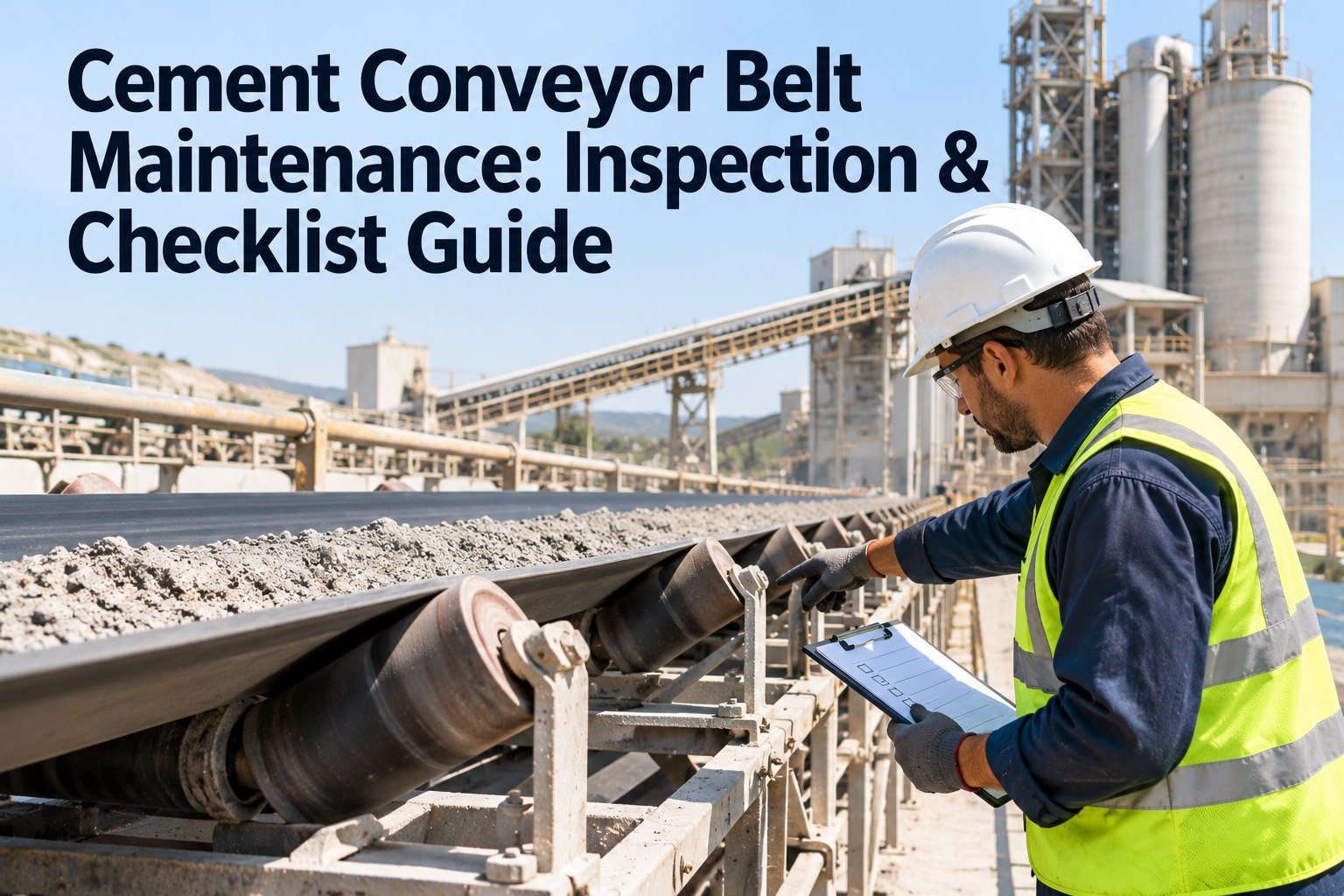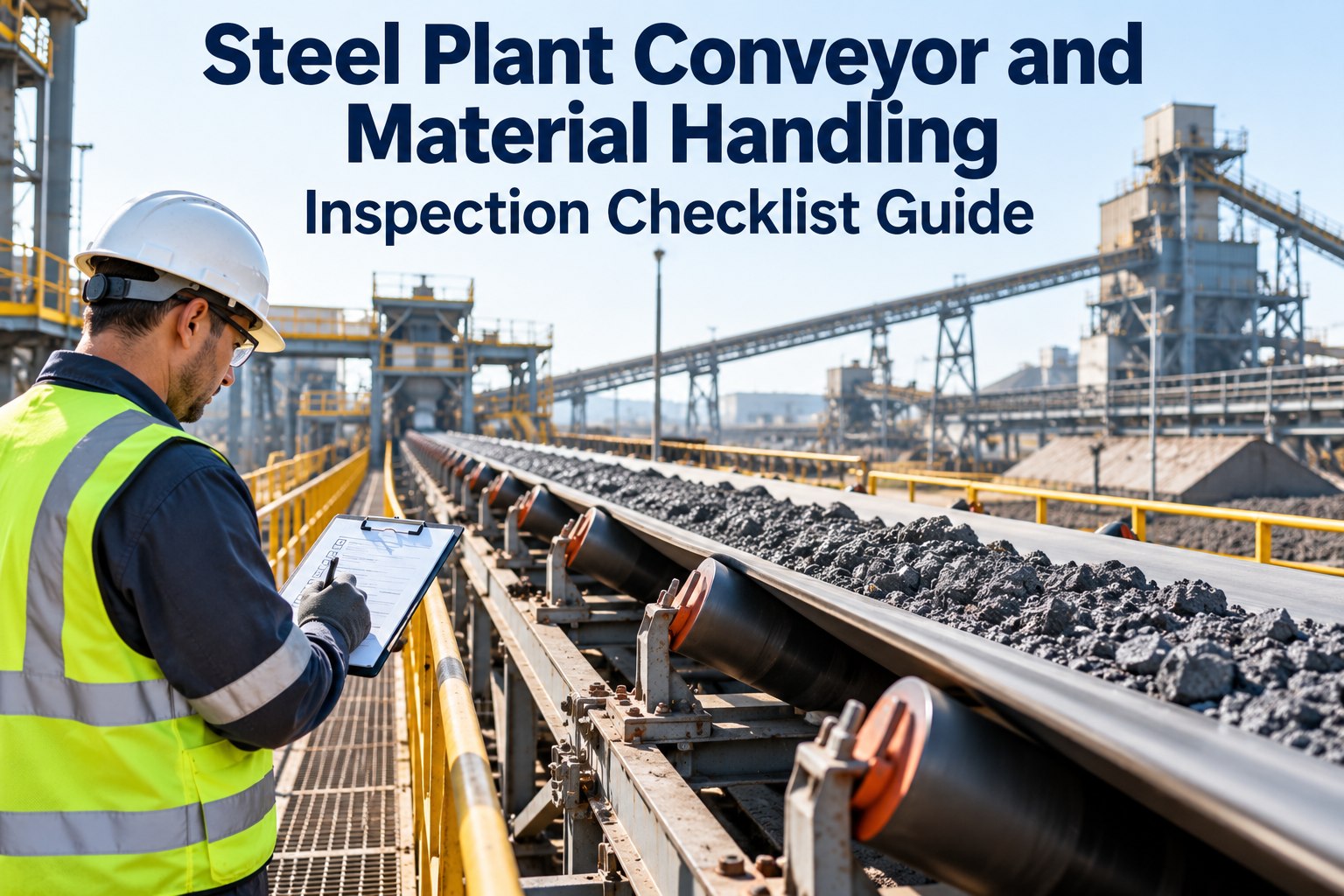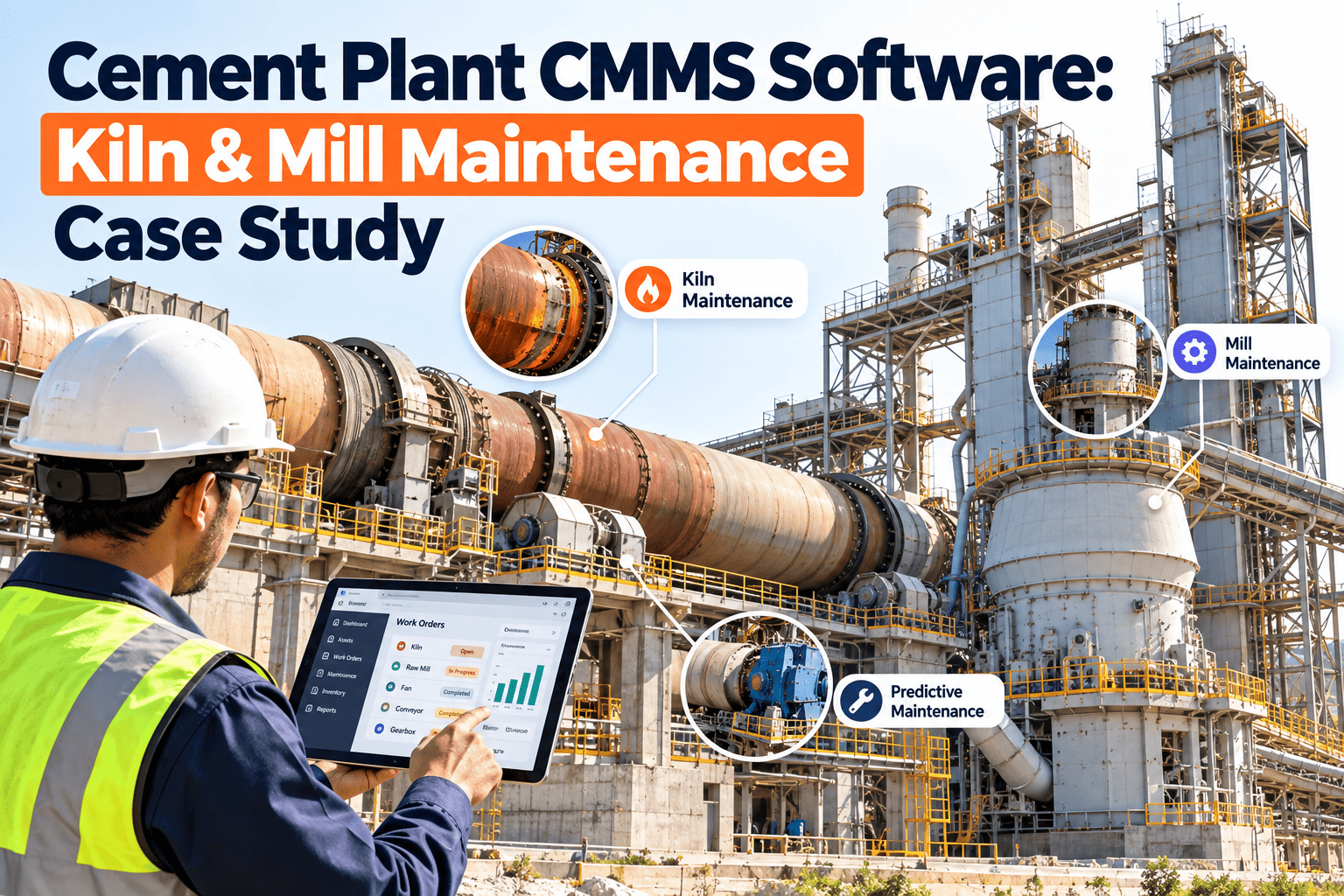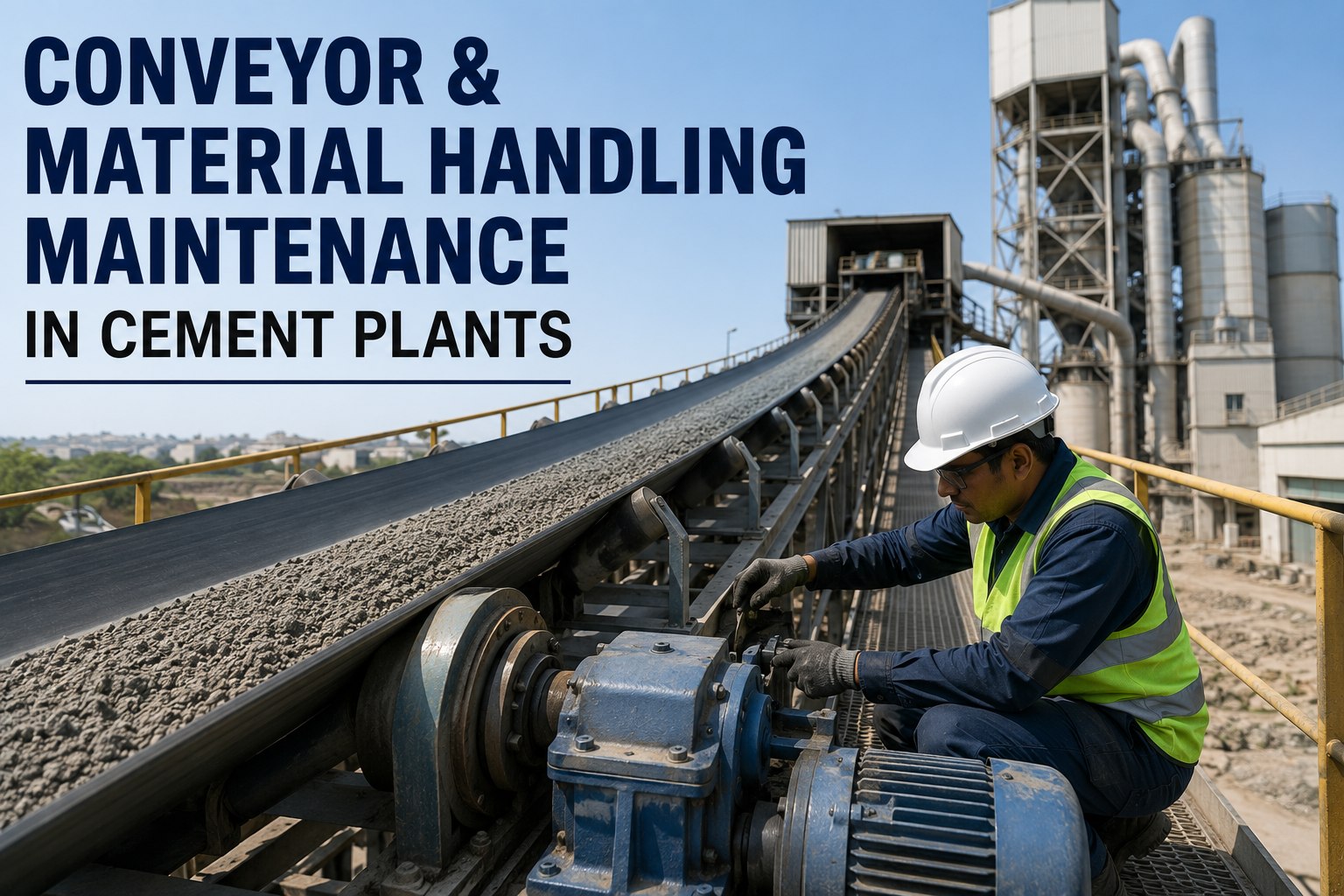
Cement conveyor maintenance is the backbone of plant-wide material flow — when a single bucket elevator or belt conveyor stops, the raw mill and kiln stop with it. In an industry where unplanned downtime can cost $12,000–$50,000 per hour, a structured material handling maintenance program is the difference between hitting clinker production targets and falling behind schedule. OxMaint's AI-powered CMMS gives cement maintenance teams the conveyor PM libraries, idler inspection tracking, and bucket elevator reliability workflows needed to keep the bulk handling chain running at kiln-required availability. Ready to replace reactive firefighting with predictive precision? Start Free Trial and see how fast your material handling reliability improves.
CONVEYOR RELIABILITY FOR CEMENT PLANTS
One Bucket Elevator Down Means the Kiln Stops Running
Cement plants lose millions annually to material handling chain failures — belt tears, idler seizures, and bucket elevator breakdowns that cascade through raw meal, clinker, and finish grinding circuits. A CMMS-driven conveyor maintenance program targets 98%+ mechanical availability on the bulk handling chain, protecting kiln throughput and cutting unplanned downtime by 30–50%.
WHY MATERIAL HANDLING FAILURES CASCADE
The Chain Reaction: How Conveyor Stops Shut Down the Kiln
In a cement plant, material handling is a single continuous chain — limestone from the quarry, raw meal to the silo, clinker to the cement mill. A failure at any link doesn't just stop one conveyor; it starves or chokes downstream equipment within minutes. A bucket elevator carrying raw meal to the silo drops a bucket chain at 2 AM, and the raw mill has 15 minutes before it must shut down to avoid overfilling. The kiln follows within the hour.
Belt Conveyor Failure
A belt tear or seized idler on the limestone feed conveyor stops primary crushing. Within 30 minutes the raw material stockpile depletes and the raw mill starves.
Bucket Elevator Breakdown
A bucket elevator lifting raw meal to the blending silo fails. The kiln feed bin drains in under 60 minutes, forcing a kiln stop and a costly 8–12 hour restart cycle.
Kiln & Clinker Stop
The kiln stops. Clinker cooler conveyors and cement mill feed halt. Restart costs $50K–$120K in fuel, refractory stress, and lost production — before the conveyor is even fixed.
"In a 5,000 TPD cement plant, a single 4-hour bucket elevator failure can cost over $100,000 in lost clinker production — plus another $25,000 in kiln restart fuel. The conveyor PM that prevents it costs less than $200 in labor and parts."
— Typical scenario from mid-size cement plant reliability audits
CONVEYOR PM CHECKLIST
Cement Plant Conveyor Maintenance Checklist: Belt, Idler & Drive Inspections
A defensible conveyor maintenance program in a cement plant follows a tiered inspection structure: daily visual rounds, weekly mechanical checks, and monthly precision measurements. Below is a field-tested PM framework for belt conveyors and bucket elevators operating in high-dust, high-abrasion cement service.
- Inspect belt for tears, edge wear, and tracking wander at head/tail pulleys
- Listen for abnormal idler noise (squealing, grinding) along full conveyor length
- Check chute blockages at transfer points and apron feeder discharge
- Verify bucket elevator boot and head inspection hatches are sealed and dust-tight
- Confirm emergency pull-cord and stop switches are functional and unobstructed
- Grease idler bearings per PM schedule (typically 2–3 oz per bearing, NLGI #2)
- Check gearbox oil level and temperature on head drive and take-up winch
- Inspect belt tension and take-up travel — adjust if sag exceeds 2% of span
- Torque-check bucket elevator bolts and inspect chain/belt for elongation or missing buckets
- Examine scraper blades and skirt rubber at load points for wear
- Conduct vibration analysis on drive motors, gearboxes, and pillow block bearings
- Measure belt thickness and cover wear — record against replacement threshold
- Perform thermography on drive motor, coupling, and gear reducer under load
- Calibrate belt scale and speed sensors for raw mix feed accuracy
- Audit spare belt stock, idler inventory, and bucket chain sections against min/max levels
| Conveyor Type | Critical Failure Mode | PM Interval | Inspection Method | Typical Cost to Repair |
|---|---|---|---|---|
| Belt Conveyor (Limestone) | Belt tear / idler seizure | Daily visual / Weekly grease | Visual + acoustic | $2K–$8K |
| Bucket Elevator (Raw Meal) | Chain break / bucket loss | Weekly bolt torque / Monthly elongation | Torque + chain gauges | $15K–$40K |
| Bucket Elevator (Clinker) | Bucket wear / chain stretch | Weekly inspection / Monthly thermography | Visual + thermal | $10K–$30K |
| Apron Conveyor (Clinker Cooler) | Roller failure / track wear | Weekly grease / Monthly vibration | Vibration + visual | $8K–$20K |
| Pneumatic Conveyor (Cement) | Pipe erosion / blower failure | Monthly pressure drop / Quarterly blower PM | Pressure + thermography | $5K–$15K |
HOW OXMAINT HELPS
CMMS-Driven Conveyor Reliability: How OxMaint Keeps Material Handling Running
OxMaint turns the conveyor PM checklist above into a closed-loop, CMMS-driven reliability program — automated work order generation, mobile inspection capture, condition-based triggers, and real-time KPI dashboards. No more clipboard rounds, lost grease tickets, or "we forgot to check the bucket elevator" surprises at 2 AM. Here's how cement plants use OxMaint to protect the material handling chain:
Conveyor PM Library & Auto Work Orders
Pre-built PM templates for belt conveyors, bucket elevators, and apron feeders generate work orders automatically on calendar or runtime triggers. Technicians get mobile checklists on their tablets — every inspection, grease point, and bolt torque recorded against the asset.
Predictive Condition Monitoring
Vibration, temperature, and belt-speed sensor data flows into OxMaint's AI engine. The system flags idler bearing degradation or gearbox wear before failure — auto-creating a corrective work order with the right parts and priority, days or weeks before a breakdown.
Asset & Spare Parts Tracking
Every conveyor, idler, belt section, and bucket chain lives in OxMaint's asset registry with full maintenance history, manuals, and BOM. Spare-parts inventory auto-reserves against open work orders and triggers reorders at min-stock — so the right belt or idler is always on the shelf.
Maintenance Analytics & KPI Dashboards
Real-time dashboards track MTBF, MTTR, PM compliance, and availability per conveyor route — benchmarked against ISO 55000 asset management principles. Reliability engineers see which bucket elevators and belts are trending toward failure and can prioritize intervention before the kiln feed is at risk.
WORKED EXAMPLE
The Cost of Skipping Conveyor PM vs. Running OxMaint
Consider a mid-size cement plant producing 4,500 TPD clinker, operating 18 belt conveyors, 6 bucket elevators, and 4 apron feeders across quarry, raw mill, kiln, and finish grinding. The plant runs a reactive-plus-spreadsheet maintenance model — PMs are scheduled on paper, inspections are inconsistent, and spare parts are tracked in a binder.
A typical 4,500 TPD cement plant implementing OxMaint for conveyor and material handling reliability achieves full payback in under 8 weeks — based on reduced unplanned downtime, lower emergency parts spend, and avoided kiln restart costs alone.
See OxMaint Protect Your Conveyor Routes — Book a 30-Minute Demo
Walk through a live conveyor PM workflow, bucket elevator inspection tracking, and predictive failure alerts on assets just like yours. See how fast your team can move from reactive to reliability-driven.
FREQUENTLY ASKED QUESTIONS
Cement Conveyor Maintenance FAQs
How often should cement plant belt conveyors be inspected?
Belt conveyors in cement plants should receive daily visual walkarounds for belt tears, tracking wander, and idler noise; weekly mechanical inspections including grease and tension checks; and monthly precision measurements such as vibration analysis and belt thickness gauging. High-abrasion service conveyors handling clinker or raw meal may require more frequent idler greasing — up to twice weekly in dusty environments. OxMaint auto-generates and tracks each of these PM intervals against the asset so nothing is missed.
What are the most common bucket elevator failure modes in cement plants?
The most common bucket elevator failures are chain or belt breakage from fatigue and overload, bucket loss from bolt loosening, boot shaft bearing seizure from dust ingress, and chain elongation beyond acceptable limits. Clinker-service elevators also see accelerated bucket wear from abrasive material. A weekly bolt torque check, monthly chain elongation measurement, and thermography on boot and head bearings can catch 80%+ of these failure modes before they escalate. Book a Demo to see how OxMaint tracks each of these inspections per elevator.
How does a CMMS improve conveyor reliability in cement plants?
A CMMS like OxMaint improves conveyor reliability by automating PM scheduling, ensuring inspection compliance, capturing condition-monitoring data for predictive analysis, and maintaining a complete asset history for every conveyor and elevator. Instead of reactive firefighting from spreadsheet-based tracking, maintenance teams get AI-driven failure predictions, automated work order generation, and real-time KPI visibility — typically cutting unplanned conveyor downtime 30–50% and improving material handling availability to 98%+.
What spare parts should a cement plant keep for conveyor maintenance?
Critical spare parts for cement conveyor maintenance include spare belt sections (at least one full length per critical conveyor), a stock of common idler sizes, bucket elevator chain links and replacement buckets, gearbox oil and seals, drive motor bearings, and scraper blades. OxMaint's inventory module tracks min/max levels for each part, auto-reserves spares against open work orders, and triggers reorder alerts — ensuring the right parts are on the shelf without overstocking.
How long does it take to implement OxMaint for conveyor maintenance in a cement plant?
Most cement plants are live on OxMaint within 2–4 weeks. The process includes importing your conveyor and elevator asset register, configuring PM templates from OxMaint's pre-built cement library, setting up inspection routes, and training maintenance technicians on the mobile app. Switching from spreadsheets or paper is straightforward — OxMaint's onboarding team handles data migration and configuration. Start Free Trial to explore the platform, or book a demo for a guided walkthrough tailored to your plant.
Stop Losing Kiln Hours to Conveyor Failures
Join cement plants using OxMaint to cut unplanned material handling downtime by up to 50%, hit 98%+ conveyor availability, and protect kiln throughput with AI-driven predictive maintenance.
Free 14-day trial · No credit card