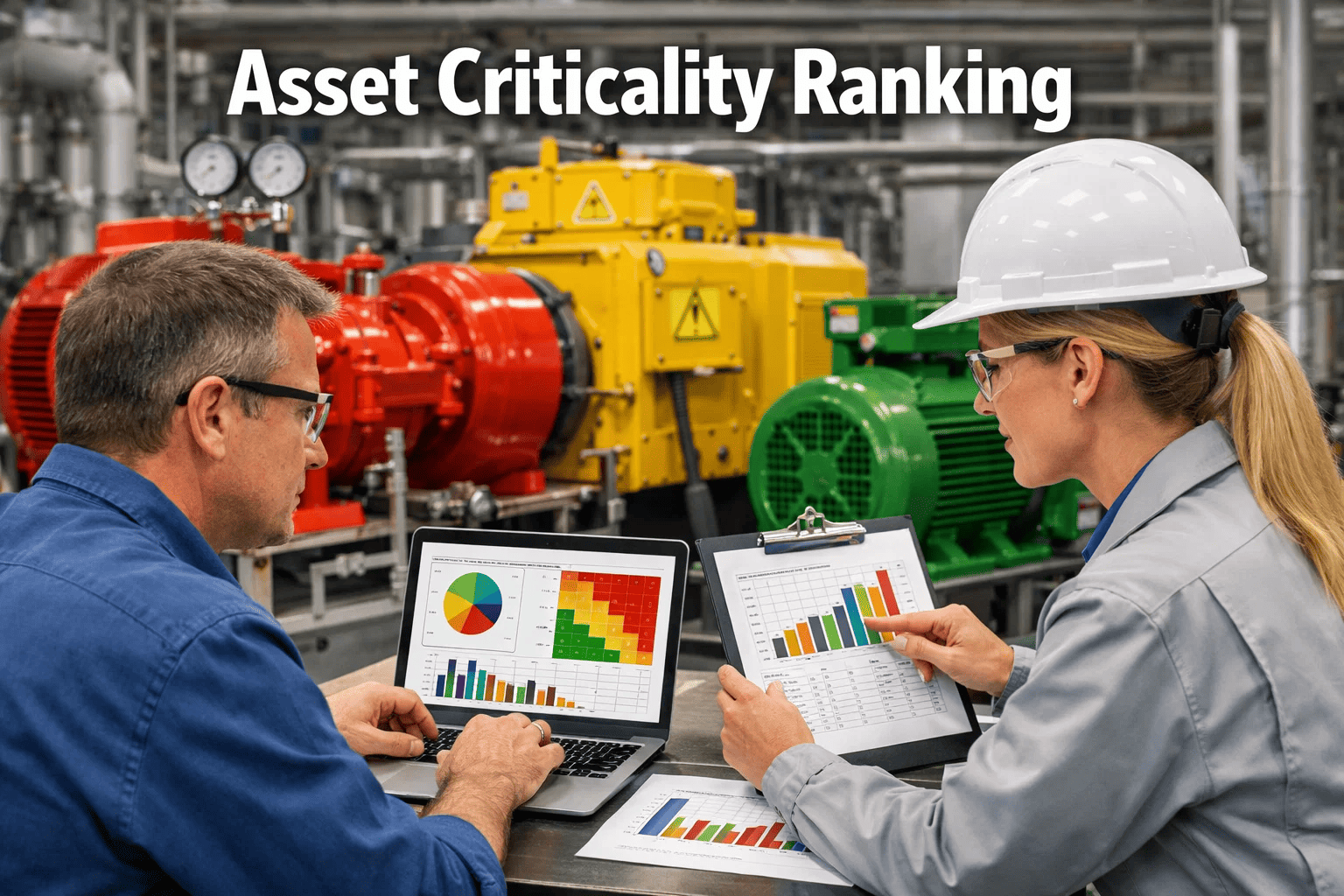
Identifying and ranking the most critical equipment in Cold Chain & Refrigeration operations is the foundation of a defensible maintenance strategy, because treating every compressor, evaporator, and condenser equally guarantees wasted budget and unexpected failures. This consequence-of-failure ranking approach scores assets across safety, production loss, environmental impact, repair cost, and regulatory risk, giving your reliability team a data-driven blueprint for where to allocate resources first. OxMaint's AI-powered CMMS transforms this criticality matrix into daily operations—auto-routing Tier 1 work orders to senior technicians, enforcing strict PM schedules on high-risk assets, and delivering real-time downtime risk dashboards. Build your defensible asset hierarchy and eliminate reactive blind spots today when you Start Free Trial, or keep reading to see how to structure your equipment ranking.
Which assets deserve your next maintenance dollar?
In cold chain and refrigeration, a single unranked asset can trigger a million-dollar product loss cascade. Score your equipment by consequence of failure—safety, production, environment, cost, and compliance—to concentrate preventive maintenance where downtime hurts most.
The essential equipment list you must track
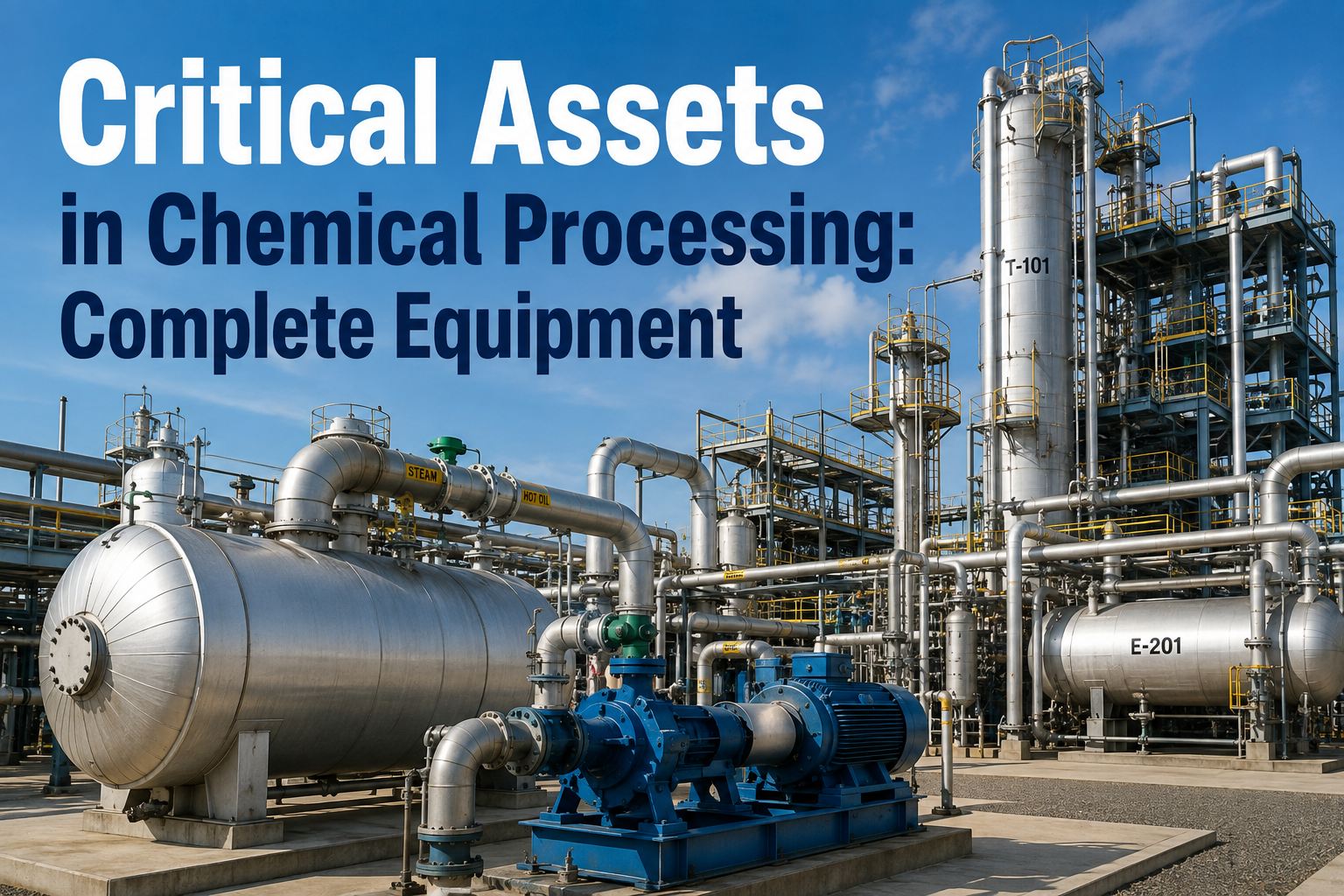
A robust critical asset register for cold chain and refrigeration operations goes far beyond the main compressors. It encompasses every component that sustains temperature integrity, air quality, and regulatory compliance across your facility.
Industrial Compressors & Condensers
The heart of your refrigeration loop. A single screw compressor failure can halt cooling across an entire 50,000 sq ft warehouse. These are definitive Tier 1 essential assets requiring vibration analysis and oil sampling.
Evaporator Units & AHUs
Responsible for heat exchange inside cold rooms. Defrost cycle failures or fan motor degradation here cause localized temperature spikes that ruin sensitive pharmaceutical or food batches.
Refrigerant Piping & Valves
High-risk assets prone to vibration fatigue and seal degradation. Undetected leaks lead to environmental penalties (EPA Section 608) and massive refrigerant replacement costs.
PLC Controls & Telemetry Panels
The central nervous system of the cold chain. A faulty sensor or relay can trigger false defrosts or catastrophic system lockouts, making them high-priority assets for electrical PM.
Backup Generators & UPS
Your last line of defense during grid outages. If untested and unranked, a failed transfer switch during a summer storm can wipe out millions in frozen inventory in under four hours.
Temperature Monitoring Sensors
IoT probes mapping the cold chain. Drift in these sensors creates false security, masking actual temperature violations and invalidating compliance audits under FSMA and GDP guidelines.
How to calculate consequence of failure for cold chain equipment
Equipment risk ranking in cold chain and refrigeration relies on a standard 1–5 scoring system across five operational pillars. This creates a defensible criticality matrix that removes guesswork from maintenance budgeting.
Each variable is scored 1 (Negligible) to 5 (Catastrophic). Assets scoring above 4.0 are classified as Tier 1 essential equipment.
| Scoring Pillar | Score 1 (Low) | Score 3 (Moderate) | Score 5 (Critical) |
|---|---|---|---|
| Safety | Minor first aid | Lost time injury | Fatality / Ammonia release |
| Production Loss | < $1K / hr downtime | $1K–$10K / hr downtime | > $50K / hr downtime |
| Environmental | No refrigerant leak | Minor HFC leak | Major ammonia / CO2 venting |
| Repair Cost | < $1K | $5K–$15K | > $50K (Full replacement) |
| Compliance | Internal note | Minor audit finding | FSMA / GDP violation |
Cold chain and refrigeration equipment ranking by tier
Once your criticality scores are calculated, assets are stratified into maintenance tiers. This prioritization ensures your best technicians and strictest PM schedules target your highest-risk assets.
Mission-Critical Assets
Score: 4.0 – 5.0
Main ammonia compressors, primary PLCs, backup power transfer switches. Unplanned failure causes immediate production halt and regulatory exposure. Requires predictive maintenance, weekly inspections, and automated parts readiness.
Operational Assets
Score: 2.5 – 3.9
Evaporator fans, secondary condensers, secondary temperature sensors. Failure degrades efficiency but allows short-term operation. Requires strict preventive maintenance schedules and condition monitoring.
Standard Assets
Score: 1.0 – 2.4
Lighting, standard HVAC in non-critical zones, basic door seals. Managed with basic run-to-failure or corrective maintenance protocols to free up budget for Tier 1 assets.
How OxMaint operationalizes your criticality matrix
A spreadsheet of high-risk assets gathers dust. OxMaint's CMMS and EAM platform turns your cold chain and refrigeration equipment ranking into automated workflows that prevent failures before they happen.
Automated Tier-Based Work Routing
Tag assets as Tier 1, 2, or 3 in the system. OxMaint automatically routes Tier 1 work orders to your most senior refrigeration technicians, cutting response times by up to 40% on critical assets.
Enforced Preventive Maintenance
Enforce PM compliance on essential cold chain equipment. OxMaint triggers automatic alerts and escalations if a compressor oil change or sensor calibration is missed, ensuring 100% audit readiness.
Real-Time Risk Dashboards
See exactly where downtime risk is concentrated across single or multi-plant networks. Visualize asset health by criticality tier to justify maintenance spend to stakeholders instantly.
Critical Spare Parts Linking
OxMaint links your Tier 1 assets directly to their required spare parts inventory. When a critical compressor fails, the system confirms part availability and bin location instantly, reducing repair time by 50%.
Stop guessing where your maintenance dollars should go.
See how OxMaint's asset hierarchy and criticality scoring can cut unplanned cold chain downtime by 30–50%. Book a 30-minute demo on your actual assets today.
The cost of unranked assets: A worked example
Consider a mid-sized cold chain and refrigeration plant running 180 assets, spending roughly $42K annually on a reactive, unranked maintenance schedule. Here is how implementing a consequence-of-failure matrix transforms their operational ROI.
- Reactive Focus: Technicians spend 60% of time on low-impact equipment failures.
- Major Event: An unmonitored Tier 1 evaporator fan motor seizes, halting cooling in Zone A.
- Financial Impact: $180,000 in spoiled pharmaceutical inventory over 6 hours.
- Parts Delay: Critical bearings were out of stock, extending downtime by 14 hours.
- Proactive Routing: Asset tagged Tier 1, receives automated monthly vibration analysis.
- Predictive Alert: OxMaint flags bearing degradation 3 weeks before failure.
- Parts Ready: Spare motor automatically reserved and staged at the asset location.
- Financial Impact: $0 inventory loss. Planned repair cost: $2,400. Zero downtime.
Cold chain equipment criticality & risk
What is the most critical equipment in a cold chain and refrigeration system?
The most critical assets are typically the primary refrigeration compressors, main PLC control panels, and backup power generators. These Tier 1 components have the highest consequence of failure because their unplanned downtime causes immediate temperature excursions, halts production, and triggers massive financial and regulatory losses. Ranking them first ensures maintenance budgets are properly allocated.
How do you calculate consequence of failure for cold chain assets?
Consequence of failure is calculated by scoring an asset across five dimensions: safety, production loss, environmental impact, repair cost, and regulatory compliance. Each dimension is rated 1 to 5, and the average forms the criticality score. You can automate this calculation and track asset risk live by using an AI-powered CMMS platform like OxMaint.
Why do we need an equipment risk ranking for cold chain maintenance?
Without an equipment risk ranking, maintenance teams waste resources on low-impact assets while high-risk equipment fails unpredictably. Ranking assets into tiers (Critical, Essential, General) ensures that your most skilled technicians, strictest PM schedules, and critical spare parts are reserved for the equipment that poses the greatest threat to facility safety, product integrity, and operational uptime.
What is the difference between Tier 1 and Tier 2 cold chain assets?
Tier 1 assets are mission-critical components whose failure causes immediate and catastrophic consequences, such as product loss or safety hazards; they require predictive maintenance and weekly inspections. Tier 2 assets are essential but allow for short-term operational continuity; they are managed with strict preventive maintenance schedules to prevent degradation from escalating into a critical failure.
How does a CMMS support cold chain and refrigeration reliability (RCM)?
A CMMS supports Reliability-Centered Maintenance (RCM) by digitizing the critical asset register, automating PM triggers based on tier rankings, and centralizing work order history for root-cause analysis. To see how OxMaint enforces RCM workflows and cuts downtime by up to 50%, you can Book a Demo with our reliability engineers.
Build your defensible critical asset register today.
Join the maintenance leaders using OxMaint to rank equipment, automate PM schedules, and eliminate reactive maintenance. Set up your cold chain asset hierarchy in minutes.
Free 14-day trial · No credit card required