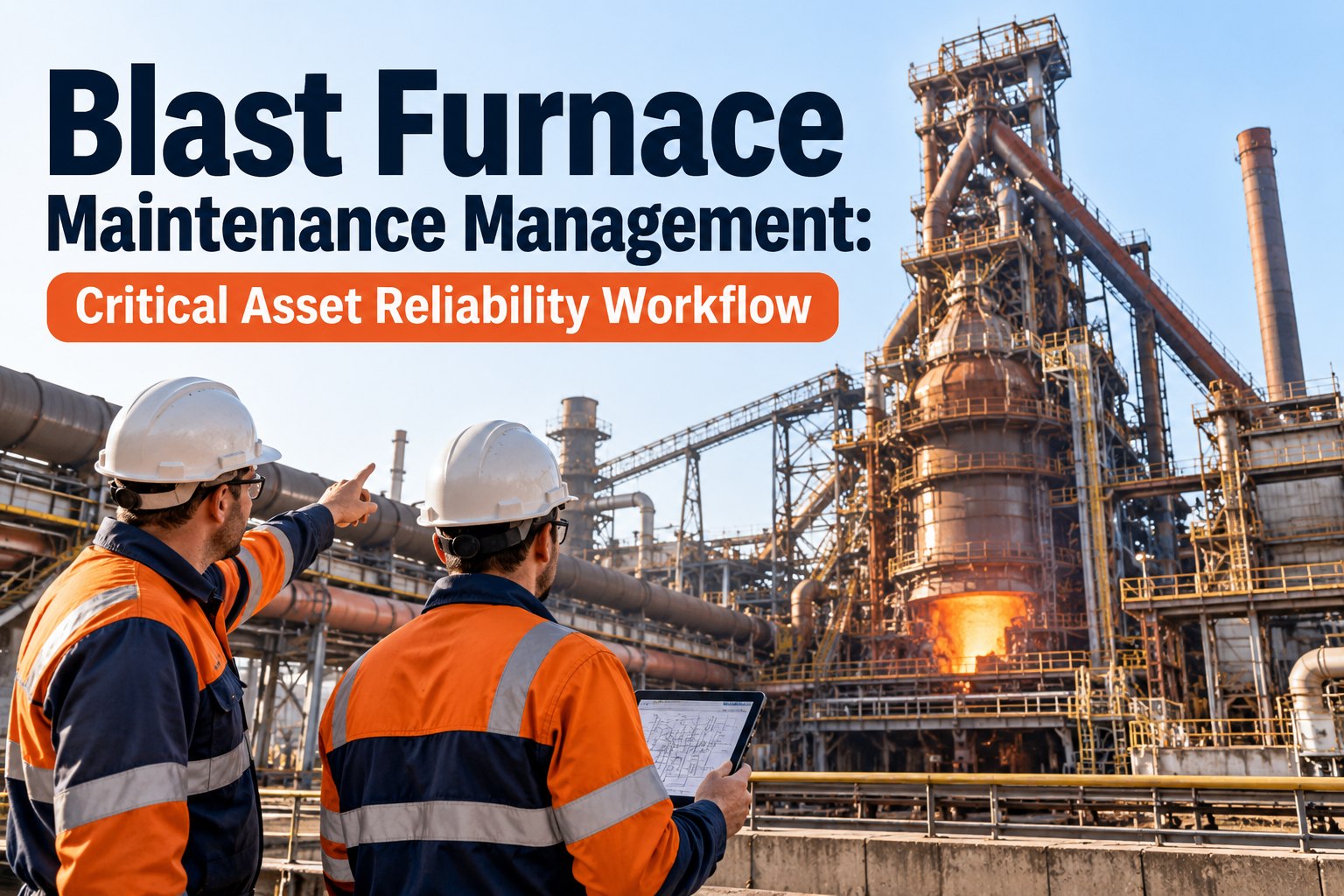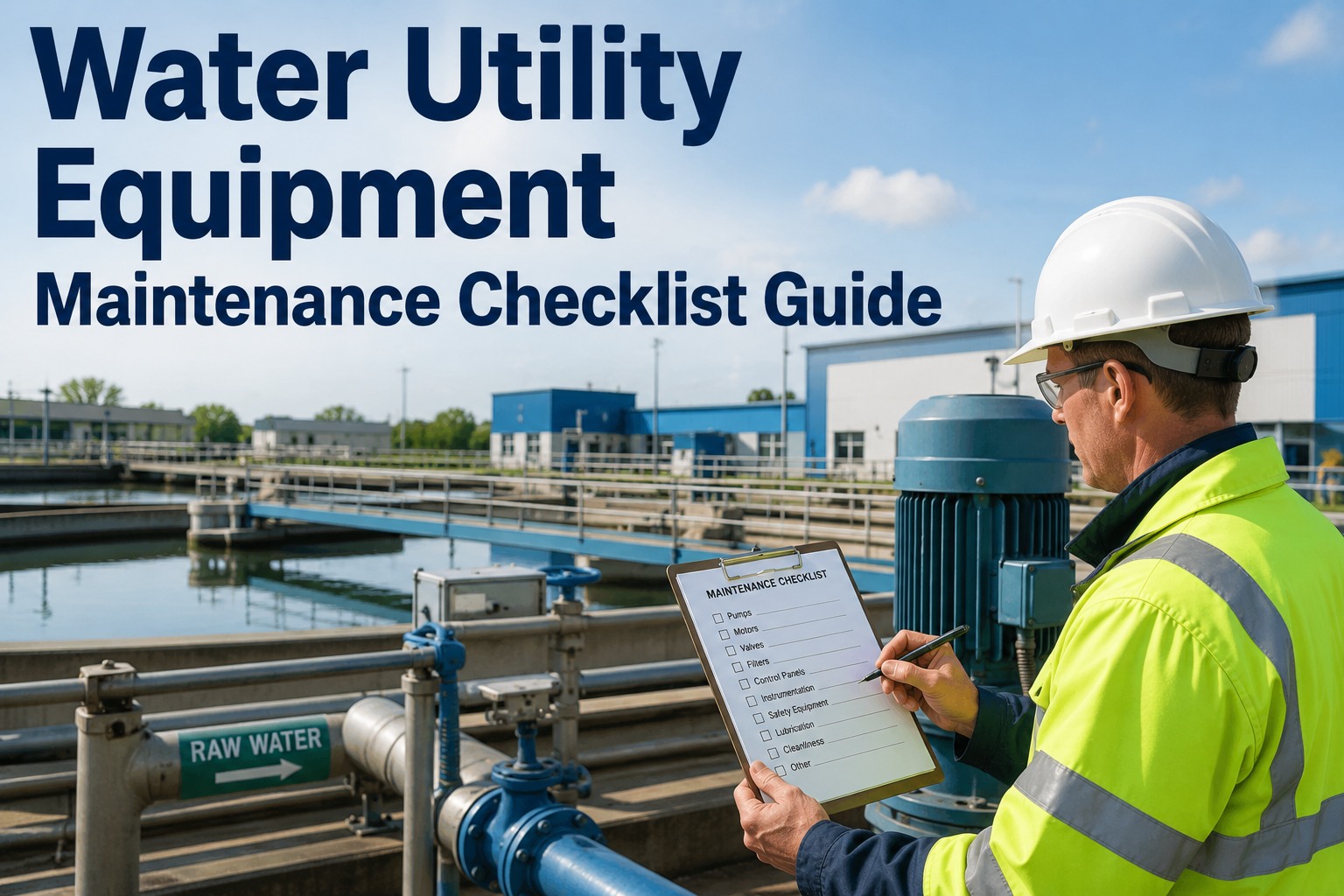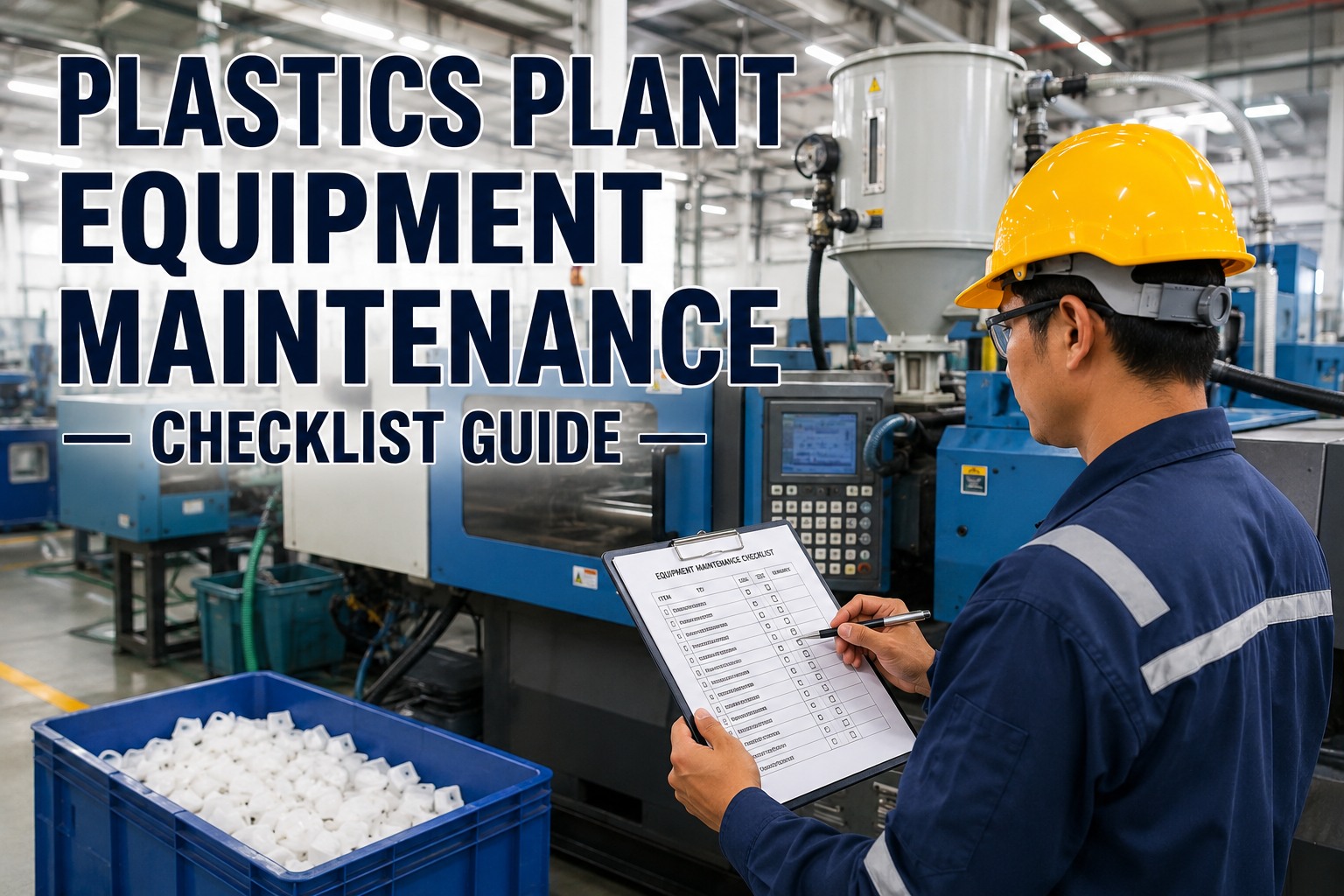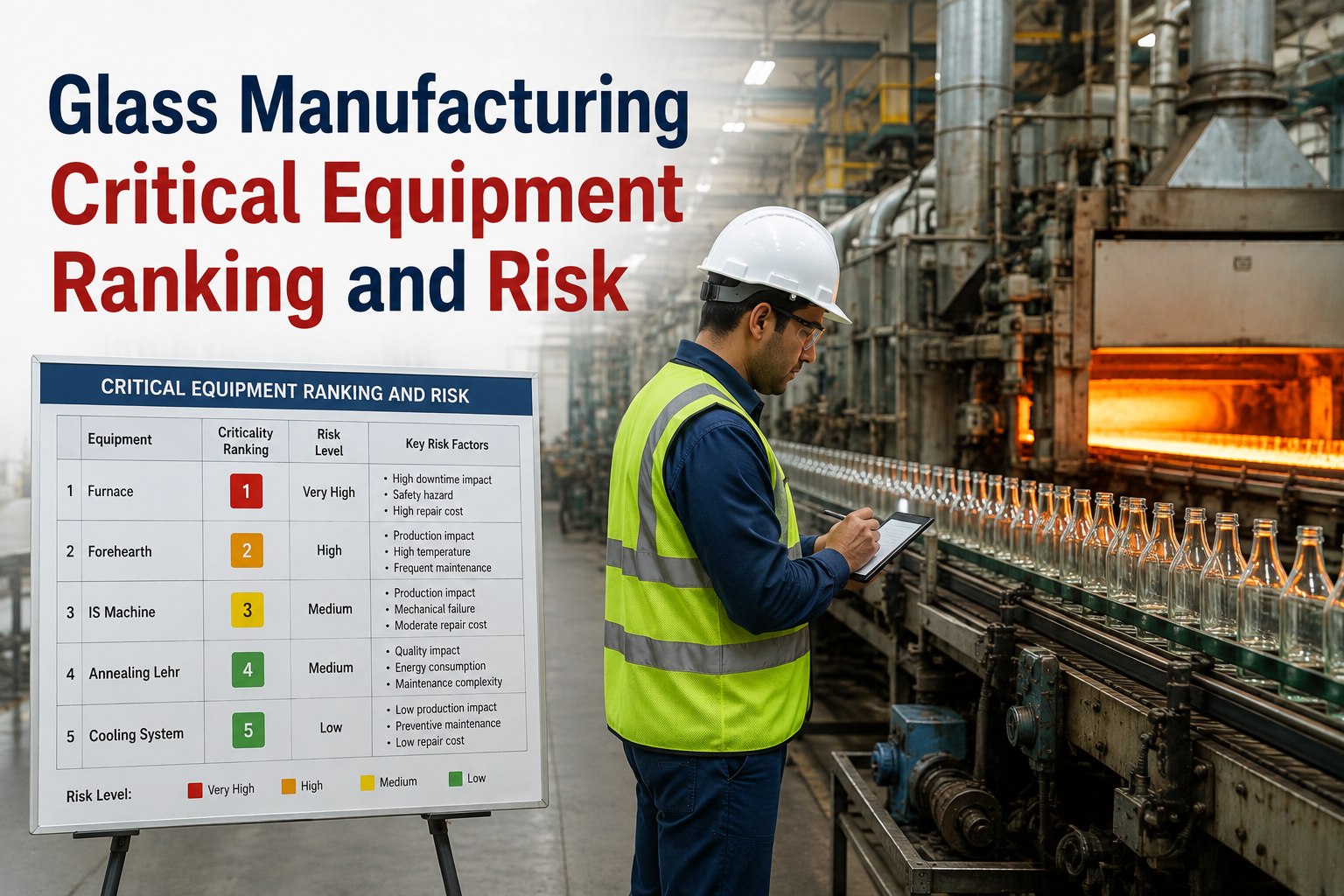
Identifying and ranking critical equipment in chemical processing is the single highest-leverage activity a maintenance and reliability team can perform — it determines where every spare part, labor hour, and PM dollar goes. Not every pump, reactor, or heat exchanger deserves the same attention, and treating them equally is exactly why maintenance budgets overrun while Tier 1 assets still fail unexpectedly. This guide walks you through a defensible consequence-of-failure scoring model across safety, production loss, environmental impact, repair cost, and regulatory risk, so your team can build a chemical processing critical equipment list that holds up under audit. You can put this framework into action immediately by tagging every asset with its tier in OxMaint — start a Start Free Trial today or book a personalized demo to see the full criticality workflow live.
Chemical Processing Criticality Framework
Which assets could shut down your plant, injure your people, or trigger an EPA violation tomorrow?
In a typical chemical processing facility, fewer than 15% of assets drive over 80% of unplanned downtime, safety incidents, and regulatory risk. If you cannot rank them by consequence of failure, you are spending maintenance dollars on the wrong equipment. OxMaint turns criticality ranking into an operational system — not a spreadsheet that lives in one reliability engineer's inbox.
The Cost of Equal Treatment
Why chemical processing critical assets fail under flat maintenance budgets
When every asset in a chemical processing plant receives the same preventive maintenance attention, three things happen simultaneously: Tier 1 equipment is under-maintained and fails during production runs, Tier 3 equipment is over-maintained and wastes labor budget, and your reliability team spends its days firefighting instead of executing RCM. The result is a plant where OEE plateaus at 60–65% when 80%+ is achievable, and where a single catastrophic failure — a reactor agitator seizing, a distillation column feed pump dropping offline, or a cooling tower fan failing during a peak summer batch — can cost $50,000 to $500,000 per day in lost production, plus environmental cleanup and OSHA reportable incident exposure.
Consequence-of-Failure Model
How to score and rank chemical processing equipment by failure consequence
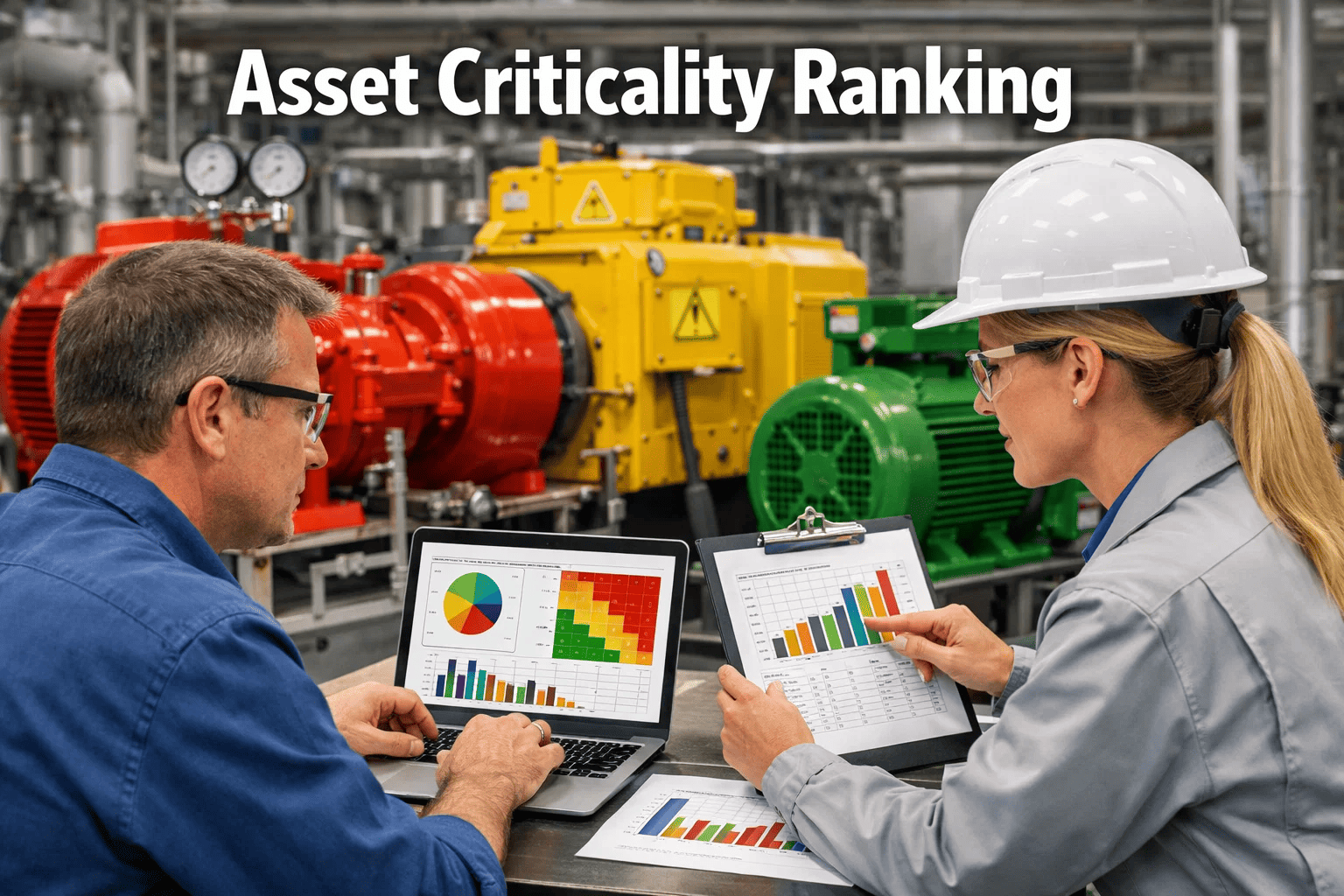
A defensible chemical processing equipment risk ranking uses a weighted consequence-of-failure (CoF) score across five dimensions. Each asset receives a score from 1 (negligible) to 5 (catastrophic) in each category. The total score places the asset into Tier 1 (critical), Tier 2 (essential), or Tier 3 (routine). This model aligns with ISO 55000 asset management principles and gives auditors a data-driven answer to why you maintain each piece of equipment the way you do.
Tier 1 Equipment Reference
Chemical processing critical equipment list: what belongs in Tier 1
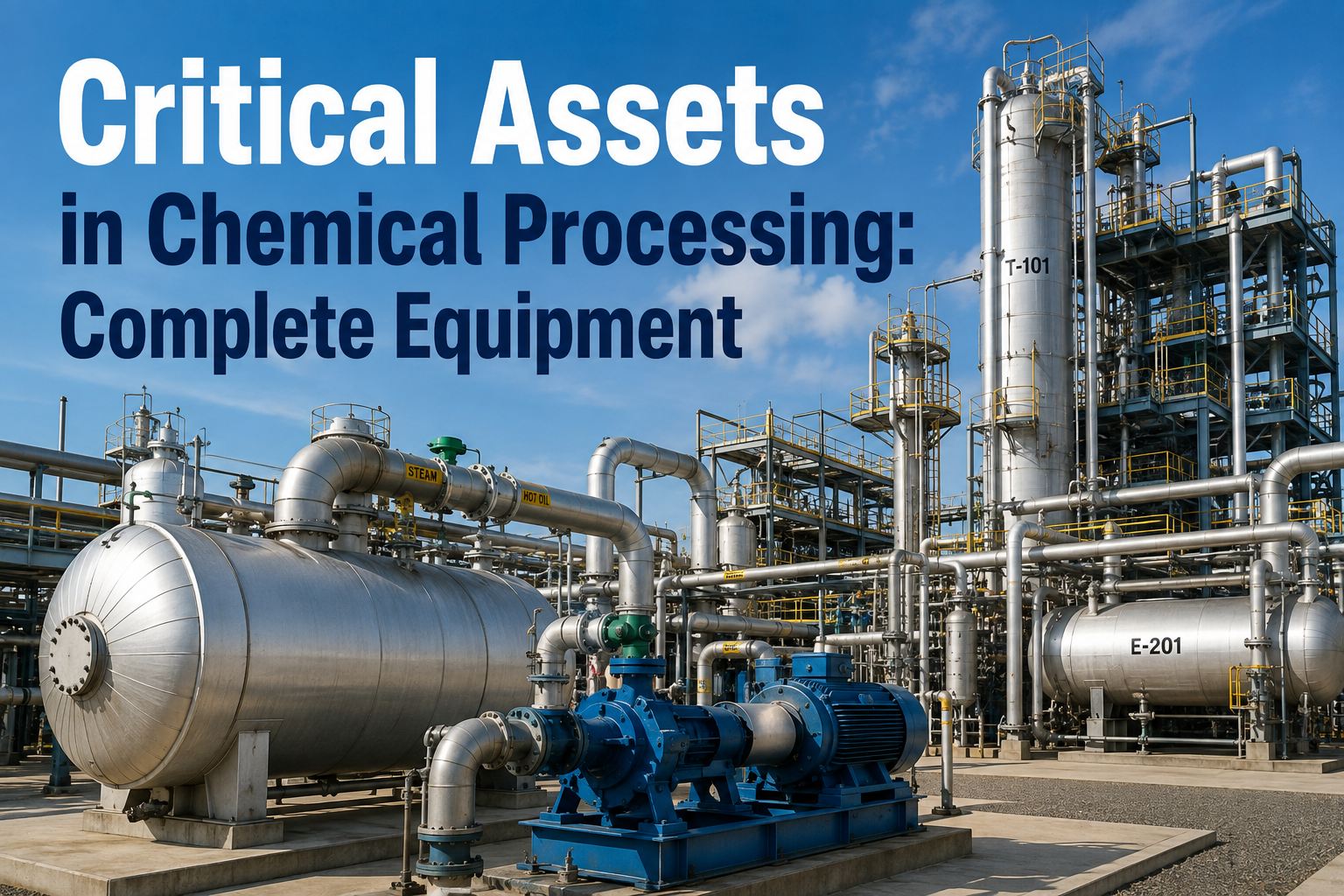
While every plant is different, the following asset categories consistently rank as Tier 1 critical equipment in chemical processing facilities. If any of these appear in your asset register without a documented criticality score and an enforced PM schedule, that is an immediate gap to close. Use this as a starting reference, then apply your own CoF scoring to build a defensible critical asset register for chemical processing operations.
| Asset Category | Typical Examples | Primary Failure Mode | CoF Tier |
|---|---|---|---|
| Reactors & Vessels | Jacketed reactors, pressure vessels, crystallizers | Liner failure, over-pressurization, agitator seizure | Tier 1 |
| Distillation Columns | Separation columns, strippers, absorbers | Feed pump failure, tray fouling, flooding | Tier 1 |
| Heat Exchangers | Shell-and-tube, plate exchangers, reboilers | Tube leak, gasket failure, fouling | Tier 1 |
| Critical Pumps | Centrifugal feed pumps, metering pumps, acid pumps | Seal failure, bearing degradation, cavitation | Tier 1 |
| Compressors & Blowers | Process gas compressors, air blowers, vacuum pumps | Vibration, valve failure, oil system loss | Tier 1 |
| Safety-Critical Instruments | SIS valves, pressure relief devices, gas detectors | Failure to trip on demand, calibration drift | Tier 1 |
| Utilities (Plant-Affecting) | Cooling water pumps, boiler feed water, instrument air | System-wide production stoppage | Tier 1 |
| Storage & Transfer | Large storage tanks, loading/unloading stations | Spill, overfill, containment failure | Tier 1–2 |
Worked Example
A 180-asset chemical plant prioritizes its maintenance spend
Consider a mid-size specialty chemical plant with 180 tracked assets, a $420,000 annual maintenance budget, and an OEE of 63%. After applying consequence-of-failure scoring, the reliability team discovered that 27 assets (15%) were Tier 1 critical, responsible for 82% of unplanned downtime events over the prior 12 months. Their top three findings: the jacketed reactor agitator had no vibration monitoring despite a $90K/day production impact; two distillation feed pumps shared a single spare with no criticality flag; and 40% of PM hours were spent on Tier 3 assets that had never failed.
- Flat PM schedule across all 180 assets
- No criticality tier tags in asset register
- 42% of PM hours spent on Tier 3 equipment
- Reactor agitator: zero condition monitoring
- OEE stuck at 63%, rising unplanned downtime
- Tiered PM strategy: stricter intervals on Tier 1
- Every asset tagged Tier 1–3 in OxMaint CMMS
- PM hours reallocated: 70% to Tier 1 & 2
- Vibration sensor + predictive alerts on agitator
- OEE reached 78% within 9 months
By shifting PM hours from low-risk to high-risk assets and adding predictive monitoring on the reactor agitator, the plant cut unplanned downtime by 34%, avoided an estimated $310,000 in annual production loss, and freed up 12 maintenance hours per week for proactive reliability work. The criticality matrix gave leadership a defensible, audit-ready answer to where every maintenance dollar went and why.
How OxMaint Helps
Turn your criticality matrix into an operational CMMS workflow
A spreadsheet criticality score is only useful if it drives daily maintenance decisions. OxMaint makes chemical processing critical assets operational — every asset carries its tier, risk score, and PM strategy inside the CMMS, so work orders, inspections, and spare parts stocking are all driven by consequence of failure, not guesswork.
Tier-Based Work Order Routing
Tag every asset Tier 1, 2, or 3. OxMaint auto-routes Tier 1 work orders to your most senior technicians, enforces mandatory checklists, and escalates overdue PMs to supervisors automatically.
Enforced Tiered PM Schedules
Set stricter PM intervals and inspection frequencies for Tier 1 equipment. OxMaint enforces compliance and flags any missed PM on a critical asset as a high-priority exception.
Predictive Maintenance Integration
Connect vibration, temperature, and pressure sensor data to OxMaint. AI-driven alerts predict bearing degradation, seal wear, and heat exchanger fouling before failure occurs.
Risk-Concentrated Dashboards
Real-time dashboards show where downtime risk is concentrated across your plant or multi-site network. Filter by tier, asset class, or facility to see exactly where the next failure is likely to occur.
See OxMaint rank your assets by real risk — not gut feel
Book a 30-minute demo and we will walk you through the criticality matrix, tier-based PM routing, and predictive alerts on a live chemical processing asset hierarchy.
FAQ
Critical equipment in chemical processing: frequently asked questions
What is the most critical equipment in a chemical processing plant?
The most critical equipment typically includes reactors and pressure vessels, distillation columns, heat exchangers, process-critical pumps and compressors, and safety instrumented systems (SIS). These assets earn Tier 1 status because their failure poses the highest risk to safety, production continuity, environmental compliance, and repair cost. A formal consequence-of-failure scoring model should be used to confirm which specific assets in your plant qualify as Tier 1 — you can build and track this inside OxMaint or book a demo to see the framework applied live.
How do you rank critical assets in chemical processing?
Rank assets by scoring consequence of failure across five dimensions: safety risk, production loss, environmental impact, repair cost, and regulatory exposure. Weight each dimension by your plant's risk profile, sum the scores, and classify assets into Tier 1 (critical), Tier 2 (essential), or Tier 3 (routine). This approach aligns with ISO 55000 and RCM principles for chemical processing reliability.
What is a criticality matrix and why does a chemical plant need one?
A criticality matrix is a structured scoring tool that ranks every asset by its failure consequence, producing a defensible Tier 1–3 classification. Chemical plants need one because it directs where maintenance budget, labor hours, spare parts, and condition monitoring should be concentrated — and it gives auditors and regulators a data-driven explanation for your maintenance strategy. Without it, PM spend is spread evenly and Tier 1 assets remain under-protected.
How does RCM apply to chemical processing equipment?
Reliability-Centered Maintenance (RCM) in chemical processing uses failure mode and effects analysis (FMEA) to select the right maintenance strategy for each asset — predictive, preventive, run-to-failure, or redesign — based on its criticality and failure patterns. RCM ensures that high-risk assets like reactors and distillation feed pumps receive condition-based monitoring, while low-risk assets are not over-maintained. OxMaint supports RCM by tying each asset's strategy to its tier within the CMMS.
How often should a chemical processing critical equipment list be reviewed?
A critical asset register for chemical processing should be reviewed at least annually, and whenever a significant process change, new equipment installation, or regulatory update occurs. Production throughput changes, new product lines, and PSM management-of-change (MOC) events can all shift an asset's consequence-of-failure score. OxMaint makes this easy by letting you re-score assets in-system and automatically updating PM schedules when a tier changes — Start Free Trial to try it.
Stop guessing where your next failure will come from
Build your chemical processing criticality matrix in OxMaint, enforce tiered PM schedules, and see exactly where your downtime risk is concentrated — starting today.
Free 14-day trial · No credit card required