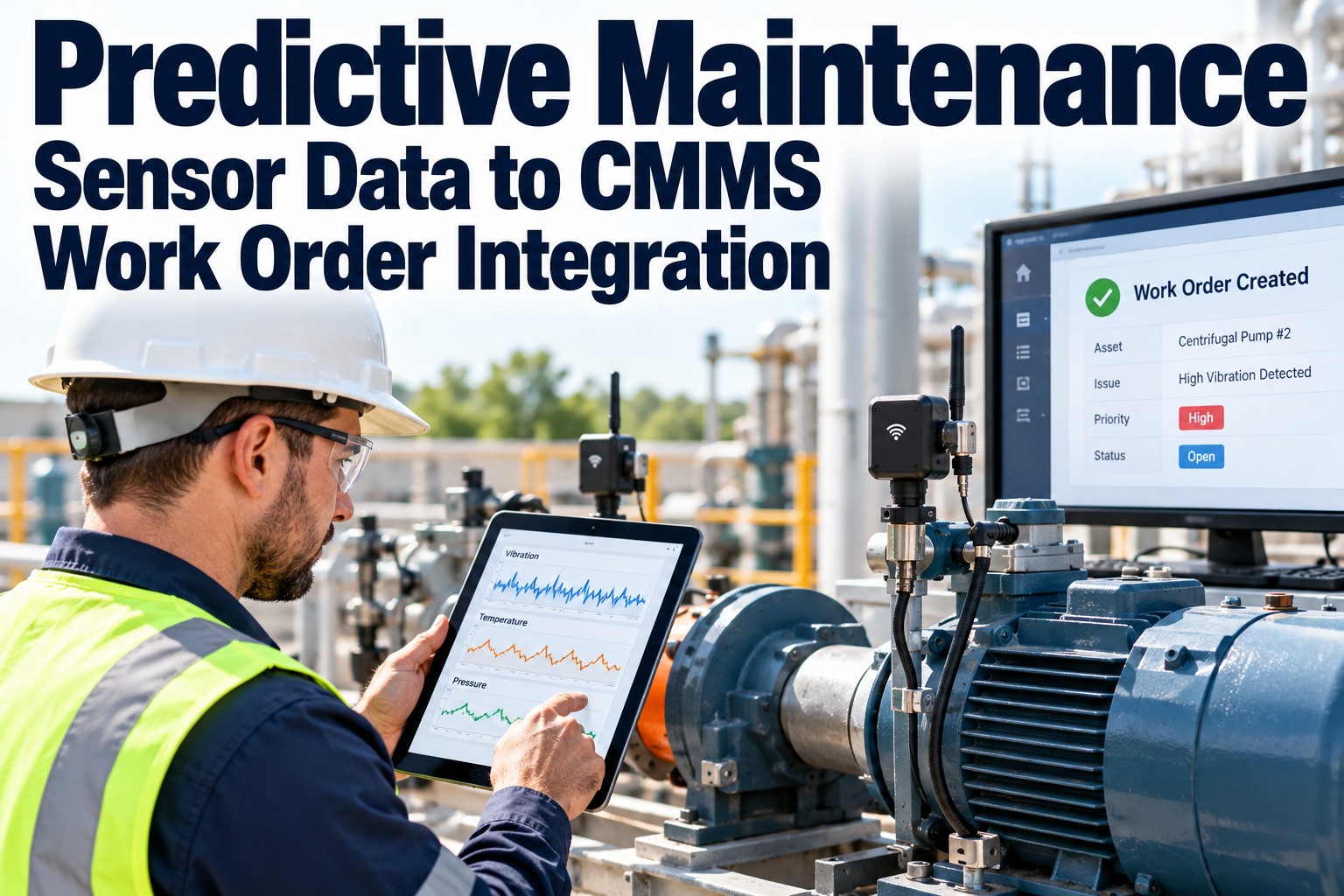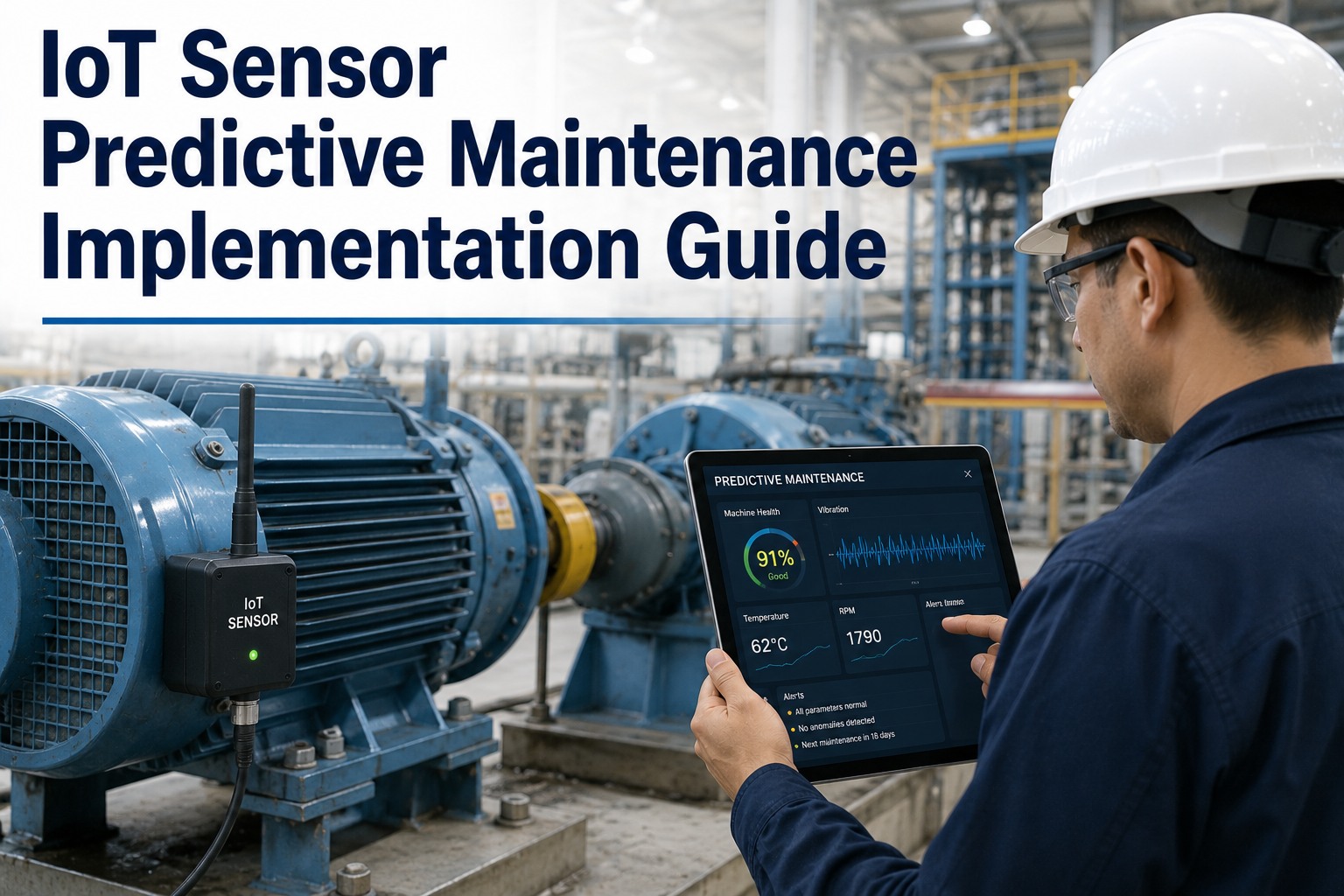
IoT predictive maintenance leverages networked vibration, temperature, pressure and acoustic sensors to monitor asset health in real time, triggering condition-based work orders before catastrophic failure occurs. Industrial teams implementing IoT sensors for maintenance typically reduce unplanned downtime by 30–50% and cut maintenance costs by 10–25% within the first twelve months, provided the sensor data flows directly into a CMMS that can act on it. The challenge is not buying sensors — it is architecting an IIoT maintenance pipeline that turns raw telemetry into automated alerts, prioritized work orders and measurable ROI. OxMaint integrates IoT condition monitoring data with AI-driven work order automation so reliability teams can deploy, scale and prove the value of predictive IoT maintenance without building custom middleware. Ready to connect your assets? Start Free Trial and see the pipeline in action.
IoT Sensor PdM Implementation
Is your IoT sensor pilot stuck in data without decisions?
Most industrial IoT deployments stall because sensor data never reaches the maintenance team's workflow. OxMaint closes that loop — ingesting telemetry, detecting anomalies and auto-generating condition-based work orders so your IIoT investment delivers documented uptime gains, not just dashboards.
Implementation Roadmap
How to deploy IoT sensors for predictive maintenance — a 6-step timeline
A successful IoT maintenance implementation moves from asset criticality analysis to ROI validation in 8–12 weeks. Below is the deployment timeline reliability teams follow to move from pilot to production without stalling.
Asset criticality ranking & sensor selection
Start with an ISO 55000-aligned criticality assessment. Identify the top 10–15% of assets by risk-adjusted downtime cost — typically rotating equipment (pumps, motors, gearboxes, fans, compressors). Select sensor type by failure mode: vibration accelerometers for bearing wear, thermal sensors for overheating, acoustic emission for leak detection, and current/voltage transducers for electrical faults. A 180-asset plant usually instruments 25–40 assets in phase one.
Sensor placement & gateway installation
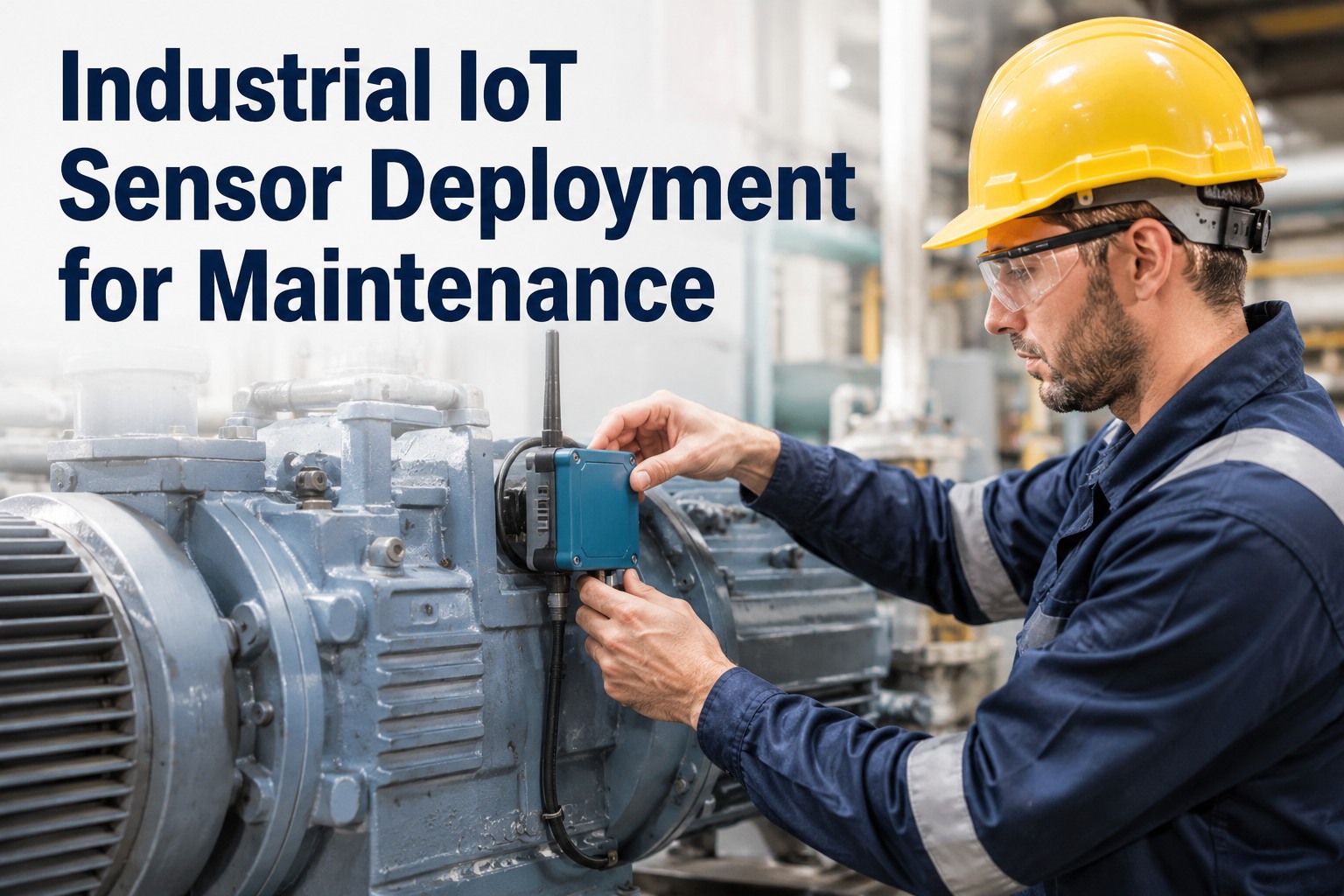
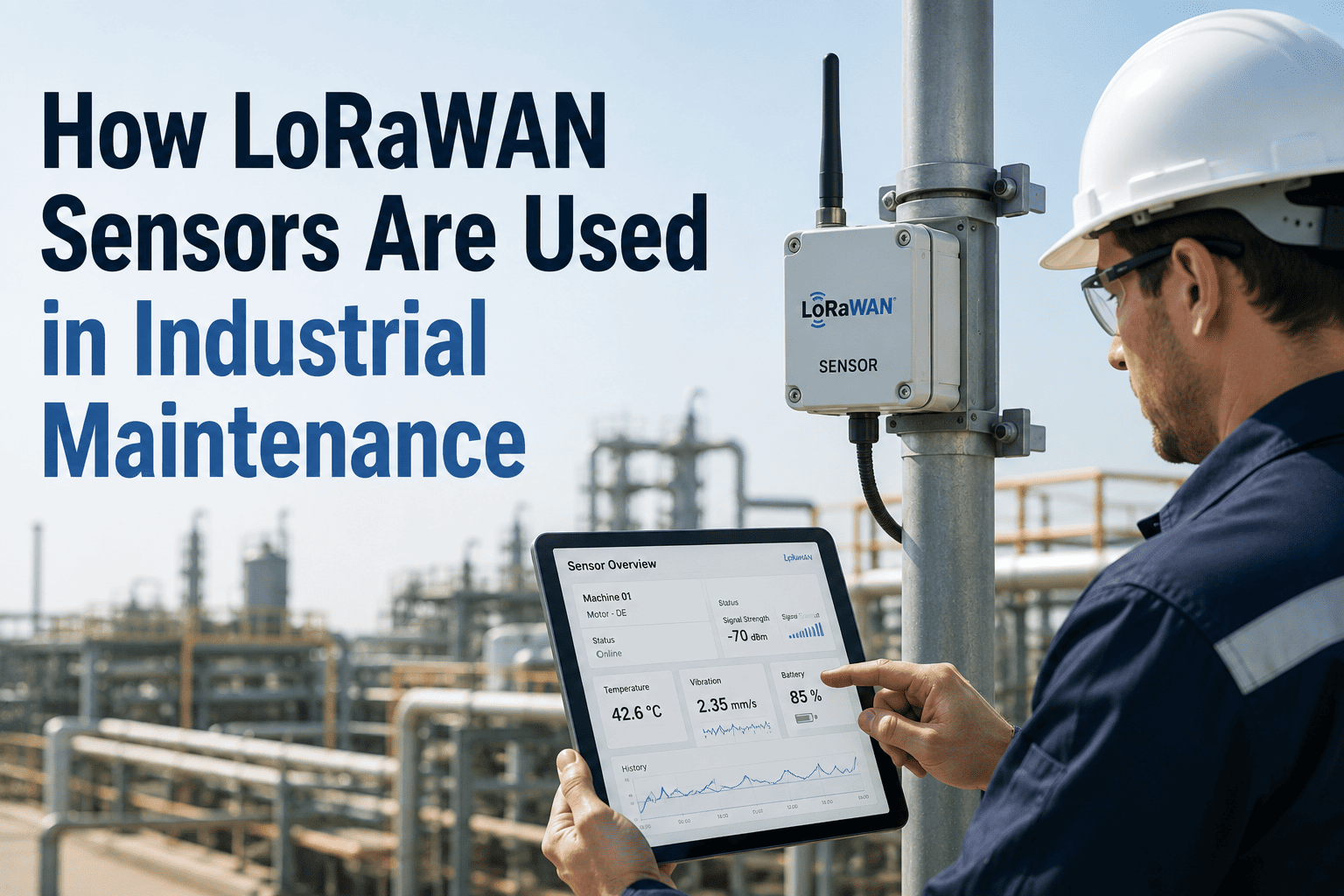
Mount vibration sensors on bearing housings in the load zone; thermal sensors on stator windings or gland packing; acoustic sensors at valve stems and flange joints. Deploy edge gateways within 30 m of sensor clusters for Bluetooth/Zigbee, or use LTE-M/NB-IoT for dispersed assets. Power via long-life battery (5–10 yr) or 4–20 mA loop for continuous monitoring. Typical install time: 15–30 minutes per sensor.
Data integration architecture & CMMS connectivity
Route sensor telemetry through an MQTT broker or REST API into OxMaint's IoT condition monitoring module. Configure asset-to-sensor mappings so each data stream is bound to an equipment record. Set sampling intervals (continuous for critical assets, 15-min for moderate) and define thresholds: warning (yellow), alarm (orange), critical (red). This is where IIoT CMMS integration proves its value — raw data becomes asset context.
Baseline learning & threshold tuning
Allow 2–4 weeks of baseline data collection before enabling automated triggers. OxMaint's AI engine learns normal operating envelopes per asset — RPM bands, load conditions, temperature gradients — and refines anomaly detection. Tune thresholds against historical failure modes using ISO 10816 vibration severity charts and ISO 7919 criteria. False-positive rates should drop below 5% before go-live.
Automated work order triggers go live
Activate condition-based work order generation: when a sensor breaches a critical threshold, OxMaint auto-creates a work order tagged with asset ID, fault type, sensor reading and recommended action — routed to the assigned technician via mobile app. Set SLA timers (e.g., critical = 2 hr response) and escalate overdue alerts. This is where sensor-based maintenance becomes operational, not experimental.
ROI measurement & program scaling
Measure against the baseline: downtime hours avoided, maintenance cost per asset-hour, mean time to repair (MTTR), OEE improvement and spare-parts inventory reduction. A documented 3:1 ROI within 6 months justifies scaling to the next 30–50 assets. OxMaint's analytics dashboards auto-calculate these KPIs so you can present defensible numbers to leadership and expand the program with confidence.
Sensor Selection by Failure Mode
Which IoT sensors match which equipment failure modes?
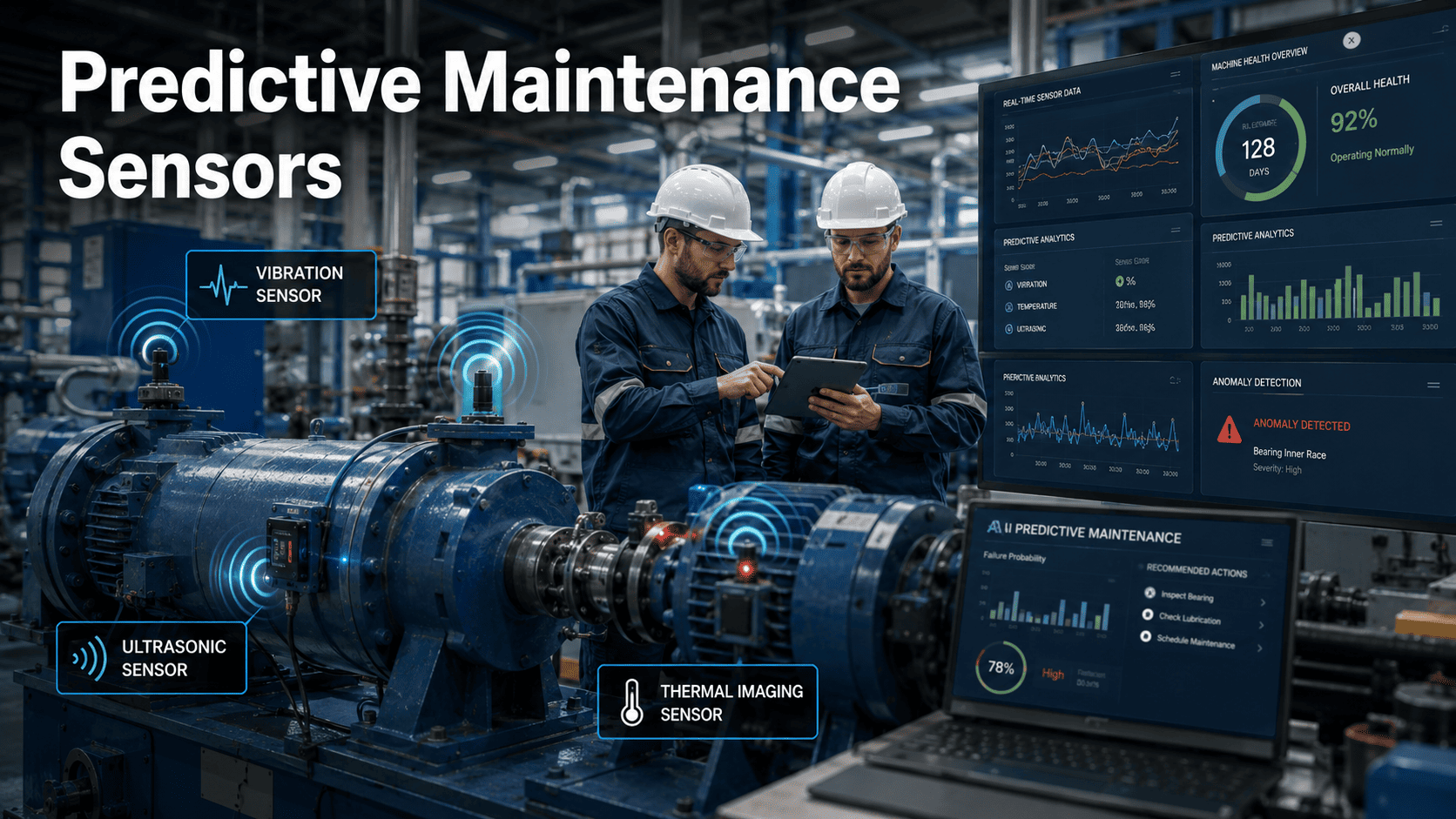
Matching the right sensor technology to the dominant failure mode is the single biggest factor in predictive IoT maintenance accuracy. Use this reference to build your sensor selection matrix.
| Sensor Type | Failure Mode Detected | Best-Fit Assets | Typical Lead Time to Failure | Integration to OxMaint |
|---|---|---|---|---|
| Vibration (accelerometer) | Bearing wear, imbalance, misalignment, resonance | Motors, pumps, fans, gearboxes, compressors | 2–12 weeks | Auto WO on ISO 10816 breach |
| Temperature (RTD/thermocouple) | Overheating, lubrication failure, overload | Motor windings, bearings, transformers, hydraulic lines | 1–4 weeks | Threshold alert + trend chart |
| Acoustic emission | Gas/steam leaks, partial discharge, cavitation | Valves, steam traps, pipes, switchgear | Hours–days | Critical priority WO + escalation |
| Ultrasonic | Friction, arcing, compressed-air leaks | Bearings, electrical panels, pneumatic lines | 1–8 weeks | Inspection task auto-scheduled |
| Current/voltage transducer | Overload, phase imbalance, winding degradation | Motors, switchgear, VFDs | Days–weeks | Electrical fault WO + parts kit |
| Pressure / flow | Blockage, leak, pump degradation, filter fouling | Pumps, filters, heat exchangers, distribution lines | 1–6 weeks | Performance deviation WO |
Worked Example
Real-world IoT predictive maintenance ROI — a 180-asset plant scenario
Consider a mid-sized food processing plant running 180 critical assets, currently spending $42,000/year on reactive repairs and losing 260 production hours to unplanned downtime. Here is how a phased IoT sensor deployment changes the math.
35 vibration + temperature sensors, 3 edge gateways, sensor mounting and 2 weeks of integration engineering with OxMaint CMMS IoT module.
130 unplanned downtime hours eliminated (50% reduction) at $600/hr production loss — detected bearing failures on 2 conveyor motors and 1 mix-tank gearbox before catastrophic failure.
Eliminated 40% of scheduled PMs on monitored assets (condition-based replaced calendar-based) and reduced emergency parts premium by 60% through early-warning parts ordering.
($92K benefit − $28K investment) ÷ $28K = 229% ROI in Year 1. Payback achieved in Month 5. Year 2 ROI exceeds 320% as sensor costs amortize and coverage expands.
The CMMS Foundation
How OxMaint turns IoT sensor data into maintenance action
Sensors without a CMMS are just dashboards. OxMaint is the IIoT CMMS layer that converts telemetry into prioritized, assigned and tracked work — so your sensor investment produces measurable uptime, not just charts.
Automated condition-based work orders
When a sensor breaches threshold, OxMaint auto-generates a work order with asset ID, fault signature, sensor reading, recommended action and parts list — routed to the assigned technician via mobile app within 60 seconds. Eliminates manual alert-to-WO lag that costs teams 4–8 hours per incident.
AI anomaly detection & failure prediction
OxMaint's AI engine learns each asset's operating envelope and detects deviations 2–12 weeks before functional failure — combining sensor data with work history and parts usage for multi-signal prediction. Reduces false positives to under 5% and predicts failure mode with 85%+ accuracy after baseline training.
Asset registry & sensor mapping
Every sensor is bound to an equipment record with full asset hierarchy — parent system, criticality rating, failure history, spare-parts BOM and maintenance procedures. Technicians see the complete asset context inside the work order, not just an alert ID. Supports ISO 14224 failure taxonomy for enterprise reporting.
Live KPI dashboards & audit trail
Real-time dashboards track downtime hours avoided, MTBF improvement, OEE lift, PM-to-CM ratio and cost per asset-hour — automatically calculated from work order data. Full audit trail of sensor readings, alert timestamps and WO completion supports FMCSA, FDA 21 CFR Part 11 and ISO 55000 compliance reviews.
See OxMaint on your assets — book a 30-minute demo
Walk through a live IoT sensor alert triggering a condition-based work order in real time. We'll map the implementation to your top 10 critical assets and show the ROI model for your facility.
Pilot to Enterprise
Why IoT predictive maintenance pilots stall — and how to scale past them
70% of industrial IoT pilot programs never reach production. The bottleneck is never the sensors — it is the missing CMMS workflow layer between data and action. Here is what separates pilots that scale from those that stall.
Data without decisions
- Sensor data lives in a standalone dashboard no one checks daily
- Alerts generate emails — technician must manually create work orders
- No asset hierarchy linking sensor readings to equipment records
- No baseline learning — thresholds set by guess, 30–40% false positives
- No KPI measurement — leadership sees cost but no documented ROI
- Spare parts not pre-staged — early warning wasted on procurement delay
Data driving automated action
- Sensor breaches auto-create work orders in OxMaint within 60 seconds
- Work orders carry asset context, fault type, parts list and procedure
- AI-tuned thresholds per asset — false positives below 5%
- Parts auto-reserved from inventory when alert triggers
- Live dashboards show downtime avoided and ROI to leadership monthly
- Program expands 30→50→100+ assets with proven 3:1 ROI per phase
FAQ
IoT predictive maintenance — frequently asked questions
What is IoT predictive maintenance and how does it differ from preventive maintenance?
IoT predictive maintenance uses networked sensors to monitor asset condition in real time — vibration, temperature, pressure, acoustics — and triggers maintenance work only when an anomaly or degradation trend is detected. Preventive maintenance, by contrast, follows fixed calendar or runtime intervals regardless of actual asset condition. IoT condition monitoring typically reduces unnecessary PMs by 30–40% while catching failures 2–12 weeks earlier than scheduled inspections. OxMaint supports both strategies side by side, letting you transition assets from time-based to condition-based maintenance as sensor data matures.
How much does IoT sensor deployment for maintenance cost?
A typical phase-one deployment of 25–40 sensors on critical rotating equipment costs $18,000–$35,000 including sensors ($150–$800 each depending on type), edge gateways ($800–$2,500), mounting hardware and integration engineering. Wireless battery-powered sensors reduce installation cost by 40–60% versus wired. Most plants achieve payback in 4–8 months through downtime avoidance alone. You can model your specific ROI by booking a demo — we'll build the business case with your asset count and downtime cost.
How does IoT CMMS integration work technically?
Sensors publish data via MQTT, REST API or OPC-UA to an edge gateway, which forwards telemetry to OxMaint's cloud or on-premise instance. OxMaint maps each sensor to an asset record, evaluates readings against learned thresholds and AI models, and auto-generates work orders when breaches occur. No custom code is required — configuration is done through the OxMaint admin interface. Most integrations are live within 1–2 weeks of sensor installation.
Which assets should I instrument first for IoT condition monitoring?
Start with the top 10–15% of assets ranked by risk-adjusted downtime cost — typically high-speed rotating equipment (motors, pumps, fans, compressors, gearboxes) on production-critical lines where a single failure stops output. Assets with a documented history of recurrent failure, long lead-time spare parts, or safety/environmental consequences are also priority candidates. OxMaint's asset criticality matrix helps you rank and prioritize — and you can Start Free Trial to import your asset list and run the analysis immediately.
Can OxMaint integrate with sensors we already have installed?
Yes. OxMaint supports standard industrial protocols including MQTT, REST API, OPC-UA, Modbus TCP and direct integration with most major sensor gateway platforms. If your existing sensors publish data through any of these protocols, OxMaint can ingest it without replacing hardware. During onboarding, our team maps your existing sensor streams to OxMaint asset records and configures threshold-based and AI-based alert rules. Typical integration time for existing sensor infrastructure is 5–10 business days.
Start Your IoT PdM Program
Turn sensor data into uptime — with OxMaint
Connect your IoT sensors to a CMMS that acts on what they detect. Automated work orders, AI failure prediction, live ROI dashboards and the audit trail your compliance team needs — all in one platform.
Free 14-day trial · No credit card