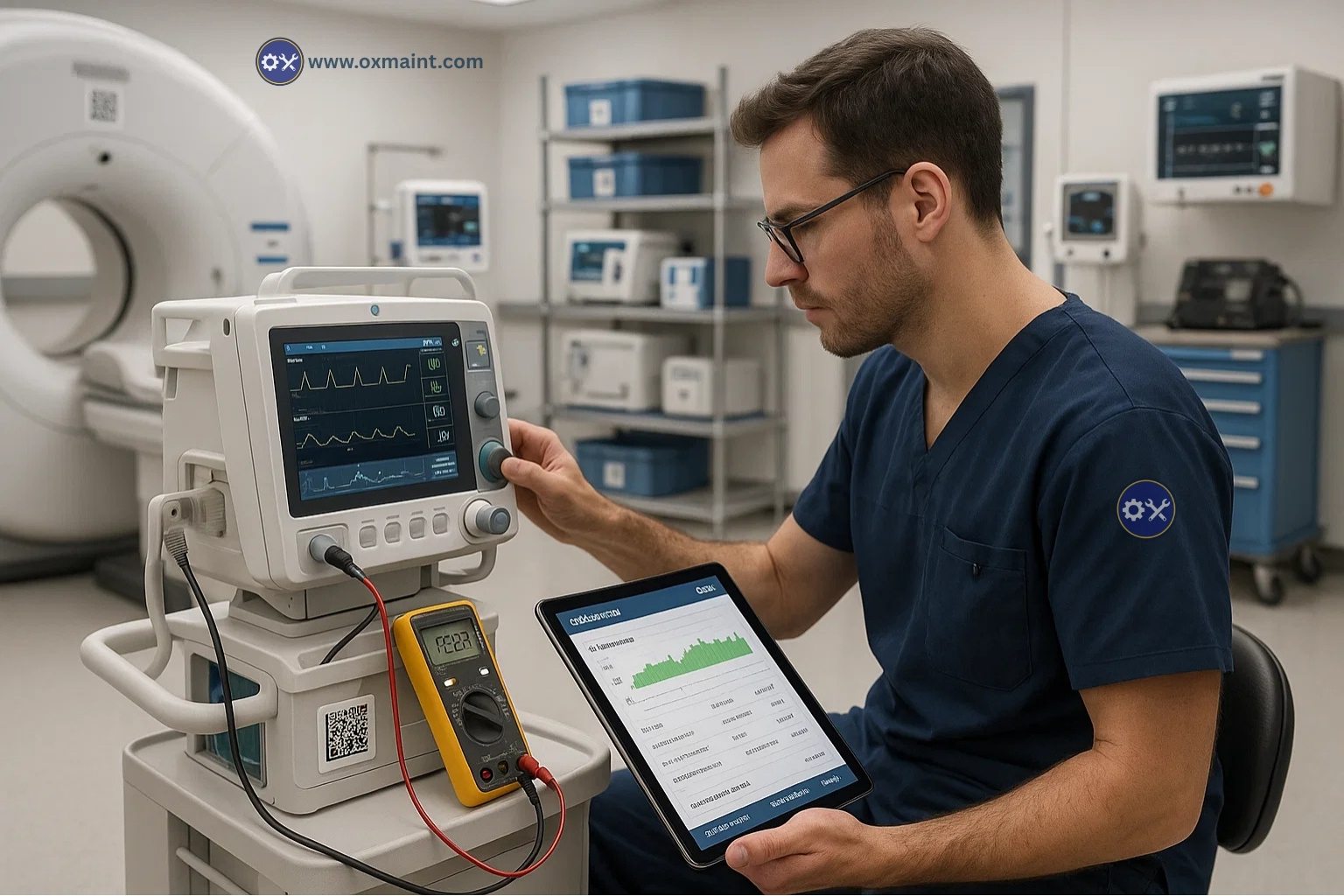
In today's healthcare manufacturing landscape, medical imaging equipment represents one of the most critical and expensive investments. From MRI machines and CT scanners to X-ray systems and ultrasound devices, these sophisticated instruments require meticulous care to maintain their diagnostic accuracy and operational reliability. For US manufacturing professionals overseeing medical device production and maintenance, implementing a robust preventive maintenance program isn't just a regulatory requirement—it's a strategic imperative that directly impacts patient outcomes, operational efficiency, and bottom-line profitability.
The stakes couldn't be higher. Equipment failures can result in costly downtime, compromised patient safety, regulatory violations, and significant financial losses. However, a well-designed preventive maintenance strategy can prevent up to 80% of equipment failures while extending asset lifecycles by 20-30%. This comprehensive guide explores the essential elements of maintaining medical imaging equipment to ensure consistent diagnostic accuracy and optimal performance.
The Critical Role of Preventive Maintenance in Medical Imaging
Medical imaging equipment operates under demanding conditions, often running 12-16 hours daily in clinical environments. Unlike conventional manufacturing equipment, these devices must maintain extraordinary precision—even minor calibration drift can compromise diagnostic accuracy and patient care. Preventive maintenance serves as the foundation for reliable operation, ensuring that complex systems continue to produce high-quality images while meeting stringent FDA regulations and industry standards.
The financial impact of preventive maintenance extends far beyond avoiding emergency repairs. Studies show that reactive maintenance costs 3-5 times more than preventive approaches. For a typical imaging suite valued at $2-5 million, an effective preventive maintenance program can save $200,000-500,000 annually in avoided downtime, extended equipment life, and reduced emergency service calls. Additionally, proper maintenance helps maintain warranty coverage and ensures compliance with Joint Commission standards and FDA requirements.
Key Components Requiring Regular Maintenance
Understanding which components require attention is crucial for developing effective maintenance protocols. Medical imaging equipment comprises numerous interconnected systems, each with specific maintenance requirements and failure modes. Here are the critical areas that demand regular attention:
- X-ray Tubes and Generators: Regular calibration, tube aging monitoring, and generator performance verification to maintain consistent exposure parameters
- Detector Systems: Cleaning protocols, calibration verification, and pixel integrity testing for digital radiography and CT systems
- Magnetic Field Components: Cryogenic system monitoring, magnetic field homogeneity testing, and gradient coil performance verification for MRI systems
- Cooling Systems: Regular coolant level checks, heat exchanger cleaning, and temperature monitoring to prevent overheating
- Software and Computing Systems: Regular updates, database maintenance, and backup verification to ensure system reliability
- Mechanical Components: Patient positioning systems, gantry rotation mechanisms, and table movement systems require regular lubrication and calibration
Each component type requires specific maintenance intervals and procedures. For example, X-ray tubes may need weekly output verification but annual comprehensive testing, while MRI systems require daily cryogenic monitoring but quarterly magnetic field mapping. Understanding these requirements helps optimize maintenance schedules and resource allocation.
Developing an Effective Maintenance Schedule
Creating an optimal maintenance schedule requires balancing manufacturer recommendations, regulatory requirements, and operational demands. The most effective approaches combine time-based, usage-based, and condition-based maintenance strategies to maximize equipment availability while minimizing unnecessary interventions.
Time-based maintenance follows predetermined schedules regardless of equipment condition—ideal for critical safety checks and regulatory compliance. Usage-based maintenance triggers activities based on cumulative operating hours or patient studies completed, which better reflects actual wear and tear. Condition-based maintenance uses real-time monitoring data to predict when intervention is needed, optimizing resource utilization and minimizing unnecessary downtime.
- Daily Tasks: Visual inspections, basic performance checks, cleaning protocols, and log reviews
- Weekly Tasks: Calibration verification, consumable level checks, and basic diagnostic tests
- Monthly Tasks: Comprehensive performance testing, detailed inspections, and preventive part replacements
- Quarterly Tasks: Major calibrations, software updates, and compliance verifications
- Annual Tasks: Complete system overhauls, major component replacements, and comprehensive testing protocols
Cost-Benefit Analysis: Prevention vs. Reactive Repairs
The financial case for preventive maintenance becomes compelling when examining total cost of ownership over equipment lifecycles. While preventive maintenance requires upfront investment in labor, parts, and systems, the long-term savings significantly outweigh these costs through reduced downtime, extended equipment life, and improved operational efficiency.
Emergency repairs typically cost 3-5 times more than planned maintenance due to overtime labor, expedited parts shipping, and productivity losses during downtime. For a CT scanner experiencing unplanned downtime, costs can exceed $2,000 per hour when accounting for lost revenue, rescheduling impacts, and potential patient transfer costs. In contrast, a comprehensive preventive maintenance program for the same equipment might cost $30,000-50,000 annually but can prevent 80% of potential failures.
Beyond immediate cost savings, preventive maintenance extends equipment lifecycles by 20-30%, deferring capital replacement costs that can range from $500,000 to $3 million per imaging system. This lifecycle extension represents substantial value when amortized over the additional operational years gained through proper maintenance.
Best Practices for Documentation and Compliance
Comprehensive documentation serves multiple purposes: regulatory compliance, warranty protection, performance trending, and continuous improvement. The FDA requires detailed maintenance records for medical devices, and Joint Commission standards mandate documented preventive maintenance programs. Poor documentation can result in regulatory violations, voided warranties, and legal liability in case of equipment-related incidents.
Effective documentation systems should capture maintenance activities, performance data, parts usage, and any deviations from normal operating parameters. Modern digital platforms enable real-time data collection, automated compliance reporting, and advanced analytics for predictive maintenance optimization. These systems should integrate with existing hospital information systems and provide role-based access for different stakeholders.
- Maintenance Records: Complete activity logs, parts used, time spent, and technician certifications
- Performance Data: Trending analysis, calibration results, and quality assurance measurements
- Compliance Documentation: Regulatory inspection records, certification renewals, and audit trails
- Incident Reporting: Failure analysis, corrective actions, and prevention strategies
Conclusion: Investing in Maintenance Excellence
Preventive maintenance for medical imaging equipment represents a strategic investment that delivers measurable returns through improved reliability, extended asset lifecycles, and enhanced patient safety. For US manufacturing professionals, implementing comprehensive maintenance programs isn't just about regulatory compliance—it's about operational excellence and competitive advantage.
The most successful organizations treat maintenance as a core competency, investing in advanced technologies, skilled personnel, and robust processes. By adopting best practices in scheduling, documentation, and continuous improvement, manufacturers can achieve maintenance costs below 3% of asset value while maximizing equipment availability and diagnostic accuracy.
Ready to Optimize Your Medical Equipment Maintenance?
Discover how advanced maintenance management solutions can transform your operations. Join thousands of US manufacturing professionals who have revolutionized their maintenance programs with proven strategies and cutting-edge technology.
Getting StartedBook a Demo
Frequently Asked Questions
Q1: How often should medical imaging equipment undergo preventive maintenance?
Maintenance frequency depends on equipment type, usage patterns, and manufacturer recommendations. Generally, daily visual inspections, weekly performance checks, monthly calibrations, and quarterly comprehensive evaluations are standard. High-usage equipment may require more frequent attention, while some components need annual overhauls. The key is following manufacturer guidelines while adapting to your specific operational environment.
Q2: What are the typical costs associated with preventive maintenance programs?
Preventive maintenance typically costs 2-4% of the equipment's initial purchase price annually. For a $2 million MRI system, expect $40,000-80,000 in annual maintenance costs. This includes labor, parts, software updates, and compliance testing. While this may seem significant, it's substantially less than reactive maintenance costs, which can be 3-5 times higher when factoring in emergency repairs and downtime.
Q3: Who should perform maintenance on medical imaging equipment?
Maintenance should be performed by certified technicians with specific training on your equipment models. This can include manufacturer-certified service engineers, hospital biomedical technicians with appropriate certifications, or qualified third-party service providers. The key is ensuring technicians have proper training, certification, and access to manufacturer specifications and genuine parts.
Q4: How does preventive maintenance impact equipment warranties and regulatory compliance?
Proper preventive maintenance is essential for maintaining equipment warranties and regulatory compliance. Most manufacturers require documented maintenance following their specifications to honor warranty claims. Additionally, FDA regulations and Joint Commission standards mandate preventive maintenance programs for medical devices. Failure to maintain proper documentation and procedures can result in regulatory violations and voided warranties.
Q5: What technologies can improve preventive maintenance effectiveness?
Modern maintenance management systems offer computerized maintenance management software (CMMS), predictive analytics, IoT sensors for real-time monitoring, and mobile applications for field technicians. These technologies enable automated scheduling, real-time performance tracking, predictive failure analysis, and comprehensive reporting. Advanced systems can reduce maintenance costs by 20-30% while improving equipment reliability and compliance.