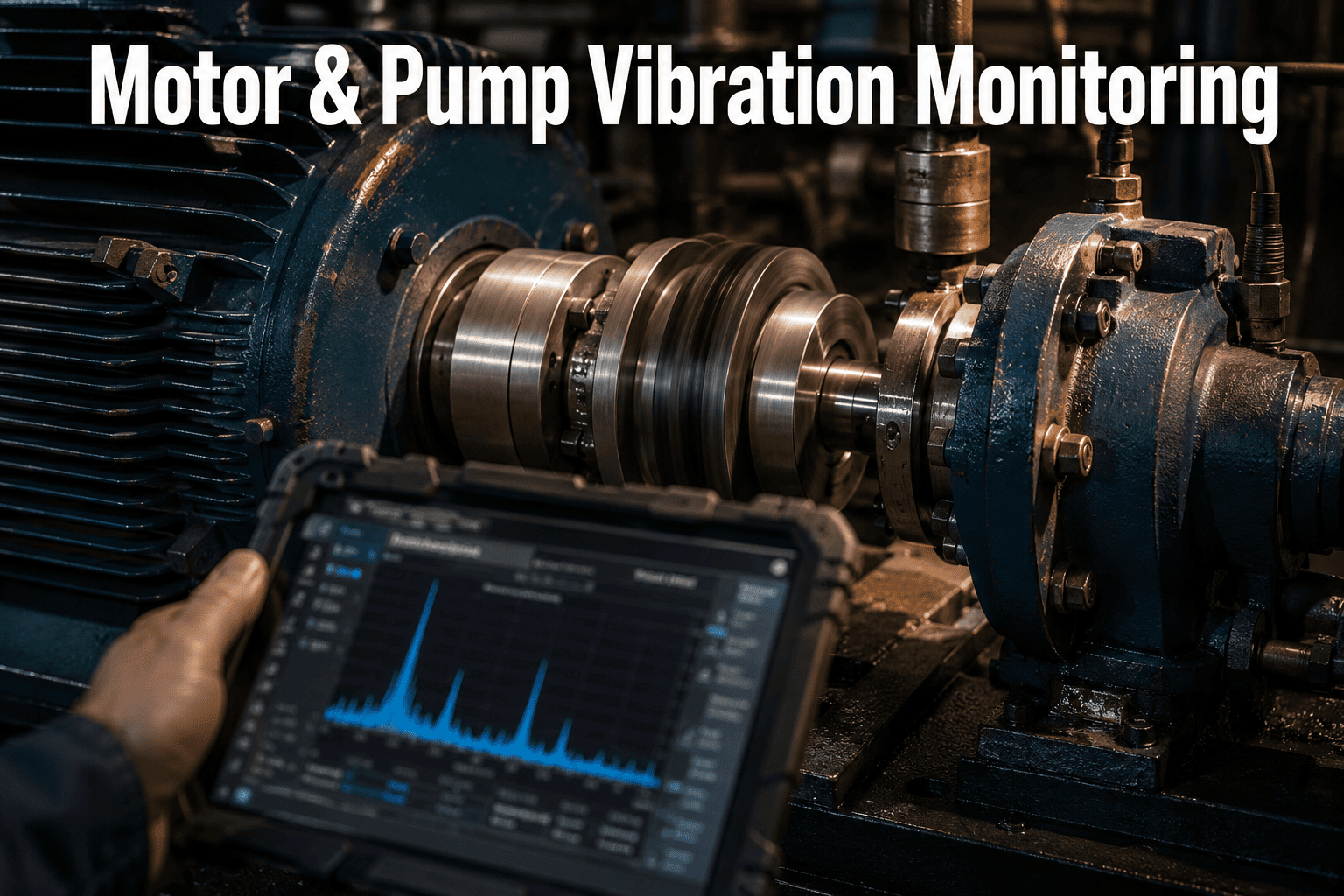
A bearing on a critical pump rarely fails without warning — the vibration signal changes first. The challenge is not collecting readings; it is knowing what a reading means, who acts on it, and whether the repair gets scheduled before the bearing gives out. This guide walks through the stages of bearing failure, the most common detection challenges on motor-pump trains, and how OXMAINT AI, the AI-powered CMMS, turns condition readings into inspections, work orders and maintenance plans.
Predictive Maintenance · Vibration Monitoring · Bearing Failure Detection
Catch Bearing Problems on Motors and Pumps While the Repair Can Still Be Planned
Vibration data on a spreadsheet or in a separate tool is easy to miss, and a rising trend with no work order behind it changes nothing. OXMAINT AI, the AI-powered CMMS, links readings, defects and repairs in one platform, per asset.
1Reading or inspectionRoute readings and operator checks
→
2Issue or defectRising trend logged on the pump or motor
→
3Work orderLubrication, alignment or bearing change
→
4PM & predictive planFindings tune future routes and intervals
The result: every vibration finding has an owner, a work order and a history.
Where to Measure: The Motor-Pump Train
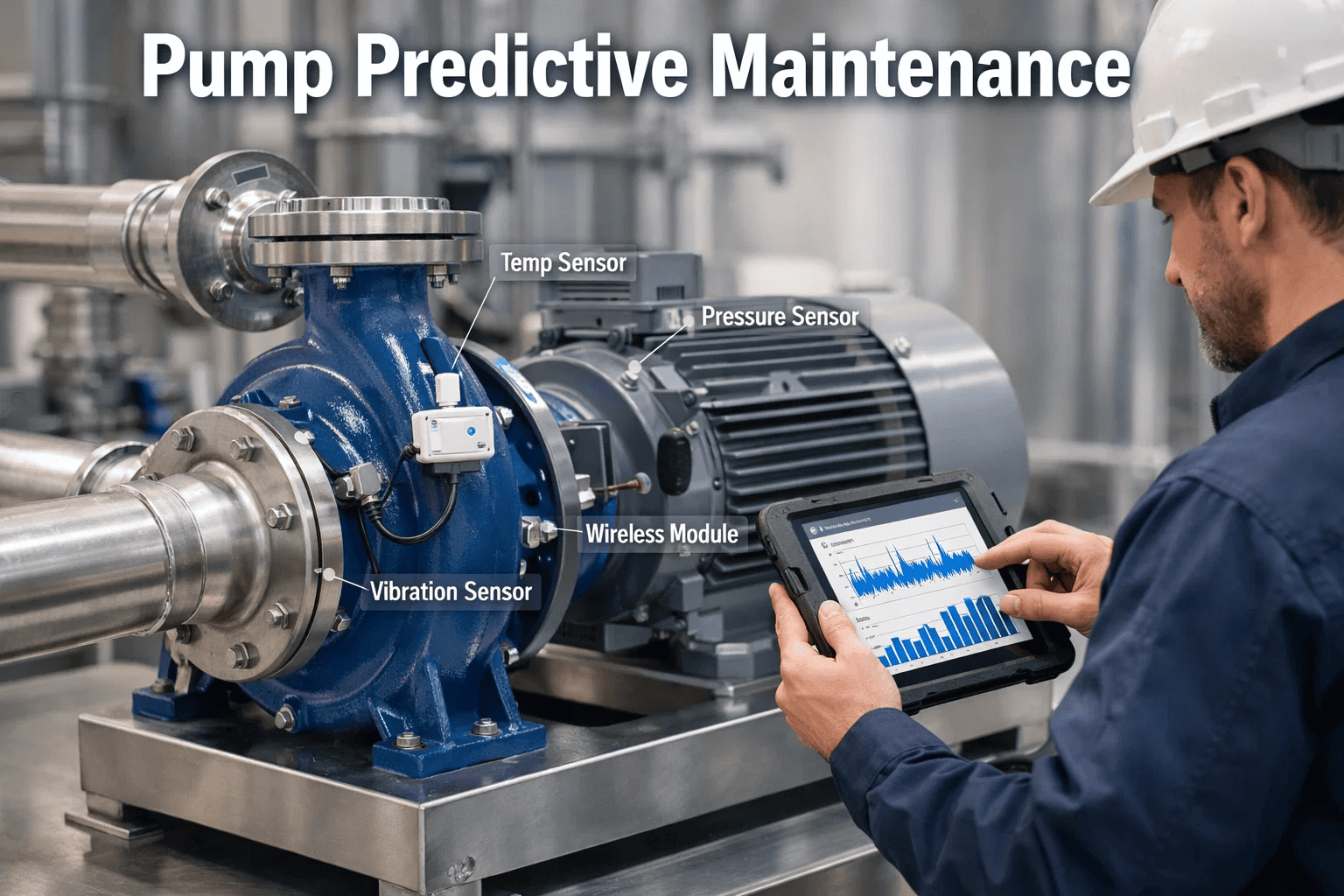
Bearing faults show up at the bearing, so consistent measurement points matter more than fancy tools. A standard train has four. Book a demo to see these points set up as routes in OXMAINT AI.
1Motor non-drive end
MOTOR
2Motor drive end
COUPLING
3Pump drive end
PUMP
4Pump non-drive end
Standard guidance for industrial machines above 15 kW and 120–30,000 rpm is ISO 20816-3, which replaced ISO 10816-3. Smaller machines: use manufacturer limits plus your own baseline trend.
The 4 Stages of Bearing Failure
Rolling element bearings typically move through four stages, and the response should match the stage. The warning window from first detectable defect to failure ranges from days to many months, depending on speed, load and lubrication.
Stage 1
Earliest defect
Visible only in high-frequency or ultrasonic data.
Trend it
Stage 2
Resonance excited
Bearing natural frequencies begin to rise.
Check lubrication, plan
Stage 3
Defect frequencies
Defect peaks and harmonics appear in the spectrum.
Schedule replacement
Stage 4
End of life
Severe damage, noise and heat. Bearings should not reach here.
Act now
5 Detection Challenges and How to Solve Them
CHALLENGENo trusted baselineAlarms set from generic limits fire too early or too late.
FIXMeasure after verifying lubrication, alignment and mounting; save that as the asset's baseline.
CHALLENGEInconsistent measurementDifferent points, loads or people make trends unreliable.
FIXStandard routes with fixed points, in the same order, at comparable operating conditions.
CHALLENGELubrication blind spotsUnder-lubrication, over-greasing and contamination are widely cited bearing killers.
FIXSchedule lubrication PMs and log what was applied, so a vibration rise can be cross-checked.
CHALLENGEAlerts without actionA flagged reading sits in an inbox.
FIXConvert the finding into a work order with an owner and due date.
CHALLENGEHistory scatteredRepairs, readings and parts live in different places.
FIXKeep readings, defects, work orders and parts in one asset record.
A Reading Only Matters If Something Happens Next.
Connect the vibration finding to the repair, and the next reading shows whether it worked.
Baseline Checklist Before You Set Alarms
✓Confirm lubrication type and quantity
✓Check coupling alignment
✓Verify sensor or mount is secure
✓Record at stable speed and load
✓Save all four points as the baseline
✓Set alert thresholds from the trend
Frequently Asked Questions
What is the best way to detect bearing failure early?
How long between the first warning and failure?
It varies from days to many months, depending on speed, load and lubrication, so match your response to the severity stage and criticality.
Does a CMMS replace a vibration analyzer?
No. Analyzers and sensors capture and diagnose the data; the CMMS manages routes, work orders, parts and history around it.
Start free in OXMAINT AI.
Which machines should be monitored first?
Start with critical pumps and motors where an unplanned stop affects safety, production or has long repair lead times.
Turn Vibration Readings Into Planned Repairs.
Manage inspections, defects, work orders and preventive plans for every motor and pump in the OXMAINT AI maintenance management software.