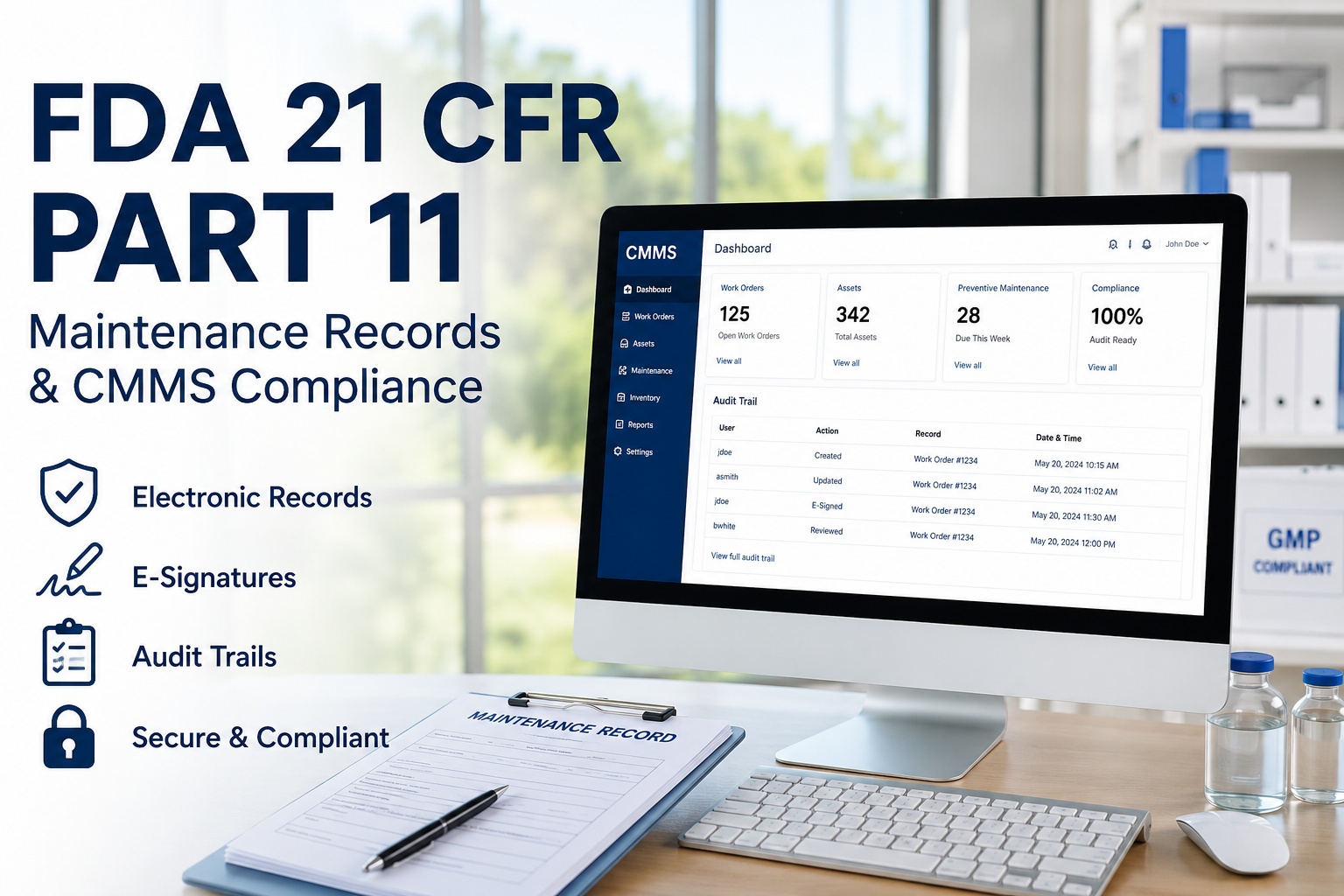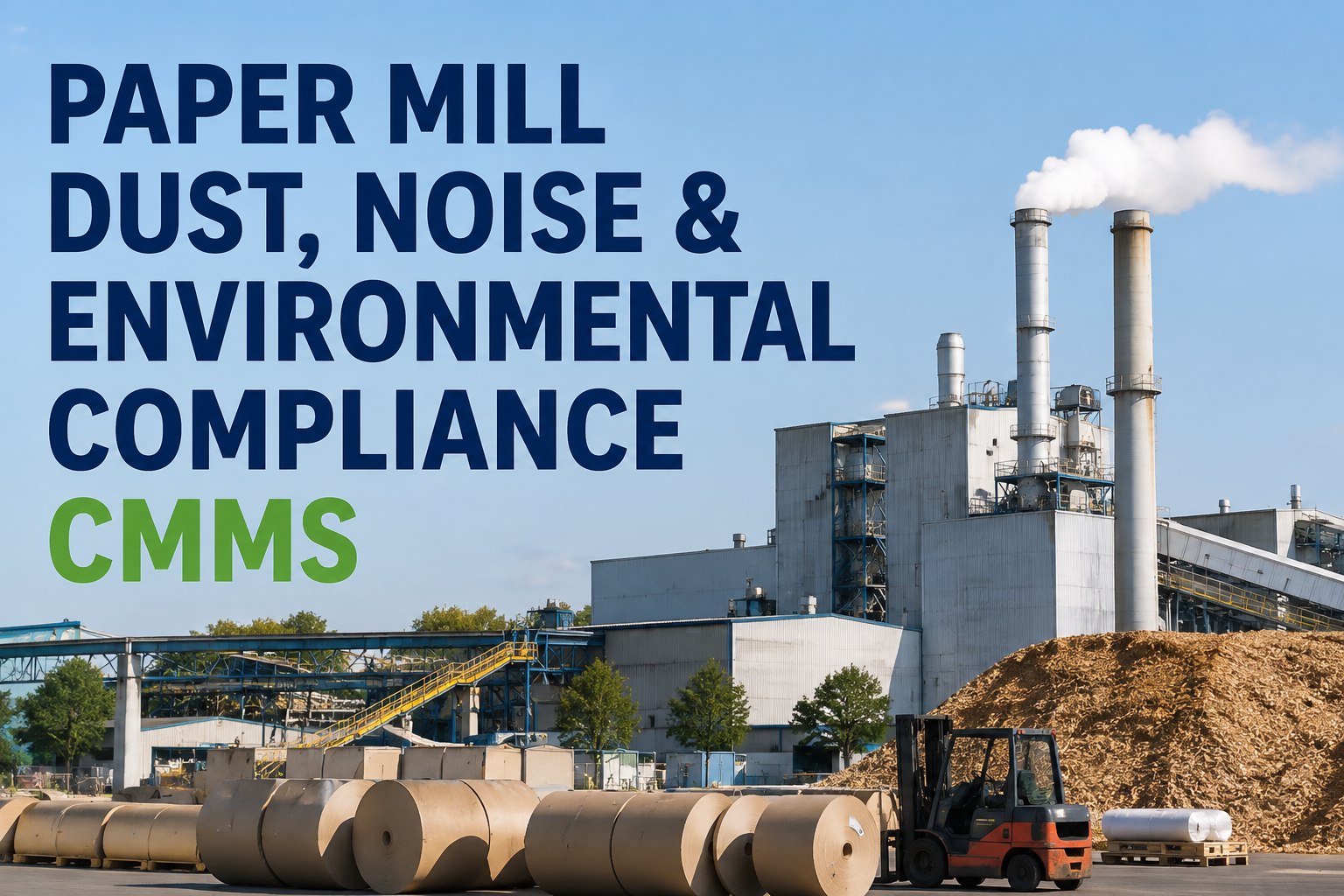
Paper mill environmental compliance hinges on one factor that plant managers underestimate: maintenance discipline. When the EPA, state environmental agencies, or third-party auditors arrive at a pulp and paper facility, they do not ask to see your sustainability mission statement — they ask for discharge monitoring reports, dust suppression PM logs, effluent treatment plant (ETP) maintenance records, and continuous emissions monitoring system (CEMS) calibration certificates. OxMaint is an AI-powered CMMS and EAM platform built to keep pulp and paper mills audit-ready by digitizing work orders, automating preventive maintenance for environmental control equipment, and centralizing every compliance document in one searchable system. If your team is still tracking environmental maintenance on spreadsheets or paper logs, Start Free Trial to see how OxMaint transforms scattered reactive maintenance into a defensible, audit-ready compliance program.
Your next EPA permit audit is won or lost in your maintenance records — not your emissions data.
Paper mills face a relentless compliance burden spanning the Clean Air Act, Clean Water Act, and state-level NPDES discharge permits. OxMaint automates the preventive maintenance schedules, work-order documentation, and asset-tracking rigor that inspectors expect — so every dust collector, effluent pump, and CEMS analyzer has a defensible maintenance history.
applicable to pulp & paper
discharge violation penalty
deferred ETP maintenance
Why maintenance discipline is the backbone of paper mill environmental compliance
Paper mill environmental compliance spans the EPA, state environmental agencies, and continuous emissions monitoring requirements — and maintenance discipline is where compliance either holds or breaks. A single failed baghouse, a bypassed scrubber, or an uncalibrated CEMS analyzer can trigger a Notice of Violation (NOV) costing $10,000 to $100,000+ per day under the Clean Air Act and Clean Water Act.
A 2023 industry analysis found that over 60% of paper mill environmental violations traced back to equipment failure — not process design flaws. The scrubber that was PM-deferred for three months, the dust collector with 40 overdue filter changes, the ETP aeration blower running past its bearing-service interval: these are the root causes of noncompliance. OxMaint maintenance management software helps pulp and paper mills stay environmentally compliant by ensuring every environmental control asset has a rigorous, documented, and automated preventive maintenance schedule.
Paper mill dust suppression and emission control: PM checklist that keeps inspectors satisfied
Particulate matter (PM) from paper machine dryers, recovery boilers, and pulp handling areas is regulated under 40 CFR Part 63 Subpart S (National Emission Standards for Hazardous Air Pollutants for Pulp and Paper Industry). Effective paper mill dust suppression requires disciplined preventive maintenance on baghouses, cyclones, electrostatic precipitators (ESPs), and wet scrubbers.
Baghouses & Fabric Filters
- Pressure-drop monitoring & pulse-jet valve function — weekly
- Filter bag inspection & replacement — based on delta-P trend
- Clean-air-plenum leak test — quarterly per NESHAP Subpart S
- Hopper dust-level sensor calibration — monthly
Wet Scrubbers
- Scrubber liquor flow rate & pH verification — daily log
- Mist eliminator wash-down & blade inspection — bi-weekly
- Packing / tray fouling assessment — quarterly
- Recirculation pump seal & impeller wear check — monthly
Electrostatic Precipitators (ESP)
- Transformer-rectifier T/R set output & spark rate — continuous
- Rapper / collecting-plate cleaning cycle audit — monthly
- Hopper ash-removal system & rotary valve PM — weekly
- Internal electrode alignment inspection — annual outage
A 1,200-ton/day recycled linerboard mill in the Southeast US was issued a $187,000 NOV after a recovery-boiler ESP failed during an EPA compliance inspection. Root cause: the rapper cleaning cycle had been deferred for 11 months because the PM work order existed only in a spreadsheet that two maintenance planners had separately edited. After implementing OxMaint, the mill automated ESP rapper PM on condition-based triggers, cut dust-emission excursions by 92% in six months, and passed the follow-up audit with zero findings. The payback period on the OxMaint deployment was under four months.
Paper mill effluent treatment plant (ETP) maintenance: preventing discharge permit violations
Pulp and paper mills generate 30,000 to 50,000 gallons of wastewater per ton of product, regulated under NPDES permits that specify daily maximum and monthly average limits for BOD, TSS, AOX, and temperature. Paper mill effluent treatment reliability is entirely dependent on preventive maintenance of primary clarifiers, aeration basins, secondary clarifiers, and DAF (dissolved air flotation) units.
DAF unit & primary clarifier inspection
Scum-skimmer chain tension, flight wear, and drive-unit oil-level checks. OxMaint auto-generates work orders 72 hours before due date with attached OEM spec sheets and EPA documentation requirements.
Aeration blower & diffuser PM
Dissolved oxygen (DO) is the single most critical parameter for biological effluent treatment. Blower bearing vibration analysis, inlet filter replacement, and membrane diffuser fouling inspection prevent the DO crashes that trigger BOD excursions.
Effluent flow meter & CEMS calibration
NPDES permits require certified flow measurement. Quarterly calibration of magnetic flow meters, ultrasonic level sensors, and online water-quality analyzers ensures DMR (Discharge Monitoring Report) data integrity and avoids data-quality violations.
Sludge dewatering & chemical dosing system overhaul
Centrifuge / belt-press bearing replacement, polymer dosing pump rebuild, and chemical storage tank integrity testing. OxMaint tracks spare-parts inventory for these long-lead-time items and triggers pre-staging work orders 90 days before the outage.
How OxMaint CMMS turns environmental maintenance into a defensible compliance program
OxMaint is an AI-powered CMMS and EAM platform that maps directly to the environmental compliance challenges pulp and paper mills face — from dust suppression PM to ETP maintenance to EPA and state agency audit-readiness. Here is how four concrete capabilities translate into measurable compliance and cost outcomes.
Automated PM Scheduling for Environmental Assets
OxMaint auto-generates preventive maintenance work orders for baghouses, scrubbers, ESPs, ETP pumps, and CEMS analyzers based on runtime hours, calendar intervals, or condition triggers (vibration, delta-P, temperature). No spreadsheet can miss a deadline — every PM has an audit-trail timestamp.
Compliance-Ready Work Order Documentation
Every work order in OxMaint captures technician name, date/time, parts consumed, meter readings, before/after photos, and digital sign-off. When an EPA or state inspector requests maintenance records for a specific environmental asset, you export a complete, defensible history in under 60 seconds.
AI-Driven Predictive Maintenance
OxMaint's AI engine analyzes vibration, temperature, and pressure trends from IIoT sensors on critical environmental assets — ETP blowers, scrubber recirculation pumps, ESP transformer-rectifiers — and predicts failures 14 to 30 days before they cause a compliance event. The system auto-creates corrective work orders with recommended actions.
Spare-Parts Inventory for Environmental Equipment
OxMaint tracks critical spares — filter bags, blower bearings, CEMS calibration gas cylinders, scrubber pump seals — with min/max reorder triggers and lead-time awareness. When a PM work order is generated, OxMaint automatically reserves the required parts and flags shortages before they become compliance risks.
Paper mill noise monitoring maintenance: OSHA and community compliance ROI
OSHA 29 CFR 1910.95 mandates hearing conservation programs at 85 dBA TWA, and paper mill noise levels routinely exceed 95 dBA around refiners, stock preparation, and paper machine drive sections. Paper mill noise maintenance is not just an OSHA issue — community noise ordinances can shut down nighttime operations, and noise control equipment (enclosures, silencers, absorptive lagging) requires scheduled PM just like process equipment.
Example: A 180-asset paper mill spending $42K/yr on OxMaint avoids an estimated $180K in annualized penalty exposure (based on industry-average violation probability of 0.18 × $1M avg major-facility settlement). Net ROI: $138K/yr — a 3.3x return before counting downtime avoidance.
| Compliance Area | Reactive Maintenance Cost | OxMaint-Managed Cost | Annual Savings |
|---|---|---|---|
| Dust suppression (baghouse/ESP PM) | $78K (penalties + emergency repairs) | $22K (scheduled PM + parts) | $56K |
| ETP / effluent treatment maintenance | $120K (BOD excursion fines + unplanned downtime) | $34K (predictive + preventive PM) | $86K |
| CEMS calibration & certification | $45K (data-quality violations + recalibration) | $12K (automated calibration scheduling) | $33K |
| Noise control equipment PM | $28K (OSHA citations + community complaints) | $8K (scheduled enclosure & silencer PM) | $20K |
| Total Annual Compliance Savings | $271K | $76K | $195K |
See OxMaint on your environmental assets — book a 30-minute demo
Walk through a live environmental compliance CMMS setup: dust collector PM schedules, ETP work-order documentation, CEMS calibration tracking, and one-click audit export. See exactly how OxMaint maps to your mill's NPDES permit, NESHAP Subpart S requirements, and OSHA noise compliance obligations.
Paper mill environmental compliance CMMS: what maintenance and reliability teams ask
How does a CMMS help with paper mill EPA compliance and audit-readiness?
A CMMS like OxMaint centralizes every environmental asset's maintenance history — work orders, PM completion timestamps, parts consumed, calibration certificates, and technician sign-offs — into a single searchable system. When the EPA or a state inspector requests documentation under 40 CFR 63 Subpart S or your NPDES permit, you can export a complete, time-stamped audit trail for any baghouse, scrubber, ETP pump, or CEMS analyzer in under 60 seconds, eliminating the days-long scramble of pulling paper logs and reconciling spreadsheets.
What environmental assets in a paper mill should be tracked in a CMMS?
At minimum, a paper mill environmental CMMS should track all assets regulated under EPA and state permits: baghouses, ESPs, wet scrubbers, recovery boiler CEMS, ETP equipment (DAF units, clarifiers, aeration blowers, sludge dewatering systems), effluent flow meters and water-quality analyzers, noise enclosures and silencers, and chemical dosing systems. OxMaint's asset hierarchy allows you to map each environmental asset to its specific regulatory requirement and permit condition.
Can OxMaint automate preventive maintenance for paper mill dust suppression equipment?
Yes. OxMaint auto-generates PM work orders for dust collectors, baghouses, and ESPs based on calendar intervals, runtime hours, or condition triggers such as differential pressure or opacity readings. Each work order includes OEM specifications, required spare parts, EPA documentation fields, and digital sign-off — ensuring every dust suppression PM is completed, documented, and defensible. You can Book a Demo to see automated dust-control PM scheduling on a live environment.
How does OxMaint support paper mill effluent treatment plant (ETP) maintenance?
OxMaint schedules and tracks preventive maintenance for every ETP component — DAF units, primary and secondary clarifiers, aeration blowers, sludge centrifuges, and chemical dosing pumps — and links each work order to the corresponding NPDES permit condition. The system's predictive maintenance module analyzes vibration and temperature data from ETP blowers and pumps to flag failures 14–30 days before they cause BOD or TSS excursions, and its spare-parts inventory module ensures critical long-lead-time items are pre-staged before scheduled outages.
How long does it take to implement OxMaint in a paper mill, and what is the ROI?
Most paper mills are live on OxMaint within 4 to 6 weeks, including asset hierarchy import, PM schedule migration from spreadsheets, and technician training. Typical ROI is under 4 months: a 180-asset mill spending approximately $42K annually on OxMaint avoids an estimated $195K per year in environmental penalty exposure, unplanned ETP downtime, and emergency repair costs — a 3.3x return on investment before factoring in reduced audit preparation time and improved OEE on environmental systems.
Make your next EPA audit the easiest one yet
Join the pulp and paper mills using OxMaint to automate environmental maintenance, eliminate overdue PMs, and walk into every compliance inspection with a complete, defensible audit trail. Start your free trial or book a personalized demo on your assets today.
Free 14-day trial · No credit card