A property management portfolio managing 1,200 units typically receives between 380 and 620 maintenance complaints per month — yet 67% of those complaints are repeats from the same units, the same systems, and frequently the same root cause that was never properly diagnosed the first time. Industry research shows that the average maintenance complaint costs $35-85 to dispatch and resolve, but a single recurring complaint loop on a chronic issue (faulty HVAC zoning, slow drain backup, intermittent boiler short-cycling) can rack up $1,800-4,200 in cumulative dispatches before anyone connects the dots. Most property teams lose 20-40% of their maintenance budget on repeat work caused by symptom-fixing instead of root-cause documentation — start a free trial to see how Oxmaint links every complaint to an asset history thread, or book a demo and we will walk you through your top 10 recurring complaint patterns.
Property Management · Tenant Experience · 2026
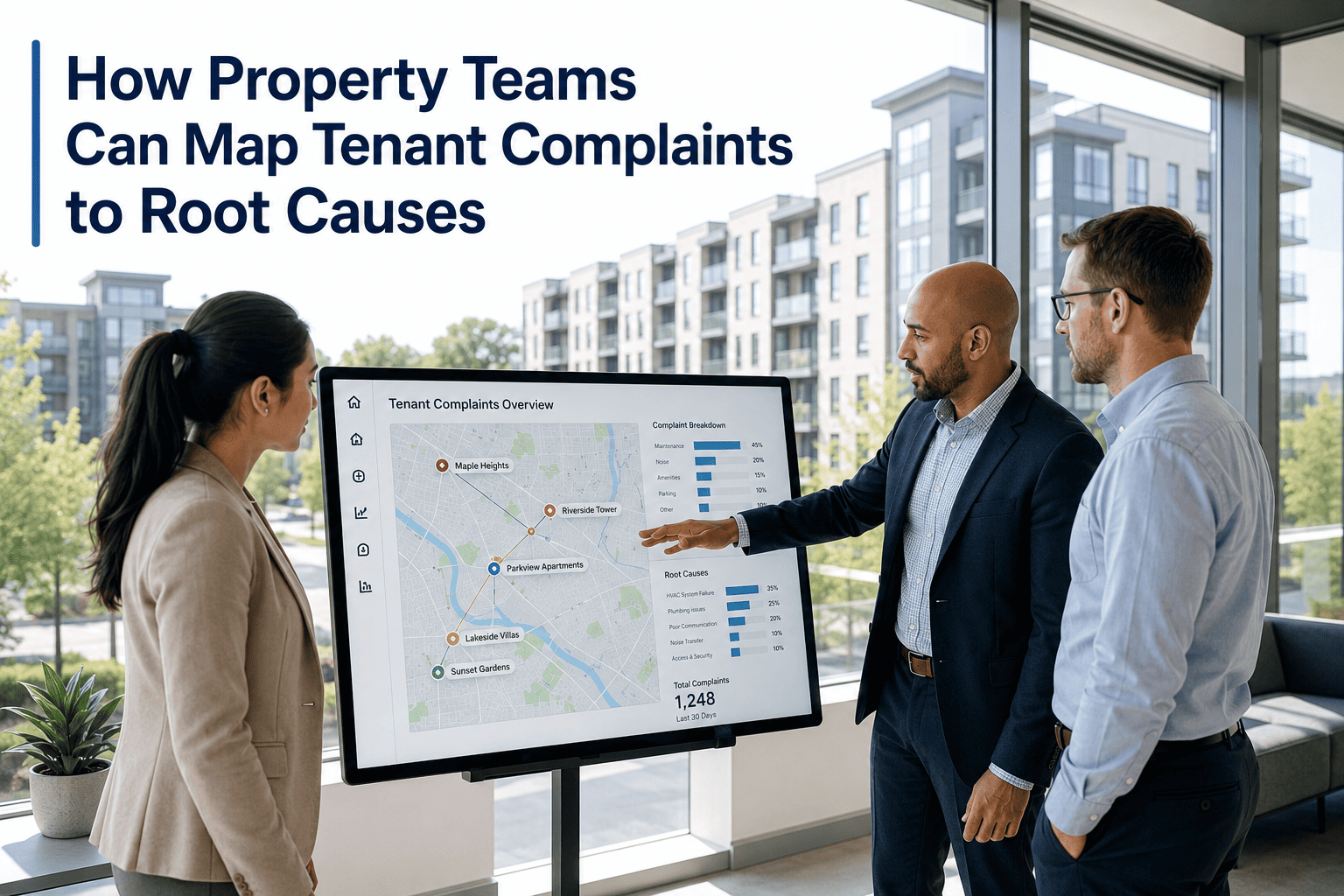
How Property Teams Can Map Tenant Complaints to Root Causes
Stop sending three plumbers, two HVAC techs, and a carpenter to fix one underlying problem. Use root-cause-linked maintenance history to close the complaint loop on the first visit.
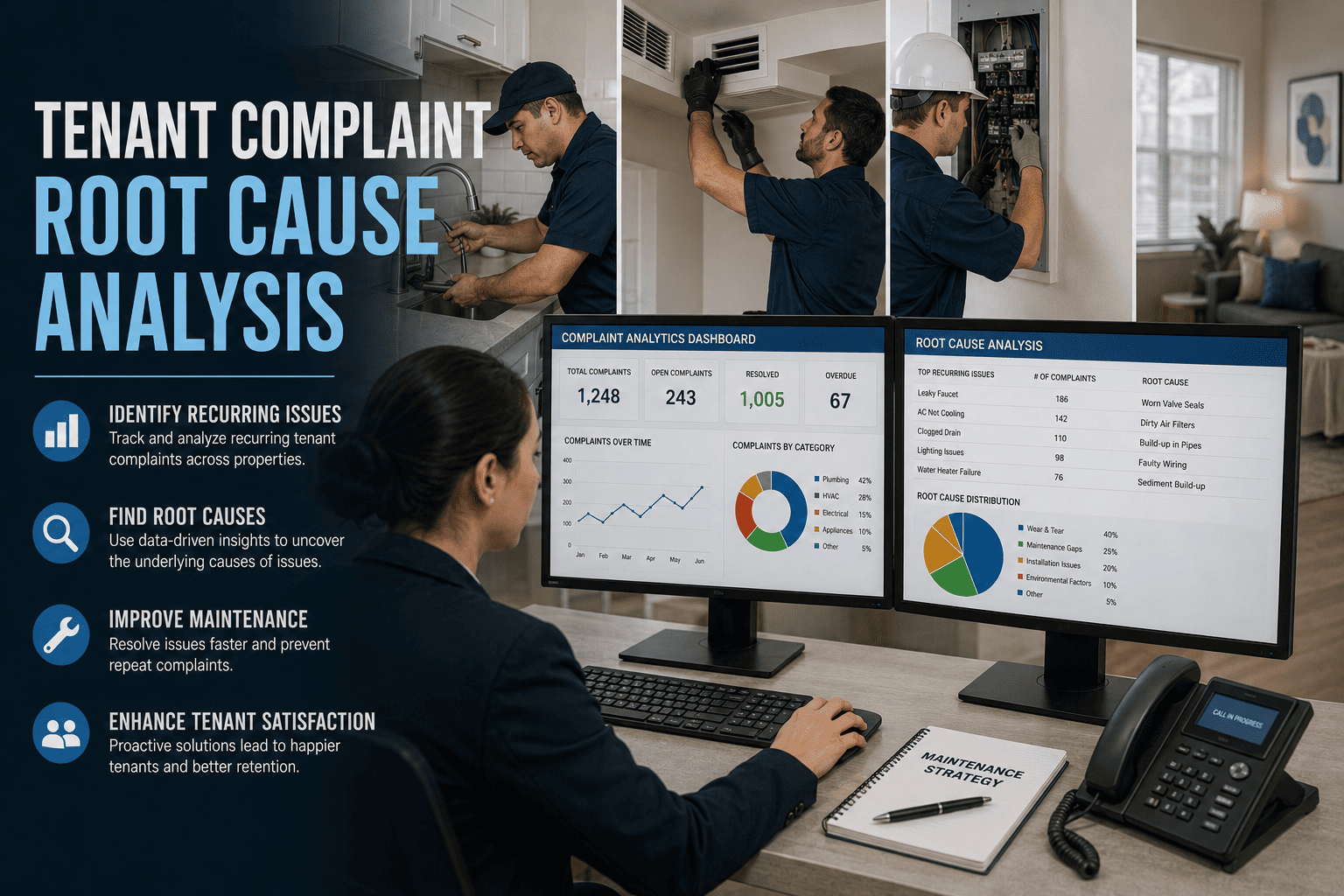
Recurring complaint detection
Asset-linked work history
Multi-site complaint patterns
See exactly which units, systems, and root causes are generating your repeat complaint loops.
of tenant maintenance complaints are repeats from the same unit or the same underlying root cause
$85
average dispatch and resolution cost per maintenance complaint across mid-sized portfolios
3.4x
higher tenant churn rate in units with three or more unresolved repeat complaints in 12 months
38%
of maintenance budget consumed by repeat work on complaints already addressed once
What is tenant complaint root-cause mapping
Tenant complaint root-cause mapping is the discipline of linking every incoming maintenance request to (a) the specific asset or system involved, (b) the historical work performed on that asset, and (c) the documented underlying failure pattern — rather than treating each complaint as an isolated ticket to clear. When a tenant reports "no hot water" for the fourth time in eight months, the right response is not another plumber dispatch. It is a thread of history that shows three previous visits, two thermostat replacements, and a circulating pump that has been quietly underperforming since the building was commissioned.
Without that thread, property managers operate in clear-the-ticket mode — close it, move on, repeat. The CMMS converts complaints from disposable tickets into a documented asset health record per unit, per system, per property. The result: complaints stop repeating, tenants stop escalating, and dispatch budgets stop hemorrhaging. Try Oxmaint free and see your first recurring complaint pattern in under an hour.
The complaint-to-root-cause framework
01
Asset-Tagged Intake
Every complaint logged against the specific unit, system, and component — not a free-text description that disappears into the void.
02
Historical Match Check
System surfaces prior work on the same asset before dispatch — so technicians arrive with context, not blind.
03
Failure Mode Capture
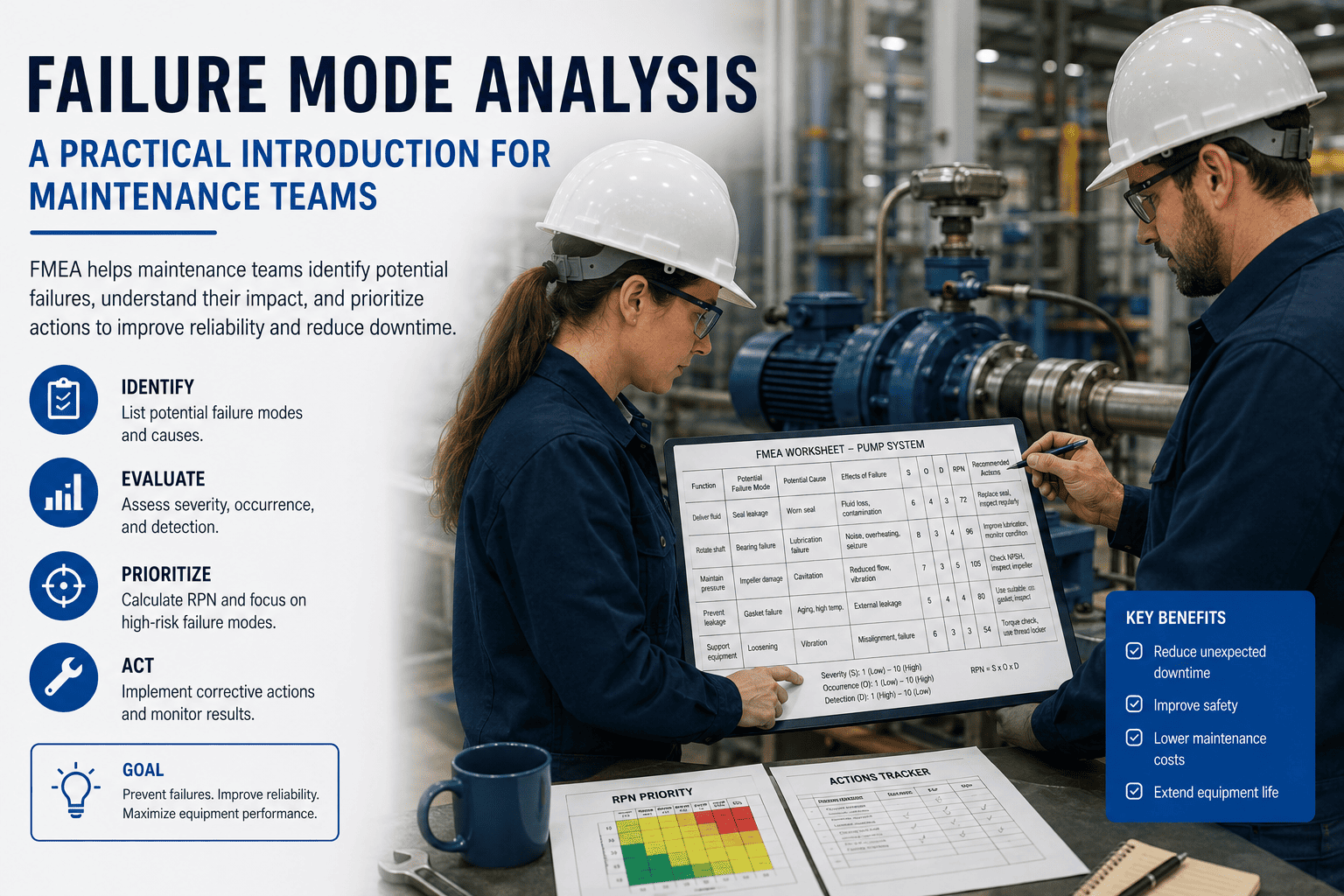
Closing the work order requires selecting the failure mode and root cause from a standardized list — not free-text.
04
Repeat-Complaint Flag
If the same complaint type on the same unit occurs within 90 days, the system flags it as a repeat for supervisor review.
05
Cross-Unit Pattern Detection
Complaints clustering across multiple units in the same building surface as a system-level issue, not 12 separate dispatches.
06
Capital Decision Trigger
Documented repeat-cause history feeds CapEx planning — so end-of-life systems are replaced before they generate 40 more complaints.
A single recurring complaint loop on one chronic issue costs $1,800-4,200 in cumulative dispatches before anyone connects the dots.
Why property teams keep treating symptoms instead of causes
Free-Text Complaint Logs
"Toilet running" logged 14 different ways across 14 tickets means no analytics can find the pattern — and the same unit gets dispatched again next month.
Ticket-Close Culture
Technicians close work orders to hit response time KPIs — without documenting what was actually wrong. The fix becomes "I cleared the issue" with zero detail.
No Asset Hierarchy
Complaints attached to a unit number alone — not to the HVAC unit serial, the riser, or the building boiler. Patterns by system never surface.
Tenant Escalations
By the fourth repeat complaint, the tenant has stopped opening tickets and started filing online reviews — which costs more in vacancy than the repair ever would.
Property teams that move to root-cause-mapped complaint workflows typically reduce repeat complaint volume by 45-60% in 12 months and recover the equivalent of one full FTE in saved dispatch time across a 1,000-unit portfolio. Book a demo and we will show you the recurring-complaint dashboard built for portfolio managers.
How Oxmaint maps complaints to root causes
Portfolio > Property > Unit > Asset hierarchy
Every complaint attaches to the precise asset — not just the unit. Patterns by HVAC model, riser, or shared system become visible across the entire portfolio.
Repeat-complaint flagging
Same complaint type on the same asset within 90 days auto-flags as a repeat — supervisor sees the full history before dispatching another technician.
Standardized failure mode codes
Closing the work order requires picking a failure mode from a configurable list. Free-text becomes analytics-ready data over time.
Tenant communication thread
Tenants receive automated updates as the complaint progresses — reducing escalation calls and the operational drag of status chasing.
Cross-property pattern detection
If the same complaint type spikes across multiple buildings (mansard leak after a storm, fan coil short-cycling after a season change), it surfaces as a portfolio-level alert.
CapEx-grade complaint history
Documented repeat-cause history feeds 5-10 year CapEx models — supporting investor-grade replacement decisions on chronic underperforming systems.
A 1,000-unit portfolio that closes its repeat-complaint loop recovers the equivalent of one full FTE in saved dispatch time within 12 months.
Ticket-close culture vs root-cause discipline
Operational Dimension
Symptom-Fix Workflow
Root-Cause Mapped Workflow
Complaint intake
Free-text by anyone
Asset-tagged, system-linked
Pre-dispatch context
None — tech goes in blind
Full asset history surfaced
Work order closeout
"Resolved" — no detail
Failure mode and root cause selected
Repeat detection
Manual, supervisor memory
Auto-flag within 90 days
Cross-unit pattern
Invisible
System-level alerts
Tenant updates
Manual, inconsistent
Automated thread
CapEx feed
Disconnected from complaints
Direct input to replacement planning
Repeat complaint rate
67% baseline
25-30% after 12 months
ROI of root-cause complaint mapping
45-60%
reduction in repeat complaint volume within 12 months of root-cause-linked workflows
38%
recovery of maintenance budget previously consumed by repeat dispatches on the same root cause
3.4x
lower tenant churn risk on units once repeat complaint loops are documented and closed
1 FTE
equivalent dispatch time recovered across a 1,000-unit portfolio in the first year
The complaint volume your portfolio generates is not the problem — the repeat rate is. Move that single number from 67% to 30% and every downstream metric improves: dispatch cost, tenant retention, online review ratings, CapEx accuracy. Start a free trial and benchmark your repeat-complaint rate against portfolio-grade standards.
Frequently Asked Questions
How does Oxmaint identify a recurring complaint pattern
Oxmaint flags any complaint type that occurs more than once on the same asset within 90 days, and surfaces cross-unit patterns when the same complaint type clusters across multiple units in the same property or system. Failure mode codes at work order closeout feed an analytics layer that ranks the top recurring patterns across the portfolio every month.
Can our tenants log complaints directly into Oxmaint
Yes. Tenants can submit requests through a portal that tags the complaint to the correct unit and surfaces a short guided flow to capture system, severity, and access notes. The complaint enters the same workflow as internally generated tickets and remains visible to the tenant as it progresses — which substantially reduces status-chase calls.
Does this work across a portfolio with multiple property types
Yes. Oxmaint is built around a Portfolio > Property > System > Asset hierarchy that handles mixed portfolios — residential, commercial, mixed-use, and managed multi-family. Each property can have its own asset registry while complaint pattern detection runs at the portfolio level.
How long does implementation take for a 1,000-unit portfolio
Most portfolios are live with core complaint intake, dispatch, and repeat-flagging within 2-4 weeks. Asset registry population, failure mode standardization, and historical data import typically run in parallel over the first 60-90 days. No heavy onboarding consultant is required — the system is designed for self-serve setup.
Decision Point
Stop dispatching plumbers to fix problems your HVAC system caused
Every repeat complaint is a documentation gap, not a labour gap. Oxmaint closes that gap — linking complaints to assets, assets to history, and history to capital decisions. Used by property teams managing 10,000+ assets across multi-site portfolios. Live in days, not months.