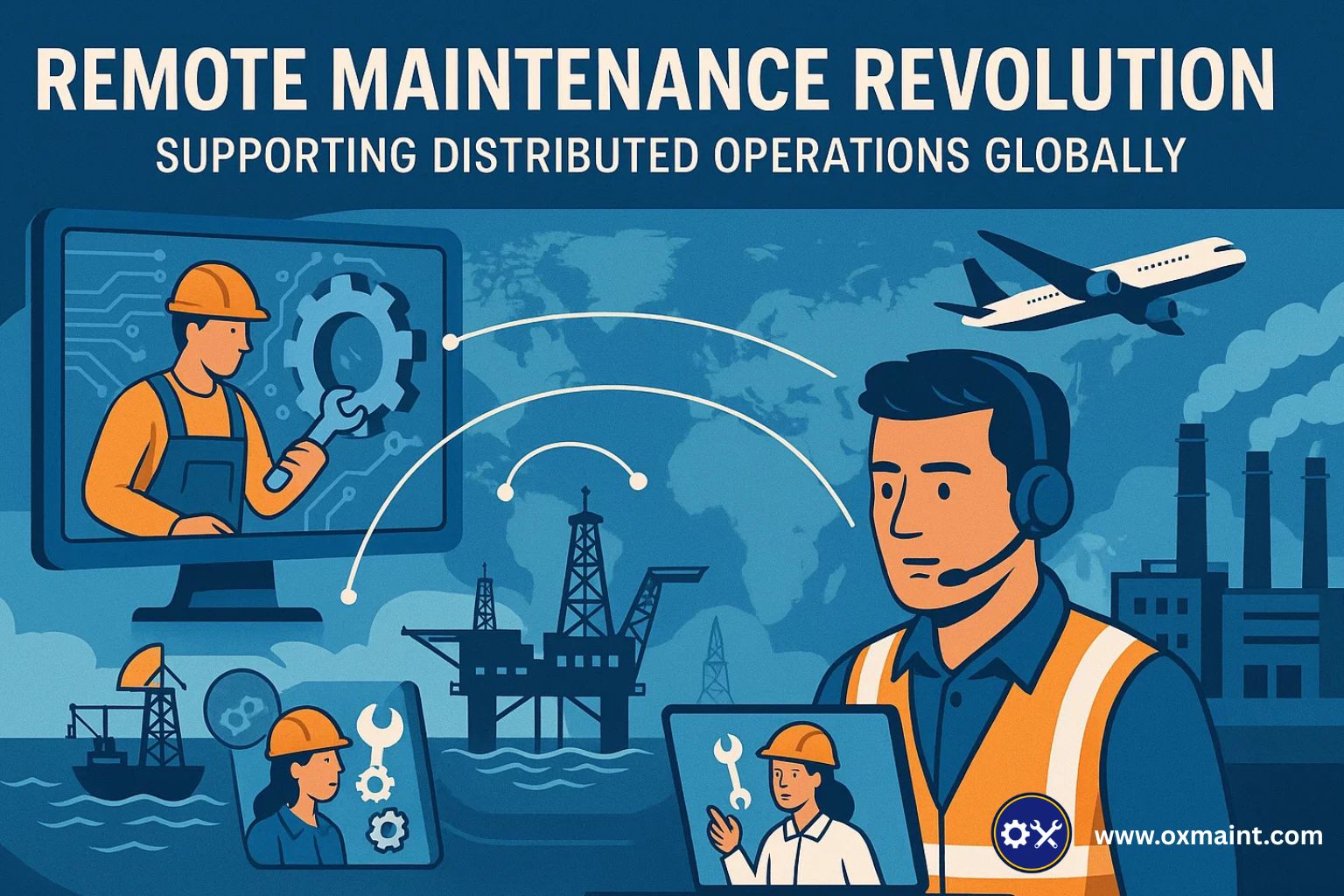
The manufacturing landscape has fundamentally changed. Gone are the days when your operations were confined to a single location with on-site technicians handling every maintenance issue. Today's manufacturing professionals are managing distributed operations across multiple states, countries, and continents. This shift has created both unprecedented opportunities and unique challenges that demand innovative solutions.
Enter the remote maintenance revolution – a game-changing approach that's transforming how manufacturers support their distributed operations. By leveraging advanced technologies like IoT sensors, augmented reality, and cloud-based platforms, companies are now able to diagnose problems, guide repairs, and optimize performance from thousands of miles away. This isn't just about convenience; it's about survival in an increasingly competitive global marketplace.
The Critical Need for Remote Maintenance Solutions
Manufacturing operations today face a perfect storm of challenges. Skilled technicians are retiring faster than they can be replaced, creating a knowledge gap that threatens operational continuity. Meanwhile, the push for global expansion means equipment is spread across vast geographical areas, making traditional on-site support both expensive and time-consuming.
Consider this: The average cost of unplanned downtime in manufacturing is $50,000 per hour. When you multiply this by the time it takes to fly a technician to a remote facility, troubleshoot the problem, and implement a fix, the numbers become staggering.
Remote maintenance solutions address these challenges head-on by enabling immediate response to equipment issues, regardless of location. This capability is no longer a luxury – it's a necessity for manufacturers who want to remain competitive in today's fast-paced global economy.
Key Technologies Driving the Remote Maintenance Revolution
The remote maintenance revolution is powered by several converging technologies that work together to create comprehensive support systems:
- Industrial IoT and Smart Sensors: These devices continuously monitor equipment health, providing real-time data on performance metrics, vibration patterns, temperature fluctuations, and other critical parameters.
- Augmented Reality (AR) and Virtual Reality (VR): These technologies enable remote experts to guide on-site personnel through complex repair procedures with visual overlays and step-by-step instructions.
- Cloud-Based Analytics Platforms: Advanced algorithms analyze vast amounts of operational data to predict failures before they occur and recommend optimal maintenance schedules.
- Mobile Applications and Wearable Devices: These tools provide technicians with instant access to equipment manuals, troubleshooting guides, and direct communication with remote experts.
- Digital Twin Technology: Virtual representations of physical equipment allow for simulation and testing of maintenance procedures without risking actual production equipment.
When integrated effectively, these technologies create a powerful ecosystem that transforms reactive maintenance into proactive, predictive operations management.
Proven Benefits for Manufacturing Operations
The impact of remote maintenance solutions extends far beyond simple cost savings. Manufacturing professionals who have implemented these systems report transformative changes across their operations:
Dramatic Reduction in Downtime: Companies typically see 30-50% reduction in unplanned downtime within the first year of implementation. Remote diagnostics enable faster problem identification, while guided repair procedures reduce the time needed to restore operations.
Significant Cost Savings: Beyond the obvious savings from reduced downtime, remote maintenance eliminates travel costs for technicians, reduces the need for extensive spare parts inventory at each location, and optimizes maintenance schedules to prevent unnecessary interventions.
Enhanced Safety and Compliance: Remote monitoring systems can detect dangerous conditions before they pose risks to personnel, while digital documentation ensures consistent compliance with safety protocols across all locations.
Knowledge Preservation and Transfer: As experienced technicians retire, their expertise can be captured in digital formats and shared across the organization, ensuring critical knowledge isn't lost.
Implementation Strategies for Maximum Impact
Successfully implementing remote maintenance solutions requires a strategic approach that considers both technological and human factors. The most successful deployments follow a phased implementation strategy that allows organizations to build capabilities gradually while demonstrating value at each stage.
Phase 1: Foundation Building begins with installing monitoring systems on critical equipment and establishing reliable communication infrastructure. This phase focuses on data collection and building baseline understanding of equipment performance patterns.
Phase 2: Enhanced Diagnostics introduces predictive analytics and remote troubleshooting capabilities. Teams learn to interpret data patterns and respond to early warning indicators before problems escalate.
Phase 3: Advanced Integration incorporates AR/VR technologies, digital twins, and sophisticated AI-driven recommendations. This phase represents full transformation to predictive, remotely-supported maintenance operations.
Success Tip: Start with your most critical equipment and gradually expand the program. This approach allows you to demonstrate ROI quickly while building internal expertise and confidence in the technology.
Overcoming Common Implementation Challenges
While the benefits of remote maintenance are clear, manufacturing professionals often face several challenges during implementation. Understanding and preparing for these obstacles is crucial for successful deployment.
Connectivity and Infrastructure: Many manufacturing facilities, especially in remote locations, lack the robust internet connectivity required for real-time data transmission and video communication. Addressing this challenge often requires infrastructure investment, but the long-term benefits far outweigh the initial costs.
Workforce Adaptation: Experienced technicians may be hesitant to adopt new technologies, preferring traditional methods they've used for decades. Successful implementation requires comprehensive training programs and clear demonstration of how these tools enhance rather than replace their expertise.
Data Security and Privacy: Remote monitoring systems collect vast amounts of operational data, raising concerns about cybersecurity and proprietary information protection. Implementing robust security protocols and choosing platforms with enterprise-grade security features is essential.
Integration with Existing Systems: Most manufacturing facilities already have established maintenance management systems, ERP platforms, and other software tools. Ensuring seamless integration while maintaining data consistency requires careful planning and often custom development work.
The Future of Remote Maintenance
The remote maintenance revolution is just beginning. Emerging technologies promise even more dramatic improvements in how manufacturers support their distributed operations. Artificial intelligence will enable fully autonomous diagnosis and repair recommendations, while advanced robotics may allow for remote physical interventions in certain scenarios.
5G connectivity will enable real-time high-definition video streaming and instantaneous data transmission, making remote support as effective as being physically present. Blockchain technology may provide secure, immutable maintenance records that ensure compliance and enable better predictive modeling.
The companies that embrace these technologies today will be the industry leaders of tomorrow. Those that delay adoption risk being left behind as competitors achieve significant operational advantages through remote maintenance capabilities.
Conclusion
The remote maintenance revolution represents more than just technological advancement – it's a fundamental shift in how manufacturing operations are supported and optimized. As global competition intensifies and skilled labor becomes increasingly scarce, the ability to provide immediate, expert support regardless of geographical constraints becomes a critical competitive advantage.
Manufacturing professionals who implement remote maintenance solutions today are positioning their organizations for long-term success. They're reducing costs, improving reliability, enhancing safety, and preserving critical knowledge while building the foundation for future innovations.
The question isn't whether remote maintenance will become standard practice – it's whether your organization will be among the leaders or followers in this transformation. The technology exists, the benefits are proven, and the competitive advantages are clear. The time to act is now.


.jpg)


