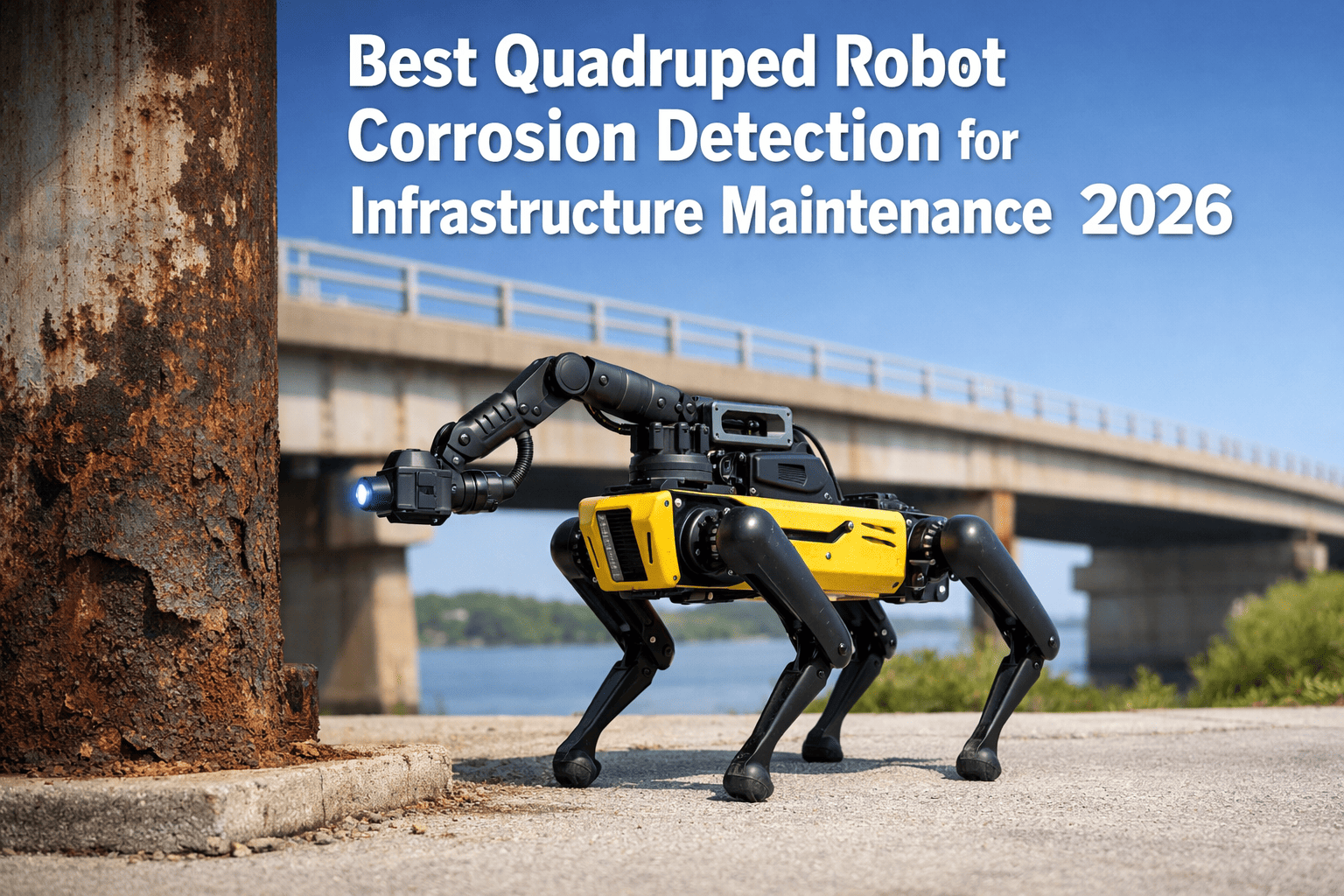
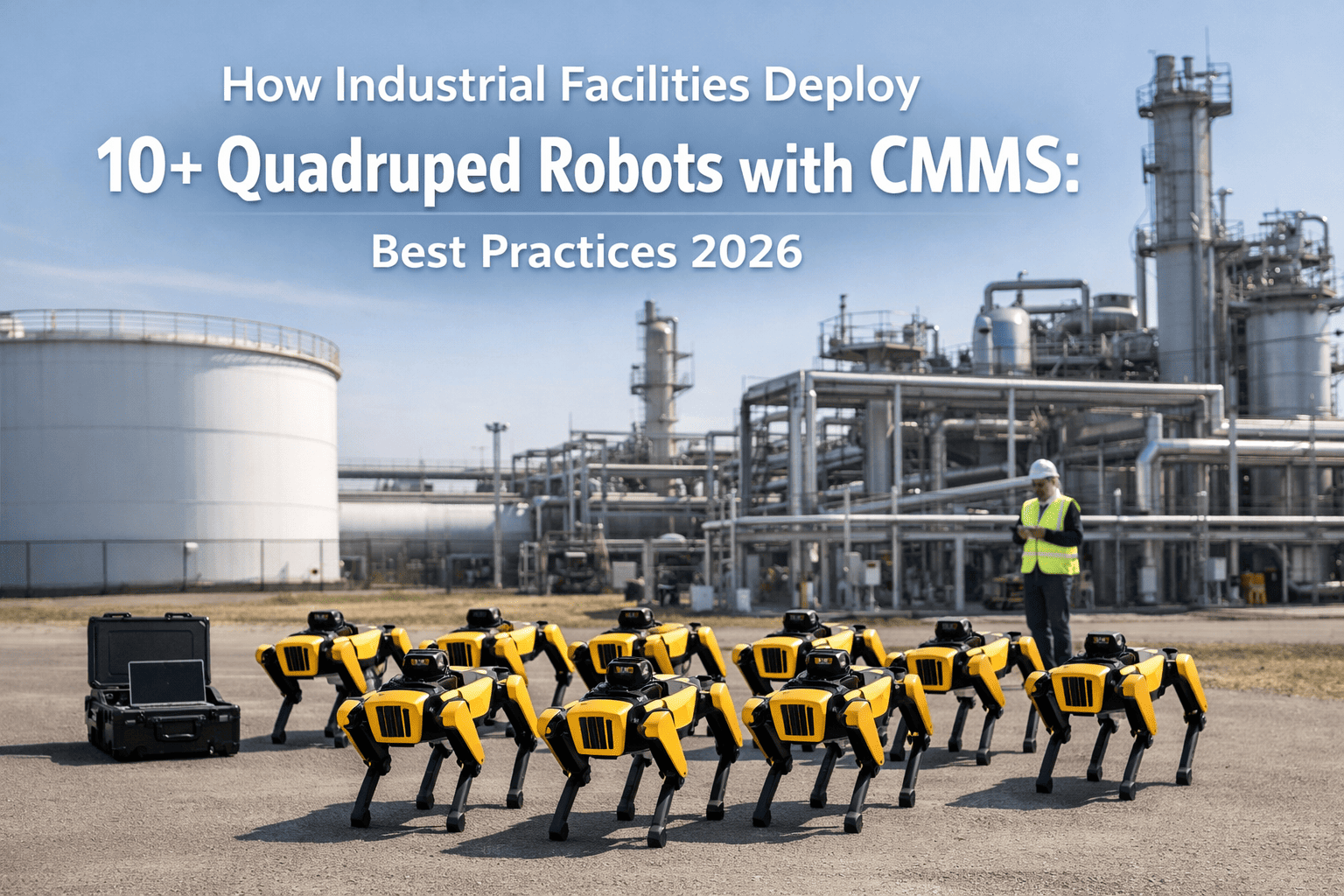
Every year, undetected corrosion triggers pipeline ruptures, bridge closures, and refinery shutdowns that cost billions in emergency repairs and lost production. The root cause is almost always the same — inspection gaps. Manual walkthroughs happen quarterly at best, miss 30–40% of early-stage degradation, and put workers directly inside hazardous environments. Quadruped robots equipped with AI-powered cameras, ultrasonic thickness probes, and thermal sensors are closing these gaps by patrolling infrastructure autonomously — detecting rust, pitting, wall thinning, and corrosion under insulation that human eyes simply cannot catch. When connected to a CMMS platform like Oxmaint, every finding becomes a tracked, prioritized work order before minor degradation turns into structural failure. Schedule a free demo to see how robotic corrosion data integrates with your maintenance workflows.
Why Corrosion Costs Industries Billions — And How Robots Change That
Corrosion is the single largest threat to infrastructure longevity worldwide. It accounts for 40–60% of pipe maintenance costs in petrochemical plants alone, and corrosion under insulation (CUI) has caused roughly half of all hydrocarbon leaks at onshore facilities over the past two decades. Traditional detection relies on scheduled visual walkthroughs, spot ultrasonic checks, and insulation removal — methods that are slow, expensive, and dangerously inconsistent.
Quadruped robots fundamentally change this equation. They deliver high-frequency, multi-sensor inspections across terrain that wheeled robots cannot handle — stairs, grating, uneven floors, and confined corridors — while keeping human workers out of hazardous zones entirely.
$2.5 Trillion
Estimated global annual cost of corrosion across all infrastructure sectors
40–60%
Of pipe maintenance budgets consumed by corrosion under insulation detection and repair
50%
Of onshore hydrocarbon leaks over 20 years attributed to CUI that went undetected
Stop discovering corrosion after it becomes a crisis
Oxmaint turns robotic inspection data into automated work orders, degradation trend tracking, and predictive maintenance alerts — before minor rust becomes structural failure.
How AI-Powered Quadruped Robots Detect Corrosion Before It Spreads
Quadruped robots combine autonomous mobility with multi-sensor payloads to execute corrosion detection workflows that would take human inspectors days to complete manually. The closed-loop process — from autonomous patrol to CMMS work order — runs with minimal human intervention while delivering inspection data that is more consistent, more frequent, and more actionable than any manual program.
01
Autonomous Route Execution
The robot follows pre-programmed patrol routes through your facility, navigating stairs, grated walkways, narrow corridors, and uneven industrial floors. Platforms like Boston Dynamics Spot and ANYbotics ANYmal can handle steps up to 20 cm and operate in wet, dusty, or extreme-temperature environments. Self-docking charging stations enable continuous 24/7 operation without human intervention.
02
Multi-Sensor Data Capture
At each checkpoint, the robot pauses to capture data from its sensor payload — AI vision cameras photograph surface corrosion, ultrasonic probes measure wall thickness, infrared cameras detect thermal anomalies indicating CUI, and LiDAR scanners build 3D surface models for change detection between inspections. A single patrol generates thousands of data points across dozens of assets.
03
AI Classification and Severity Scoring
Onboard and cloud-based machine learning models analyze raw sensor data to classify corrosion type — surface oxidation, pitting, general wall thinning, stress corrosion cracking, or galvanic corrosion — and assign severity scores. Convolutional neural networks trained on industrial corrosion datasets achieve over 90% classification accuracy across steel, concrete, and coated surfaces.
04
CMMS Work Order Generation
Classified findings stream directly into Oxmaint CMMS via API — complete with corrosion images, GPS coordinates, severity scores, wall thickness readings, and recommended corrective actions. Critical findings trigger immediate work orders routed to the right technician; routine degradation queues for scheduled preventive maintenance with full historical context. Sign up for Oxmaint to automate your corrosion work orders.
Sensor Technologies That Make Robotic Corrosion Detection Possible
The effectiveness of robotic corrosion inspection depends on the sensor payload. Each sensing modality addresses different degradation types and detection depths. The most capable quadruped platforms combine multiple technologies for comprehensive assessments that no single method can achieve alone.
Precision: 0.1 mm accuracy with phased array ultrasonic testing (PAUT)
Infrared Thermography (IRT)
Detects: Corrosion under insulation (CUI), moisture ingress, temperature differentials
How: Thermal cameras identify wet insulation zones and abnormal heat signatures indicating hidden corrosion
Advantage: Non-contact — no insulation removal required for CUI screening
LiDAR 3D Surface Mapping
Detects: Deformation, material loss, geometric shifts indicating progressive degradation
How: Laser scanning creates mm-accurate 3D point clouds, compared between inspections for change detection
Advantage: Sub-millimeter accuracy for tracking corrosion progression over time
See multi-sensor corrosion data inside Oxmaint. Book a live walkthrough showing how AI vision findings, UT readings, and thermal anomalies flow into asset records and generate prioritized work orders automatically.
Where Quadruped Robots Outperform Manual Corrosion Inspectors
The shift from periodic manual inspections to autonomous robotic patrols is not about replacing human expertise — it is about eliminating the repetitive, hazardous, and inconsistent parts of corrosion detection while freeing skilled inspectors for complex engineering analysis and repair planning.
Manual Inspection vs. Quadruped Robot Inspection
Traditional Approach
Quarterly or annual inspection schedules with long gaps between checks
Relies on individual inspector experience and visual judgment under time pressure
Requires scaffolding, rope access, or confined-space permits for hard-to-reach areas
Paper forms or spreadsheets with manual data entry, delayed reporting
No automated baseline comparison between inspection cycles
30–40%
of early corrosion missed per inspection cycle
Robot + CMMS Approach
Daily, weekly, or continuous autonomous patrols with self-charging
AI vision models with 90%+ classification accuracy, consistent across every patrol
Four-legged mobility handles stairs, grating, confined spaces — ATEX-certified for hazardous zones
Automatic CMMS data upload with photos, GPS, severity scores, and instant work orders
3D change detection tracks degradation progression between every inspection
<5%
defects missed with multi-sensor autonomous coverage
Which Industries Benefit Most from Robotic Corrosion Monitoring
Quadruped corrosion detection robots serve every sector where metal infrastructure degrades — from offshore platforms exposed to constant saltwater to manufacturing plants with aggressive chemical environments. Each industry faces unique corrosion challenges that autonomous robotic patrols are specifically suited to address.
Robot Edge: Patrols harsh coastal environments where salt exposure accelerates degradation
Managing corrosion across multiple sites or asset classes? Oxmaint centralizes inspection data from robots, drones, and manual rounds into one predictive maintenance dashboard — regardless of the platform or facility.
Connecting Robot Inspection Data to Your CMMS for Predictive Maintenance
Robotic inspection data only creates value when it triggers maintenance action. Without CMMS integration, corrosion images accumulate in folders, thickness readings get lost in email chains, and critical findings go unresolved. Oxmaint bridges this gap by converting every robot finding into a tracked, prioritized maintenance event linked to the correct asset record.
How Robot Data Becomes Maintenance Action
Corrosion Images
AI vision photos attach to asset record with severity tag. Auto-compared against previous patrol images to track degradation progression visually.
Wall Thickness Readings
Ultrasonic measurements plot on degradation trend graphs. Automated alerts trigger when readings approach minimum allowable wall thickness thresholds.
Thermal Anomalies
Infrared findings flagged as potential CUI zones generate inspection work orders for manual follow-up verification and insulation assessment.
3D Surface Models
LiDAR point clouds stored in asset digital twin. Change detection between patrols highlights new deformation, pitting, or material loss automatically.
GPS Coordinates
Exact defect locations pinpointed on facility map for technician routing, repair planning, and historical location-based trend analysis.
What Does It Cost to Deploy Corrosion Detection Robots — And What Is the ROI
The financial case for robotic corrosion detection strengthens as inspection frequency increases and historical degradation data accumulates in your CMMS. Most facilities identify significant corrosion issues within the first 30 days that manual programs had missed entirely — and the compounding effect of continuous monitoring delivers returns across safety, uptime, and asset longevity.
Measured Performance Improvements from Robotic Corrosion Programs
Reduction in inspector hazardous zone exposure
70%
More inspection checkpoints covered per shift vs. manual
5x
Faster corrosion reporting with automated CMMS integration
55%
Decrease in unplanned shutdowns from undetected corrosion
40%
Typical ROI payback achieved within first year of deployment
6–12 mo
"
Corrosion is infrastructure's silent threat — by the time it is visible to the naked eye, you have already lost significant asset life. Robot patrols paired with a CMMS turn corrosion management from reactive scrambles into a data-driven predictive program that extends asset service life by years and prevents the catastrophic failures nobody wants to explain to regulators.
Step-by-Step: Deploying Quadruped Corrosion Robots at Your Facility
A structured rollout delivers early wins while building toward fully autonomous, continuous monitoring. Most facilities see actionable corrosion intelligence within 30 days of deployment and positive ROI within the first year.
Phase 1 — Week 1 to 2
Facility Assessment and Route Planning
Map inspection checkpoints, identify critical assets, verify network coverage across patrol routes, and position charging dock locations. Establish corrosion baselines from existing inspection records.
Phase 2 — Week 3 to 4
Robot Commissioning and Sensor Calibration
Deploy and calibrate quadruped platform with your specific sensor payload. Program autonomous patrol routes, configure obstacle avoidance, and validate sensor accuracy against known reference standards.
Your quarterly walkthroughs cannot match the frequency, accuracy, or consistency of AI-powered quadruped robots. Oxmaint connects robotic corrosion data to your maintenance workflows — auto-generating work orders, tracking degradation trends, and ensuring every finding gets resolved before minor rust becomes a structural failure.
What types of corrosion can quadruped robots detect?
Multi-sensor quadruped platforms detect surface corrosion (rust, oxidation, coating failure) via AI vision, subsurface degradation (wall thinning, internal pitting) via ultrasonic probes, corrosion under insulation through infrared thermography, and stress corrosion cracking through combined sensor analysis. All findings classify automatically with severity scores and flow directly into your CMMS. Sign up for Oxmaint to centralize robotic corrosion tracking and work order generation.
Can these robots operate in explosive or hazardous atmospheres?
Yes. The ANYbotics ANYmal X holds ATEX/IECEx Zone 1 certification for operation in explosive atmospheres — the only commercially available ex-certified quadruped as of 2026. Companies like Shell, Equinor, and BASF have deployed these robots in active petrochemical environments where human entry requires extensive safety protocols.
How does robotic inspection data integrate with a CMMS?
Robot findings — images, UT measurements, GPS coordinates, thermal maps, and AI severity scores — stream to Oxmaint via API in real time. The CMMS automatically matches data to the correct asset record, compares against historical baselines, and triggers work orders when degradation thresholds are exceeded. Schedule a free demo to see this robot-to-CMMS integration workflow live.
How fast is the ROI for robotic corrosion detection programs?
Most facilities discover significant corrosion issues within the first 30 days that manual programs had missed. The combination of reduced unplanned downtime, extended asset life, lower inspection labor costs, and eliminated scaffolding expenses delivers positive ROI within 6–12 months, with savings compounding as AI models improve from accumulated data.
Do quadruped robots replace human corrosion inspectors?
Robots augment human expertise rather than replacing it. They handle the repetitive, hazardous parts of inspection — autonomous patrols, data collection, and initial classification — while human inspectors focus on complex engineering analysis, repair planning, and regulatory compliance decisions. The result is more frequent, more consistent inspection coverage with better data quality for every maintenance decision.
By oxmaint
✨
Experience Oxmaint's Power
Take a personalized tour with our product expert to see how OXmaint can help you streamline your maintenance operations and minimize downtime.