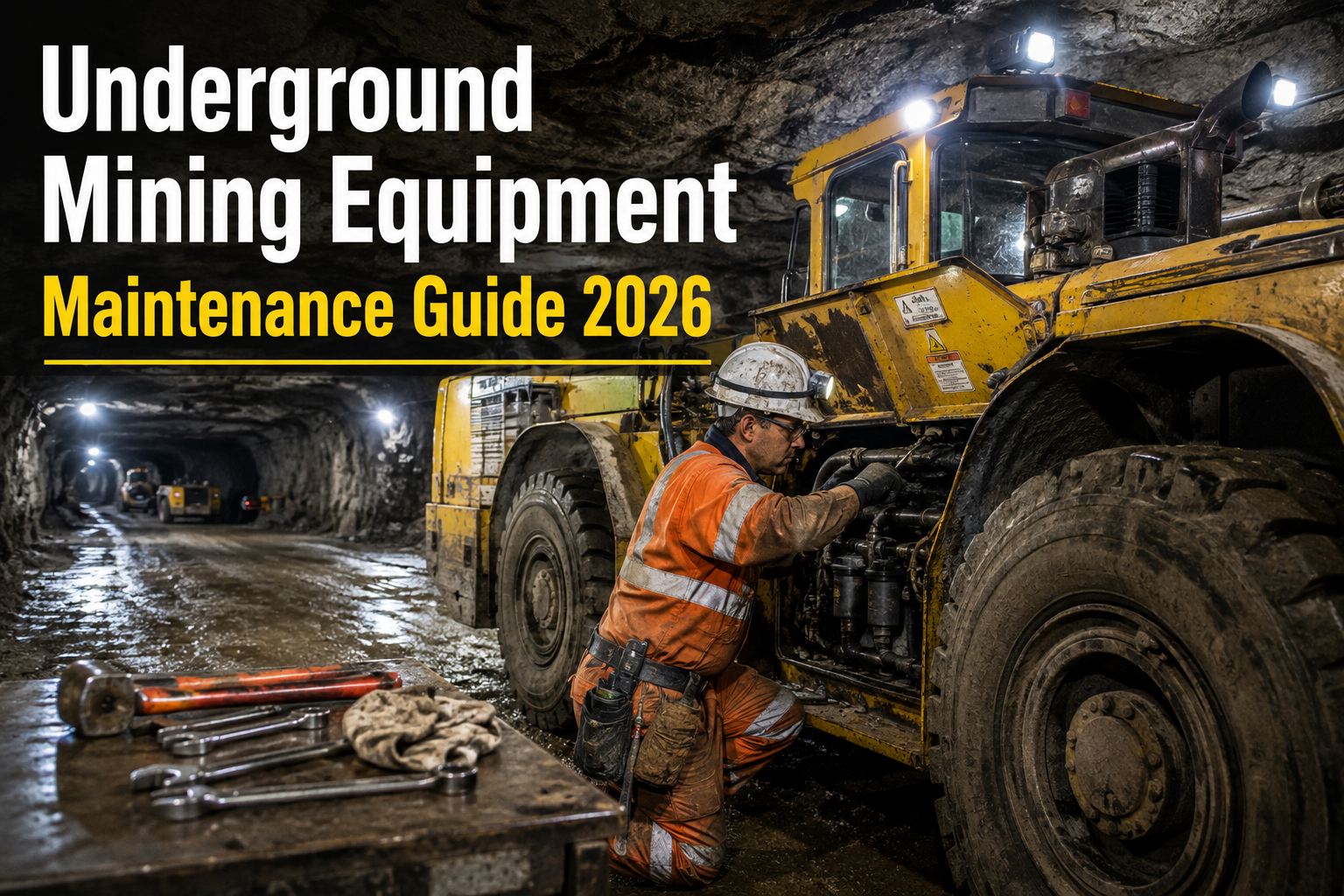
Underground mining equipment maintenance operates in the harshest industrial environment on earth — confined spaces, methane atmospheres, abrasive dust, and zero tolerance for failure when a continuous miner or roof bolter goes down mid-shift. A single unplanned breakdown underground can idle an entire section for 8–24 hours at $5,000–$15,000 per hour in lost production, and MSHA inspectors expect documented PM records for every piece of permissible equipment. This guide covers the preventive maintenance schedules, inspection standards, and CMMS structure that keep underground operations safe, compliant, and productive in 2026. Whether you manage a longwall panel or a room-and-pillar section, the fastest way to digitize your underground mine maintenance schedule is to Start Free Trial with OxMaint and see your first PM plan running in days, not months.
What does a failed continuous miner cost your mine per shift?
Unplanned downtime underground costs $5K–$15K per hour in lost production, idle crews, and delayed sections. Mines running structured PM programs cut unplanned failures 30–50% and pass MSHA inspections with documented, audit-ready records — not binders full of grease-stained paper.
Underground Mining Equipment Maintenance: The 4 Systems That Decide Your Shift
Roughly 70% of underground production stoppages trace back to four equipment families. Each has its own failure modes, PM cadence, and MSHA documentation requirements — and each one benefits from a mining CMMS that tracks hours, not just calendar dates.
Continuous Miner PM
The heart of room-and-pillar production. Cutter head bits, gathering head motors, conveyor chains, and hydraulic systems wear fast in abrasive seams. A structured continuous miner PM program checks bits every shift, greases cutter gearboxes every 8 operating hours, and inspects tram motors weekly. Miss one cutter gearbox oil change and you're looking at a $40K–$80K rebuild plus 2–3 days of lost section production.
Roof Bolter Maintenance
Roof bolters protect every miner under unsupported top. Drill steel, rotation units, dust collection systems, and ATRS (automated temporary roof support) hydraulics need daily inspection. A failed bolter doesn't just stop production — it stops the entire section from advancing because no one works under unbolted roof. Roof bolter maintenance logs are among the first records MSHA asks for after a roof fall.
Mine Ventilation Maintenance
Main fans, auxiliary fans, and scrubber systems keep methane below 1.0% and respirable dust under MSHA's 1.5 mg/m³ standard. Ventilation equipment runs 24/7 — a main fan failure can force a full mine evacuation. Weekly vibration checks, monthly bearing temperature logs, and quarterly blade inspections are the baseline. OxMaint tracks every fan by runtime hours so PM triggers fire automatically.
Haulage & Scoop Fleet
Shuttle cars, scoops, and LHDs cycle hundreds of times per shift through mud, water, and tight entries. Cable reels, wheel motors, brake systems, and battery packs (on diesel-free fleets) are the top failure points. Tire and brake inspections every shift, hydraulic hose checks weekly, and full driveline service every 500 hours keep haulage moving.
How to Build an Underground Mine Maintenance Schedule by Equipment Hours
Calendar-based PM fails underground because equipment utilization swings wildly — a miner might run 18 hours one week and 4 the next. Hour-meter-based triggers are the standard. Here's a proven cadence used by high-performing sections:
| Equipment | Every Shift | Weekly | 250–500 Hrs | MSHA Record |
|---|---|---|---|---|
| Continuous Miner | Bits, water sprays, methane monitor, trailing cable | Cutter gearbox oil, conveyor chain tension, hydraulic leaks | Tram motor brushes, pump pressure test, full lube service | Pre-op exam + PM log |
| Roof Bolter | Drill steel, ATRS function, dust collector vacuum | Rotation head seals, hydraulic hose chafing, chuck wear | Drift rod threads, pump rebuild, filter change | Pre-op exam + PM log |
| Ventilation Fan | Visual/vibration walk-around, amperage draw | Bearing temp, belt tension, blade clearance | Motor megger test, blade pitch calibration, bearing grease | Weekly exam record |
| Scoop / LHD | Brakes, lights, fire suppression, tire condition | Battery terminals, hydraulic oil level, cable reel | Brake pack service, wheel motor seals, frame crack inspection | Pre-op exam + PM log |
OxMaint converts every row above into automated, hour-triggered work orders — your maintenance planner stops chasing meter readings and starts planning parts and labor two weeks ahead.
MSHA Compliance: What Inspectors Actually Ask For
MSHA issued over 60,000 citations in recent years, and inadequate equipment examination records are consistently in the top 10. Underground mines face 4+ inspections per year — every one of them can pull your PM history on the spot.
Weekly Electric Equipment Examinations
Every piece of electric face equipment must be examined weekly by a qualified person, with a signed record kept for one year. Paper logs get lost, smeared, or pencil-whipped. OxMaint timestamps every exam digitally with the examiner's identity — audit-ready in one click.
On-Shift & Pre-Shift Examinations
Certified examiners must record hazardous conditions and corrective actions before and during every shift. When a methane monitor fails or a ventilation control is damaged, the clock starts on documentation. Mobile work orders in OxMaint capture findings at the face, even offline, and sync when the miner returns to the surface.
Explosion-Proof Equipment Requirements
Permissible equipment must maintain its explosion-proof enclosures — every cover bolt, packing gland, and flame path matters. A single missing bolt on an XP enclosure is a citation and a shutdown. OxMaint's asset records store permissibility checklists per machine so nothing gets skipped during rebuilds.
What Reactive Maintenance Costs a 2-Section Mine Per Year
Consider a room-and-pillar operation running two continuous miner sections, 12 scoops/bolters, and 3 main fans — roughly 40 tracked assets. Here's the math most mine managers already feel but rarely total up:
A structured PM program typically cuts unplanned events 30–50%. At just 35% reduction, this mine saves $273K in downtime + $67K in parts premiums + avoids most citation exposure — roughly $350K/year against a CMMS investment that costs a fraction of one continuous miner gearbox rebuild.
Mining CMMS Software Built for Underground Conditions
Generic maintenance software breaks down underground — literally. OxMaint is the mining CMMS designed around hour-meter triggers, offline mobile access, MSHA record formats, and the reality that your mechanics work 600 feet below the nearest Wi-Fi signal.
Hour-Meter PM Automation
Set PM triggers by operating hours, not calendar dates. OxMaint fires work orders automatically when a continuous miner hits 250 hours or a fan hits its bearing-grease interval. Outcome: 30–50% fewer unplanned failures and zero missed services.
Offline Mobile Work Orders
Mechanics and examiners complete pre-op exams, PMs, and repairs on any device at the face — no connectivity required. Everything syncs to the surface automatically. Outcome: eliminate paper work orders and get 100% exam documentation.
MSHA-Ready Audit Trail
Every examination, repair, and PM is timestamped, signed, and searchable by asset, date range, or examiner. When an inspector asks for 52 weeks of § 75.512 records, you export them in 60 seconds. Outcome: walk into every inspection confident.
Spare Parts & Failure Analytics
Track cutter bits, hydraulic hoses, and tram motor inventory against actual consumption. OxMaint's analytics flag which assets eat the most parts and labor so you can rebuild, replace, or renegotiate with data. Outcome: cut emergency freight spend 40%+.
See OxMaint running on your fleet — book a 30-minute demo
We'll map your continuous miners, bolters, fans, and scoops into a live PM schedule and show you the MSHA audit trail before the call ends.
Underground Mining Maintenance FAQs
How often should a continuous miner receive preventive maintenance?
Continuous miner PM follows an hour-based cadence: bit and spray checks every shift, gearbox oil and conveyor inspections weekly, and full lube service plus tram motor checks every 250–500 operating hours. Hour-meter triggers beat calendar schedules because section utilization varies week to week.
What MSHA records are required for underground equipment maintenance?
MSHA requires weekly electric equipment examination records (30 CFR § 75.512) kept for one year, pre-shift and on-shift examination records (§ 75.362), and documentation that permissible equipment maintains its explosion-proof integrity. A mining CMMS like OxMaint timestamps and stores all of these digitally so you can book a demo and see the exact audit export inspectors receive.
What is the biggest cause of underground mining equipment downtime?
Hydraulic system failures and cutter/drivetrain wear account for the majority of unplanned underground downtime — typically 40–60% of events. Both are highly preventable with structured PM: hose chafing inspections, oil analysis, and hour-based component rebuilds catch these failures weeks before they stop a section.
Can a CMMS work underground without internet connectivity?
Yes — modern mining CMMS platforms like OxMaint offer full offline mobile capability. Examiners and mechanics complete work orders, PM checklists, and pre-op exams on phones or tablets at the face, and all data syncs automatically when the device reconnects at the surface. No paper, no double entry.
How much does unplanned downtime cost an underground mine?
A single continuous miner stoppage costs $5,000–$15,000 per hour in lost production, idle labor, and delayed section advance. Mines averaging one unplanned event per week lose $780K+ annually — most of which is recoverable with a structured PM program. Start Free Trial and OxMaint's analytics will show your own downtime cost within the first month.
Stop losing shifts to preventable breakdowns
Join the underground mines running hour-triggered PMs, offline work orders, and audit-ready MSHA records on OxMaint — set up your first asset in under 10 minutes.
Free 14-day trial · No credit card · Cancel anytime