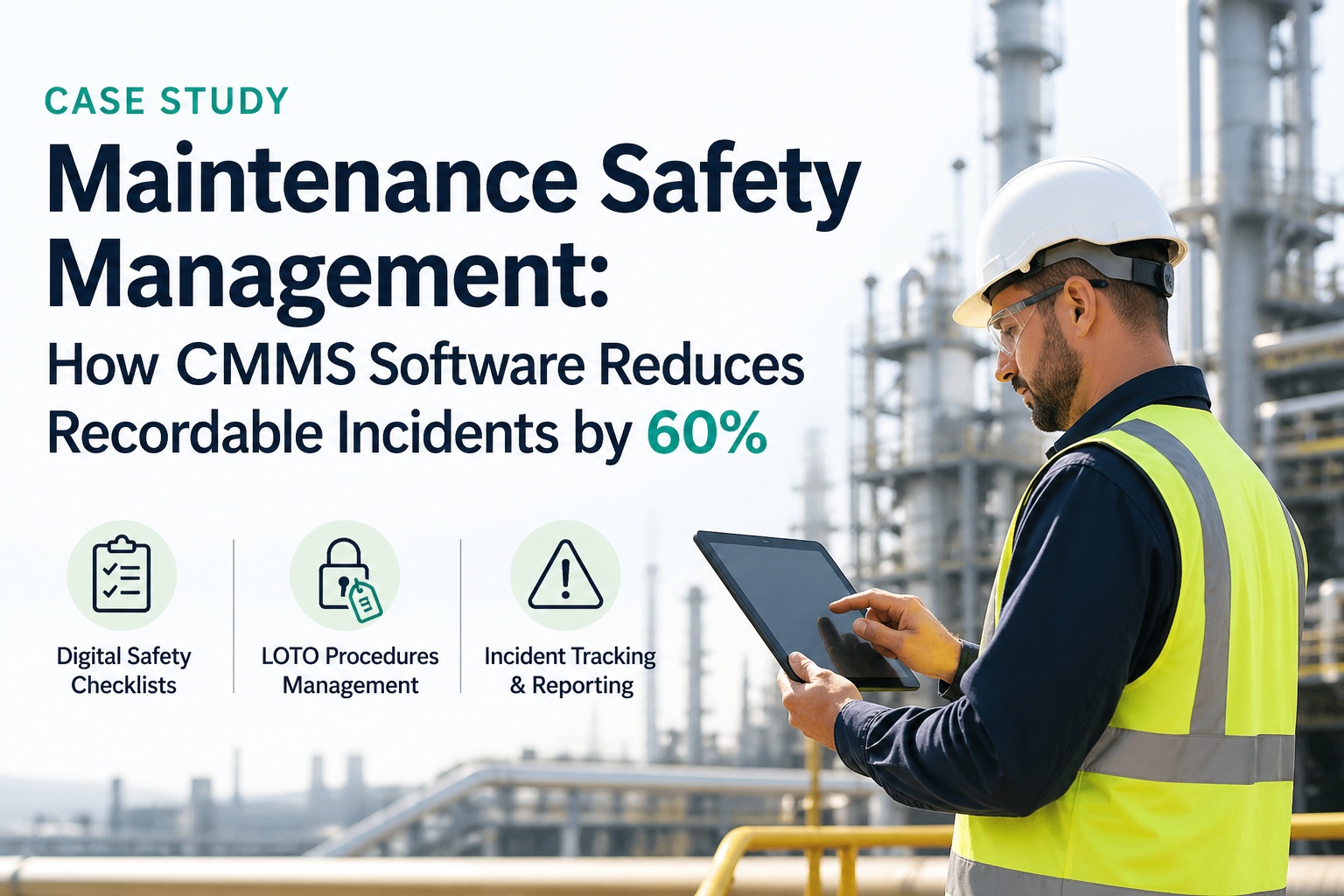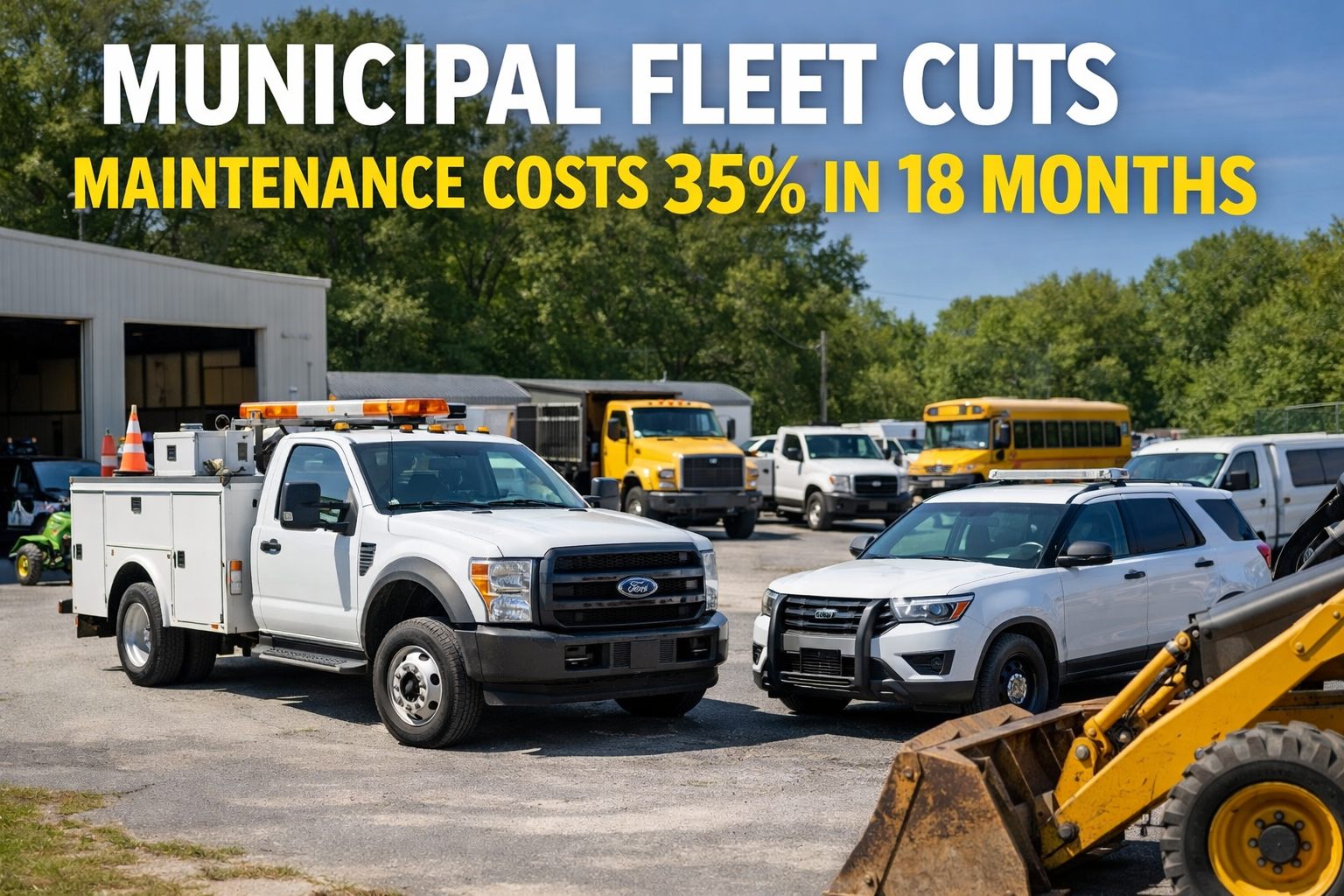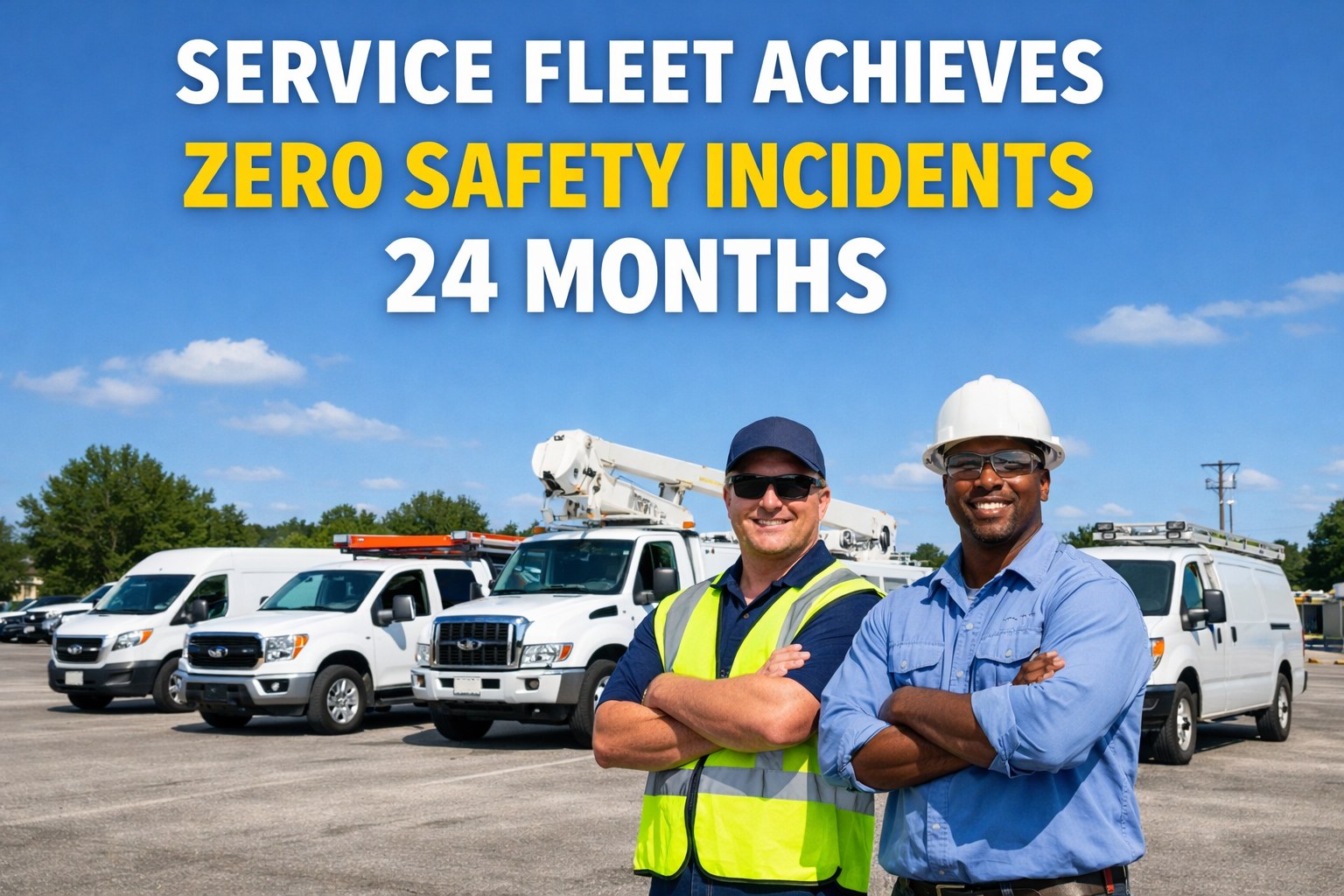
A regional service fleet operating 340 vehicles across 8 branch locations—utility vans, bucket trucks, service rigs, and support vehicles—was averaging 16 OSHA-recordable vehicle-related incidents per year with annual incident costs exceeding $2.4M. After deploying a unified CMMS platform with automated safety inspections and preventive maintenance enforcement, the fleet achieved zero recordable safety incidents for 24 consecutive months. Here's the complete framework.
In the service fleet industry, every uninspected brake line, every missed tire rotation, and every deferred defect repair is a safety incident waiting to happen. When a bucket truck's hydraulic system fails at 40 feet or a service van's brakes give out on a highway, the consequences aren't just financial—they're life-altering. This case study shows how one fleet operator built a maintenance-driven safety culture that eliminated recordable incidents entirely. Service fleet operators facing similar safety challenges can schedule a free demo to see this safety-first maintenance approach in action.
Is Your Fleet One Missed Inspection Away From a Safety Incident
See how OxMaint helps service fleets automate safety inspections, enforce PM compliance, and build the maintenance discipline that prevents incidents before they happen.
The Problem: 16 Recordable Incidents Per Year and Climbing
The company operated 340 service vehicles across 8 branches in 5 states. Technicians drove to customer sites daily—logging 4.2M fleet miles annually. Each branch managed its own vehicle maintenance using a mix of spreadsheets, paper inspection forms, and shop foreman memory. Pre-trip inspections were inconsistent, defect reporting was informal, and PM schedules were routinely missed when service demand was high.
Safety Failures Before Transformation
- 16 OSHA-Recordable Incidents/Year: Vehicle-related injuries including 3 hospitalization events in the prior 24 months
- PM Compliance at 52%: Nearly half of scheduled safety-critical maintenance was overdue at any given time
- 38% of Pre-Trip Inspections Skipped: Drivers under schedule pressure routinely departed without completing vehicle checks
- Average Defect Resolution: 11.3 Days: Reported vehicle defects sat in queues for over a week before repair
- No Centralized Safety View: 8 branches using different tracking methods—management had zero real-time visibility
- $2.4M Annual Incident Costs: Workers' comp, vehicle repairs, legal fees, OSHA fines, and lost productivity
Pre-Implementation Safety Cost Breakdown
- Annual Incident Costs: $2.4M (workers' comp, repairs, legal, fines, lost time)
- Insurance Premiums: $890K/year—34% above industry average due to claims history
- OSHA Recordable Rate: 4.7 (industry average: 2.1)
- Vehicle Availability: 79% (target: 95%)
- PM Compliance: 52% fleet-wide across all 8 branches
- Average Defect-to-Repair Time: 11.3 days
- Near-Miss Reports Filed: Under 20 per year (severe underreporting)
The Solution: Safety-First CMMS Across All 8 Branches
Company leadership committed to a zero-incident goal backed by technology enforcement—not just posters and safety meetings. A cloud CMMS was deployed to automate every touchpoint where maintenance failures could lead to safety events: pre-trip inspections, defect escalation, PM compliance, and critical component tracking.
Key Technology Components Deployed
Mandatory Digital Pre-Trip Inspections
Paper inspection forms replaced with a mobile app requiring drivers to complete a 28-point safety checklist before the vehicle ignition system releases. Brakes, tires, lights, hydraulics, fluid levels, and safety equipment verified with photo documentation on every trip.
Instant Defect Escalation System
Any safety-critical defect flagged during pre-trip inspection automatically generates a priority work order, removes the vehicle from service, and alerts the branch maintenance lead and fleet safety manager simultaneously. No vehicle with an open safety defect can be dispatched.
Automated PM Enforcement
Preventive maintenance schedules built from OEM specs and safety requirements—with automated alerts at 30/15/7 days before due. Overdue PMs escalate to branch managers, then regional directors, ensuring zero missed safety-critical services.
Critical Component Lifecycle Tracking
Brakes, tires, hydraulic hoses, lift mechanisms, electrical systems, and PPE tracked individually with replacement schedules based on usage hours, mileage, and manufacturer intervals. Predictive alerts trigger replacement before failure.
Implementation Timeline: 6 Months to Zero Incidents
Phase 1: Foundation and Critical Fixes (Months 1-3)
- All 340 vehicles digitized with full safety profiles, inspection histories, and PM schedules
- Cloud CMMS deployed across all 8 branches simultaneously—no phased rollout for safety
- Eliminated backlog of 127 overdue safety-critical PM services within first 45 days
- Digital pre-trip inspections activated for all 340 vehicles with mandatory completion enforcement
Phase 2: Automation and Culture Shift (Months 4-8)
- Automated defect escalation system live—average defect resolution dropped from 11.3 days to 14 hours
- Near-miss reporting integrated into mobile app—reports jumped from under 20/year to 420+ in first 6 months
- PM compliance crossed 90% fleet-wide; safety-critical PM items reached 98% compliance
- Branch-level safety dashboards deployed for daily management visibility
Phase 3: Sustained Excellence (Months 9-24)
- Zero recordable incidents achieved at Month 7 and maintained through Month 24
- Critical component lifecycle tracking activated—predictive replacements for brakes, tires, and hydraulics
- Quarterly safety audits automated with CMMS-generated compliance reports
- Cross-branch safety benchmarking enabled real-time performance comparison
The Results: 24 Months Zero Recordable Incidents
Safety Performance Transformation
- Zero OSHA-Recordable Incidents: 24 consecutive months with no vehicle-related recordable injuries—down from 16/year
- 97% PM Compliance: Up from 52%—safety-critical services at 99.2% on-time completion
- 100% Pre-Trip Inspection Compliance: Up from 62%—every vehicle inspected before every dispatch
- 14-Hour Defect Resolution: Down from 11.3 days—safety defects resolved same-day in 91% of cases
- 420+ Near-Miss Reports/Year: Up from under 20—a proactive safety culture replacing reactive incident response
- 92% Vehicle Availability: Up from 79%—better maintenance means more vehicles in service
Detailed Safety Performance Comparison
| Safety Metric | Before Implementation | After 24 Months | Improvement |
|---|---|---|---|
| OSHA Recordable Incidents/Year | 16 | 0 | 100% elimination |
| OSHA Recordable Rate | 4.7 | 0.0 | 100% improvement |
| PM Compliance Rate | 52% | 97% | 87% improvement |
| Pre-Trip Inspection Compliance | 62% | 100% | 61% improvement |
| Defect Resolution Time | 11.3 days | 14 hours | 97% faster |
| Near-Miss Reports/Year | <20 | 420+ | 2,000%+ increase |
| Vehicle Availability | 79% | 92% | 16% improvement |
Financial Impact Breakdown
- $2.4M Incident Cost Elimination: Zero recordable incidents means zero workers' comp claims, legal fees, OSHA fines, and lost-time costs
- $312K Insurance Premium Reduction: 35% decrease in workers' comp and fleet liability premiums over 24 months
- $280K Reduced Emergency Repairs: Preventive maintenance replaced costly roadside breakdowns and emergency service calls
- $195K Productivity Recovery: Zero incident investigations, zero light-duty reassignments, zero vehicle downtime from safety holds
- Total 24-Month Financial Benefit: $6.37M in savings and cost avoidance against $142K implementation investment
Ready to Eliminate Safety Incidents From Your Fleet
See how OxMaint helps service fleets automate safety inspections, enforce PM compliance, and track defects in real time. Start your free trial today—no credit card required.
5 Strategies That Delivered Zero Incidents
Strategy 1: Make Inspections Mandatory, Not Optional
The single most impactful change was enforcing digital pre-trip inspections for every vehicle, every trip. When drivers can't skip inspections, defects get caught before they become incidents. Compliance jumped from 62% to 100% within 60 days.
Strategy 2: Same-Day Defect Resolution
Automated defect escalation removed the "it'll get fixed eventually" culture. Safety-critical defects generated instant priority work orders, pulled vehicles from service, and alerted maintenance leads simultaneously. Average resolution dropped from 11.3 days to 14 hours.
Strategy 3: Enforce PM Compliance With Escalation
Three-tier PM alerts (30/15/7 days) with automatic escalation to branch managers ensured no safety-critical service was missed. When PM compliance crossed 90%, breakdown rates dropped sharply—the compounding safety effect was immediate.
Strategy 4: Track Critical Components by Lifecycle
Brakes, tires, hydraulic hoses, and lift mechanisms were tracked individually with usage-based replacement triggers. Components were replaced before failure—not after. This eliminated the category of incidents caused by worn-out safety-critical parts.
Strategy 5: Build a Near-Miss Culture
Integrating near-miss reporting into the daily mobile app—making it as easy as tapping a button—transformed safety from reactive to predictive. Going from under 20 reports/year to 420+ meant the fleet was identifying and fixing hazards before anyone got hurt.
Lessons Learned for Service Fleet Managers
What Worked and What to Watch For
- Deploy Everywhere Simultaneously: For safety systems, phased rollouts create gaps. All 8 branches went live on the same day—no branch left unprotected
- Fix the Backlog First: Eliminating 127 overdue PM services in the first 45 days removed the most immediate safety risks before automation kicked in
- Drivers Are Your Safety Sensors: When you make inspections easy and defect reporting instant, drivers become the most effective safety detection system in your fleet
- Data Convinces Skeptics: Branch managers who resisted the system became advocates once dashboards showed their safety improvements alongside peer branches
- Insurance Carriers Notice: The 35% premium reduction didn't require negotiation—carriers proactively adjusted rates after reviewing 12 months of zero-incident CMMS data—fleet operators ready to build this kind of safety record can start a free trial and digitize fleet safety inspections today
- Implementation Cost: $142K total (platform, tablets, training, data migration)
- Time to Zero Incidents: Month 7 after go-live
- 24-Month ROI: 4,387% ($6.37M benefit vs. $142K investment)
- Ongoing Annual Cost: $46K (platform licensing + support)
- Staff Impact: Zero layoffs—safety coordinator role created from existing headcount
Your Fleet's Safety Transformation Starts Here
Schedule a free safety assessment to identify your fleet's biggest incident risk factors and see how OxMaint automates the inspections, PM compliance, and defect tracking that prevent safety events.