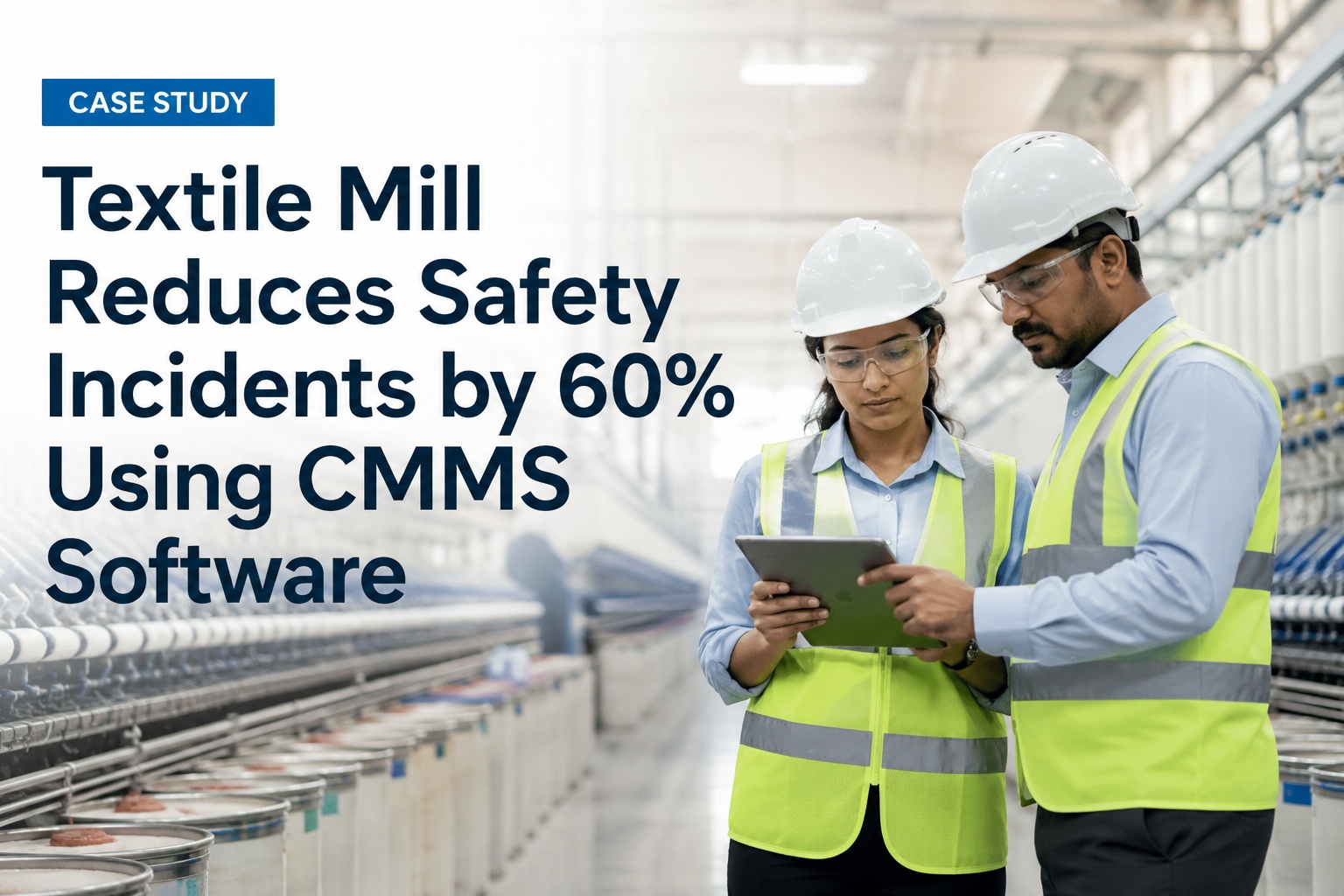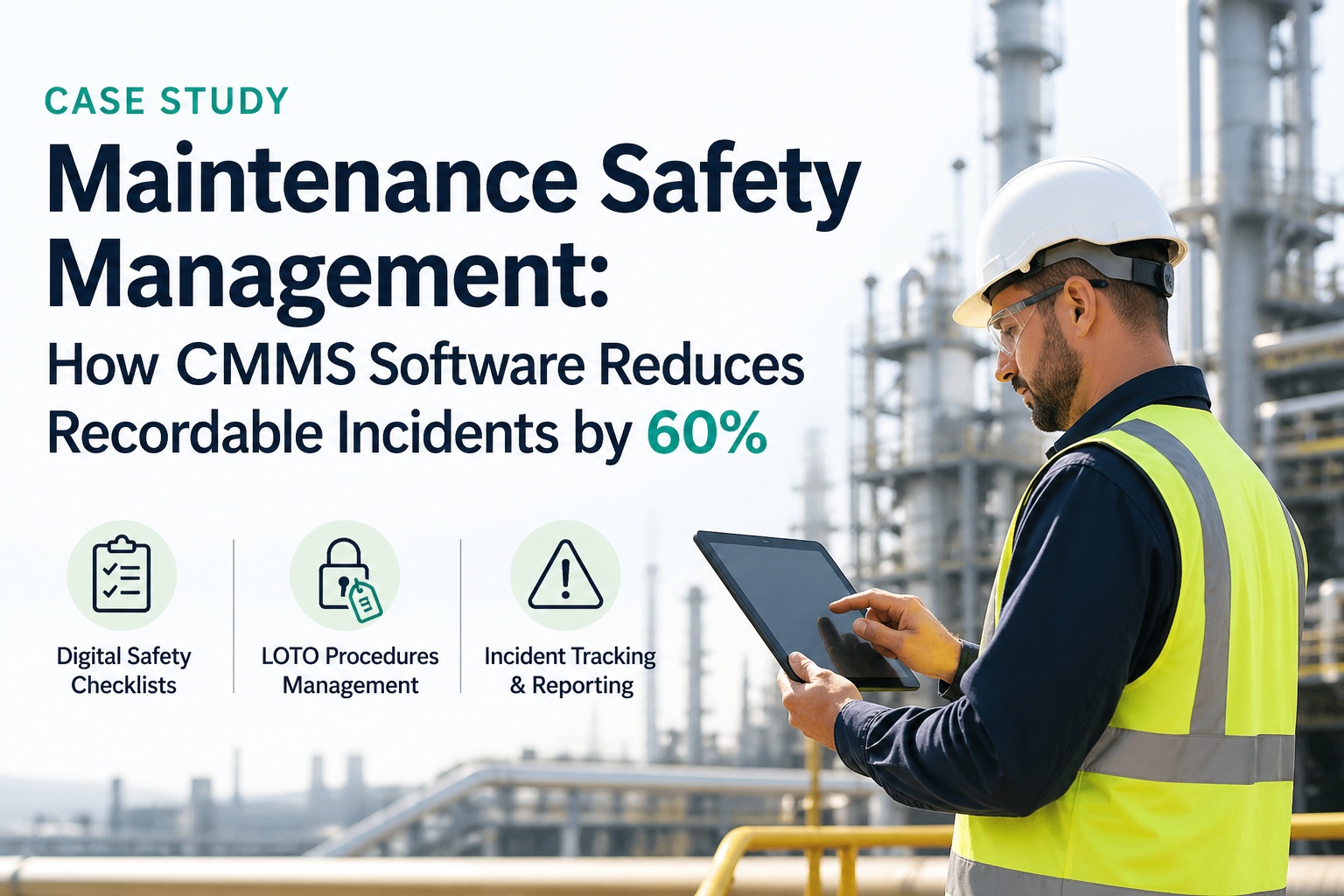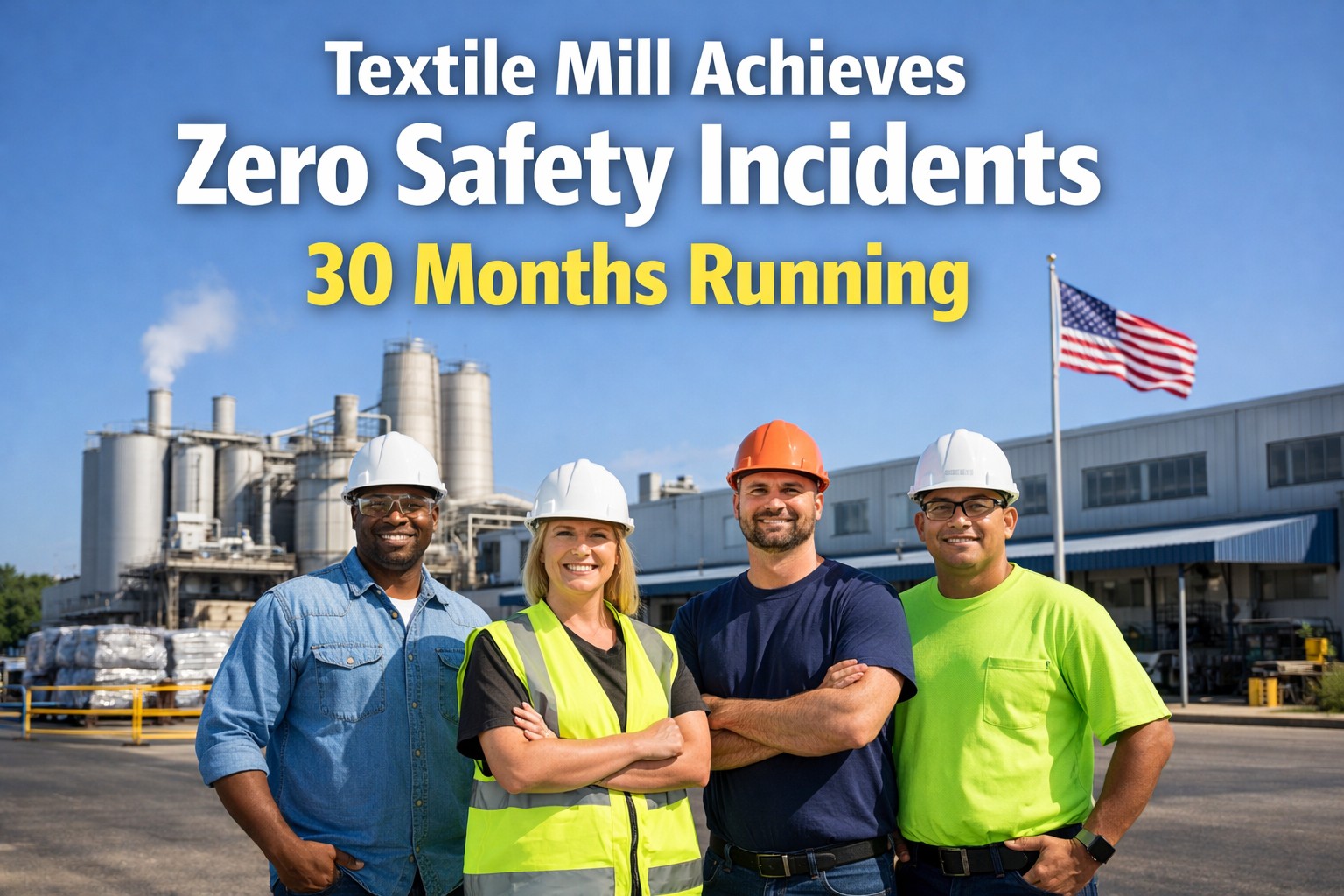
A mid-sized textile mill with 1,200 employees and 340+ production machines was averaging 18 recordable safety incidents per year—costing $2.1M annually in workers' comp claims, production shutdowns, and OSHA penalties. After implementing a systematic safety-focused maintenance and compliance platformthe mill achieved zero recordable safety incidents for 30 consecutive months. Here's how they built an unbreakable safety culture.
Textile manufacturing is inherently hazardous—high-speed looms, chemical dye processes, steam systems, and heavy material handling create constant risk exposure. Most mills treat safety as a reactive function: investigate after incidents happen. This case study reveals how proactive safety management through digital compliance tools eliminated incidents entirely by addressing root causes before they became injuries.
The transformation wasn't about adding more safety posters or longer training sessions—it was about connecting equipment maintenance, safety inspections, and compliance documentation into one automated system that made unsafe conditions impossible to ignore.
Ready to Build a Zero-Incident Safety Culture
Schedule a consultation to see how OxMaint helps textile manufacturers automate safety inspections, track compliance, and eliminate workplace incidents. No sales pressure—just honest assessment.
The Safety Crisis: 18 Incidents Per Year and Rising
The mill operated 3 shifts across spinning, weaving, dyeing, and finishing departments. Safety inspections were paper-based, machine maintenance was largely reactive, and near-miss reporting was virtually nonexistent. OSHA had cited the facility twice in 18 months, and insurance premiums were climbing 15% annually.
Critical Safety Failures Before Transformation
- Reactive Machine Maintenance: 67% of maintenance was unplanned—creating equipment failures that caused 11 of 18 annual incidents
- Paper-Based Safety Inspections: Inspections were inconsistent across shifts with no centralized tracking or automated follow-up on identified hazards
- No Near-Miss Reporting System: Workers had no easy way to report hazards before they caused injuries
- Lockout/Tagout Gaps: 23% of LOTO procedures were outdated or not followed consistently during shift changes
- Overdue Equipment Inspections: 31% of safety-critical equipment inspections were past due at any given time
- Disconnected Safety Data: Incident reports, maintenance logs, and inspection records existed in separate systems with no correlation analysis
Pre-Implementation Safety Metrics
- Recordable Incidents: 18 per year (TRIR of 4.8)
- Lost-Time Injuries: 7 per year averaging 12 days lost each
- Safety Inspection Compliance: 69% of scheduled inspections completed on time
- Near-Miss Reports: Fewer than 10 per year (severe underreporting)
- LOTO Compliance Rate: 77% verified compliance during audits
- Annual Safety-Related Costs: $2.1M (workers' comp, shutdowns, penalties, premium increases)
- Average Hazard Resolution Time: 8.4 days from identification to corrective action
The Solution: Integrated Safety-Maintenance Platform
Mill leadership recognized that safety incidents weren't random—they were predictable outcomes of deferred maintenance, missed inspections, and invisible hazards. The solution connected equipment maintenance, safety inspections, hazard reporting, and compliance tracking into one real-time platform accessible to every employee from the production floor. Manufacturers facing similar challenges can schedule a free demo to see this approach in action.
Key Technology Components Deployed
Automated Safety Inspection Scheduling
Pre-shift, daily, weekly, and monthly safety inspections auto-assigned to designated personnel with escalation alerts. Every inspection generated timestamped, photo-verified digital records meeting OSHA documentation requirements.
Mobile Near-Miss & Hazard Reporting
Any employee could report a hazard in under 60 seconds via mobile app—with photo, location, and severity classification. Reports triggered automated work orders for corrective action with priority-based routing to the right maintenance team.
Preventive Maintenance Tied to Safety
Safety-critical equipment received automated PM schedules based on manufacturer specs, risk assessments, and operating hours. Machine guards, emergency stops, ventilation systems, and fire suppression equipment were tracked with zero-tolerance overdue policies.
Digital Lockout/Tagout Management
Every LOTO procedure was digitized with step-by-step verification, photo confirmation, and digital sign-off. The system prevented equipment restart until all safety steps were verified and documented.
Implementation Timeline: From Crisis to Zero Incidents
Phase 1: Critical Safety Foundation (Months 1-3)
- Complete safety audit of all 340+ production machines and support equipment
- CMMS platform deployed with safety inspection templates for all departments
- Eliminated backlog of 106 overdue safety-critical equipment inspections
- Mobile near-miss reporting launched mill-wide with anonymous option
Phase 2: Full Integration (Months 4-8)
- Mobile app deployed to all shift supervisors and 85 maintenance technicians
- Automated PM scheduling activated for all safety-critical equipment
- Digital LOTO system replaced paper procedures across all production lines
- Real-time safety dashboards installed on production floor displays
Phase 3: Culture Transformation (Months 9-14)
- Near-miss reporting incentive program launched—targeting 50+ reports/month
- Quarterly safety mock audits using OSHA criteria began
- Predictive safety analytics identifying high-risk equipment patterns
- Safety KPIs integrated into department performance reviews
The Results: 30 Months of Zero Recordable Incidents
Breakthrough Safety Outcomes
- Zero Recordable Incidents: 30 consecutive months with no recordable workplace injuries
- TRIR Dropped to 0.0: Down from 4.8—industry average for textiles is 3.1
- $2.1M Annual Cost Elimination: Zero workers' comp claims, OSHA penalties, or incident-related shutdowns
- 97% Safety Inspection Compliance: Up from 69% pre-implementation
- 680+ Near-Miss Reports Per Year: Up from fewer than 10—hazards caught before injuries
- 100% LOTO Compliance: Digital verification eliminated procedural gaps entirely
Detailed Safety Performance Comparison
| Safety Metric | Before Implementation | After Implementation | Improvement |
|---|---|---|---|
| Recordable Incidents/Year | 18 | 0 | 100% elimination |
| TRIR (Total Recordable Rate) | 4.8 | 0.0 | 100% improvement |
| Lost-Time Injuries/Year | 7 | 0 | 100% elimination |
| Safety Inspection Compliance | 69% | 97% | 41% improvement |
| Near-Miss Reports/Year | <10 | 680+ | 6,700% increase |
| LOTO Compliance | 77% | 100% | 30% improvement |
| Hazard Resolution Time | 8.4 days | Under 18 hours | 91% faster |
Financial Impact Beyond Safety
- $2.1M Annual Incident Cost Elimination: Zero workers' comp claims, production shutdowns, or OSHA penalty expenses
- $480K Insurance Premium Reduction: 32% decrease in workers' comp and liability premiums over 24 months
- $340K Productivity Gain: Zero lost-time injuries meant zero production disruptions from safety events
- $190K Reduced Contractor Costs: Lower EMR rating qualified for preferred vendor programs
- Total 30-Month Financial Benefit: $7.8M in eliminated costs, reduced premiums, and productivity gains
Ready to Eliminate Safety Incidents at Your Mill
See how OxMaint helps textile manufacturers automate safety inspections, digitize LOTO procedures, and build a zero-incident culture. Start your free trial today.
5 Strategies That Delivered Zero Incidents
Strategy 1: Connect Maintenance to Safety
Equipment-related failures caused 61% of all incidents. By tying preventive maintenance directly to safety compliance—and making overdue safety PMs a plant-manager-level escalation—the mill eliminated the root cause of most injuries before they could occur.
Strategy 2: Make Hazard Reporting Frictionless
Replacing paper forms with a 60-second mobile reporting tool transformed near-miss culture. Reports jumped from fewer than 10 per year to 680+. Each report automatically generated a prioritized work order ensuring every hazard was addressed—not just documented.
Strategy 3: Digitize Lockout/Tagout Completely
Paper LOTO procedures were replaced with digital step-by-step checklists requiring photo verification at each step. The system physically prevented task completion sign-off until all safety steps were verified, eliminating the shortcuts that caused 4 incidents in the previous year.
Strategy 4: Never Miss a Safety Inspection
Automated scheduling with 3-tier escalation chains (technician → supervisor → plant manager) ensured every safety inspection was completed on time. Compliance jumped from 69% to 97%, and the remaining 3% represented rescheduled inspections due to planned shutdowns—not missed ones.
Strategy 5: Make Safety Data Visible to Everyone
Real-time safety dashboards on production floor screens showed current streak, open hazards, inspection status, and near-miss trends. When every employee could see the safety scorecard, ownership became collective rather than limited to the safety department.
Lessons Learned and Recommendations
Critical Success Factors for Textile Safety
- Anonymous Reporting Matters: 38% of early near-miss reports used the anonymous option—removing fear of blame unlocked critical hazard identification
- Speed of Response Builds Trust: Resolving reported hazards in under 18 hours showed workers their reports mattered
- Maintenance IS Safety: Every PM schedule was reviewed against safety impact—not just equipment uptime
- Celebrate the Streak: Monthly zero-incident milestones were celebrated publicly—reinforcing the culture
- Digital Proof Protects Everyone: Timestamped, geo-tagged, photo-verified records protected the mill during audits and liability reviews—start your free trial to experience this level of documentation
- Implementation Cost: $185K total (platform, training, floor displays)
- Time to First Zero-Incident Month: Month 5 after go-live
- 30-Month ROI: 4,116% ($7.8M benefit vs. $185K investment)
- Ongoing Annual Cost: $42K (platform licensing + support)
- Staff Required: 1 safety coordinator managing the system (vs. 2 FTEs + external consultant previously)
Your Mill's Zero-Incident Journey Starts Here
Schedule a free safety assessment to identify your biggest risk areas and see how OxMaint automates inspections, LOTO compliance, and hazard resolution. No sales pressure—just honest assessment.