The alarm went off at 2:47 AM on March 15, 2023. What plant operators at ThermalPower Energy Solutions initially dismissed as a routine pressure fluctuation turned out to be something far more serious—a critical steam isolation valve had deteriorated to the point of imminent failure. Had it ruptured during the day shift when 85 workers were on site, the consequences could have been catastrophic. This wasn't just another maintenance issue. This was a wake-up call that would transform how this 650-megawatt Texas power plant approached safety forever.
The investigation that followed revealed an uncomfortable truth: the valve failure wasn't an anomaly. It was a symptom of systemic problems in how ThermalPower managed safety inspections and equipment compliance. Paper logs were incomplete. Critical inspections were being missed. When problems were identified, they sat in filing cabinets for days before reaching anyone who could act on them. The facility was operating on borrowed time, and everyone knew it.
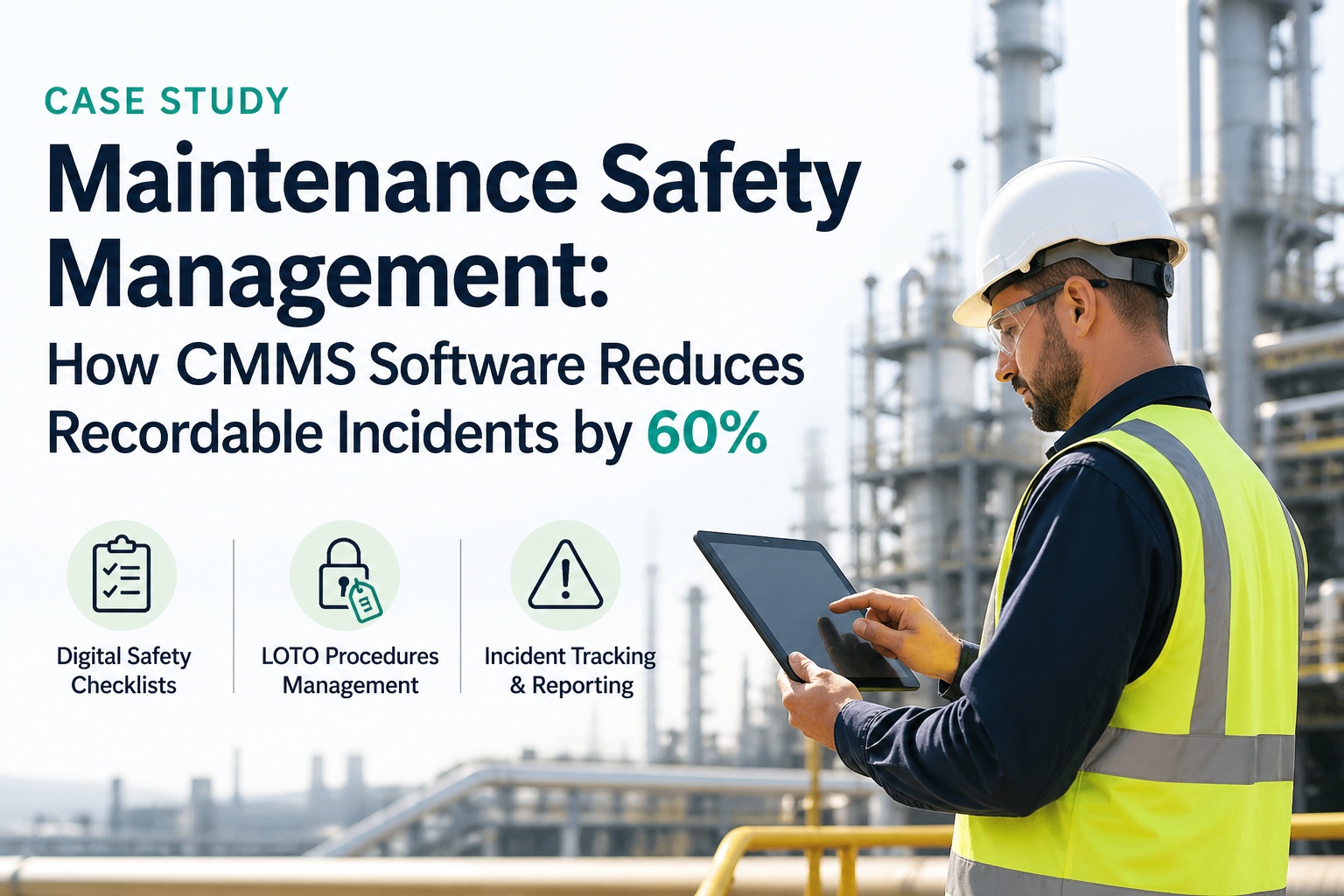
Within 60 days of that near-miss, ThermalPower's leadership made a decision that would change everything: they would completely overhaul their safety management approach using OXMaint's digital inspection and compliance platform. Eighteen months later, they've achieved something remarkable—zero recordable safety incidents, 100% regulatory compliance, and a complete transformation of their safety culture. This is the story of how they did it.
What Was Actually Going Wrong
ThermalPower wasn't run by careless people. They had safety protocols. They had trained technicians. They had inspection schedules. On paper, everything looked fine. But paper was exactly the problem.
Every day, technicians would grab clipboard inspection checklists from the maintenance office, walk their routes through the facility's 450+ critical safety systems, fill out forms by hand, and return them to be filed. Simple enough, right? Except inspections were getting skipped when the facility was short-staffed. Findings were getting lost between shifts. When someone did identify a problem—like that deteriorating valve—the paperwork would sit in someone's inbox while the equipment continued operating in an unsafe condition.
The real crisis wasn't just the missed inspections. It was the complete lack of visibility. Management had no way to know in real-time what had been inspected, what hadn't, or what urgent problems were lurking in those stacks of paper forms. By the time issues made it into weekly reports, they were already days old. In a power plant where equipment operates at extreme temperatures and pressures, days can be the difference between a close call and a disaster.
The Numbers Told the Story
Before digital transformation, ThermalPower was struggling:
- Only 68% of required safety inspections were being completed on time
- 8 recordable safety incidents every year—more than double the industry standard
- 23 near-miss events annually that could have become serious incidents
- $185,000 in regulatory fines over the previous two years
- 6+ days on average before safety findings reached decision-makers
- 32% of required inspections had incomplete or missing documentation
After the March incident, OSHA conducted an unscheduled inspection. The compliance score: 76%. The message was clear—ThermalPower needed to make fundamental changes, or face escalating consequences including potential operational shutdowns.
Why They Chose a Digital Solution
ThermalPower's Director of Safety, Maria Chen, had seen digital CMMS systems before. But she'd also seen them fail—clunky interfaces that technicians hated, systems that created more paperwork instead of less, platforms that promised the world but couldn't deliver real-time visibility when it mattered most.
What made OXMaint different was its mobile-first design specifically built for field inspections. Chen knew that any solution requiring technicians to return to a desktop computer to enter data was doomed from the start. The system needed to work where the work actually happened—out on the plant floor, in real-time, with equipment right in front of them. Mobile inspection capabilities weren't a nice-to-have feature. They were the entire foundation of making this work.
The other critical factor: OXMaint's pre-built compliance templates for energy facilities. Instead of spending months configuring inspection schedules from scratch, ThermalPower could start with OSHA, EPA, and NERC requirements already built in, then customize from there. For a facility racing against regulatory deadlines, this head start was invaluable.
The Four-Month Transformation
Most safety management system implementations drag on for a year or more. ThermalPower didn't have that luxury. They set an aggressive four-month timeline from kickoff to full deployment. Here's how they pulled it off:
Month 1: Building the Foundation
The team started with a complete safety audit—not of equipment, but of processes. Every inspection type, every regulatory requirement, every piece of safety-critical equipment got documented. They interviewed technicians about what actually happened during inspections versus what the procedures said should happen. The gaps were eye-opening.
They discovered that many inspection checklists hadn't been updated in years, still referencing equipment that had been replaced. Some technicians were taking shortcuts because certain checks seemed redundant. Others were finding creative workarounds for forms that didn't match field realities. The paper system wasn't just inefficient—it was actively encouraging non-compliance.
Month 2: Designing Inspections That Actually Work
This is where most implementations go wrong—leadership mandates a system without involving the people who'll actually use it. ThermalPower did the opposite. They formed a design team of experienced technicians, had them review every digital inspection checklist, and gave them authority to demand changes.
The result: inspection workflows that matched how technicians actually moved through the facility, checklists organized by equipment location instead of alphabetically, smart fields that auto-populated routine information, and mandatory photo requirements for any abnormal findings. Every digital checklist was tested in the field and revised based on real feedback.
Month 3: The Pilot That Proved It
Rather than trying to go facility-wide immediately, ThermalPower selected their highest-risk equipment systems for a pilot program—the very systems where the March near-miss occurred. Twenty technicians got tablets, training, and a challenge: prove that digital inspections could work better than paper.
The results were undeniable. Inspection completion rates hit 98% within two weeks. Average inspection time actually decreased despite more thorough documentation. And for the first time ever, management had real-time visibility into equipment conditions and safety findings without waiting for weekly reports.
Month 4: Full Deployment and the Paper Bonfire
Once the pilot proved successful, rollout accelerated rapidly. Every technician got a tablet and hands-on training. Paper inspection forms were officially retired. And in a symbolic gesture that became plant legend, the facility held a "paper bonfire" where years of old inspection logs were ceremonially shredded (after digital archival, of course).
The message was clear: there was no going back.
What Changed (Beyond the Metrics)
The numbers are impressive:
- Zero recordable safety incidents for 18 consecutive months
- 100% on-time completion of all required inspections
- Near-miss events dropped 87% from 23 to just 3 annually
- Perfect 100% score on the follow-up OSHA audit
- Safety issue resolution time cut from 6.2 days to 1.1 days
- $520,000 in annual savings from eliminated incidents and fines
But the real transformation goes deeper than any metric can capture. The culture changed.
Technicians started taking pride in thorough inspections instead of viewing them as bureaucratic overhead. Why? Because they could see their findings getting acted on immediately. Take a photo of a concerning equipment condition at 9 AM, and by 10 AM a supervisor has reviewed it, assigned a work order, and scheduled the repair. That immediate feedback loop transformed inspections from paperwork exercises into meaningful safety contributions.
Management's relationship with safety changed too. With real-time dashboards, executives could see exactly what was happening across the facility at any moment. No more waiting for monthly reports. No more wondering if inspections were actually getting done. Complete transparency created complete accountability—and dramatically better results.
The Technology Behind the Transformation
Understanding what makes OXMaint's safety inspection system work requires looking at how it handles the complete inspection lifecycle:
Automated Scheduling That Never Forgets
Every piece of safety-critical equipment has its own digital profile with required inspection frequencies based on regulatory requirements and manufacturer specifications. The system automatically generates inspection work orders, assigns them to qualified technicians, and escalates if they're not completed on time. No human needs to remember that the pressure relief valves need quarterly inspection or that the emissions monitoring system requires monthly calibration checks—the system handles it all automatically.
Mobile Inspections That Capture Everything
Technicians receive their daily inspection assignments directly on their tablets. Each inspection includes a digital checklist with mandatory fields that can't be skipped, photo requirements for specific equipment conditions, and the ability to capture equipment readings that get trended over time. GPS verification ensures inspections are performed at the actual equipment location. Digital signatures create accountability. And everything syncs in real-time to the central system.
Instant Escalation When It Matters
Here's where the system truly shines: urgent findings don't wait in a queue. When a technician marks something as a safety concern, automated workflows immediately notify relevant supervisors and safety managers. High-priority issues trigger escalation protocols if they're not acknowledged within specified timeframes. The system won't let critical safety findings fall through the cracks.
Predictive Intelligence That Prevents Problems
Over time, the system builds a complete history of every piece of equipment's inspection data. Equipment readings get trended to identify gradual degradation before it becomes dangerous. Failure patterns get analyzed to optimize inspection frequencies. Predictive analytics transform reactive safety management into proactive risk prevention.
What This Cost (And What It Saved)
ThermalPower invested $224,000 in the first year covering software licensing, implementation services, mobile devices, training, and integration work. For a facility generating hundreds of millions in annual revenue, it wasn't a massive capital project. But leadership still needed to justify the ROI.
The financial returns came from multiple sources:
| Benefit Category | Annual Value | How It Was Achieved |
|---|---|---|
| Eliminated Regulatory Fines | $92,500 | Perfect compliance record vs. previous violations |
| Prevented Safety Incidents | $180,000 | Zero incidents eliminating medical, investigation, and lost-time costs |
| Reduced Insurance Premiums | $95,000 | 22% decrease in workers' comp based on safety performance |
| Avoided Equipment Failures | $125,000 | Predictive maintenance preventing emergency repairs |
| Improved Reliability | $85,000 | 31% reduction in unplanned outages |
| Administrative Efficiency | $62,000 | Automated reporting and documentation |
Total annual benefits: $639,500. Payback period: 5.3 months. But as Director Chen pointed out in the board presentation, "You can't put a price tag on preventing the kind of incident that could have shut down this facility permanently."
The Lessons Other Facilities Can Learn
ThermalPower's experience offers valuable insights for any energy facility considering digital safety transformation:
Involve technicians from day one. The people doing inspections know where the problems are. Give them real influence over system design, not just token input. ThermalPower's success came largely from building workflows that matched how work actually gets done.
Don't try to replicate paper digitally. The goal isn't electronic clipboards. It's reimagining how safety inspections should work when freed from paper's limitations. Real-time escalation, automated scheduling, predictive analytics—none of this was possible with paper, and that's the whole point.
Make compliance automatic, not aspirational. Relying on people to remember inspection schedules or follow up on findings creates failure points. Systems should make compliance the path of least resistance, with automated reminders, escalations, and accountability built in.
Prove it works before going all-in. The pilot program gave ThermalPower concrete evidence that digital inspections delivered better results. That proof built organizational confidence and accelerated adoption.
Transparency drives accountability. When everyone can see inspection status and safety findings in real-time, performance improves naturally. Visibility is powerful.
Where They're Heading Next
ThermalPower isn't done innovating. With their foundation of digital safety management now solid, they're expanding into advanced capabilities:
IoT sensor integration is next—connecting equipment monitoring systems directly to OXMaint so condition-based inspections can be automatically triggered when equipment parameters drift outside normal ranges. They're also piloting augmented reality inspection guidance for complex equipment, and exploring AI-powered predictive maintenance that can forecast equipment failures weeks or months in advance.
The facility has also become a benchmark for the energy industry. Other power plants are visiting to study their safety transformation. Regional utility organizations are featuring ThermalPower's approach in safety conferences. And OSHA has recognized them as a model for how digital tools can enhance safety compliance.
The Bottom Line
What started as a crisis—a near-catastrophic equipment failure that could have devastated the facility—became the catalyst for fundamental transformation. By implementing OXMaint's digital inspection and compliance platform, ThermalPower didn't just improve their safety metrics. They changed how everyone in the organization thinks about safety.
Inspections aren't paperwork anymore. They're real-time intelligence gathering that protects people and equipment. Safety findings aren't bureaucratic reports sitting in filing cabinets. They're immediate action items visible to everyone who needs to know. Compliance isn't a struggle. It's automatic.
The result: zero incidents, perfect compliance, transformed culture, and over half a million dollars in annual savings. Not bad for a four-month project that started with a clipboard and ended with a revolution.
For energy facilities still managing safety with paper systems, the question isn't whether digital transformation makes sense. It's how long they can afford to wait.
Your Facility Deserves the Same Safety Excellence
Don't wait for a near-miss to force change. See how OXMaint's digital inspection platform can transform your safety management—starting today.
Begin Your TransformationTalk to Safety Experts