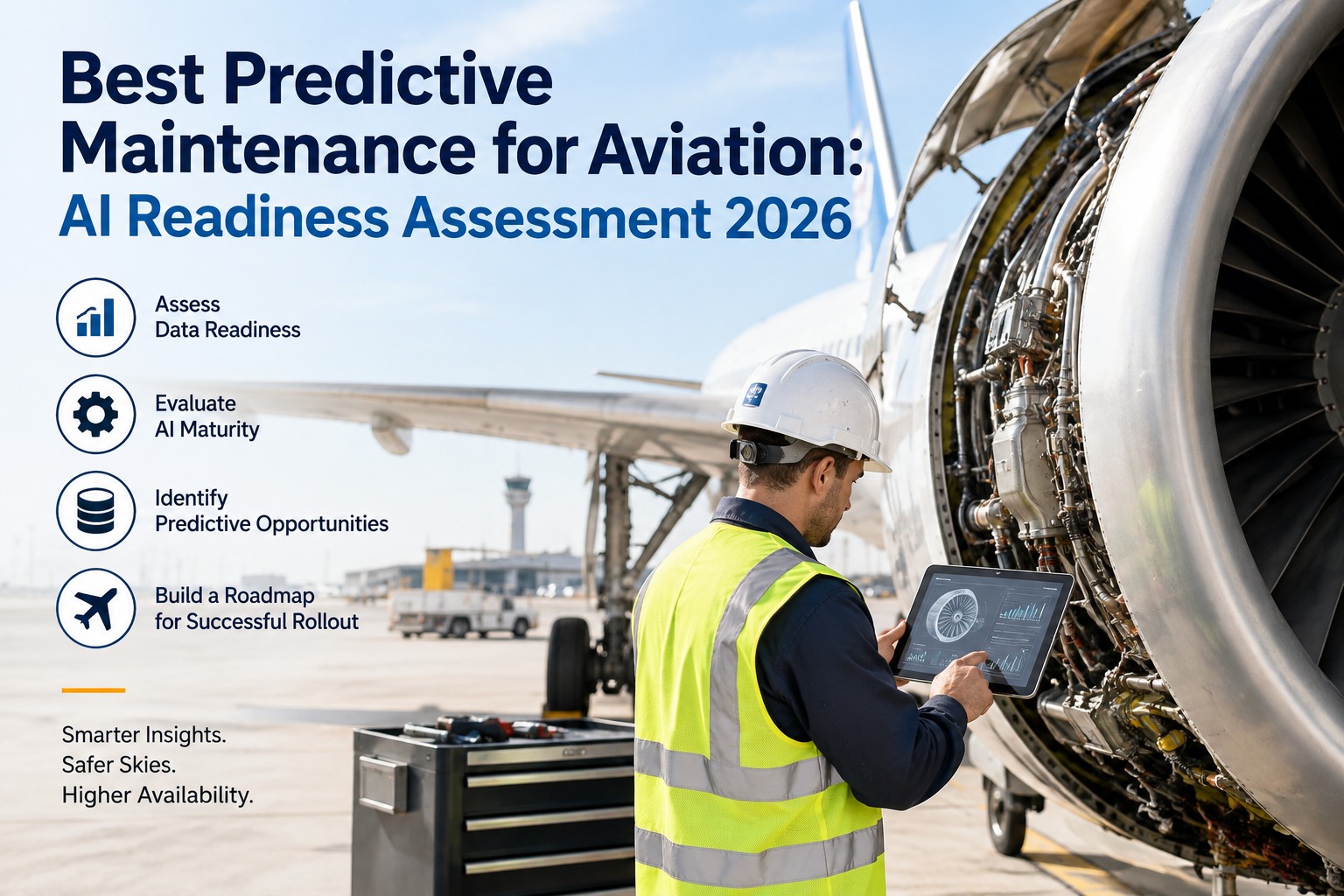
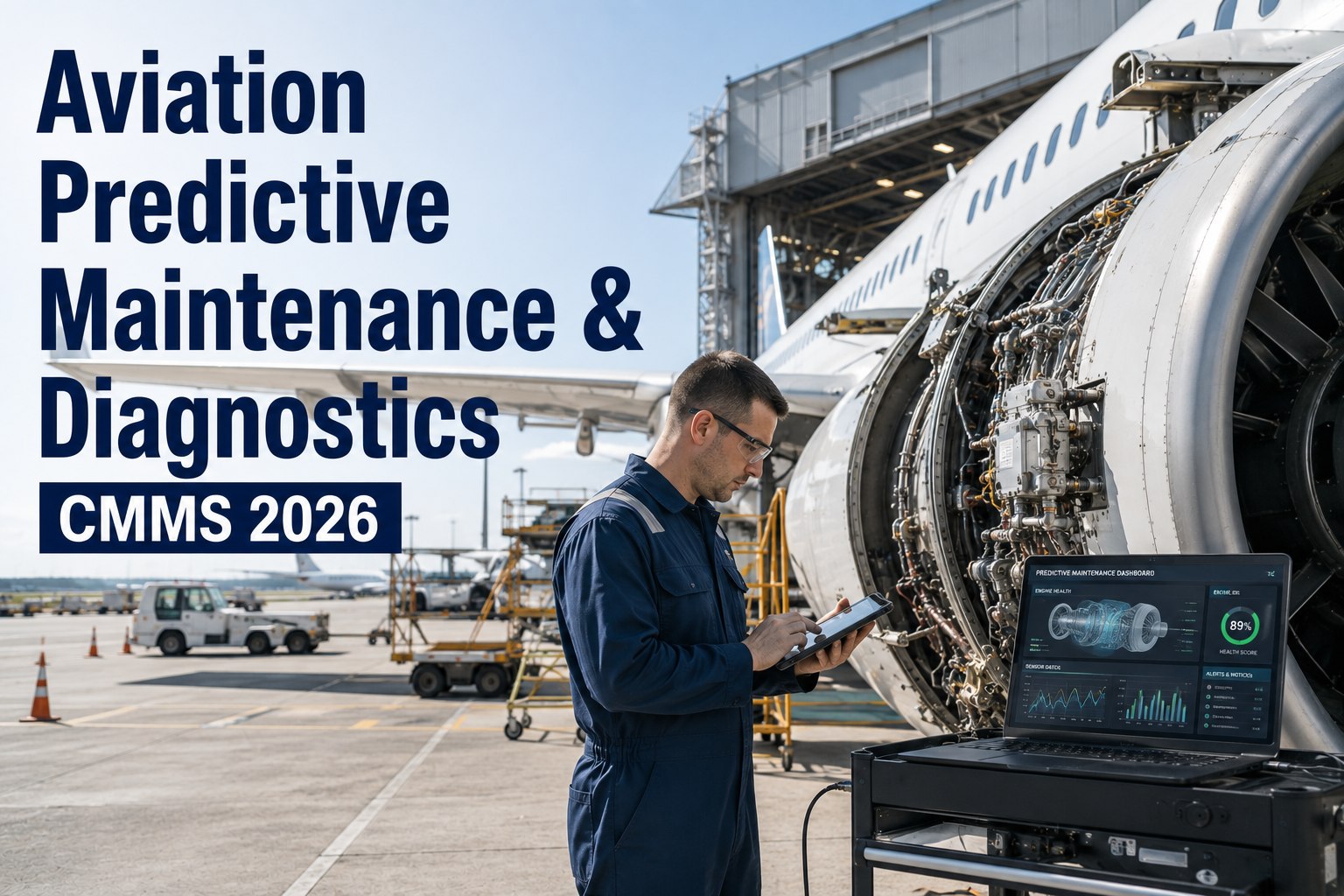
Aviation maintenance represents 15 to 20 percent of total airline operating costs — and the majority of that figure is not fixed, it is preventable. Airlines, MRO operators, and airport ground service teams running AI-driven maintenance platforms in 2026 are documenting 20 to 35 percent reductions in maintenance spend, 60 to 68 percent fewer unscheduled removals, and AOG cost avoidance that frequently exceeds four million dollars per year for a 40-aircraft operator. This guide breaks down exactly how those numbers are achieved, what the 2026 cost benchmarks look like across every category of aviation maintenance spend, and how predictive asset management platforms are delivering measurable ROI within 90 days of go-live for commercial airlines, MRO providers, and regional operators worldwide.
Cut Your Maintenance Costs by Up to 35% — Starting in 18 Days
Oxmaint deploys in 18 days, integrates with AMOS, TRAX, and SAP PM, and delivers measurable AOG reduction from the first month of go-live. No heavy implementation fees. No IT overhead. Measurable results in dollars from day one.
What Is AI-Driven Aviation Maintenance Cost Reduction?
The systematic use of machine learning, sensor analytics, and automated work management to eliminate the financial root causes of unplanned downtime in airline and MRO operations.
Traditional maintenance schedules are built on fixed calendar or flight-hour intervals — replacing components regardless of actual condition. AI changes this model entirely. Onboard sensors, ACARS data streams, and historical failure patterns feed predictive models that calculate exactly when each component needs attention. Labor is deployed when condition data demands it, parts arrive before failures occur, and operations shift from reactive firefighting to surgical, cost-optimised execution. For a 40-aircraft carrier, this shift typically saves $4 to 8 million annually in maintenance costs alone. To model those numbers against your own fleet profile, get a free trial for 30 days and see your cost data in real time, or book a session with an Oxmaint aviation specialist who will walk you through a live ROI projection — start your free trial now or book a 30-minute demo today.
The Full Financial Exposure of Unmanaged Aviation Maintenance
Before optimising costs, you need to see the full picture of what unmanaged maintenance is already costing you. These 2026 benchmarks cover every major category of preventable aviation maintenance expense.
The Preventable Pain Points Draining Your Maintenance Budget
These four operational failure modes cost aviation operators real money every single day. None of them are inevitable — all four are eliminated by AI maintenance platforms within the first quarter of deployment.
Eight Capabilities. One Platform. A Measurable Result on Every Cost Driver.
Every feature in the Oxmaint aviation CMMS was built to target a specific, quantifiable line in your MRO budget. Here is how each module performs against real 2026 benchmarks.
All eight modules activate from day one with no third-party integrations required for core functionality. If you want to see exactly how Oxmaint maps to your current fleet cost structure, start a free 30-day trial with no credit card required, or book a live walkthrough with an aviation specialist — start your free trial and explore every module against your real operational data, or book a 30-minute demo with our aviation team to see your projected cost reduction live.
Reactive vs AI-Predictive Maintenance: The Full Cost Comparison
The financial and operational gap between legacy reactive maintenance and AI-driven predictive management widens every year as aircraft systems grow more complex. Where does your current operation sit on this spectrum?
| Maintenance Dimension | Reactive Maintenance — Legacy | AI Predictive — Oxmaint |
|---|---|---|
| Maintenance trigger | Component failure or fixed time interval | Real-time condition data and failure probability score |
| AOG events per aircraft per year | 3.8 average — 2026 industry benchmark | Reduced 60 to 68 percent in Year 1 of deployment |
| Emergency parts procurement | 200 to 400% cost premium on emergency buys | Planned procurement at standard market pricing |
| Technician utilisation rate | 65 to 72% effective efficiency | 85 to 90% with AI-driven task assignment |
| AD and SB compliance tracking | Manual process — constant gap exposure | Automated — 100% coverage at all times |
| No Fault Found removal rate | 30 to 40% of avionics removals | Reduced below 8% with fleet pattern AI analysis |
| Inventory excess and obsolete rate | 22 to 30% of total inventory value | 18 to 25% holding cost reduction with demand AI |
| Maintenance as % of operating cost | 15 to 20% of total airline operating cost | Reduced to 10 to 14% of operating cost |
What Aviation Operators Achieve in the First 12 Months
Questions from Aviation Maintenance Leaders
How quickly will we see measurable cost reduction after deployment?
Most operators see measurable cost reduction within the first 30 days, primarily through reduced emergency parts procurement and faster work order execution. AOG reduction of 40 to 60 percent becomes visible in months 2 and 3 as AI models calibrate to your fleet's specific failure patterns. Full ROI, including inventory optimisation, typically arrives within 6 to 12 months. The average Oxmaint aviation customer documents 2.3 times platform ROI within the first year. To model the timeline for your specific fleet size and current maintenance maturity, the best starting point is a live cost projection with your actual data — book a 30-minute demo and we will run the ROI projection live with your numbers.
Does Oxmaint integrate with AMOS, TRAX, or SAP PM?
Yes — Oxmaint provides native bidirectional integration with AMOS, TRAX, MXI Maintenix, and SAP PM. For proprietary systems, the open API enables custom integration in 5 to 10 business days. All historical maintenance records, work orders, and component histories are preserved with full traceability during migration. No internal IT resources are required — Oxmaint's aviation technical team handles the complete integration and data migration process from first call through go-live. If you want to verify compatibility with your current stack before committing, start your free trial and our team will map your integration architecture at no cost.
Is the platform compliant with FAA Part 121 and EASA Part-145?
Oxmaint is built specifically for FAA Part 121 and EASA Part-145 operational environments. The platform generates compliant work order documentation, maintains immutable audit trails for every maintenance action, and tracks all open ADs, SBs, and MEL items in real time. Electronic signatures meet FAA Order 8900.1 and EASA AMC 145.A.55 authentication standards. FAA Form 8130-3 and EASA Form 1 are generated and digitally signed within the platform. Regulatory template updates push automatically as requirements change — your records stay audit-ready at all times without any manual intervention from your compliance team.
What if we have limited digital maintenance history for the AI models to learn from?
Oxmaint's AI operates effectively with three input types: real-time sensor data, historical maintenance records, and flight operational data. If you are transitioning from paper-based records, the baseline models draw on fleet-type and manufacturer data to generate initial predictions while learning from your live operational data over time. Operators with minimal digital history consistently reach full model accuracy within 60 to 90 days of go-live. To assess your data readiness before any commitment, start a free trial and our aviation team will run a complete data readiness evaluation at no cost as part of your onboarding.
Every Day of Reactive Maintenance Is a Day of Preventable Financial Loss
A 50-aircraft operator running reactive maintenance loses an estimated $34,000 per day to avoidable AOG costs, excess inventory carrying expenses, and unscheduled labour premiums. Oxmaint eliminates that exposure within 18 days of go-live — with zero IT burden on your team, full FAA and EASA compliance from day one, and a 2.3 times ROI benchmark backed by documented customer results across six continents.
Trusted by MRO operations on 6 continents · SOC 2 Type II · GDPR Compliant · FAA and EASA Ready