Airport maintenance budgets do not shrink on their own — they grow, predictably and relentlessly, driven by aging infrastructure, expanding terminal footprints, new technology deployments, and regulatory requirements that only increase in scope. The question facing every airport operations director and finance leader is not whether maintenance costs will rise, but whether the organization is positioned to extract maximum operational value from every dollar spent. The data from airports that have deployed CMMS automation with AI analytics is now conclusive: facilities running modern maintenance platforms consistently report 20–40% reductions in total maintenance costs, 50% decreases in unplanned downtime, and 25% extensions in equipment lifespan — results that compound into eight-figure savings at major hub airports operating thousands of assets across millions of square feet. The mechanism is not magic — it is the systematic elimination of the five cost multipliers that inflate every reactive maintenance program: emergency repair premiums, unnecessary preventive service, parts inventory waste, compliance penalty exposure, and the invisible operational drag of untracked asset degradation. Emergency repairs alone cost 4.8x more than planned maintenance — meaning every dollar shifted from reactive to planned work delivers nearly five dollars of cost avoidance. The airports achieving 35%+ cost reductions are not cutting corners — they are eliminating waste with precision that manual programs cannot match. See how OxMaint's automation framework maps to your airport's specific cost structure — start a free trial and run the numbers with your own data.
What Would a 35% Maintenance Cost Reduction Mean for Your Airport?
OxMaint delivers work order automation, predictive scheduling, smart inventory, and compliance documentation in one platform — with measurable ROI within 90 days.
The Five Cost Multipliers CMMS Automation Eliminates
Every airport maintenance program — regardless of size — contains five systematic cost multipliers that inflate spending beyond what is operationally necessary. These are not minor inefficiencies: together, they typically account for 30–45% of total maintenance spend. CMMS automation targets each one with a specific mechanism, creating compounding savings that accelerate over time as data quality improves and predictive models mature.
Emergency Repair Cost Premium
Unplanned breakdowns require after-hours technician callouts, expedited parts procurement, vendor emergency dispatch fees, and overtime labor — all at premium rates. A $2,000 planned motor replacement becomes a $10,000 emergency event when the part is not in stock and requires rush shipping. CMMS automation shifts work from reactive to planned through predictive scheduling, driving emergency-to-planned ratios below 15%.
Unnecessary Preventive Maintenance
Fixed-interval PM schedules service equipment regardless of actual condition — replacing filters that have months of life remaining, lubricating systems that do not need it, and dispatching technicians to inspect assets showing no degradation. Condition-based maintenance triggered by sensor data and AI analysis eliminates this waste, directing labor only where and when it is actually needed.
Spare Parts Inventory Inefficiency
Without consumption data linked to work orders and asset failure patterns, airports either overstock parts that rarely fail (tying up capital) or understock critical components (triggering expedited procurement at premium cost when failures occur). Smart inventory management linked to predictive maintenance data optimizes stock levels based on actual consumption patterns and forecasted demand.
Compliance Penalty Exposure
Missed inspections, expired certifications, and incomplete maintenance documentation generate enforcement actions that carry direct financial penalties — OSHA violations up to $156,259 per incident in 2026 — plus the indirect costs of remediation, legal review, and operational restrictions. Automated compliance scheduling with digital audit trails eliminates lapse risk entirely.
Unoptimized Asset Replacement Timing
Without condition data and lifecycle cost analytics, capital replacement decisions are driven by either catastrophic failure (too late) or fixed depreciation schedules (often too early). Both approaches waste capital. Emergency CapEx requests drop by 38% when replacement timing is driven by actual condition data and remaining useful life estimates rather than calendar assumptions or crisis response.
Where the Savings Come From: Six CMMS Automation Capabilities
Work Order Automation
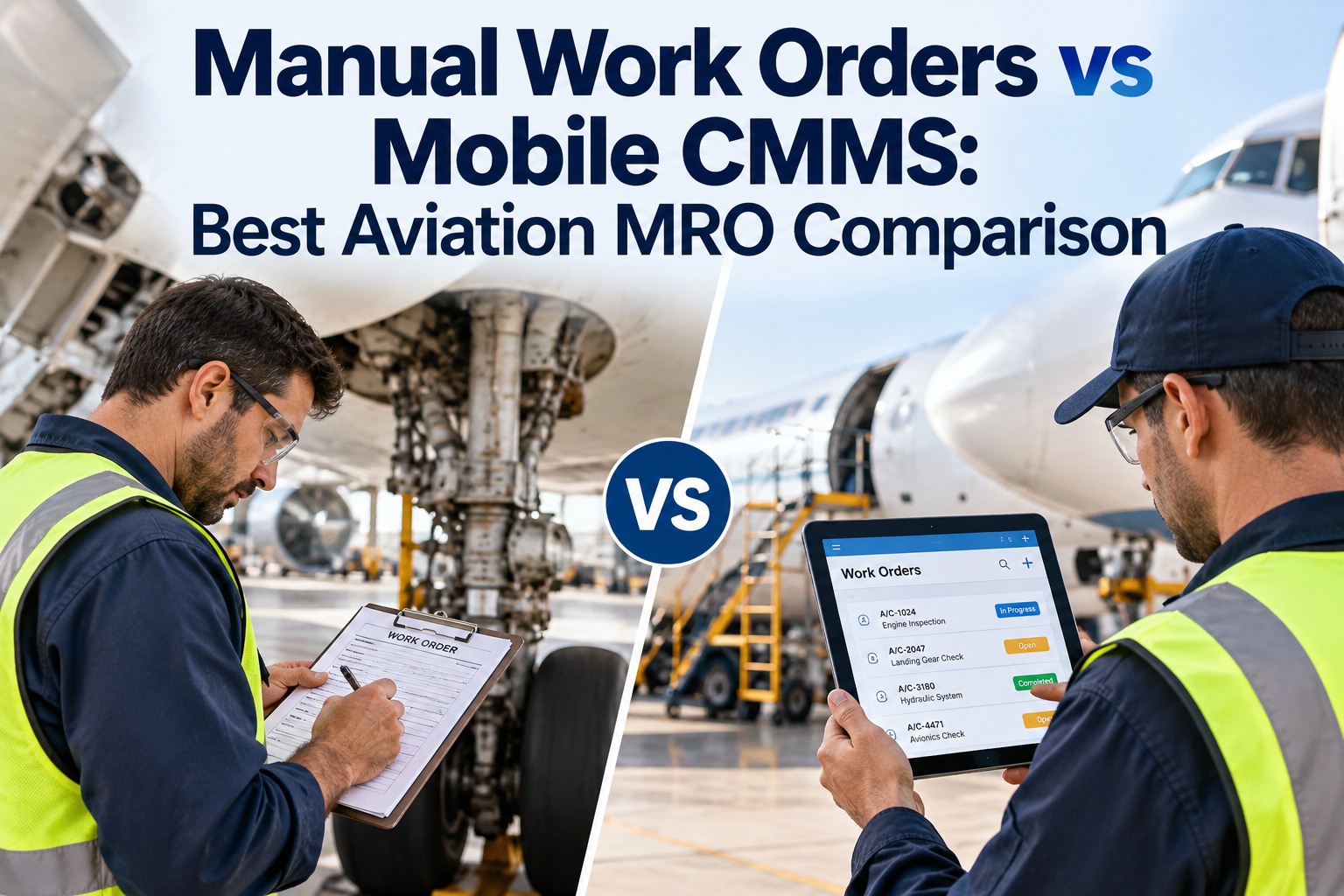
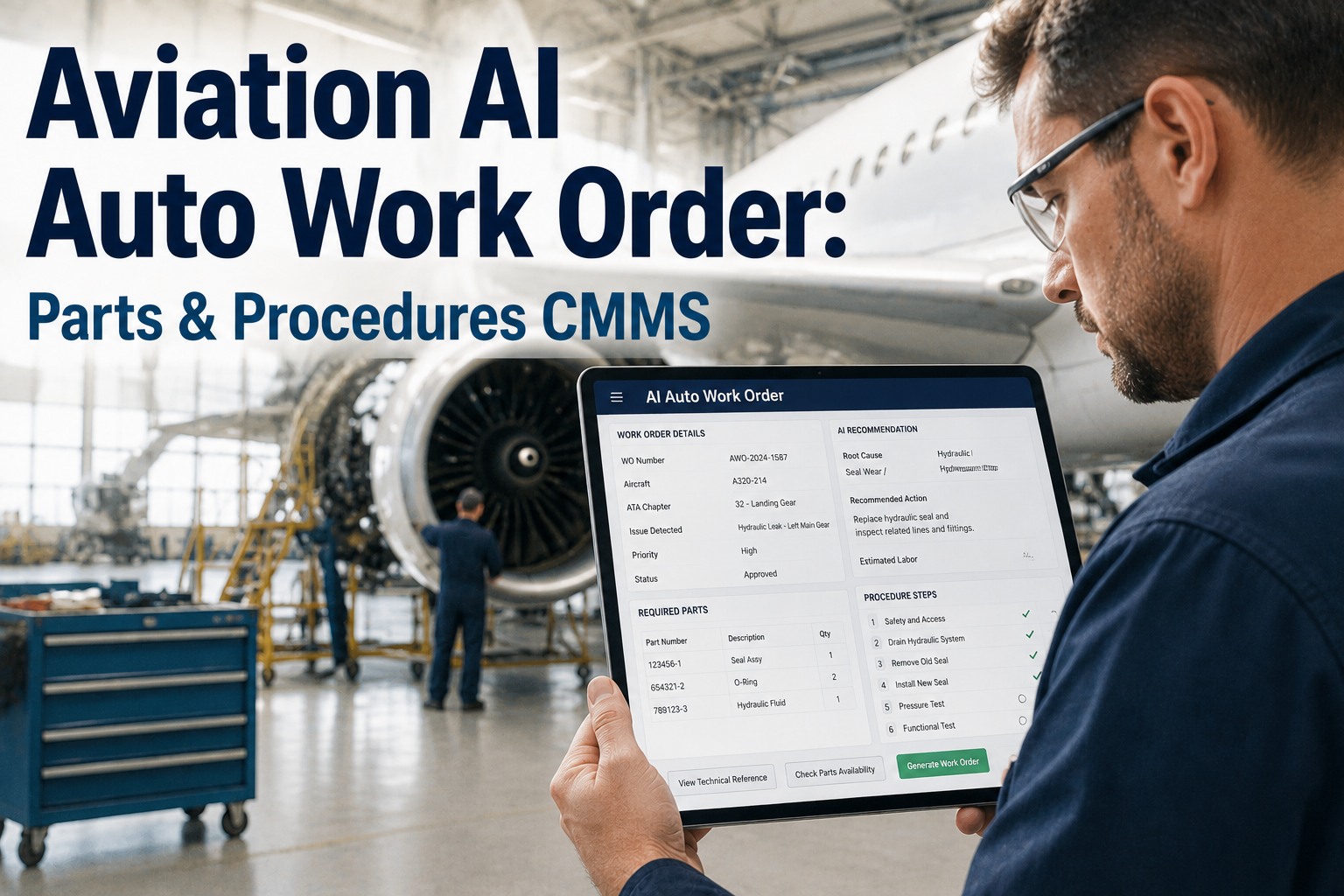
Auto-generated, auto-routed, mobile-accessible work orders with pre-populated parts lists and skill requirements eliminate manual ticket creation, phone-based dispatch, and paper documentation — reclaiming 15–25% of maintenance labor hours for productive wrench time rather than administrative overhead.
Predictive Maintenance AI
Machine learning models analyzing sensor data, maintenance history, and usage patterns identify degradation 30–90 days before failure occurs — converting unplanned shutdowns into scheduled maintenance windows that minimize operational disruption and eliminate the cost premium of emergency response.
Smart Parts Management
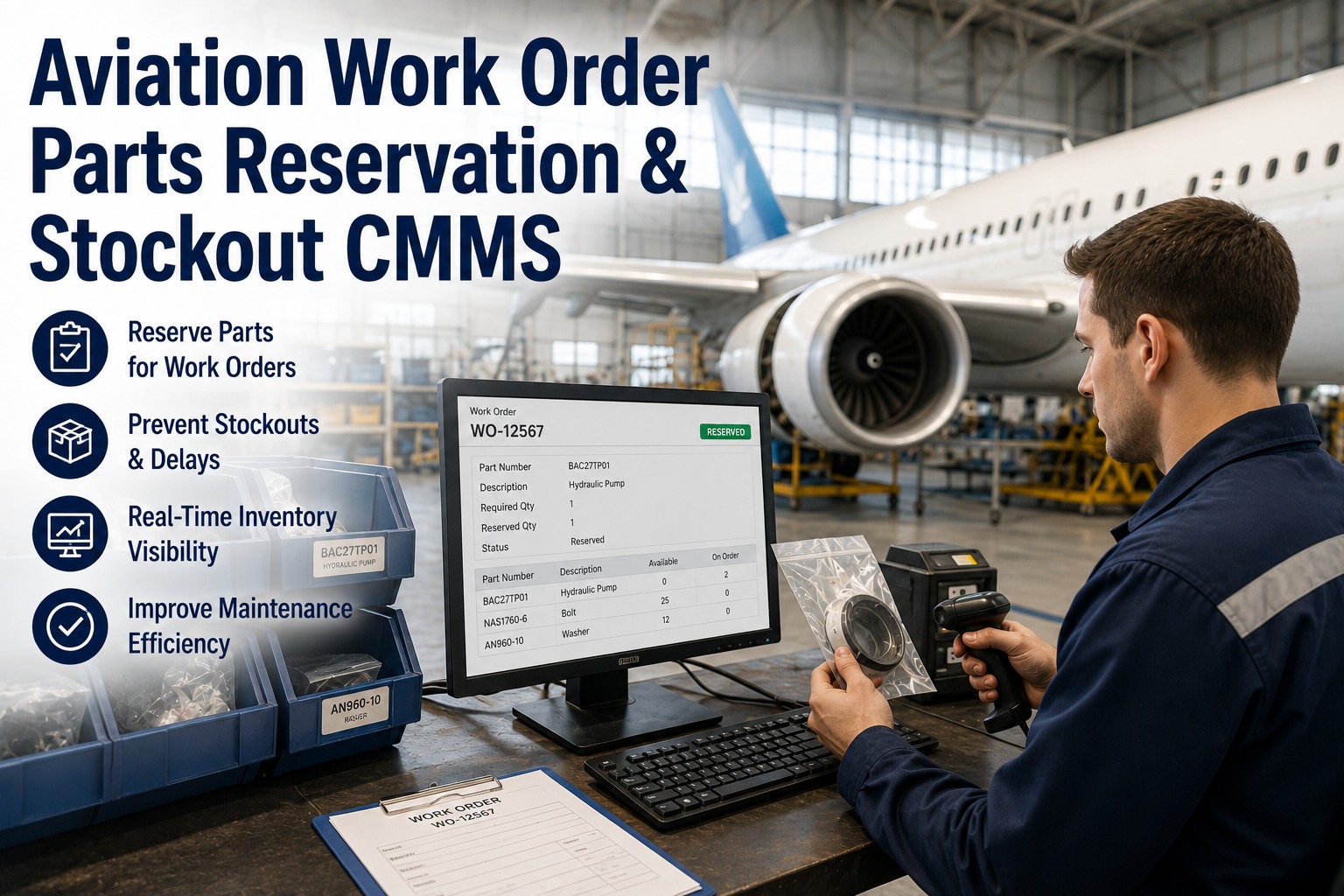
Consumption-linked inventory with automated reorder points, minimum/maximum stock rules, and predictive demand forecasting eliminates both stockouts and excess inventory. Work order closure auto-updates stock levels and posts costs to asset records without manual data entry.
Compliance Documentation Engine
Every completed maintenance task on a compliance-relevant asset generates a timestamped, technician-attributed digital record automatically. FAA Part 139 inspection logs, OSHA documentation, and building code evidence all generated from the same work order system. Audit preparation drops from weeks to minutes.
Asset Lifecycle Analytics
Condition scoring, maintenance cost trending, and remaining useful life estimation across every asset class. Finance teams receive data-driven replacement timing recommendations instead of guesswork-based CapEx requests — extending equipment service life by 25% on average while reducing the risk of catastrophic in-service failure.
Portfolio-Level Reporting
Real-time dashboards showing KPIs across all airport asset classes — PM compliance rates, emergency-to-planned ratios, cost-per-asset trends, downtime hours, and technician utilization. Automated reporting replaces the 15–20 hours per week of manual spreadsheet compilation that many airport maintenance teams currently invest.
The Implementation Timeline: From Deployment to Measurable ROI
Asset Registry and Configuration
Map highest-criticality assets, configure PM schedules, build inspection checklists, and set up user access. No heavy IT implementation — OxMaint deploys as a cloud platform with mobile apps ready from day one. Start with your top-priority asset classes and expand progressively.
Work Order Automation and Team Training
Migrate existing PM schedules into automated workflows, train technicians on mobile work order management, and begin capturing digital maintenance records. First measurable benefit: elimination of paper-based documentation gaps and manual dispatch inefficiency.
First Measurable Cost Reductions
Work order automation savings, scheduling corrections, and initial inventory optimization deliver visible cost reductions within the first 60–90 days. PM compliance rates climb from the industry average of 58% toward the 89%+ that CMMS-managed programs achieve — directly reducing emergency repair frequency.
Predictive Models Calibrate and Compound
AI failure prediction models reach operational accuracy as historical maintenance data accumulates. Unplanned downtime reductions of 30–50% become measurable. Inventory optimization reaches full effectiveness. The average OxMaint customer documents 2.3x platform ROI within the first 12 months.
Full Program Maturity and CapEx Integration
Condition-based lifecycle analytics inform capital planning with data-driven replacement timing. Emergency CapEx requests decline by 38%. Portfolio-level reporting provides CFO-grade documentation for budget justification. Total maintenance cost reductions of 20–40% are fully realized and documented with auditable data.
The critical insight: ROI from CMMS automation is not a distant future-state projection — it begins within the first month of deployment through work order efficiency gains and accelerates as data depth increases. Airports that delay implementation are not saving money — they are accumulating the compounding cost of waste that automation would have eliminated. Start capturing your first savings this month — start a free trial and deploy your first automated PM schedules within days, or book a demo to see ROI projections modeled against your airport's specific cost structure.
Frequently Asked Questions
How quickly can an airport expect to see ROI from CMMS implementation?
Most airports see measurable benefits within 60–90 days of deployment, primarily through reduced administrative overhead, improved PM compliance, and decreased emergency work order frequency. Full ROI — including predictive maintenance savings, inventory optimization, and CapEx planning improvements — typically materializes within 12–18 months. Cloud-based platforms like OxMaint deploy in 2–4 weeks rather than the 3–6 months required for on-premise systems, accelerating the path to initial value capture significantly.
What is the difference between 20% and 35% cost reduction — and what determines which level an airport achieves?
The 20% tier reflects work order automation, improved scheduling, and basic inventory management — achievable by any airport that deploys a modern CMMS and executes the implementation process. The 35%+ tier requires integration of IoT sensor data for predictive maintenance, AI-driven condition-based scheduling, and portfolio-level analytics that optimize capital planning alongside operational maintenance. The determining factor is not the size of the airport but the extent to which the organization leverages the data the CMMS captures to drive progressively more intelligent maintenance decisions.
Does CMMS automation replace existing maintenance staff?
No — CMMS automation redirects existing staff from low-value administrative tasks (manual work order creation, paper documentation, phone-based dispatch, spreadsheet reporting) to high-value maintenance execution. The typical result is not headcount reduction but productivity increase: the same team completes more planned work, responds faster to priorities, and spends less time on paperwork. Airports consistently report 15–25% improvements in wrench-time productivity after CMMS deployment without any staffing changes.
How does CMMS cost reduction compare to the platform investment?
Cloud-based CMMS platforms deliver 40–50% better ROI than on-premise alternatives due to lower implementation costs, faster deployment, and reduced IT infrastructure requirements. Industry benchmarks show 300–500% returns within 18–24 months for comprehensive implementations. The average OxMaint aviation customer documents 2.3x platform ROI within the first year — meaning the platform pays for itself more than twice over before the 12-month mark, with savings continuing to compound as predictive models mature and data depth increases.
Stop Budgeting for Waste. Start Automating for Results.
OxMaint delivers the work order automation, predictive maintenance AI, smart inventory management, and compliance documentation that airports need to achieve measurable cost reductions — with ROI visible within 90 days of deployment.