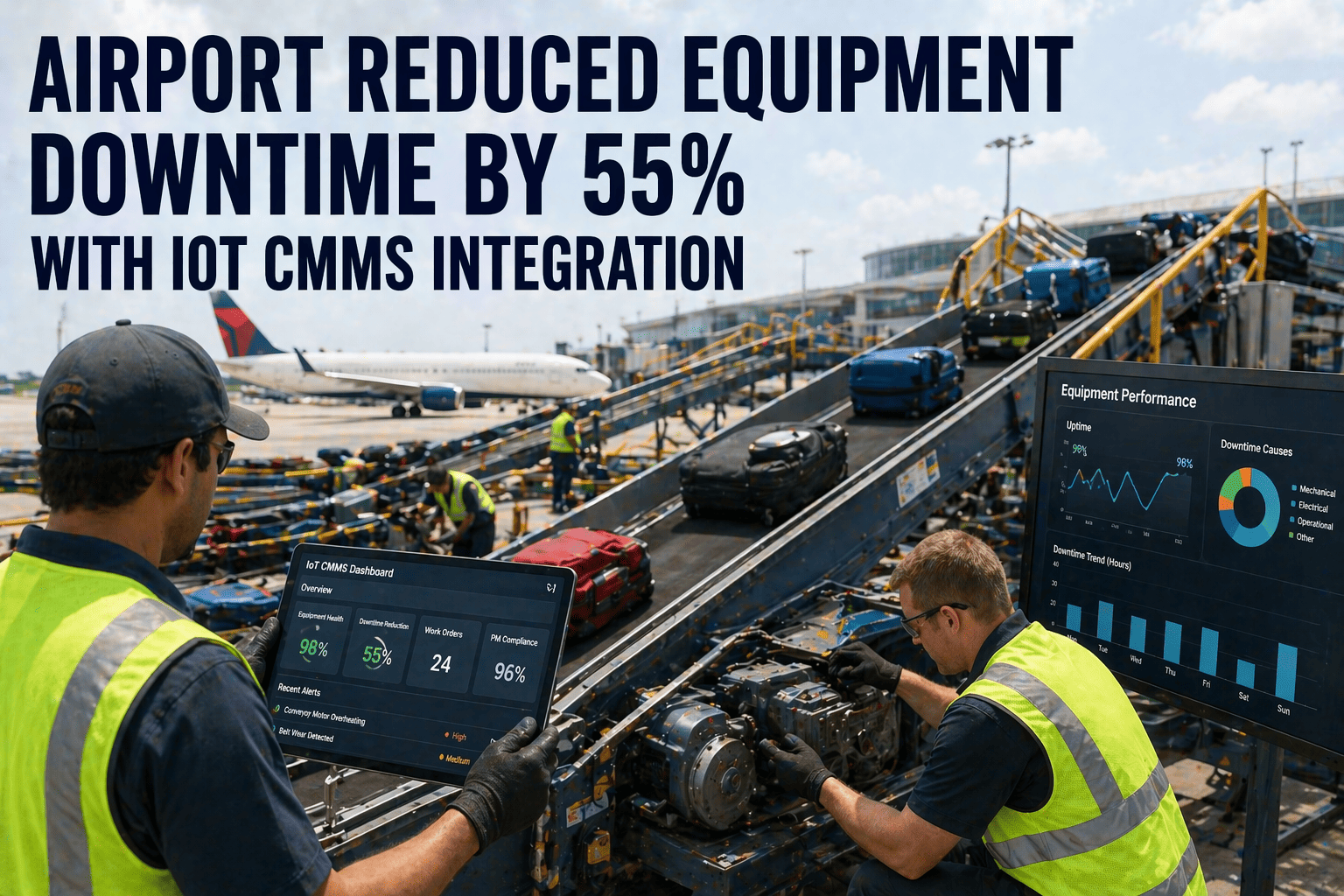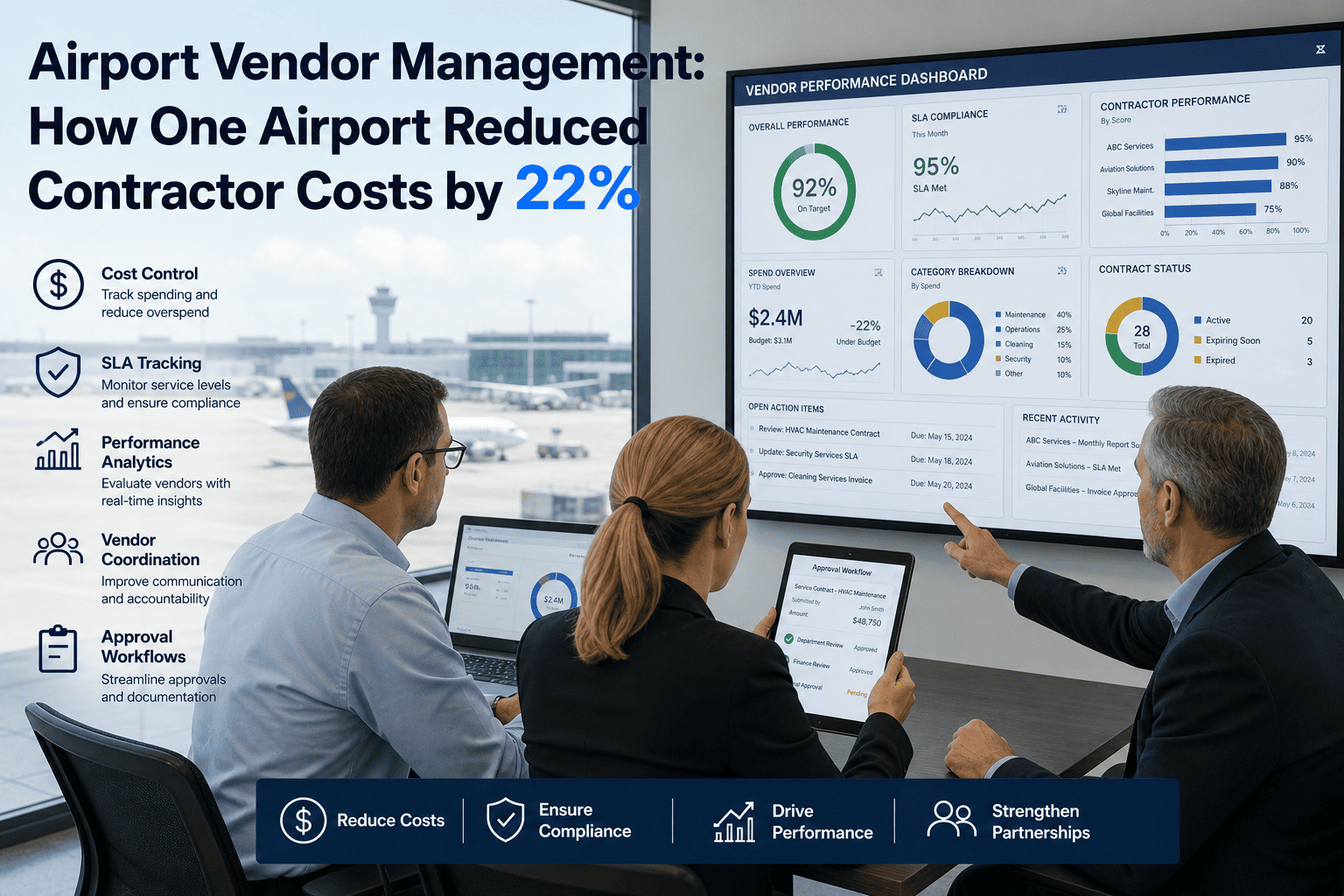
Airport maintenance budgets are under pressure from every direction — rising labor costs, aging terminal infrastructure, and regulatory compliance demands that never shrink. One category where airports consistently overpay is contractor management. Without structured vendor performance tracking and automated invoice verification, overpayments and SLA breaches go undetected for months. This case study outlines how one regional airport reduced its total contractor spend by 22% within 14 months by deploying Oxmaint's vendor management module — without cutting a single service line. Ready to audit your own vendor spend? Start a free trial or book a demo with the Oxmaint team.
Airport Reduces Contractor Costs by 22% with Vendor Management
A regional international airport was paying for contractor services it could not fully verify. Here is how structured SLA tracking, vendor scorecarding, and automated invoice checks closed the gap — and recovered six figures in a single budget cycle.
Do You Know What Your Vendors Are Actually Delivering?
Most facilities teams manage contractors through email, PDFs, and spreadsheets. Oxmaint centralizes every vendor contract, SLA, work order, and invoice in one system — giving you the data to hold vendors accountable and prove the value of every dollar spent. Start a free trial for 30 days or book a demo to see the vendor dashboard in action.
Where the Money Was Going — and Why Nobody Noticed
The airport's facilities team managed 18 contractor relationships across HVAC, electrical, vertical transportation, fire suppression, cleaning, and groundside equipment. Each contractor operated on a separate contract, submitted separate invoices, and was reviewed — loosely — in quarterly meetings. The structural problem was not bad vendors. It was missing data.
Over a third of contractor invoices had no corresponding verified work order in the system. Finance approved them anyway — no audit trail existed to challenge them.
Response time SLAs were written into contracts but never systematically tracked. Contractors knew this. Late responses carried no commercial consequence.
Every active contract contained penalty clauses for SLA breaches. In three years, the airport had claimed zero credits — because breaches were never documented at the time of occurrence.
Manually matching contractor invoices against paper job sheets consumed facility management staff time that should have been spent on operations, not accounting reconciliation.
Four Systems That Closed the Gap
Each contractor was onboarded into Oxmaint with full contract terms, SLA response time commitments, scope of work, and rate card data. Every work order issued to that vendor was automatically linked to the relevant contract.
When a work order was assigned to a contractor, the SLA clock started. Oxmaint logged the time from assignment to acknowledgement, to site attendance, to completion — automatically. No manual recording, no dispute over timestamps.
When a contractor invoice arrived, Oxmaint matched it against completed work orders — verifying scope, hours, and materials against what was contracted. Discrepancies were flagged automatically before payment approval.
A monthly scorecard for each contractor showed SLA compliance percentage, average response time, work quality scores from technician feedback, and invoice accuracy rate — giving procurement teams objective data for contract renewal negotiations.
Vendor Management: Then and Now
Where the 22% Was Found
What Powers the 22% Reduction
Contract response time commitments are built into the work order workflow. When a vendor is assigned, compliance tracking begins automatically — no separate process required.
Oxmaint cross-references every contractor invoice against completed work orders. Line item discrepancies are flagged before they reach accounts payable — protecting against systematic overcharging.
Each vendor receives a monthly scorecard covering response time compliance, work quality ratings, invoice accuracy, and rework rate — giving procurement teams objective leverage at renewal time.
Compare vendor performance across categories and terminals side by side. Identify which vendors consistently underperform and which earn preferential contract treatment — all from one management view.
Common Questions on Airport Vendor Management
How does Oxmaint handle vendors who use their own job management systems?
What SLA types can Oxmaint track for contractor agreements?
Can Oxmaint track multiple vendor contracts for the same service category?
How quickly can vendor data be visible in Oxmaint after onboarding?
Your Vendors Know More About Their Performance Than You Do — Fix That
Oxmaint gives airport maintenance teams the data infrastructure to manage contractors the way they manage assets — with objective metrics, automated verification, and accountability built into every work order. The 22% reduction is the outcome. The process starts with one platform.