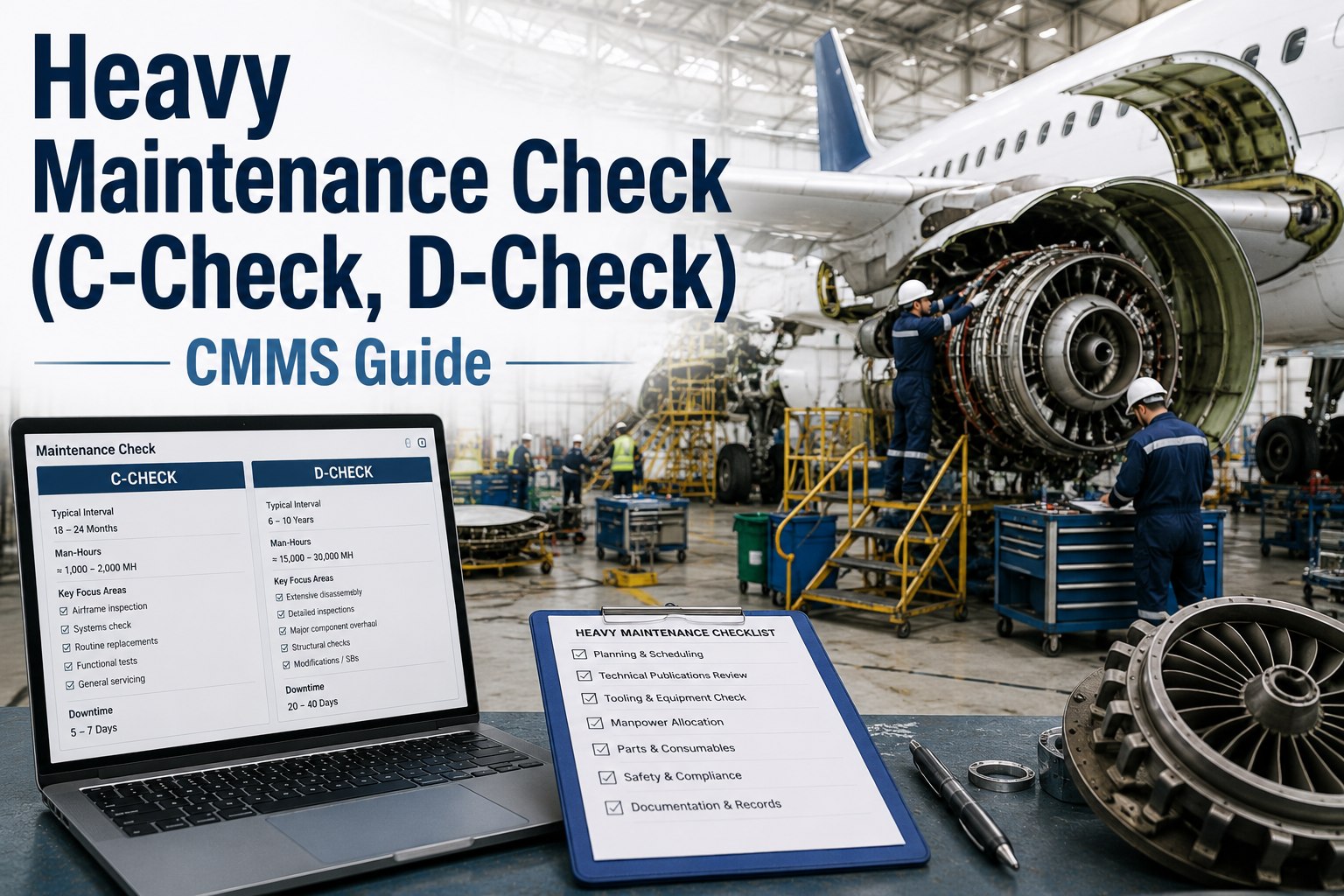
A jet engine producing 70,000 pounds of thrust is one of the most complex machines ever built by human hands — and it stays airworthy only because someone, somewhere, planned a maintenance visit months in advance. Across the global aviation industry, unplanned maintenance events cost airlines an estimated $8 billion annually, not because aircraft wear out faster than expected, but because maintenance programs are not planned with enough precision or foresight. The operators who hold the best on-time performance records and the lowest cost-per-flight-hour ratios share a single operational habit: they treat every A-check, C-check, and D-check as a project that begins planning 18 months before the aircraft rolls into the hangar. If your team still opens a work package the morning the aircraft arrives, this article is your starting point. Want to see what structured check planning looks like in practice? Take a look at how a free trial changes how your team approaches the next scheduled visit.
AVIATION MAINTENANCE INTELLIGENCE
Aircraft Heavy Maintenance Planning: A-Check to D-Check Explained
From overnight line checks to multi-week structural overhauls — the complete operational framework for planning every tier of aircraft maintenance checks with precision, compliance, and zero costly surprises.
$8B
Annual cost of unplanned aviation maintenance globally
12 yr
Maximum interval between D-check structural overhauls
30%
Average heavy check cost overrun without structured planning
18 mo
Recommended planning horizon for a C-check event
Ready to Plan Your Next Check Cycle?
OxMaint's Check Planning Module gives engineering, supply chain, and operations a single platform to schedule, track, and execute every maintenance visit — from A-check overnight turns to D-check overhauls. Most teams are running their first check plan within a week of onboarding. Start a free trial today and see the difference structured planning makes on your next visit.
THE CHECK TIER SYSTEM
Understanding Aircraft Maintenance Check Levels
Aviation regulators — FAA, EASA, CAAC, and their equivalents worldwide — mandate a tiered inspection framework that escalates in depth, duration, and cost at each level. This is not an arbitrary bureaucratic structure. It reflects the physical reality that different components degrade at different rates, and that some structural defects simply cannot be found without removing interior panels, flooring, and insulation that would never come out during routine line maintenance. Mastering the check tier system is the first step toward building a maintenance program that is both compliant and cost-efficient. Ready to structure yours? Book a demo and walk through the Check Planning Module with our team.
A-CHECK
Line Maintenance
Interval400–600 flight hours
Duration6–12 hours overnight
LocationLine station / gate
Cost Range$10,000–$20,000
Covers fluid checks, visual inspections, minor defect rectification, and cabin servicing. Performed by small line maintenance teams without hangar access.
B-CHECK
Intermediate Service
IntervalAbsorbed into A-check packages on most modern types
Duration1–3 days
LocationLine station with hangar access
Cost Range$50,000–$150,000
Deeper lubrication, operational system tests, and cabin equipment checks. Largely phased into enhanced A-check packages for A320/B737 family aircraft under MSG-3 programs.
C-CHECK
Base Maintenance Inspection
Interval20–24 months or 4,000–6,000 FH
Duration1–2 weeks in hangar
LocationDedicated MRO facility
Cost Range$1M–$5M
Full structural zone inspections, AD and SB compliance, landing gear detailed inspection, avionics software updates, fuel tank access, and flight control rigging checks.
D-CHECK
Heavy Structural Overhaul
Interval6–12 years at calendar/cycle limits
Duration6–12 weeks full teardown
LocationHeavy MRO facility only
Cost Range$6M–$30M+
Complete strip to bare metal — corrosion treatment, wiring harness audit, structural repair, landing gear overhaul, and full cabin refurbishment. The most resource-intensive event in an aircraft's life cycle.
WHY CHECKS FAIL BUDGETS
The 4 Root Causes of Heavy Check Cost Overruns
Industry analysis of heavy check performance consistently identifies the same four root causes behind schedule extensions and budget overruns. None of them are technical mysteries — they are all planning failures with structural solutions.
30%
Undiscovered Defects at Teardown
Corrosion, cracking, and hidden wear found only after panels are removed. Without continuous condition scoring, these add an average 18% to labor hours on every C-check. The fix is condition-based asset tracking that predicts probable findings before the aircraft enters the hangar.
25%
Long-Lead Parts Not Pre-Ordered
Structural components and avionics LRUs carry 8–26 week lead times. When procurement is triggered at induction rather than 12 months prior, aircraft sit in hangar bays on facility fees waiting for parts that were entirely foreseeable from the maintenance program.
22%
Incomplete Work Packages at Induction
When job cards are not finalized until the aircraft arrives, technicians idle during engineering delays. Parallel task planning across aircraft zones is impossible without a pre-built work package. This single failure regularly converts planned 10-day checks into 14-day events.
23%
Late AD and Service Bulletin Discovery
Mandatory Airworthiness Directives and manufacturer Service Bulletins applicable to the next check interval must be loaded into the work package during planning — not discovered at induction. Last-minute AD compliance adds unplanned man-hours that cascade through the entire check schedule.
PLANNING FRAMEWORK
The Heavy Check Planning Timeline: What Happens When
Best-in-class MRO operators and airline maintenance programs treat heavy checks as rolling projects with structured milestones, not events that begin planning when the aircraft is 30 days out. Here is the planning timeline that separates on-budget, on-time checks from those that routinely overrun. Start a free trial and map your next check event against this framework in OxMaint this week.
24–36 mo
Hangar Slot Booking and Fleet Calendar Lock
Secure the hangar facility slot. Confirm aircraft removal date against fleet schedule. Operators who book D-check slots on short notice pay 15–25% premium on facility rates. Lock the date — everything else is built from this anchor point.
12–18 mo
Long-Lead Parts Procurement Launch
Identify all components with lead times exceeding 8 weeks. Issue purchase orders for structural hardware, avionics LRUs, landing gear components, and specialty consumables. This is the single most impactful action for preventing parts-caused TAT extension.
6–9 mo
AD and SB Compliance Review
Complete review of all applicable Airworthiness Directives, Service Bulletins, and Engineering Orders due at or before the check interval. Load all compliance items into the work package. Zero last-minute AD discoveries is the measurable goal of this milestone.
60–90 days
Work Package Build and Parallel Task Planning
Engineering completes full job card package with parallel task allocation across aircraft zones and trades. Technician roster confirmed. Special tooling allocated. Pre-induction work package completion is the leading predictor of check TAT performance.
14–30 days
Condition Pre-Assessment and Scope Prediction
Review asset condition scores, flight cycle data, previous check findings, and deferred defect log. Flag likely structural zones for enhanced inspection. Teams with condition-based scoring reduce mid-check scope extensions by up to 40% through this step alone.
At induction
Pre-Confirmed Parts, Full Work Package, Ready State
When the aircraft arrives, everything should already be in place. Parts kitted and confirmed. Job cards finalized. Technicians briefed. First tasks beginning within 2 hours of aircraft arrival. This is what structured planning delivers — no waiting, no scrambling.
BEFORE VS. AFTER
Unstructured Check Management vs. OxMaint Check Planning
The operational gap between teams managing checks reactively and those using structured check planning tools is measurable at every stage of the maintenance visit lifecycle.
OXMAINT CHECK PLANNING MODULE
8 Platform Capabilities That Transform Check Execution
OxMaint is built for the operational realities of tiered aircraft maintenance — not a generic CMMS with an aviation label attached. Every module is designed around the specific workflows of heavy check planning, from first scheduling trigger to return-to-service sign-off.
ASSET REGISTRY
Aircraft Hierarchy with Live Condition Scores
Portfolio to component-level asset hierarchy. Every aircraft tracked with condition scores derived from flight hours, cycles, sensor data, and inspection history. Maintenance teams know what to expect before teardown begins.
CHECK CALENDAR
Multi-Year Check Schedule Across Full Fleet
Plan A, C, and D-check events 18–36 months ahead across every aircraft in the fleet. Slot conflicts identified automatically. Fleet availability impact modeled before any commitment is made to a hangar date.
WORK PACKAGES
Pre-Induction Package Build with Parallel Tasks
Complete job card packages built 60–90 days before induction. Parallel task allocation across zones and trades. Critical path visible from day one of planning, not day one of the check. Shift handoffs captured digitally throughout the visit.
COMPLIANCE
AD, SB, and Engineering Order Tracking
All applicable Airworthiness Directives, Service Bulletins, and Engineering Orders flagged and loaded into the work package during the planning phase — 6 to 9 months before induction. Zero last-minute compliance discoveries.
PROCUREMENT
Predictive Parts Ordering with Long-Lead Tracking
Procurement triggered by check schedule, not by aircraft arrival. Long-lead items flagged automatically at 12–18 months. Pre-task kitting confirmation required before induction clearance. No mid-check parts standstills.
DIGITAL SIGN-OFF
Audit-Ready RTS Documentation
Every task captured digitally at the point of work, throughout the check. Return-to-service documentation is complete when the final task is signed off — no post-completion paperwork reconciliation, no missing signatures, no regulatory risk.
CAPEX FORECASTING
5–10 Year Check Cost Modeling per Aircraft
Rolling CapEx forecasts built from check history, condition data, and planned intervals. Finance and operations see aircraft lifecycle costs before they are committed. Investor-grade reporting out of the box — no custom report builds required.
FLEET VISIBILITY
Portfolio-Level Check Status Dashboard
Every open check event across every base visible in a single dashboard. Task progress, cost variance, and schedule risk indicators all real-time. Operations directors see fleet status without making a single phone call to a hangar.
RESULTS IN NUMBERS
What Structured Check Planning Delivers
These outcomes are reported by MRO operators and airline maintenance programs that have moved from reactive check management to structured, data-driven planning. Consistent across fleet types and check tiers.
32%
Reduction in Heavy Check TAT
From pre-induction work package completion and parallel zone task planning
40%
Fewer Mid-Check Scope Extensions
Condition scoring identifies structural risk zones before teardown begins
24%
Lower Check Cost Variance
Predictive scope assessment and 12-month parts procurement eliminating budget surprises
18%
More Aircraft in Revenue Service
Shorter check events and fewer unscheduled removals returning aircraft to operational status faster
4.8x
Emergency maintenance costs 4.8 times more than planned maintenance. Every unplanned mid-check scope extension is a budget event that structured planning could have prevented.
FREQUENTLY ASKED QUESTIONS
Aircraft Maintenance Check Planning: Answers to Common Questions
How far in advance should airlines plan a C-check?
For a C-check, the recommended planning horizon begins 18 months before the scheduled induction date. Hangar slot booking should be confirmed at 18 months, long-lead parts procurement launched at 12 months, AD and SB compliance review completed at 6–9 months, and the full work package built and finalized 60–90 days before aircraft arrival. The single most important planning milestone is the long-lead parts order — structural components, avionics LRUs, and specialized hardware often carry 8–26 week procurement lead times, and ordering at induction is the primary driver of mid-check parts standstills that extend TAT by days or weeks. MRO operators who follow a structured 18-month planning cycle consistently achieve check completion within 5% of planned TAT, compared to industry averages that regularly overrun by 15–30%.
What is the most expensive type of aircraft maintenance check?
The D-check, also called a heavy structural overhaul, is by far the most expensive maintenance event in an aircraft's lifecycle. For narrow-body aircraft (A320, B737 family), D-check costs typically range from $6 million to $15 million. For wide-body types (B777, A330, B787), costs regularly reach $20–30 million or more. The D-check involves complete aircraft strip to bare metal, full corrosion inspection and treatment, wiring harness audit, structural repair per the SRM and engineering orders, landing gear overhaul, and full cabin refurbishment. The event typically runs 6 to 12 weeks, during which the aircraft generates zero revenue. Proper advance planning — particularly hangar slot booking 24–36 months ahead and structural component procurement 12–18 months ahead — can reduce total D-check cost by 15–20% compared to poorly planned events with short-notice hangar slots and mid-check parts delays.
What causes aircraft maintenance checks to overrun their planned duration?
The four most common causes of heavy check TAT overruns are: (1) Undiscovered structural defects — corrosion, cracking, and wear found during teardown that were not anticipated, adding an average 18% to labor hours when no condition tracking is in place. (2) Long-lead parts not pre-ordered — aircraft wait in hangars on facility fees for components that should have been ordered 12 months earlier. (3) Incomplete work packages — when engineering finalizes job cards at induction rather than 60–90 days prior, technicians idle and parallel task planning is impossible. (4) Last-minute AD and SB compliance discovery — mandatory directives not loaded into the work package during planning add unplanned scope that disrupts the entire task schedule. All four causes are addressable through structured pre-check planning disciplines, and all four are visible, preventable failures — not technical mysteries.
How does a CMMS help with aircraft maintenance check planning specifically?
A modern maintenance platform like OxMaint impacts heavy check performance at multiple levels simultaneously. At the fleet level, a multi-year check calendar gives operations and finance a forward view of every upcoming check event, hangar slot, and associated CapEx commitment — replacing spreadsheet-based fleet plans that rapidly go stale. At the aircraft level, condition scoring derived from flight hours, cycles, and sensor data gives engineering a pre-check view of likely findings, enabling scope pre-planning that reduces scope extension events. At the work package level, digital job card builds with parallel task allocation compress TAT by ensuring all zones and trades are working simultaneously from day one of induction. At the parts level, procurement triggers tied to the check schedule ensure long-lead items are ordered 12–18 months ahead, not at induction. And at the compliance level, AD and SB tracking loads all applicable directives into the work package during planning — eliminating the last-minute compliance discoveries that routinely extend check duration by two to five days.
TAKE THE NEXT STEP
Your Next C-Check or D-Check Is Already in the Planning Window
The maintenance programs running checks on time and within budget are not doing it because they have better engineers or larger teams. They are doing it because they started planning earlier, with better data, and with a platform that connects scheduling, procurement, compliance, and execution into a single workflow. OxMaint puts that system in place without a six-month implementation project or heavyweight consulting engagement. Most teams are running their first structured check plan within a week. Start a free trial and see how your next check looks when it is planned properly — or book a demo and walk through the Check Planning Module with our team.