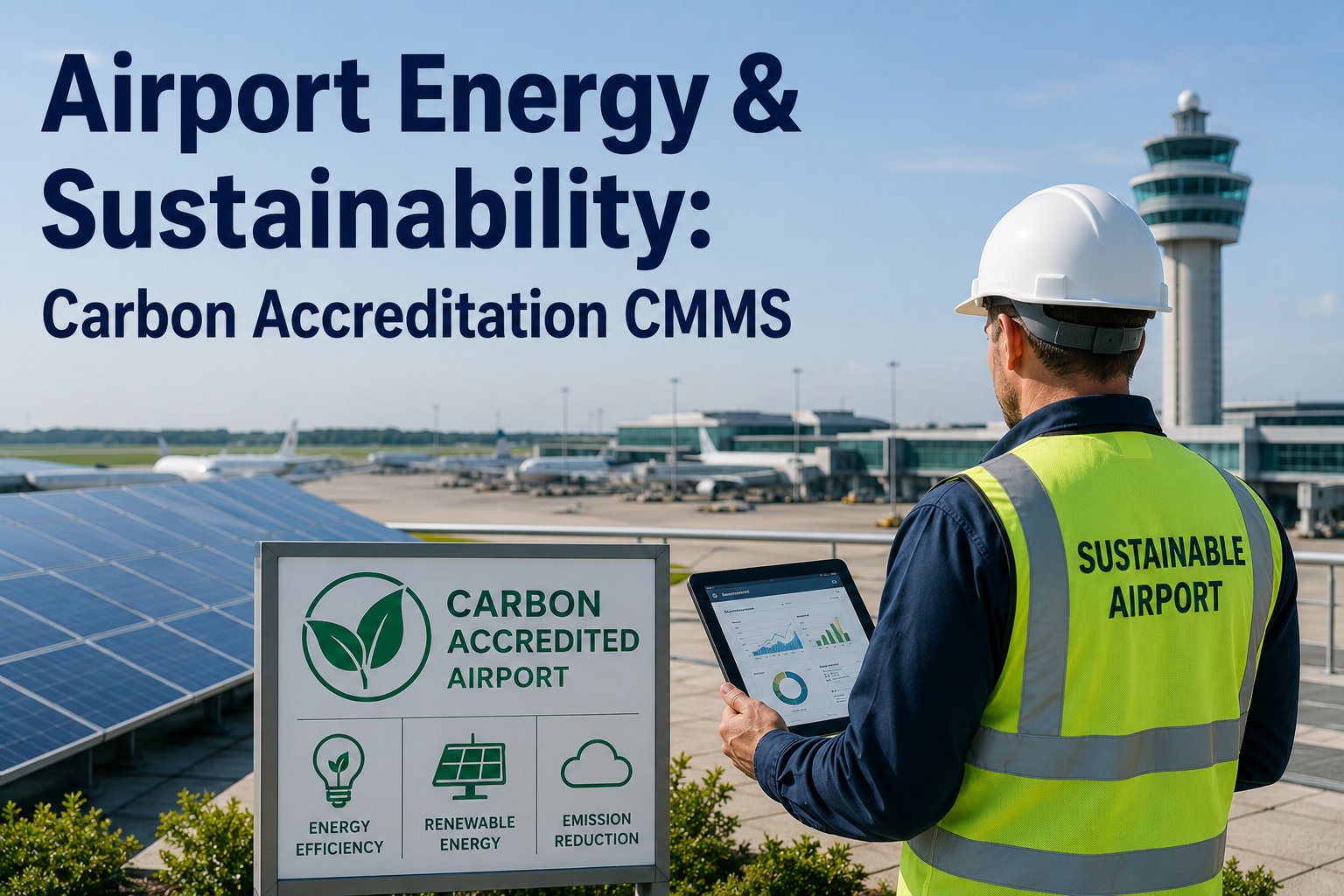
The aviation sector accounts for roughly 2.5% of global CO2 emissions — but airports themselves, independent of the aircraft they serve, contribute significantly through energy-intensive terminals, ground support equipment fleets, and diesel-powered vehicles. Net-zero airport commitments from Heathrow, Singapore Changi, Dubai International, and over 200 ACI member airports reflect a growing recognition that the path to sustainable aviation runs through the ground infrastructure, not just the aircraft. If your airport is still managing energy consumption and GSE maintenance on separate systems, start a free OxMaint trial and begin connecting equipment data to your sustainability targets — or book a demo to see how the platform supports airport ESG programs.
Aviation Sustainability · Net-Zero Operations
Airport Sustainability Roadmap: Net-Zero Operations Guide
GSE electrification, renewable energy, carbon tracking, waste reduction, and CMMS-driven maintenance efficiency — the operational blueprint for a credible airport net-zero strategy.
40%
Of airport Scope 1+2 emissions come from buildings and ground operations — not aircraft
200+
ACI member airports with formal net-zero commitments as of 2024
$3.1B
Airport energy cost savings potential from efficiency improvements by 2030
72%
Of GSE can be electrified using current commercially available technology
What Airport Net-Zero Operations Actually Means
Airport net-zero operations means achieving carbon neutrality across all airport-controlled emissions — Scope 1 (direct combustion from vehicles and equipment), Scope 2 (purchased electricity), and increasingly Scope 3 (tenant operations, ground transportation). The ACI Airport Carbon Accreditation program provides the most widely adopted framework, with Level 3+ requiring absolute emissions reduction and Level 4+ requiring engagement with supply chain and tenants. Net-zero is not a single technology — it's a coordinated operational transformation across energy, equipment, waste, and water management.
Scope 1
Direct Emissions
Diesel GSE fleet combustion
Natural gas heating systems
Airport vehicle fuel use
Standby generator operation
Scope 2
Purchased Energy
Terminal electricity consumption
Airfield lighting systems
EV charging infrastructure
GPU power supply to aircraft
Scope 3
Value Chain Emissions
Airline and handler GSE operations
Passenger ground transportation
Supply chain and contractors
Business travel and commuting
ACI Level 4+
Stakeholder Engagement
Airline emission reduction partnerships
Concessionaire sustainability targets
Ground handler electrification plans
ESG reporting to investors
The 6 Pillars of a Net-Zero Airport Strategy
These six workstreams must advance in parallel — no single intervention achieves net-zero. Each requires operational changes, investment, and measurement infrastructure to demonstrate real progress.
GSE Electrification
Replace diesel tugs, belt loaders, fuel trucks, and ground power units with electric equivalents. 72% of current GSE categories have commercially available electric alternatives.
Scope 1 reduction: 30–45% of ground emissions
Renewable Energy
On-site solar on terminal roofs and carpark structures, combined with Power Purchase Agreements for grid supply. Airports with available land area target 30–60% renewable self-generation.
Scope 2 reduction: up to 100% with PPAs
Building Energy Efficiency
Terminal HVAC optimization, LED lighting conversion, building management system upgrades, and insulation improvements. Terminals typically reduce energy consumption 20–35% through building efficiency alone.
Average energy reduction: 25% per terminal
Waste Reduction
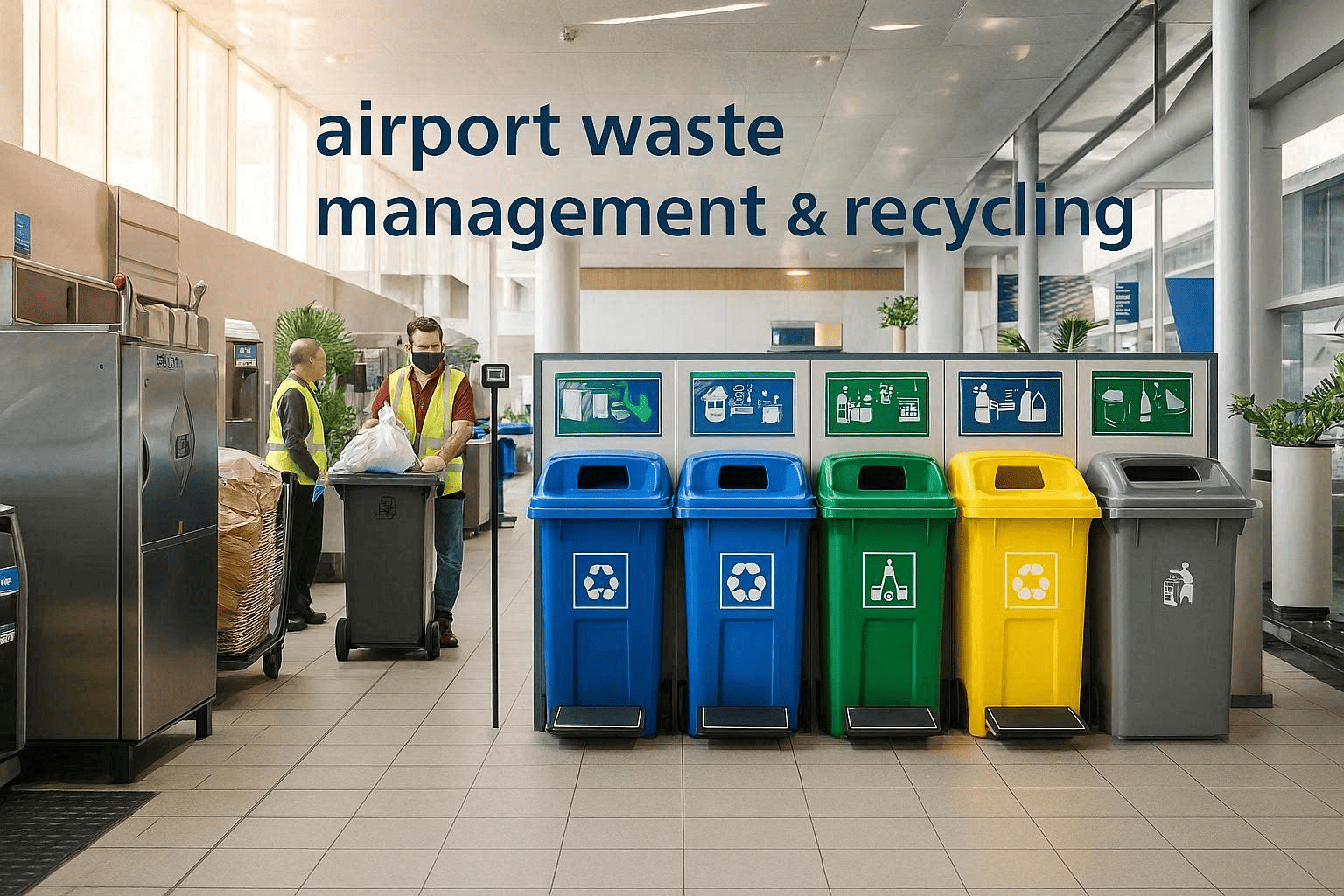
Zero-waste-to-landfill programs covering terminal operations, F&B concessions, and construction projects. Composting, recycling streams, and catering waste diversion drive landfill diversion rates above 80%.
Target: 85%+ diversion from landfill
Water Conservation
Rainwater harvesting for aircraft washing and landscaping, leak detection programs, and low-flow fixture retrofits. Large international airports reduce potable water consumption by 30–50% with active conservation programs.
Potable water reduction: 30–50%
ESG Reporting & Carbon Tracking
Verified carbon accounting, stakeholder disclosure reports, and ACI accreditation documentation require structured data from maintenance and operations systems. Manual tracking creates unverifiable ESG claims.
Required for ACI Level 3+ accreditation
Why Airport Sustainability Programs Stall
Most airports have sustainability commitments on paper. Fewer than a third have the operational data infrastructure to verify progress against those commitments.
01
No Baseline Energy Data Per System
Sustainability teams know total electricity consumption but can't identify which terminal systems, buildings, or equipment categories are the largest contributors. Optimization requires asset-level data, not portfolio-level totals.
02
GSE Lifecycle Data Doesn't Exist
Electrification business cases require fuel consumption data per GSE unit, maintenance cost per unit, and remaining useful life estimates. Without a GSE asset registry with maintenance history, electrification investment decisions are made on guesswork.
03
Maintenance and Sustainability Are Siloed
A poorly maintained HVAC system running 15% below design efficiency is an emissions problem and an energy cost problem — but maintenance teams and sustainability teams use different systems with no shared data. The inefficiency runs undetected for months.
04
ESG Reporting Is Manual and Unverifiable
Carbon emissions, water consumption, and waste diversion figures are compiled manually from disconnected source systems. The resulting reports can't be independently verified — which is precisely what ACI accreditors and ESG investors require.
How OxMaint Connects Maintenance Operations to Sustainability Goals
OxMaint creates the operational data layer that connects equipment maintenance, energy consumption, and asset lifecycle management — giving sustainability teams the verified data they need to report progress and prioritize investment.
GSE
GSE Fleet Registry with Fuel & Usage Tracking
Every GSE unit in OxMaint has a complete asset record — fuel type, consumption data, maintenance cost history, age, and condition score. When the electrification team needs to build the business case for replacing diesel belt loaders with electric, the data is already there: fuel cost per unit, maintenance frequency, and remaining useful life.
PM
HVAC & Energy System PM for Efficiency Preservation
An HVAC system that misses filter changes, coil cleaning, or refrigerant top-ups runs progressively less efficiently — consuming more energy to deliver the same output. OxMaint's PM scheduling ensures every energy system gets maintenance on schedule, preserving design efficiency and preventing the silent energy waste that undermines carbon targets.
EV
EV Charging Infrastructure Maintenance
As GSE fleets electrify, charging infrastructure becomes critical operational equipment. OxMaint tracks every charging station as an asset — scheduled inspections, fault work orders, and uptime history. A charging station offline during a turn is a direct operational impact. Proactive PM prevents infrastructure failures from undermining the electrification program.
ROI
CapEx Forecasting for Sustainability Investments
OxMaint's rolling CapEx forecasting model projects replacement needs for aging GSE and terminal systems 5–10 years out — giving sustainability planning teams a data-driven replacement schedule that aligns electrification and efficiency upgrades with natural asset end-of-life cycles, avoiding stranded asset costs from premature replacements.
ESG
Audit-Ready Maintenance Documentation for ESG Reporting
ACI Carbon Accreditation and ESG investor frameworks require verified records of maintenance activities, equipment condition, and system performance. OxMaint's digital work order and inspection trail provides the documented evidence that sustainability claims are operationally backed — not just reported from spreadsheets.
KPI
Multi-Terminal Portfolio Sustainability Dashboard
Airport groups managing multiple terminals or concessions can view maintenance-linked sustainability KPIs — PM compliance rate, equipment downtime, EV charger uptime, energy system inspection status — across all locations from a single dashboard. Directors see where the sustainability program is ahead of schedule and where it needs intervention.
Net-Zero Roadmap: From Commitment to Accreditation
Establish Scope 1+2 emissions baseline
Audit GSE fleet fuel consumption by unit
Energy meter by terminal and system
Asset register for all energy systems
ACI Level 1 target
LED lighting conversion across terminals
HVAC PM optimization for efficiency
Begin GSE electrification pilot fleet
Solar feasibility and PPA procurement
ACI Level 2 target
Full GSE electrification for eligible fleet
100% renewable electricity via PPA
Verified carbon offset for residual Scope 1
Waste diversion above 80%
ACI Level 3 target
Airline and handler Scope 3 programs
Annual ESG disclosure with verified data
Investor-grade sustainability reporting
Net-zero maintenance program continuous
ACI Level 4+ target
Sustainability Performance: What Progress Looks Like
35%
Average Scope 1 emissions reduction
After full electric GSE deployment for eligible fleet categories
25%
Terminal energy reduction
From HVAC PM optimization and LED conversion combined
85%+
Waste diversion from landfill
Achieved by airports with structured waste management programs
ACI L3
Carbon Accreditation achievable
Within 3 years for airports with structured maintenance and energy data
Frequently Asked Questions
What does ACI Airport Carbon Accreditation require from maintenance operations?
ACI accreditation at Level 3 and above requires documented evidence of emission reduction actions — not just reported numbers. For maintenance operations, this means demonstrable records of energy system PM activities, equipment efficiency measurements, and maintenance actions taken to address energy performance degradation. OxMaint's digital work order and inspection trail provides exactly this evidence — timestamped records of HVAC maintenance, energy system inspections, and GSE maintenance activities that support the verification process accreditors perform.
How do we build the business case for GSE electrification without existing data?
The electrification business case requires three data sets: current fuel cost per GSE unit per year, current maintenance cost per unit per year, and remaining useful life per unit. If your GSE has been tracked in OxMaint, all three are available from the asset record. For airports starting fresh, OxMaint can establish the data collection baseline in 30–60 days of operation — giving you the unit-level data needed to prioritize the electrification sequence by highest-ROI replacements first rather than blanket fleet replacement.
How does maintenance efficiency connect directly to carbon emissions reduction?
Equipment running below design efficiency consumes more energy to deliver the same output — making poor maintenance a direct emissions multiplier. An HVAC chiller running with fouled heat exchanger surfaces consumes 15–25% more electricity than a clean unit. An air compressor with a worn seal runs continuously rather than cycling — consuming energy constantly instead of intermittently. OxMaint PM scheduling ensures energy systems are maintained at design efficiency, directly reducing the Scope 2 electricity consumption that feeds into carbon accounting.
Can OxMaint support sustainability reporting across a multi-airport group?
Yes. OxMaint's portfolio architecture allows airport groups to aggregate maintenance and asset data across multiple airports into a single sustainability dashboard. Each airport maintains its own asset registry and work order history, while group-level reporting shows PM compliance rates, equipment condition scores, and energy system maintenance status across the portfolio. For ESG reporting purposes, this provides the consistent data collection methodology across all sites that institutional investors and rating agencies require for portfolio-level sustainability disclosures.
Start Your Net-Zero Journey
Net-Zero Airport Operations Start With Operational Data. OxMaint Is Where That Data Lives.
GSE fleet registry with fuel tracking. HVAC and energy system PM scheduling. EV charging infrastructure maintenance. CapEx forecasting for electrification planning. Audit-ready documentation for ACI accreditation. OxMaint connects your maintenance operations to your sustainability targets — with every data point verified and retrievable.