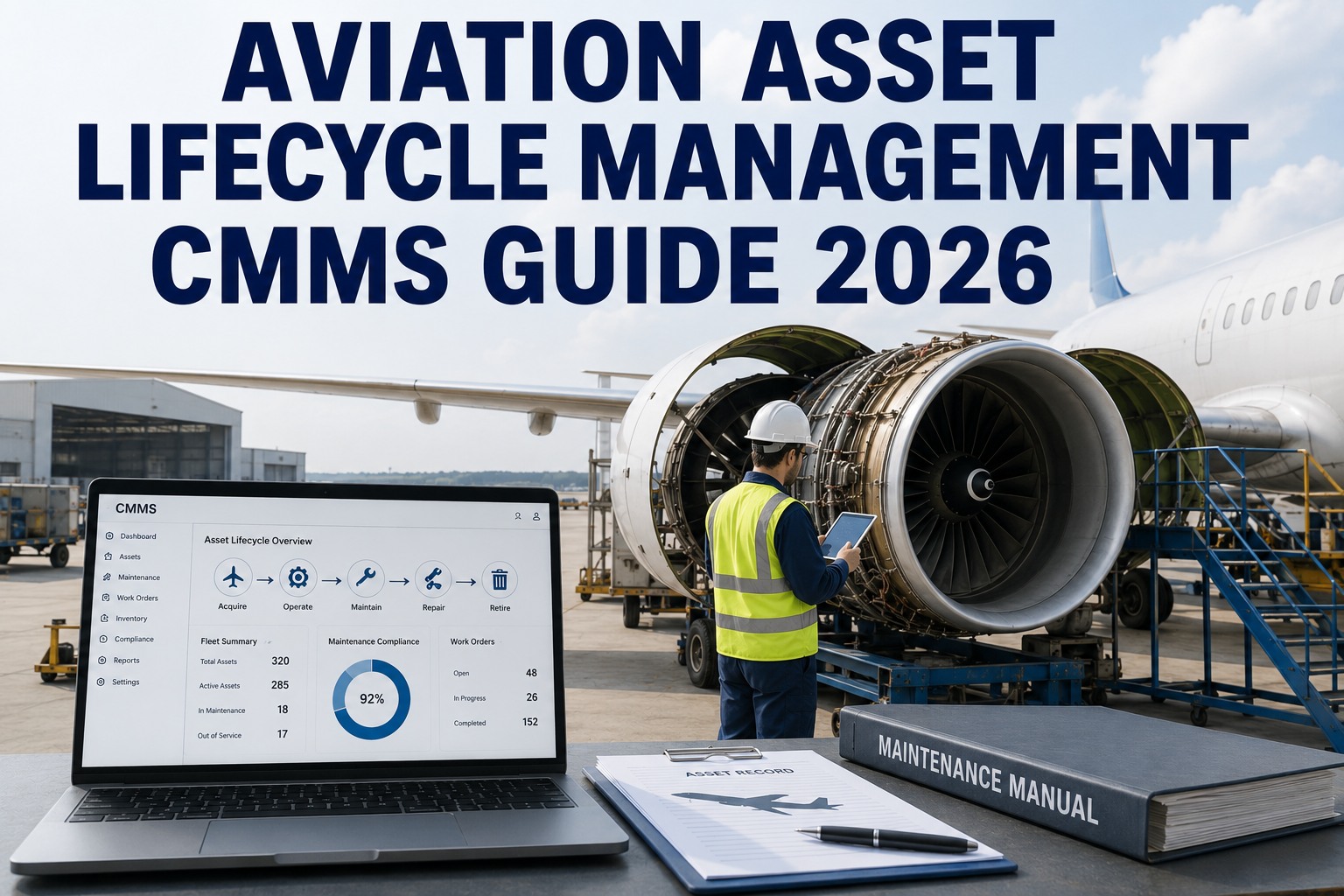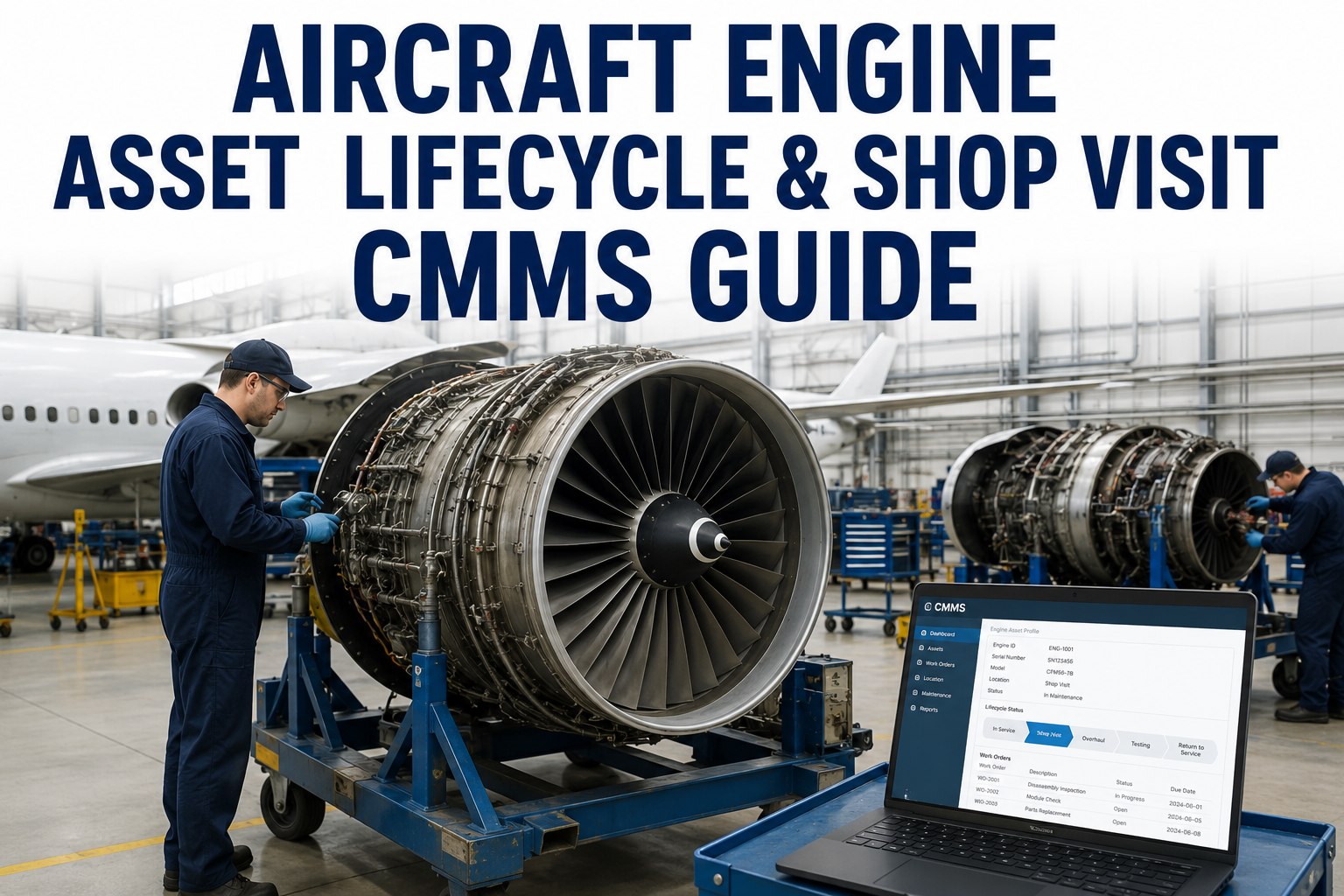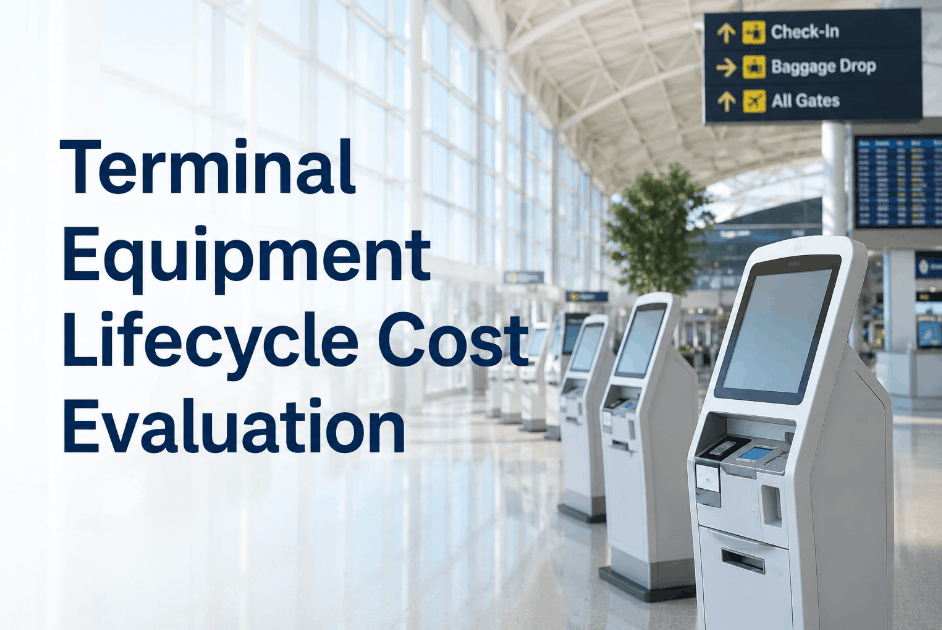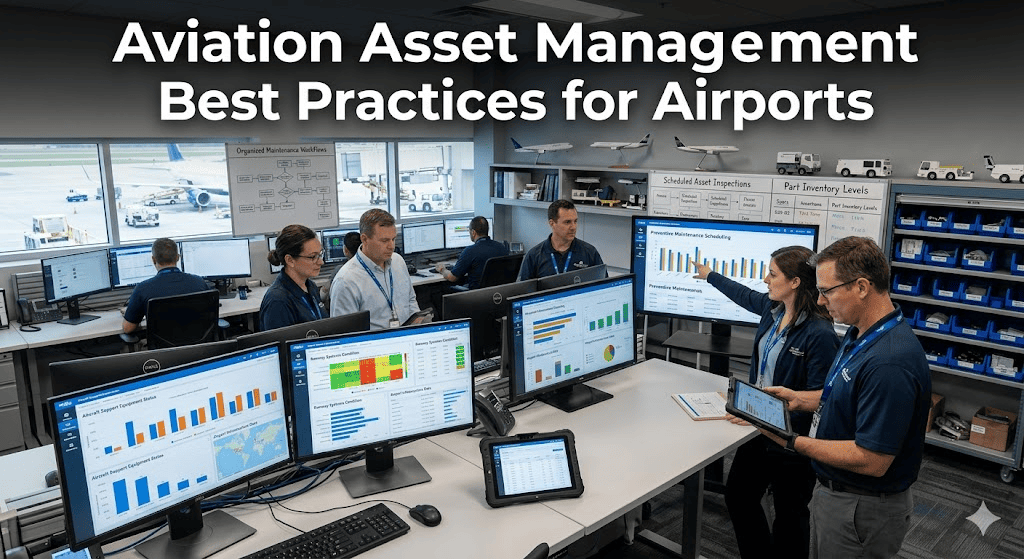
Airfield electrical assets CCRs, series cables, L-830 isolation transformers, LED and legacy halogen fixtures — don't fail on a schedule; they fail on a curve. Repair them once too often and the next unplanned outage costs more than the replacement would have. Replace them one year too early and the capital plan burns cash it didn't need to spend. This guide walks the life-cycle cost (LCC) model that answers the question one asset at a time — with MTBF, remaining useful life, failure cost, and OEM data as the inputs — inside OxMaint AI-powered CMMS / Maintenance Management Software, so airfield electricians and airport engineering leads can build a defensible replace-vs-repair call, not a gut one.
Stop Repairing Assets That Are Already Costing You More Than a Replacement.
CCRs and cables age quietly — MTBF drops, insulation resistance drifts, and callout costs creep up until one Cat III night ends the argument the wrong way. OxMaint AI-powered CMMS builds the LCC model asset by asset — captures MTBF from work order history, tracks megger trends, monetises failure cost, and surfaces every airfield asset that has crossed its economic replace point.
The Six LCC Inputs OxMaint Captures Per Asset
A defensible replace-vs-repair call needs six numbers per asset. Airport engineering usually has three or four; the missing ones come from historian data or vendor quotes. OxMaint holds all six on the asset record so the LCC re-runs the moment any of them changes.
Per-Asset LCC Reference — Airfield Electrical Fleet
Different assets sit on different curves. A halogen inset light with 1,000–1,500 hours of lamp life plays a completely different LCC game to an LED with tens of thousands. Series cables that read 2,000+ MΩ this quarter but 400 MΩ next need a decision, not another test. OxMaint carries the asset-family defaults below and lets you override per-asset from field data.
| Asset Family | Typical Life | Primary Wear Signal | Repair Ceiling | Replace Trigger |
|---|---|---|---|---|
| Constant Current Regulator (CCR) L-828 / L-829 · FAA AC 150/5345-10 |
15–20 yrs | Board fault rate, harmonic distortion, output-current drift | >40% new-unit cost per event | Two board faults in 12 mo & RUL < 5 yr |
| Series Cable — 5 kV airfield Direct-buried or ducted |
25–40 yrs | Insulation resistance (megger) trend | >3 fault-find splices per km per yr | Megger < 50 MΩ w/ downward slope |
| L-830 / L-831 Isolation Transformer 6.6A & 20A series-circuit |
20–30 yrs | Encapsulation cracking, moisture ingress | Not repairable — swap on fault | Any secondary open-circuit event |
| Halogen Inset / Elevated Light Runway edge, threshold, taxiway |
1,000–1,500 hr lamp | Lamp burn-out rate, prism erosion | Fixture-swap uneconomic vs LED retrofit | Any fleet-scale energy or PM review |
| LED Airfield Fixture Runway / taxiway / stopbar |
50,000–100,000 hr | Photometric drop toward 70% initial | Driver-only swap where modular | Below 70% intensity on nightly check |
| Airfield Vault Switchgear MCCB, contactors, PLC-based ALCMS I/O |
25–30 yrs | Contactor bounce, PLC alarm log | Spares-availability collapse | OEM EOL notice + spares hoard < 12 mo |
The Replace-vs-Repair Decision Tree OxMaint Applies
Every candidate asset walks the same five branches. OxMaint scores the branch automatically from live data — the engineer overrides only when a factor the model can't see (a planned runway resurface, a spares-availability collapse) shifts the answer.
The Wrong Repair Costs More Than the Right Replacement.
Move your CCR, cable and fixture history into OxMaint and let the LCC model surface every asset that's already past its economic break-even.
Worked Example — CCR at 17 Years
A 20 kW L-828 CCR on Runway 09L series circuit. Original install 2008. Recent history: two output-board faults in the last 12 months, harmonic distortion drifting outside spec, MTBF window shrinking from 26 months to 11.
From Per-Asset LCC to the Multi-Year Capital Plan
OxMaint doesn't stop at the per-asset call. Every asset flagged Replace rolls into the capital plan sorted by RUL, criticality and available slot. What the airport engineering lead takes to finance is a defensible list, not a wish-list.
| Asset | Family | RUL (yr) | LCC Score | Slot | Est. CapEx |
|---|---|---|---|---|---|
| CCR-09L-01 | CCR 20 kW | 2 | Replace | Y1 Q2 | £38,000 |
| CBL-TW-B | Cable 5 kV | 3 | Replace | Y1 Q3 | £112,000 |
| FIX-RW27-EDGE | Halogen fleet | 0 | LED Upgrade | Y2 Q1 | £240,000 |
| CCR-27R-02 | CCR 15 kW | 6 | Monitor | Y3 | £32,000 |
| TX-IT-BATCH | L-830 batch | 4 | Run-to-Fail | Y2–Y4 | £46,000 |
| VAULT-B-SWG | Switchgear | 2 | Replace | Y2 Q4 | £185,000 |
| CBL-RW09L-APR | Cable 5 kV | 7 | Continue | Y5+ | — |
What OxMaint Gives an Airfield Electrical Team
FAQs
Every Asset. Every Input. One Replace-vs-Repair Call.
Move your airfield electrical LCC onto OxMaint — six inputs per asset, one decision tree, one capital plan that survives the CFO review.