Terminal equipment lifecycle cost evaluation breaks down when repair spend is tracked separately from replacement timing and service value — leaving capital planners to argue from incomplete data when a baggage carousel or boarding bridge reaches end of useful life. Without a lifecycle cost model, maintenance budgets and capital expenditure requests tell two different stories about the same asset. Sign Up Free to see how OxMaint helps airport facility teams evaluate terminal equipment economics by combining repair history, replacement timing, and passenger service impact into a single asset cost picture.
Compare Terminal Equipment Repair Cost Against Replacement Value
OxMaint captures repair spend, downtime, and service impact data across terminal assets so lifecycle cost decisions are backed by real equipment history rather than age estimates.
Why Terminal Equipment Lifecycle Cost Evaluation Requires a Structured Approach
Terminal equipment — boarding bridges, baggage handling systems, passenger conveyors, check-in kiosks — carries high passenger service exposure combined with long replacement lead times and significant capital cost. Decisions about whether to continue repairing or proceed to replacement are often made on gut feel or simple age thresholds rather than a calculated comparison of cumulative repair cost against remaining service value. Teams that Book a Demo with OxMaint see how a lifecycle cost model, built on actual work order repair history and downtime records, gives capital planners and maintenance managers a defensible framework for terminal equipment investment decisions.
Accumulate labor, parts, and contractor costs against each asset's work order history to build a total repair expenditure picture over the equipment's operating life.
Compare remaining useful life estimates against rising repair frequency to identify the point where continued maintenance costs exceed replacement economics.
Factor in passenger-facing service impact and availability requirements when comparing repair versus replacement — not just purchase price versus maintenance spend.
Calculate total cost of ownership across acquisition, maintenance, and operational downtime to support capital budget justification with documented asset economics.
Group terminal assets by class and model projected maintenance spend against replacement schedules so capital and OpEx planning align across the five-year horizon.
Store cost evaluation findings against each asset record so the analysis is available for the next budget cycle without rebuilding from raw data each year.
Terminal Equipment Lifecycle Cost Evaluation: Step-by-Step
Pull cumulative labor, parts, and contractor costs from work order records for each terminal asset. Without a complete repair cost picture, lifecycle comparisons understate the true cost of keeping aging equipment running. Teams that Sign Up Free can use OxMaint's work order history to extract per-asset repair cost totals without a manual data assembly exercise.
Estimate remaining service life for each asset class using OEM design life, inspection condition ratings, and failure frequency trends from recent work order history — then layer that estimate against projected repair cost to identify assets approaching the lifecycle cost threshold.
Include asset downtime duration and passenger-facing service consequence when comparing repair to replacement. A boarding bridge that fails twice annually for four hours at peak traffic carries a service cost that doesn't appear in the maintenance budget line. Teams that Book a Demo can see how OxMaint captures downtime duration against work orders to feed service impact into the lifecycle calculation.
Document the full replacement cost including procurement lead time, installation disruption, and commissioning against the projected ongoing maintenance spend for the next five years. That comparison, backed by actual repair data, is the capital expenditure justification that budget reviewers need.
Rank assets by lifecycle cost urgency and distribute planned replacements across the capital budget horizon, balancing total expenditure against service risk and operational disruption from simultaneous replacement projects.
Terminal Equipment Lifecycle Cost Reference Table
| Evaluation Element | Data Source | Cost Type | Decision Output | Review Frequency |
|---|---|---|---|---|
| Cumulative Repair Spend | Work order history | OpEx — labor, parts, contractor | Total maintenance cost to date | Annual |
| Remaining Useful Life | OEM life, inspection ratings | Time-based asset value | Replacement timing window | Annual / condition-triggered |
| Service Impact | Downtime records, MTTR | Indirect — passenger & ops cost | Service value at risk | Per incident / quarterly |
| Replacement Cost | Procurement and install quotes | CapEx — purchase and commissioning | Capital request justification | Pre-budget cycle |
| Five-Year Maintenance Forecast | Failure trend, PM schedule | Projected OpEx | Repair vs replace decision | Annual budget planning |
How OxMaint Supports Terminal Equipment Lifecycle Cost Evaluation
OxMaint keeps repair cost, downtime history, parts consumption, and PM records attached to each terminal asset's record, giving lifecycle cost analysts a single source of operational truth rather than data fragmented across maintenance logs, parts databases, and separate downtime trackers. Asset managers can pull cumulative repair expenditure, failure frequency trends, and inspection condition ratings directly from work order records to build lifecycle comparisons without a data consolidation project before each budget cycle. Airport facility teams can Sign Up Free and begin building their terminal asset cost history from day one of platform use.
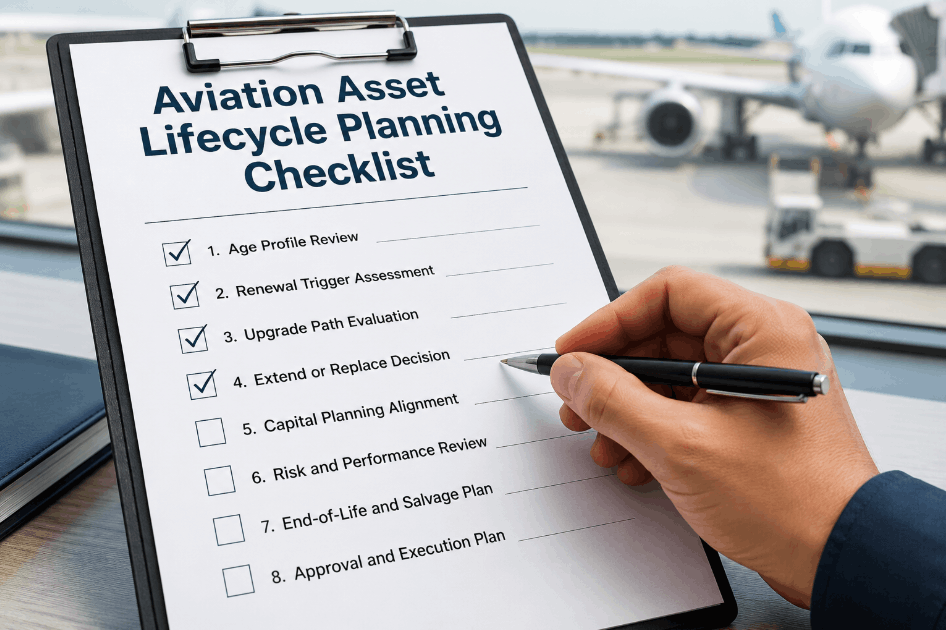
Implementing Terminal Equipment Lifecycle Cost Evaluation: Steps
Build the Asset Inventory
Confirm all terminal assets are registered with acquisition date, OEM design life, and original cost before beginning any lifecycle cost analysis.
Extract Cumulative Repair Costs
Pull total labor, parts, and contractor spend by asset from work order history to establish the repair expenditure baseline for each piece of equipment.
Rate Condition and Remaining Life
Combine inspection condition ratings with failure frequency trends to estimate remaining useful life for each asset class.
Quantify Service Impact
Add downtime cost and passenger service consequence to the repair spend comparison so the lifecycle analysis accounts for indirect costs alongside maintenance budget impact.
Build the Capital Replacement Case
Compare projected five-year maintenance cost against replacement cost for assets approaching lifecycle thresholds and document the comparison as the capital request justification.
Sequence and Submit to Budget
Rank replacement priorities by lifecycle urgency and distribute across the capital budget horizon. Book a Demo to see how OxMaint supports the full terminal equipment lifecycle cost process from repair tracking to capital planning.
Make Terminal Equipment Lifecycle Decisions From Real Cost Data
OxMaint gives airport facility teams the repair history, downtime records, and inspection data to build lifecycle cost comparisons that hold up in capital budget review — not just age thresholds and intuition.
Frequently Asked Questions
What is terminal equipment lifecycle cost evaluation?
It is the process of comparing cumulative repair spend, remaining service life, and service impact for passenger-facing terminal assets to determine whether continued maintenance or capital replacement delivers better long-term economics.
When does repair cost justify replacement?
A common threshold is when annual maintenance cost exceeds 30–40% of asset replacement value, though service impact and parts availability should also factor into the timing decision.
How does OxMaint support lifecycle cost analysis?
OxMaint accumulates labor, parts, and contractor costs against each asset record from completed work orders, and captures downtime duration so both direct and indirect costs feed into lifecycle comparisons without separate data assembly.
What terminal assets should be prioritized for lifecycle evaluation?
Boarding bridges, baggage handling systems, and passenger boarding conveyors — high service exposure, long replacement lead times, and significant capital cost — typically carry the most lifecycle cost urgency for airport facility teams.
How does downtime fit into lifecycle cost modeling?
Downtime duration and frequency represent an indirect cost — passenger disruption, airline delay penalties, and operational workarounds — that doesn't appear in the maintenance budget but materially affects the true cost of keeping aging equipment in service.
Start Building Terminal Equipment Lifecycle Cost Models From Real Repair Data
OxMaint gives airport facility teams repair history, downtime tracking, and asset cost records to evaluate terminal equipment lifecycle economics and support capital investment decisions with documented evidence.