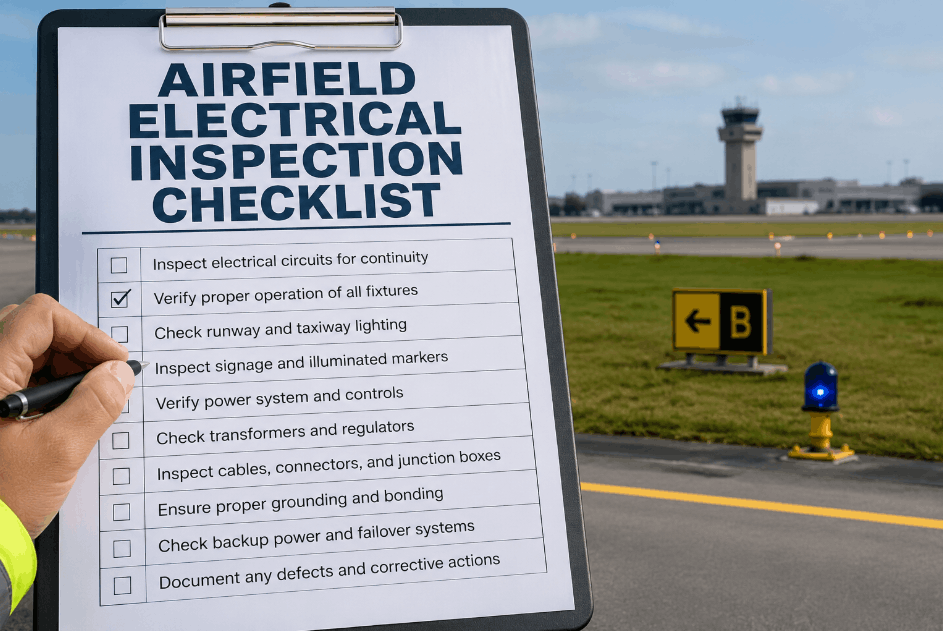
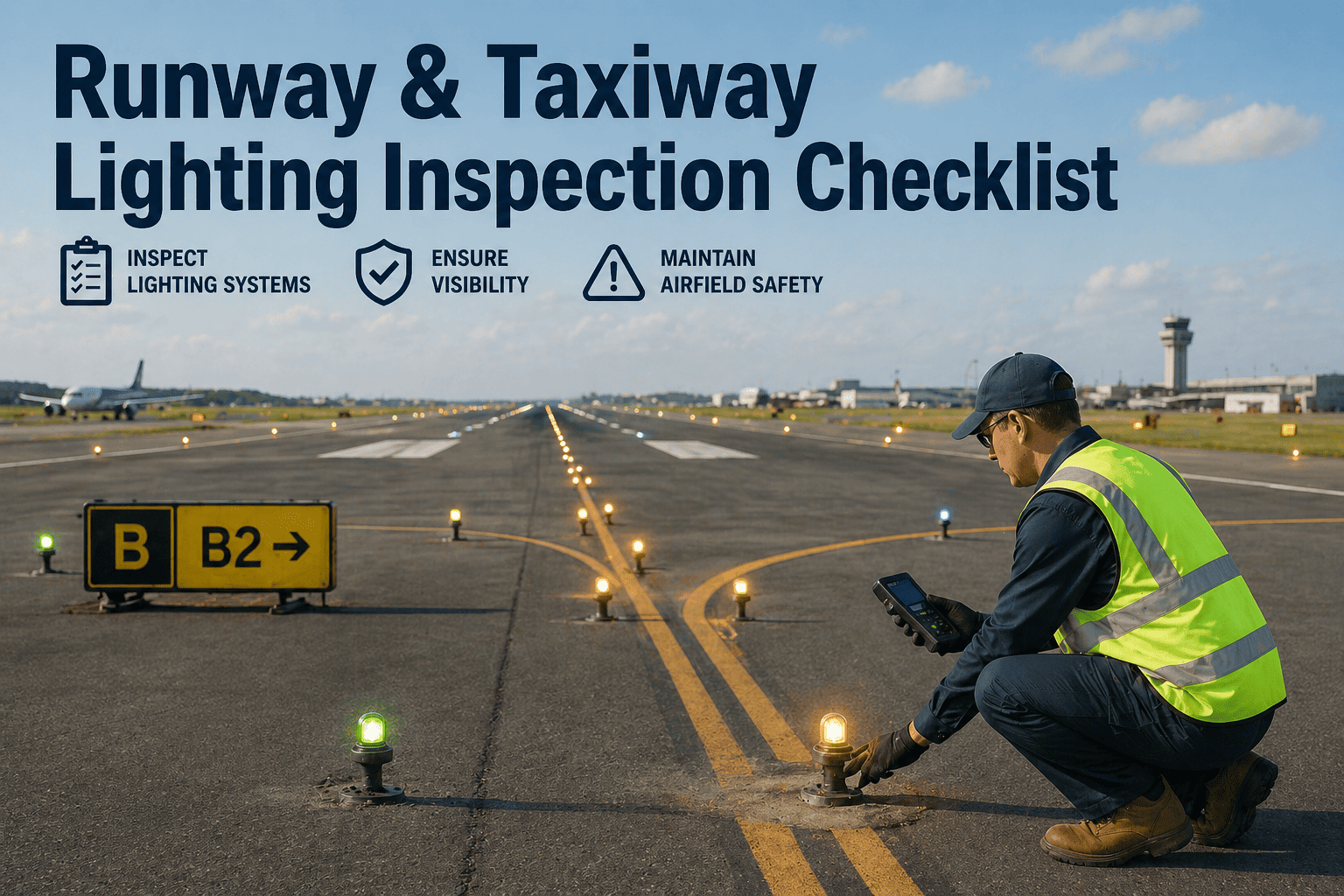
Airfield lighting reliability at international hubs operates under a compliance and safety standard that leaves no margin for reactive maintenance. A failed approach light, an undetected runway edge light outage, or a taxiway centreline circuit interruption at a hub processing 600 movements per day does not produce a maintenance work order — it produces an ATC notification, a potential runway closure, and a regulatory finding. The gap between inspection cadence and outage timing is where fixture health deteriorates without surface visibility, and where the difference between a scheduled replacement and an unplanned circuit failure is measured in departure delays and safety exposure. Sign Up Free to build your airfield lighting inspection programme in OxMaint — linking circuit verification records, fixture health checks, and outage response work orders to each lighting zone across your hub airfield.
Aviation Infrastructure · Article · Airfield Operations
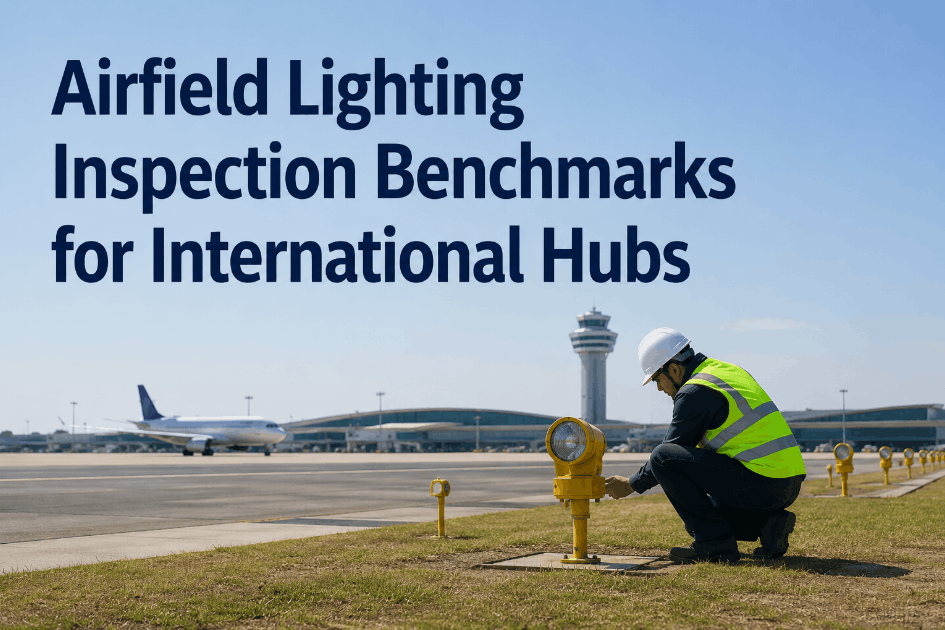
Airfield Lighting Inspection Benchmarks for International Hubs
Inspection cadence, fixture health scoring, circuit continuity verification, and outage timing analysis — structured benchmarks for airfield engineering teams maintaining reliable lighting across international hub operations day and night.
94%Of airfield lighting outages at international hubs are preventable with structured inspection cadence and proactive fixture health tracking
3.2×Higher outage frequency on circuits where inspection intervals exceed the hub benchmark of 14 days for high-intensity approach lighting
−57%Reduction in unplanned fixture replacements when CMMS-linked inspection scheduling replaces reactive outage-triggered maintenance
18 minAverage ATC notification-to-maintenance response time for airfield lighting outages without a CMMS-linked work order escalation programme
Six Airfield Lighting Inspection Benchmarks for International Hub Operations
Airfield lighting inspection at international hubs is not a single uniform programme — it is a tiered system of verification intervals and health metrics that must be calibrated against the criticality of each lighting zone, the traffic density of the circuit, and the visibility conditions under which the hub routinely operates. The six benchmarks below represent the inspection parameters with the highest correlation to unplanned outage prevention at hubs with 400+ daily movements. Book a Demo to see how OxMaint structures airfield lighting inspection work orders by zone, circuit, and criticality level — scheduling verification intervals against the specific outage risk profile of your hub infrastructure.
Benchmark 1
Approach Lighting Circuit Verification
High-intensity approach lighting systems require full circuit continuity verification every 7–14 days at hubs with ILS Cat II/III operations. Partial circuit failures produce approach category downgrade without visible surface indication.
Safety Critical
Benchmark 2
Runway Edge and Centreline Brightness
Brightness output verification against certified photometric standards every 30 days. Lamp degradation below threshold produces no alarm — only physical measurement against the hub's brightness compliance record identifies progressive failure before outage.
High Failure Risk
Benchmark 3
Taxiway Stop Bar and Hold Point Inspection
Stop bar circuit verification every 14 days minimum at hubs with complex taxiway geometry. Stop bar failures are an incursion risk — CMMS-linked inspection scheduling ensures no circuit goes beyond the benchmark interval without a formal check record.
Safety Critical
Benchmark 4
PAPI and VASIS Unit Alignment Check
Precision approach path indicator alignment verification every 60 days or after any airfield surface maintenance activity in the approach zone. Misalignment produces no visible warning until a pilot report is received — structured checks prevent reactive discovery.
High Failure Risk
Benchmark 5
Fixture Condition and Seal Integrity
Physical fixture inspection — cover seal condition, ingress protection, corrosion state — every 90 days. Seal failure allows moisture ingress that accelerates lamp failure and produces circuit-level outages disproportionate to lamp age.
Reliability Risk
Benchmark 6
Circuit Continuity and Constant Current Regulator Check
CCR output verification and series circuit continuity test every 30 days. CCR drift produces brightness variance across circuits that is not detectable by visual walk inspection — only instrument verification against the commissioning baseline identifies pre-failure drift.
Reliability Risk
Airfield Lighting Failure Cascade — How a Missed Inspection Interval Becomes an ATC Event
Airfield lighting failures at international hubs do not arrive without precursors — they arrive after a series of missed inspection intervals that allowed the precursor conditions to develop undetected. The cascade below maps the progression from a first missed brightness check to a regulatory finding, showing how each missed interval compounds the eventual response cost and safety exposure. At every stage, a structured CMMS inspection programme would have intercepted the failure before it reached the next level. Sign Up Free to build the inspection cadence that intercepts the cascade at Stage 1 — before a lamp brightness deficiency becomes an approach category event.
Airfield Lighting Failure Cascade — 5 Stages from Missed Inspection to Regulatory Event
Stage 1
Missed Inspection Interval — Brightness Deficiency Undetected
Lamp output falls below threshold. No brightness check scheduled or overdue in CMMS. Physical walk does not identify progressive dimming. No outage, no alarm.
$0
Cost if caught at inspection
↓
Stage 2
Circuit Degradation — Multiple Fixtures Below Standard
Adjacent fixtures in the circuit degrade progressively. Photometric non-compliance now extends across a circuit segment. Still no visible trigger from the airfield surface.
$640
Lamp replacement batch cost
↓
Stage 3
ATC Notification — Fixture Outage Reported
Individual fixture fails completely. ATC notified via NOTAM. Approach category review initiated. Maintenance team dispatched reactively without prepared work order or spares kit.
$2,100
Emergency dispatch + NOTAM cost
↓
Stage 4
Approach Category Downgrade — Departure Impact
Approach category temporarily reduced pending circuit restoration. Low-visibility operations suspended. Multiple arrival and departure delays recorded. Airline operational impact commences.
$8,400
Operational impact + recovery
↓
Stage 5
Regulatory Finding — Inspection Record Gap
Safety regulator audit identifies absence of structured inspection records for the affected circuit. Maintenance programme non-compliance finding raised. Corrective action plan required against inspection schedule.
$14,000+
Regulatory finding + remediation
Airfield Lighting Inspection Maturity Score — Assess Your Hub Programme
Not every international hub operates an airfield lighting inspection programme at the same maturity level. A hub with CMMS-scheduled verification intervals per circuit, closed inspection records at each cadence point, and trend analysis on fixture health carries fundamentally lower outage and regulatory risk than a hub where inspection is triggered by outage reports rather than a structured schedule. The assessment framework below gives airfield engineering managers a rapid tool to identify which elements of the inspection programme need immediate attention. Book a Demo to configure OxMaint's airfield lighting inspection scheduling for your hub's specific circuit map and criticality tiers.
Airfield Lighting Inspection Maturity Score — Hub Assessment
Score 5 = benchmark compliant · Score 1 = active outage risk · Assess per circuit type or inspection zone
5
Benchmark Compliant — CMMS-Scheduled Per Circuit
All inspection intervals scheduled in CMMS per circuit type and criticality. Brightness, continuity, and fixture checks completed at benchmark cadence. Zero overdue inspections. Full outage trend data available.
Action: Maintain programme. Review fixture health trend quarterly. Verify CCR calibration records are current against manufacturer intervals.
4
Mostly Compliant — Some Intervals Lapsed
Most circuits scheduled but PAPI alignment and CCR checks running behind benchmark. Some fixture inspections completed visually without instrument verification. Outage trend data partially available.
Action: Close interval gaps within 30 days. Introduce instrument-based brightness verification for all approach circuits. Update CCR check schedule in CMMS immediately.
3
Intermittent — Visual Walk Only, No Instrument Checks
Regular visual patrols performed but brightness measurement, circuit continuity testing, and CCR verification are not structured into the maintenance programme. Outage history exists but trend analysis is not performed.
Action: Implement instrument-based verification for all Category I and above circuits within 3 weeks. Build inspection schedule into CMMS per benchmark intervals.
2
Reactive — Inspections Triggered by Outage Reports Only
Maintenance response occurs after ATC notification or pilot report. No proactive inspection schedule. Outage frequency is rising. Circuit health data is not available for trend analysis or regulatory review.
Action: Immediate inspection audit of all approach and stop bar circuits. Initiate CMMS-scheduled programme before next low-visibility operations season.
1
No Programme — Active Regulatory and Safety Risk
No structured inspection programme. Circuit health is unknown. Outages addressed individually without root cause analysis. Regulatory inspection record gap is likely to be identified at next audit.
Action: Emergency programme initiation. Full circuit condition survey within 10 days. Engage safety regulator liaison ahead of next scheduled audit.
Technology Integration: CMMS Inspection Scheduling, Fixture Health Records, and Outage Trend Analysis
An airfield lighting inspection programme that relies on shift supervisors to initiate verification walks produces coverage that varies with staffing levels, shift handover quality, and individual technician judgement — none of which is a consistent inspection programme. Effective airfield lighting reliability at international hubs requires the inspection schedule to be owned by the CMMS, each circuit check to generate a structured health record, and outage trend analysis to surface circuit deterioration patterns before they produce ATC notifications. OxMaint connects all three: inspection work orders auto-generated per circuit at benchmark intervals, fixture health records linked to the circuit map and outage history, and trend reports identifying brightness degradation patterns across circuits before they reach the failure threshold. Sign Up Free to move your airfield lighting programme from reactive outage response to CMMS-driven circuit health management.
Inspection Scheduling
100%
Circuit coverage when CMMS-scheduled vs supervisor-initiated
Inspection work orders auto-generated per circuit type at benchmark intervals. No circuit can exceed its inspection window without a CMMS overdue record — coverage is complete and audit-ready.
Fixture Health Records
−57%
Reduction in unplanned fixture replacements with proactive health tracking
Each inspection generates a structured fixture health record linked to the circuit, the zone, and the photometric standard. Brightness deficiencies trigger replacement work orders before outage occurs.
Outage Trend Analysis
3.2×
Earlier circuit failure detection vs reactive ATC-triggered response
Repeat fixture failures on the same circuit surface automatically in OxMaint's airfield dashboard — identifying circuit-level deterioration patterns weeks before they produce approach category events.
CCR and Circuit Records
98%
Regulatory record compliance when CMMS-managed vs paper-based
CCR verification records and circuit continuity test results linked to every inspection work order. Regulator audit requests are answered from the CMMS record set — no paper chase, no record gaps.
"
We had two approach lighting NOTAM events in a single quarter that traced back to circuits we hadn't formally inspected in over 40 days. The visual patrols were happening but brightness wasn't being measured — we just didn't know the circuits were degraded. We implemented OxMaint's circuit inspection scheduling with instrument verification work orders at the benchmark intervals. In the following 12 months we had zero unplanned approach circuit NOTAMs and our regulatory inspection record audit came back clean for the first time in three years.
Airfield Infrastructure Manager — International hub, 3 runways, Category III ILS operations, Northern Europe
Airfield Lighting Failure Root Cause Distribution at International Hubs
Unplanned airfield lighting outages at international hubs originate from a consistent set of identifiable root causes — most of which are preventable with structured inspection intervals and instrument-based health verification before they produce operational events. The distribution below reflects airfield maintenance programme analysis across hubs with 300+ daily movements. Book a Demo to map your hub's circuit risk profile against this distribution and configure OxMaint's inspection scheduling to target the highest-frequency failure origins first.
Airfield Lighting Failure Root Cause Distribution — International Hub Operations (%)
Inspection interval exceeded — no CMMS scheduling
74%
Brightness degradation undetected — visual walk only
67%
Seal failure allowing moisture ingress to fixture
58%
CCR drift not identified before circuit variance
49%
PAPI misalignment following surface maintenance activity
41%
Stop bar circuit failure — inspection record gap
33%
Protect Approach Category Compliance — CMMS-Scheduled Circuit Inspection, Fixture Health-Tracked.
OxMaint schedules airfield lighting inspection per circuit, per criticality tier — outage-prevention focused, regulatory record-ready, and free to start.
Frequently Asked Questions
What inspection interval benchmarks apply to approach lighting at ILS Cat III hubs?
Circuit continuity and brightness verification every 7 days for Cat III approach lighting systems. Visual fixture condition check every 14 days. CCR output verification every 30 days. All intervals should be scheduled in CMMS and verified with instrument records, not visual walk only.
How does a CMMS improve airfield lighting inspection compliance at international hubs?
A CMMS generates inspection work orders at benchmark intervals per circuit, requires structured health records at each check, links fixture failures to replacement work orders automatically, and provides the complete inspection record set for regulatory audits.
Sign Up Free to build this in OxMaint.
What is the most common cause of unplanned airfield lighting outages at international hubs?
Exceeded inspection intervals combined with visual-only patrols that do not detect progressive brightness degradation. Brightness failures produce no alarm — only scheduled photometric measurement against the certified standard identifies pre-outage conditions before they generate a NOTAM event.
How often should stop bar circuits be inspected at complex hub taxiway systems?
Every 14 days as a minimum for active stop bar circuits at hubs with complex taxiway geometry or multiple runway crossings. Hubs with Cat II/III low-visibility operations should inspect every 7 days and after any surface maintenance activity within the taxiway zone.
Book a Demo to configure this in OxMaint.
What records are required to demonstrate airfield lighting inspection compliance to regulators?
Dated work order records per circuit showing inspection date, technician, measurement results against photometric standard, and any corrective actions raised. CMMS-generated records are preferable to paper logs — they provide timestamped, uneditable audit trails that satisfy most national aviation authority requirements without additional formatting.
Zero Unplanned NOTAMs — Circuit-Scheduled, Fixture Health-Logged, Regulatory Record-Ready.
OxMaint builds airfield lighting inspection into your asset maintenance programme — automated interval scheduling, instrument verification records, and approach circuit health trending.