A major international airport operates more than 10,000 individual assets — from jet bridges and baggage handling conveyors to airfield lighting circuits, HVAC systems, people movers, water infrastructure, security equipment, and terminal building components — each with its own maintenance schedule, depreciation timeline, and capital replacement horizon. Managing this asset base without a structured framework is not inefficient; it is financially dangerous. Oxmaint gives airport asset managers a scalable CMMS framework to register, condition-score, and lifecycle-manage every asset category from a single platform — with rolling CapEx forecasting models that replace reactive replacement surprises with defensible, data-driven capital budgets. A 10,000-asset airport spending 4.8x more on reactive repairs than planned maintenance is not a maintenance team problem — it is a data problem. Book a demo and see how Oxmaint scales to your airport asset portfolio.
10,000 Assets. One Platform. Complete Lifecycle Visibility.
Oxmaint scales to the full complexity of airport asset management — from airfield infrastructure to terminal systems — with condition scoring, PM scheduling, and rolling CapEx forecasting that gives your finance team defensible capital budget data and your operations team the visibility to prevent failures before they disrupt the airport.
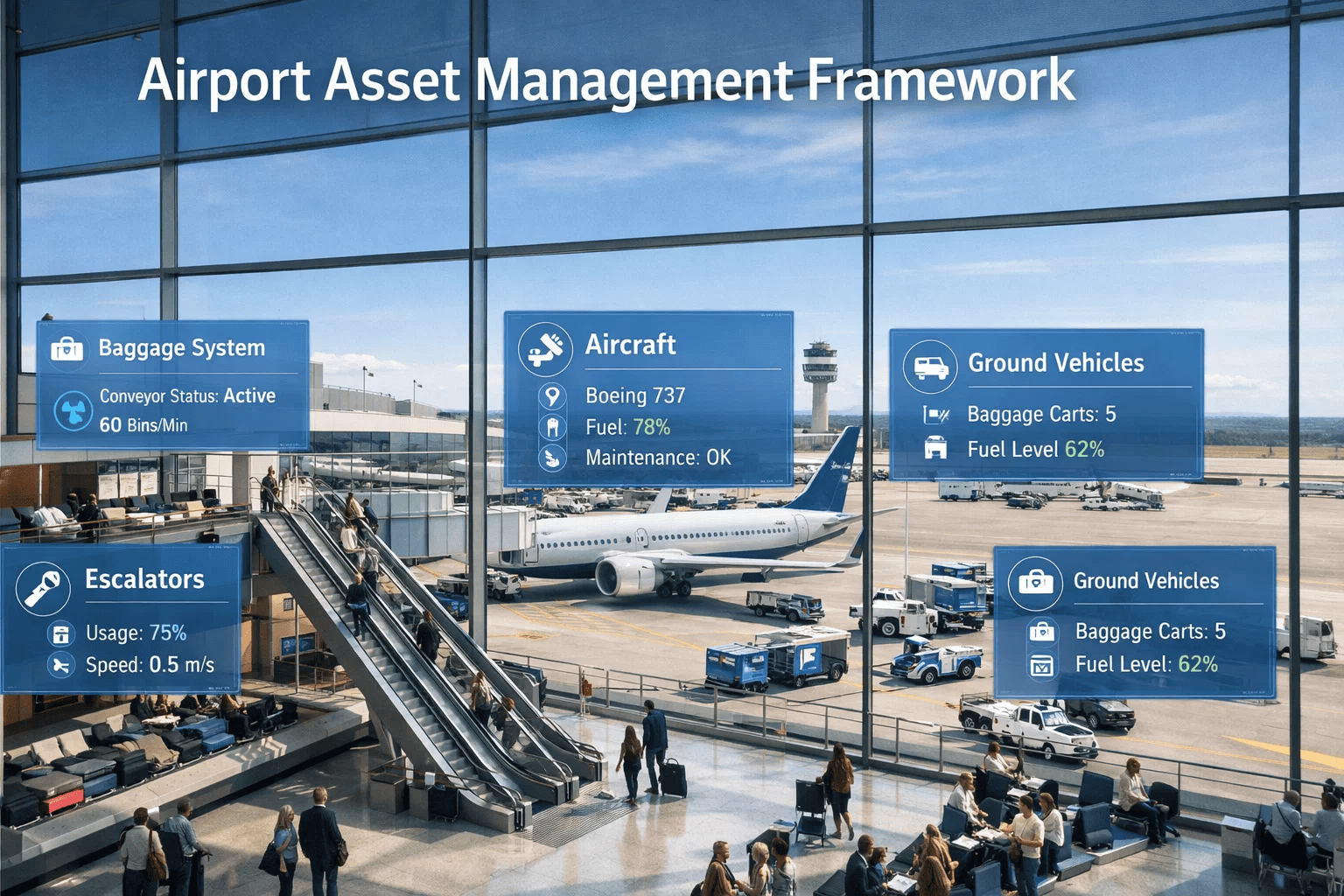
The Airport Asset Management Framework: 5 Structural Levels
Effective airport asset management requires a hierarchical data structure that mirrors how the airport is physically and operationally organised — enabling reporting at every level from individual component to full portfolio.
Portfolio
The entire airport authority — all terminals, concourses, airfield areas, and facilities under one ownership structure. CapEx budget rollup and compliance dashboard at this level.
Property / Facility
Terminal A, Terminal B, Concourse C, Cargo Complex, Maintenance Base, Airfield — each managed as a distinct maintenance and CapEx unit with its own asset register and PM program.
System
HVAC, Electrical, Plumbing, BMS, Baggage Handling, APM, Security, Airfield Lighting — system-level performance metrics, PM compliance, and cost tracking within each facility.
Asset
Individual equipment units — AHU-04, Jet Bridge 12A, BHS Motor-07 — each with a condition score, service history, PM schedule, cost-to-date, and replacement forecast.
The 8 Major Airport Asset Categories to Register and Manage
Comprehensive airport asset management spans every system category that contributes to safe, efficient, and compliant operations — not just the high-visibility terminal equipment.
Airfield Infrastructure
Pavement, markings, lighting (PAPI, REIL, edge lights, centerline), signage, drainage, and safety area features. Condition scored per FAA PAVEAIR methodology or equivalent.
Terminal Building Systems
HVAC, electrical distribution, plumbing, fire suppression, BMS/BAS, elevators, escalators, and structural elements — each with lifecycle cost tracking and CapEx planning integration.
Baggage Handling Systems
Conveyor drives, sortation units, in-line screening (ILS) equipment, early baggage storage (EBS), and baggage claim carousels — PM scheduled by operating cycles, not just calendar.
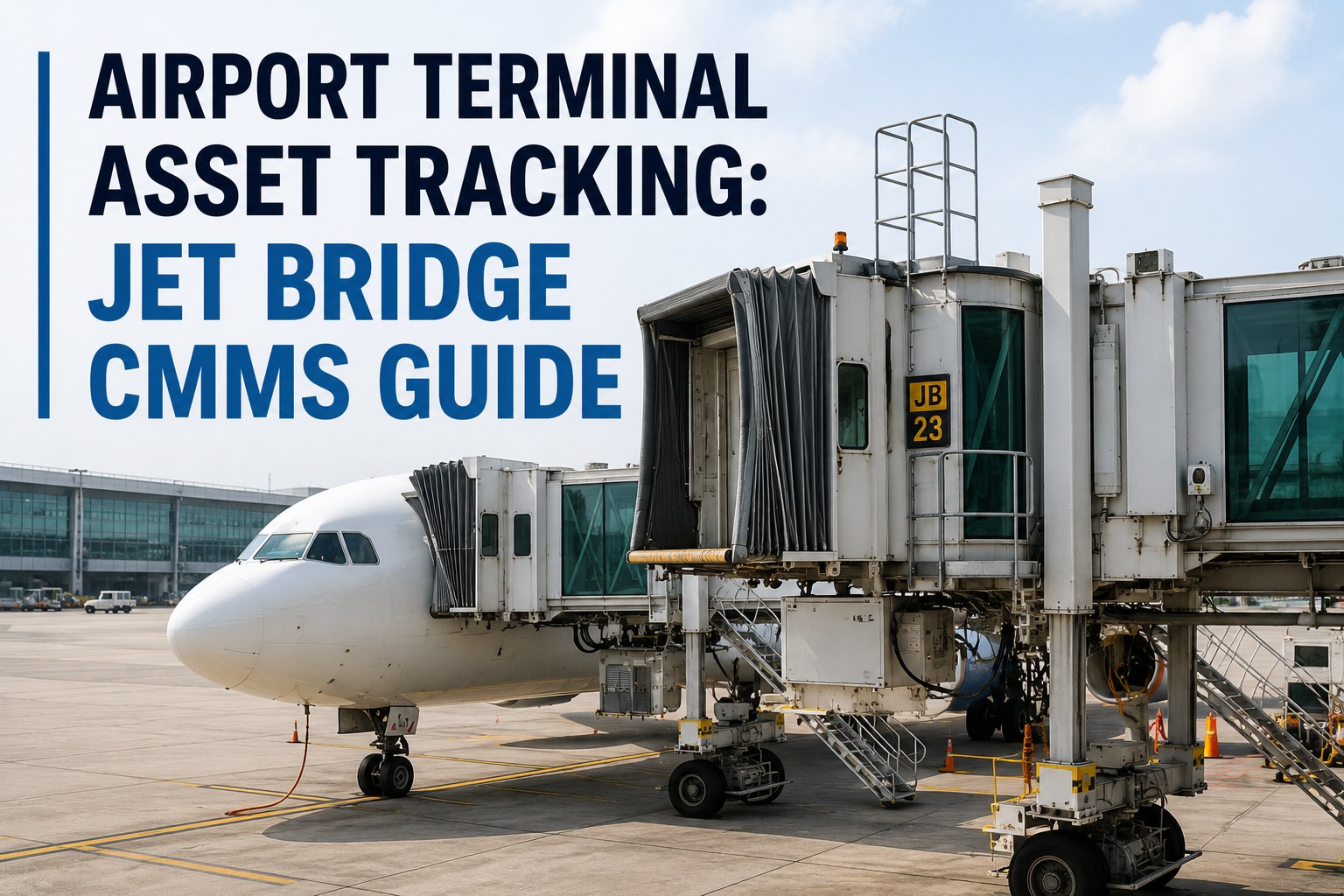
Passenger Boarding Bridges
Jet bridge drive systems, elevation mechanisms, weather seals, passenger walkway flooring, and cabin position sensors. PBB availability directly impacts on-time departure performance.
Ground Support Equipment
Airport-owned pushback tractors, belt loaders, ground power units, de-icing equipment, and FOD sweepers — fleet-level maintenance programs with utilisation-based PM triggers.
Security Systems
CCTV networks, access control, perimeter intrusion detection, passenger screening equipment, and checkpoint X-ray systems — availability and calibration records for TSA and authority compliance.
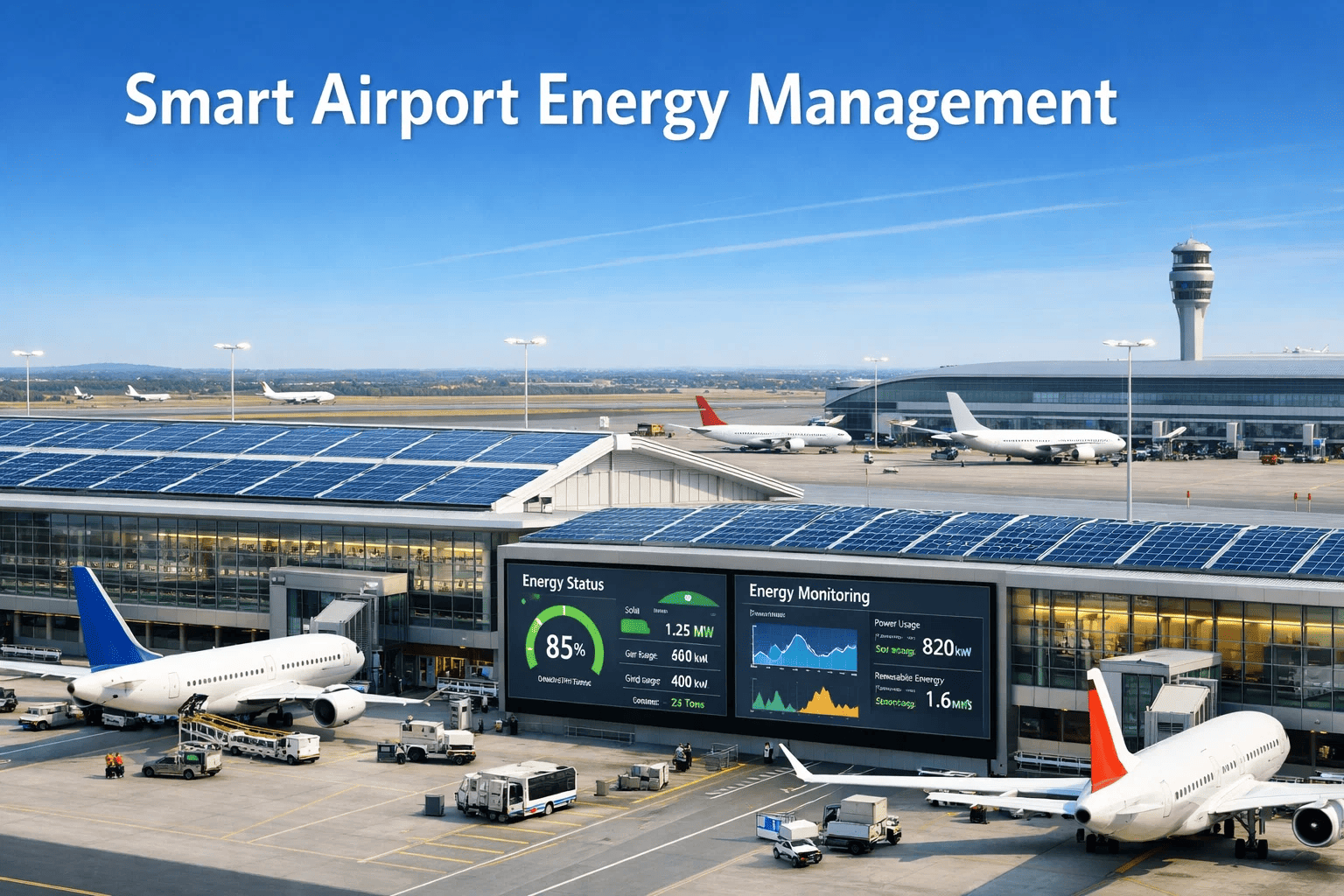
Utilities and Energy
High-voltage switchgear, UPS systems, generator sets, central chiller plants, and fuel farm infrastructure — critical assets with annual thermographic and electrical testing requirements.
Automated Transit Systems
People mover vehicles, guideway, propulsion, station platform equipment, and control systems — cycle-based PM programs with 99.5%+ availability requirements and safety inspection compliance.
Why Airport Asset Management Programs Break Down at Scale
No Single Source of Asset Truth
Assets registered in multiple disconnected systems — BMS for building, separate CMMS for airfield, spreadsheets for GSE, paper records for ARFF. No consolidated view, no portfolio-level reporting, no cross-system condition comparison.
Capital Budgets Built on Age, Not Condition
Airport authorities replacing assets on manufacturer-recommended age schedules miss assets that are degrading faster than expected and waste budget on assets with significant remaining useful life. Condition-based replacement decisions require condition data — which most airports do not systematically collect.
PM Compliance Not Measurable Across Systems
When PM records are split across five systems, a portfolio-level PM compliance rate cannot be calculated. The compliance gaps that drive reactive failures are invisible at the management level until failures occur.
True Cost Per Asset Unknown
Without a single system linking work orders, parts, contractor invoices, and labour to individual assets, the actual lifetime maintenance cost per asset is unknown. High-cost problem assets are subsidised by the overall budget without generating replacement decisions.
How Oxmaint Manages 10,000+ Airport Assets
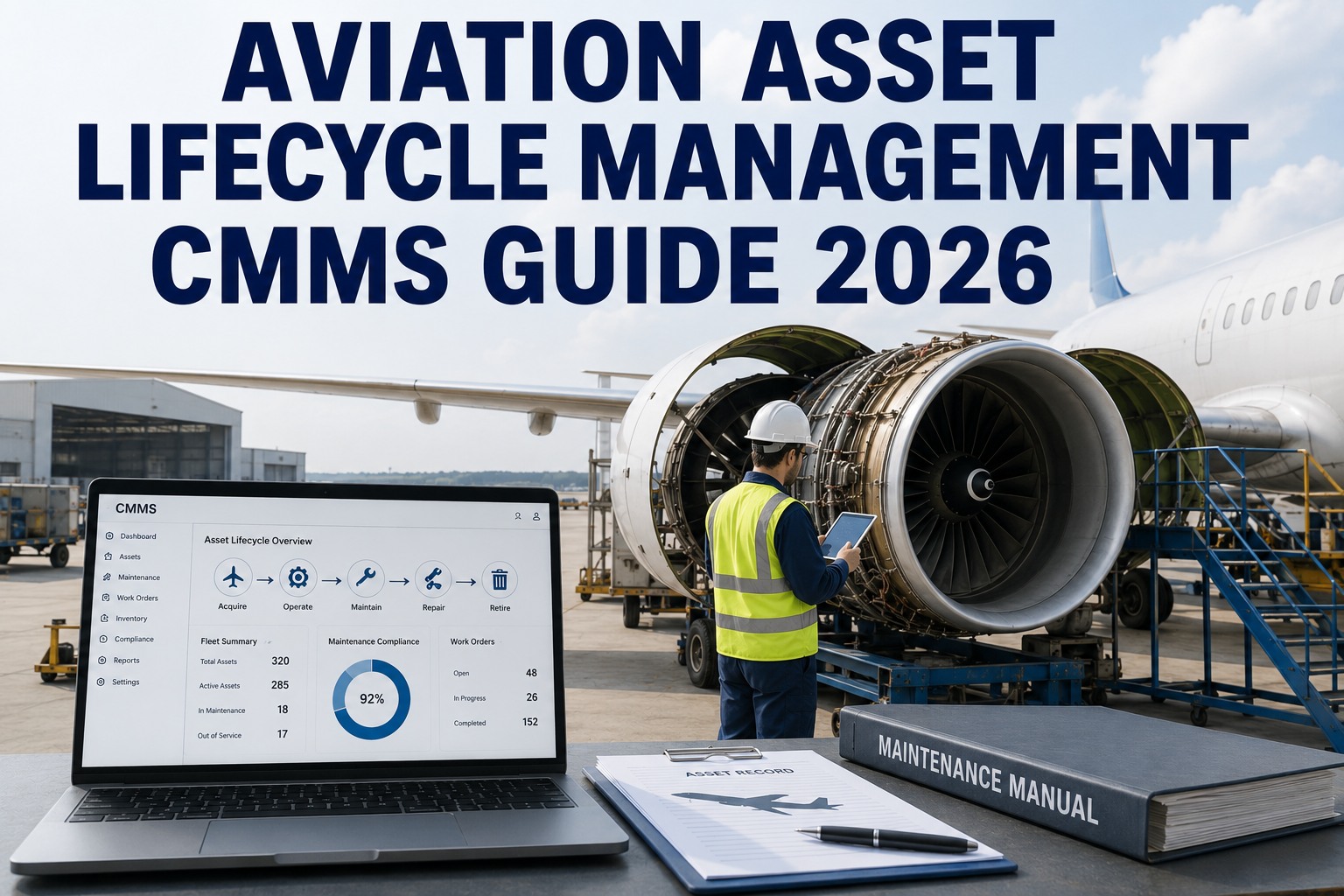
Full Asset Register With Condition Scoring
Register every airport asset with its location, category, installation date, OEM specs, and current condition score — from airfield lights to jet bridges — in a single searchable platform accessible airport-wide.
PM Scheduling by Time, Cycles, and Condition
Set PM intervals by calendar, operating cycles, or condition threshold. High-cycle BHS components get PM at the right interval. Low-use assets are not over-maintained. PM backlog visible in real time across all asset categories.
Rolling 5–10 Year Replacement Forecast
Condition scores and maintenance cost trends feed automatically into Oxmaint's CapEx forecasting model — generating a rolling 5 to 10-year capital replacement budget that finance directors and airport authorities can defend to boards and bondholders.
True Lifetime Cost Per Asset
Labour, parts, and contractor costs linked to every work order and attributed to the individual asset. Identify your top-10 cost assets annually — and make replacement decisions based on real numbers, not estimates.
Multi-Terminal PM Compliance Dashboard
Airport-wide PM compliance rate, work order backlog, open deficiencies, and overdue safety inspections — consolidated in one dashboard for airport directors, regardless of how many terminals or facilities are under management.
Audit-Ready Documentation Across All Systems
Every inspection, PM completion, and corrective action logged with digital signatures and timestamps — exportable as an audit package for FAA Part 139, ISO 55001, or airport authority compliance reviews in minutes.
Fragmented Asset Management vs Unified Oxmaint Framework
Frequently Asked Questions
How long does it take to build an airport asset register in Oxmaint for a 10,000-asset portfolio?
Most airports complete their initial asset register build in 6 to 12 weeks using a combination of bulk CSV import, integration with existing facility management systems, and field-based asset tagging with the Oxmaint mobile app. A phased approach — starting with the highest-criticality asset categories — delivers ROI within the first quarter. Start free and our onboarding team will scope the asset register build for your specific portfolio.
How does Oxmaint's condition scoring work for airport assets across different categories?
Oxmaint assigns condition scores from 1 to 10 based on inspection findings, age relative to design life, maintenance cost trend, and failure history. Scoring criteria can be customised per asset category — pavement condition follows FAA PCI methodology, HVAC equipment follows ASHRAE condition guidelines, and structural assets use engineering-defined criteria. Condition scores update after each inspection or IoT data cycle. Book a demo to see condition scoring configuration for your asset categories.
Can Oxmaint generate CapEx forecasts that airport finance teams can use in bond presentations?
Yes. Oxmaint's rolling CapEx forecast model outputs replacement cost projections by asset category, facility, and year — with condition score basis for each projected replacement. Airport finance teams have used Oxmaint CapEx data directly in capital improvement program (CIP) presentations to airport authority boards, rating agencies, and bond counsel. The model updates automatically as asset conditions change.
Does Oxmaint integrate with existing airport CMMS, BMS, or facility management platforms?
Yes. Oxmaint integrates with BMS, SCADA, IoT sensor networks, and existing CMMS platforms via REST API and structured data connectors. For airports with legacy systems, Oxmaint can function as the portfolio-level reporting and CapEx planning layer above existing system-specific tools — consolidating asset condition and maintenance data from multiple sources into one management view. Book a demo to review integration options for your existing platform stack.
Every Asset. Every System. One Platform. Defensible Capital Budgets.
Oxmaint scales to the full complexity of airport asset management — giving your operations team condition-based PM visibility, your finance team rolling CapEx forecasts they can defend to the board, and your compliance team audit-ready documentation for every regulatory program. Start free and have your first asset category live within the week.