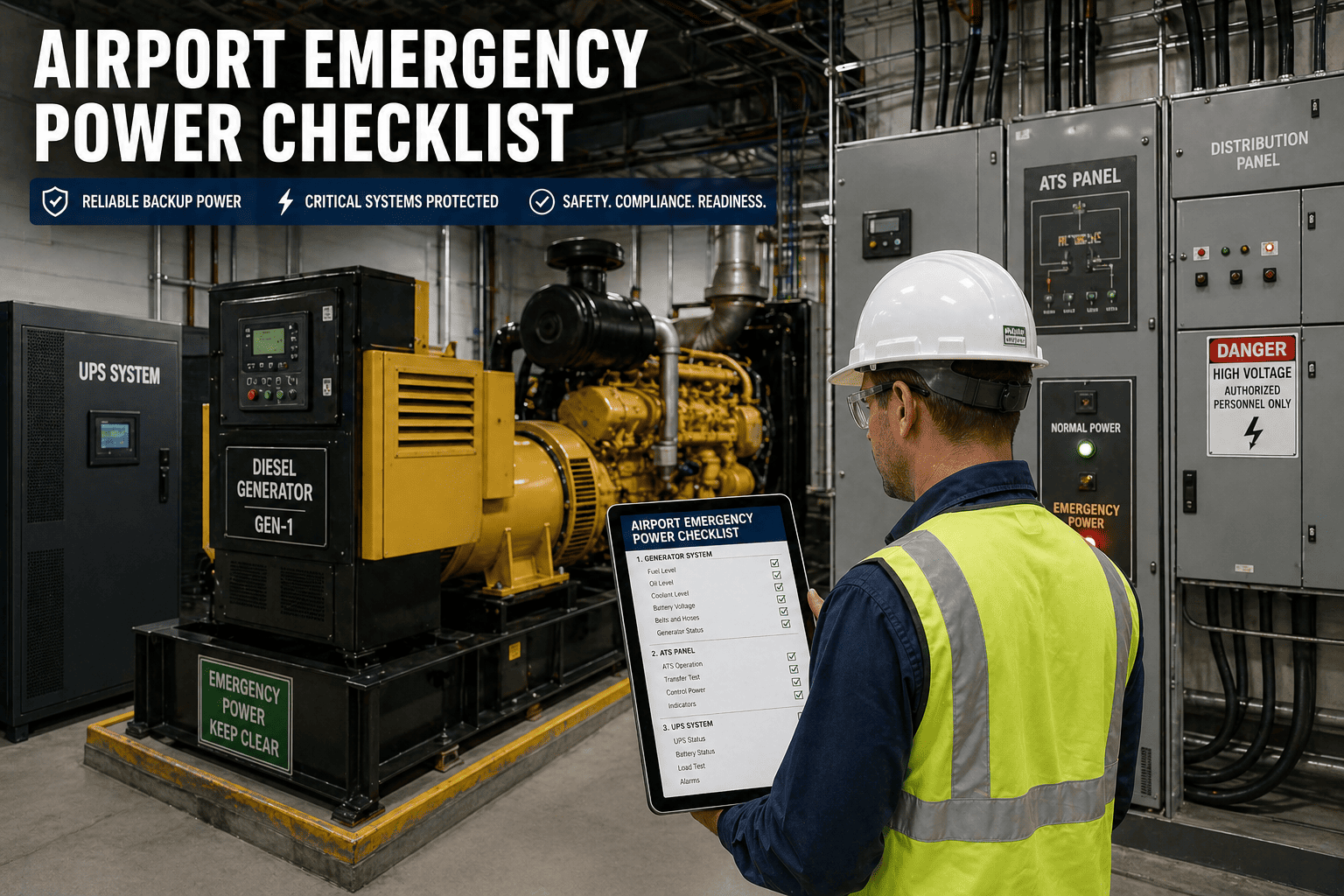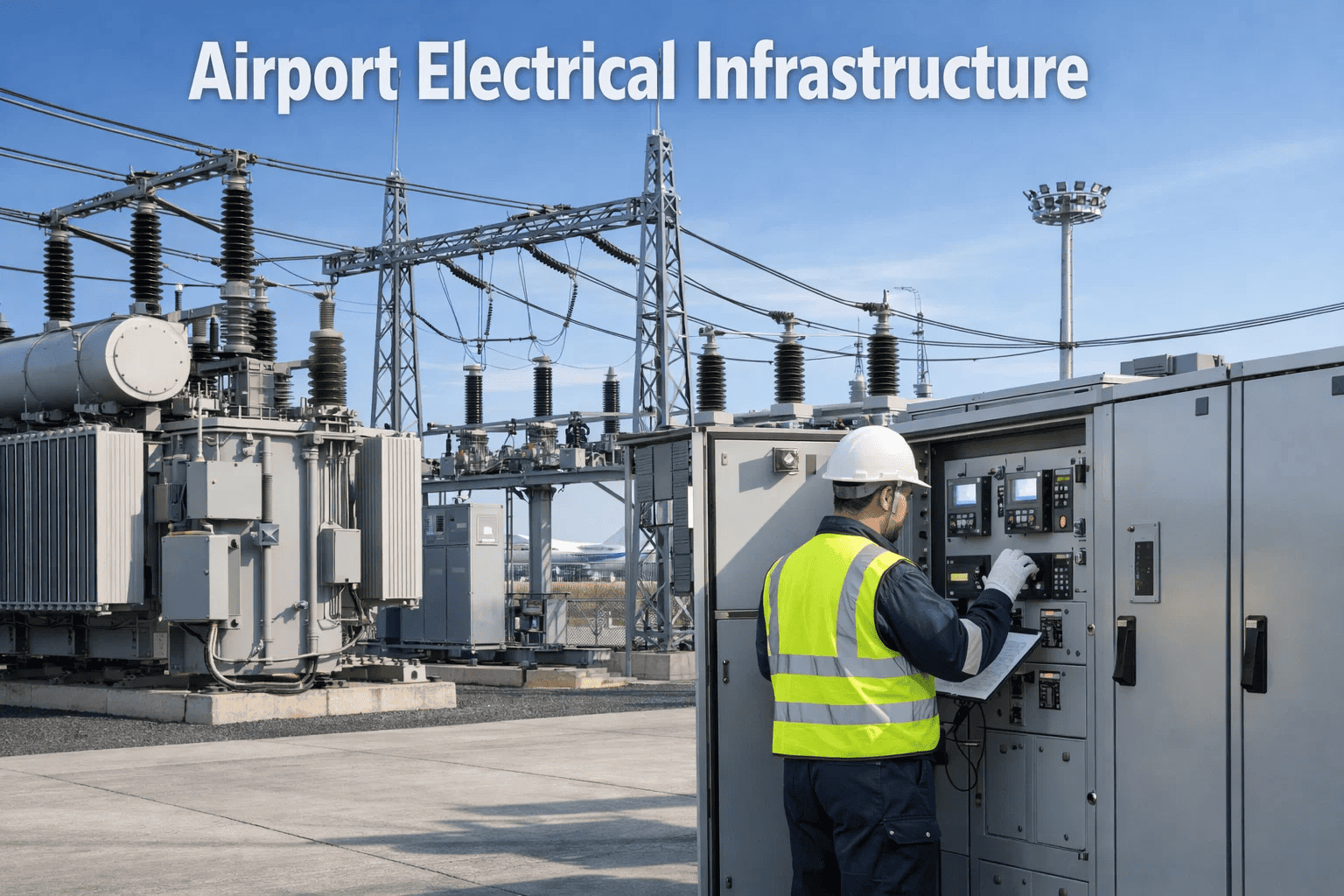
Airport electrical infrastructure is the silent backbone of every terminal, runway, and control system — and when it fails, the ripple effect shuts down gates, delays hundreds of flights, and triggers regulatory investigations. High-voltage substations, switchgear, and power distribution networks at major airports operate under continuous 24/7 load, yet most maintenance teams are still managing them with spreadsheets and paper-based inspection logs. The gap between what your electrical assets demand and what your team can actually track manually is where failures hide — and where costs compound silently until something catastrophic forces the issue. Start tracking your airport electrical assets free with Oxmaint and close the inspection gap before it becomes a compliance gap — or book a live demo to see how Oxmaint manages high-voltage substation maintenance at scale.
Airport Electrical Infrastructure: High-Voltage Substations & Power Distribution
A complete maintenance guide for airport facility managers covering substation management, switchgear, transformers, and power distribution — with CMMS-driven inspection scheduling and compliance tracking.
Airport Electrical Infrastructure Is Not Just Utilities — It Is Operational Safety
Every critical airport system — from runway lighting and ILS navigation aids to jetbridge power, terminal HVAC, and security screening — depends entirely on a reliable electrical distribution chain. At the core of that chain are high-voltage substations that step down transmission-level voltages (typically 33kV to 132kV) to distribution levels usable by terminal systems. A single substation failure cascades across every downstream load simultaneously. Unlike commercial facilities where power disruptions are an inconvenience, at airports they are a safety event subject to FAA, CAA, EASA, and ICAO standards with mandatory reporting requirements. Want to build a preventive maintenance program that keeps your substation assets inspection-current? Start a free trial of Oxmaint today and get your first PM schedules running in under 48 hours — or book a demo to see how airport electrical assets are managed across multi-terminal portfolios.
The Four Layers of Airport Electrical Infrastructure
Primary intake points receiving utility-level power. Contain power transformers, protection relays, circuit breakers, and metering. Typically unmanned and remotely monitored — inspection intervals are regulatory-mandated at 3 to 12 months depending on voltage class and jurisdiction.
Ring main units and switchboards distributing power from substations to secondary transformers across the airfield and terminal zones. SF6 and vacuum circuit breakers require insulation resistance testing, contact wear checks, and gas pressure verification on defined cycles.
Step-down units serving terminal zones, gates, ground support equipment areas, and airside infrastructure. Oil-cooled units require thermographic inspection, dissolved gas analysis, and moisture testing. Dry-type units in terminal buildings require cooling path verification and winding resistance checks.
Constant current regulators (CCRs) powering runway, taxiway, and approach lighting systems. Series circuits operating at 6.6A require isolation transformer integrity checks, CCR output regulation verification, and ground fault detection testing at intervals defined by FAA Advisory Circular 150/5340.
Where Airport Electrical Maintenance Programs Break Down
Substation assets, cable routes, protection relay settings, and last-test results scattered across multiple contractor reports, PDF files, and spreadsheets. No single source of truth for compliance evidence.
Transformer oil analysis, relay calibration, and switchgear contact wear checks due on fixed cycles — but reminder systems are manual emails. When personnel change, inspection cadences break immediately.
Regulatory audits require complete, date-stamped inspection records with technician sign-off. Paper logbooks and disconnected files cannot produce this evidence quickly — creating compliance risk during every CAA or FAA audit cycle.
Power transformers have 25–40 year lifecycles. Without condition tracking tied to asset age and maintenance history, replacement planning is purely reactive — forcing emergency capital requests at the worst possible time.
Is Your Airport Electrical Infrastructure Inspection-Current and Audit-Ready?
Oxmaint gives airport facility teams a single platform to register every electrical asset, schedule every mandatory inspection, capture digital sign-off, and produce compliance reports in minutes — not days. No paper. No spreadsheets. No missed intervals.
What Changes When You Replace Paper With Oxmaint
Oxmaint Capabilities Built for Airport Electrical Teams
Register every substation, transformer, switchboard, CCR, and protection relay with nameplate data, installation date, voltage class, OEM specs, and condition score in a searchable hierarchy.
Build maintenance schedules directly from FAA AC 150/5340, NFPA 70B, IEC 62271, and local utility authority requirements. Inspection intervals auto-trigger and escalate on overdue.
Mobile inspection checklists for thermographic surveys, insulation resistance tests, contact wear checks, and oil sampling — completed on-site with photo capture, digital signature, and automatic time-stamp.
Rolling 5–10 year replacement forecasts built on actual condition scores, maintenance history, and asset age — giving finance and airport authority planning teams data-backed capital justification.
One-click export of inspection history, work order records, and digital sign-offs for any asset, zone, or date range. Formatted for regulatory authority submission with no manual assembly required.
Manage electrical infrastructure across multiple terminals, concourses, and airside zones from a single dashboard. Portfolio managers see compliance status, overdue inspections, and CapEx exposure at a glance.
The Financial Case for Structured Electrical Maintenance at Airports
Frequently Asked Questions
What maintenance intervals are mandatory for airport high-voltage substations?
Mandatory intervals vary by jurisdiction and voltage class. In the US, FAA Advisory Circular 150/5340-26 governs airfield lighting and electrical systems. NFPA 70B and IEEE C2 set inspection standards for HV equipment. Typical intervals: annual visual inspection, 3-yearly insulation resistance and contact resistance testing, and 5-yearly protection relay calibration. Transformer oil analysis is typically annual for units over 10 years old. Start a free trial to build your first compliance schedule today.
Can Oxmaint manage both internal electrical staff and external high-voltage contractors?
Yes. Oxmaint supports both internal technician work orders and contractor-assigned jobs on the same platform. External contractors can receive work orders, complete mobile inspection forms, attach test certificates, and provide digital sign-off — all recorded against the asset in the same audit trail as internal maintenance. This is critical for HV work where qualified contractors handle live equipment and their records must be retained for regulatory purposes. Book a demo to see the contractor workflow in action.
How does Oxmaint handle spare parts inventory for critical electrical components?
Oxmaint includes full spare parts inventory management linked to asset records. Critical spares — protection relay modules, SF6 gas bottles, transformer bushings, CCR components — are tracked by quantity, location, and minimum reorder level. When a PM work order consumes a part, inventory adjusts automatically. The CapEx forecasting module flags spare parts procurement requirements aligned to planned replacement windows, not just reactive stock-outs. Start a free trial to connect your spares inventory to your PM programme.
Does Oxmaint support multi-terminal airports with separate electrical zones?
Oxmaint is built for multi-site and multi-zone portfolios. The asset hierarchy — Portfolio, Property, System, Asset, Component — maps directly to airport structures: Airport Authority at the top, then Terminal A, B, C, then Substation Zone, then individual transformer or switchboard. Reporting can be done at any level, meaning a facilities director sees all three terminals' compliance status simultaneously while a technician sees only their zone's overdue tasks. Book a demo to see the multi-terminal dashboard.
Stop Managing Airport Electrical Infrastructure on Spreadsheets
Oxmaint gives airport electrical teams a complete CMMS to register every HV asset, schedule every mandatory inspection, capture digital compliance evidence, and forecast CapEx — in one platform, with no implementation fees and no long onboarding timeline. Your next regulatory audit is coming. Be ready for it.