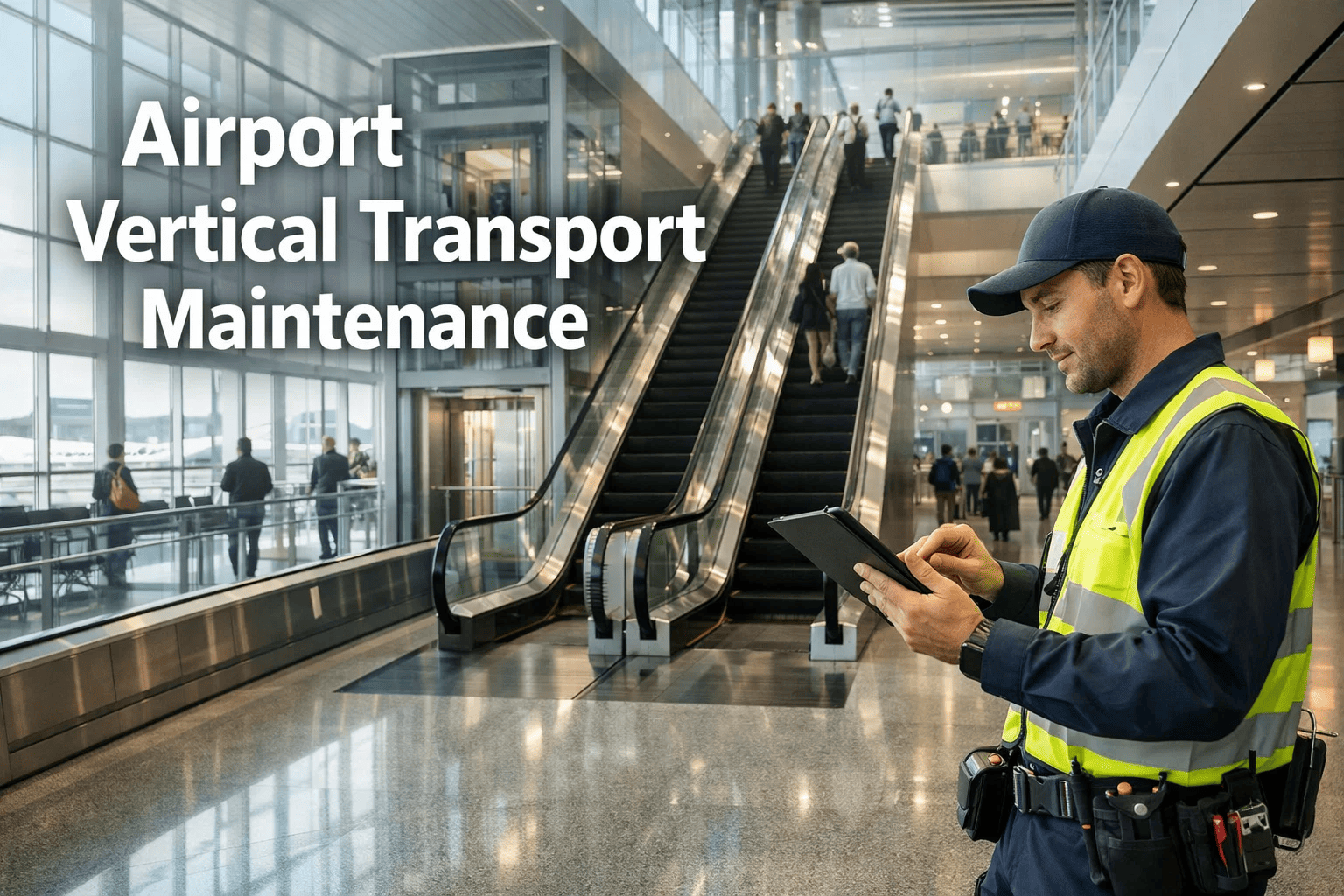
Elevator and escalator failures in airport terminals create passenger safety risks, ADA compliance violations, and operational bottlenecks that ripple across check-in, security, and boarding gates — yet 62% of airport facilities still track vertical transport maintenance using vendor-supplied paper checklists that cannot flag wear patterns before catastrophic failures occur. When an escalator emergency-stops during peak boarding with 400 passengers queued behind security, the cost is not the repair technician — it is the missed departures, passenger injury liability, and TSA throughput delays that follow. OxMaint digitizes elevator and escalator PM programs with predictive failure alerts and ADA compliance tracking — start a free trial and configure your first vertical transport inspection route in under 20 minutes.
Vertical Transport · ADA Compliance · Passenger Safety
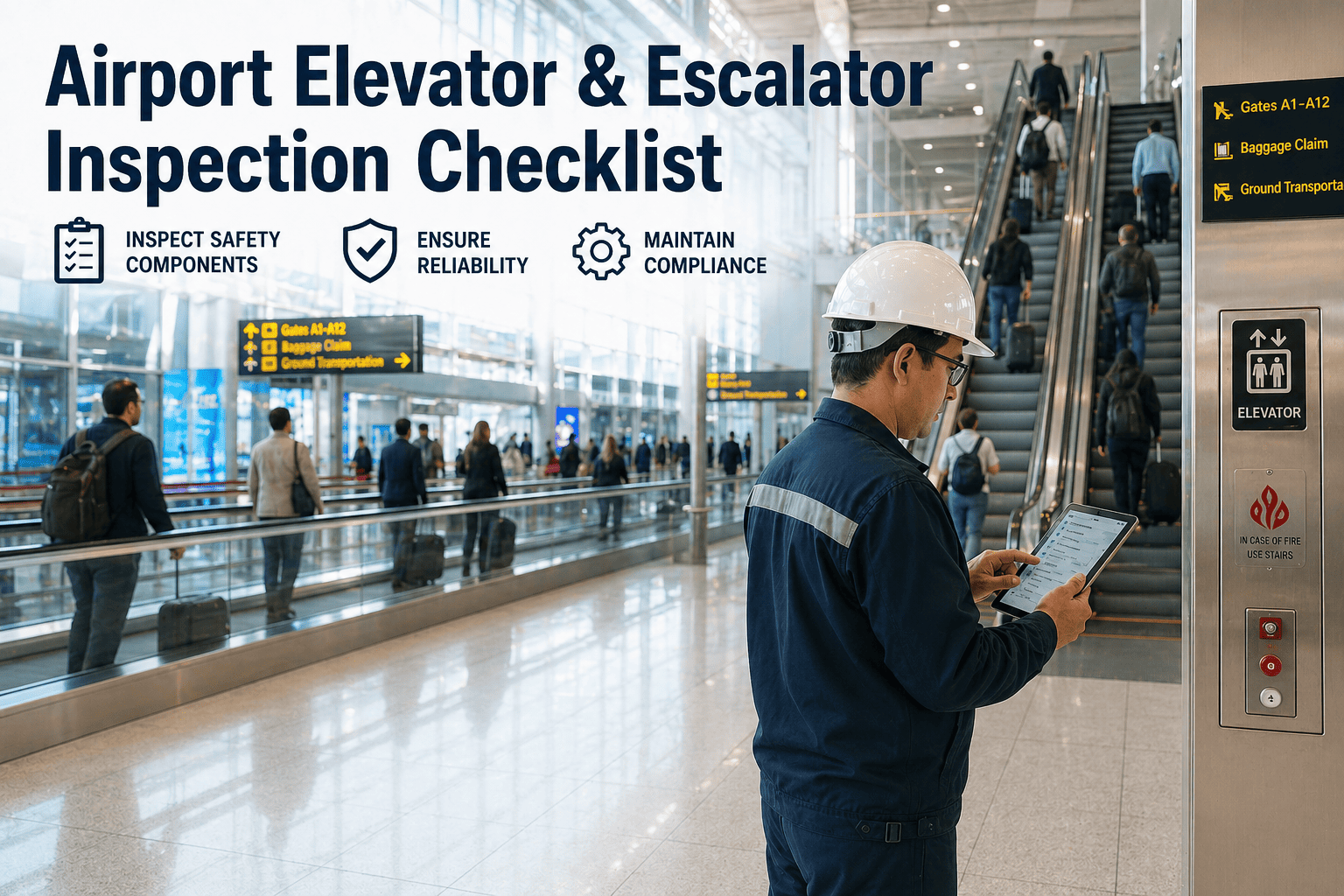
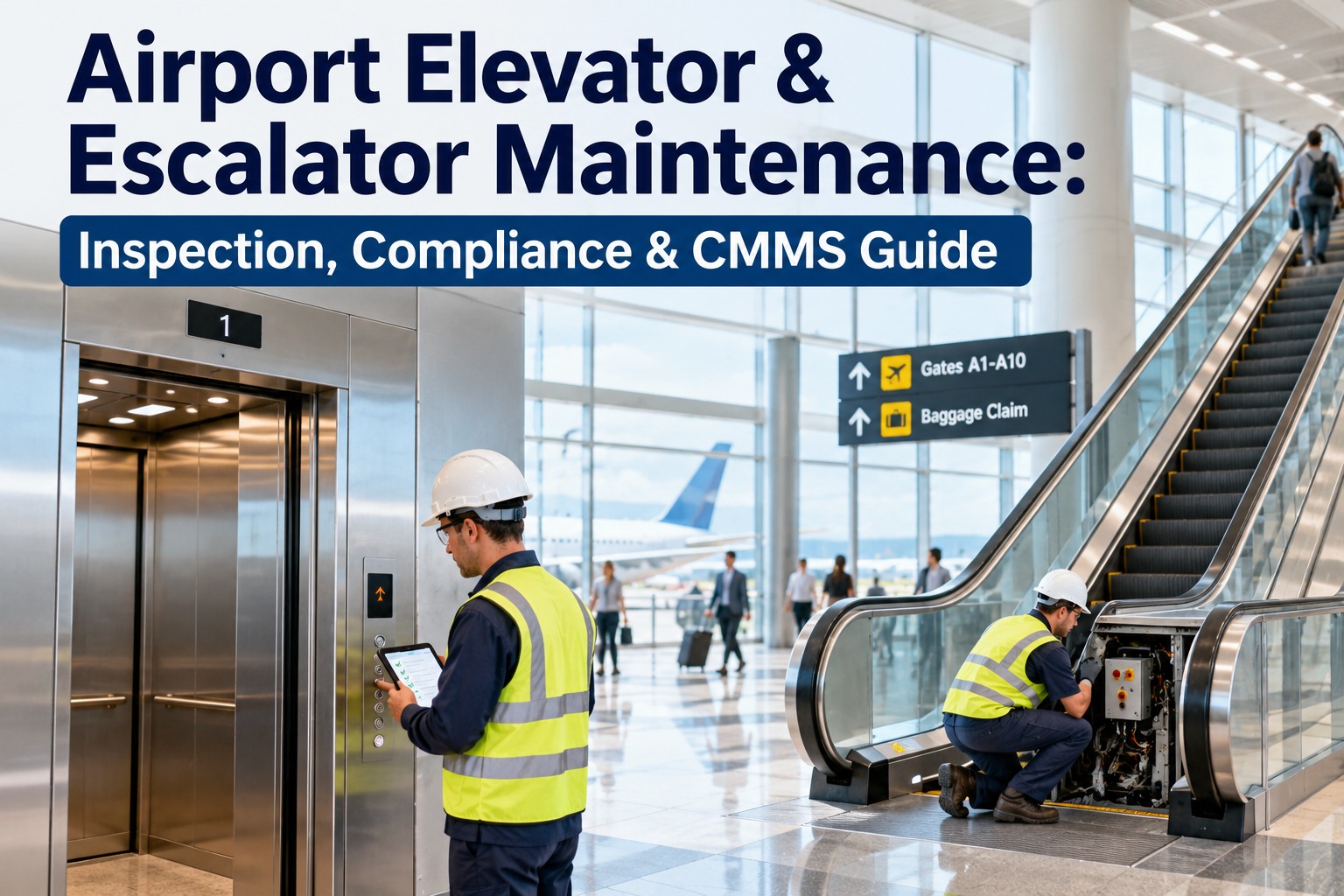
Airport Elevator & Escalator Inspection Checklist: Complete Safety & Compliance Guide
Airport vertical transport systems require structured preventive maintenance to ensure passenger safety, ADA accessibility, and operational reliability. This guide covers elevator safety systems, escalator step inspection, moving walkway belt integrity, and emergency communication testing with frequencies aligned to ASME A17.1 and local jurisdiction codes.
62%
Airport facilities using paper-based vertical transport PM
$47K
Average cost per escalator emergency-stop incident
28min
Average passenger delay per elevator outage at peak
4–6
Monthly inspection cycles for high-traffic terminal equipment
System Overview
What Is an Airport Vertical Transport Inspection Program?
An airport vertical transport inspection program is a structured preventive maintenance protocol covering elevators, escalators, and moving walkways to ensure passenger safety, ADA accessibility, and operational uptime. Inspections verify safety brake function, emergency communication systems, handrail speed synchronization, step integrity, and load-bearing capacity across all terminal vertical transport assets. Looking to automate your inspection scheduling and eliminate paper checklists? Start a free trial with OxMaint or book a demo to see our airport facility maintenance module in action.
Inspection Categories
Critical Vertical Transport Systems — What to Inspect
Airport vertical transport systems are divided into six inspection categories, each with unique safety systems, wear patterns, and compliance requirements under ASME A17.1 and ADA standards.
Elevator Safety
Emergency Brake & Overspeed Governor
Safety brake systems prevent free-fall during cable or motor failures. Inspect brake pad wear, overspeed governor trigger settings, and emergency stop response time. Brake failures create catastrophic passenger injury risk.
Escalator Mechanics
Step Chain & Comb Plate Integrity
Step chain tension and comb plate alignment prevent passenger entrapment. Check for cracked steps, loose chain rollers, and comb tooth damage. Entrapment incidents trigger immediate shutdown and liability exposure.
Moving Walkways
Belt Tracking & Drive System
Belt alignment and drive motor load prevent walkway stoppages. Inspect belt edge wear, tracking roller adjustment, and motor bearing temperature. Misalignment creates sudden stops that injure passengers with luggage.
Communication Systems
Emergency Phones & Alarms
Two-way emergency communication in elevators ensures passenger safety during entrapment. Test phone clarity, battery backup, and alarm audibility. Non-functional emergency phones violate ADA and create liability during entrapment events.
Handrail Systems
Handrail Speed Synchronization
Handrail speed must match step speed within 2% tolerance to prevent passenger falls. Measure handrail belt tension, drive roller condition, and speed differential. Speed mismatch causes loss of balance and fall injuries.
ADA Compliance
Braille Signage & Audio Announcements
Elevator braille buttons, tactile floor indicators, and audio announcements ensure ADA accessibility. Verify button contrast, braille accuracy, and audio clarity. Non-compliance creates discrimination liability and citation risk.
Common Failures
Why Airport Vertical Transport Systems Fail — Root Causes
⚠
Step Chain Wear Goes Undetected
Escalator step chains stretch gradually under continuous load, creating slack that causes sudden emergency-stops. Without monthly tension measurements, chains fail catastrophically during peak passenger traffic — triggering evacuation, injury claims, and throughput collapse.
⚠
Emergency Phone Batteries Die Silently
Elevator emergency phone backup batteries degrade without visible symptoms. When primary power fails during entrapment, passengers discover the phone is dead — creating panic situations and ADA violation exposure that only surface during actual emergencies.
⚠
Handrail Speed Drift Accumulates
Escalator handrail speed drifts out of sync with step speed as drive belts wear. Passengers grip handrails moving 5–8% slower than steps, causing loss of balance and fall injuries — yet speed differential is invisible without measurement tools.
⚠
Paper Inspection Gaps Create Liability
Vendor technicians complete paper inspection forms that get filed without review. Critical findings like worn brake pads or cracked steps go unaddressed for months — surfacing only after injury incidents when attorneys subpoena maintenance records showing missed inspections.
Digital Solution
How OxMaint Digitizes Airport Vertical Transport Inspections
OxMaint transforms elevator and escalator maintenance from vendor-controlled paper checklists to facility-owned digital workflows with automated scheduling, mobile inspection forms, and predictive failure alerts. Ready to take control of your vertical transport PM? Book a demo with our airport facilities team or start a free trial and configure your first elevator inspection route today.
Automated ASME-Compliant Scheduling
Pre-configured inspection templates trigger work orders based on ASME A17.1 frequencies — monthly for high-traffic terminal equipment, quarterly for low-use service elevators. Mobile technicians receive route-optimized checklists with asset-specific safety checks.
Predictive Component Failure Alerts
Track escalator step chain cycle counts and elevator brake pad wear across every asset. Predictive models flag components approaching failure thresholds 45–60 days before breakdown, enabling planned replacement during overnight maintenance windows.
Digital Safety Inspection Forms
Mobile checklists capture brake function tests, handrail speed measurements, and emergency phone verification with photo documentation and digital signatures. Completed inspections upload instantly — no vendor lag, no lost paperwork, no compliance gaps.
Critical Failure Escalation
Safety-critical findings like worn brake pads or non-functional emergency phones trigger instant escalation workflows to facilities management and vendor coordination. Automated notifications include asset ID, failure details, and passenger impact — reducing response time from hours to minutes.
ADA Compliance Tracking
Dedicated checklists verify braille button accuracy, audio announcement clarity, and tactile indicator condition. Compliance dashboards show ADA inspection status across all terminal elevators — preventing citation risk during accessibility audits.
Vendor Performance Monitoring
Track vendor response times, recurring failure patterns, and parts replacement frequency. Performance analytics identify underperforming vendors and support contract renegotiation with data showing missed PM windows and repeat failures.
Approach Comparison
Reactive vs. Preventive Airport Vertical Transport Maintenance
Vendor technicians complete paper forms filed in binders without facility oversight
Inspections scheduled by vendor — facility has no visibility into upcoming PM dates
Critical findings like worn brake pads documented but not escalated to facility management
Emergency phone battery failures discovered during actual entrapment events
Handrail speed drift accumulates until passengers report loss of balance
Step chain wear detected only after emergency-stop during peak passenger traffic
ADA compliance checked during annual audits — gaps surface as citations
Vendor performance tracked manually using email threads and repair invoices
Digital checklists with photo documentation upload to facility-owned audit trail instantly
Facility controls PM schedule — automated work orders trigger based on ASME frequencies
Safety-critical findings escalate automatically to facilities management with instant alerts
Emergency phone batteries tested monthly — predictive alerts flag replacement 60 days early
Handrail speed measured during inspections — alerts trigger when drift exceeds 2% tolerance
Step chain cycle tracking predicts wear 45 days before failure — planned replacement overnight
ADA compliance dashboards show real-time inspection status across all terminal elevators
Vendor performance analytics track response times and recurring failures with automated reporting
Performance Metrics
Results from OxMaint Airport Facilities Customers
74%
Reduction in escalator emergency-stops
Predictive step chain replacement eliminated 74% of unplanned escalator stoppages within 8 months of OxMaint implementation at a major hub terminal.
22min
Average passenger delay reduction
Faster failure detection and vendor coordination reduced average elevator outage duration from 28 minutes to 6 minutes during peak terminal operations.
100%
ADA inspection documentation compliance
Digital ADA checklists with photo verification eliminated compliance gaps during Department of Justice accessibility audits at three international terminals.
$213K
Annual emergency repair cost savings
Large international airport reduced emergency vertical transport repair costs from $341K to $128K annually after implementing OxMaint preventive schedules across 47 elevators and 28 escalators.
Common Questions
Airport Vertical Transport Inspection FAQs
How often should airport elevators be inspected according to ASME A17.1?
ASME A17.1 requires monthly inspections for passenger elevators in high-traffic terminal areas, with quarterly inspections acceptable for low-use service elevators. Annual load testing and emergency system verification are also mandatory. OxMaint automates these schedules and tracks completion rates across your entire vertical transport fleet.
Start your free trial to see automated ASME-compliant scheduling.
What is the most common cause of escalator emergency-stops in airports?
Step chain wear and tension loss are the leading causes of escalator emergency-stops — typically triggered when chain slack reaches safety system thresholds during peak passenger loading. Without monthly tension measurements and cycle count tracking, chains fail suddenly during high-traffic periods when replacement is most disruptive. Predictive maintenance prevents 70–80% of these failures.
How does OxMaint handle critical vertical transport safety findings?
Critical findings like worn brake pads, non-functional emergency phones, or step comb damage trigger instant escalation workflows that notify facilities management, dispatch emergency repair crews, and auto-generate work orders with asset details and safety impact. Mobile technicians receive priority alerts with parts staging information, reducing safety hazard exposure time by 65% on average.
Book a demo to see safety escalation workflows in action.
Can OxMaint track ADA compliance across multiple airport terminals?
Yes. OxMaint includes dedicated ADA inspection checklists covering braille button accuracy, audio announcement clarity, tactile indicators, and wheelchair accessibility. Compliance dashboards aggregate inspection status across all terminals and properties, showing real-time ADA readiness for each elevator and escalator with photo documentation and inspector signatures.
Explore ADA compliance tracking — start your free trial today.
Vertical Transport · ADA Compliance · Predictive Maintenance
Replace Vendor Paper Checklists with Facility-Owned Digital Inspections
OxMaint gives airport facilities teams complete control over elevator and escalator maintenance — automated ASME-compliant scheduling, mobile safety checklists, predictive component failure alerts, and audit-ready ADA documentation that eliminates compliance gaps before accessibility audits begin.