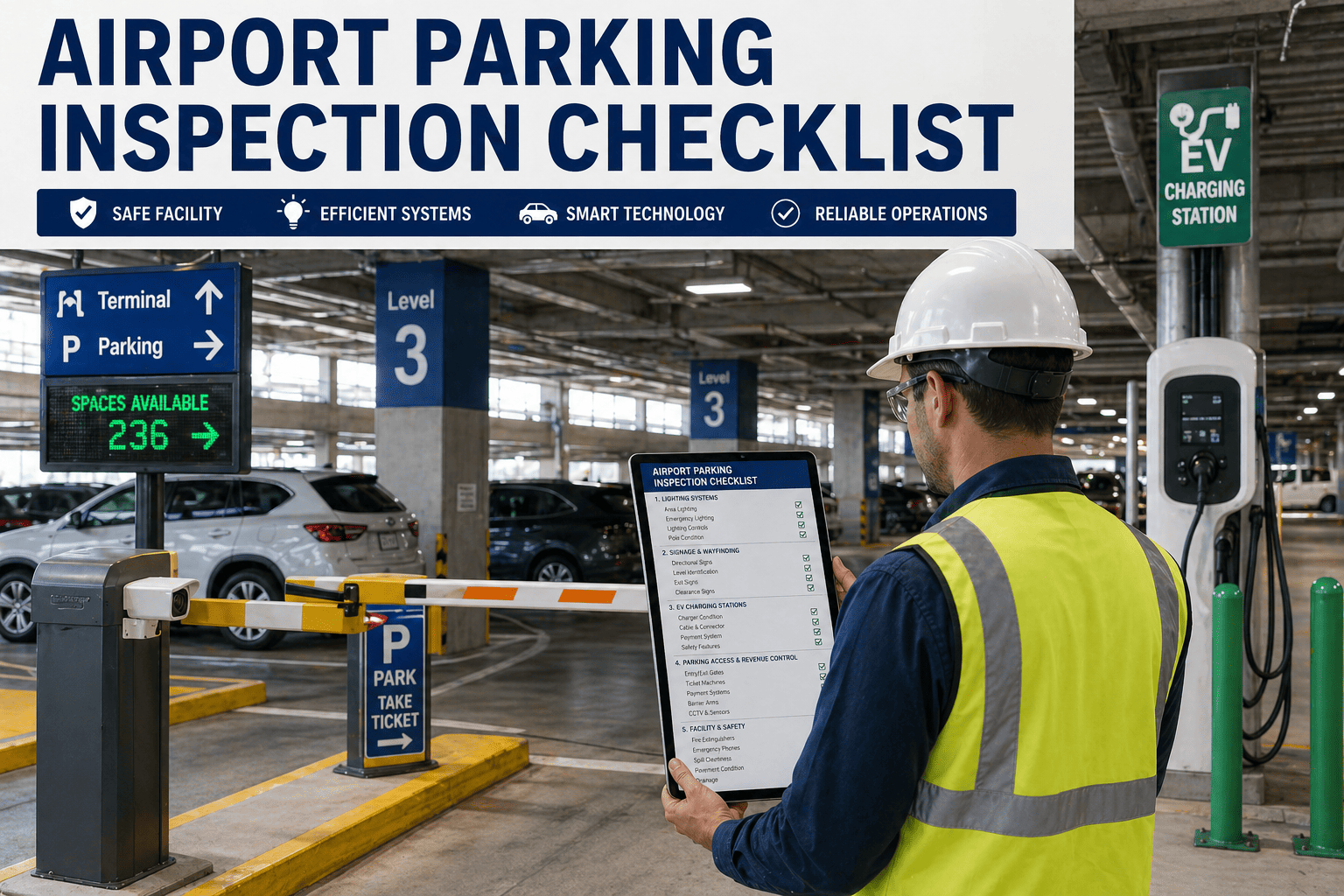
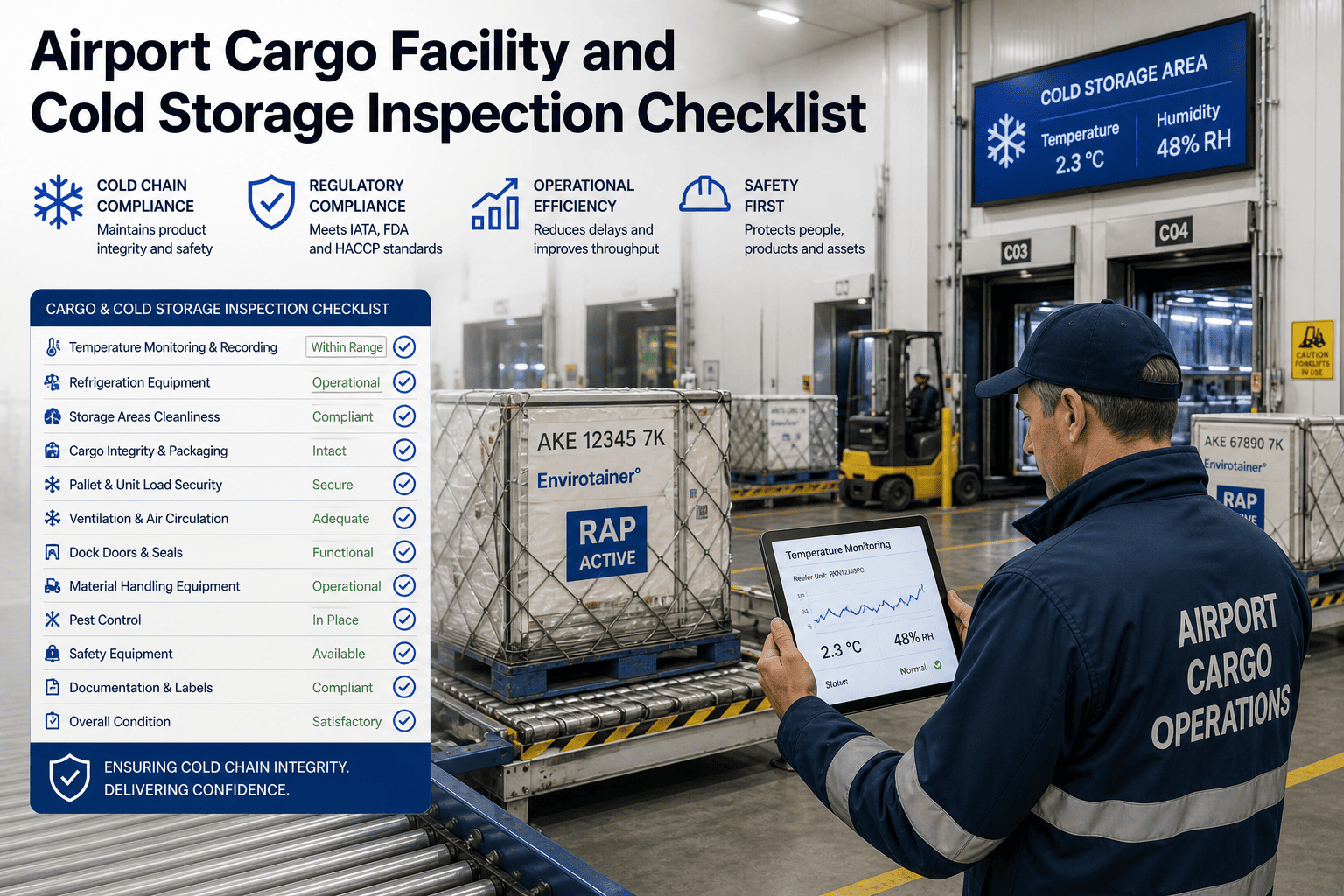
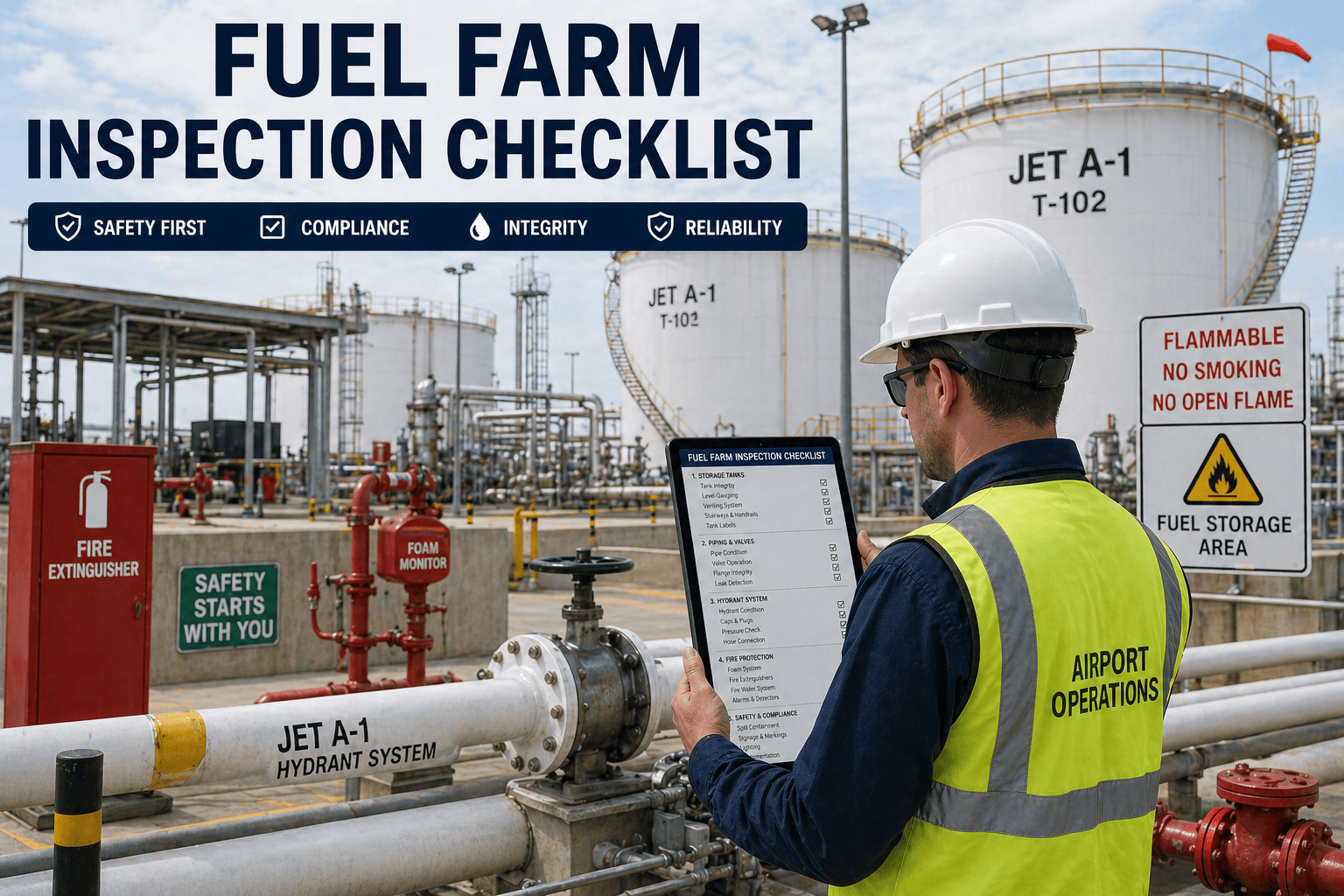
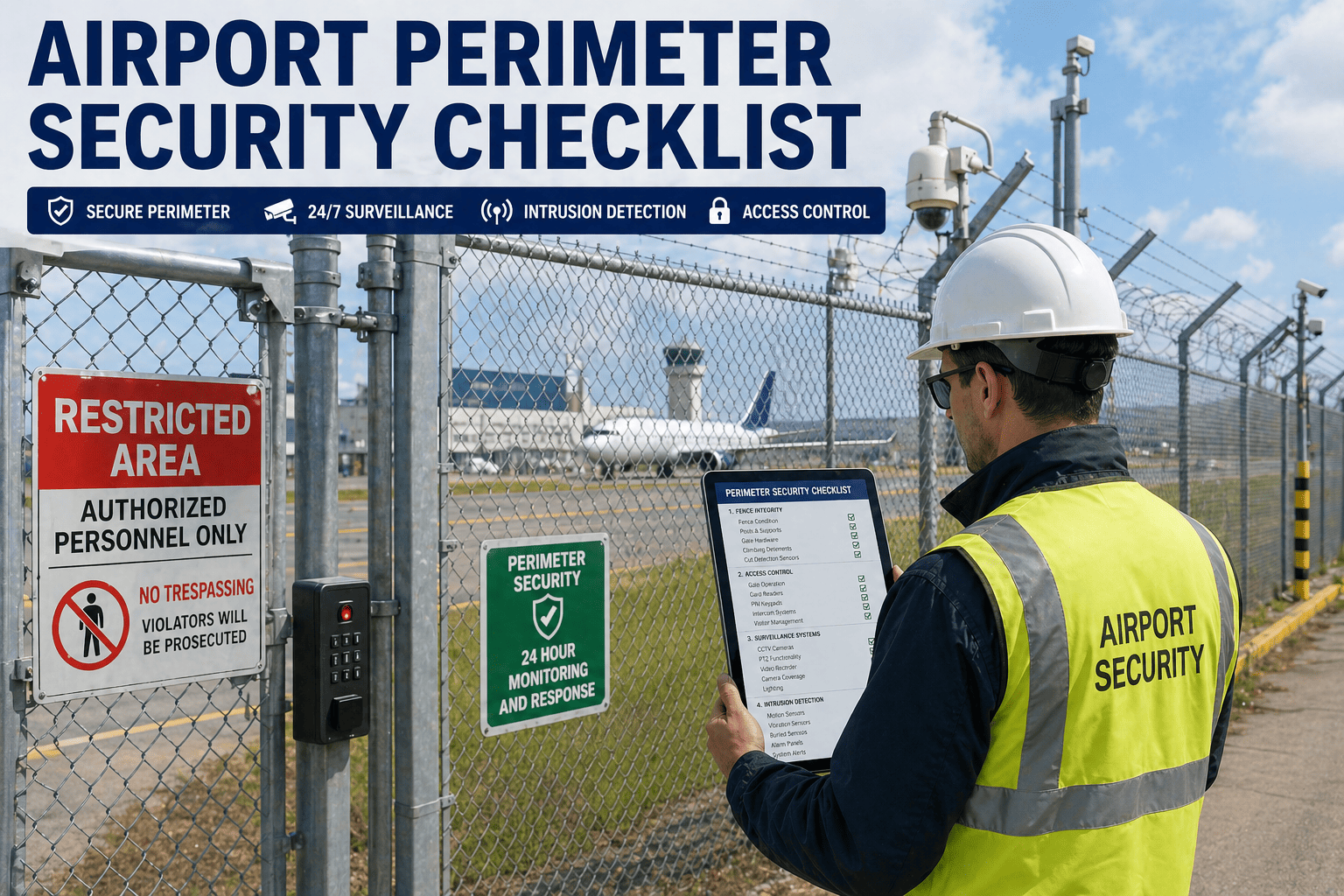
Airport parking generates 20-40% of non-aeronautical revenue at most commercial airports — yet it is frequently the most neglected infrastructure category in the maintenance program. A parking structure with failed lighting, broken gate arms, offline payment kiosks, and crumbling concrete does not just create safety liability — it drives passengers to rideshare alternatives that permanently erode revenue. Structured inspection programs covering structural integrity, PARCS systems, lighting, EV chargers, and security keep the revenue flowing and the liability contained. Book a demo to see how Oxmaint manages parking facility inspections across multi-structure airport campuses.
20-40%
of airport non-aeronautical revenue generated by parking operations
$85M
annual parking revenue at a mid-size airport — every hour of system downtime costs thousands
78%
of parking complaints relate to lighting, payment systems, or wayfinding failures
15-25 yr
typical parking structure design life — requiring ongoing structural monitoring
Six Critical Parking Facility Systems
Airport parking facilities are complex multi-system environments. Each system below has specific failure modes that affect revenue, safety, or compliance — and each requires a defined inspection cadence. Airports using CMMS to manage all six report 30% fewer customer complaints and 25% lower emergency repair costs. Ready to consolidate your parking maintenance? Start a free trial and build your parking asset hierarchy in Oxmaint.
Revenue
PARCS Systems
Gate barriers, ticket dispensers, payment kiosks, LPR cameras, and occupancy sensors. A single offline entry lane during peak hour can queue 200+ vehicles and divert passengers to competing options.
Safety
Lighting Infrastructure
Deck lights, stairwell fixtures, pedestrian pathways, and emergency lighting. Dead zones create security liability and ADA compliance issues — test during evening hours monthly.
Growth
EV Charging Stations
Level 2 and DC fast chargers require GFCI testing, cable inspection, payment system verification, and ADA accessibility checks per NEC Article 625.
Integrity
Structural Systems
Columns, decks, expansion joints, waterproofing membranes, and post-tension cables. Spalling concrete and exposed rebar are not cosmetic — they are structural warnings.
Compliance
Drainage & Pavement
Deck drains, trench drains, sump pumps, and surface conditions. Blocked drainage accelerates structural deterioration and creates slip hazards across the facility.
Security
Security Systems
CCTV cameras, emergency call stations, access control, and panic alarms. Security system failures must be addressed within 4 hours to maintain passenger safety standards.
Manage Every Parking System From One Platform
Oxmaint tracks PARCS uptime, lighting inspections, EV charger maintenance, structural assessments, and security system checks in a single dashboard — with automated scheduling and digital completion records.
Parking Facility Inspection Checklist
PARCS & Revenue Equipment
Gate barrier operation — test open/close cycle, safety sensors, and obstruction detection
Payment terminals — verify card readers, contactless payment, and receipt printing
LPR cameras — confirm capture rate, image quality, and database sync
Occupancy counters — verify accuracy against manual count baseline
Lighting & Electrical
All fixtures functional — test during evening hours for dead zone identification
Emergency lighting — verify battery backup and exit sign illumination
Photocell and timer controls — confirm automated on/off schedules
Light levels — meet IESNA parking structure minimums per zone
EV Charging Infrastructure
Physical condition — check cables, connectors, and housings for damage
GFCI protection — test ground fault circuit interrupter function
Payment and connectivity — verify screen, RFID reader, and network status
ADA compliance — stall width, access aisle, reach range, and signage
Structure & Drainage
Columns and decks — inspect for cracks, spalling, exposed rebar, water stains
Expansion joints — verify seal integrity and water tightness
Deck drains and sumps — clear debris, verify flow, test sump pumps
Pavement surface — potholes, cracking, oil spills, pedestrian markings
Reactive vs. Preventive Parking Maintenance
| Dimension | Reactive Approach | With Oxmaint CMMS |
| PARCS downtime |
Discovered by angry customers |
Monitored with auto-alerts on system failures |
| Lighting failures |
Reported after security incidents |
Scheduled evening inspections with photo documentation |
| Structural issues |
Found during expensive emergency repairs |
Annual professional assessments with condition trending |
| EV charger uptime |
Unknown until customer complaint |
Scheduled GFCI tests and connectivity monitoring |
| Compliance records |
Scattered across departments |
Centralized digital records with audit trail |
| Customer satisfaction |
Declining — driving rideshare adoption |
Maintained through proactive facility management |
Revenue and Safety Impact
30%
Fewer Customer Complaints
Proactive maintenance of PARCS, lighting, and EV chargers eliminates the failures customers notice most.
25%
Lower Repair Costs
Scheduled maintenance prevents emergency callouts that cost 3-5x more than planned interventions.
99%
PARCS Uptime
Preventive maintenance and rapid response protocols keep revenue-generating equipment operational.
100%
ADA Compliance
Regular accessibility audits with digital documentation prevent compliance violations and lawsuits.
Parking revenue is too important to lose to preventable equipment failures. Every broken gate, dark stairwell, and offline payment kiosk pushes passengers toward alternatives that permanently reduce your revenue base. Protect your parking investment — book a demo to see parking facility management in Oxmaint, or start a free trial to deploy parking inspection checklists today.
How often should parking structure concrete be professionally inspected?
Annual visual inspections by qualified structural engineers, with detailed condition surveys every 3-5 years. Post-tension cable inspections should follow PTI guidelines. Oxmaint tracks inspection schedules and stores structural assessment reports with condition trending over time.
Start a free trial to set up structural inspection schedules.What PARCS components fail most frequently?
Gate barrier motors and arms, ticket printer mechanisms, and payment terminal card readers are the highest-failure components. Monthly preventive maintenance on these items reduces PARCS downtime by 60% compared to reactive-only approaches.
Book a demo to see PARCS asset tracking in Oxmaint.What are the NEC requirements for EV charger maintenance?
NEC Article 625 requires GFCI protection testing, proper grounding verification, and cable/connector inspection. ADA accessibility must also be maintained per current guidelines. Oxmaint schedules these inspections automatically and documents compliance for each charging station.
How does poor parking maintenance affect airport revenue?
Airports with poorly maintained parking lose 8-15% of potential parking revenue to rideshare alternatives. Passengers who experience broken gates, dark areas, or offline payment systems are 3x more likely to use rideshare for future trips.
Start a free trial to protect your parking revenue stream.
Every Broken Gate Arm Is Revenue Walking Out the Door.
Oxmaint manages PARCS equipment, lighting systems, EV chargers, structural assessments, and security infrastructure in one platform — keeping your parking facilities safe, compliant, and generating the revenue your airport depends on.
PARCS Uptime TrackingEV Charger MaintenanceStructural MonitoringADA Compliance