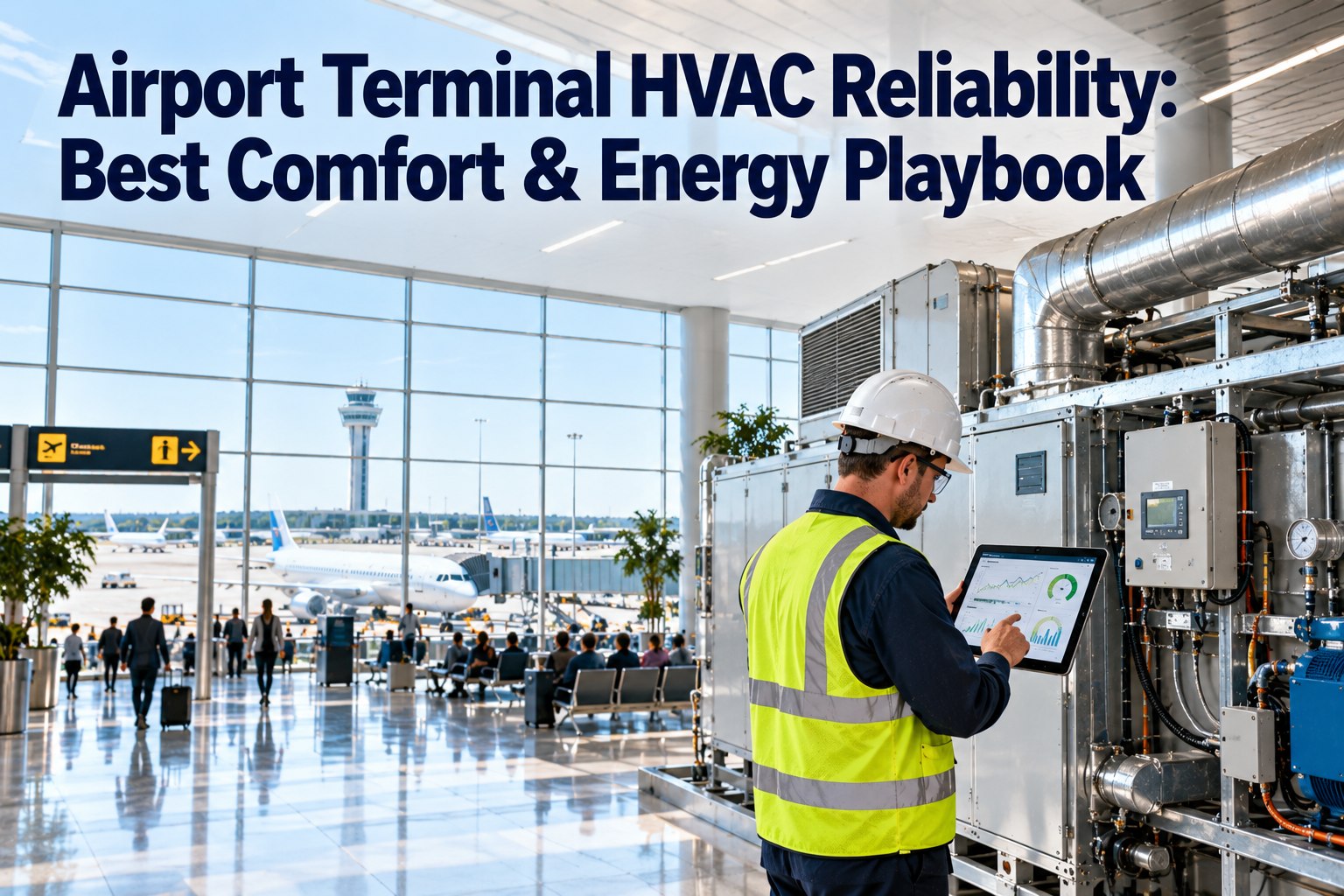
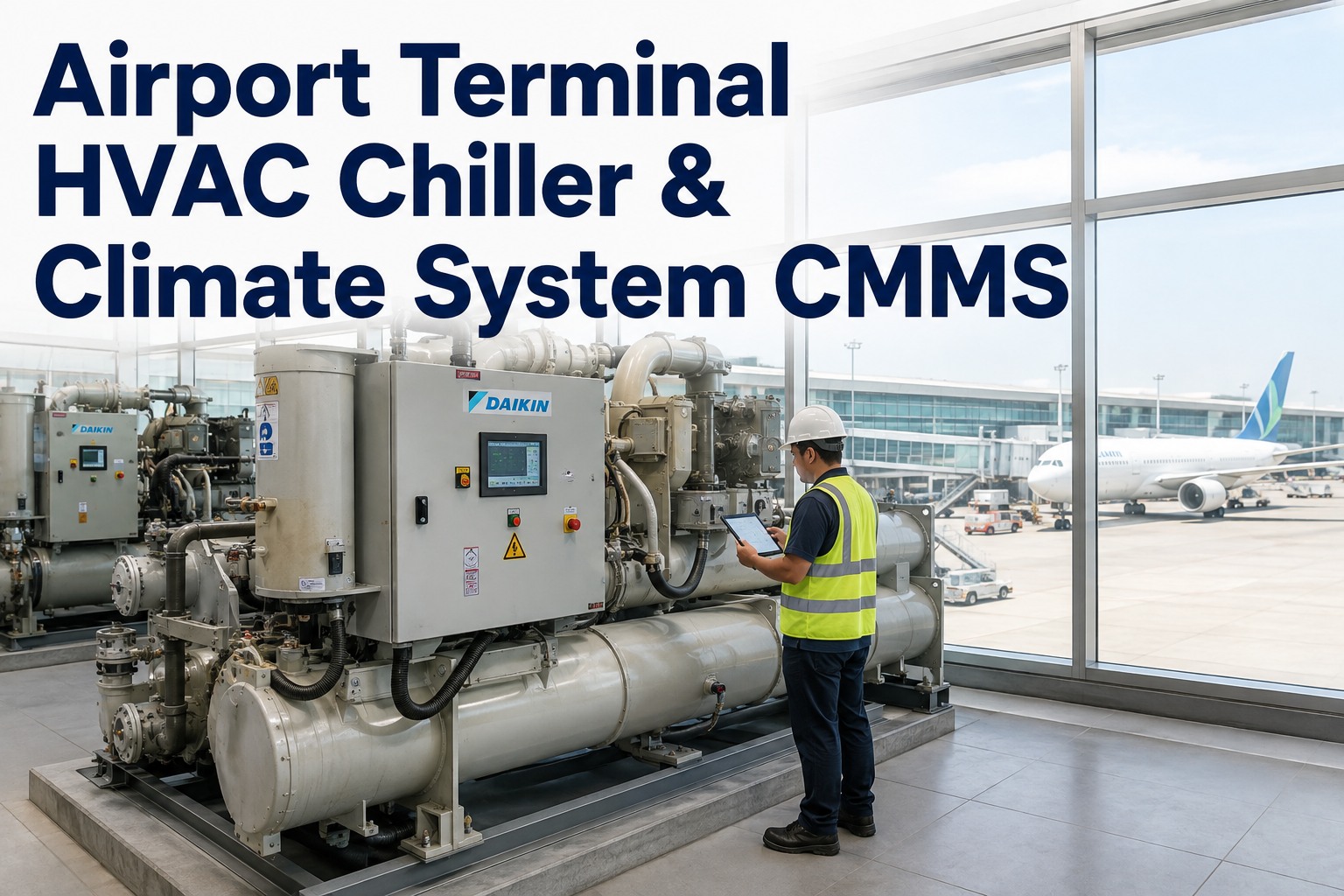
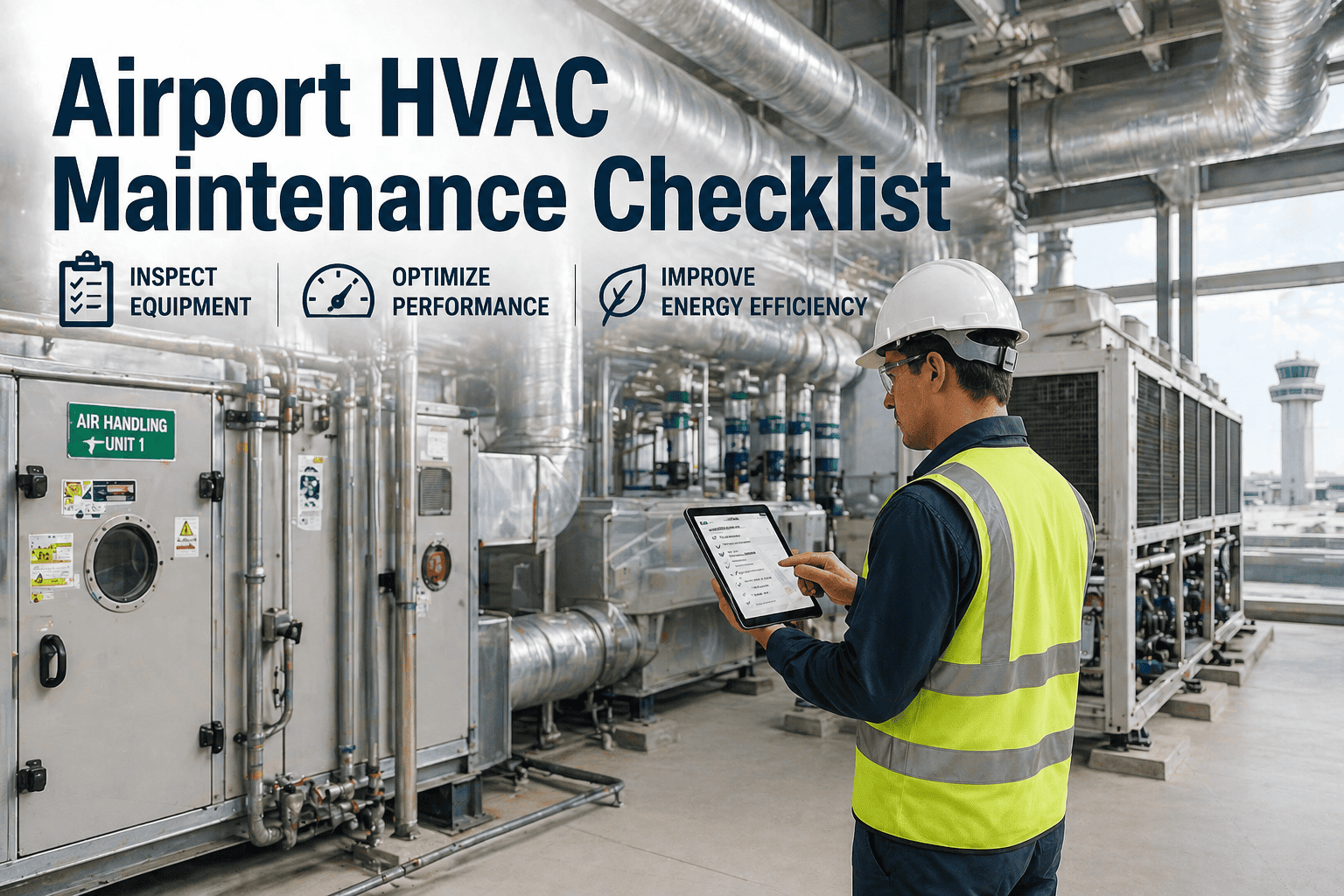
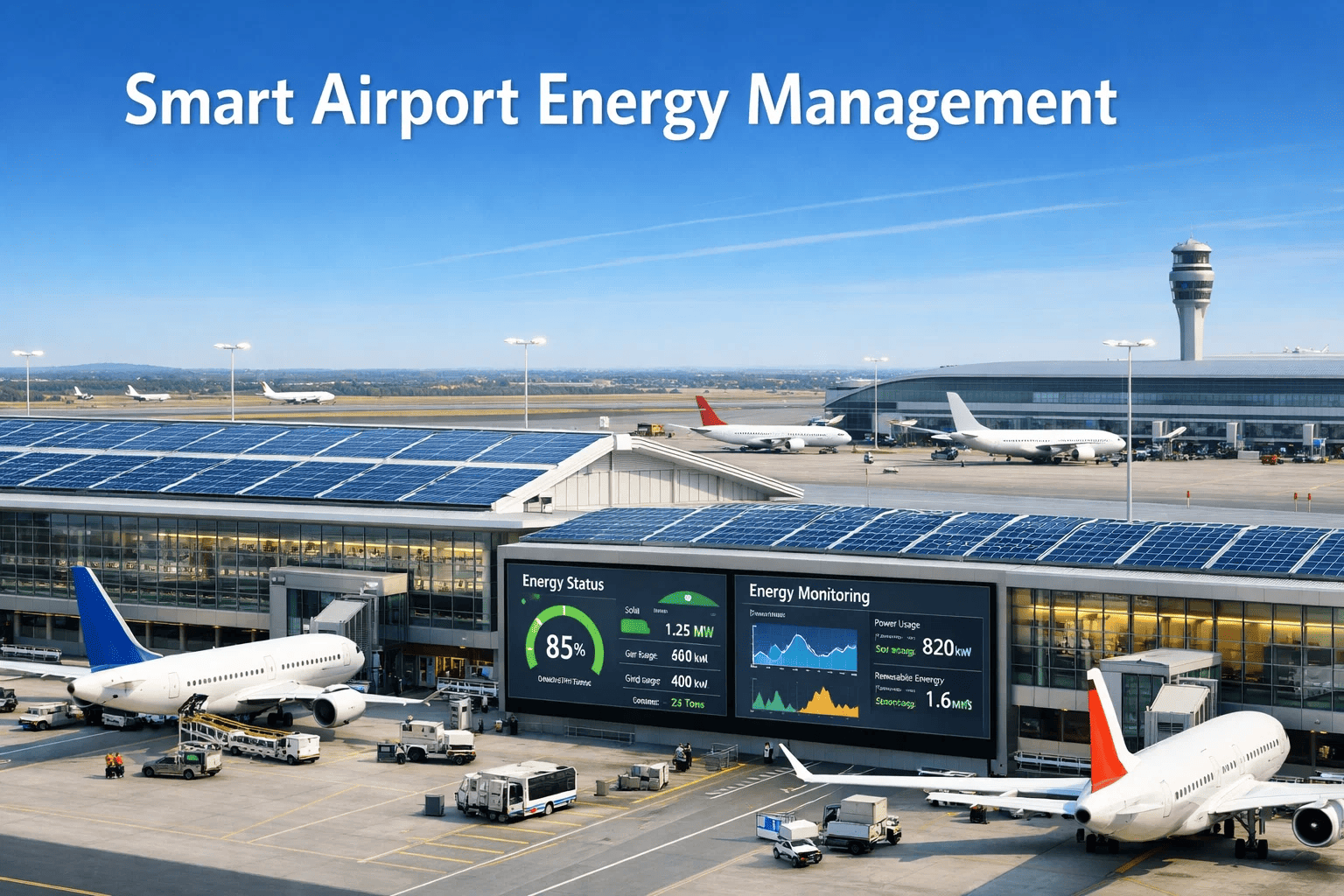
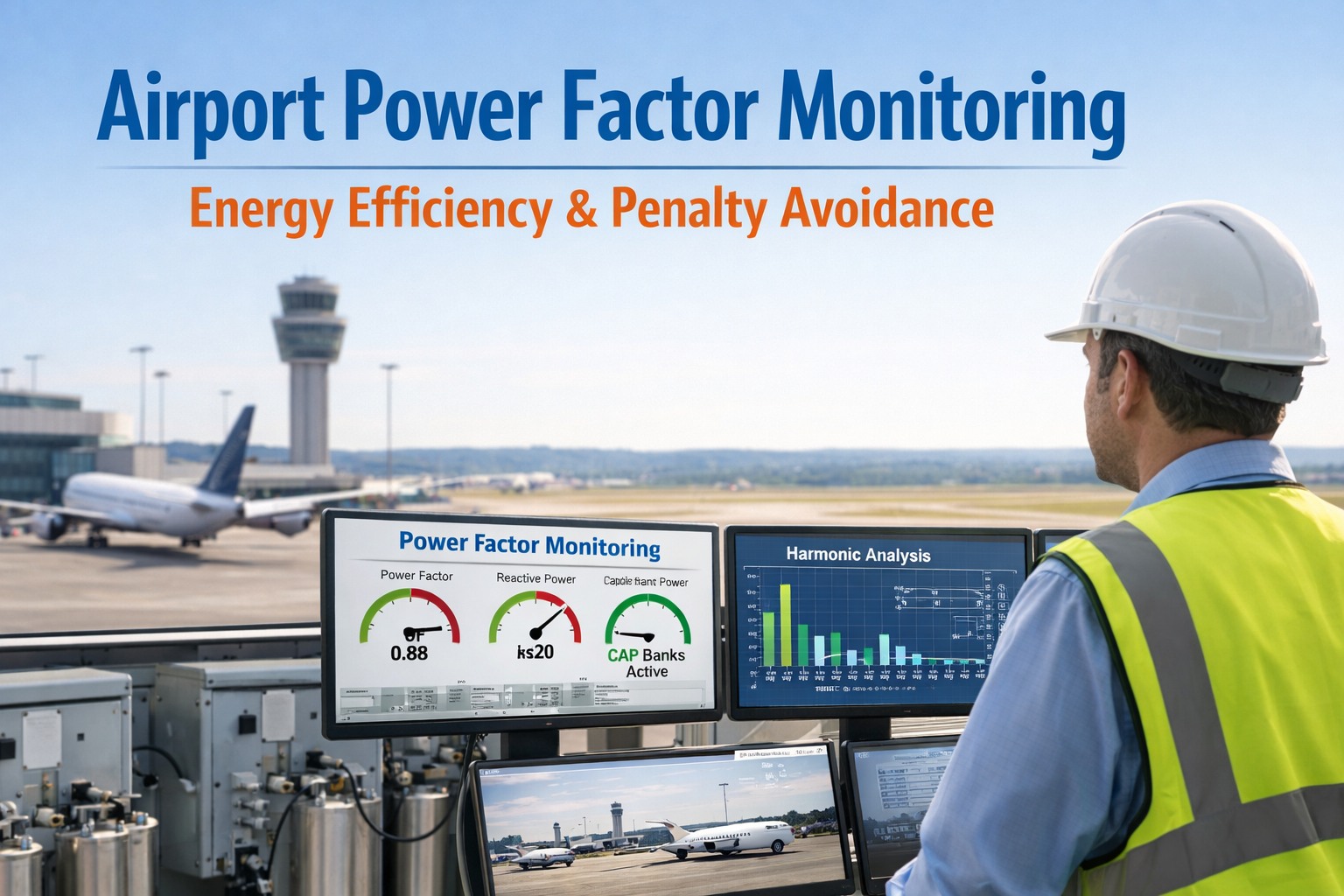
When a single HVAC failure turns your terminal into a sauna, passenger complaints surge, staff productivity plummets, and energy costs spiral beyond budget. With HVAC systems consuming 40-80% of terminal energy and airports spending over $180 per square meter annually on operations, reactive facility management is no longer sustainable. Large terminals operate thousands of air handling units, chillers, and sensors—far too complex for manual monitoring to catch problems before they impact passenger comfort. Start your free AI-CMMS trial and transform your terminal operations with IoT sensors that predict failures, optimize energy consumption, and maintain perfect environmental conditions 24/7.
IoT-POWERED ENVIRONMENTAL INTELLIGENCE
Smart Terminal Environmental Monitoring for Healthier, Efficient Airports
AI-Driven Air Quality, HVAC Performance & Energy Optimization
350+
Airports Net-Zero Pledged
57%
Potential Energy Savings
The Hidden Toll of Poor Terminal Environmental Management
When indoor air quality degrades and temperatures fluctuate uncontrolled, the consequences extend far beyond discomfort. Research shows 70% of surveyed airport passengers complain about poor indoor air quality, while high passenger densities frequently push CO₂ levels beyond recommended thresholds—directly impacting health, satisfaction, and your airport's reputation.
$180+/m²
Annual Energy Cost
Terminal buildings average 180 kWh/m² annually—some reaching 300 kWh/m²—making energy optimization critical for operational budgets
70%
IAQ Complaints
Studies reveal nearly 70% of passengers report dissatisfaction with indoor air quality, citing stuffiness, odors, and respiratory discomfort
46-51%
Terminal Energy Share
Terminal buildings consume the largest share of airport energy—more than runways, taxiways, and support facilities combined
1,000+ ppm
CO₂ Threshold Exceeded
High passenger densities push CO₂ above recommended 800-1000 ppm limits, causing fatigue, headaches, and cognitive impairment
Why Traditional Facility Management Falls Short
Modern airport terminals are complex ecosystems with multiple climate zones, fluctuating occupancy patterns, and interconnected HVAC systems. Time-based maintenance and manual inspections cannot adapt to real-time conditions—leading to energy waste, comfort failures, and reactive repairs that disrupt operations.
01
Variable Passenger Loads
Research shows actual occupancy rates reach only 54-64% of design capacity, yet HVAC runs at full power. Without real-time occupancy data, airports waste energy conditioning empty spaces.
02
Invisible Air Quality Degradation
CO₂, VOCs, and particulate matter build up invisibly between inspection rounds. By the time passengers complain, IAQ has already impacted comfort and health for hours.
03
Zone Temperature Conflicts
Different terminal areas—check-in halls, gate lounges, retail zones—have vastly different thermal requirements. Static setpoints cannot accommodate these dynamic needs.
04
Siloed Building Systems
HVAC, lighting, and BMS systems often operate independently without coordination. Unintegrated data prevents holistic optimization and predictive maintenance insights.
Struggling with Energy Costs and Comfort Complaints?
Discover how IoT-powered environmental monitoring delivers 30-57% energy savings while improving passenger satisfaction.
How IoT Environmental Monitoring Works
Wireless IoT sensors deployed throughout your terminal continuously capture environmental data—temperature, humidity, CO₂, particulate matter, and VOCs—feeding AI algorithms that detect anomalies, predict HVAC failures, and automatically optimize conditions zone by zone.
1
Sensor Deployment
Wireless IoT sensors monitor temperature, humidity, CO₂, PM2.5, VOCs, and occupancy across all terminal zones 24/7
2
Real-Time Analysis
AI algorithms correlate environmental data with passenger flow, weather, and HVAC performance to identify optimization opportunities
3
Predictive Insights
Machine learning predicts equipment degradation, identifies energy waste patterns, and forecasts maintenance needs weeks in advance
4
Automated Response
CMMS generates prioritized work orders while BMS integration enables automatic HVAC adjustments to maintain optimal conditions
Environmental Parameters Monitored
Maintain ASHRAE-recommended 72-76°F (22-24°C) across all zones. AI adjusts setpoints based on occupancy, solar gain, and passenger activity levels to balance comfort with efficiency.
Optimal: 72-76°F (22-24°C)
Monitor and control humidity between 30-60% to prevent condensation, mold growth, and static discharge while ensuring passenger respiratory comfort.
Optimal: 30-60% RH
Track CO₂ as the primary indicator of ventilation effectiveness. Levels above 1000 ppm indicate insufficient fresh air supply and correlate with passenger complaints and cognitive impacts.
Target: Below 800-1000 ppm
Monitor PM2.5 and PM10 concentrations that impact respiratory health. Terminal buildings face unique challenges from outdoor infiltration, cleaning activities, and passenger movement.
PM2.5 Target: Below 15 µg/m³
Detect volatile organic compounds from cleaning products, retail operations, food courts, and building materials that contribute to sick building syndrome and passenger discomfort.
TVOC Target: Below 500 ppb
Ensure proper pressurization between zones to control air movement, prevent contamination spread, and maintain thermal barriers at entrances and jet bridges.
Differential: 0.02-0.05" WC
HVAC Equipment Intelligence
Beyond environmental conditions, our IoT platform monitors the health and performance of your HVAC infrastructure—predicting failures before they cause comfort emergencies and optimizing operations for maximum efficiency.
Chilled Water Systems
Monitor compressor vibration, refrigerant pressures, condenser performance, and COP trends. Detect bearing wear, refrigerant leaks, and fouling before catastrophic failures occur.
Vibration | Temperature | Pressure | Power
AHU Performance
Track fan motor health, filter differential pressure, coil temperatures, and damper positions. Optimize supply air temperature and volume based on zone demands.
Current | Airflow | Filter ΔP | Damper
Heat Rejection
Monitor approach temperatures, fan motor condition, water chemistry, and fill media effectiveness. Prevent Legionella risks and optimize water treatment programs.
Temperature | Conductivity | Fan Speed
Variable Air Volume
Ensure VAV boxes respond correctly to zone demands. Detect stuck dampers, failed actuators, and calibration drift that cause hot/cold spots and energy waste.
Airflow | Position | Reheat | Zone Temp
Heating Systems
Monitor combustion efficiency, stack temperatures, water quality, and safety interlocks. Optimize firing sequences and lead-lag rotation for maximum efficiency.
Flue Gas | Water Temp | Pressure | Flow
Distribution Systems
Track pump vibration signatures, seal condition, motor current, and differential pressure. Detect impeller wear, cavitation, and alignment issues early.
Vibration | Current | ΔP | Flow Rate
Ready to Optimize Your Terminal Environment?
Get a free assessment of your facility's IoT monitoring potential and sustainability roadmap.
Terminal Zones Optimized
High-Density Public Areas
Check-in halls, security queues, baggage claim—areas with variable passenger density requiring dynamic ventilation adjustment
Retail & Food Service
Shops, restaurants, food courts with cooking exhaust, refrigeration loads, and extended operating hours requiring dedicated monitoring
Gate & Lounge Areas
Boarding gates, airline lounges, and waiting areas with fluctuating occupancy tied to flight schedules
Back-of-House Operations
Staff areas, operations centers, baggage handling—employee comfort and equipment cooling requirements
AI & Machine Learning Capabilities
Real-Time Deviation Alerts
Ensemble algorithms analyze sensor data streams to identify subtle environmental deviations and equipment anomalies before they escalate into comfort complaints or failures.
Demand Forecasting
LSTM neural networks correlate flight schedules, historical patterns, and real-time passenger counts to predict zone occupancy and pre-condition spaces accordingly.
Load Balancing AI
Reinforcement learning continuously optimizes chiller staging, AHU schedules, and setpoints to minimize energy consumption while maintaining comfort constraints.
Remaining Useful Life
Survival analysis models estimate equipment RUL based on vibration trends, performance degradation, and operational stress—enabling condition-based maintenance.
Proven Results
Energy Reduction
Research confirms feasible energy conservation strategies can reduce terminal HVAC consumption by up to 57% through optimization
HVAC Waste Eliminated
Smart HVAC systems with occupancy-based control reduce energy waste by 30% through demand-driven operation
Lighting Savings
Integrated smart lighting adjusts to daylight and occupancy, achieving up to 40% reduction in lighting energy consumption
CO₂ Emissions Cut
Combined energy strategies deliver nearly 50% reduction in terminal carbon emissions, accelerating net-zero goals
Supporting Net-Zero Airport Goals
With 350+ airports worldwide pledging net-zero operations by 2050 and 122 European airports targeting 2030, IoT-powered environmental monitoring is essential for achieving sustainability certifications and regulatory compliance.
Airport Carbon Accreditation
Meet ACI's 7-level carbon accreditation program requirements with comprehensive emissions tracking, energy monitoring, and sustainability reporting powered by real-time data.
Scope 1 & 2 Reduction
Target direct emissions from building operations—the foundation for net-zero terminals. IoT monitoring provides the visibility needed to identify and eliminate energy waste.
ESG Reporting
Generate accurate environmental data for sustainability reports, green bond compliance, and stakeholder communications with auditable sensor-based measurements.
LEED & Green Building
Support LEED certification for terminal construction and renovation projects with continuous IAQ monitoring, energy optimization, and occupant comfort documentation.
Implementation Timeline
1
Site Assessment
Week 1-2
Survey existing BMS and HVAC infrastructure
Identify critical zones and monitoring priorities
Develop sensor placement strategy
2
Sensor Deployment
Week 3-6
Install wireless environmental sensors
Deploy HVAC equipment monitoring
Configure gateway connectivity and CMMS integration
3
AI Calibration
Week 7-10
Collect baseline environmental and operational data
Train ML models on normal operating patterns
Configure alert thresholds and automation rules
4
Optimization Mode
Week 11+
Enable predictive work order generation
Activate energy optimization algorithms
Scale monitoring to additional terminal areas
Frequently Asked Questions
How does IoT monitoring integrate with our existing BMS?
OxMaint's platform operates as a complementary layer to your existing Building Management System. We integrate via BACnet, Modbus, or API connections to pull existing sensor data while adding wireless IoT sensors to fill monitoring gaps. This approach enhances your current investment without requiring BMS replacement.
What is the typical ROI timeline for terminal environmental monitoring?
Most airports see positive ROI within 12-18 months through energy savings alone. With HVAC consuming 40-80% of terminal energy and optimization delivering 20-30% reductions, a terminal spending $5M annually on energy can save $500K-$1.5M per year. Avoided equipment failures and reduced passenger complaints provide additional value.
Can sensors be installed without disrupting terminal operations?
Yes. Wireless IoT sensors require no wiring and can be installed during normal operations in minutes. Battery-powered devices mount non-invasively on walls, ceilings, or equipment. For sensitive areas like security zones, we coordinate installation during low-traffic periods with minimal passenger impact.
How does the system handle the unique challenges of airport terminals?
Our algorithms are specifically trained on airport operational patterns including flight schedule correlations, seasonal passenger variations, and the unique thermal characteristics of terminal buildings with large glass facades and high ceilings. We account for jet bridge connections, door cycling, and the rapid occupancy changes inherent to airport operations.
What air quality parameters are most critical for passenger health?
CO₂ is the primary indicator of ventilation effectiveness—levels above 1000 ppm correlate strongly with passenger complaints and cognitive impacts. PM2.5 is critical for respiratory health. VOCs indicate chemical contamination. We recommend monitoring all three plus temperature and humidity for comprehensive IAQ management.
Transform Your Terminal into a Smart, Sustainable Facility
Join leading airports achieving 30-57% energy savings with IoT-powered environmental monitoring and predictive HVAC maintenance.