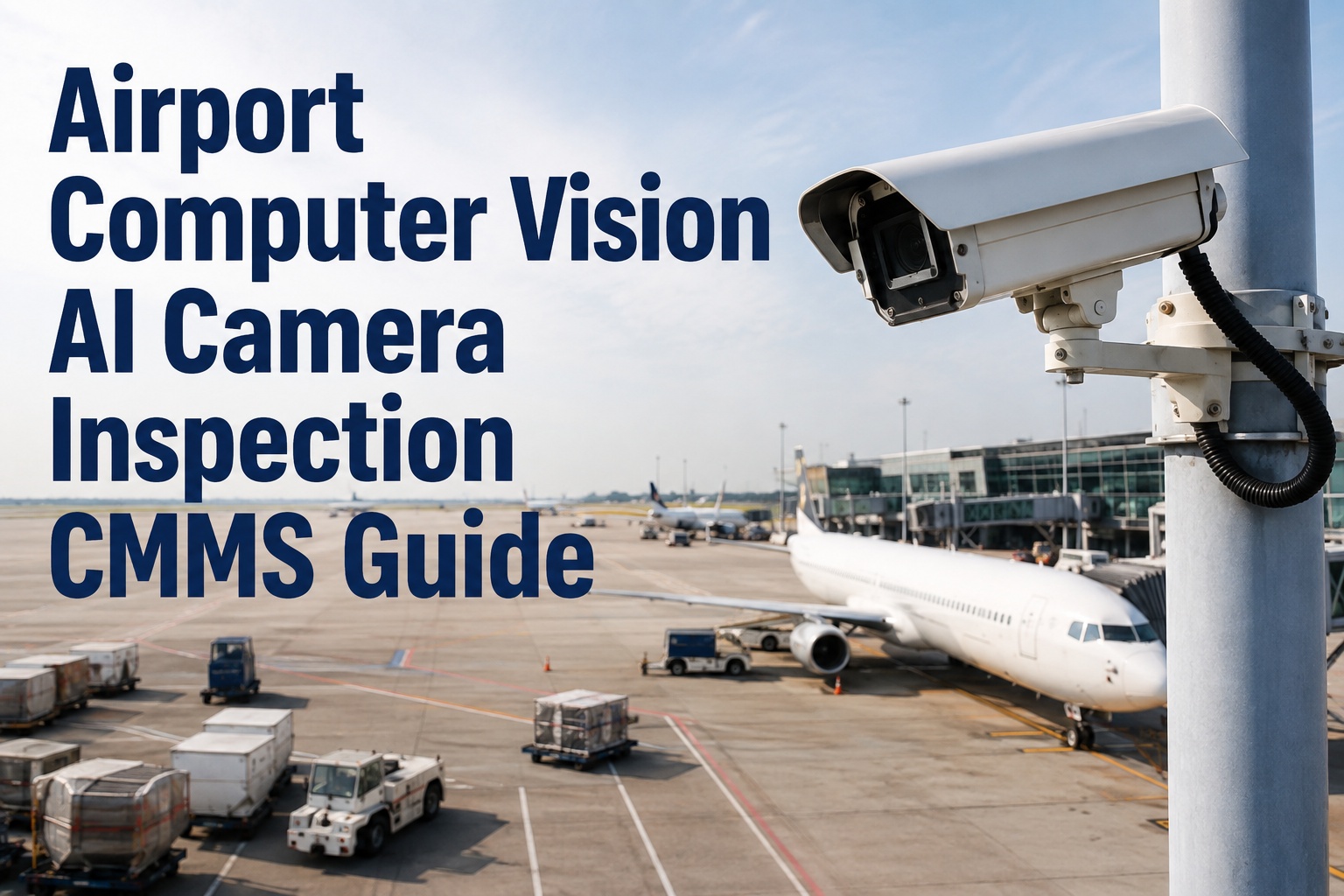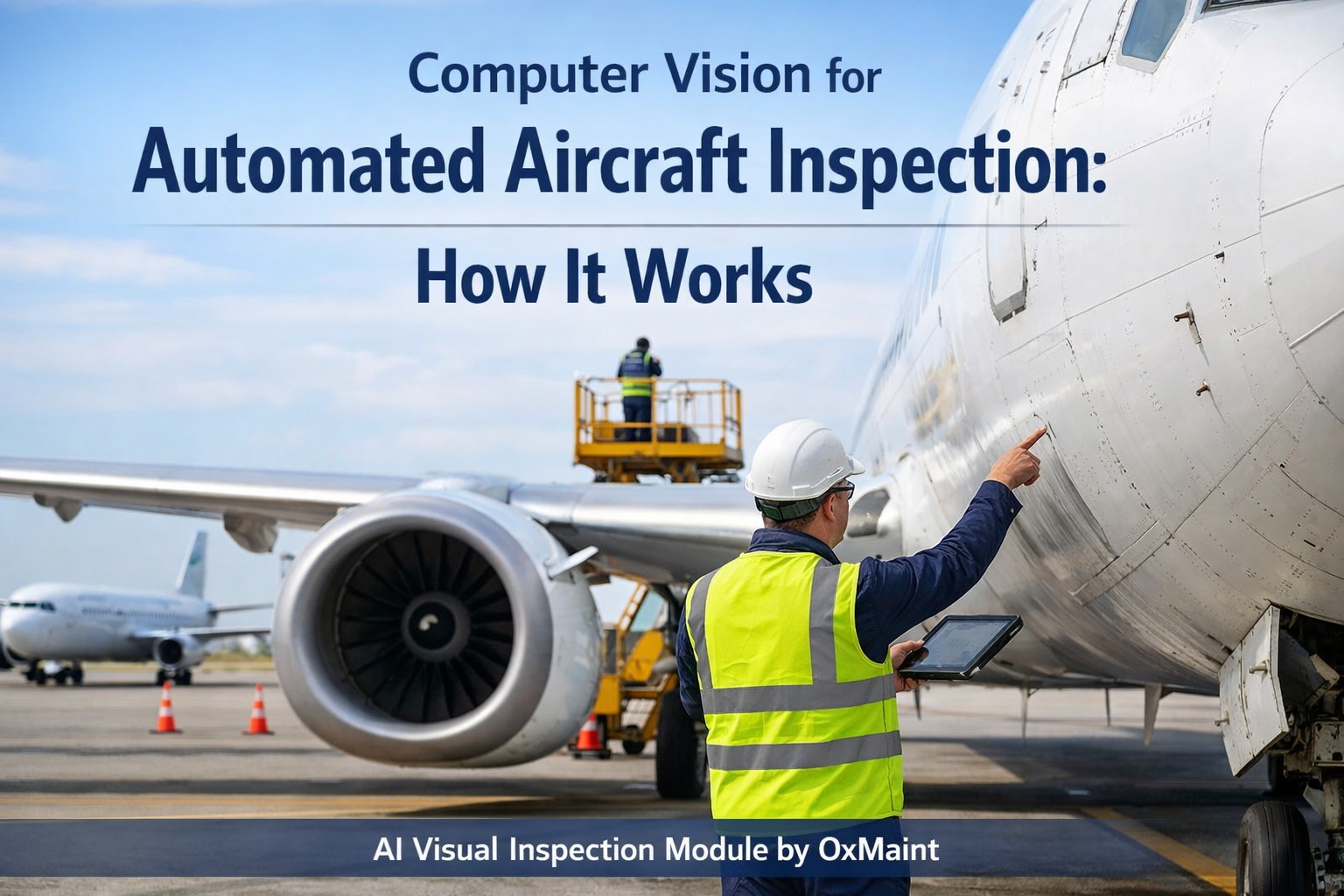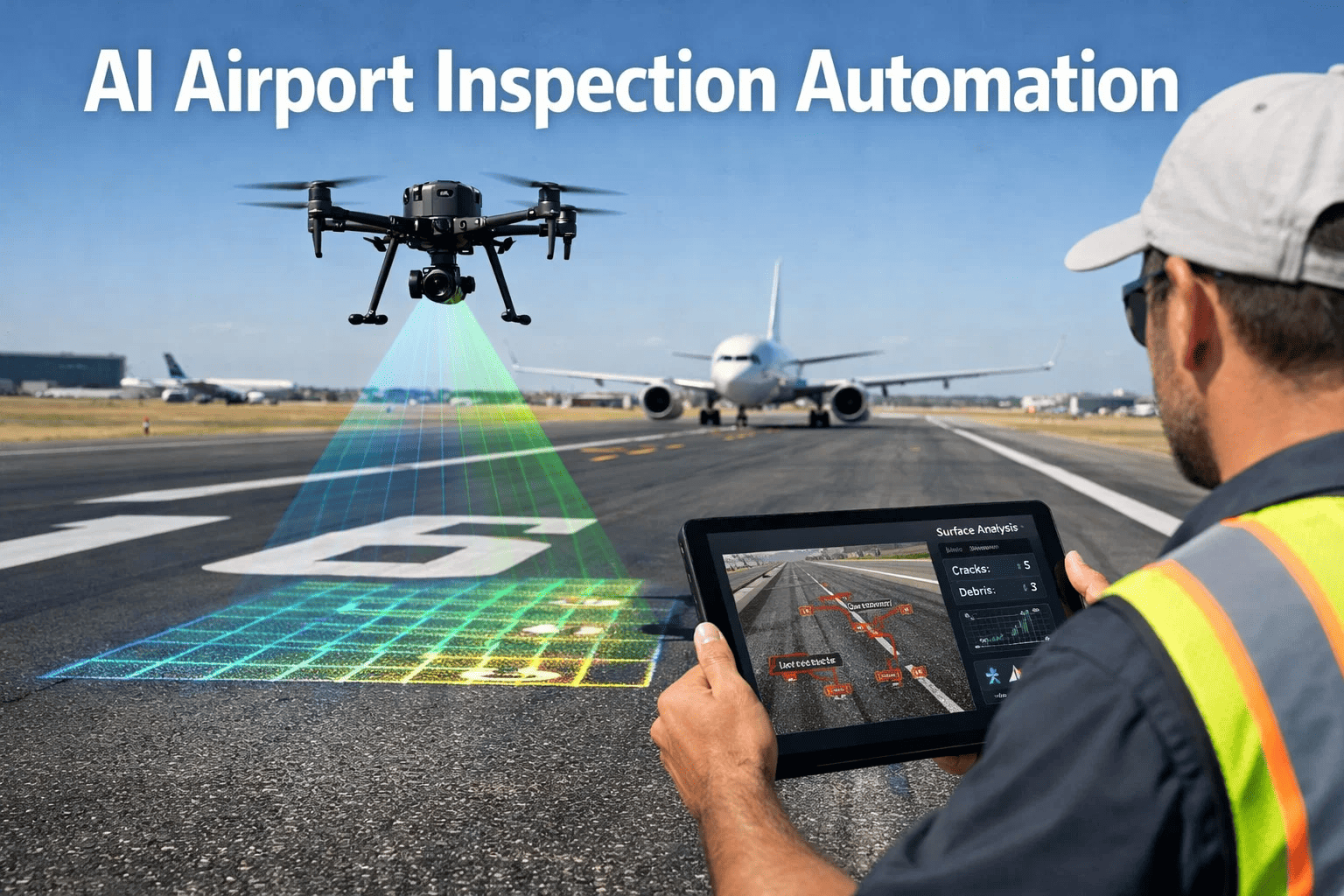
Airport facility inspection has historically been labour-intensive, inconsistent, and dangerously reliant on human attention over long walkthrough shifts. A runway surface crack missed during a visual inspection at 4am — or a FOD item on a taxiway not spotted in rain — is not a cleanliness issue. It is a safety event waiting to happen. Computer vision and AI are transforming how airports detect, log, and action facility defects by applying consistent machine-level attention across surfaces, structures, and airside areas that human inspectors can only cover periodically. The result: faster defect detection, fewer missed findings, and a complete digital inspection audit trail tied directly to maintenance workflows. Start a free trial of Oxmaint and connect your AI inspection data to a full CMMS work order system — or book a demo to see how AI-flagged defects flow directly into Oxmaint maintenance work orders.
AI & Computer Vision for Airport Facility Inspection: Smarter Detection, Faster Maintenance
How airports are using computer vision, drone imaging, and AI defect detection to automate runway analysis, FOD detection, and structural inspection — and connect findings directly to CMMS maintenance workflows.
Computer Vision in Airport Maintenance: From Manual Walkthroughs to Automated Defect Detection
Computer vision applies trained machine learning models to images and video feeds to identify, classify, and log physical defects in airport infrastructure — runway cracking, pavement distress, structural deterioration, FOD presence, and surface marking degradation. Unlike human inspection, computer vision applies the same classification criteria at 3am as it does at 3pm, does not suffer from inspection fatigue over long airfield walkthrough routes, and can process thousands of image frames per minute from drone footage. The resulting defect data becomes the input to a CMMS maintenance workflow — creating a closed loop from automated detection to scheduled repair that significantly compresses the gap between a defect forming and a maintenance team acting on it. Start a free trial of Oxmaint to see how AI inspection outputs connect to structured maintenance work orders — or book a demo to walk through the AI-to-CMMS workflow live.
Six Proven AI Inspection Applications at Airports
AI models trained on PCI (Pavement Condition Index) distress categories classify cracking, raveling, rutting, and joint deterioration from drone or vehicle-mounted camera footage. Outputs include defect location, severity rating, and repair priority — feeding directly to a CMMS work order.
Fixed camera arrays at runway thresholds and taxiway intersections, combined with millimetre-wave radar, apply computer vision to detect foreign object debris in real time. System alerts go directly to airfield operations and, via API, to CMMS removal work orders with location coordinates pre-populated.
Drone-based AI imaging of terminal facades, roof structures, jetbridge exteriors, and airside building walls detects spalling, crack propagation, sealant failure, and surface corrosion at heights and angles impossible for manual inspection — with 3D defect mapping output for engineering review.
Machine vision analysis of runway threshold markings, taxiway centerlines, holding position signs, and apron markings scores retroreflectivity degradation and paint wear against FAA AC 150/5340-1 standards — generating a prioritised re-marking schedule for the maintenance team.
Computer vision applied to CCTV feeds monitors escalator step gap consistency, handrail condition, and entry/exit comb plate integrity in real time. Anomaly detection flags degradation before it reaches a safety threshold — triggering a preventive work order before failure occurs.
AI-processed drone imagery of apron surfaces identifies standing water locations indicating drainage blockage, surface depressions that create FOD risk, and fuel spill contamination areas — generating location-tagged CMMS work orders for drainage and surface repair crews.
AI Finds the Defects. Oxmaint Makes Sure They Get Fixed.
The value of AI inspection is only realised when defect findings convert automatically to maintenance work orders with the right technician, the right priority, and the right parts ready. Oxmaint connects AI inspection outputs — via API or manual upload — to a full CMMS maintenance workflow so nothing detected is ever left unactioned.
Traditional Inspection vs AI-Assisted Inspection
How Oxmaint Connects AI Inspection Outputs to Maintenance Execution
Computer vision model identifies and classifies defect — crack, FOD, marking degradation, surface damage — with GPS coordinates, severity rating, and image evidence.
Defect data flows to Oxmaint via REST API integration or structured upload. Asset ID matched to defect location. Work order template pre-populated with defect type, location, and priority classification.
Oxmaint routes the work order to the correct team based on defect category: runway maintenance crew, structural repair contractor, or terminal facilities technician. Mobile alert sent immediately.
Technician completes repair, logs findings, attaches completion photos, and provides digital sign-off in Oxmaint mobile. Work order closes against the asset record with full repair history attached.
Frequently Asked Questions
Does Oxmaint integrate directly with AI inspection platforms or drone software?
Oxmaint provides a REST API that accepts structured inspection data — defect type, location coordinates, severity score, and image reference — from any external system. AI inspection platforms and drone analysis software that produce structured JSON output can integrate with Oxmaint to auto-generate work orders. For platforms without native API output, structured CSV or Excel uploads also convert to CMMS work orders. Book a demo to discuss your specific AI inspection platform integration.
Do I need to replace our current inspection programme to adopt AI inspection?
No. AI inspection at airports is typically adopted as a supplement to human inspection programmes, not a replacement. The most effective implementations use AI for high-frequency, high-coverage asset checks — like weekly runway surface analysis — while human inspectors focus on detailed close-up assessment and specialist equipment checks that require physical interaction. Oxmaint supports both AI-generated and manually-created work orders in the same system. Start a free trial to see how both inspection types work together.
How does Oxmaint handle the volume of work orders generated by continuous AI monitoring?
Oxmaint includes priority classification, queue management, and technician capacity balancing tools. AI-generated findings are filtered through configurable severity thresholds before work order creation — so minor surface scuffing below a defined severity score enters a review queue rather than generating an immediate dispatch order. Only findings above the severity threshold convert to active work orders, ensuring your maintenance team receives actionable priorities, not a flood of low-priority noise. Book a demo to see the priority management workflow.
What ROI can airports expect from combining AI inspection with a CMMS?
The primary ROI drivers are: reduced defect-to-repair cycle time (faster detection means smaller repairs before full failure); reduced inspection labour hours (drone covers the same area as a foot patrol in a fraction of the time); fewer regulatory compliance failures (consistent detection vs. fatigue-affected human inspection); and improved pavement lifecycle (more accurate PCI data supports better capital planning). Airports integrating AI inspection outputs with CMMS typically report 30–40% reduction in reactive airfield repair costs within the first 18 months of operation. Start a free trial to begin tracking your baseline today.
AI Inspection Without a Connected CMMS Is Just Data. Connect the Loop.
Oxmaint bridges the gap between AI defect detection and maintenance execution — turning every AI finding into a tracked, assigned, and completed work order with a full audit trail. If your airport is investing in AI inspection technology, the ROI multiplies when it connects to Oxmaint.