Most airport facility managers can tell you the BTU capacity of their terminal HVAC system — but very few can tell you what percentage of that capacity is actually reaching the gate holdrooms versus being lost to clogged filters, degraded coil surfaces, and unbalanced airflow distribution. When a packed departure lounge hits 82 degrees in July because the AHU serving Gates 12-18 has been running at 60% efficiency for three months, the cost is not just passenger complaints — it is the emergency overtime HVAC callout, the portable cooling unit rental, and the compounding effect on every other system in that air handler
chain. OxMaint CMMS automates HVAC preventive maintenance schedules, tracks filter change cycles, and monitors energy consumption per system — start your free trial and eliminate reactive HVAC breakdowns.
Terminal HVAC · Preventive Maintenance · Energy Efficiency
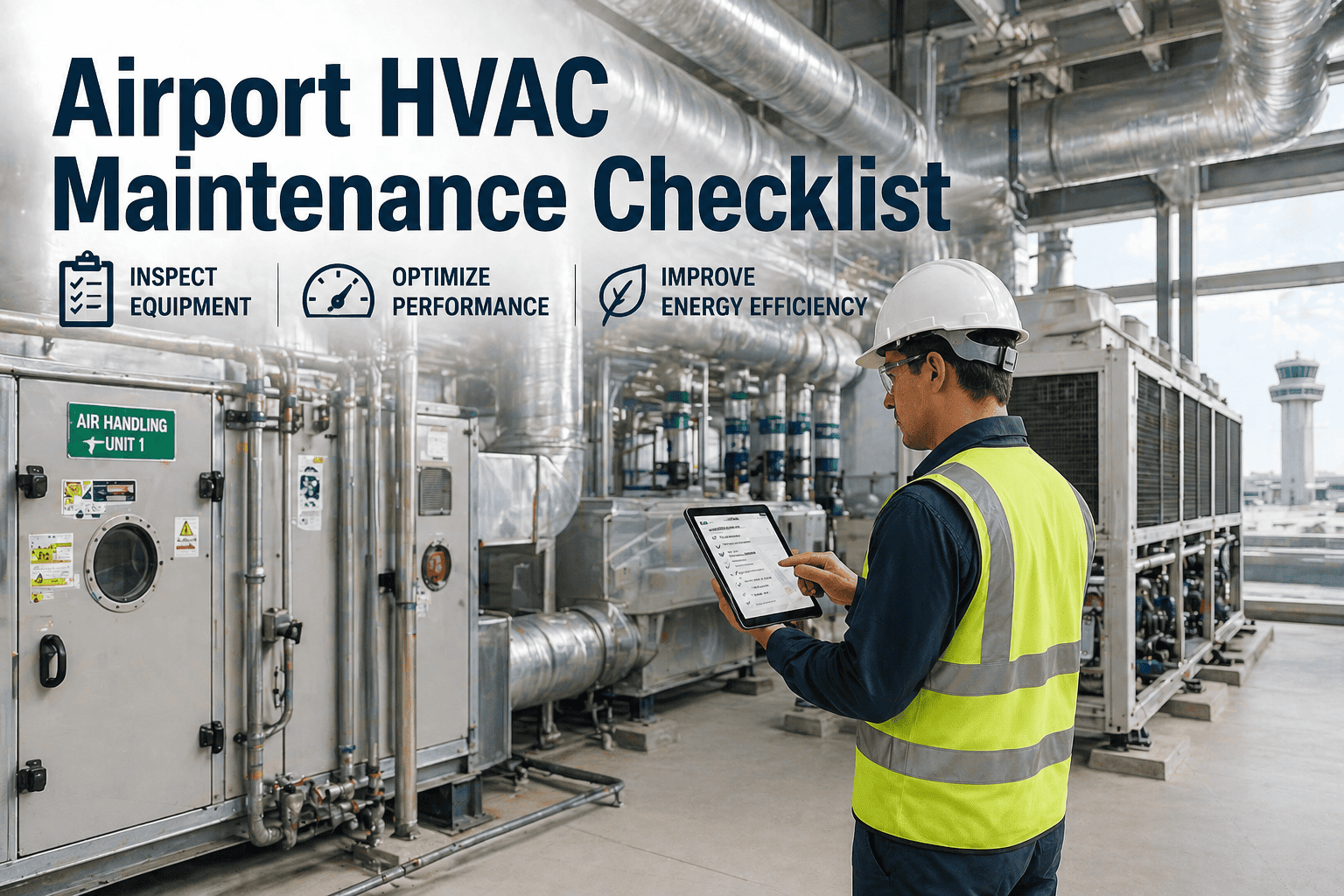
Airport Terminal HVAC Maintenance Checklist: Complete System Guide for Facility Managers
Airport terminal HVAC systems operate under extreme duty cycles with 24/7 loads, variable occupancy swings, and strict air quality requirements. This maintenance framework covers AHUs, chillers, boilers, cooling towers, and BAS optimization to maintain comfort, efficiency, and regulatory compliance.
Terminal HVAC Performance Gaps
Energy waste from deferred PM
18-34%
Average filter change delay
6.2 weeks
HVAC emergency calls per year
38-62
Unplanned downtime cost per event
$12-47K
HVAC System Overview
Airport Terminal HVAC Architecture: System Components and Maintenance Zones
Terminal HVAC is not a single system — it is an interconnected network of air handlers, chillers, boilers, cooling towers, and building automation controls that must be maintained as both individual components and as an integrated whole. Maintenance planning must account for equipment redundancy, peak load demands, and seasonal operational shifts. Book a demo to see how OxMaint maps your entire HVAC infrastructure for comprehensive maintenance planning.
Rooftop and mechanical room AHUs deliver conditioned air to terminals, concourses, and back-of-house areas. Typical airports operate 12-45 units depending on terminal size.
PM Frequency: Monthly filters, quarterly coils, annual belts
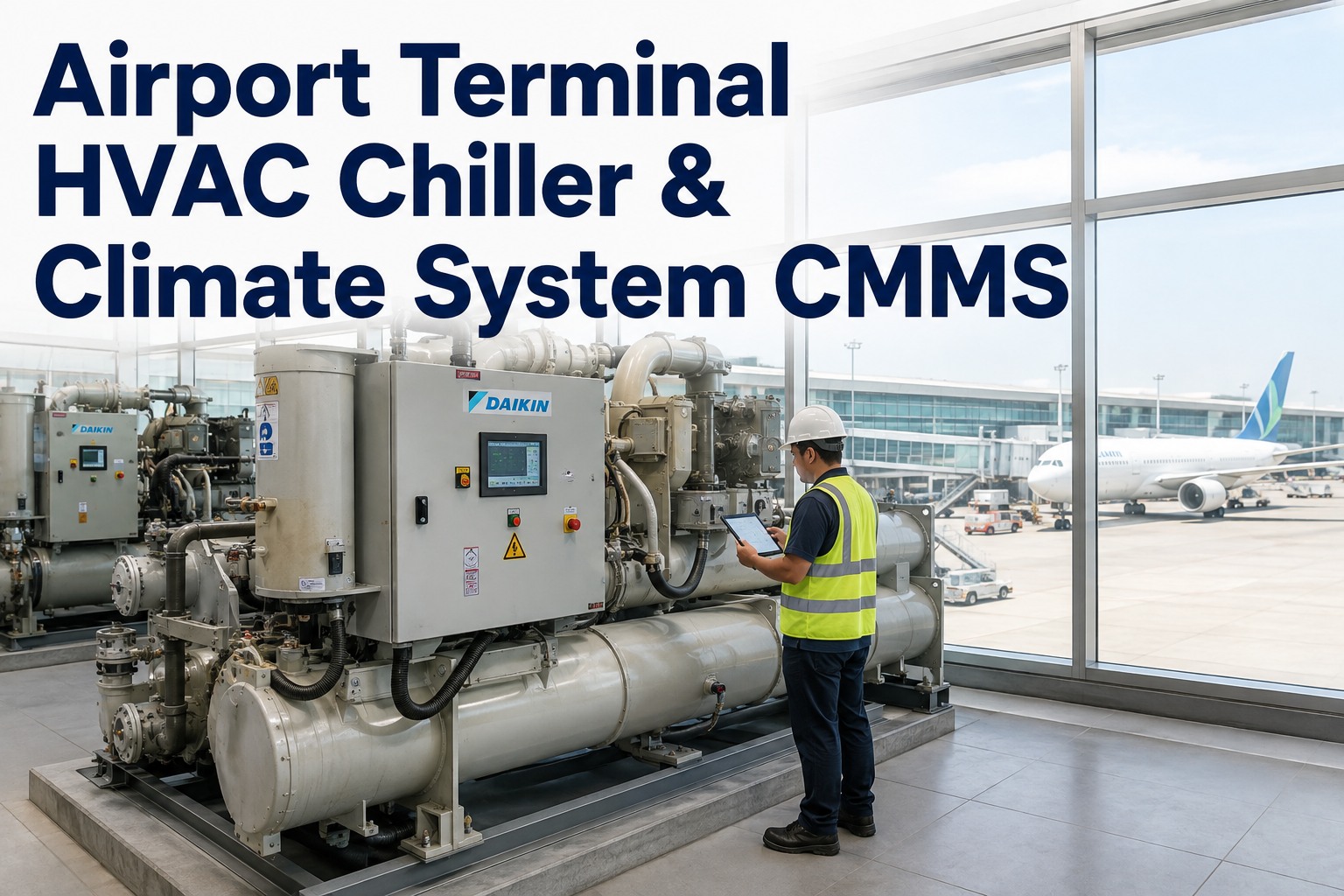
Central chilled water generation for cooling loads. Most terminals run 2-4 chillers in lead-lag configuration with combined capacity of 800-3500 tons.
PM Frequency: Weekly water treatment, monthly vibration, annual tube cleaning
Hot water or steam generation for heating coils and domestic hot water. Critical for cold-weather operations and humidity control.
PM Frequency: Weekly combustion check, monthly safety tests, annual tube inspection
Heat rejection for chiller condensers. Open-loop towers require aggressive water treatment and cleaning to prevent legionella and scale buildup.
PM Frequency: Weekly water chemistry, monthly basin cleaning, quarterly drift eliminator check
DDC controls manage setpoints, scheduling, and system optimization. BAS alarms provide early warning of equipment failures and performance drift.
PM Frequency: Monthly calibration spot-checks, quarterly alarm review, annual sensor validation
VAV boxes, fan coil units, and split systems serve individual zones. High unit counts make scheduled maintenance tracking critical.
PM Frequency: Quarterly filter replacement, semi-annual coil cleaning, annual actuator calibration
AHU Preventive Maintenance
Air Handling Unit Inspection and Service Checklist
AHUs are the workhorse of terminal climate control. Deferred maintenance on filters, coils, and belts compounds into higher energy consumption, poor air quality, and eventual equipment failure. This checklist breaks down by service interval.
Replace or clean pre-filters and bag filters per pressure drop reading
Inspect belt tension and alignment on supply and return fans
Check condensate drain pans for blockages and biological growth
Verify damper actuators respond to BAS commands
Record amp draw on all fan motors and compare to baseline
Inspect cabinet doors and access panels for air leaks
Clean cooling and heating coils with approved coil cleaner
Lubricate fan bearings and motor bearings per manufacturer schedule
Test and calibrate mixed air temperature sensors
Inspect insulation on cold surfaces for condensation damage
Verify economizer operation through full cycle
Check vibration isolators for deterioration or compression
Replace all fan belts regardless of apparent condition
Perform motor insulation resistance test (megger test)
Verify airflow with pitot tube traverse and compare to design CFM
Infrared scan of electrical connections and motor windings
Clean and inspect smoke/fire dampers and test actuators
Recalibrate BAS points and verify alarm setpoints
Chiller Plant Maintenance
Central Chiller System Service Protocol
Chiller failures during peak cooling season create catastrophic comfort and operational impacts. Preventive maintenance focuses on water treatment, refrigerant integrity, and mechanical component inspection.
Weekly
Water Treatment Monitoring
Test chilled water pH and conductivity
Check chemical feed pump operation
Inspect for visible leaks in chilled water piping
Review BAS trending for abnormal temperature deltas
Monthly
Mechanical Inspection
Record refrigerant pressures and compare to baseline
Check oil level and condition in compressor sight glass
Inspect compressor for abnormal vibration or noise
Verify condenser approach and evaporator approach temperatures
Quarterly
Performance Testing
Calculate chiller efficiency (kW/ton) and trend over time
Perform oil analysis and refrigerant purity test
Inspect electrical connections with infrared camera
Test safety shutdown controls and high-pressure cutouts
Annual
Major Service
Eddy current test condenser and evaporator tubes
Clean condenser tubes with chemical or mechanical method
Inspect and recalibrate all chiller sensors
Review starter contacts and replace if pitted or worn
Common Failure Modes
Top Six Terminal HVAC Maintenance Gaps That Drive Emergency Repairs
HVAC emergency calls are rarely the result of sudden catastrophic failure — they are the predictable endpoint of deferred preventive maintenance that compounds over weeks or months until system performance collapses.
Filter Change Drift
Scheduled monthly filter changes stretch to 6-10 weeks due to staffing or budget constraints. Dirty filters increase static pressure, forcing fans to work harder and reducing airflow by 20-40%. Eventually motors overheat or belts fail under sustained overload.
Energy penalty: 18-28% higher kWh consumption
Coil Fouling Neglect
Cooling and heating coils accumulate dust, biological growth, and corrosion that block airflow and reduce heat transfer. Without quarterly cleaning, coil performance degrades to the point where AHUs cannot maintain setpoint even at full capacity.
Capacity loss: 25-45% reduction in BTU transfer
Belt Replacement Delay
Waiting for visible belt wear before replacement means operating with glazed, slipping belts that waste motor power and create harmonic vibration. When belts finally break, it is always during peak load when the failure impact is maximum.
Emergency repair premium: 3.2x planned belt change cost
Chiller Water Treatment Gaps
Inconsistent water chemistry monitoring allows scale and corrosion buildup in chiller tubes. Scale acts as insulation, forcing chillers to run longer to achieve the same cooling output. Eventual tube fouling requires emergency shutdown for chemical cleaning or tube replacement.
Efficiency drop: 8-15% per 0.001-inch scale thickness
BAS Calibration Drift
Temperature sensors and pressure transducers drift out of calibration over time, causing BAS to make control decisions based on inaccurate data. Systems run unnecessarily or fail to activate when needed, wasting energy and creating comfort complaints.
Control error cost: 12-22% energy waste from sensor drift
Cooling Tower Biological Growth
Deferred cooling tower cleaning and water treatment allows algae, biofilm, and scale to accumulate in basins and fill media. This reduces heat rejection capacity and creates legionella growth risk requiring immediate shutdown and remediation.
Remediation cost: $18K-$85K for emergency tower cleaning and disinfection
CMMS Solution
How OxMaint Prevents Terminal HVAC Maintenance Drift
OxMaint automates HVAC preventive maintenance scheduling, tracks completion across all systems, and provides energy consumption trending to identify performance degradation before it escalates to emergency repair. Start a free trial and see your HVAC maintenance compliance improve within the first 30 days.
Automated PM Scheduling
OxMaint generates work orders automatically for every HVAC asset on monthly, quarterly, and annual cycles. Filter changes, coil cleaning, belt replacement, and sensor calibration all trigger on schedule without manual tracking or calendar reminders.
Equipment Hierarchy Mapping
Model your entire HVAC infrastructure from chiller plant down to individual VAV boxes. Assign PM tasks at the correct system level and roll up completion metrics by zone, building, or equipment type for portfolio visibility.
Energy Consumption Tracking
Log monthly kWh usage per chiller, AHU, or system and trend over time. OxMaint flags abnormal consumption spikes that indicate fouled coils, failed economizers, or degraded chiller performance before comfort complaints emerge.
Sensor Calibration Alerts
Track calibration dates for all BAS sensors and receive alerts 30 days before recalibration is due. Prevents control drift that wastes energy and creates temperature complaints in passenger areas.
Filter Inventory Management
Maintain par levels for all filter sizes across your terminal. OxMaint triggers reorder points automatically when inventory drops below minimum stock and links filter usage to specific AHU work orders for accurate consumption tracking.
Contractor Service Verification
When third-party contractors perform chiller tube cleaning, cooling tower service, or annual inspections, OxMaint captures completion sign-off, test results, and before/after photos in a single record tied to the asset history.
Reactive vs Preventive
HVAC Maintenance Approach Comparison: Reactive Breakdown vs Scheduled PM
Filter changes happen when airflow complaints reach facility management
Filters changed on fixed monthly schedule before pressure drop impacts performance
Chiller efficiency drops 15-25% before poor cooling triggers investigation
Quarterly efficiency calculations flag 5-8% degradation for immediate coil cleaning
Belt failures occur during peak load when replacement parts are not on hand
Belts replaced annually during low-demand periods with parts pre-staged
BAS sensors drift for 18-24 months until control errors become obvious
Sensor calibration tracked with automated alerts 30 days before service due
Cooling tower cleaning deferred until legionella risk forces emergency shutdown
Monthly tower basin cleaning and quarterly disinfection prevents biological growth
No baseline data to identify gradual performance degradation over time
Energy and performance metrics trended monthly to catch efficiency drift early
Performance Improvement
HVAC Maintenance Outcomes — OxMaint Airport Customer Averages
58%
Reduction in HVAC Emergency Calls
Preventive maintenance eliminates most reactive breakdowns that occur during peak demand periods
$127K
Average Annual Energy Savings
From improved filter discipline, coil cleanliness, and BAS calibration maintaining design efficiency
92%
PM Schedule Completion Rate
Automated work order generation and mobile completion tracking ensures tasks are not forgotten or deferred
34%
Longer Equipment Service Life
Consistent preventive maintenance extends useful life of chillers, AHUs, and motors beyond design life
Common Questions
Airport HVAC Maintenance — Frequently Asked Questions
How often should airport terminal AHU filters be changed?
What is the typical service life of a commercial chiller in airport terminal application?
With proper preventive maintenance including annual tube cleaning, quarterly refrigerant analysis, and consistent water treatment, centrifugal and screw chillers in terminal applications routinely achieve 20-25 years of service life. Chillers that receive reactive maintenance only typically fail between year 12 and year 16 due to compressor wear, tube fouling, and refrigerant contamination that could have been prevented with scheduled PM.
How does deferred HVAC maintenance specifically impact energy costs?
Dirty filters increase fan energy by 15-30% due to higher static pressure. Fouled coils reduce heat transfer efficiency by 25-45% forcing longer run times. Sensor drift causes simultaneous heating and cooling or unnecessary equipment operation. Combined, these factors typically increase HVAC energy consumption by 18-34% compared to a well-maintained baseline — translating to $80K-$200K in annual waste for a mid-size terminal.
Can OxMaint integrate with existing BAS systems to pull alarm data and runtime hours?
Yes. OxMaint supports API integration with major BAS platforms including Johnson Controls, Siemens, Honeywell, and Tridium systems. Runtime hours, alarm history, and energy consumption data can flow automatically into OxMaint to trigger condition-based maintenance and provide energy trending without manual data entry.
Book a demo to discuss your specific BAS integration requirements.
Terminal HVAC · Preventive Maintenance · Energy Efficiency
Stop Reacting to HVAC Breakdowns. Automate Preventive Maintenance and Reduce Energy Waste by 20-30%.
OxMaint provides airport facility managers with automated PM scheduling, energy consumption tracking, and real-time completion visibility across every AHU, chiller, boiler, and terminal unit in your HVAC infrastructure — so maintenance happens on schedule before performance degrades and energy costs spike.