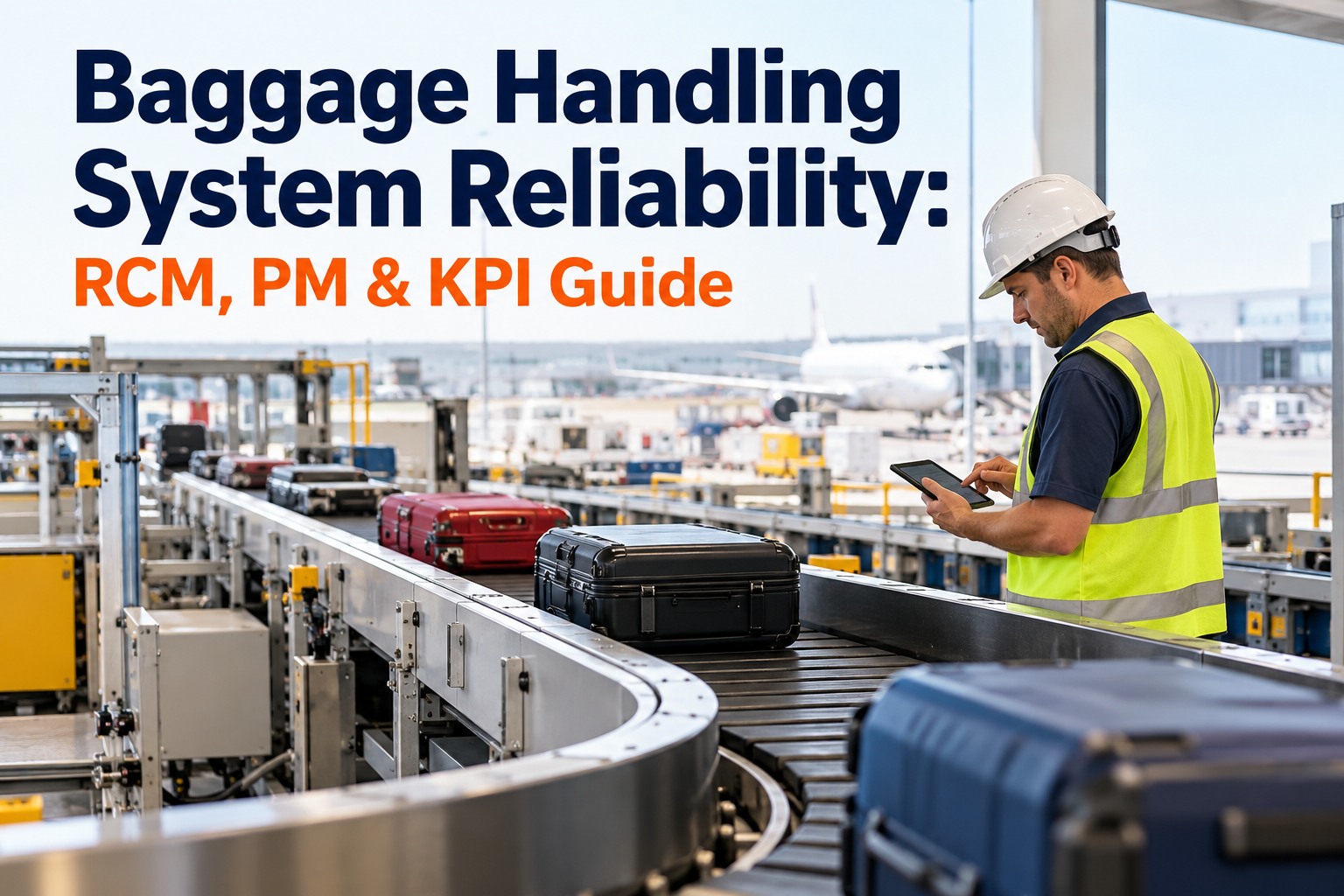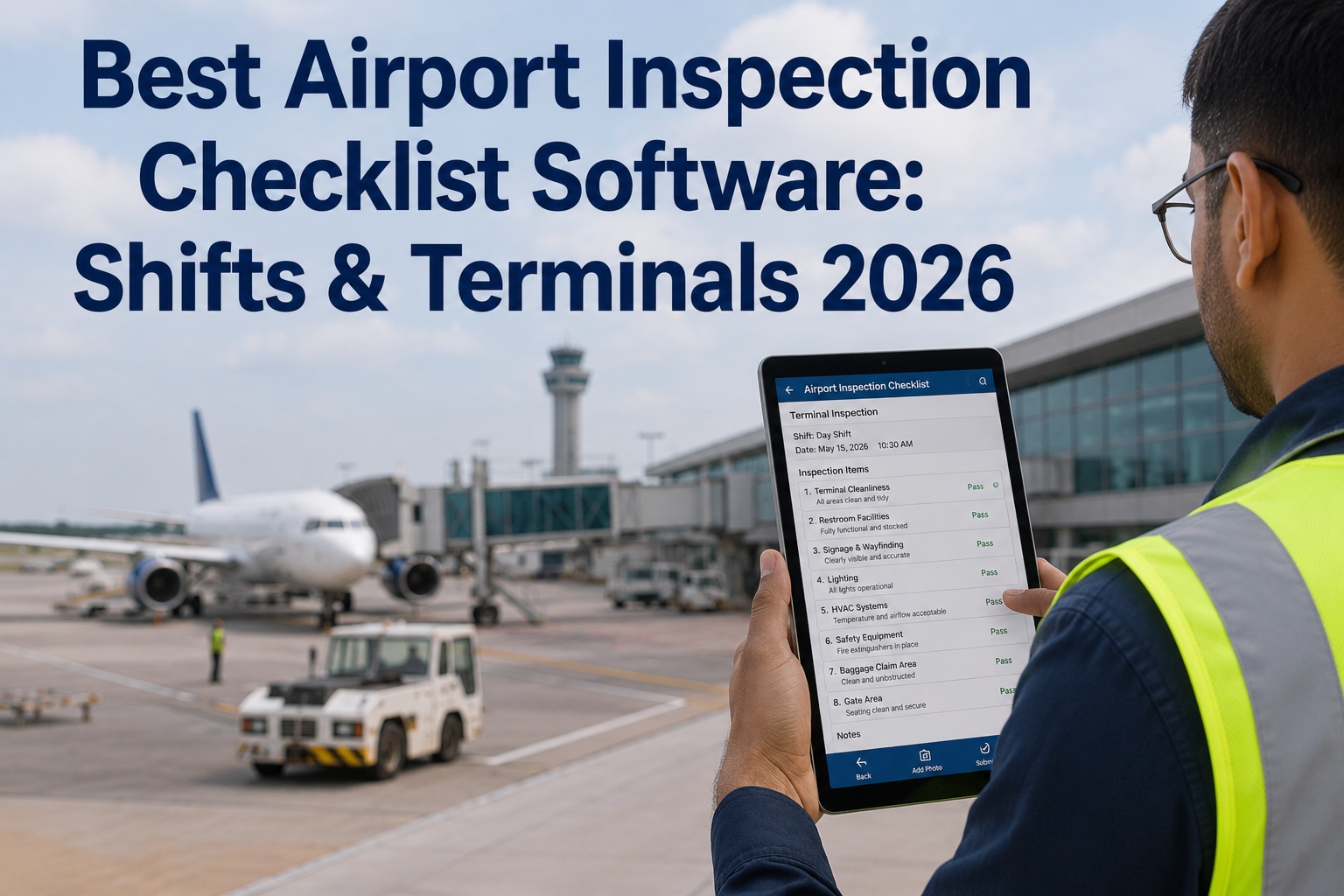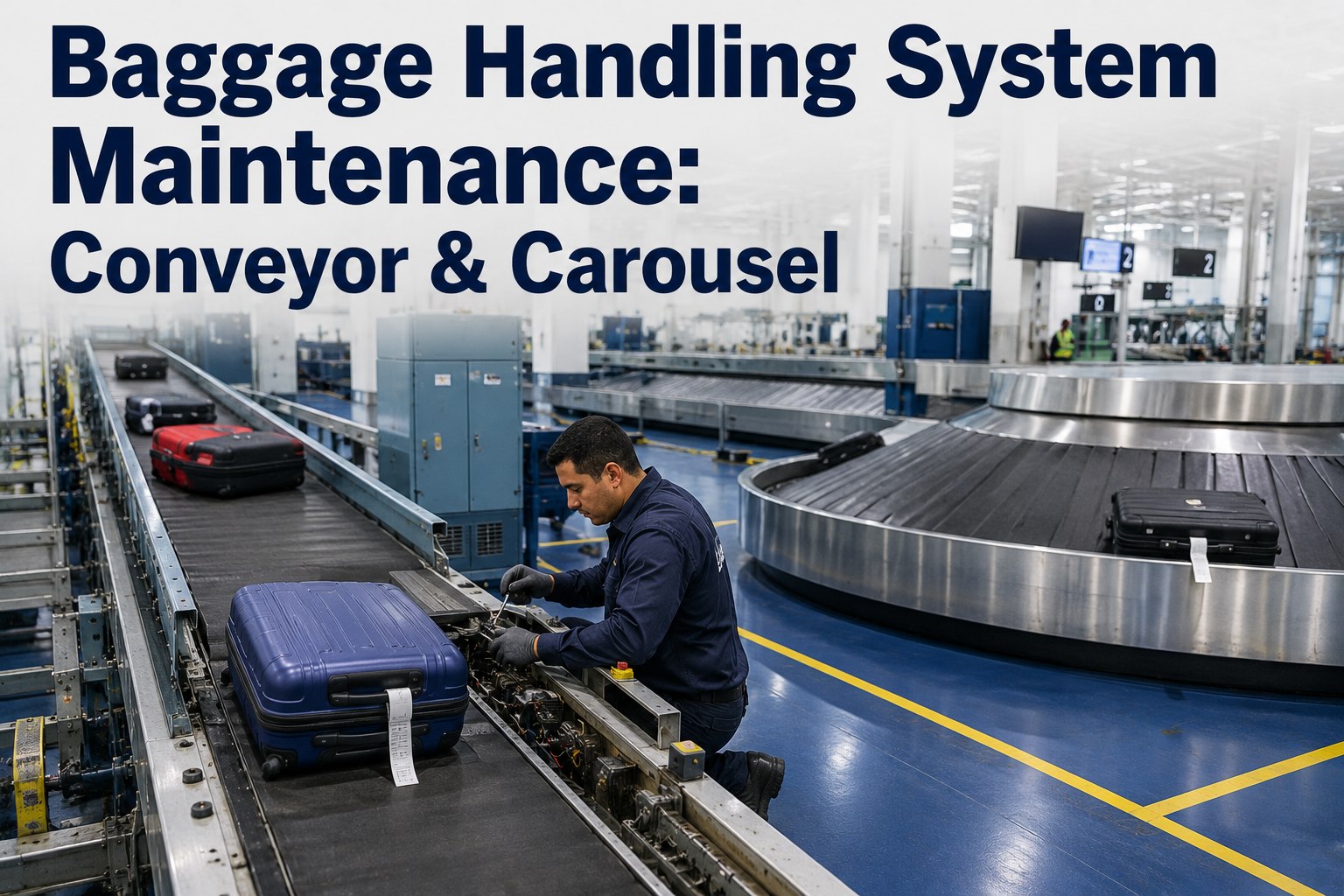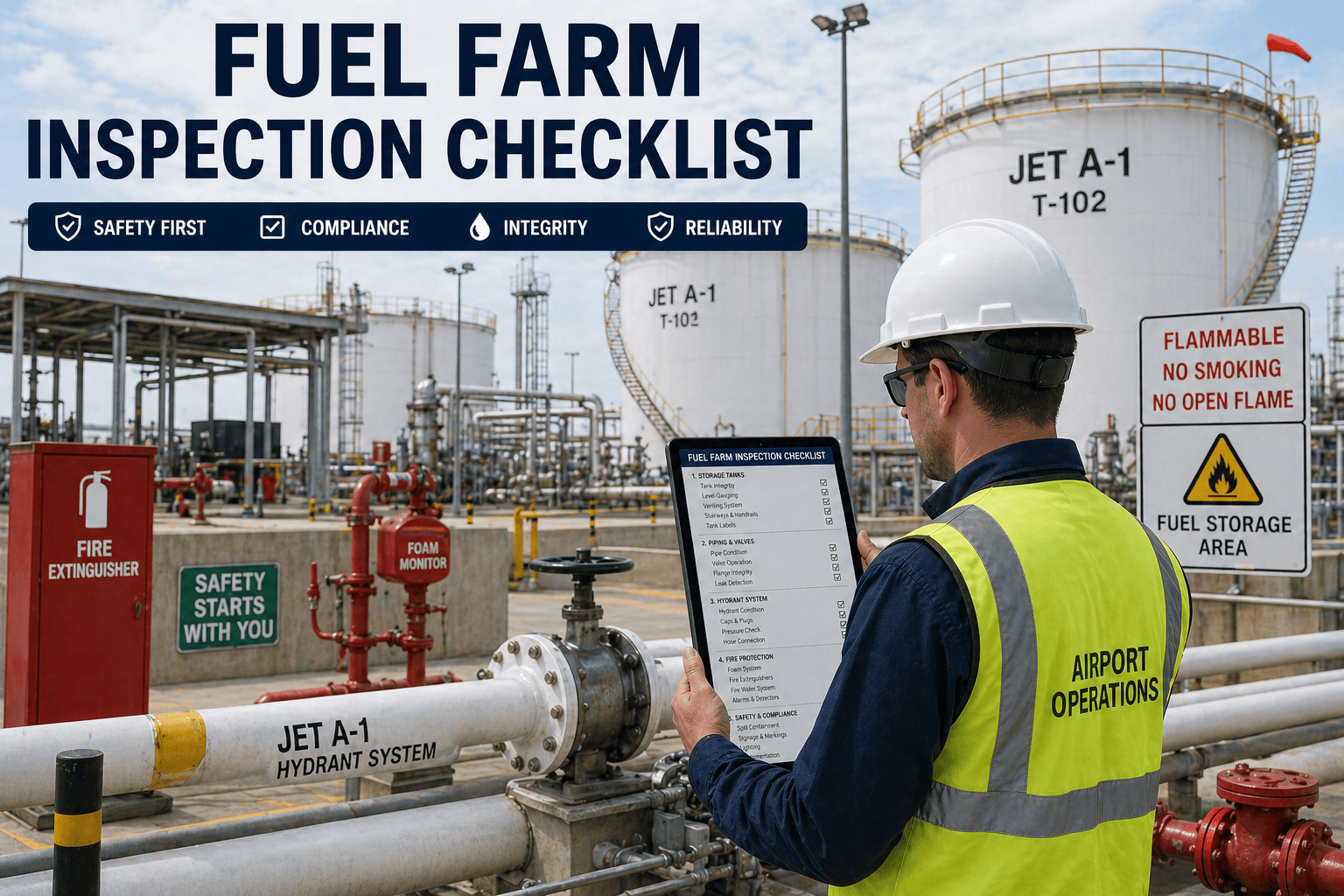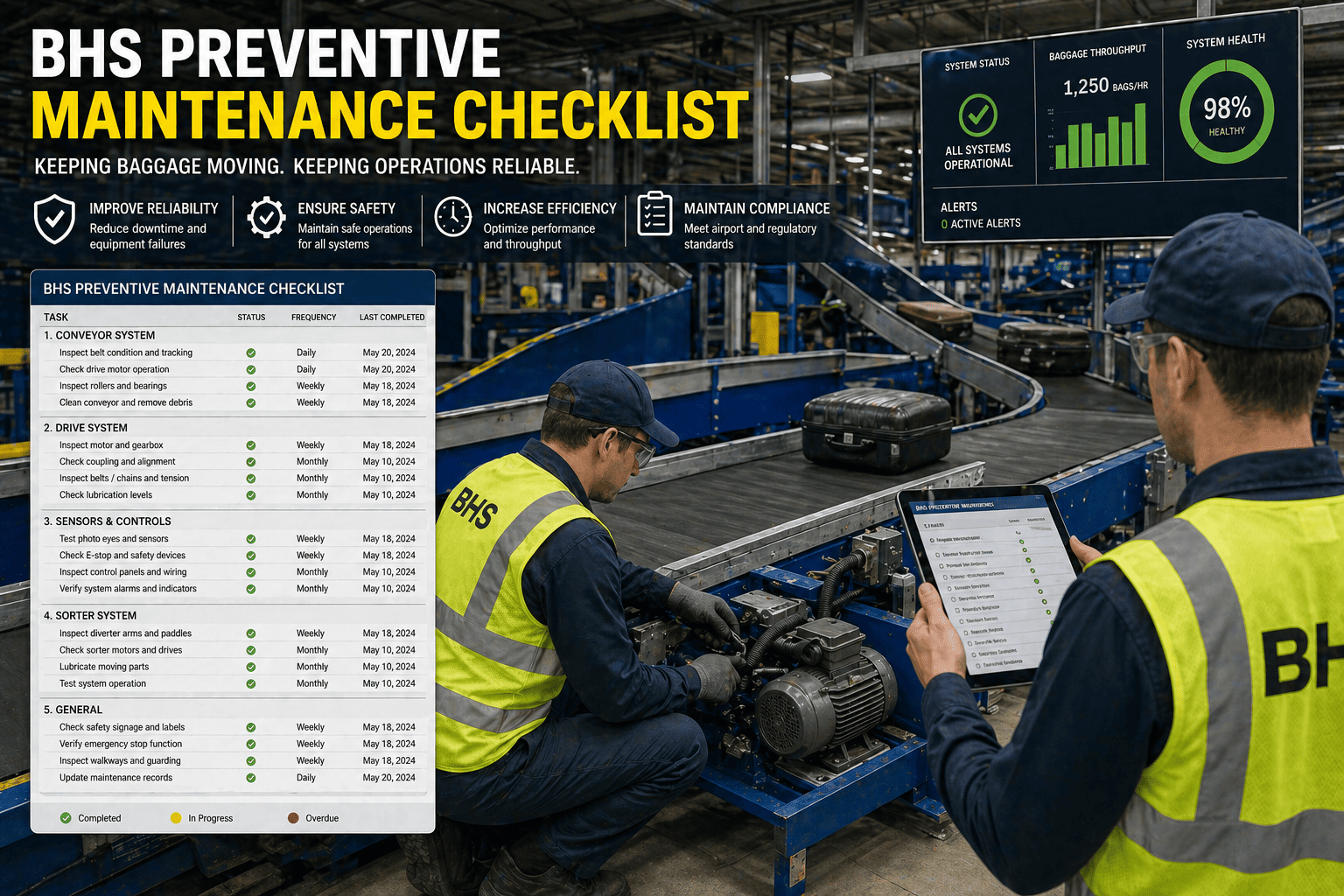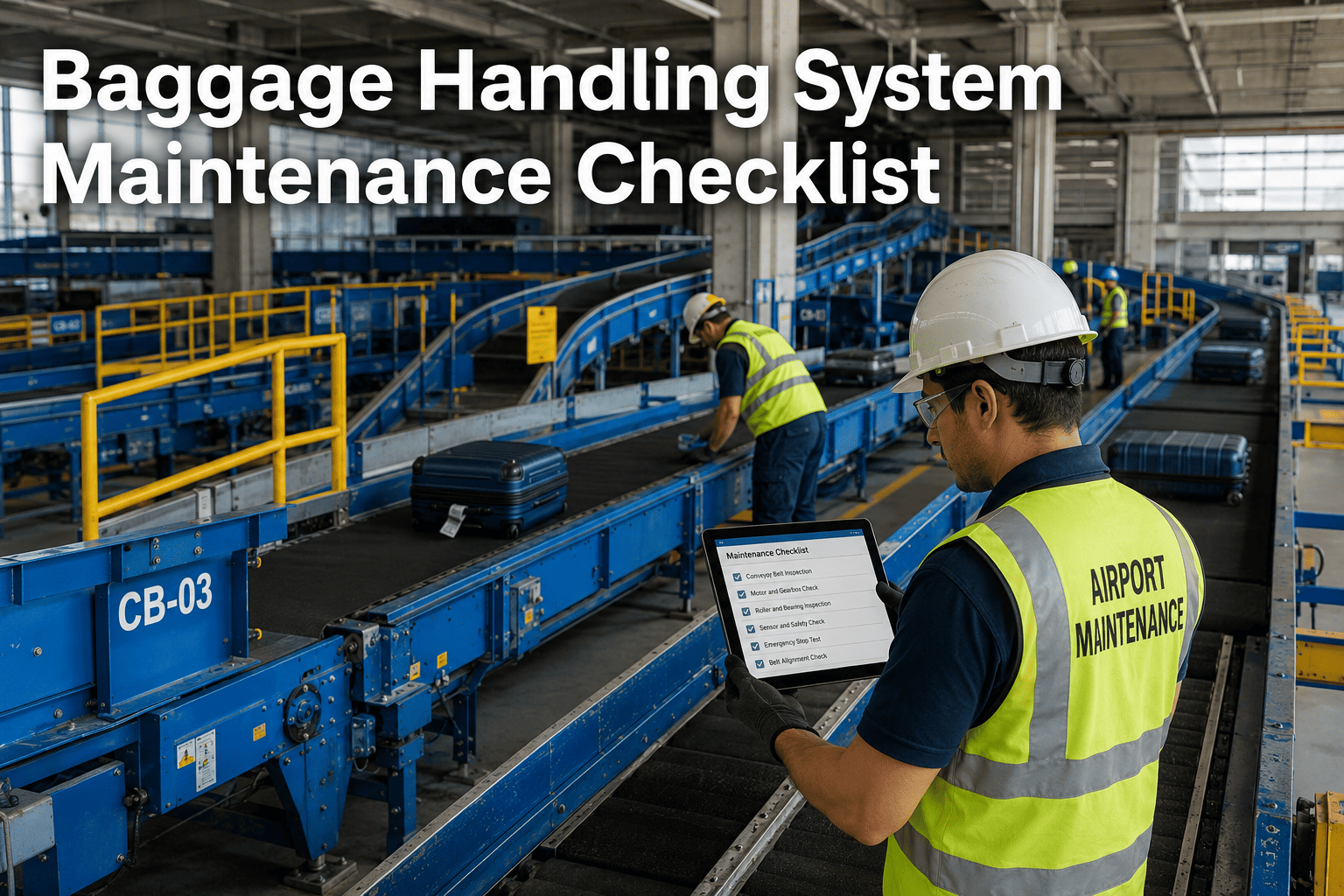
A baggage handling system (BHS) is the most operationally exposed mechanical asset in any airport terminal. Miles of conveyor, hundreds of motors, sortation diverters, scanners, weighing scales, and carousels — all running near-continuously, all expected to misroute fewer than a handful of bags per thousand. When a single drive bearing seizes during morning bank, the impact cascades fast: missed connections, bag claims, airline penalties, and queues that wrap a terminal. Inspection windows on a live BHS are short and irregular, and the workforce is stretched thinner than it was pre-pandemic. The fix is a structured, zone-by-zone maintenance checklist executed inside a CMMS — not paper, not spreadsheets — that captures every PM, every inspection, every defect with timestamps, photos, and digital sign-off. This guide gives you the airport-grade BHS checklist (daily, weekly, monthly, quarterly, annual) that VPs of Operations and Directors of Facilities deploy to reduce breakdowns, extend equipment life, and pass airline service-level audits without scrambling. Book a demo to see the OxMaint BHS checklist library running on a live conveyor network.
Why BHS Maintenance Is a Different Problem
A baggage handling system is not a single conveyor — it is a tightly coupled chain of subsystems, each with its own failure modes and PM cadence. Check-in conveyors, dispatch belts, transport runs, security screening interfaces, sortation diverters, make-up carousels, and arrival claim units all feed into one another. Stop one segment for unplanned repair and the rest of the BHS, plus every airline schedule, takes a hit. The unique pressure: inspection windows are short, vary by airport traffic, and require a maintenance team that knows exactly what to check and when, before they walk on the line.
This is why a checklist-driven CMMS approach beats both reactive maintenance and unstructured PM. Tasks are zoned, scoped, frequency-tagged, and assigned to the right crew, then executed from a phone or tablet with photo evidence and digital sign-off. Start a free trial and import your BHS asset hierarchy and checklists into OxMaint within hours.
The BHS Maintenance Map: Six Zones, Six Checklists
Every BHS naturally divides into six maintenance zones. Treat them as six separate but linked checklist domains.
The Daily & Weekly Operational Checklist
These tasks are executed by the on-shift maintenance crew at every airport with a real BHS program. Each row maps to an OxMaint mobile checklist with QR-coded asset access.
- Walk every active conveyor zone for visual debris, foreign objects, and obstruction
- Test all emergency stop pull cords on each line — verify zone-isolation alarms
- Inspect photo-eyes, encoders, and scanners for dust, alignment, and signal status
- Confirm no unresolved alarms from previous shift; review BAS / SCADA log
- Spot-check weighing-scale zero on all check-in stations
- Verify drive housings, gearmotors, and rollers free of unusual heat or noise on touch test
- Check belt tracking, lacing condition, and splice integrity on all transport conveyors
- Inspect all takeup pulleys and counterweights for free movement
- Lubricate idler bearings and chain drives per OEM schedule
- Run a service route on tilting devices and miniloaders (if installed)
- Photograph any worn belt sections, document in OxMaint against the asset
- Validate all alarm zones in test mode — log corrective actions for any alarm areas with high activity
Monthly & Quarterly Checklist
These are scheduled, longer-window tasks that keep the BHS away from the failure cliff.
- Detailed inspection of gearmotors, idler rollers, drive shafts, and tension shafts on each line
- Check belt centering on all check-in and dispatch conveyors; perform splicing where required
- Inspect drive chains, sprockets, and couplings — replace or lubricate per condition
- Calibrate all check-in baggage scales against CIAC test weights
- Functional check of passenger and operator panels, push buttons, indicators
- Trend motor amperage on critical drives — flag deviations from baseline
- Inspect cable routings, festoons, and cable carriers for wear and chafing
- Vibration analysis on all drive motors and high-cycle bearings
- Thermal imaging of electrical panels and motor connections
- Sortation diverter calibration: pusher timing, photo-eye latency, divert accuracy audit
- EDS/CT screening conveyor synchronization with TSA equipment scheduling
- Carousel slat inspection: missing/cracked slats, edge guard wear
- OOG conveyor mechanical condition, weight load testing where mandated
- Spare-parts inventory audit: critical bearings, belts, drive components
Annual & Major Overhaul Checklist
The annual cycle is when latent failure modes get caught — well before the next operational quarter exposes them.
- Full belt replacement on highest-cycle conveyors per OEM service intervals
- Drive motor refurbishment: bearing replacement, winding insulation testing, alignment
- Diverter mechanism teardown, pusher actuator service, accuracy recalibration
- Make-up carousel drive overhaul, slat replacement on worn segments
- Claim carousel chain replacement where elongation exceeds OEM tolerance
- EDS/CT integration recommissioning with security partners
- SCADA/PLC firmware audit, control-logic version control, and backup restoration test
- Refresh of safety-system documentation, emergency-stop testing certification
- Asset condition score update for every BHS component in OxMaint — feeds the rolling CapEx model
Where Reactive BHS Maintenance Bleeds Money
Each item above is a documented PM-prevented failure mode. The CMMS is what converts a list of risks into a closed-loop schedule. Start a free trial and let OxMaint route every check into a mobile work order with photo evidence and sign-off.
How OxMaint Runs the BHS Checklist Program
Reactive vs Checklist-Driven BHS Operations
| BHS Operational Layer | Reactive / Paper-Based | OxMaint Checklist-Driven |
|---|---|---|
| PM Compliance | ~54% — half of scheduled work never gets done | 95%+ verified through digital sign-off |
| Inspection Records | Paper logs, photos on phones, scattered files | Timestamped digital records on every asset |
| Defect Capture | Recalled at end of shift, often missed | Logged with photo at point of detection |
| Spare Parts | Discovered missing at the asset | Pre-reserved with WO; JIT reorder triggered |
| Audit Preparation | Multi-day scramble to assemble records | Single-click compliance pack export |
| CapEx Forecasting | Best-guess based on age | Condition-driven 5–10 year rolling model |
| Cross-Site Visibility | None — every terminal an island | Single dashboard across all BHS portfolios |
ROI: What Structured BHS Maintenance Delivers
The economics are clear: a structured BHS checklist program inside OxMaint converts emergency cost into planned cost, extends asset life, and protects airline service-level commitments. Book a demo to model the ROI against your specific BHS layout and traffic.
Frequently Asked Questions
How often should an airport BHS be inspected?
Can OxMaint integrate with an existing BHS PLC or SCADA system?
How does OxMaint handle multi-vendor BHS environments?
How fast can OxMaint go live for a BHS program?
Stop Letting a Single Failed Splice Take Down Your Terminal.
OxMaint runs every baggage handling system as a structured asset class — six zones, prebuilt checklists, mobile execution, condition trending, audit-ready compliance, and rolling CapEx forecasting in a single CMMS your team can deploy this month.
- Zone-by-zone PM checklist library
- SCADA / PLC condition integration
- Audit-ready compliance vault