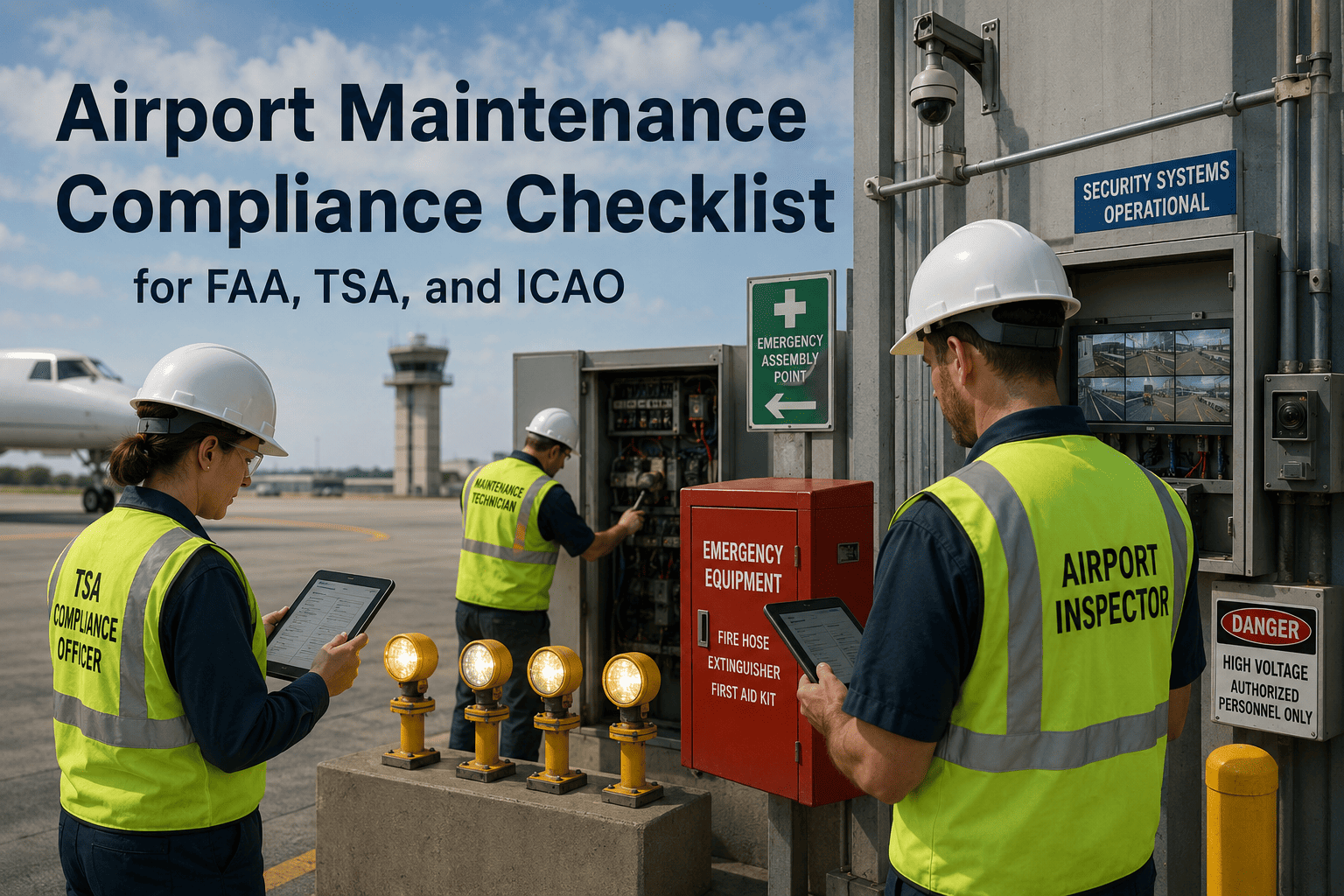
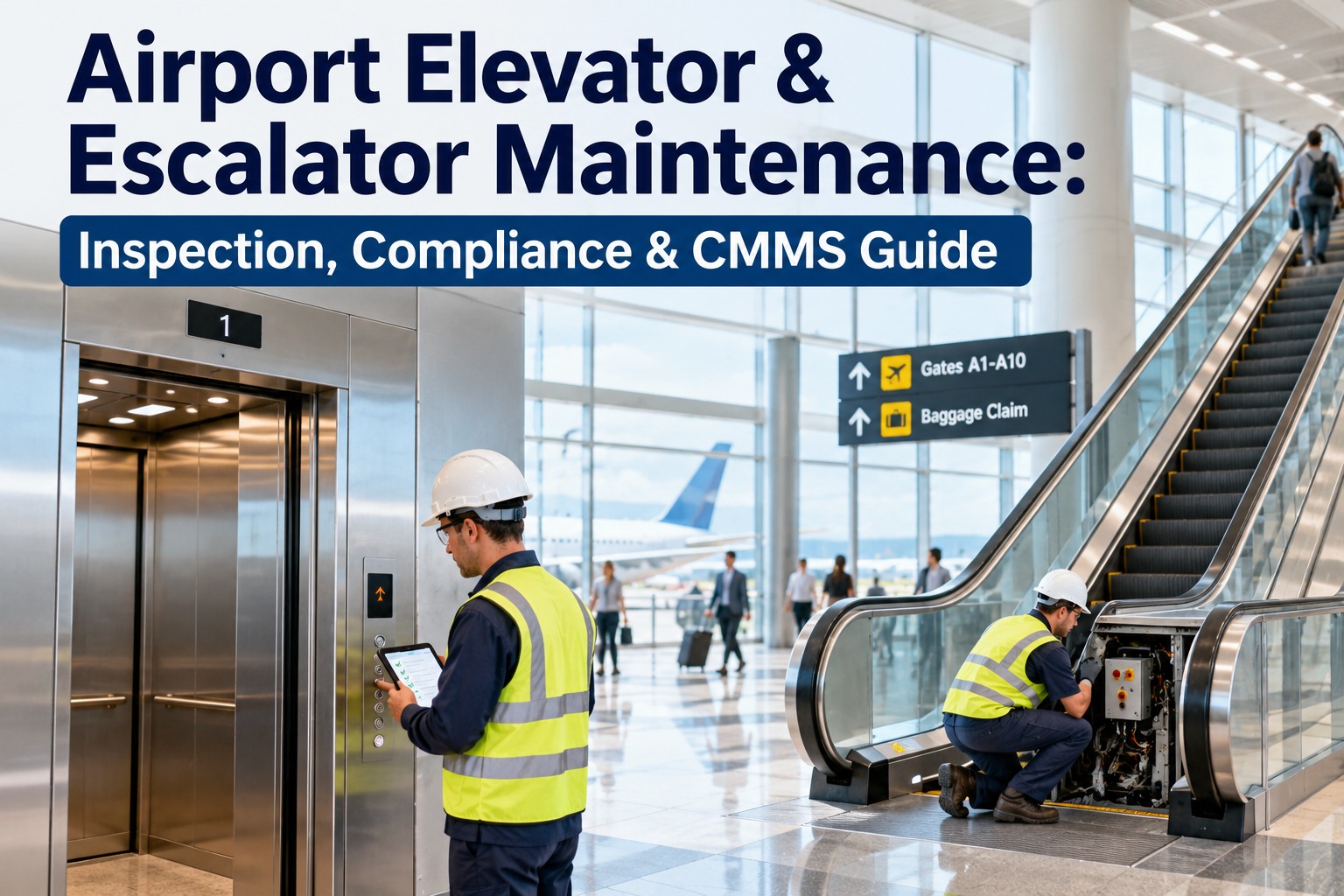
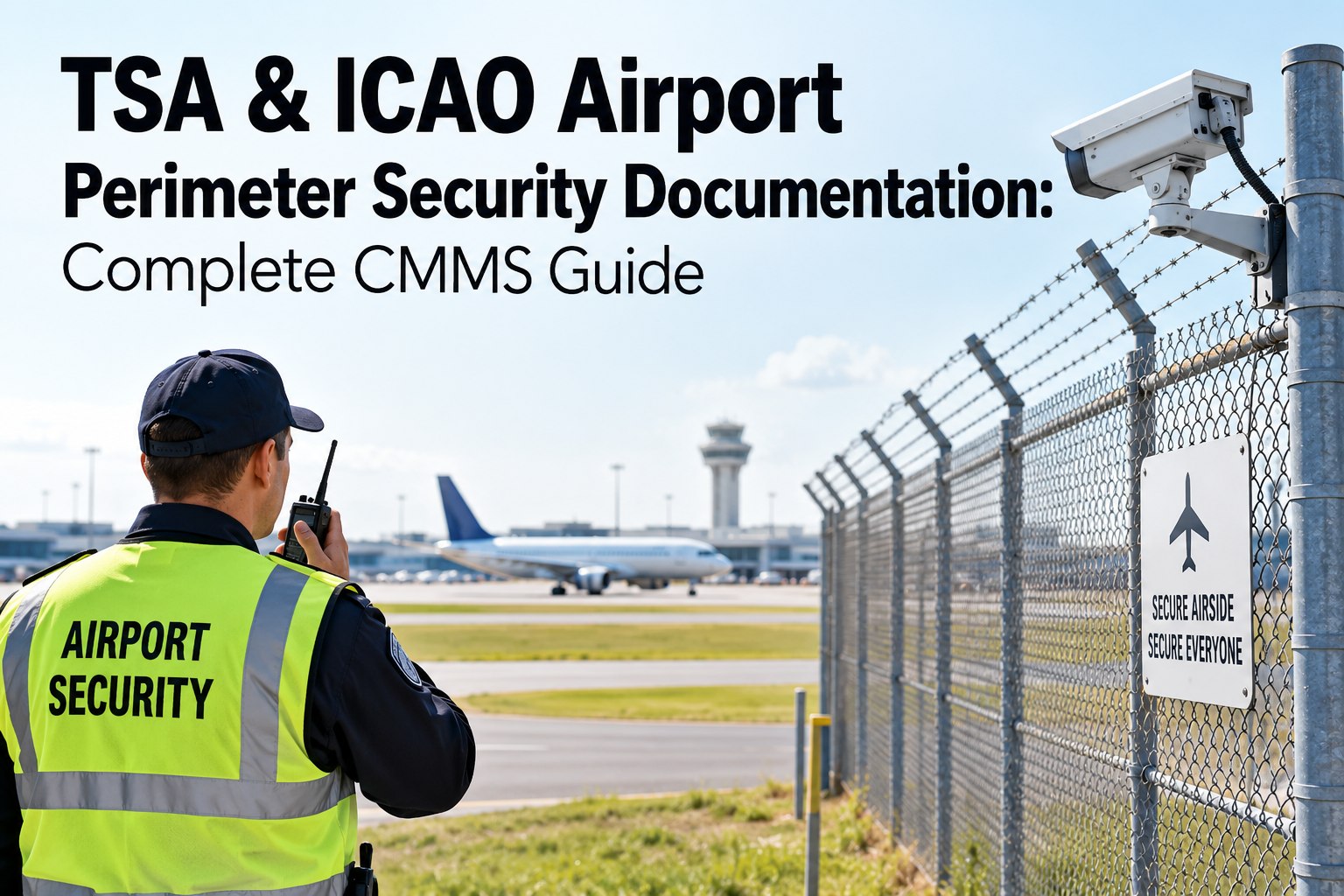
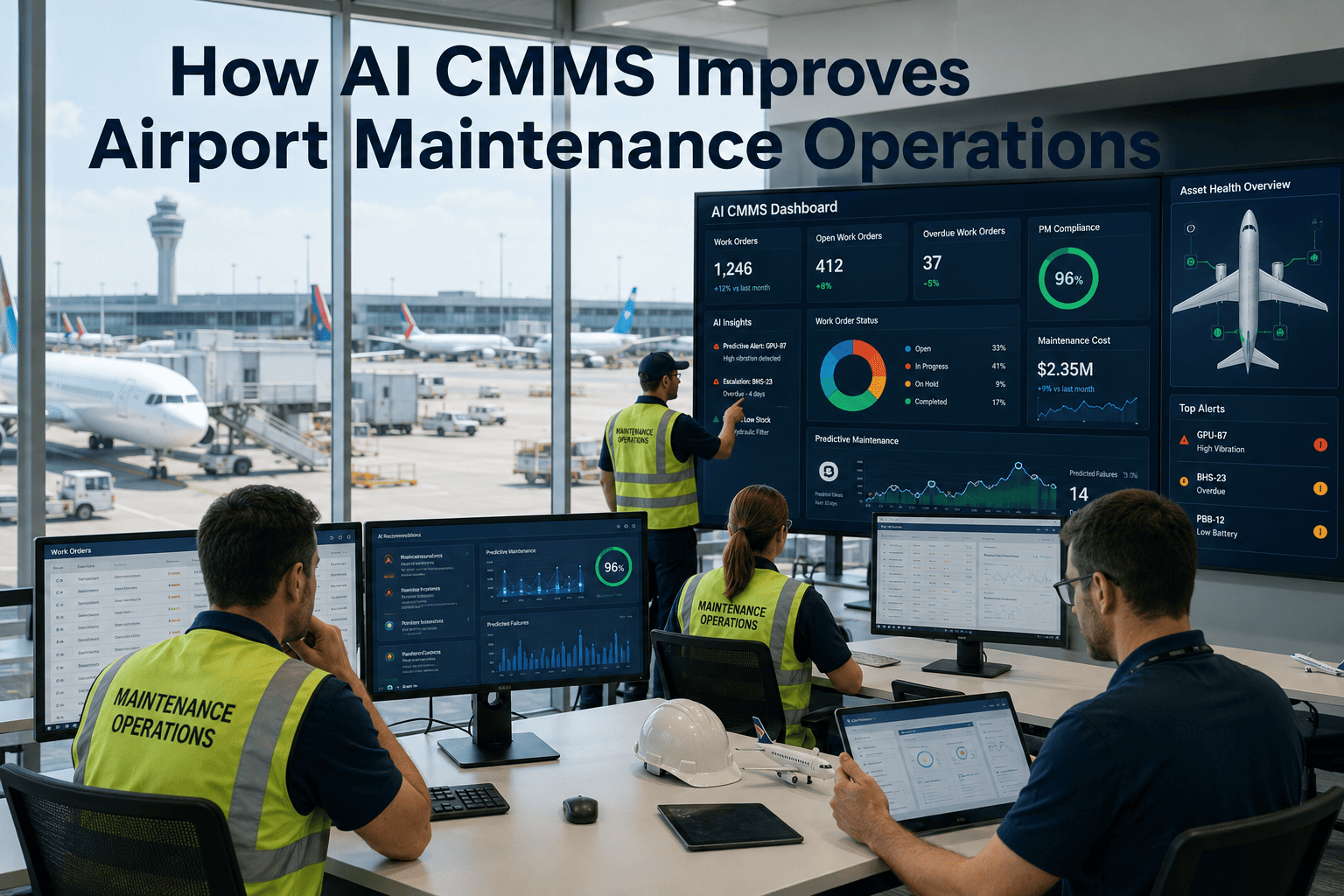
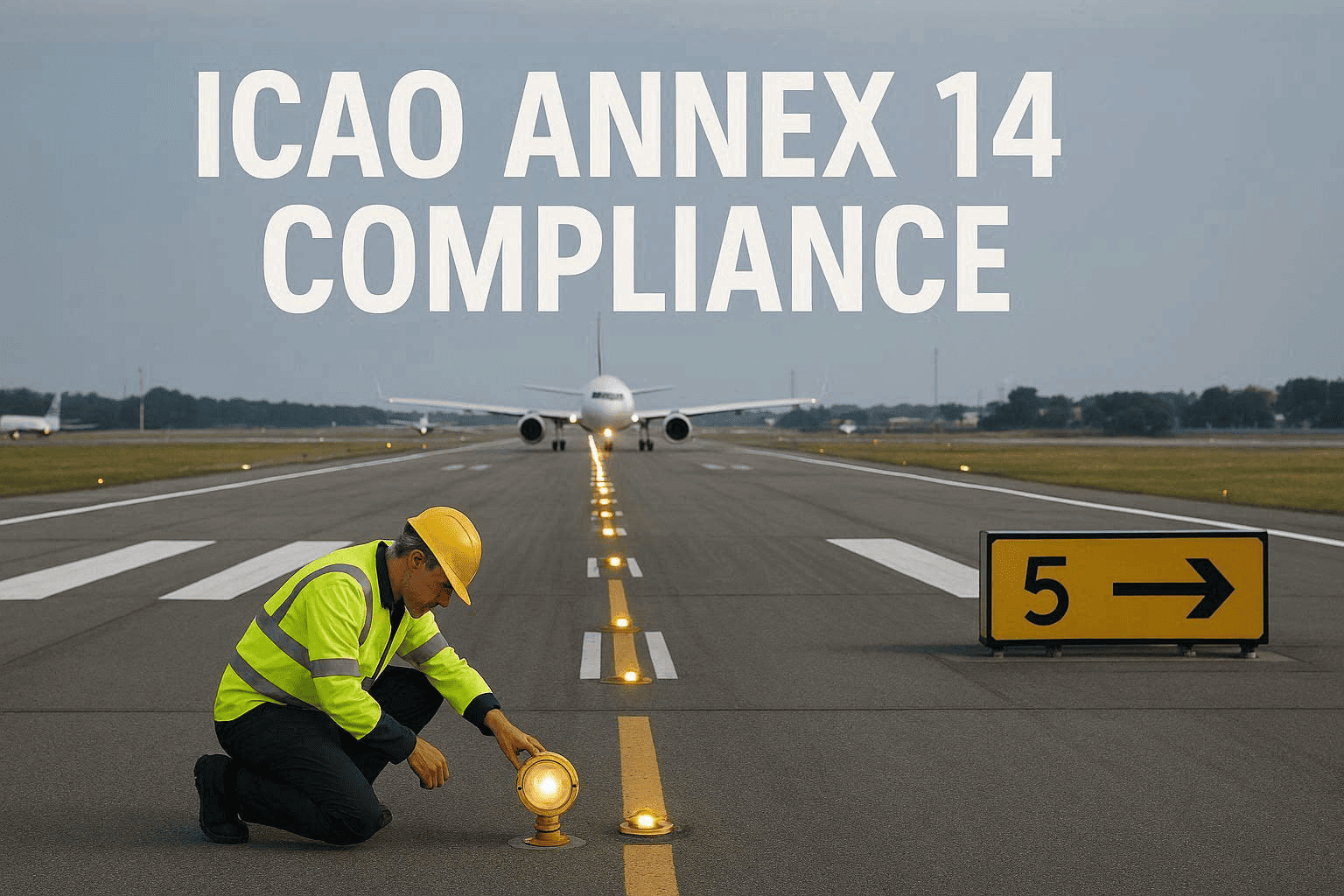
Airport Maintenance Compliance Checklist for FAA, TSA, and ICAO
By Lewis Abbott on May 9, 2026
Airport maintenance compliance is not optional — and the cost of getting it wrong scales fast. FAA Part 139 violations can carry civil penalties exceeding USD 30,000 per occurrence, EASA findings can ground entire operations, and an ICAO Universal Safety Oversight Audit Programme (USOAP) gap can affect a country's category rating for international flights. Yet most airport compliance programs still run on paper logs, scattered spreadsheets, and last-minute audit scrambles. This guide consolidates the compliance checklist airports actually need — by regulator, by inspection category, and with the verification standard each finding requires. Start a free trial to deploy these compliance workflows digitally on your own airport, or book a demo for a tailored regulator walkthrough.
civil penalty per FAA Part 139 violation — and a single audit can produce dozens of findings
191
ICAO contracting states subject to USOAP audits — covering the world's commercial airport network
3 wks
typical audit-prep time at airports running paper records — cut to hours with digital evidence trails
62%
reduction in audit findings reported by airports moving from paper to CMMS-based compliance
The Three Regulators Every Airport Operates Under
For airports operating in or interfacing with US-bound traffic, three regulatory bodies set the maintenance compliance bar. The FAA enforces Part 139 (airport certification), Part 13 (enforcement), and various advisory circulars on equipment standards. The TSA governs security-related infrastructure, screening equipment, and access control under 49 CFR Parts 1540 and 1542. ICAO sets the international baseline through Annexes 14 (Aerodromes) and 19 (Safety Management) and audits compliance through USOAP.
Most airports outside the US operate under their national civil aviation authority (CAA, EASA, DGCA, GCAA) but those frameworks generally align with ICAO Annexes — meaning the underlying inspection items are remarkably consistent across jurisdictions. Start a free trial to map your airport's regulatory profile in under an hour.
The 6 Compliance Domains You Cannot Skip
01
Movement Area Safety
Runway, taxiway, and apron surface inspections, FOD management, RESA integrity, marking and signage condition. Primary regulator: FAA Part 139.305 / ICAO Annex 14.
02
Visual Aids & NAVAIDS
Runway and taxiway lighting, PAPI/VASI, ILS, wind direction indicators, signage illumination. Primary regulator: FAA Part 139.311 / ICAO Annex 14 Vol I.
03
Rescue & Fire Fighting
ARFF vehicle readiness, response time drills, firefighting agent supply, station equipment. Primary regulator: FAA Part 139.317-319 / ICAO Annex 14.
The single most common audit finding across FAA, EASA, and ICAO audits is the same: missing or unverifiable inspection records. Digitization eliminates this finding entirely.
Master Compliance Checklist by Regulator and Domain
The table below consolidates the highest-frequency compliance inspection items across FAA Part 139, TSA, and ICAO Annex 14 / 19 — with the inspection cadence and verification standard each requires. Book a demo to see how Oxmaint preloads these as digital templates.
"Runway inspected — OK" written in a logbook is not evidence. Without timestamps, photos, GPS tags, or measurement data, auditors treat the entry as unverified — and findings follow.
Findings Without Closure
A finding logged but never closed is worse than no finding at all. Most airports have a backlog of open corrective action requests that auditors uncover instantly during a records review.
Siloed Documentation
Compliance evidence scattered across maintenance, security, fire, and operations systems — when an auditor asks for a six-month inspection history, reconstruction takes days and gaps are inevitable.
Inspection Drift
Standards drift over time without a controlled template. Two technicians inspect the same asset and produce different evidence — auditors flag the inconsistency as procedural non-conformance.
Audit-Prep Burnout
Three weeks of supervisor and engineering time burned reconstructing records before every audit — capacity that should have gone to actually fixing the underlying compliance gaps.
No Trend Visibility
Recurring findings repeat year after year because no one tracks them as a pattern. A digital compliance log surfaces repeat issues immediately so they can be fixed at the root cause.
Replace audit scrambles with continuous compliance evidence
Oxmaint timestamps, photo-verifies, and signs off every compliance inspection — across FAA, TSA, and ICAO domains in one platform.
Oxmaint is built for the evidence standard regulators actually require — every inspection captured with timestamp, photo, measurement, and digital signature, then stored against the right asset for the right duration. Start a free trial and run your first compliance inspection within 30 minutes of account setup.
Pre-Loaded Regulator Templates
Templates aligned with FAA Part 139, TSA 49 CFR 1542, and ICAO Annex 14/19 — customizable to your local CAA without losing the underlying audit structure.
Mobile Inspection Capture
Technicians complete inspections on phone or tablet — capturing GPS-tagged photos, measurements, and digital sign-off with offline mode for airfield areas.
Auto-Corrective Workflow
A failed checklist item automatically generates a corrective action request routed to the right team — closing the gap between finding and fix.
Findings & CAR Tracking
Every finding tracked from log to closure with evidence attached. Open CARs visible on the operations dashboard — no more hidden audit liabilities.
One-Click Audit Export
FAA, TSA, EASA, and ICAO audit packages exported in minutes — every inspection step timestamped, signed, and photo-backed against the right asset.
Trend & Repeat-Finding Analytics
Dashboards surface repeat findings, recurring CARs, and inspection-completion gaps — letting compliance leaders fix root causes before the next audit.
A digital compliance program does not just pass audits faster — it produces 60% fewer findings because issues are caught and closed continuously, not annually.
Paper-Based vs. Digital Compliance Programs
Compliance Dimension
Paper / Spreadsheet Program
Oxmaint Digital Compliance
Audit prep time
2–3 weeks of reconstruction
Hours — single-click regulator export
Evidence per inspection
Tick-box, often illegible
Timestamp, GPS, photo, measurement, signature
Finding-to-closure tracking
Manual log, frequently stale
Auto-generated CAR with closure evidence
Repeat finding visibility
Discovered only at next audit
Surfaced live on the compliance dashboard
Inter-regulator alignment
Separate files per regulator
Single hierarchy, multi-regulator export
Evidence retention
Filing cabinets, often incomplete
Indefinite digital retention with version history
Average findings per audit
Baseline: 18–30 across major audits
62% reduction — typically 7–12 findings
The ROI of Digital Compliance at Airports
Compliance digitization pays off twice — once in audit performance, and again in everyday inspection efficiency. The numbers below reflect documented airport CMMS deployments. Book a demo to model these against your audit history.
62%
reduction in audit findings reported by airports moving from paper to CMMS-based compliance
85%
cut in audit-preparation time — from weeks to hours with continuous digital evidence
100%
corrective action traceability when every finding generates an auditable CAR
94%
on-time inspection completion rate, up from 62–75% on paper programs
Frequently Asked Questions
Does Oxmaint replace our SMS or just maintenance compliance?
Oxmaint covers the full inspection, finding, and corrective action workflow that ICAO Annex 19 requires for an SMS — alongside maintenance compliance for FAA Part 139 and TSA 49 CFR 1542. Most airports use Oxmaint as the single platform for both. Where a separate SMS framework is in place, Oxmaint integrates via API to feed inspection findings into the SMS hazard log.
How long does compliance digitization take to implement?
A pilot covering one compliance domain — for example, daily movement area self-inspections under FAA Part 139.327 — can be live in 5 to 10 working days. Full multi-regulator rollout (FAA, TSA, ICAO domains) typically completes within 6 to 12 weeks. Pre-loaded templates accelerate this; teams configure rather than build from scratch.
Can we customize the templates to our local CAA requirements?
Yes. Pre-loaded templates aligned with FAA, TSA, and ICAO are starting points — every inspection item, frequency, and verification requirement is fully customizable to your national civil aviation authority (CAA, EASA, DGCA, GCAA, CASA, etc.). The underlying audit-trail structure remains the same, which is what regulators of every jurisdiction actually require.
How are inspection records retained for regulatory periods?
Oxmaint retains all inspection records, photos, measurements, and digital signatures indefinitely by default — well beyond the 1, 3, and 5-year retention periods specified by FAA, TSA, and ICAO frameworks. Records are version-controlled and tamper-evident, with full export available at any time for both routine audits and incident investigation.
Stop Scrambling Before Audits. Start Auditing Continuously.
Deliver Audit-Grade Compliance for FAA, TSA & ICAO from One Platform
Used by operations teams managing 10,000+ assets. Pre-loaded regulator templates. Live in days, not months — no heavy implementation required.
Mobile inspection capture with GPS, photo & measurement
Auto-corrective action requests on every failed check
One-click audit export for any regulator, any timeframe