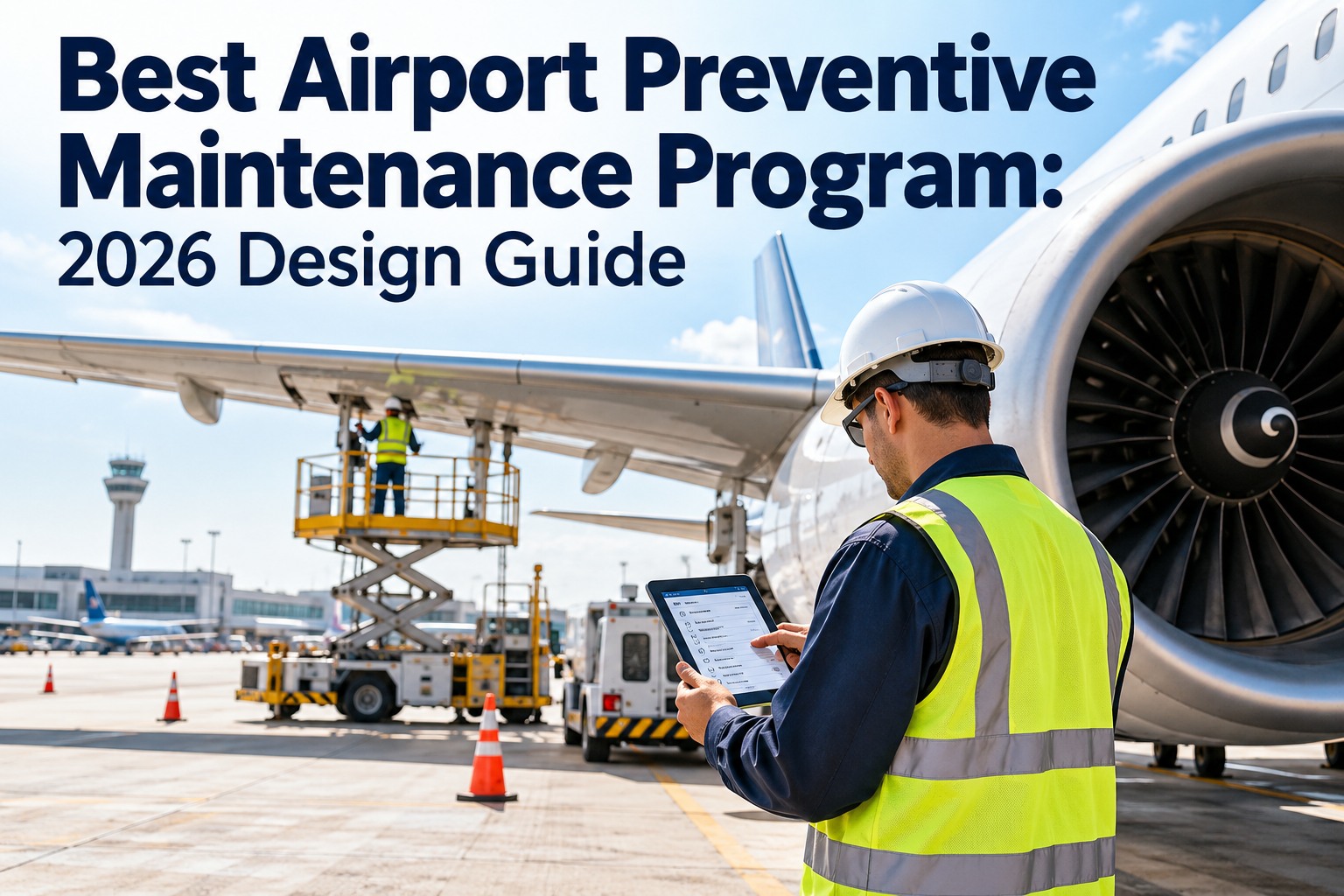
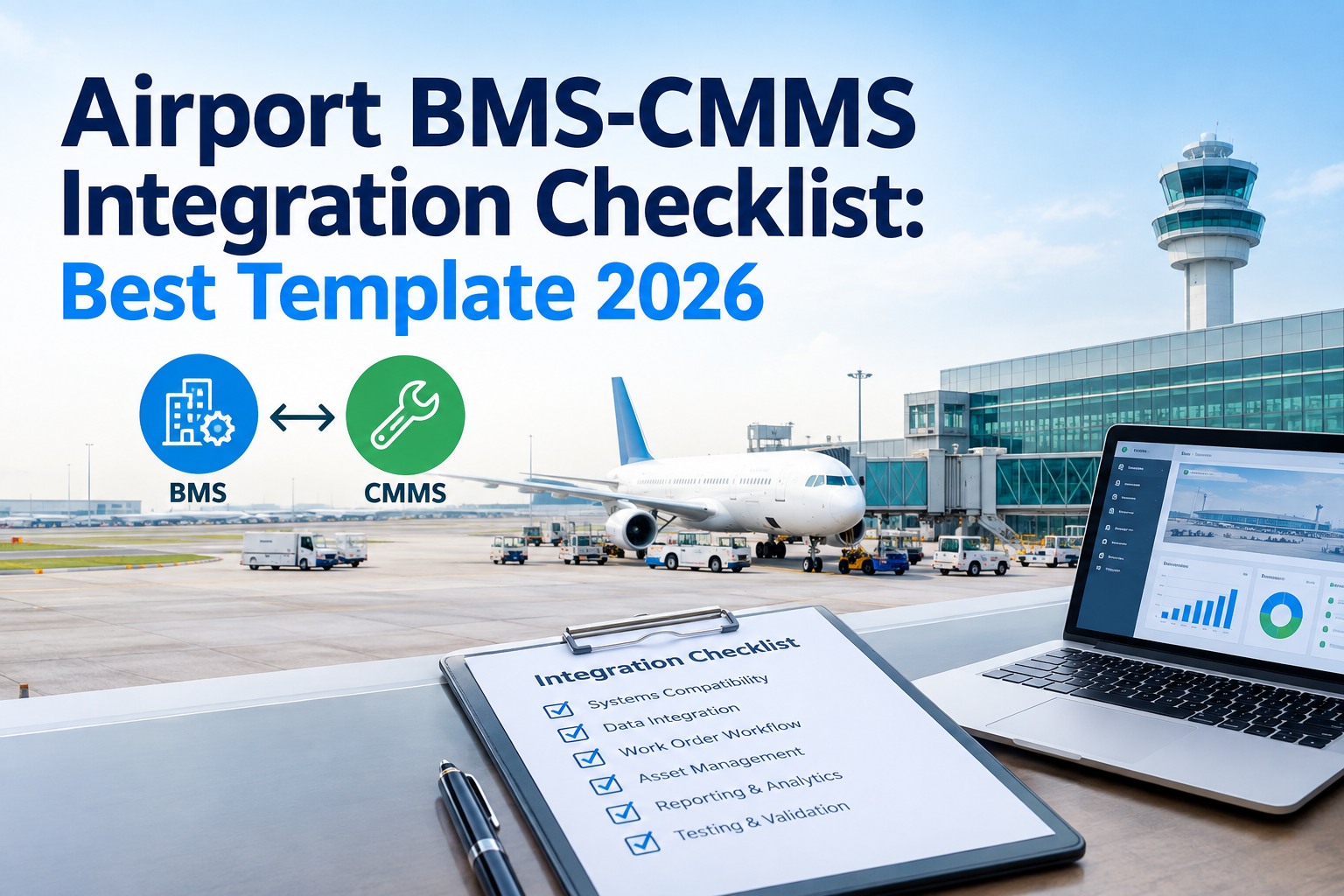
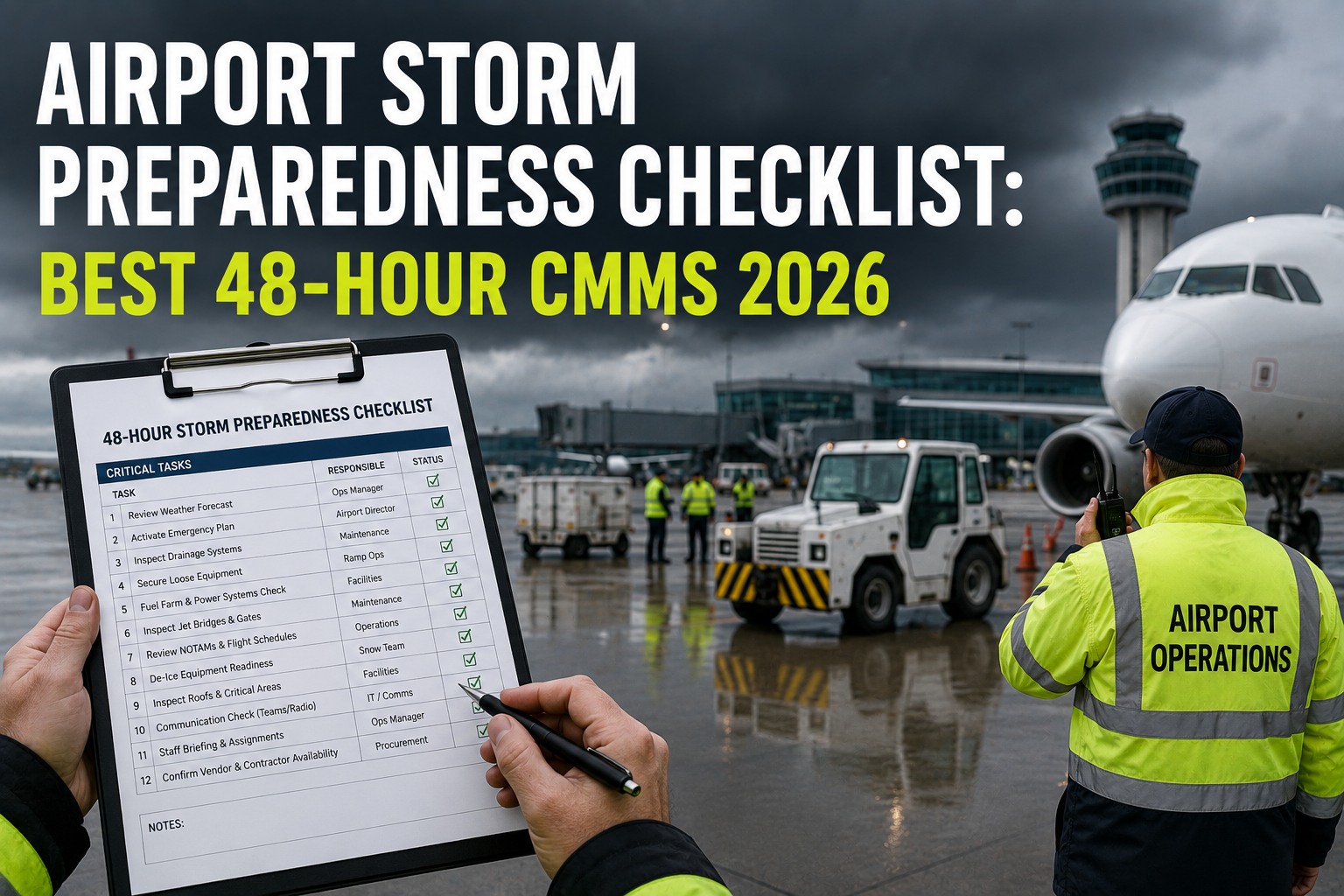
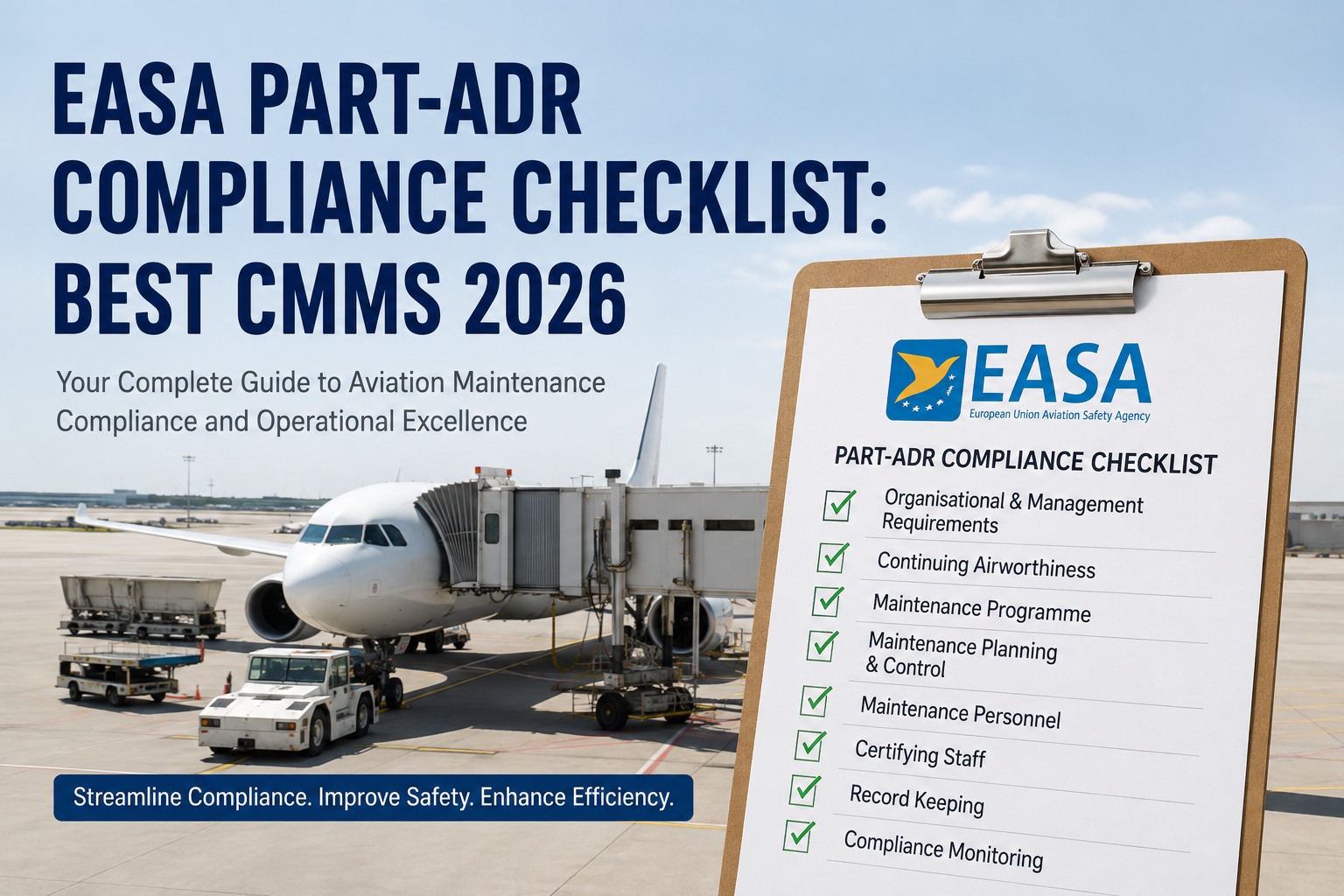
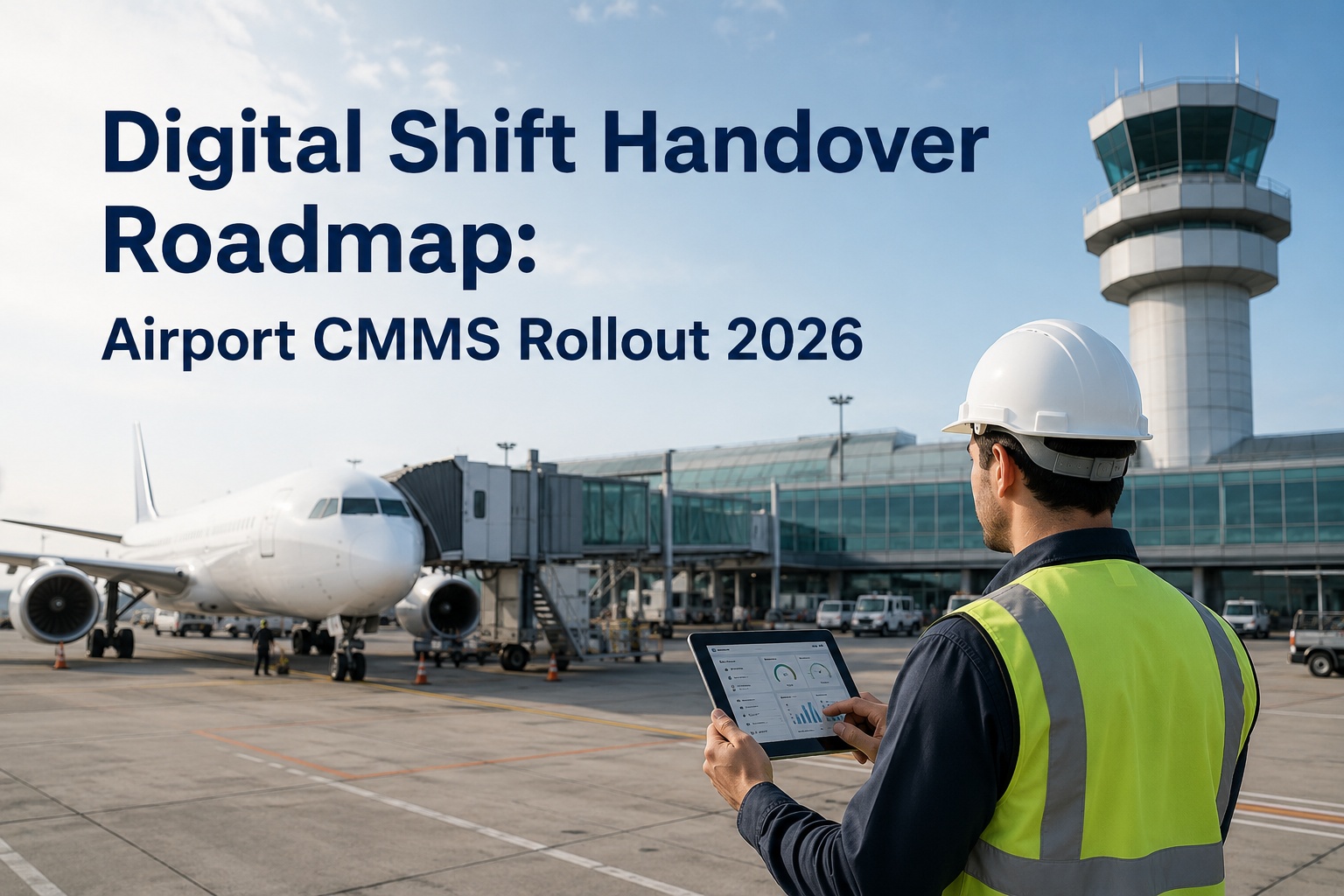
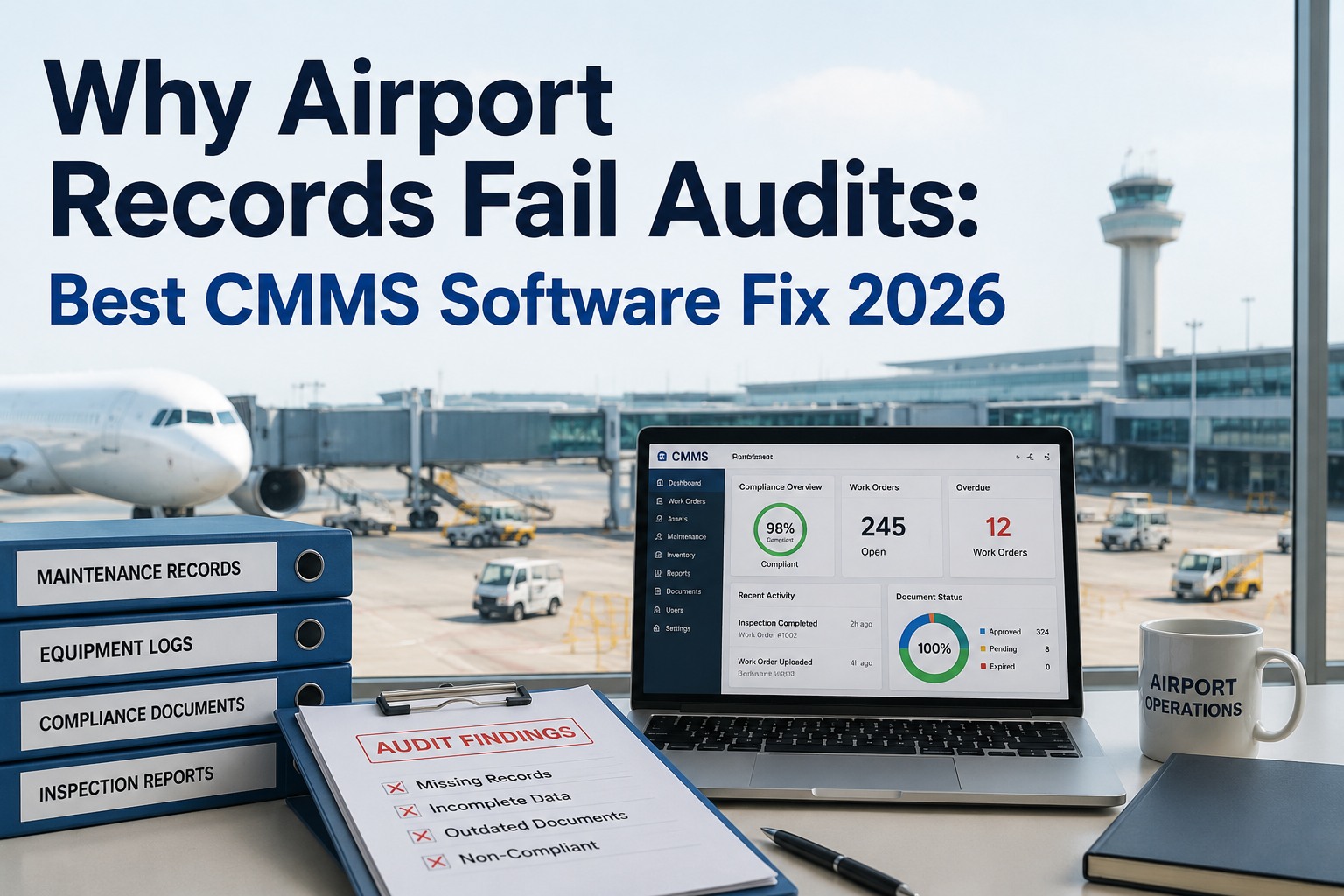
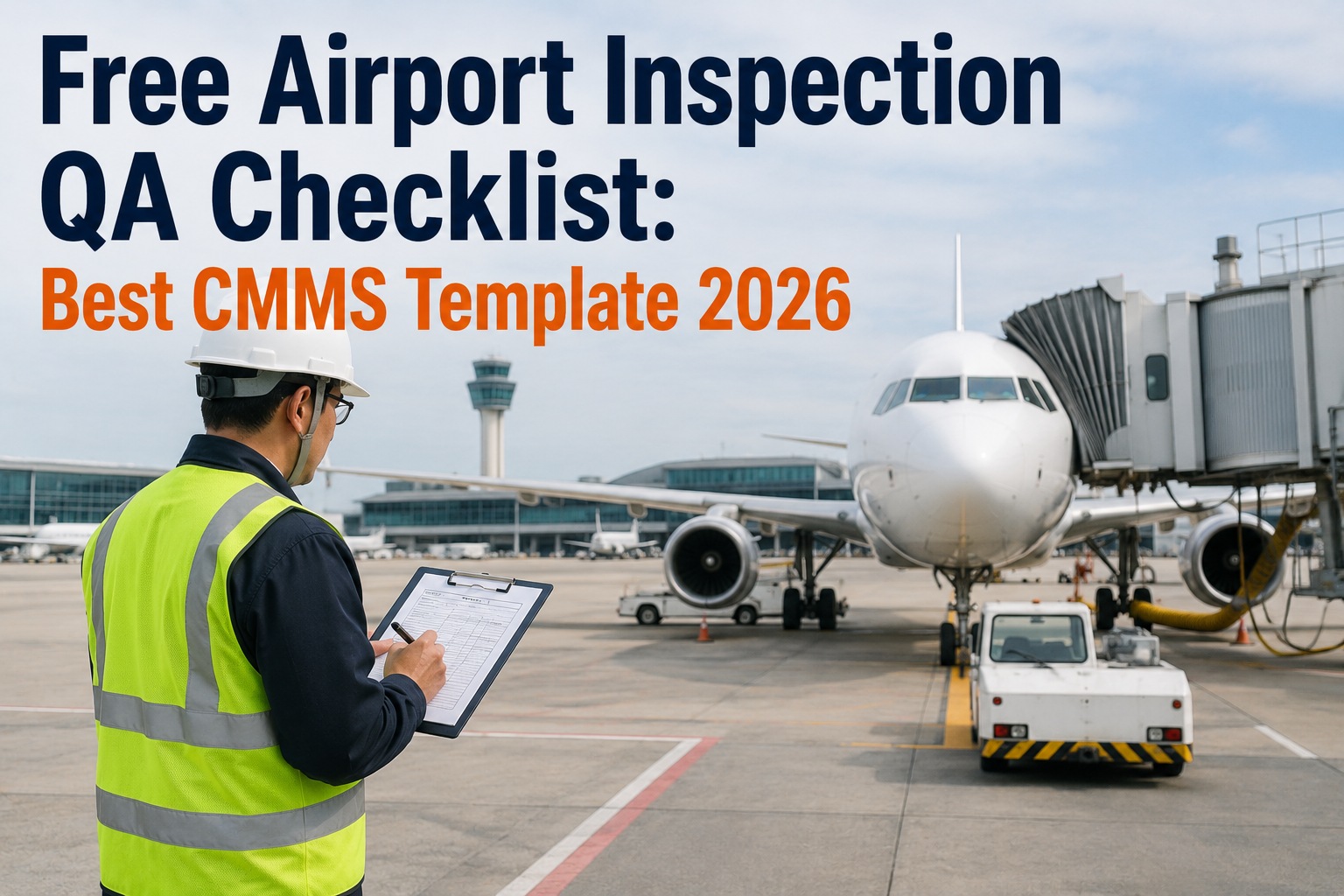
An airport is not one facility — it's a dense grid of thousands of assets spread across the airfield, the terminal, and the ramp, each with its own failure clock. A runway edge light, a jet bridge hydraulic seal, a baggage conveyor bearing, and a terminal chiller all fail on completely different timelines, and every one of them can turn into a delay, a NOTAM, or an FAA finding. A preventive maintenance program is what keeps that grid running on schedule instead of on luck. OxMaint AI maintenance management software gives every airport asset its own PM schedule, criticality tier, and audit-ready record — so nothing safety-critical is ever running blind.
Aviation · Airport Facility · Preventive Maintenance · 2026
Airport Preventive Maintenance, Run as One Connected Workflow
When a defect on the airfield lives on a clipboard and the fix lives in someone's memory, small problems become delays and NOTAMs. OxMaint AI-powered CMMS connects the whole loop on one platform — inspection to logged defect to work order to scheduled preventive maintenance — so an issue found overnight becomes an assigned, tracked job before the first departure, and every asset carries its own history.
1Inspect & capture
→
2Flag the defect
→
3Raise the work order
→
4Schedule PM & alerts
10,000+
individually tracked assets at a mid-size hub
3–4 hrs
the overnight window to service airside assets
3–5×
what emergency repairs cost vs. planned maintenance
25–40%
maintenance-efficiency gain reported with a CMMS
Why Airport Maintenance Is Unlike Any Other Facility
Every airport PM task carries an access window, a certification, and a regulatory obligation a normal building never faces — which is why spreadsheets fall behind and OxMaint AI is built to hold those constraints. Start free and put every airport asset on a managed schedule in OxMaint AI.
The Overnight Window Is Fixed
Airside assets can only be serviced in the 3–4 hours between last arrival and first departure. Miss the window and the task waits a full day.
ATC & Gate Coordination
Runway and taxiway work needs Air Traffic Control clearance; jet bridge PM needs a gate slot that doesn't collide with an aircraft turn.
Failure Cascades Fast
One belt-loader down extends a turn; one conveyor bearing jams 4,000 bags; one edge-light circuit triggers a NOTAM in minutes.
Every Task Is Auditable
FAA Part 139 expects documented daily airfield inspections and lighting records — the work isn't done until the record proves it.
The Three Zones of Airport Assets
A structured program maps the airport into three operating zones, each with its own access rules and PM cadence — and OxMaint AI keeps all three in one registry you can filter by zone. Book a demo to see zone-filtered dashboards in OxMaint AI.
AIRSIDEFAA Part 139
Runway & taxiway pavement · airfield ground lighting (edge, centerline, PAPI, REIL) · ILS & navaids · ARFF vehicles · signage & markings
Serviced in the overnight window. Highest consequence, tightest access.
TERMINALBuilding code · IATA
Jet bridges · baggage handling (conveyors, sorters, carousels) · terminal HVAC & chillers · escalators & elevators · fire/life safety · security systems
Serviced in low-traffic periods. Passenger-facing, penalty-heavy.
LANDSIDEOSHA · EPA · local
Ground support equipment (tugs, belt loaders, GPUs, deicers) · car parks · access roads · perimeter fence · water & drainage infrastructure
GSE often airline-contracted but airport-accountable. Deicer failure grounds a bank.
Prioritize by Criticality, Not by Complaint
You can't service 10,000 assets on one cadence. A structured program ranks each asset into a criticality tier, and OxMaint AI drives the work queue from that tier — so runway lights never wait behind a squeaky office door. Sign up free and tag every asset by tier in OxMaint AI.
TIER 1
Safety-Critical
Runway systems, airfield lighting, ILS, ARFF equipment, jet bridges. Failure is a safety event or an immediate NOTAM. Weekly-to-daily PM, no deferral without management sign-off.
TIER 2
Operational
Baggage handling, escalators, elevators, key GSE. Failure disrupts operations and triggers airline penalties, but isn't life-safety. Scheduled PM on rolling windows.
TIER 3
Facility
Terminal HVAC comfort systems, plumbing, general lighting, back-of-house. Failure is inconvenient, recoverable. Calendar-based PM, longer intervals.
70% of the Team's Time on Emergencies Isn't a Staffing Problem. It's a Program Problem.
When maintenance runs reactive, PM tasks get deferred "until things calm down" — which never happens — and emergency costs run 3–5× higher than planned work. The fix isn't more people. It's ring-fenced PM capacity and OxMaint AI maintenance management software raising every task on time.
Preventive Maintenance Intervals by Asset Class
A program needs cadences, not intentions. These are the typical intervals a structured airport PM schedule runs — and OxMaint AI turns each one into a task that raises itself on time. Start free and load every interval as an auto-generated task in OxMaint AI.
| Asset class | Zone | Typical PM cadence | Tier |
|---|
| Airfield ground lighting | Airside | Daily inspection · circuit test weekly | 1 |
| Runway & taxiway pavement | Airside | Daily visual · condition index annually | 1 |
| Jet bridges (boarding bridges) | Terminal | Weekly PM · hydraulic service quarterly | 1 |
| Baggage handling system | Terminal | Weekly belt & bearing checks · monthly PLC | 2 |
| Terminal HVAC / chillers | Terminal | Monthly inspection · seasonal service | 2–3 |
| Escalators & elevators | Terminal | Monthly PM · annual certification | 2 |
| Ground support equipment (GSE) | Landside | Engine-hours / cycles / calendar — first hit | 2 |
| ARFF vehicles | Airside | Per manufacturer & regulatory schedule | 1 |
Track the Five KPIs That Actually Move
You can't improve what you don't measure. OxMaint AI calculates these five numbers from your work-order data and puts them on one live dashboard, so leaders decide on trends, not the loudest complaint. Book a demo of the live KPI dashboard in OxMaint AI.
MTBF
Mean Time Between Failures
How long each asset runs before failing. Rising MTBF means your PM program is working.
MTTR
Mean Time To Repair
How fast you recover when something fails. Falling MTTR shrinks the operational impact.
PM %
PM Compliance Rate
Share of scheduled PMs completed on time. Target 90%+ — below it, failures climb.
WO
Work Order Backlog
Aging open work. A growing backlog is deferred risk stacking up out of sight.
$/AST
Maintenance Cost per Asset
Spend per unit over time. Flags the equipment you should replace rather than keep repairing.
All five, one dashboard
OxMaint AI calculates each from your work-order data automatically.
Start free →
The Overlooked Zone: Ground Support Equipment
GSE is the backbone of every ramp turn, yet most handlers still track $500K–$5M of it on clipboards. OxMaint AI brings every tug, loader and GPU onto the same managed schedule as the rest of the airport. Start free and move GSE off spreadsheets in OxMaint AI.
Multi-Trigger Intervals
A belt loader serviced at 250 engine hours — or by cycle count, or calendar, whichever comes first — gets maintenance aligned to real use, not a guess.
Defect Notes Survive the Shift
Paper GSE work orders lose defect notes between shifts. A digital log carries the fault forward so nothing gets re-discovered at the gate.
Past-Due Visibility
Supervisors see which GPUs missed load-bank testing and which loaders are past hydraulic service — before a failure surfaces mid-turn.
Airport-Accountable Records
Even airline-contracted GSE is airport-accountable at certificated facilities. One shared record keeps the responsibility clear.
How OxMaint AI Runs the Program
The intervals and tiers are well understood — the failures come from missed tasks and lost records. OxMaint AI closes that gap, turning a static schedule into a system that alerts, assigns, and documents itself. Start free and turn your PM schedule into a live program.
Zoned Asset Registry
Every asset registered by zone and criticality tier — airside, terminal, landside — in one searchable record for 10,000+ units.
Window-Aware Scheduling
Airside PMs land in the overnight window with an alert if the slot is missed; terminal work targets low-traffic periods.
Closed-Loop Work Orders
Every inspection finding links to a corrective work order, and every work order to a verified resolution — no orphaned defects.
Part 139 Audit Trails
Daily airfield inspections and lighting records captured in the format regulators expect, produced on demand.
Live KPI Dashboard
MTBF, MTTR, PM compliance, backlog, and cost per asset tracked in real time for maintenance leadership.
Mobile Ramp & Airfield Capture
Technicians log inspections and defects from the ramp or the field — the record is built where the work happens.
Frequently Asked Questions
What does an airport preventive maintenance program cover?
Every asset across airside, terminal, and landside — airfield lighting, pavement, jet bridges, baggage systems, HVAC, escalators, GSE and more — each with its own interval, criticality tier, and compliance record.
Start free and build yours in OxMaint AI.
How do airports schedule PM without disrupting flights?
Airside tasks are scheduled inside the 3–4 hour overnight window; terminal work targets low-traffic periods; airside PM never runs during active operations without explicit coordination.
Book a demo of window-aware scheduling.
Which airport assets are the highest maintenance risk?
Baggage handling and airfield lighting drive a large share of capacity-restricting disruptions, and jet bridges are high-consequence, high-frequency — they sit in Tier 1 with weekly PM.
Sign up free and tier your assets.
Can one CMMS handle both FAA-regulated and terminal assets?
Yes. OxMaint AI maintenance management software holds one unified registry spanning airside and landside, each asset class carrying its own PM template and regulatory tagging, with one dashboard showing compliance across all of them.
Book a demo of the combined view.
What KPIs prove the program is working?
Run the Airport on a Schedule, Not on Luck.
Thousands of assets, three zones, one overnight window, and a regulator that expects proof — an airport is the hardest place to run maintenance reactively, and the most expensive place to get it wrong. OxMaint AI gives every asset its PM schedule, its criticality tier, and its audit-ready record, so the program runs itself and the paperwork is ready before anyone asks.