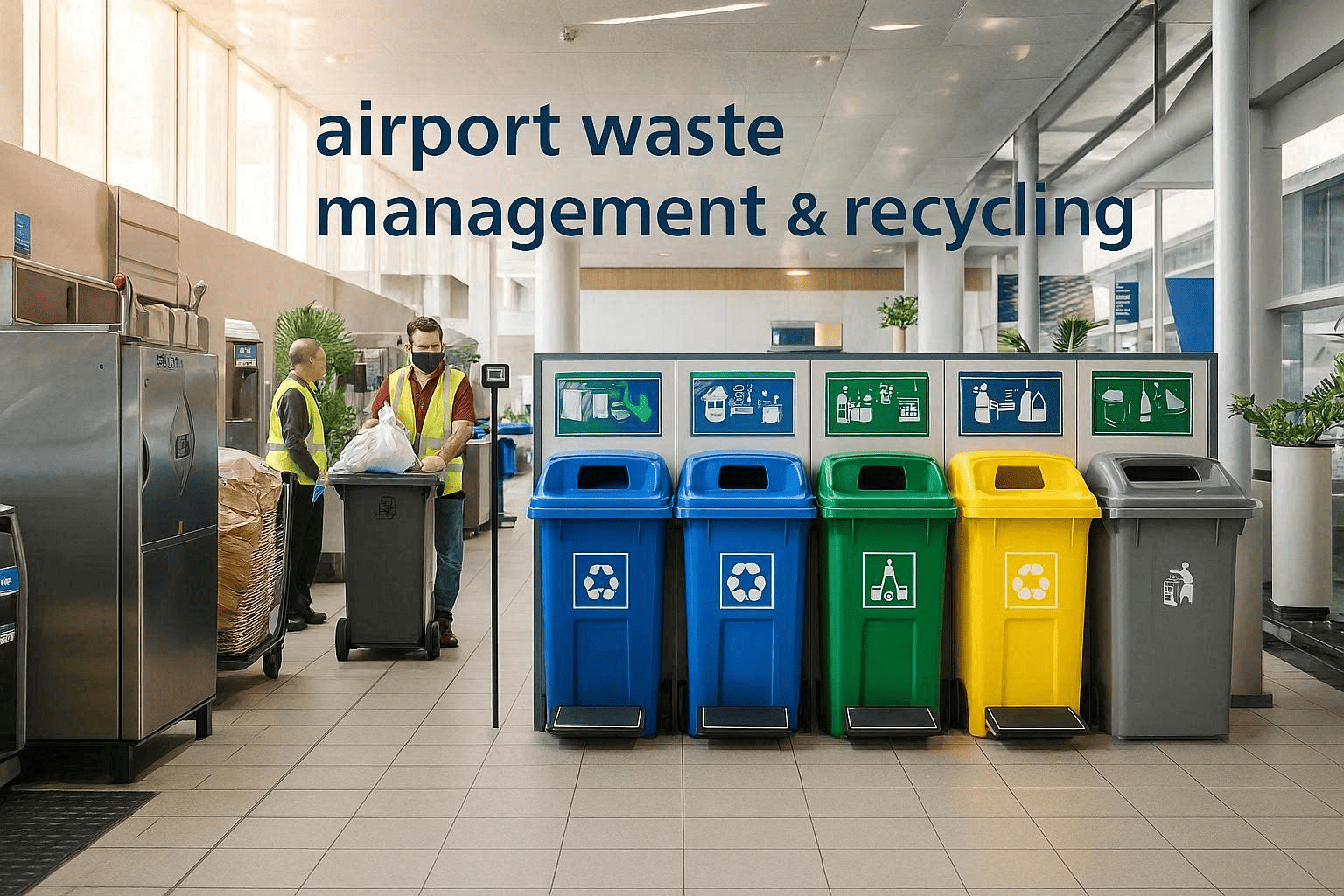
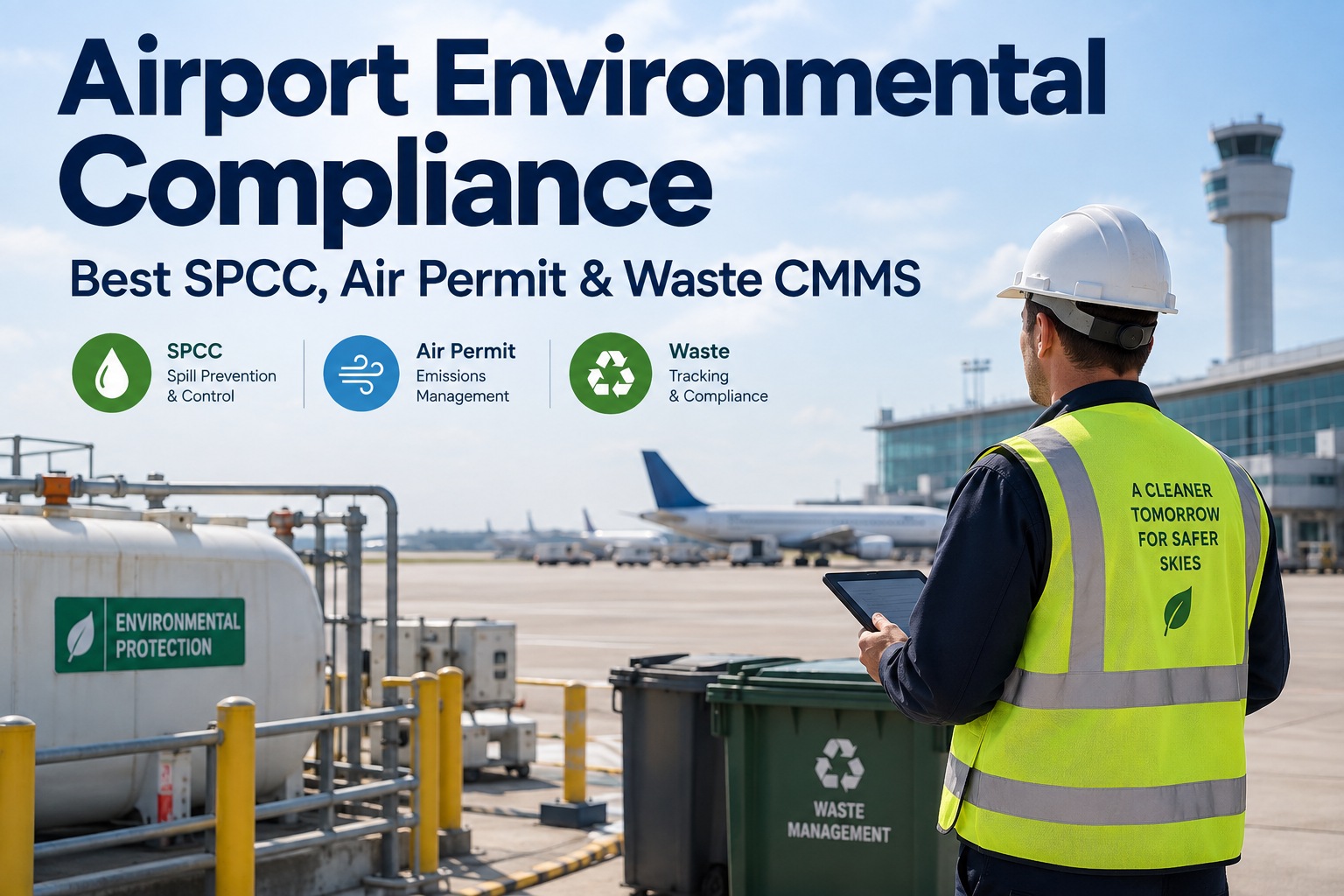
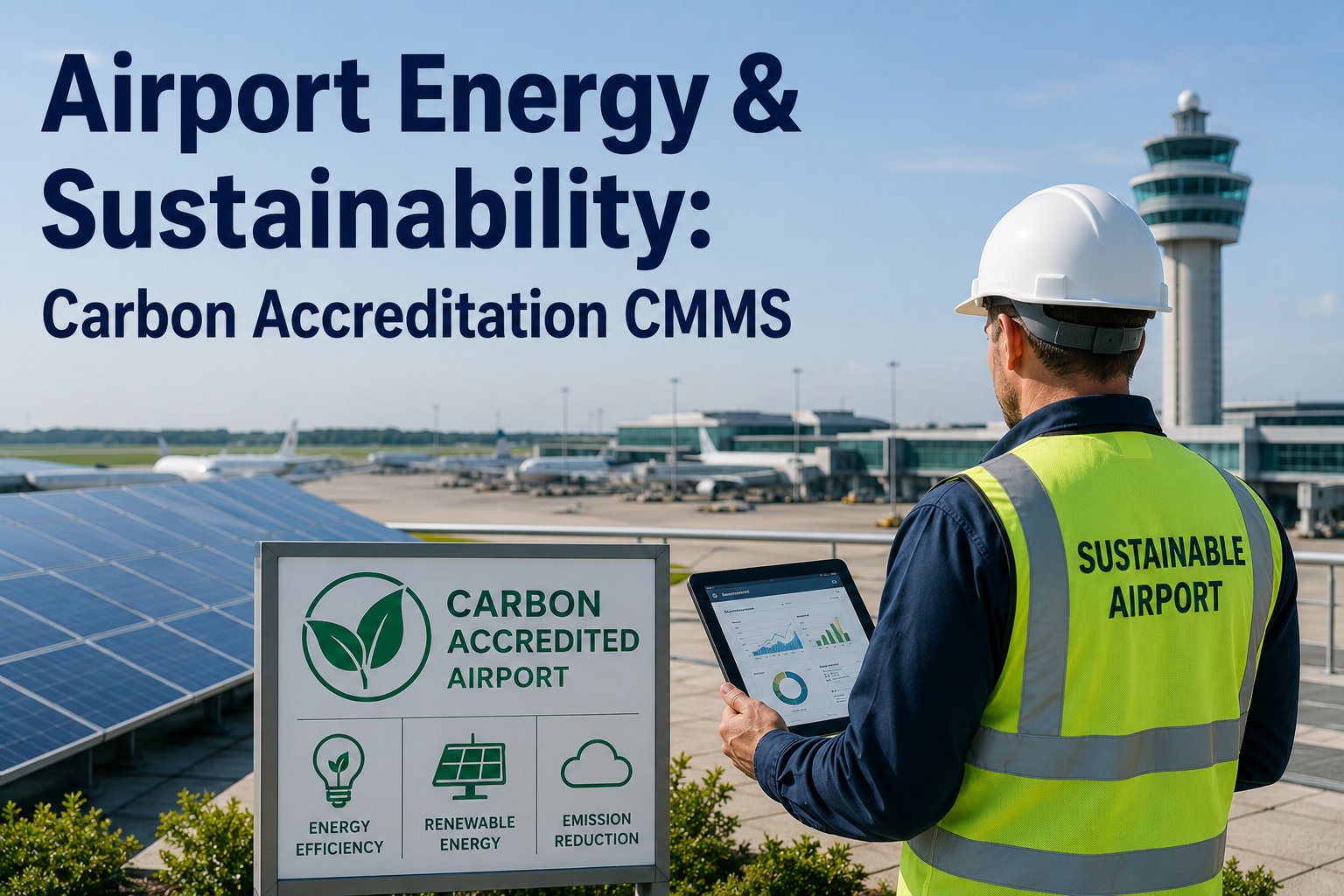
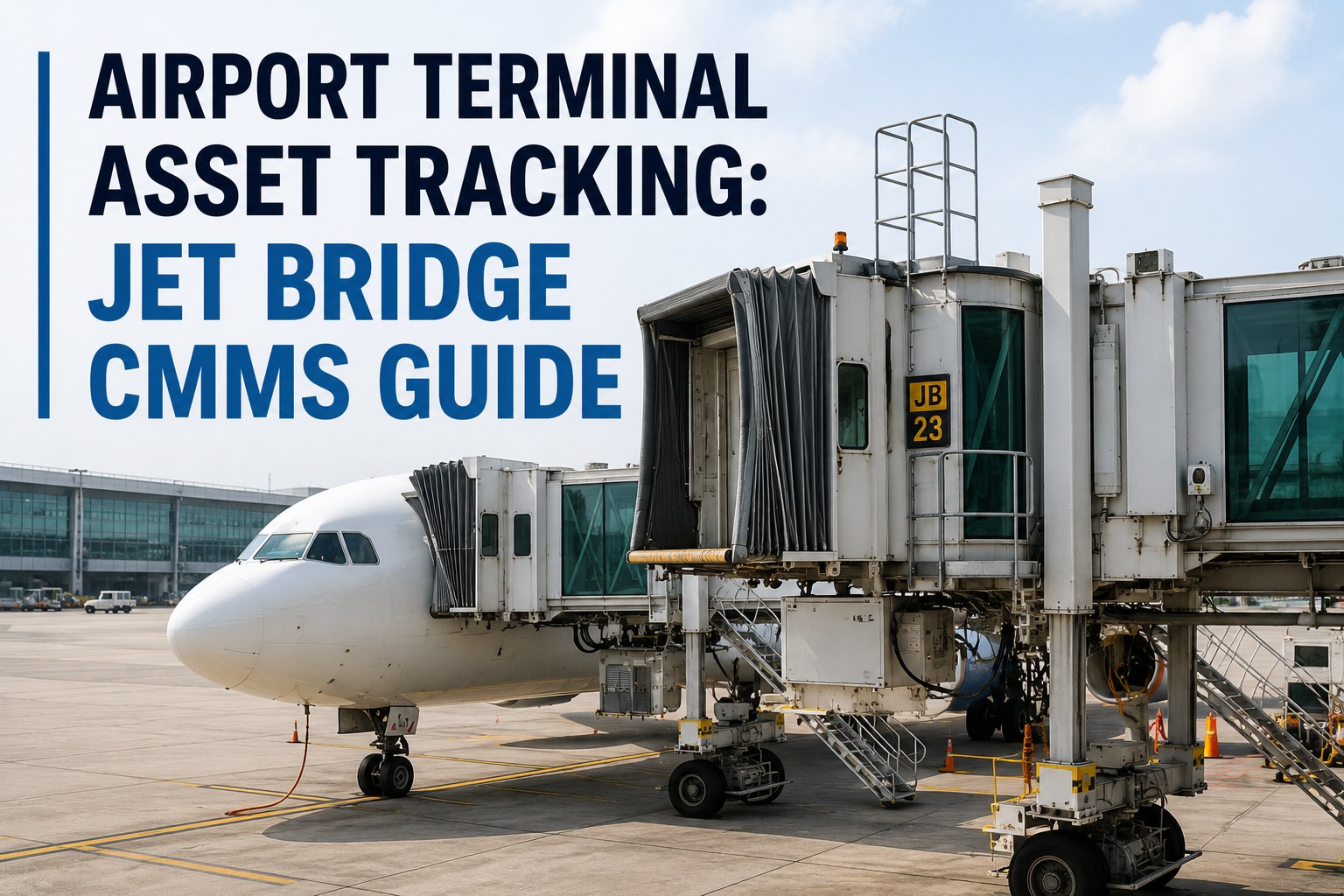
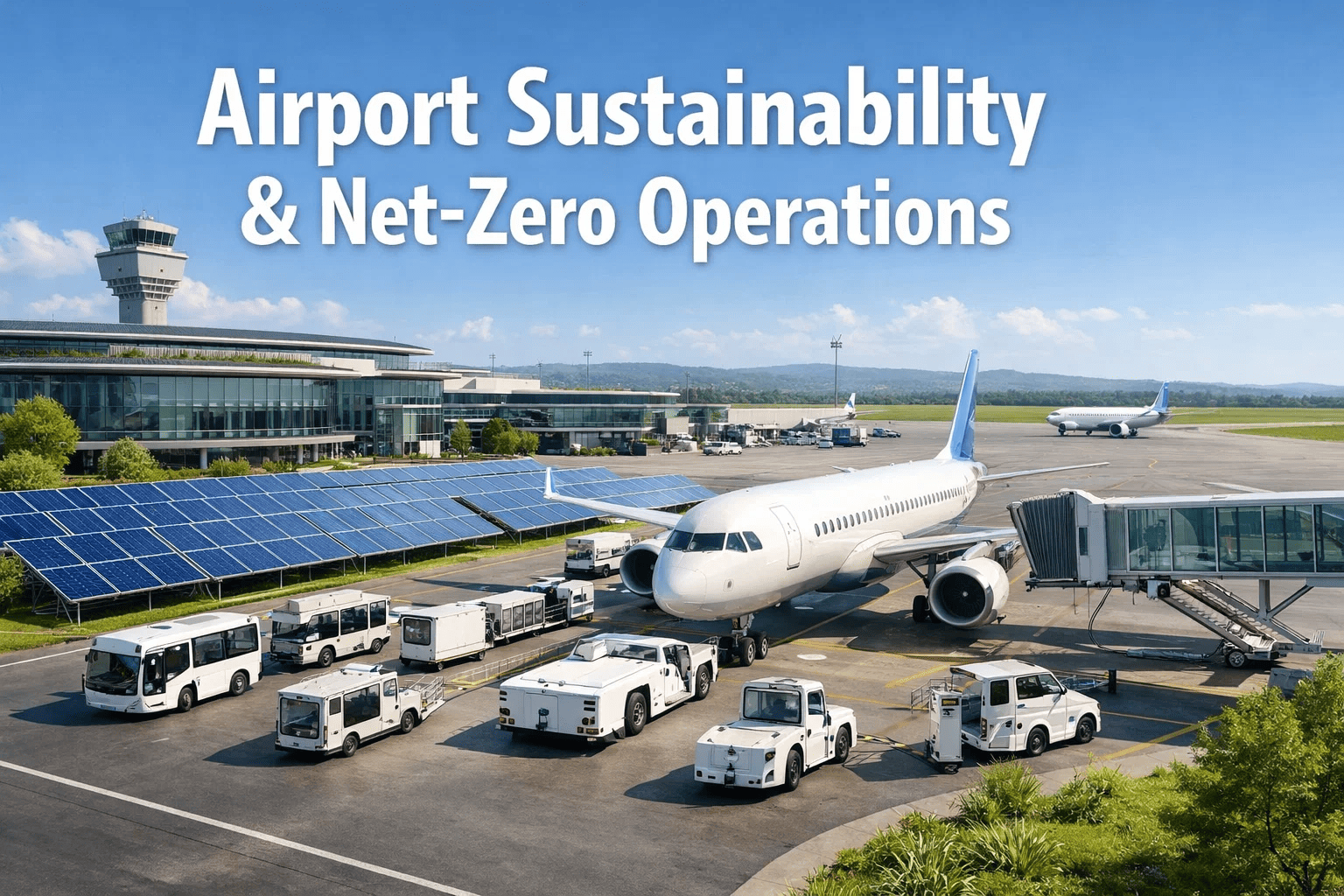
A major US airport generates the municipal waste equivalent of a city of 500,000 people — compressed into terminals, jetways, and tarmacs. US airports collectively produce approximately 425,000 tonnes of waste annually, and with global passenger volumes set to nearly double by 2040, that number is climbing fast. Airport sustainability directors are no longer just managing waste — they're managing a capital planning problem that intersects with compliance requirements, ESG reporting obligations, and increasingly stringent regulatory frameworks. CMMS-driven waste management gives operations teams the tracking, scheduling, and documentation infrastructure to run evidence-based sustainability programs instead of approximate ones. Start a free trial to integrate waste asset management into your Oxmaint platform, or book a demo with our sustainability operations team.
0.94 kg
Waste per passenger per flight (IATA 2023/24 audit)
3.6M tonnes
Global cabin waste generated annually — set to double by 2040
87%
Diversion rate achieved at San Diego Airport with systematic program
<20%
Industry average recycling rate without aggressive intervention programs
Understanding the Airport Waste Landscape
Airport waste doesn't come from one place — it comes from at least four distinct, rarely coordinated sources. Each requires different collection infrastructure, different treatment streams, and different compliance documentation. The central challenge is that no single entity controls all of them, yet sustainability reporting requires aggregating performance across all four. Oxmaint provides the data infrastructure to track waste asset performance across every stream from one operations dashboard. Book a demo to see waste program tracking inside Oxmaint.
~35%
Passenger Terminal Waste
Food packaging, bottles, retail bags — volume spikes unpredictably (Thanksgiving Wednesday being notoriously difficult). Primarily food-contaminated plastics that complicate recycling without source separation.
~28%
Food & Beverage Outlets
Concession food waste, packaging, and organic material. Back-of-house segregation offers higher control — kitchen staff can be trained, organic streams collected clean, and lease obligations can mandate diversion targets.
~22%
Operational & Maintenance Waste
Hangar maintenance waste, used oils, hydraulic fluids, cleaning chemicals, construction debris. Requires hazardous waste handling protocols, EPA compliance documentation, and separate collection infrastructure.
~15%
International Cabin Waste
Subject to specific ICAO and national quarantine regulations. Despite being technically recyclable, contamination and biosecurity rules mean most international cabin waste is incinerated — a key target for regulatory reform.
What Best-in-Class Airport Waste Programs Look Like
Leading airports are setting targets that would have seemed implausible a decade ago. Oslo Airport targets zero waste to landfill by 2030. Porto International reports a 98% waste recovery rate. San Francisco targets 90% diversion by 2030 with mandatory compostable foodware and elimination of single-use plastics. Denver's Zero Waste Valet program achieved 71% diversion for participating concessions — more than triple the facility-wide average of 21% — through dedicated support infrastructure and trained staff. The gap between top performers and average airports isn't effort: it's systems and tracking infrastructure.
San Diego International
87%
Denver (Zero Waste Valet)
71%
Denver (Facility-Wide Avg.)
21%
Industry Average (no intervention)
<20%
The 4 Waste Infrastructure Assets That Need Active Maintenance
Waste management is often treated as a service contract rather than an asset management problem. But the physical infrastructure that enables diversion — compactors, balers, organics processors, grease traps — all require scheduled maintenance like any other plant asset. When a terminal compactor fails at a Friday afternoon peak, the cascade is immediate: overflowing bins, diverted waste streams, and a compliance documentation gap. Start a free trial to register your waste infrastructure assets in Oxmaint.
Waste Compactors
PM Frequency: Monthly hydraulic inspection + quarterly full service
High-throughput terminal compactors require hydraulic system checks, seal inspections, blade condition assessment, and safety interlock testing. Failure at peak periods backs up entire terminal waste flow.
Balers & Cardboard Presses
PM Frequency: Weekly blade check + monthly hydraulic service
Retail and concession cardboard volumes are substantial. Baler downtime means loose cardboard accumulation in back-of-house corridors — a fire hazard and housekeeping violation requiring documented corrective action.
Organics & Composting Systems
PM Frequency: Weekly aeration check + monthly biological monitoring
On-site organic waste processing requires temperature monitoring, aeration system checks, and moisture level management. Odour control equipment servicing is critical in terminal proximity settings.
Grease Traps & Oil Interceptors
PM Frequency: Bi-monthly pump-out + quarterly inspection
Restaurant and catering grease traps require regular pump-out and inspection schedules to prevent blockage and EPA violation. Maintenance records are required for environmental compliance audits.
How Oxmaint Supports Airport Sustainability Programs
Asset Management
Waste Infrastructure PM Scheduling
Register every compactor, baler, and processor as an asset with manufacturer-defined PM intervals. Auto-generate monthly and quarterly service work orders before equipment degrades — not after it fails during a peak period
Compliance Tracking
EPA & Environmental Audit Documentation
Every grease trap pump-out, hazardous waste disposal, and spill response is logged with date, personnel, volume, and disposition — creating an audit-ready environmental compliance record without manual compilation
Sustainability Reporting
Waste Diversion Metric Dashboards
Track recycling volumes, diversion rates, composting tonnage, and landfill avoidance across terminals and concessions operators — generating GRI-aligned sustainability reports for ESG disclosures and Airport Carbon Accreditation submissions
Tenant Management
Concession Lease Compliance Monitoring
Track sustainability compliance across all food and beverage tenants — mandatory compostable packaging use, diversion rate targets, and food waste reporting obligations embedded in lease agreements and monitored monthly through CMMS dashboards
Sustainability Requires Evidence. Oxmaint Creates It.
From compactor PM scheduling to diversion rate dashboards and EPA documentation — Oxmaint gives airport sustainability teams the operational infrastructure to meet ACI green targets, satisfy ESG reporting requirements, and keep waste infrastructure running during peak passenger periods.
Frequently Asked Questions
How does Oxmaint help airports track waste diversion rates for sustainability reporting?
Oxmaint allows airports to log waste collection volumes by stream — recyclables, organics, general waste, hazardous — through mobile work order completion at each collection point. These volumes feed into dashboard reports showing diversion rates by terminal, by tenant, and airport-wide. Reports can be structured to match GRI sustainability disclosure formats, ACI Airport Carbon Accreditation requirements, and CSRD corporate sustainability reporting obligations.
Start a free trial to build your waste diversion dashboard.
Can waste infrastructure assets like compactors and balers be managed in the same CMMS as terminal and airfield equipment?
Yes. Oxmaint manages waste infrastructure assets alongside all other airport equipment within the same platform. Compactors, balers, organics processors, and grease traps receive their own asset records with PM schedules, work order histories, and parts inventory. This eliminates the common scenario where waste equipment is maintained reactively while all other terminal assets have scheduled PM programs.
How does a CMMS help with hazardous waste compliance documentation?
Oxmaint logs every hazardous waste management action — collection, storage, transfer, and disposal — with date, personnel, quantity, waste classification, and disposal destination. These records create an unbroken chain of custody required for EPA compliance audits. When an environmental inspector arrives, the complete hazardous waste log is available as a single-click report covering any requested time period.
Book a demo to see how environmental compliance documentation works in Oxmaint.
What specific data does Oxmaint provide that supports an airport's Zero Waste or Net Zero Carbon ambitions?
Oxmaint provides operational sustainability data including waste diversion rates by stream and location, organic waste tonnage diverted from landfill, compactor utilization rates (which indicate collection frequency optimization opportunities), and maintenance-related material consumption that can be factored into operational carbon accounting. This data supports Net Zero Carbon programs, Airport Carbon Accreditation Level 3+ applications, and annual sustainability report disclosures.