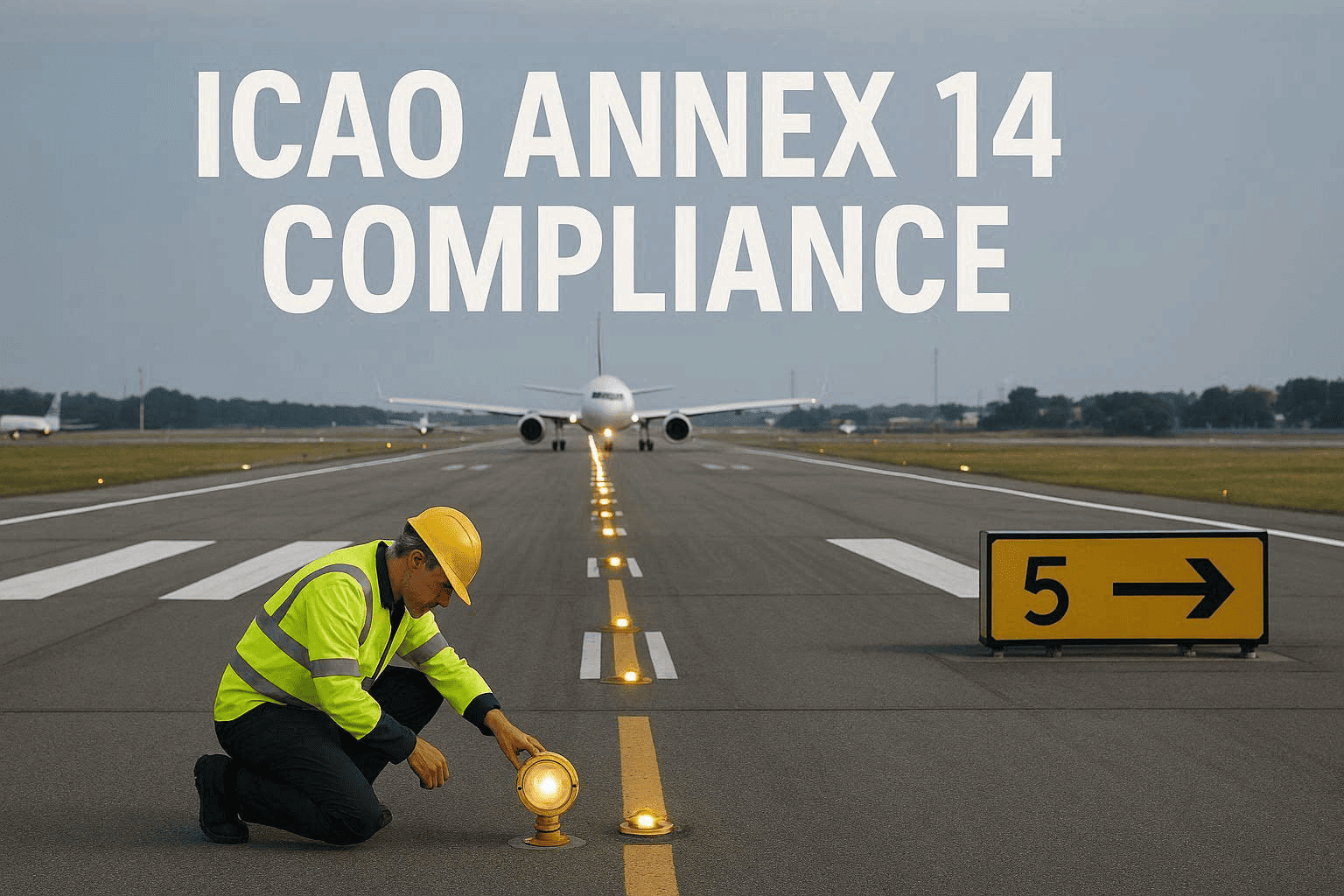
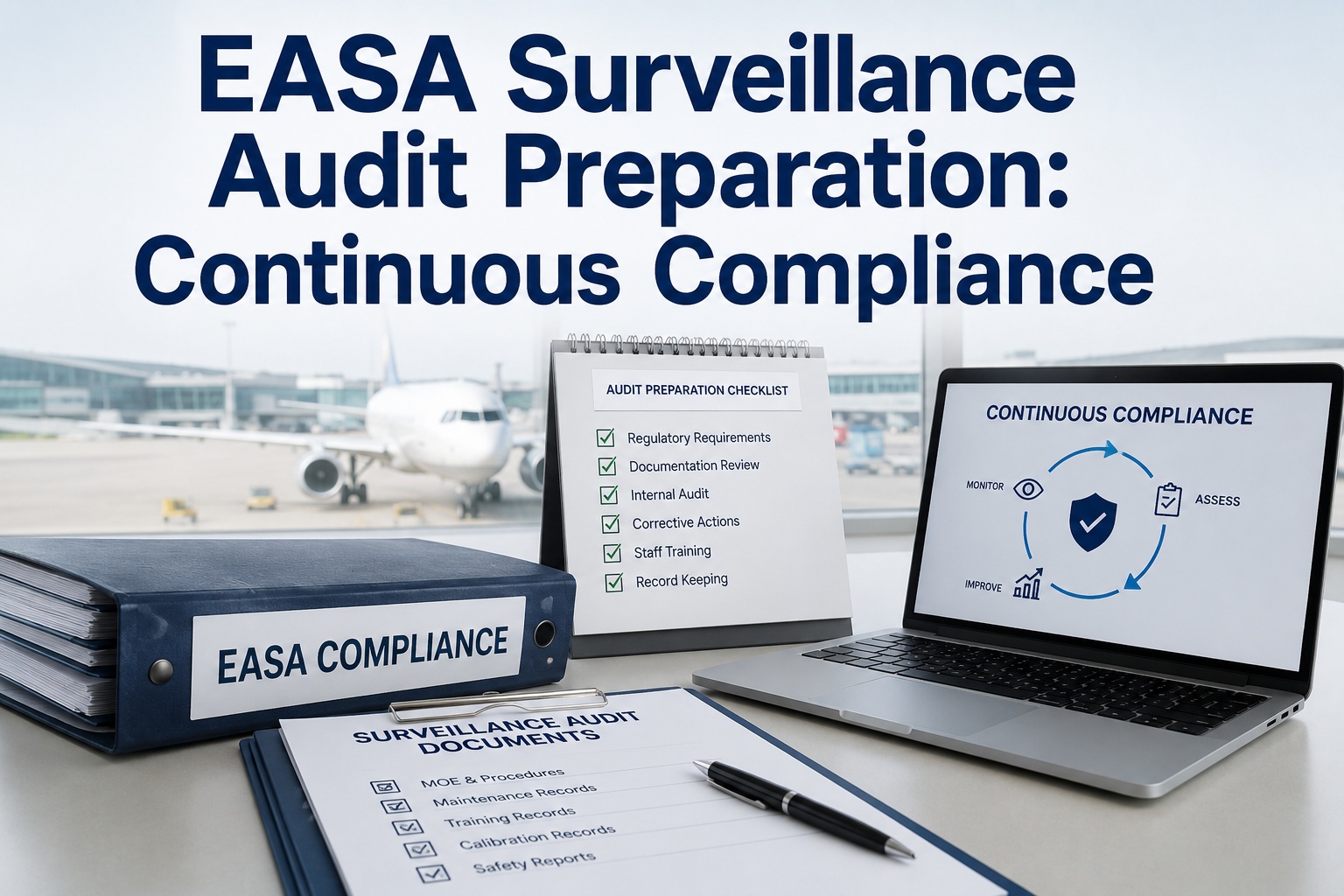
ICAO Annex 14 is the international standard that defines what every certified aerodrome must maintain, inspect, and document to keep aircraft safe. For airport maintenance teams, it's not just a regulatory reference — it's a living framework of obligations that must be tracked, evidenced, and audited continuously. Amendment 18 to Annex 14 Volume I was adopted by ICAO on 28 March 2025 and became effective in August 2025, introducing updated aerodrome design standards, visual aids requirements, and obstacle limitation surface revisions with applicability extending through November 2030. Falling behind on compliance isn't just an audit risk — it's a certification risk that can close an airport. Start a free trial to begin tracking your ICAO Annex 14 compliance obligations in Oxmaint, or book a demo with our aviation compliance specialists.
19
Chapters in Annex 14 Vol. I
Each with distinct maintenance, inspection, and documentation requirements for certified aerodromes
18
Amendments Adopted Since 1951
Amendment 18 effective August 2025 — airports must assess, notify differences, and implement by 2030
97%
Compliance Audit Pass Rate
Documented outcome after airports deploy CMMS for compliance tracking vs. 64% manual baseline
193
ICAO Contracting States
All obligated to comply with Annex 14 Standards or formally notify ICAO of differences under Article 38
What ICAO Annex 14 Actually Requires of Airport Maintenance Teams
Most airport professionals know Annex 14 exists. Fewer have read the specific maintenance obligations it creates for operations teams. The Standard covers far more than runway dimensions — it prescribes maintenance requirements across physical infrastructure, visual aids, lighting systems, obstacle clearance, and surface condition, all with documentation requirements that must be auditable on demand. Here are the core maintenance domains Annex 14 creates obligations for.
Chapter 3
Physical Characteristics
Runway, taxiway, and apron surface condition. Pavement bearing strength assessment. Surface friction measurement. Grooving and slope maintenance.
Daily + after each significant weather event
Chapter 5
Visual Aids for Navigation
All runway lighting systems, taxiway edge and centerline lights, threshold lights, PAPI/VASI systems, approach lighting. Serviceability checks and replacement protocols.
Daily inspection mandatory
Chapter 6
Obstacle Marking & Lighting
Obstruction lights on all structures within OLS surfaces. Paint marking on obstacles. Documentation of all structures near movement areas for NOTAM purposes.
Weekly serviceability check
Chapter 8
Aerodrome Operational Services
Runway inspection procedures, friction testing schedules, pavement condition reporting, snow/ice removal documentation, FOD control program evidence.
Multiple times daily during operations
Chapter 9
Aerodrome Maintenance
Explicit maintenance program requirements for all aerodrome surfaces and visual aids. Records of all maintenance actions with dates, personnel, findings, and corrective actions taken.
Continuous with structured audit trail
Chapter 10
Rescue & Fire Fighting
ARFF vehicle maintenance records, response time testing documentation, equipment readiness certifications. Vehicle maintenance directly tied to aerodrome certification category.
Daily readiness check + scheduled PM
The 6 Documentation Failures That Cause Compliance Audits to Fail
Most ICAO compliance audit failures aren't because airports didn't do the maintenance — they're because airports can't prove they did it. These six documentation gaps account for the majority of non-conforming findings. Book a demo to see how Oxmaint closes every one of these gaps automatically.
01
Missing Inspection Timestamps
Paper checklists with no time recorded. Auditors can't verify the required twice-daily runway inspection actually occurred between specific operational hours.
02
Unsigned Maintenance Records
Work orders completed but not signed off by the qualified personnel responsible. Annex 14 requires traceable authorization for maintenance actions on safety-critical assets.
03
Lighting Fault Gaps in Record
A runway light was unserviceable for 6 hours but no NOTAM was issued and no work order tracks when the fault occurred, who was notified, and when it was corrected.
04
Friction Test Overdue
Runway friction measurement schedule exceeded its interval — not because it wasn't planned, but because no system triggered the overdue alert and scheduled the corrective test.
05
Disconnected ARFF Records
ARFF vehicle PM records kept separately from aerodrome maintenance system. Auditors find gaps between vehicle readiness records and aerodrome daily inspection logs.
06
No Change Impact Assessment
Construction or modification work affected an OLS surface without documented assessment. Amendment 18's revised OLS requirements make this gap increasingly critical through 2030.
How Oxmaint Maps ICAO Annex 14 to Your Daily Operations
Oxmaint doesn't just store compliance records — it actively generates the workflows that create them. Every Annex 14 maintenance obligation is converted into a scheduled inspection, automated work order trigger, or escalation alert, so compliance is built into daily operations rather than audited after the fact. Start a free trial and configure your first Annex 14 compliance framework in under an hour.
1
Map Annex 14 Obligations to Asset Records
Each aerodrome asset — runway light, friction meter, ARFF vehicle, pavement section — is registered with its Annex 14 chapter reference, inspection frequency, and documentation requirements. Obligations are embedded in the asset record, not kept in a separate compliance spreadsheet.
2
Auto-Schedule Mandatory Inspections
Daily runway checks, weekly lighting surveys, monthly friction tests — all auto-scheduled with digital checklists pushed to the responsible technician's mobile device. Overdue items escalate automatically to the aerodrome operations manager.
3
Capture Evidence at the Point of Work
Technicians complete inspections on mobile devices — timestamped, geo-tagged, with photo capture and digital signature. The CMMS creates an unbroken chain of custody from the asset to the audit record with zero transcription delay.
4
Generate Audit-Ready Compliance Reports
When the civil aviation authority arrives, Oxmaint generates a complete Annex 14 compliance report in one click — every inspection, every work order, every corrective action, organized by chapter and time period. No scrambling. No gaps.
Before vs. After: ICAO Compliance Management
Manual Compliance Tracking
✕ Paper checklists — no timestamps, no chain of custody
✕ Compliance gaps discovered during audit, not before
✕ 3–5 days to compile audit packages from multiple files
✕ Amendment 18 obligations tracked in ad-hoc spreadsheets
✕ 64% audit pass rate — non-conforming findings routine
CMMS-Automated Compliance (Oxmaint)
✓ Digital records — timestamped, signed, geo-tagged at point of work
✓ Overdue obligations flagged proactively before they create gaps
✓ One-click audit package — complete Annex 14 compliance report
✓ Amendment 18 obligations mapped to asset records and auto-scheduled
✓ 97% audit pass rate achieved after CMMS deployment
ICAO Auditors Require Proof. Oxmaint Creates It Automatically.
Every Annex 14 maintenance obligation — daily runway checks, lighting inspections, ARFF readiness, friction testing — is auto-scheduled, digitally captured, and compiled into one-click audit reports. Stop scrambling before audits. Start running with evidence built in.
Frequently Asked Questions
What does ICAO Annex 14 Amendment 18 specifically change for maintenance teams?
Amendment 18, effective August 2025, restructures obstacle limitation surface (OLS) requirements and updates visual aids and ground handling standards. For maintenance teams, this primarily means reviewing any structures within or near OLS surfaces, ensuring obstruction lighting on all affected obstacles is documented, and assessing whether any planned construction or modifications require updated aerodrome documentation under the revised standards. Full applicability extends to November 2030.
Start a free trial to begin mapping Amendment 18 obligations to your asset records.
How does Oxmaint support multiple overlapping aviation compliance standards simultaneously?
Oxmaint supports multi-standard compliance tracking within a single platform. ICAO Annex 14, FAA Part 139, NFPA fire systems standards, TSA security equipment requirements, and local civil aviation authority requirements can all be configured simultaneously. Each standard has its own inspection schedule, checklist template, and documentation requirement — and every maintenance action can be auto-tagged to multiple regulatory domains at once, eliminating duplication.
Can Oxmaint generate the specific documentation formats that civil aviation authority auditors require?
Yes. Oxmaint generates customizable compliance reports that can be formatted to match specific authority requirements — whether an ICAO State audit, an EASA aerodrome certification review, or an FAA Part 139 inspection. Reports include inspection dates, personnel, asset identifiers, findings, corrective actions, and sign-off chains — all organized chronologically and by chapter reference. Export formats include PDF and Excel.
Book a demo to see a sample audit report in the Oxmaint format.
What happens when an Annex 14 inspection finds a non-conforming item?
When a technician flags a defect during an Annex 14 inspection — a failed runway light, a pavement crack above tolerance, an ARFF vehicle fault — Oxmaint auto-generates a corrective work order linked to the specific inspection finding. The defect, the work order, and the repair outcome are all linked in a single audit chain. If the defect affects operational safety — a lighting system below minimum serviceability — the CMMS can trigger an automated NOTAM-relevant notification to aerodrome operations.