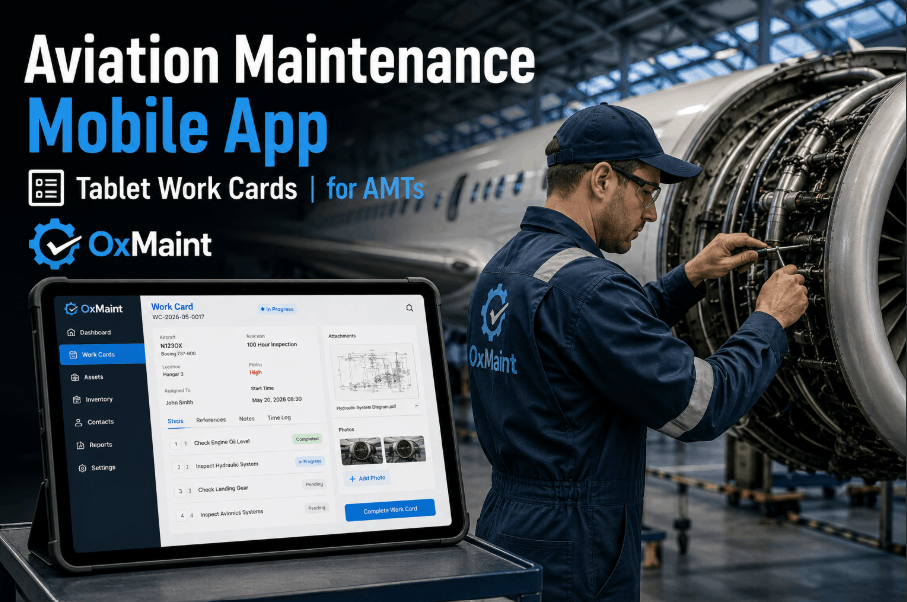
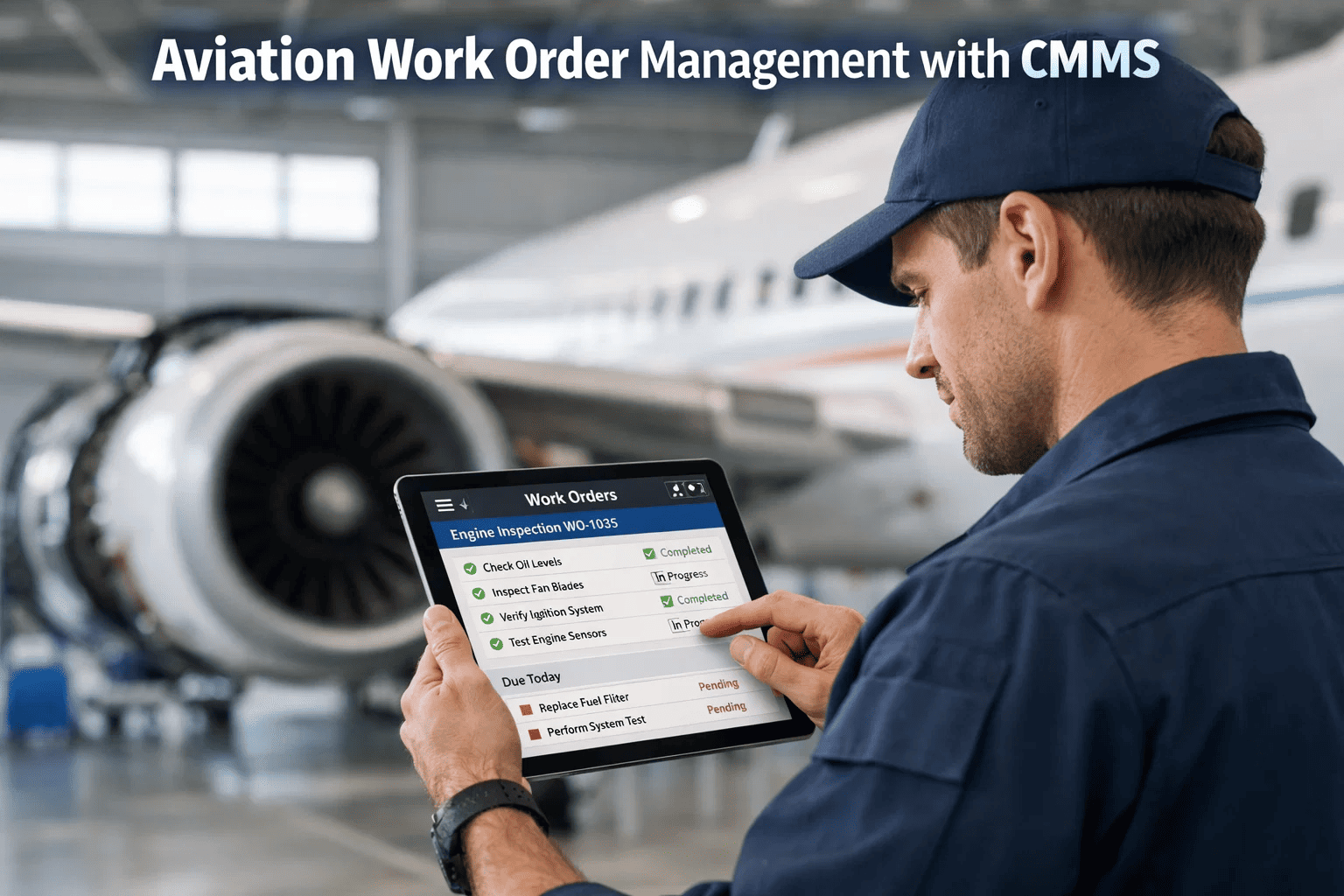
The global aviation maintenance industry is heading into a talent emergency unlike anything it has faced before. Boeing's Pilot and Technician Outlook projects demand for over 650,000 new aviation maintenance technicians by 2042—yet fewer than 3% of currently certified Aviation Maintenance Technicians in the United States identify as women, and ethnic minorities remain underrepresented at every leadership level of MRO operations worldwide. The industry cannot close a 650,000-person gap by recruiting from the same narrow pool it has always relied on. Diversity and inclusion in aviation maintenance is not a corporate program—it is the most operationally urgent workforce strategy in the sector. Organizations that move first to expand their talent pipeline will be the ones with the technicians to keep aircraft flying when the shortage peaks. To see how Oxmaint gives maintenance leaders the data infrastructure to build and manage a high-performing, diverse workforce across every site and shift, start a free trial or book a demo with our team today.
Ready to Build a Maintenance Workforce That Performs at Scale?
Oxmaint gives aviation maintenance directors, MRO managers, and operations leaders a single platform to track technician skills, assign work equitably, monitor training progress, and report on workforce performance across every site and shift. Stop managing your most valuable asset on spreadsheets. The talent shortage is real and growing—explore how Oxmaint transforms workforce management with a full 30-day free trial and start a free trial or book a demo with the Oxmaint team.
What Is Diversity and Inclusion in Aviation Maintenance?
Diversity and inclusion in aviation maintenance is the intentional expansion of the AMT talent pool to encompass women, ethnic minorities, veterans transitioning from non-aviation roles, career-changers, and international technicians—combined with the operational and cultural systems that allow those individuals to contribute fully, advance equitably, and remain. It is simultaneously a workforce strategy, a safety strategy, and a financial strategy. Research across industries consistently shows that diverse teams produce better analytical decisions under pressure—a property with direct consequences on the hangar floor.
The critical operational distinction is between diversity and inclusion. Diversity defines who enters the organization. Inclusion determines whether those individuals have equal access to high-value work, development opportunities, and advancement. Organizations that recruit diverse candidates into non-inclusive environments achieve no performance gain and sustain maximum turnover cost—averaging $35,000–$70,000 per departure in direct replacement expense alone, before accounting for lost institutional knowledge. Oxmaint provides the data infrastructure that makes inclusion measurable and auditable, not aspirational. If you want to see what a high-performing, data-driven maintenance workforce looks like in practice, book a demo or start a free trial today.
The D&I Framework: 6 Pillars for Aviation MRO Operations
Building an inclusive aviation maintenance workforce requires structured, measurable action across six operational dimensions. Each pillar addresses a distinct gap in how MRO organizations currently recruit, develop, and retain talent. Organizations implementing all six consistently see faster workforce growth, lower attrition, and superior safety event reporting. For a platform that supports data-driven workforce management across every pillar, start a free trial of Oxmaint or book a demo with our team.
6 Workforce Pain Points Grounding the Aviation MRO Industry
Most aviation MRO organizations recognize the talent shortage as their highest operational risk. Fewer recognize that the structural barriers excluding diverse candidates are the exact same forces creating that shortage. The following six pain points describe where the industry stands today—and where the cost of inaction compounds fastest year over year. Oxmaint provides the operational tools to address each one—start a free trial or book a demo to see how.
How Oxmaint Powers an Inclusive Aviation Maintenance Operation
Oxmaint is built for maintenance operations managing real operational complexity—multi-site teams, rotating shifts, mixed certification levels, and rigorous compliance requirements across multiple regulatory frameworks. The platform provides the infrastructure that makes a diverse, high-performing maintenance workforce possible at scale. It replaces the informal, relationship-driven processes that produce both workforce inequity and operational risk. Ready to see it in action? Book a demo or start a free trial of Oxmaint today.
Before vs After: What a Structured D&I Strategy Changes in MRO
The operational impact of a structured diversity and inclusion strategy is measurable and consistent across aviation MRO organizations that have implemented it. The gap between organizations with and without a D&I strategy is widening as the talent shortage deepens—early movers gain compounding advantages in hiring speed, retention rates, and workforce capability. To see how Oxmaint supports this operational transition, book a demo or start a free trial today.
| Operational Dimension | Without D&I Strategy | With D&I Strategy + Oxmaint |
|---|---|---|
| Hiring Pool | Referral-based, narrow demographic range | Multi-source pipeline with skills-verified candidates |
| Work Assignment | Informal, relationship-driven, undocumented | Certification-matched, equitable, fully documented |
| Staff Turnover | 35–45% annual rate for non-majority new hires | 22% lower retention across all demographics |
| Time to Fill Vacancies | 4–6 months average, rising annually | Reduced by up to 50% with active diverse pipeline |
| Promotion Decisions | Subjective, poorly documented, legally exposed | Data-driven, audit-ready, consistently defensible |
| Compliance Exposure | High exposure, fragmented audit trail | Full documentation stack, minimal regulatory risk |
| Team Profitability | Baseline performance, groupthink-prone decisions | Up to 35% higher profitability — McKinsey |
| Replacement Cost Exposure | $35K–$70K per departure, frequent and rising | Significantly reduced through measurable retention gain |
The Business Case: Quantified ROI of Workforce Diversity in Aviation MRO
Frequently Asked Questions
Why is diversity specifically important in aviation maintenance — is this only a compliance concern?
Diversity in aviation maintenance is a capacity problem before it is a compliance issue. Boeing's projections demand 650,000 new AMTs globally by 2042. The existing talent pipeline — drawn primarily from military veterans and a narrow band of technical school graduates — cannot meet that figure. Expanding the pool to include women (currently 2.7% of certified AMTs), ethnic minorities, and international technicians is the only realistic path to closing the gap at scale. Beyond volume, multiple research sources show that diverse teams produce better diagnostic decisions and stronger safety event reporting cultures — outcomes with direct consequences on the hangar floor where mechanical decisions determine flight safety outcomes. Oxmaint gives you the infrastructure to manage that larger, more diverse workforce with the same operational precision. Get a free 30-day platform trial and start a free trial or book a demo today.
How does Oxmaint specifically support workforce equity and inclusion in MRO?
Oxmaint provides the operational data layer that converts equity from an aspiration into a measurable program. The platform tracks every technician's certifications, training completion rates, work order history, and performance metrics in a centralized, auditable system accessible from any device at any site. Work assignments are matched to verified skills — not informal networks or personal preferences. Performance evaluations draw on documented completion metrics, not subjective impressions. Multi-site visibility ensures technicians at every location receive equal access to high-value work and development opportunities. These tools replace bias-prone informal processes with documented, auditable decision-making that any regulator, auditor, or internal reviewer can examine. See how it works in your operation — book a demo with our team.
What are the three biggest barriers to D&I implementation in aviation MRO operations?
Three barriers consistently dominate: (1) Referral-dominated hiring — most MRO positions are filled through informal networks that structurally favor candidates matching existing team demographics, cutting off diverse applicants before any formal process begins; (2) Absence of structured advancement criteria — without documented, skills-based promotion standards, career progression defaults to informal relationships that systematically disadvantage underrepresented groups regardless of their technical capability; and (3) Retention failure — organizations that recruit diverse candidates into non-inclusive environments lose them within 24 months, paying $35,000–$70,000 in replacement costs per departure. All three are operational problems solvable with the right systems and leadership commitment — not personality or culture programs. Start a free trial and explore how Oxmaint's workforce tools address each barrier directly.
How do aviation MRO organizations measure and report the ROI of diversity initiatives?
ROI measurement for D&I in aviation MRO should track four operational metrics in parallel: (1) Time-to-fill for open AMT positions — diverse pipeline strategies consistently reduce this by 30–50% within 18 months of implementation; (2) 12-month and 24-month retention rates segmented by demographic group — inclusive organizations retain 22% more staff; (3) First-time fix rates and safety event reporting rates — diverse teams produce measurably better outcomes on both metrics because broader analytical perspectives catch more failure modes; and (4) Direct replacement cost avoidance — every retained technician saves $35,000–$70,000 in recruitment and onboarding expense, plus preserved institutional knowledge value that cannot be quantified but cannot be replaced. Oxmaint's performance analytics module provides the real-time data to track all four metrics and generate investor- and compliance-grade reports. Book a demo to see the full reporting capability.
Build the Maintenance Workforce Your Operation Needs to Survive the Shortage
Oxmaint gives aviation maintenance leaders the operational platform to track, develop, and deploy a diverse, high-performing technician workforce across every site, shift, and certification level. The talent shortage is not waiting. Neither should your strategy.