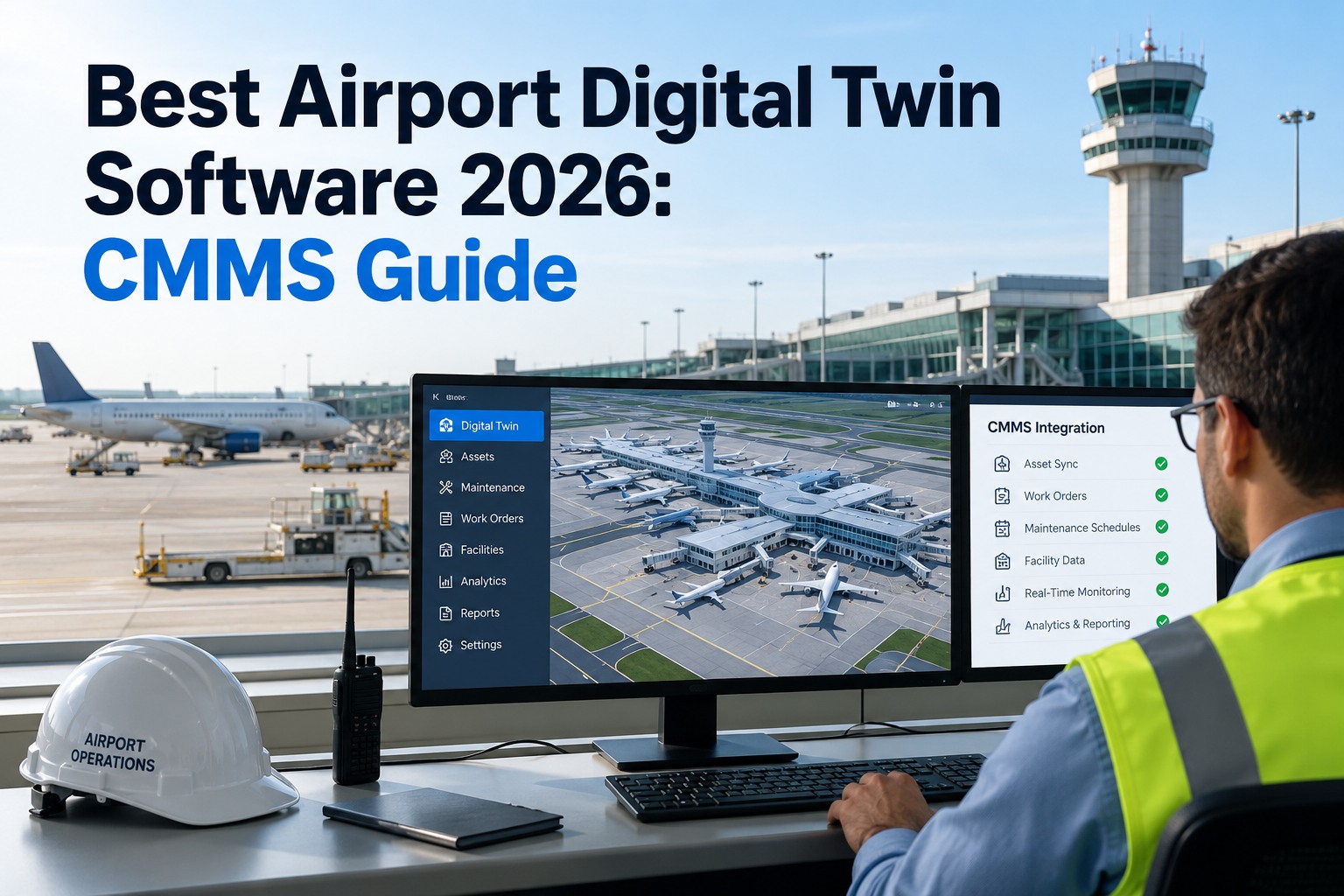
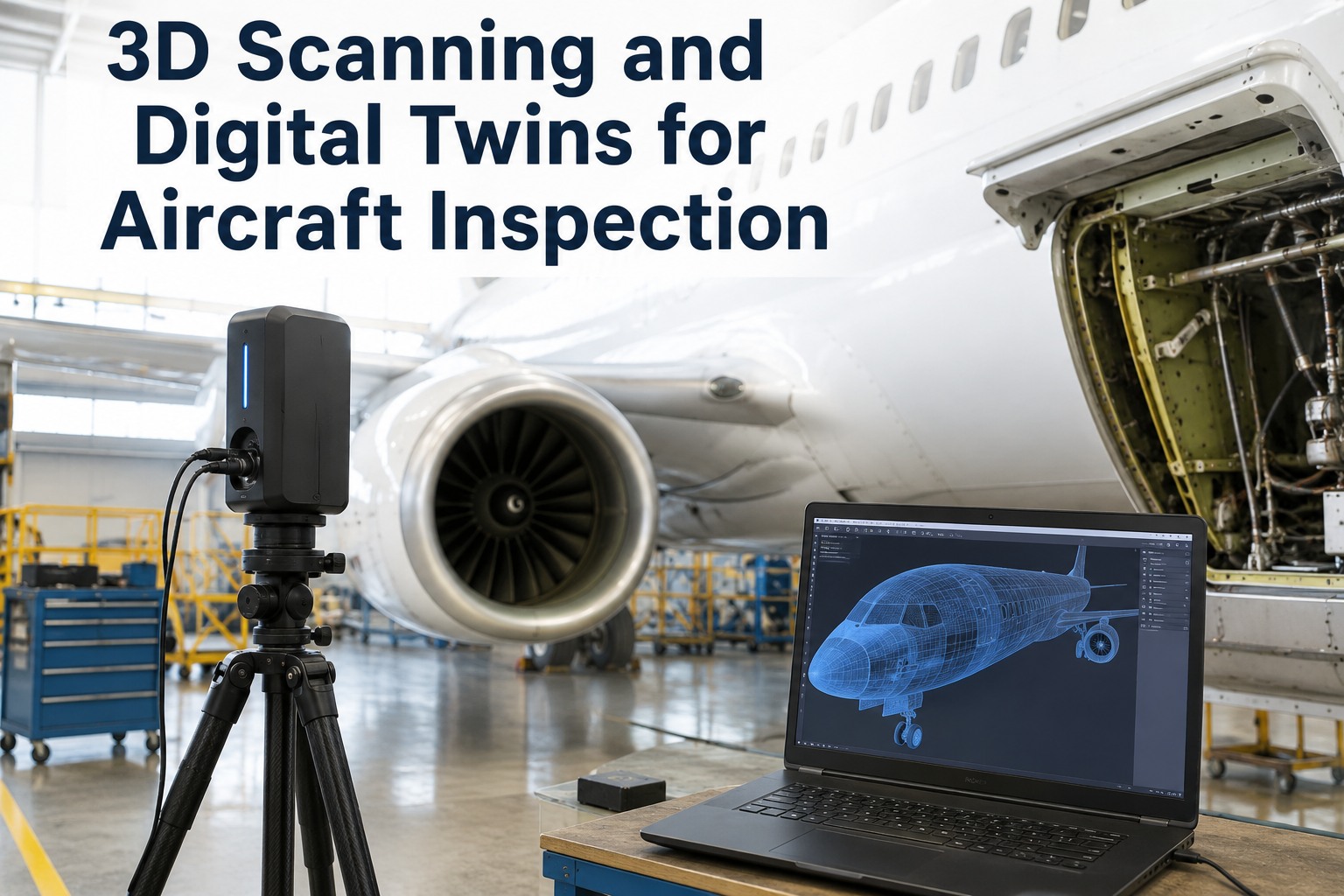
Airlines using digital twin technology are saving an average of $2.67 million per wide-body aircraft annually on maintenance costs alone. Predictive simulations are identifying 93.6% of impending failures at least 21 days before physical manifestation—turning reactive scrambles into planned repairs. Yet most MRO facilities still operate without a connected digital representation of their fleet. This roadmap shows you exactly how to implement digital twins at your operation, starting with the CMMS foundation that makes them work. Schedule a demo to see how OXmaint provides the digital backbone every twin integration depends on.
What Is a Digital Twin in Aviation?
A digital twin is a live virtual replica of a physical aircraft, engine, or subsystem that mirrors real-world performance in real time. Unlike static 3D models or historical simulations, a digital twin continuously absorbs sensor data, maintenance history, flight cycles, and environmental conditions—evolving alongside its physical counterpart throughout the entire aircraft lifecycle.
A static 3D CAD model stored on a server
A one-time simulation run during design phase
A dashboard showing real-time sensor data
A maintenance log database
A living, learning model reflecting current asset state
Continuously updated with sensor + operational data
Capable of predicting future failures and simulating scenarios
Integrated with CMMS for automated maintenance action
The Market Is Moving Fast
Digital twin investment in aviation is not emerging technology—it is scaling technology. The numbers below reflect the speed at which the industry is committing capital, resources, and organizational strategy to twin-based operations.
$18.28B
Aviation digital twin market by 2033
38.2% CAGR
$6.97B
Aerospace & defense digital twin market by 2030
22.8% CAGR
92%
of companies report ROI above 10% from digital twins
50% achieve 20%+ returns
74%
of aerospace organizations have or are building twin roadmaps
40% YoY investment increase
Sources: Grand View Research, Fortune Business Insights, Capgemini, The Business Research Company
Digital Twin Maturity Levels
Not every MRO facility needs a fully autonomous digital twin on day one. Implementation follows a maturity curve—each level builds capability on top of the previous one. The critical insight: Level 1 requires a modern CMMS, which means your twin journey starts with your maintenance platform.
Level 1
Digital Shadow
One-way data flow from physical asset to digital model. CMMS collects maintenance history, flight hours, cycles, and inspection records into a structured digital asset registry. The twin reflects reality but does not influence decisions automatically.
Requires: Modern CMMS
Asset hierarchy
Clean data
Level 2
Connected Twin
Two-way data flow. IoT sensors stream real-time engine vibration, temperature, pressure, and structural stress data into the digital model. The CMMS receives condition-based triggers and auto-generates work orders when thresholds are crossed.
Requires: IoT integration
Sensor networks
CMMS automation
Level 3
Predictive Twin
AI and machine learning models analyze historical and real-time data to predict component degradation and failure timelines. Maintenance planning shifts from calendar-based schedules to condition-based predictions—weeks or months in advance.
Requires: ML models
Historical data depth
Predictive scheduling
Level 4
Autonomous Twin
The digital twin simulates maintenance scenarios, optimizes resource allocation, and triggers actions with minimal human intervention. Fleet-wide learning means every aircraft improves the prediction accuracy for every other aircraft in the fleet.
Requires: Fleet-scale data
Simulation engine
Autonomous workflows
Every maturity level depends on a CMMS foundation. OXmaint provides the structured asset data, condition-based scheduling, and API-ready architecture that digital twin platforms require to function.
Start Free
The Implementation Roadmap
Implementing digital twins is a multi-phase journey that starts long before you purchase a twin platform. This roadmap is based on patterns observed across successful deployments at airlines and MRO providers worldwide.
Foundation
Build the Digital Backbone (Month 1–2)
Deploy a cloud-native CMMS and register every maintainable asset with complete hierarchy, serial numbers, and maintenance history. Standardize naming conventions, failure codes, and work order types. Without this foundation, sensor data and twin models have nothing to connect to.
Complete asset registry with parent-child hierarchy
Standardized work order templates and failure codes
Historical maintenance data migrated and cleaned
Connectivity
Instrument Critical Assets (Month 2–4)
Start with engines—the highest-value, highest-data-yield assets. Connect IoT sensors monitoring vibration, temperature, oil pressure, and exhaust gas temperature to your CMMS. Set condition-based thresholds that trigger automated work orders when readings exceed normal ranges.
Sensor feeds connected to CMMS for top 5 critical systems
Condition-based PM schedules replacing calendar-only triggers
Real-time dashboards for monitored asset health
Intelligence
Deploy Predictive Models (Month 4–8)
Layer machine learning models on top of accumulated sensor and maintenance data. Train failure prediction algorithms using fleet-wide historical patterns. Integrate predictions into CMMS scheduling—shifting from "maintain when due" to "maintain when needed."
ML models predicting component degradation 21+ days ahead
CMMS auto-scheduling maintenance based on predicted need
Reduction in unscheduled maintenance events measurable
Simulation
Enable Fleet-Wide Digital Twins (Month 8–14)
Expand from individual asset monitoring to fleet-level simulation. Digital twin platforms now model entire aircraft, simulate maintenance scenarios, optimize slot allocation, and predict supply chain needs across the fleet. Every aircraft's data improves every other aircraft's model.
Fleet-wide twin models with cross-aircraft learning
Maintenance scenario simulation before execution
Supply chain optimization driven by predictive demand
Optimization
Continuous Fleet Intelligence (Month 14+)
The digital twin ecosystem becomes self-improving. Prediction accuracy increases approximately 4.3% annually as operational data accumulates. Twins guide not only maintenance but also flight operations, route planning, and lifecycle investment decisions.
Self-improving prediction models with growing accuracy
Twin-informed fleet planning and retirement decisions
Full-lifecycle digital thread from acquisition to disposal
Real-World Impact: What the Leaders Are Doing
The world's most advanced aviation companies are already operating at Level 3 and 4 digital twin maturity. Their results set the benchmark for what is achievable.
Rolls-Royce
IntelligentEngine
Every Trent engine has a continuously updated digital twin. The system predicts maintenance needs down to individual part numbers, enabling the engine to fly around the globe 1,000+ times between significant maintenance events.
1,000+ circumnavigations between major events
Lufthansa Technik
AVIATAR Platform
Integrated with 34 airline maintenance systems worldwide, processing 23.7 terabytes of operational data daily. Predictive maintenance covers 71.4% of critical systems, expanding to 87.5% by mid-2026.
71.4% critical systems under predictive coverage
GE Aerospace
Digital Twin Analytics
Monitors thousands of engines daily with AI-enabled digital twins, predicting part needs ahead of MRO shop visits. Reduces workscope escalations and ensures right materials and personnel are ready before the engine arrives.
62.4% reduction in AOG incidents
Airbus
Skywise + Digital Twin
Builds each aircraft twice—first digitally, then physically. Aggregates data from 11,000+ aircraft to simulate maintenance scenarios, map MRO activities, and optimize slot allocation across the entire maintenance chain.
11,000+ aircraft in connected data platform
Where OXmaint Fits in the Digital Twin Stack
A digital twin without a CMMS is a model without a mission. OXmaint provides the operational layer that turns twin-generated insights into maintenance actions—closing the loop between prediction and execution.
Digital Twin Platform
Simulation, prediction, scenario modeling
OXmaint CMMS
Work orders, PM scheduling, calibration, mobile workflows, audit trails
Physical Fleet
Sensors, inspections, technician actions, flight operations
Twin predicts bearing failure in 18 days
OXmaint auto-generates work order with parts list
Twin simulates optimal maintenance slot
OXmaint schedules PM during next planned downtime
Twin flags calibration drift on test equipment
OXmaint triggers calibration lockout and technician alert
Technician completes repair, logs in OXmaint
Twin model updates with new maintenance state
Start Your Digital Twin Journey with the Right Foundation
OXmaint provides the structured asset data, condition-based scheduling, mobile workflows, and API-ready architecture that every digital twin platform requires to function. Start building your foundation today.
Frequently Asked Questions
What is a digital twin in aviation fleet management?
A digital twin is a continuously updated virtual replica of a physical aircraft, engine, or fleet that mirrors real-world performance using live sensor data, maintenance history, and flight operations. Unlike static simulations, digital twins evolve alongside their physical counterparts—enabling predictive maintenance, scenario simulation, and optimized resource planning across the entire fleet lifecycle.
How much does digital twin implementation cost for an aviation fleet?
Costs vary significantly by scope. Research shows ongoing annual investments of approximately $1.8 million for narrow-body fleets and $3.2 million for wide-body fleets to maintain twin systems. However, airlines report average maintenance savings of $2.67 million per wide-body aircraft annually, with 92% of companies achieving ROI above 10% and typical payback periods of 12–36 months.
Do we need a CMMS before implementing digital twins?
Yes. A modern CMMS is the essential foundation for any digital twin implementation. The twin generates predictions and simulations, but without a CMMS to convert those insights into work orders, technician assignments, and documented actions, the predictions have no operational pathway. OXmaint provides the structured asset data, automated scheduling, and API integrations that twin platforms depend on.
Book a demo to see how the integration works.
How long does it take to see results from a digital twin?
The CMMS foundation (Level 1) can be operational within weeks, delivering immediate value through structured data and automated PM scheduling. Sensor connectivity (Level 2) typically takes 2–4 months. Predictive capabilities (Level 3) emerge at 4–8 months as sufficient data accumulates. Fleet-wide simulation (Level 4) typically requires 8–14 months. Prediction accuracy improves approximately 4.3% annually as the system matures.
Which airlines and OEMs are currently using digital twins?
Rolls-Royce operates digital twins for every Trent engine in service. Lufthansa Technik's AVIATAR platform processes 23.7 terabytes daily across 34 airline maintenance systems. GE Aerospace monitors thousands of engines with AI-enabled twins. Airbus uses digital twins across 11,000+ aircraft through Skywise. The U.S. Air Force is also building a fleet-wide digital lifecycle management platform for its aging military fleet.
Ready to Build Your Digital Twin Foundation?
OXmaint gives aviation maintenance teams the structured data layer, condition-based scheduling, and API-ready platform that every digital twin depends on—from day one of your twin journey through fleet-wide deployment.