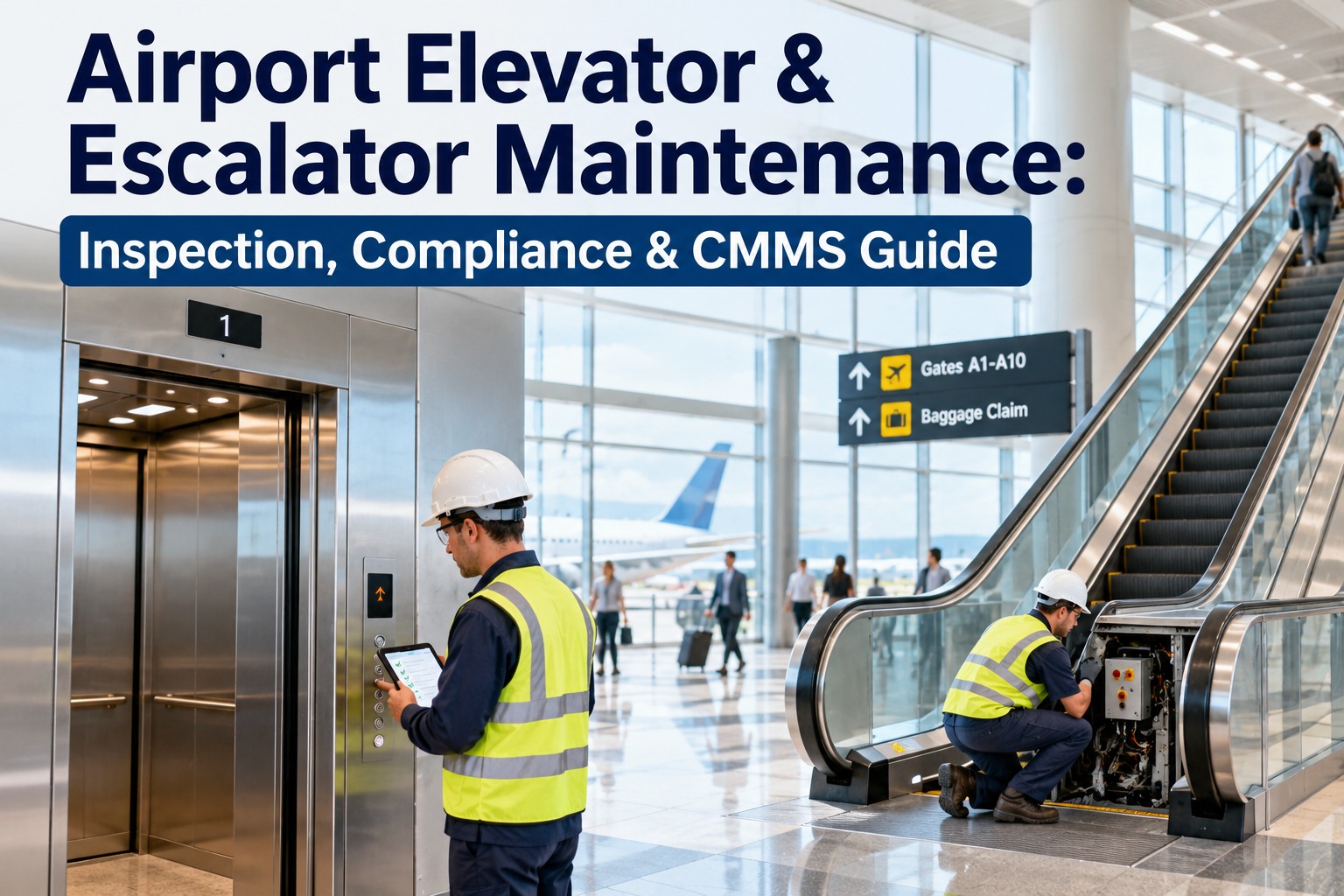
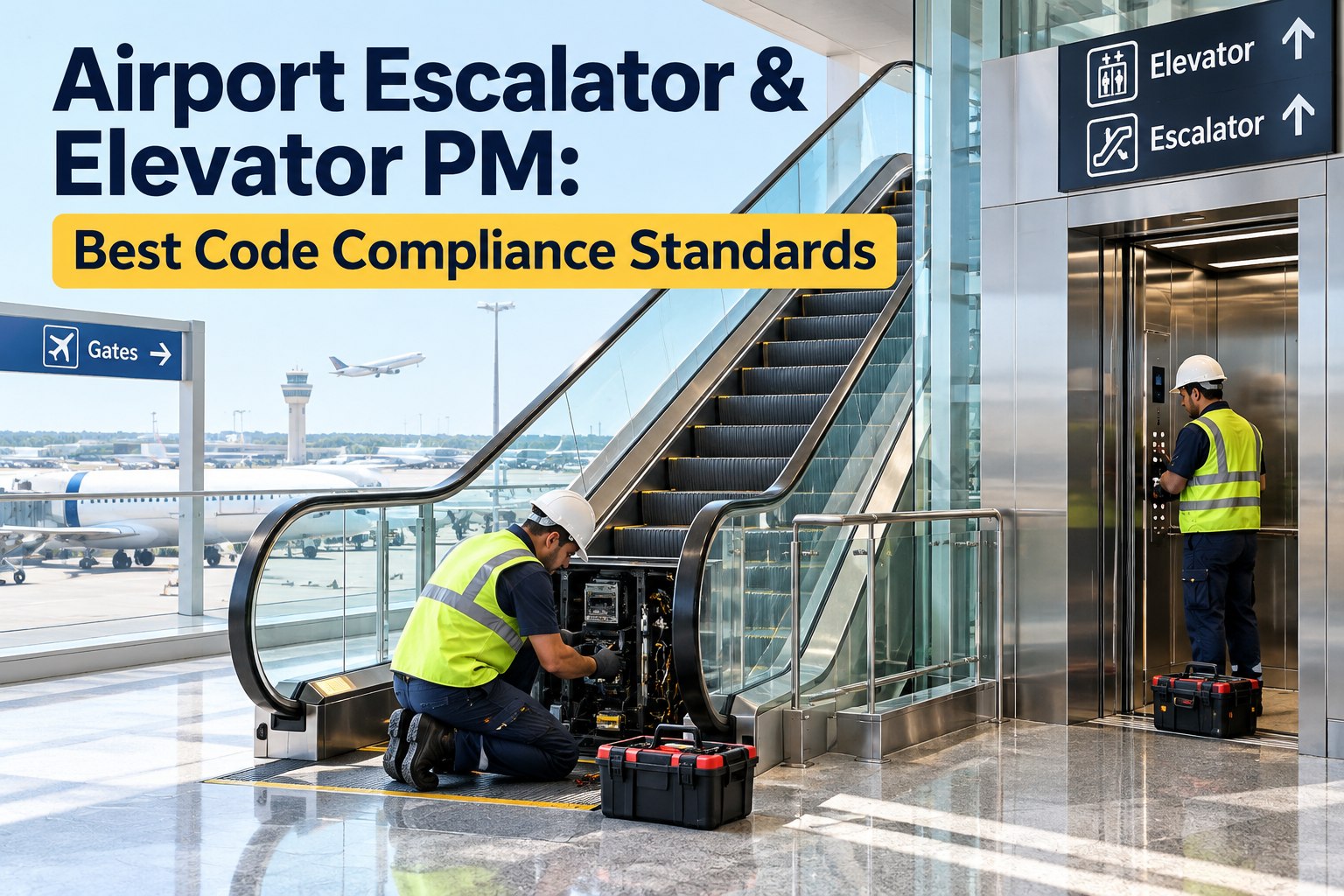
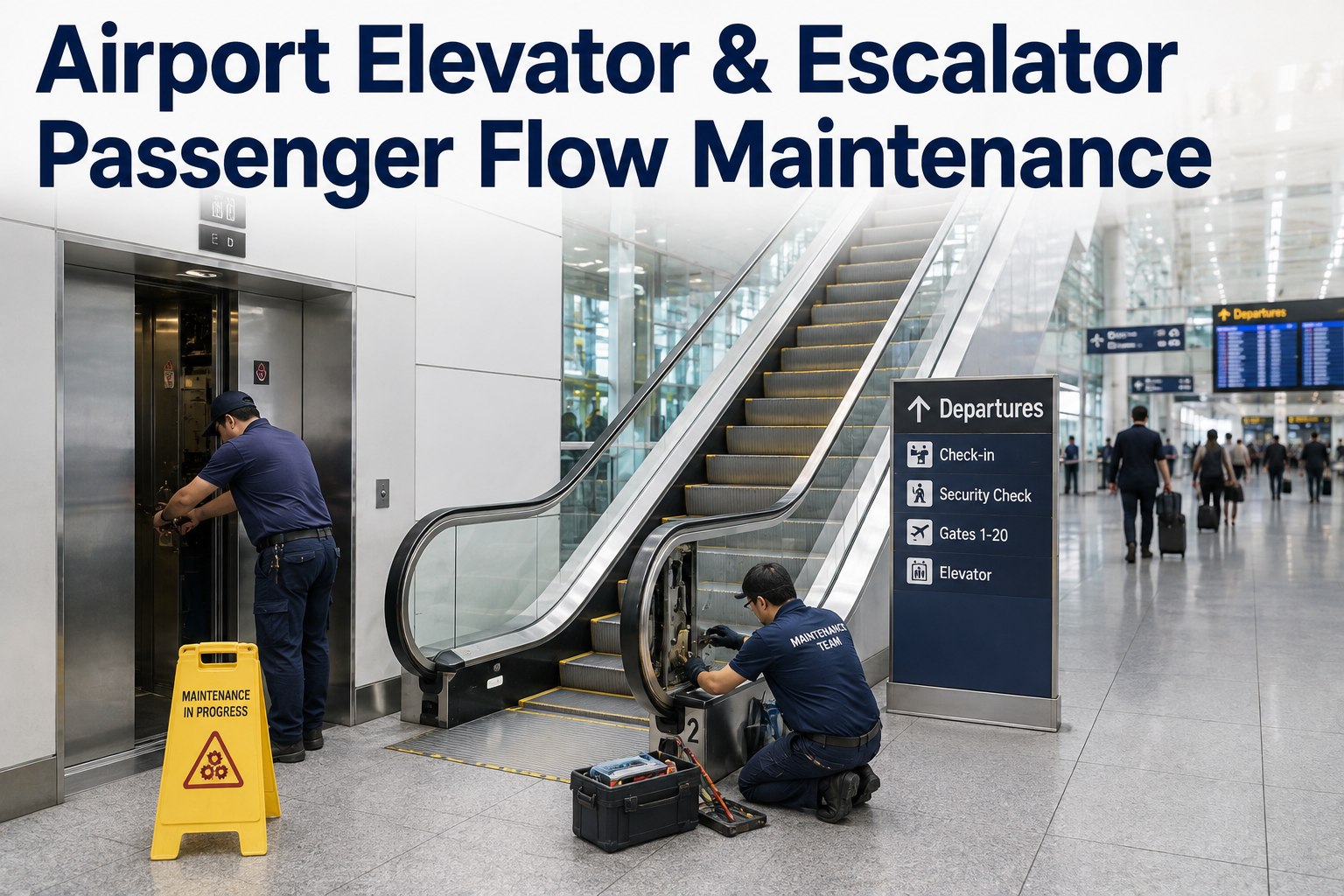
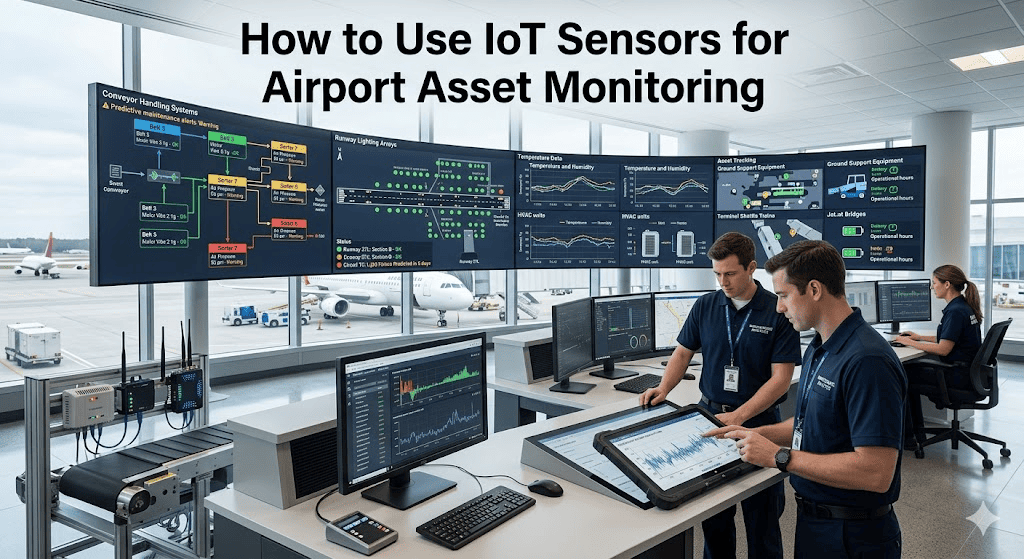
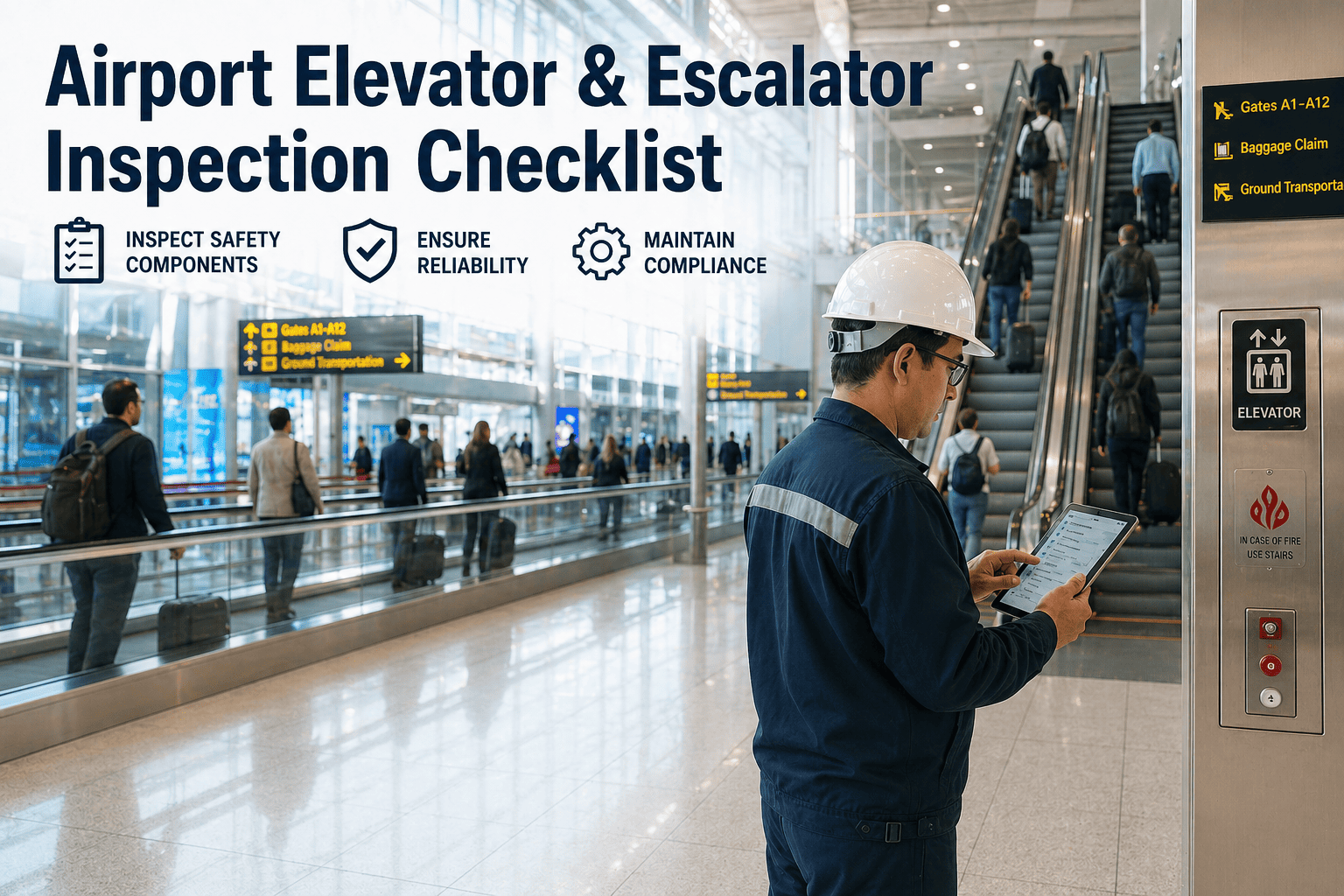
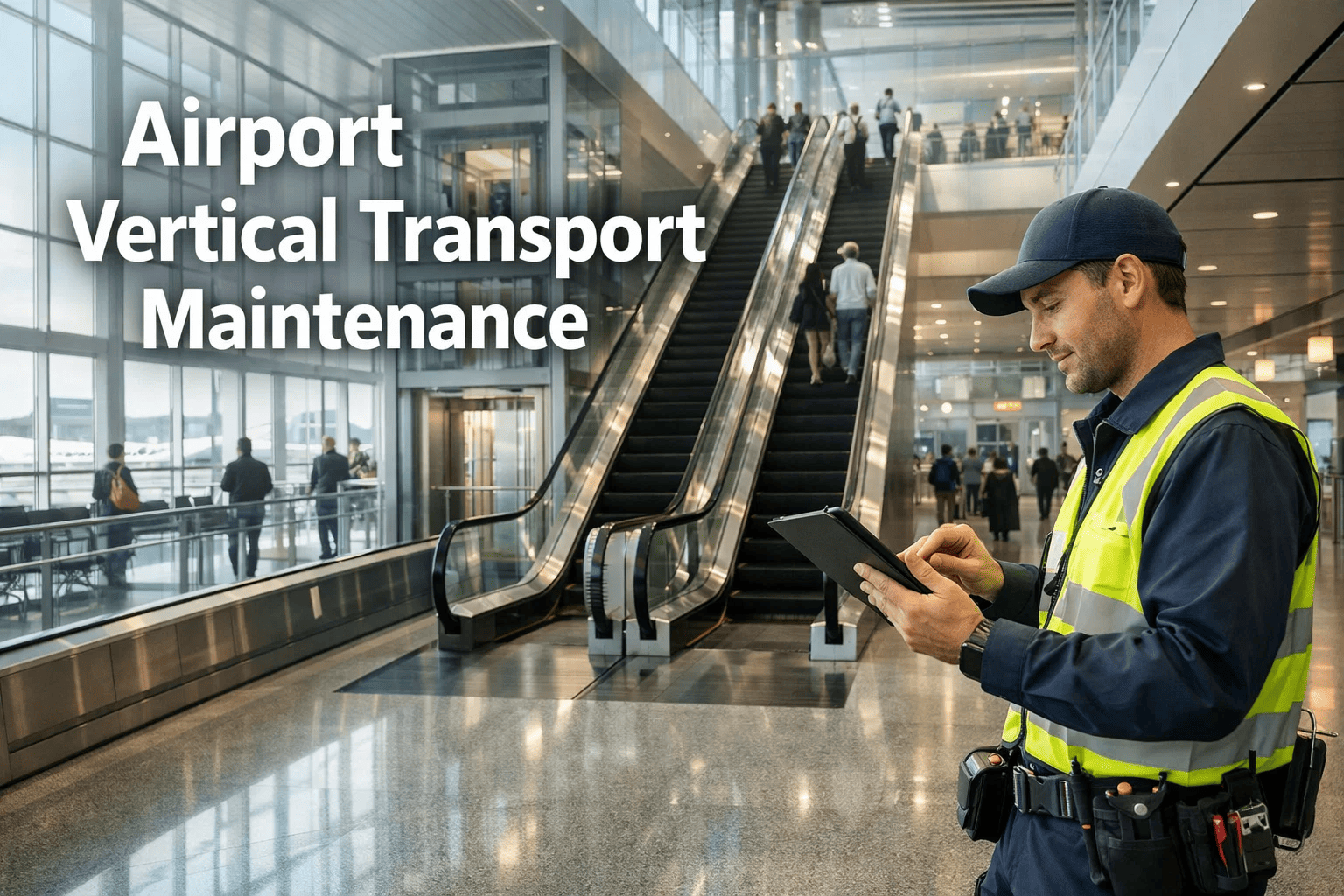
A single elevator outage at a busy airport terminal doesn't just inconvenience travelers—it creates an ADA compliance violation, blocks wheelchair users and elderly passengers, and triggers cascading congestion across every level. With IoT-powered monitoring from OXmaint, airports can predict failures before they happen, maintain 99%+ uptime, and ensure every passenger moves freely through the terminal. Schedule a demo to see how smart sensors can protect your vertical transportation systems.
Why Elevator and Escalator Failures Are an Airport's Biggest Blind Spot
Airports operate hundreds of elevators, escalators, and moving walkways across terminals, parking structures, and transit connections. Yet most still rely on scheduled maintenance and reactive repairs—waiting for equipment to break before fixing it. The consequences are immediate and costly.
$3,500–$8,000
Average cost per emergency service call for elevator breakdown
70–85%
Reduction in unplanned downtime with predictive maintenance
25–40%
Extended equipment lifecycle through condition-based monitoring
$33.13B
Global IoT in elevator market size in 2024, growing at 11.4% CAGR
ADA Compliance Alert
Airport Passenger Terminals Cannot Claim Elevator Exemptions
Under ADA Title III, airport passenger terminals are explicitly excluded from the elevator exemption that applies to smaller buildings. Every passenger elevator must be ADA compliant and maintained in working order. Failure to take prompt action to repair non-functioning elevators constitutes a federal violation—making uptime monitoring not just operational but legally mandatory.
How IoT Monitoring Actually Works
IoT sensors transform your elevators and escalators from silent machines into communicating assets. Retrofittable to any manufacturer's equipment, these sensors capture real-time performance data and feed it directly into OXmaint's centralized dashboard—no rip-and-replace required.
Vibration Analysis
Detects motor bearing wear, misaligned gears, and structural looseness weeks before failure
Temperature Monitoring
Tracks motor heat, hydraulic oil temperature, and controller cabinet conditions for overheating alerts
Door Cycle Counting
Monitors open/close cycles to predict door operator wear—the most common elevator failure point
Load & Usage Patterns
Measures passenger load, trip frequency, and peak-hour demand for capacity planning
Noise Detection
Audio analysis catches unusual sounds from cables, pulleys, and step chains before mechanical failure
Current Draw Analysis
Monitors electrical consumption patterns to identify motor degradation and control board issues
From Sensor to Action: The Predictive Maintenance Loop
1
Sense
IoT sensors collect vibration, temperature, and performance data 24/7 from every unit
2
Analyze
AI models compare real-time readings against baseline patterns to detect anomalies
3
Alert
OXmaint sends priority notifications to maintenance teams before failures occur
4
Dispatch
Automated work orders assign technicians with parts lists and repair history attached
5
Verify
Post-repair sensor readings confirm the fix and update the unit's health profile
Stop waiting for breakdowns. Start predicting them. Try OXmaint free and connect your vertical transportation systems today.
Start Free
The Real Cost of Reactive vs. Predictive Maintenance
Most airports still operate on time-based maintenance schedules—servicing equipment whether it needs it or not, while missing the failures that happen between visits. Here's how the two approaches compare in a real airport environment.
✕
Fixed calendar-based service intervals regardless of actual condition
✕
Emergency calls averaging $3,500–$8,000 per incident
✕
No visibility into equipment health between technician visits
✕
Unexpected downtime during peak passenger hours
✕
Manual inspection logs with no trend analysis
VS
✓
Condition-based service triggered by real sensor data
✓
70–85% fewer emergency calls through early fault detection
✓
24/7 remote monitoring of every elevator and escalator
✓
Schedule repairs during off-peak hours before failures happen
✓
AI-powered trend analytics with risk scoring per unit
Typical ROI Timeline
6–12 Months
Annual Savings (6+ Units)
$75,000–$200,000
What OXmaint Monitors Across Your Airport
Every vertical transportation asset in your airport—from parking garage elevators to terminal escalators and jet bridge lifts—gets connected into a single intelligent dashboard with location-based tracking and real-time health scoring.
Passenger elevators (all concourses)
Escalators between levels
Moving walkways
Service/freight elevators
Jet bridge lifts
Cargo facility elevators
ATC tower elevators
Maintenance hangar lifts
Landside & Parking
Parking garage elevators
Rental car facility escalators
Transit connection lifts
Hotel shuttle platform lifts
Elevator ELV-T1-004
Terminal 1, Concourse B, Level 2
Escalator ESC-T2-011
Terminal 2, Arrivals Hall, East Wing
Moving Walkway MW-T1-003
Terminal 1, Concourse C, Connector
What Industry Experts Are Saying
Facility managers, vertical transportation consultants, and airport operations leaders are embracing IoT-driven predictive maintenance as the new standard for elevator and escalator reliability.
KM
Kevin Morales
Director of Vertical Transportation Strategy, Leading Global Elevator OEM
IoT devices serve as the eyes and ears of whoever is responsible for maintaining a building's vertical transportation systems—providing the kind of specialized expertise that most facilities no longer have on-site around the clock.
IoT Monitoring
Predictive Analytics
24/7 Surveillance
AP
Andrew Pearson
SVP, Modernization & Existing Installations, Top-5 Elevator Manufacturer
IoT implementation for vertical transportation has revealed two key customer camps: those who prize the benefits of improved performance and transparency, and those who are more focused on cost savings. Both see measurable results.
2 Key Outcomes
Performance transparency + Cost reduction
SN
Sarah Nakamura
Facilities Technology Director, Major U.S. International Airport
Predictive maintenance ensures machines function efficiently, reducing energy waste and lowering utility bills. It minimizes risks by ensuring machinery operates within safe parameters, supporting compliance with industry standards.
Safety + Efficiency
Compliance-ready, energy-optimized operations
128,000+
Elevators globally on IoT platforms
4x Faster
Service call resolution with remote diagnostics
30%
Energy reduction with smart elevator systems
$17.3B
Smart elevator market projected by 2030
Frequently Asked Questions
Can IoT sensors be added to our existing elevators without replacing them?
Yes. Retrofit IoT sensors attach to motors, door operators, controllers, and mechanical components without modifying core equipment. They work with any manufacturer's systems regardless of age. Installation typically takes 2–4 hours per unit with no extended downtime.
Book a demo to discuss your specific equipment.
How does predictive maintenance help with ADA compliance?
ADA requires that accessible features—including elevators—be maintained in working order. IoT monitoring provides documented proof of continuous operational status, instant alerts when a unit goes down, and automated work order generation for rapid repair. This creates an auditable compliance trail that demonstrates prompt action to maintain accessibility.
What kind of ROI can we expect from IoT elevator monitoring?
Airports with 6+ elevator/escalator units typically achieve positive ROI within 6–12 months through reduced emergency service calls, extended component life, and avoided ADA penalty exposure. Facilities report $75,000–$200,000 in annual savings.
Start your free trial to see projected savings for your airport.
Does OXmaint integrate with our existing OEM service contracts?
OXmaint complements OEM contracts by providing visibility into equipment condition between scheduled visits. You gain data-backed evidence to validate vendor work, negotiate service agreements, and ensure maintenance is performed to specification.
Keep Every Elevator Running. Every Escalator Moving.
Connect your airport's vertical transportation systems to OXmaint and stop reactive maintenance from disrupting passenger flow and ADA compliance.