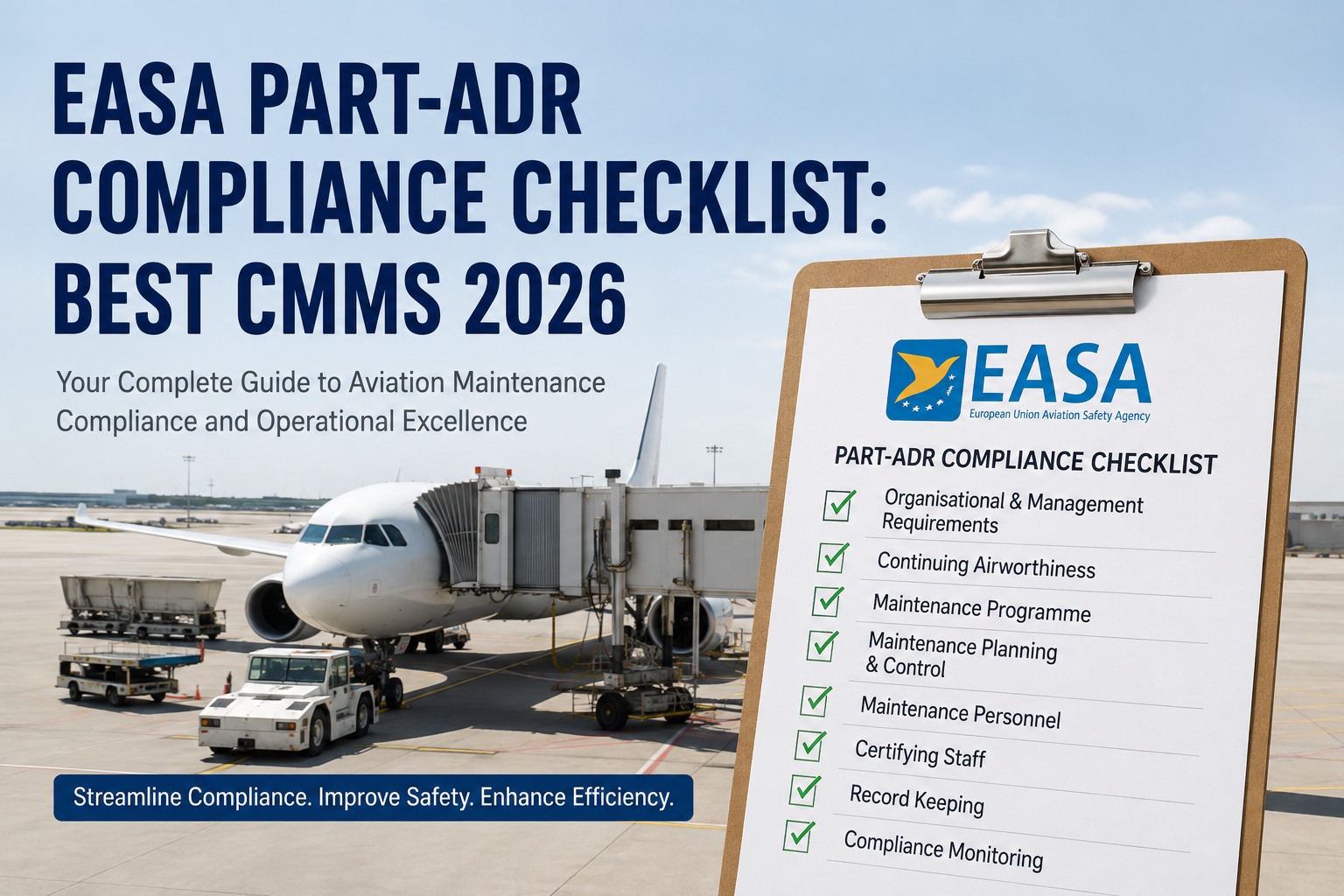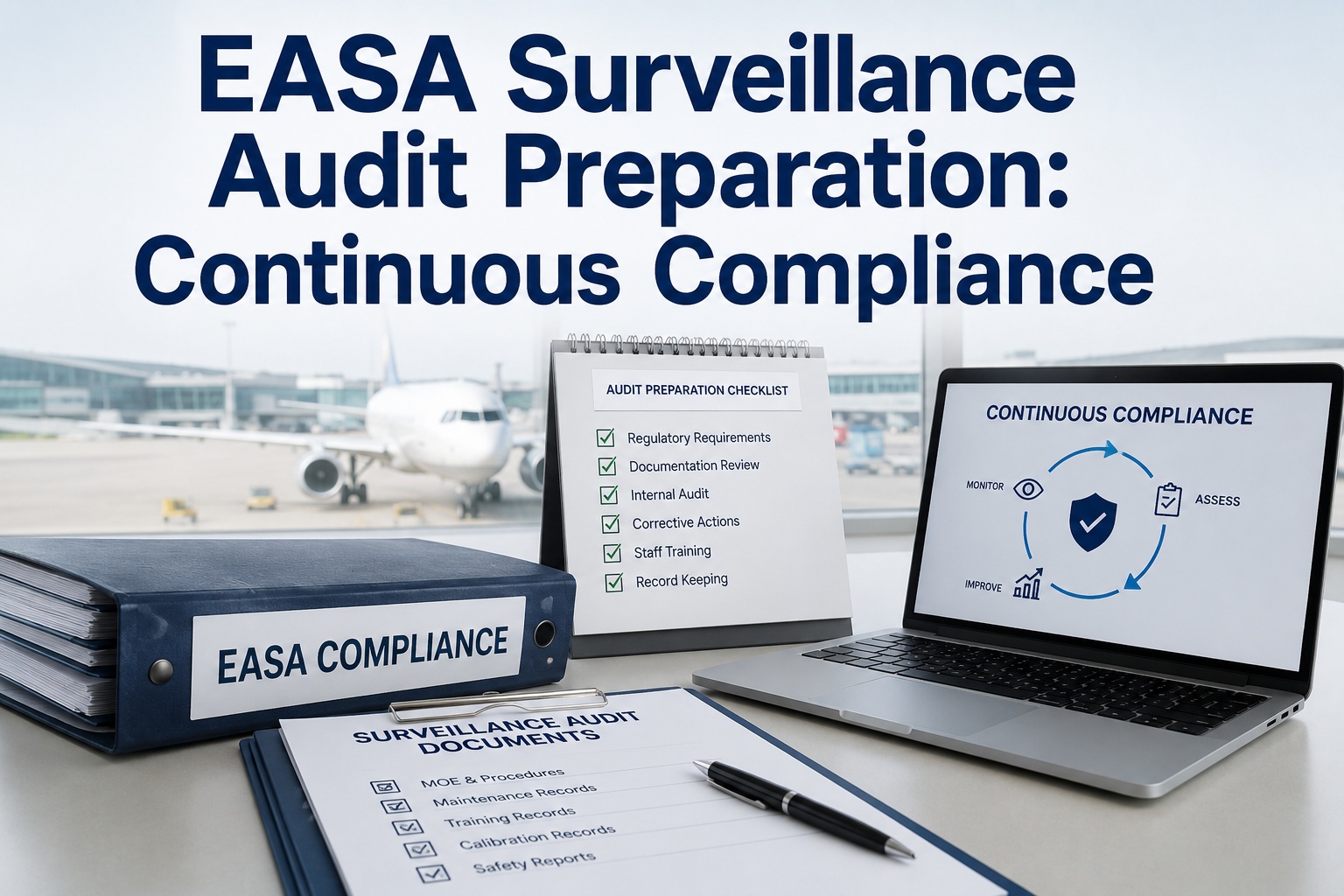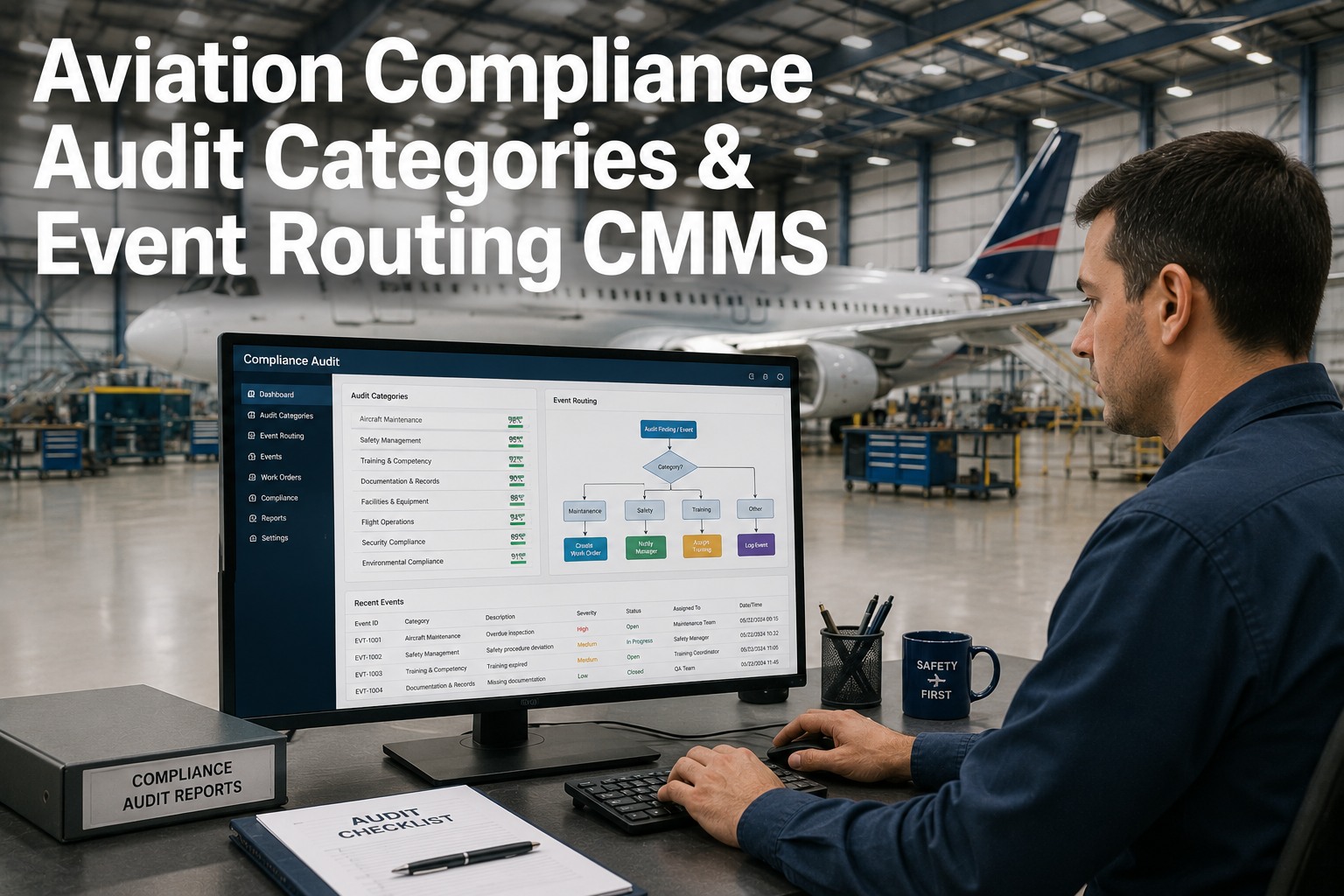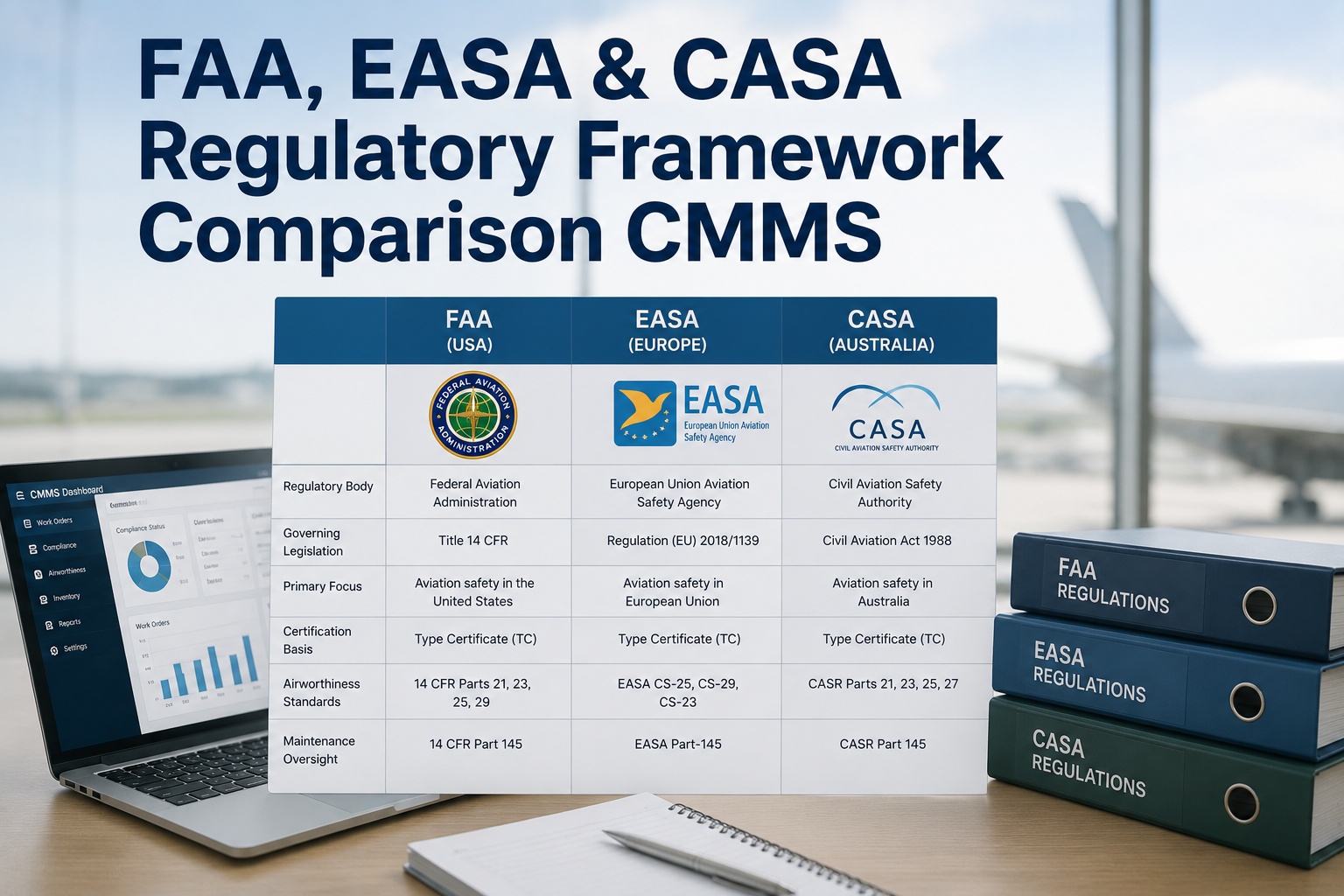
FAA and EASA Part 145 audit preparation is the difference between a routine two-day inspection and a certificate suspension — and in 2026, auditors expect compliant maintenance records in seconds, not folders assembled over weeks. This guide to Part 145 audit preparation with a CMMS covers how aviation repair stations use exposition-driven documentation, MOE compliance evidence, and automated sample selection to turn unannounced audits into walk-throughs. If your team still builds audit evidence packages by hand, it is time to Start Free Trial and let your CMMS do the assembly.
FAA / EASA Part 145 Audit Prep Guide 2026
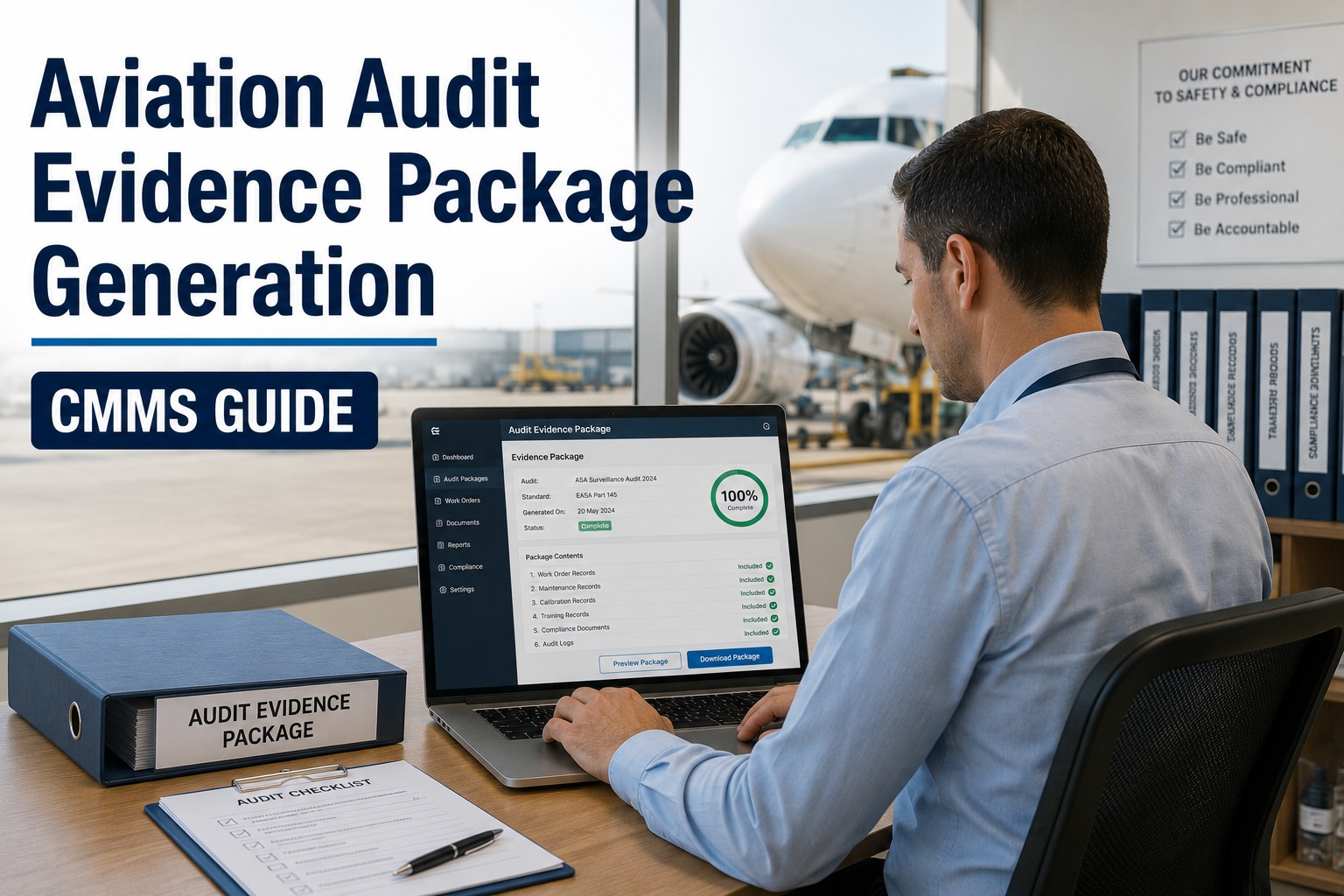
Can your repair station produce a full Part 145 audit evidence package in 20 minutes — or does it take 14 hours?
Auditors no longer accept boxes of paper or scrambled spreadsheet exports. A modern CMMS structures every work order, tool calibration, and personnel record against your MOE — so Part 145 audit preparation becomes a query, not a fire drill.
The Real Cost of Manual Audit Prep
Why Part 145 repair stations fail audits in 2026
The FAA and EASA don't audit your intentions — they audit your records. When an auditor asks for a specific calibration certificate or training record, you have minutes to produce it. Here is what happens when that process is manual.
A 180-asset repair station spending three weeks preparing for a biennial EASA audit is burning roughly 420 labor hours — the equivalent of $21,000 in quality and maintenance time — just to find and organize records that a CMMS could export in a single filtered report. The cost of not acting isn't just the audit prep labor; it's the risk of a finding that suspends your operating authority.
MOE & Exposition-Driven Documentation
How to structure your CMMS for Part 145 compliance evidence
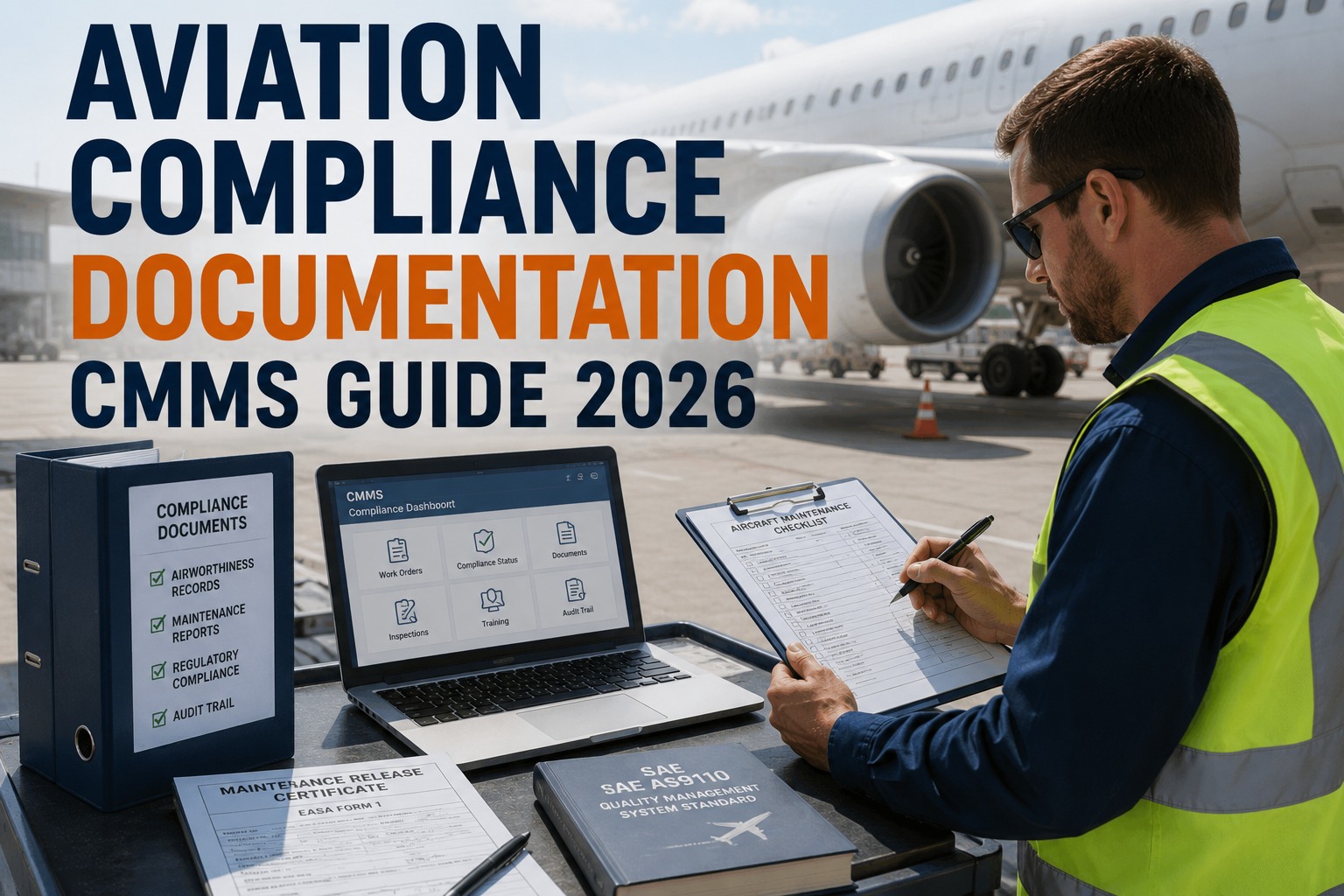
Your Maintenance Organization Exposition (MOE) and Repair Station Manual (RSM) define exactly what auditors will check. Your CMMS must mirror that structure so every record maps to a specific exposition clause.
- Link every mechanic cert directly to work orders they signed (145.A.65 / 14 CFR 145.163)
- Automated 90-day expiration alerts on A&P licenses and human factors training
- Instant filtered roster export by rating, qualification, or shift
- Calibration certificates attached to tool records, not buried in shared drives
- Environmental monitoring logs (humidity, temp) tied to hangar asset locations
- Consumable shelf-life tracking with auto-quarantine on expiry
- Digital 8130-3 / EASA Form 1 generation with tamper-proof audit trails
- Task card sign-offs with dual-inspection capture for RII items
- Complete AD/SB compliance history searchable by tail number in seconds
- Suspected Unapproved Parts (SUP) reporting workflow built into receiving
- Traceability from installation back to vendor certificate in one click
- Stock-to-work-order consumption logs that match PO and invoice records
Audit Readiness Workflow
Part 145 audit preparation timeline: 90 days to audit day
Audit readiness isn't a sprint — it's a structured 90-day cycle that ensures your exposition, records, and corrective actions are aligned before the auditor arrives.
Run a CMMS compliance dashboard filtered to MOE clauses. Identify any work orders missing dual-release signatures, tools with lapsed calibration, or personnel with expiring qualifications. A typical 145 station surfaces 12–18 gaps in under 10 minutes.
Assign corrective work orders directly from the gap dashboard. OxMaint auto-tracks resolution, attaches evidence (retrained certs, recalibrated tools), and flags items that remain open as the audit date approaches.
Auditors will pull random samples — usually 5–10 completed work orders per rating. Use your CMMS to pre-build sample sets with every linked task card, sign-off, parts traceability, and release tag already attached and time-stamped.
When the auditor requests a specific record, pull it live in the room. A CMMS-based repair station produces any work order, calibration log, or personnel record in under 30 seconds — projecting total operational control.
OxMaint CMMS Capabilities
How OxMaint solves Part 145 audit preparation
OxMaint maps directly to the regulatory evidence auditors demand. These are the four capabilities that turn a reactive repair station into an always-audit-ready operation.
One-Click Evidence Packages
Generate a complete, time-stamped audit binder filtered by date range, tail number, or MOE clause in 20 minutes — replacing 14 hours of manual document assembly.
Predictive Calibration & Training
AI-driven alerts predict tool calibration drift and personnel certification expirations 90 days out, eliminating the top two sources of Part 145 findings before they happen.
Digital 8130-3 & Form 1 Generation
Generate dual-release airworthiness tags directly from completed work orders with tamper-proof audit trails, ensuring every sign-off is traceable to the mechanic and inspector.
Live Compliance Dashboards
Real-time KPI tiles show open corrective actions, overdue calibrations, and AD/SB compliance rates — giving you a defensible, always-current compliance posture at any moment.
Manual vs. CMMS Audit Prep
Spreadsheets vs. OxMaint CMMS for repair station compliance
The gap between manual document assembly and a CMMS-driven audit is measured in hours, findings, and suspended certificates. Here is the direct comparison.
| Audit Requirement | Manual / Spreadsheets | OxMaint CMMS |
|---|---|---|
| Evidence package assembly | 14 hours across 3 staff members | 20 minutes, single filtered export |
| Work order sample retrieval | 30–45 minutes per work order in file cabinets | Under 30 seconds via tail-number search |
| Tool calibration compliance | Reactive — discovered during audit | AI-predicted 90 days before lapse |
| Personnel cert tracking | Manual spreadsheet review, high error rate | Automated alerts + linked sign-off authority |
| Corrective action documentation | Email threads and disconnected PDFs | Closed-loop work orders with evidence attached |
| Audit finding rate | 8–15 findings per cycle (industry avg.) | 0–2 findings per cycle (OxMaint benchmark) |
Worked Example
A regional MRO in Dallas operating under FAA Part 145 with 14 CFR 145.163 personnel requirements switched from spreadsheet-based tracking to OxMaint. During their 2026 renewal audit, the inspector requested five random work orders with full parts traceability. The quality manager produced all five — with linked 8130-3 tags, mechanic credentials, and tool calibration certs — in under four minutes. Result: zero findings, audit closed in 1.5 days instead of 3.
See OxMaint on your assets — book a 30-min demo
Discover how an AI-powered CMMS turns your next FAA or EASA Part 145 audit into a 20-minute evidence export instead of a 14-hour fire drill.
Part 145 Audit CMMS FAQ
Frequently asked questions about Part 145 audit preparation
What is Part 145 audit preparation in aviation?
Part 145 audit preparation is the process of organizing and verifying all maintenance records, personnel certifications, tool calibrations, and work order documentation required by FAA 14 CFR Part 145 or EASA Part 145 regulations. A CMMS automates this by mapping every record to your exposition clauses so auditors can retrieve evidence in seconds. You can see how OxMaint structures this by requesting a Book a Demo session.
How does a CMMS help with FAA and EASA repair station audits?
A CMMS like OxMaint centralizes work orders, asset histories, calibration records, and personnel qualifications into a single searchable database. When an auditor requests a specific record, you pull it instantly instead of digging through file cabinets. The CMMS also provides automated alerts for expiring certifications and calibrations, which are the top two sources of audit findings.
How long does it take to prepare for a Part 145 audit manually?
Manual Part 145 audit preparation typically takes 14 hours or more to assemble the required evidence package, involving multiple staff members pulling records from paper files, shared drives, and spreadsheets. With a CMMS, the same evidence package can be generated as a filtered export in approximately 20 minutes — a 97% reduction in preparation time.
What records do Part 145 auditors ask for most frequently?
Auditors most frequently request completed work orders with dual-release signatures, tool calibration certificates, personnel training and qualification records, receiving inspection logs for spare parts, and airworthiness release tags (FAA Form 8130-3 or EASA Form 1). A CMMS ensures all of these are linked, time-stamped, and retrievable by tail number or date range in under 30 seconds.
Can OxMaint CMMS generate FAA Form 8130-3 and EASA Form 1?
Yes. OxMaint generates dual-release airworthiness tags directly from completed work orders, auto-populating mechanic and inspector credentials, part numbers, serial numbers, and compliance statements. Every tag carries a tamper-proof audit trail. To see the workflow on your own data, Start Free Trial and import your first asset in minutes.
Make your next Part 145 audit your easiest one
Join the repair stations using OxMaint to produce audit evidence in minutes, predict compliance gaps before auditors find them, and keep their certificates spotless.
Free 14-day trial · No credit card