Your next FAA certification inspection could be announced tomorrow. When the inspector asks to see 12 months of self-inspection records, training documentation for every airside employee, and corrective action logs for every discrepancy found, will you hand over an organized digital file or start digging through filing cabinets? For 520+ Part 139 certificated airports in the U.S., compliance is not optional. Violations mean daily financial penalties, Letters of Correction, operational restrictions, or certificate revocation. OXmaint automates the documentation trail that keeps you audit-ready every single day. Schedule a demo to see how OXmaint turns compliance from a scramble into a system.
What FAA Part 139 Requires
14 CFR Part 139 governs the certification and operation of U.S. airports serving scheduled air carrier operations with more than 9 passenger seats. The regulation covers everything from runway markings and ARFF equipment to wildlife hazard management and fueling safety. At its core, Part 139 is a documentation regulation. Every requirement demands a record, and every record must be current, accessible, and audit-ready.
520+
U.S. Airports Certificated Under Part 139
→
35
FAA Inspectors Conducting Annual Audits
→
Daily
Self-Inspection Frequency Required
FAA Part 139 Airport Certification, 14 CFR Part 139
The Compliance Areas That Get Airports in Trouble
FAA certification inspections follow a structured process, covering administrative records review, movement area inspections, night inspections, and post-inspection briefings. When discrepancies are found, the FAA issues Letters of Correction with deadlines. Repeat violations escalate to financial penalties assessed per day of non-compliance. These are the documentation areas where airports most commonly fail.
139.327
Self-Inspection Records
Daily self-inspections of movement areas must be documented showing conditions found and all corrective actions taken. Records must be maintained for at least 12 consecutive calendar months. Missing or incomplete inspection logs are the most common audit finding.
139.303
Personnel Training Records
Every individual with airside access must receive initial and recurrent training covering airport familiarization, signs, markings, and lighting. Training records must be maintained for 24 consecutive calendar months. Gaps in training documentation trigger immediate corrective action.
139.319
ARFF Equipment Readiness
Aircraft Rescue and Fire Fighting vehicles must meet response time requirements and extinguishing agent quantities. Maintenance logs, agent level checks, and response time records must be documented and available for inspector review at all times.
139.321
Pavement and Marking Condition
Runway, taxiway, and apron pavements must be maintained to prevent conditions that could cause FOD or impair safe operations. Documentation of pavement condition assessments, marking maintenance, and corrective action timelines is required.
139.325
Airport Emergency Plan
A comprehensive emergency plan covering aircraft incidents, bomb threats, structural fires, natural disasters, and hazmat events must be maintained current. The plan must be reviewed and updated with all participating agencies. Full-scale exercises required every 36 months.
139.337
Wildlife Hazard Management
Wildlife strike data must be collected, reported, and documented. If a wildlife hazard assessment is required, the resulting management plan must be followed and all mitigation actions recorded. Incomplete strike reports are a recurring audit issue.
The FAA can conduct unannounced inspections at any time. OXmaint keeps every inspection record, training log, and corrective action digitally organized and instantly retrievable, so your documentation is always audit-ready.
Start Free
Inside OXmaint's Inspection Reports Dashboard
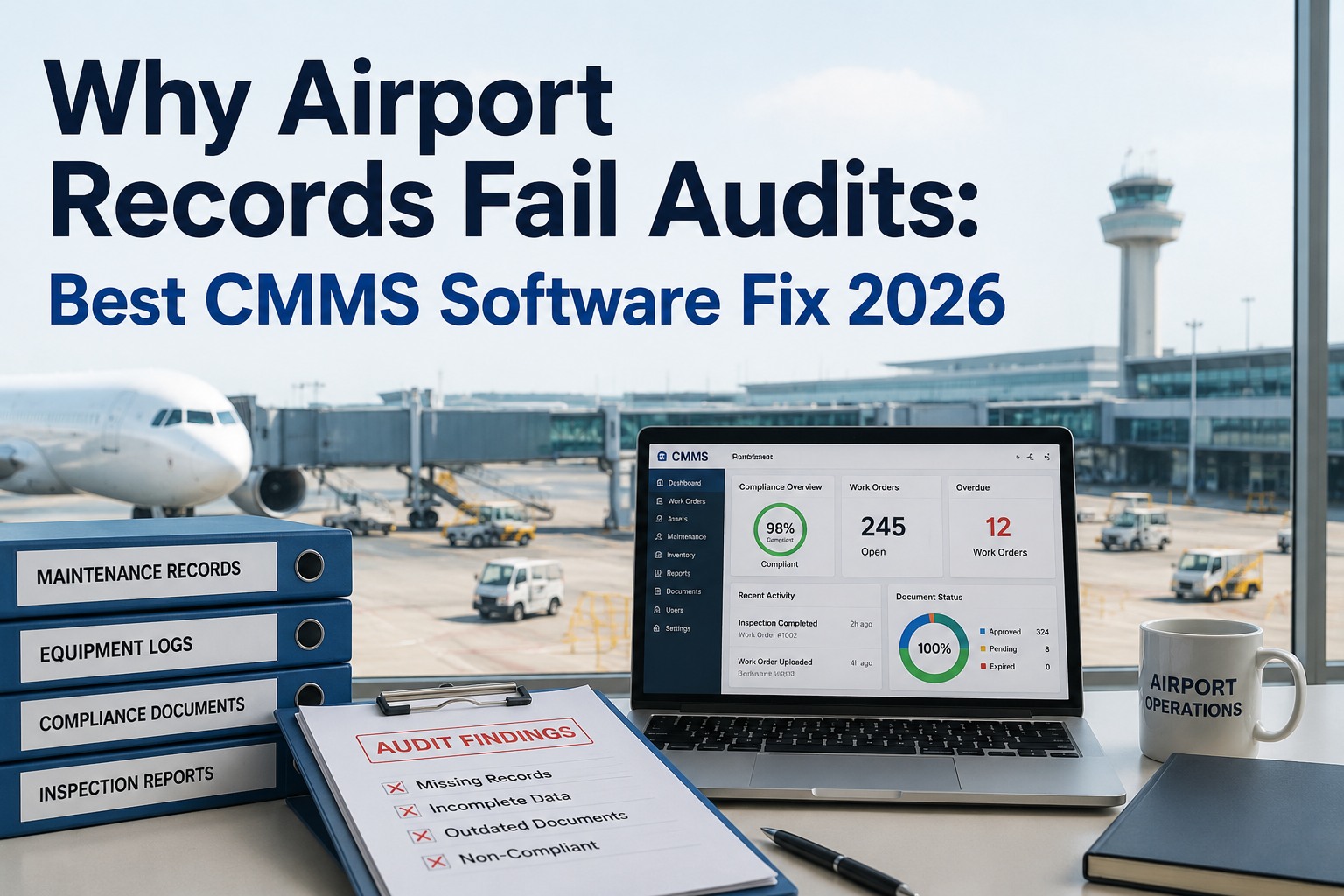
OXmaint's Inspection Reports module gives your compliance team a real-time operational snapshot of every inspection across your airport. Track completion rates, pass rates, overdue items, and compliance scores from a single screen that tells you exactly where you stand before the FAA inspector arrives.
Completion Rate
85%
41 of 48 inspections completed
Pass Rate
95%
39 of 41 inspections passed
Average Score
87.6
Average score across all completed inspections
3 Overdue Inspections
These inspections require immediate attention to maintain compliance.
Completed
Pass
INS09214587
Runway 09L/27R Daily Self-Inspection
2026-02-12
Completed
Pass
INS09214588
ARFF Vehicle Monthly Readiness Check
2026-02-11
Pending
INS09214589
Taxiway A Signage and Lighting Audit
2026-02-13
Be Audit-Ready Every Day
Book a demo and we'll show you how OXmaint automates Part 139 inspection tracking, training documentation, and corrective action management into one compliance-ready platform.
The FAA Inspection Process: What Happens and What They Check
Understanding exactly what happens during an FAA certification inspection helps you prepare for it. Here is the process, step by step, and what OXmaint ensures is ready at each stage.
Phase 1
Pre-Inspection File Review
What FAA Reviews: Airport Certification Manual, Airport Master Record (Form 5010), NOTAMs history, previous inspection findings
OXmaint Delivers: Complete digital ACM with revision logs, all historical records searchable and sortable, previous corrective actions with closure documentation
Phase 2
Administrative Records Inspection
What FAA Reviews: Self-inspection records (12 months), training records (24 months), ARFF agent records, fueling inspection logs, wildlife strike reports
OXmaint Delivers: Timestamped digital inspection records with photos, auto-generated training compliance reports per employee, equipment maintenance logs with full audit trails
Phase 3
Movement Area Inspection
What FAA Reviews: Pavement condition, markings, lighting, signs, safety areas, approach slopes, ground vehicle operations
OXmaint Delivers: Condition-based asset records for every runway, taxiway, and apron element with date-stamped inspection history and corrective action timelines
Phase 4
Night Inspection
What FAA Reviews: Runway and taxiway lighting, signage illumination, airport beacon, wind cone lighting, obstruction lighting
OXmaint Delivers: Lighting system inspection records with failure logs, bulb replacement tracking, and automated maintenance triggers when lighting assets reach service thresholds
Phase 5
Post-Inspection Briefing
What FAA Issues: Letter of Correction with violations, discrepancies, deadlines for corrective action, safety recommendations
OXmaint Delivers: Corrective action work orders auto-generated from findings, assigned with deadlines, tracked to completion with documentation, ready for follow-up verification
Paper Records vs. OXmaint: The Compliance Gap
Most airports still manage Part 139 compliance through paper forms, spreadsheets, and filing cabinets. The gap between that approach and a digital CMMS is not just efficiency, it is the difference between passing and failing an inspection.
Retrieve 12 months of self-inspection records
2-4 hours searching filing cabinets; records may be missing or illegible
Instant digital retrieval; filtered by date, inspector, or area in seconds
Verify training currency for 85 airside employees
Cross-reference spreadsheets manually; gaps discovered during audit
Auto-generated compliance dashboard; expired certifications flagged 30 days before lapse
Document corrective action from discrepancy to closure
Handwritten notes; no timestamp chain; closure verification informal
Digital work order with timestamps, photos, assigned technician, parts used, and supervisor sign-off
Prove ARFF vehicle maintenance compliance
Paper logbooks in vehicle cab; water damage, missing entries common
Digital maintenance history per vehicle with service intervals, agent level checks, and response time logs
Prepare for unannounced FAA inspection
Panic; staff pulled from operations to locate records; 1-2 day scramble
Always ready; every record accessible from any device in real time; zero preparation needed
The Part 139 Compliance Checklist OXmaint Automates
Every requirement in Part 139 Subpart D generates documentation obligations. OXmaint maps each regulatory section to automated workflows that capture, store, and surface the right records at the right time.
AUTOMATED
Daily Self-Inspections (139.327)
Mobile-friendly inspection forms with GPS-tagged photos, condition scoring, and instant corrective action escalation. 12-month archive maintained automatically.
AUTOMATED
Training Compliance Tracking (139.303)
Employee training records with certification dates, expiration alerts, recurrent training scheduling, and compliance status per individual. 24-month retention enforced.
AUTOMATED
ARFF Equipment Maintenance (139.317/319)
Vehicle maintenance schedules, agent level tracking, response time documentation, and equipment readiness status. Alerts trigger before service intervals expire.
AUTOMATED
Pavement and Marking Maintenance (139.305)
Condition assessments linked to work orders. Marking repaint schedules triggered by inspection scores. Full history of every pavement repair and marking refresh.
AUTOMATED
Wildlife Strike Reporting (139.337)
Digital wildlife strike report forms with species identification, location mapping, and FAA Strike Database submission tracking. Hazard assessment triggers built in.
AUTOMATED
Corrective Action Management (139.327(c))
Every discrepancy found during inspection automatically generates a tracked work order with assigned personnel, deadline, priority level, and closure verification.
AUTOMATED
Fueling Safety Records (139.321)
Fuel storage inspection logs, quality control records, personnel training documentation, and spill response records maintained with complete audit trails.
AUTOMATED
SMS Integration (139 Subpart E)
Safety Management System hazard identification, risk assessment, and safety assurance documentation integrated with inspection and maintenance workflows.
Business Impact: Compliance That Pays for Itself
Digital compliance management does more than prevent penalties. It reduces labor hours spent on documentation, eliminates audit preparation scrambles, extends asset life through consistent maintenance, and provides the data foundation for better operational decisions.
95%
Reduction in time spent locating records during FAA inspections with digital documentation
100%
Audit trail completeness with automated timestamps, photos, and sign-offs on every inspection
Zero
Preparation time needed for unannounced FAA inspections when records are always current
30-Day
Advance alerts before training certifications, equipment service intervals, or plan reviews expire
Frequently Asked Questions
What happens if our airport fails a Part 139 inspection?
The FAA issues a Letter of Correction identifying violations and discrepancies with deadlines for corrective action. If violations are not corrected, the FAA can impose financial penalties for each day of continued non-compliance. In extreme cases, the FAA may revoke the Airport Operating Certificate or restrict areas where air carriers can operate. OXmaint's corrective action tracking ensures every finding is documented, assigned, and resolved before deadlines, with closure verification that satisfies follow-up inspections.
How long must Part 139 records be retained?
Self-inspection records must be maintained for at least 12 consecutive calendar months. Training records must be retained for 24 consecutive calendar months after completion of training. OXmaint automatically enforces these retention periods, archiving records with full timestamps and preventing premature deletion. Records beyond the minimum retention period remain searchable for trend analysis and historical reference.
Book a demo to see the retention management system.
Can OXmaint handle the new SMS requirements under Part 139 Subpart E?
Yes. The February 2023 amendment to Part 139 added Safety Management System requirements for certain certificated airports. OXmaint integrates SMS hazard identification, risk assessment documentation, and safety assurance processes into the same platform that manages inspections and maintenance. Hazards identified during self-inspections flow directly into SMS risk registers, creating a unified compliance and safety management system.
Does OXmaint support mobile inspections for airside teams?
Absolutely. Field inspectors use the OXmaint mobile app to complete self-inspection checklists on the ramp with GPS-tagged photos, voice notes, condition scoring, and instant corrective action submission. Data syncs to the central platform in real time, so your compliance dashboard reflects the latest inspection the moment it is completed. No more returning to the office to transcribe paper forms.
Start your free trial to test mobile inspections.
How quickly can we migrate from paper-based compliance to OXmaint?
Most airports complete initial setup within 1-2 weeks, including asset registry configuration, inspection form templates, and user onboarding. Historical records can be digitized in parallel. Within 30 days, your team is running fully digital inspections with automated compliance tracking. OXmaint provides onboarding support and Part 139-specific templates to accelerate deployment.
Schedule a consultation to plan your migration.
Stop Scrambling for Your Next Audit
Automated inspection records, training compliance tracking, corrective action management, and audit-ready documentation for every Part 139 requirement. Be prepared every day, not just on inspection day.