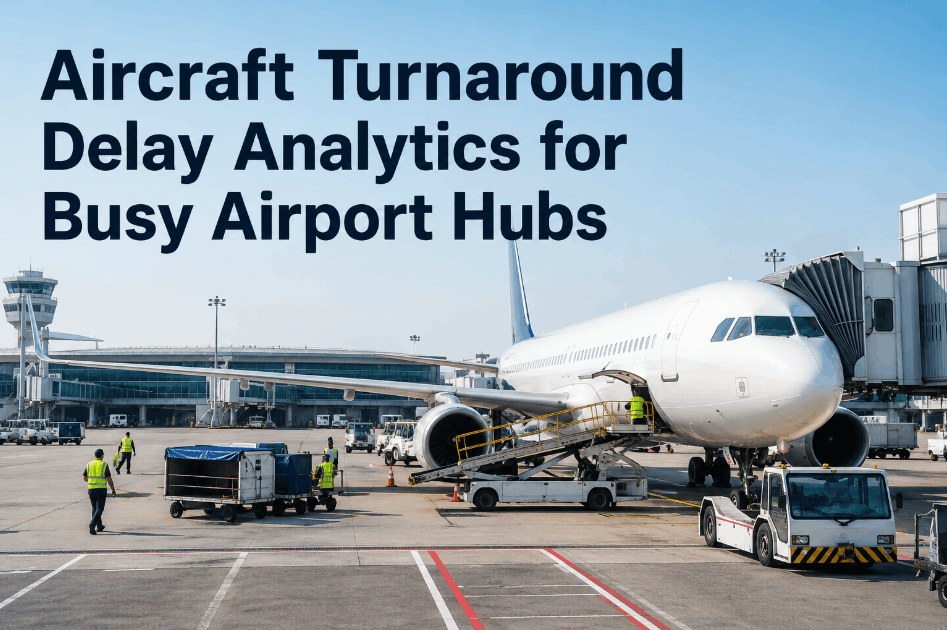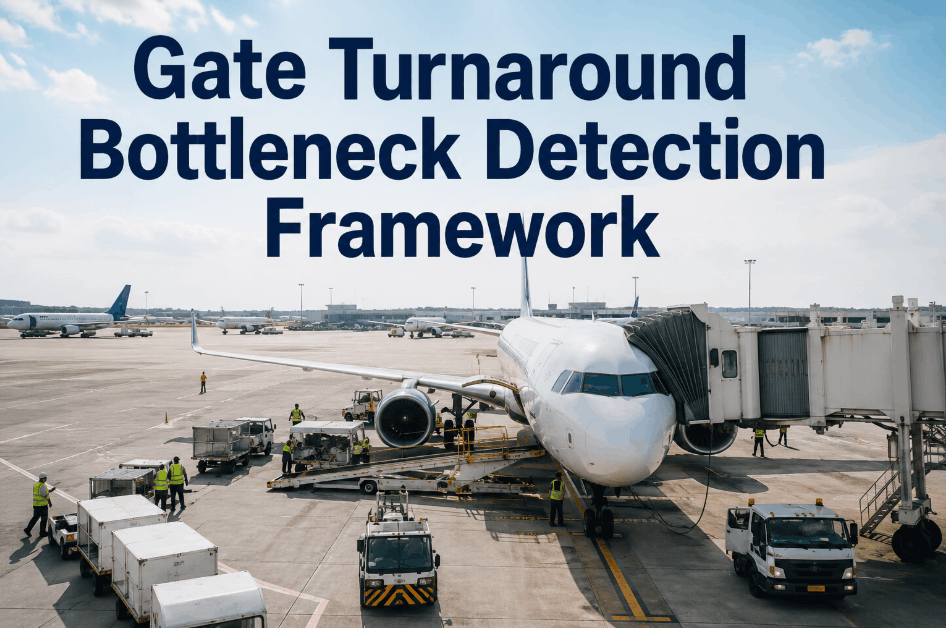
Gate turnaround performance is one of the most operationally visible metrics in aviation ground operations — and one of the most difficult to improve without a structured bottleneck detection framework. Small delays in boarding handoffs, service sequencing overlaps, and gate release timing compound quickly into missed departure windows that affect downstream schedule integrity across the network. Without a systematic method for tracing where turnaround time is being lost, Sign Up Free to start connecting gate turnaround task data to the digital work order and compliance system that drives your ground operations planning. Oxmaint helps airport ground operations and ramp management teams dispatch structured turnaround task checklists, capture handoff timing at each service stage, and identify the boarding pauses and service overlaps that generate departure delay exposure before they become missed windows. Book a Demo to see how Oxmaint supports structured gate turnaround bottleneck detection across active apron operations. A bottleneck detection framework built on real handoff timing data — not retrospective delay codes — gives turnaround coordinators and ramp supervisors the visibility to intervene in the turnaround flow while recovery is still possible. Sign Up Free and build the gate turnaround data foundation your departure control program needs.
Detect Gate Turnaround Bottlenecks Before They Generate Departure Delays
Oxmaint AI dispatches structured turnaround task checklists, captures handoff timing at every service stage, and surfaces the boarding pauses and sequencing overlaps that cost your operation missed departure windows.
Why Gate Turnaround Bottlenecks Are Missed Until a Departure Window Is Lost
Gap #1
Handoff Delays Untraced
Turnaround handoffs between ground handling, catering, fuelling, and boarding crews are timed verbally or by observation — making it impossible to identify which handoff point is consistently generating delay accumulation across the turnaround cycle.
Gap #2
Boarding Pauses Not Captured
Boarding process interruptions — gate equipment issues, document checks, passenger assistance delays — are noted informally but never captured as structured timing data, preventing pattern analysis across flights and gate positions.
Gap #3
Service Overlap Invisible
Catering, cleaning, and fuelling services operating simultaneously on the ramp create congestion and sequencing conflicts that slow the turnaround — but without task timing data, overlaps cannot be identified and sequenced out of the critical path.
Gap #4
No Gate-Level Timing Data
Turnaround performance is measured at the flight level from system departure codes rather than at the gate level from task timing — making it impossible to identify which specific service stage or gate position generates the highest delay risk.
Gap #5
Retrospective Delay Coding
Delay attribution happens after departure using standardised codes that describe the outcome rather than the cause — providing no intervention opportunity during the turnaround and no structured data for bottleneck prevention in future cycles.
Gap #6
No Cross-Gate Pattern Analysis
Turnaround performance data from different gates and shifts is never aggregated for bottleneck pattern analysis — recurring delay sources on specific gate positions or during specific service sequences remain invisible across the operational picture.
How Oxmaint Supports Gate Turnaround Bottleneck Detection
01
Turnaround Task Register
Build a gate turnaround task register in Oxmaint with service stage sequencing, handoff checkpoint definitions, and timing targets per task — establishing the structured framework the bottleneck detection model requires.
→
02
Task Timing Dispatch
Oxmaint dispatches structured turnaround work orders to ramp crew mobile devices — with service stage checklists, handoff confirmation fields, and task start and completion timestamp capture pre-loaded for each gate event.
→
03
Bottleneck Signal Capture
Ground crews log boarding pauses, service delays, and handoff timing in Oxmaint as each stage completes — capturing the task-level data that reveals which service stage or gate position is generating the critical path extension.
→
04
Pattern Analysis and Intervention
Oxmaint aggregates turnaround timing data across gates and shifts — surfacing recurring bottleneck patterns, flagging departure window risk during active turnarounds, and supporting sequencing changes before the next flight cycle.
What Oxmaint Captures Per Gate Turnaround Event
Handoff Timing
Service handoff timestamps captured at each stage transition
Handoff delay duration recorded against target transition time
Gate position and crew attribution logged per handoff event
Boarding Flow
Boarding start, pause events, and completion times recorded
Boarding pause reason captured at gate equipment and crew level
Boarding completion to gate release gap tracked per flight
Service Sequencing
Catering, cleaning, and fuelling stage timing captured per event
Service overlap duration identified against departure window risk
Sequencing deviation flagged against planned turnaround schedule
Bottleneck Output
Recurring bottleneck stage identified per gate and shift pattern
Departure window risk score updated during active turnaround
Sequencing recommendation generated from historical timing patterns
64%
Of gate turnaround delays originate from a single recurring bottleneck stage that goes undetected because task timing is never captured at service level
2.8×
More bottleneck patterns identified per operational review when handoff timing and boarding pause data are captured digitally per turnaround event
48hrs
Typical Oxmaint setup time from gate task register build to first structured turnaround timing work orders dispatched to ramp crews
45days
Average time to first recurring gate bottleneck pattern identification after Oxmaint turnaround timing tracking is active across active gate positions
Oxmaint AI vs Standard Ground Ops Systems for Turnaround Bottleneck Detection
Standard Ground Ops Systems — Limited Turnaround Bottleneck Visibility
Departure delay coded after the event with no task-level timing data connecting the code to a specific service stage bottleneck
Handoff timing confirmed verbally with no timestamp capture — delay accumulation between stages is invisible until a departure window is missed
Boarding pauses recorded informally with no pattern analysis — recurring interruption sources remain undetected across flight cycles
Service overlap cannot be identified without task start and completion timestamps — sequencing conflicts generate avoidable ramp congestion
No cross-gate aggregation — recurring bottleneck patterns on specific gate positions or shift windows are invisible in disconnected records
No active departure window risk signal — turnaround coordinators learn of delay exposure only after the window has already closed
Oxmaint AI — Gate Turnaround Bottleneck Detection Built Into Ramp Operations
Structured turnaround task checklists dispatched to ramp crews with handoff timestamp fields active at every service stage — Sign Up Free
Boarding pause events captured with reason attribution — recurring interruption patterns surfaced before they become systemic delay sources
Service stage timing tracked per turnaround — catering, fuelling, and cleaning overlaps identified and sequenced out of the critical path
Departure window risk score updated during active turnaround — ramp coordinators receive bottleneck alerts while intervention is still possible
Cross-gate timing aggregation identifies recurring bottleneck positions across shifts and flight types for targeted process improvement
Sequencing recommendations generated from historical pattern data — Book a Demo to see the turnaround dashboard
6 KPIs for Gate Turnaround Bottleneck Detection and Management
These KPIs confirm that gate turnaround bottleneck detection is improving departure window adherence and reducing recurring delay exposure across active gate positions. Book a Demo to see how Oxmaint calculates all six automatically from turnaround timing data captured in the field.
KPI 01
On-Time Departure Rate
Percentage of gate turnarounds completed within the scheduled departure window. The primary outcome metric confirming that bottleneck detection and sequencing improvements are translating into measurable departure performance gains.
Departure
KPI 02
Handoff Delay Rate
Percentage of service stage handoffs completed within target transition time per turnaround event. Rising handoff delay rates identify the specific transition points generating critical path extension across gate and shift patterns.
Handoff
KPI 03
Boarding Pause Frequency
Average number of recorded boarding interruptions per flight turnaround by gate position. High pause frequency at specific gates confirms infrastructure, equipment, or process factors requiring targeted corrective action.
Boarding
KPI 04
Service Overlap Duration
Average time that two or more ramp services are operating simultaneously beyond planned sequencing tolerance. High overlap duration identifies where sequencing discipline is generating avoidable congestion and turnaround extension.
Sequencing
KPI 05
Recurring Bottleneck Stage Rate
Percentage of delay events attributed to the same service stage across multiple consecutive turnarounds. High recurrence rates confirm that the bottleneck is structural rather than incidental and requires a process intervention rather than a one-time response.
Recurrence
KPI 06
Gate Release Adherence Rate
Percentage of gate events where the stand is released for the next arrival within the scheduled minimum ground time. Below-threshold rates identify gate positions or turnaround types where the current task sequencing cannot support the required cycle time.
Gate Control
Find the Bottleneck in Your Turnaround Flow Before It Costs a Departure Window
Oxmaint AI captures handoff timing, boarding pauses, and service sequencing data at every gate event — giving ramp coordinators and ground operations managers the bottleneck detection framework they need to intervene before small delays compound into missed departure windows. Book a Demo to see turnaround bottleneck detection applied to your active gate operations.
Frequently Asked Questions
What is a gate turnaround bottleneck detection framework?
A gate turnaround bottleneck detection framework is a structured method for tracing handoff timing, boarding pauses, and service overlap across each stage of the ground turnaround cycle — identifying which specific service stage or gate position is generating departure delay exposure.
How does Oxmaint support gate turnaround bottleneck detection?
Oxmaint dispatches structured turnaround task checklists to ramp crew mobile devices, captures timestamp data at each service stage handoff, and aggregates turnaround timing across gates and shifts to surface recurring bottleneck patterns and departure window risk.
Can Oxmaint identify boarding pause patterns at specific gate positions?
Yes. Oxmaint captures boarding pause events with reason attribution per gate position — enabling turnaround coordinators to identify whether interruption patterns are driven by infrastructure, equipment, or process factors at specific stands.
Does Oxmaint provide a departure window risk signal during active turnarounds?
Yes. Oxmaint updates departure window risk scoring as turnaround tasks are completed — alerting ramp coordinators to critical path deviations while intervention and re-sequencing are still possible within the available ground time.
How quickly can Oxmaint be deployed for gate turnaround timing capture?
Most ground operations teams have Oxmaint capturing turnaround task timing within 48 hours. Gate registers, service stage checklists, and crew assignments can be configured from existing turnaround procedures and activated immediately for ramp crews.
Know Where Your Turnaround Is Losing Time. Before the Window Closes.
Oxmaint AI captures the handoff, boarding, and service timing data ground operations teams need to detect gate turnaround bottlenecks, sequence out avoidable delays, and protect departure window adherence across every active gate position in your facility.