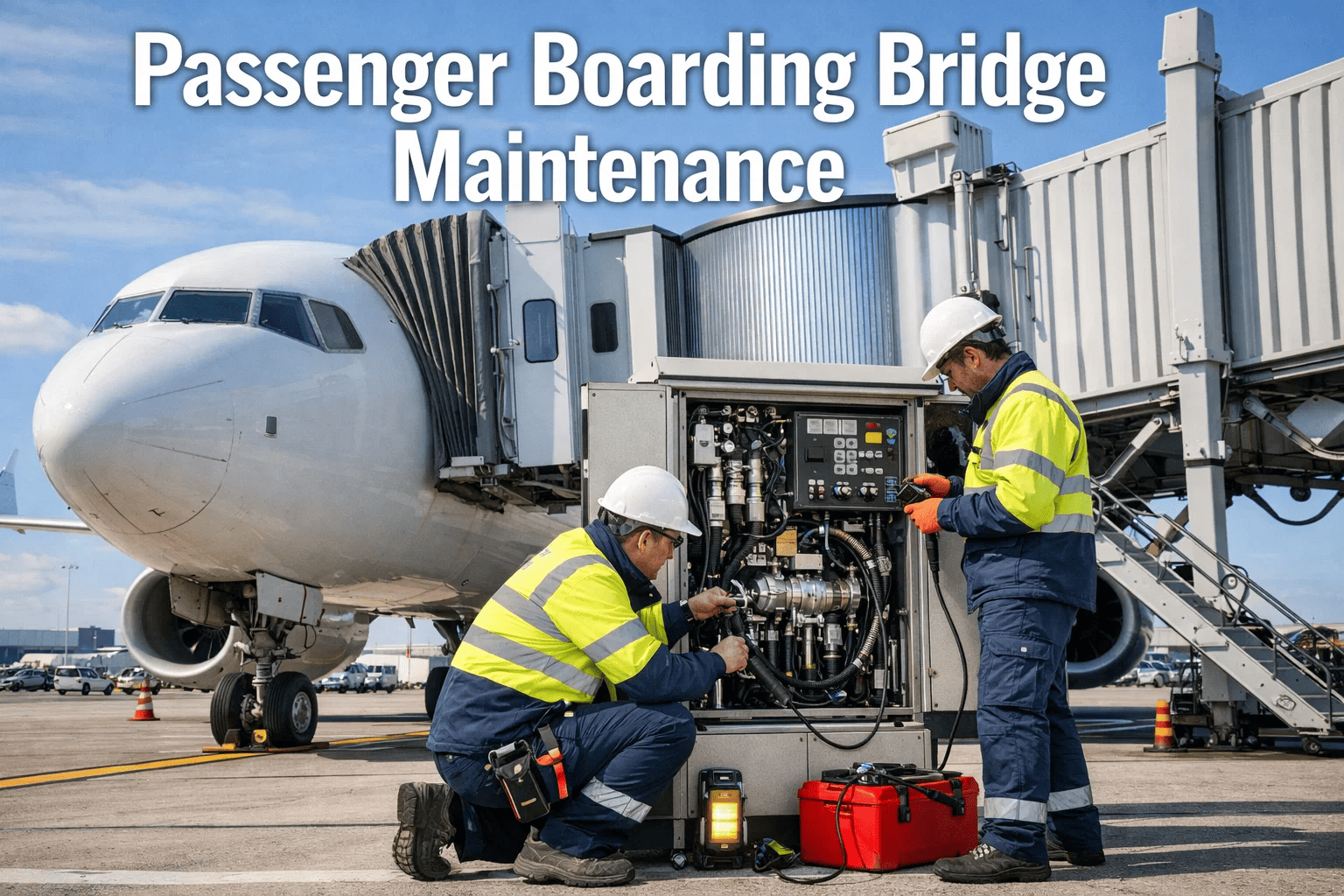
A stuck boarding bridge at Gate B14 does not just inconvenience 180 passengers — it cascades across the entire terminal. The aircraft misses its departure slot. The inbound flight waiting for that gate circles or diverts. The connecting passengers rebook. The airline absorbs over $100 per minute in delay costs while the maintenance team troubleshoots a hydraulic leak that was flagged three inspections ago but never received a work order. With over 35,000 PBBs installed at 2,500+ airports worldwide and each bridge cycling thousands of docking operations per year, the gap between reactive repair and preventive maintenance is measured in gate closures, regulatory findings, and passenger trust. Want to see how structured PM eliminates these failures? Get a free trial for 30 days and book a demo to close the maintenance gap at your gates.
Passenger Boarding Bridge (PBB) Maintenance: Preventing Delays at the Gate
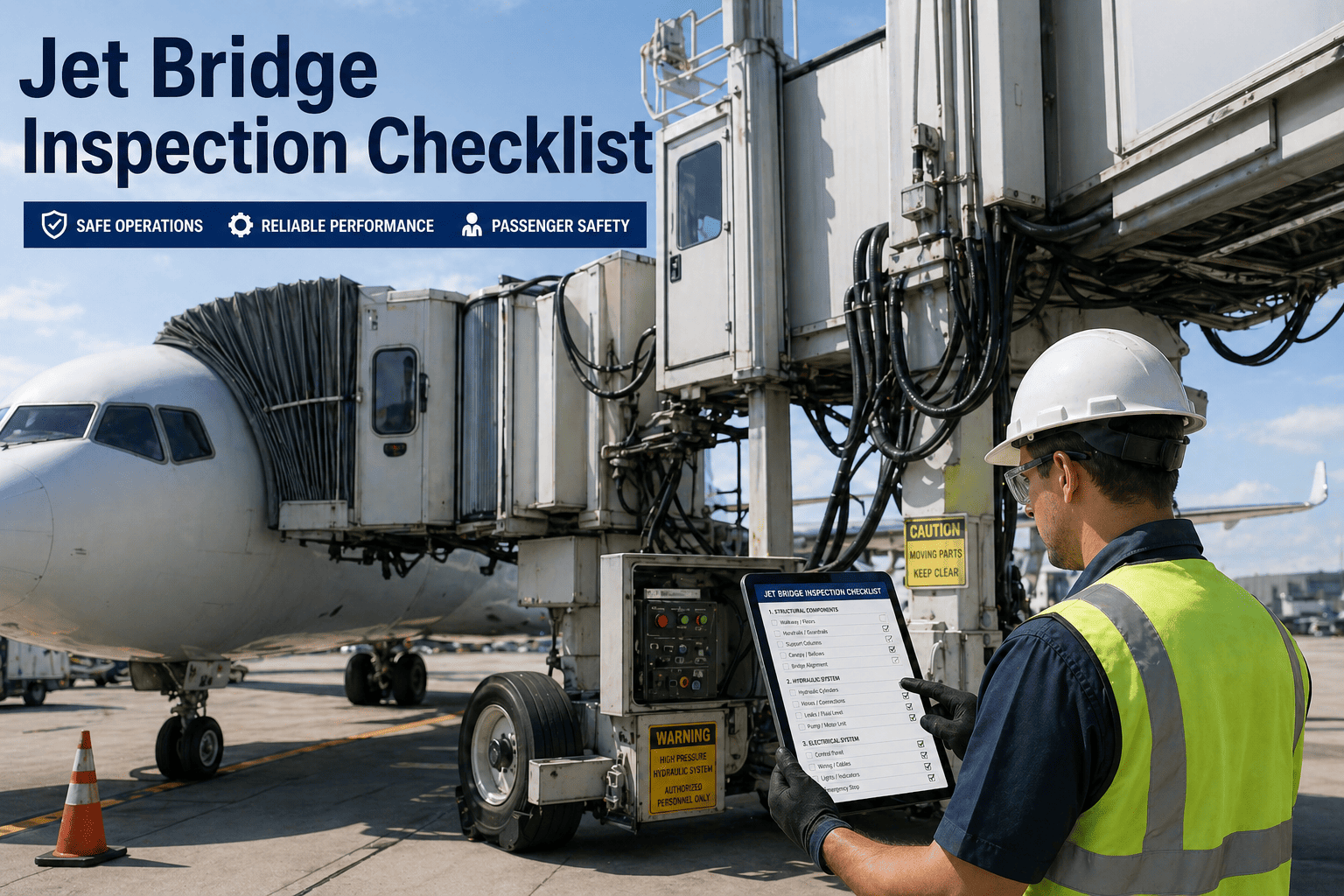
Hydraulic system integrity, drive wheel condition monitoring, tunnel alignment, canopy weatherproofing, and electrical safety inspection — managed through structured CMMS scheduling to keep every gate operational.
Stop gate closures before they start — automate PBB inspections and PM scheduling
Oxmaint connects every boarding bridge component — hydraulics, drive systems, canopy seals, electrical panels — to a single PM calendar with automatic work order generation when thresholds are crossed or intervals expire.
What a Passenger Boarding Bridge Is and Why It Demands Structured Maintenance
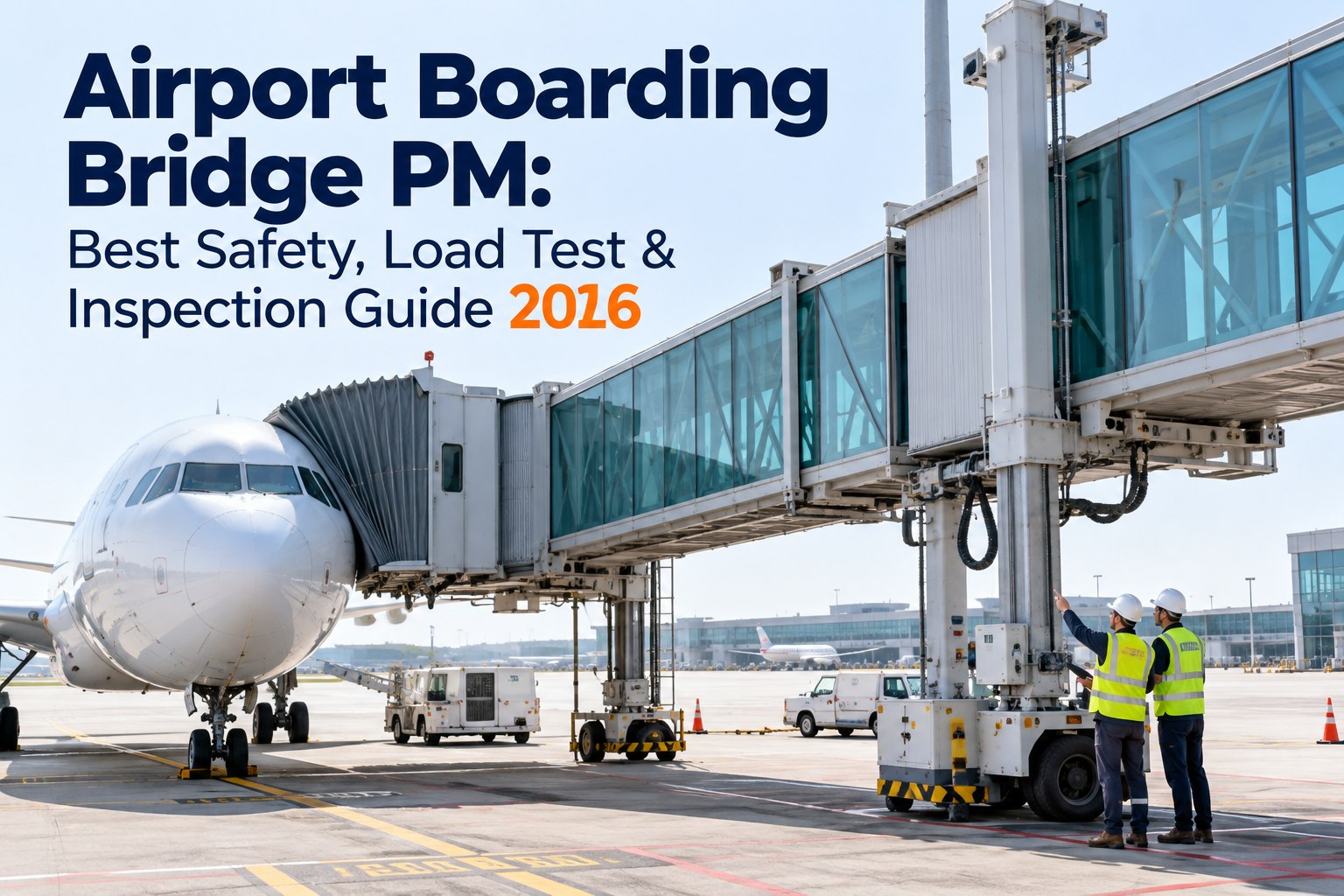
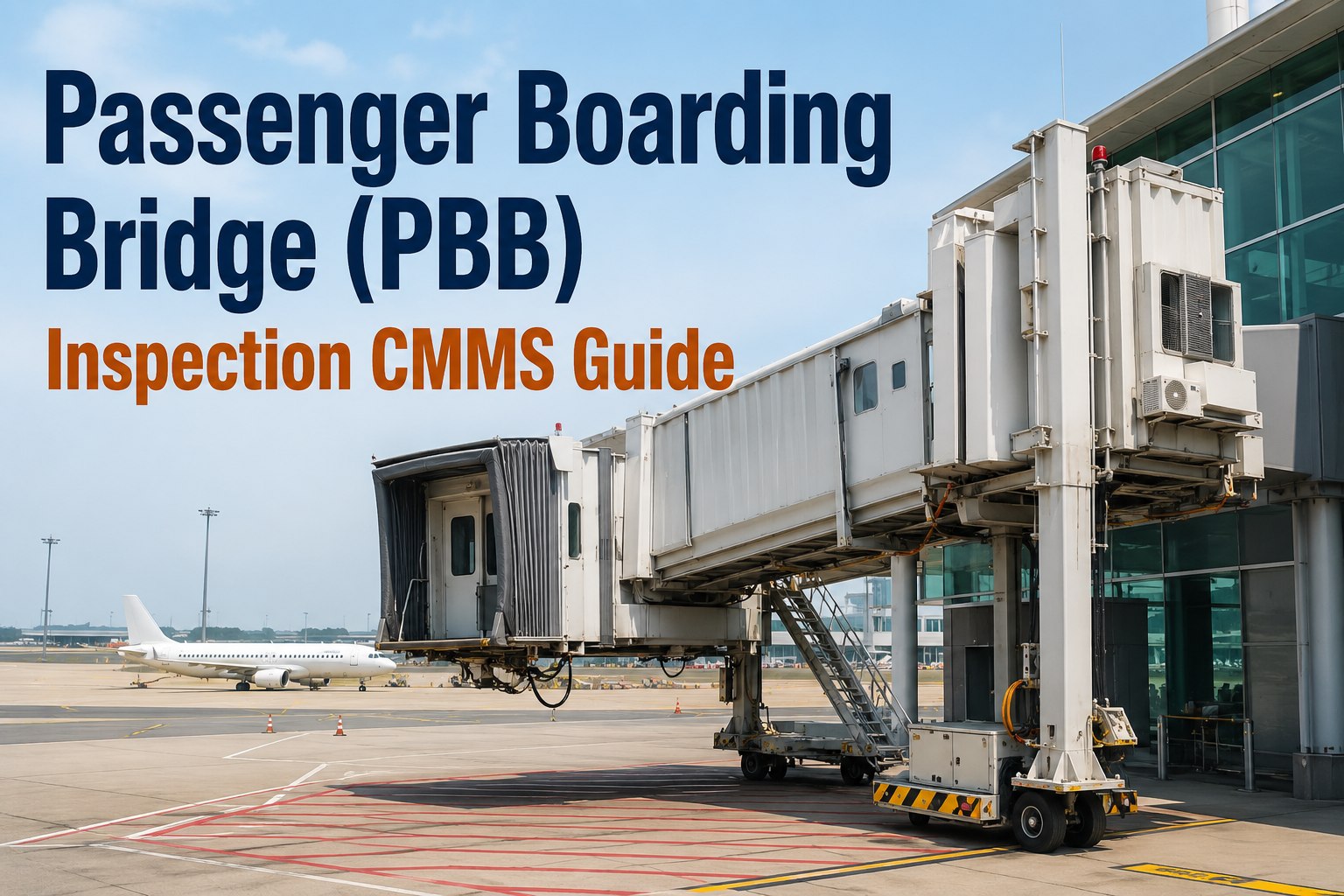
A passenger boarding bridge — also called a jet bridge, jetway, or aerobridge — is a movable, enclosed walkway that connects an airport terminal gate to the door of a parked aircraft. It eliminates the need for passengers to walk across the apron, providing safety from weather, jet blast, and ground traffic. A single PBB contains hydraulic elevation systems, telescopic tunnel sections, a rotunda mechanism, drive wheels and motors, electrical control panels, HVAC conditioning, fire detection, lighting, and a flexible canopy head that docks against the aircraft fuselage. Each of these subsystems operates under constant thermal cycling, wind loading, and mechanical stress from thousands of docking cycles per year. When any one subsystem fails, the gate closes — and every flight scheduled for that gate is delayed, diverted, or reassigned. Airports looking to eliminate unplanned gate closures should start a free trial with Oxmaint to build structured PM schedules for every bridge in the terminal.
Hydraulic Elevation System
Lift columns raise and lower the bridge to match aircraft door heights ranging from 2.5 m (regional jets) to 8+ m (A380 upper deck). Hydraulic cylinder seals, fluid levels, and pressure relief valves require monthly inspection.
Telescopic Tunnel
Nested tunnel sections extend and retract to span the distance between rotunda and aircraft. Roller guides, weatherstripping, and floor panels sustain wear from constant cycling and foot traffic.
Drive System and Wheels
Electric or hydraulic drive motors power the apron drive wheels that move the bridge laterally across the gate. Wheel bearings, drive chains, and motor brushes deteriorate under load and weather exposure.
Canopy Head and Bumper
The flexible canopy docks flush against the aircraft fuselage to create a weathertight seal. Bumper pads, proximity sensors, and the auto-leveler prevent fuselage damage during docking operations.
What Fails on a PBB — and What Each Failure Costs the Airport
PBB failures rarely happen without warning. Vibrations during docking, slower cycle times, inconsistent alignment, and rising hydraulic fluid consumption are all leading indicators that maintenance teams miss when inspections are paper-based or calendar-only. The table below maps the six most common failure modes, their warning signs, and the operational impact when they are not caught in time. Airports that want to catch these early should book a demo to see how Oxmaint condition-based alerts flag deterioration before it becomes a gate closure.
| Failure Mode | Component | Early Warning Sign | Consequence if Missed | Typical Repair Cost |
|---|---|---|---|---|
| Hydraulic seal failure | Lift column cylinders | Visible fluid weep, slow elevation response | Bridge cannot reach aircraft door — gate closed | $3,000–$8,000 |
| Drive wheel bearing seizure | Apron drive assembly | Grinding noise, uneven tracking | Bridge immobile — aircraft cannot be serviced | $2,500–$6,000 |
| Canopy bumper degradation | Docking head | Uneven seal gap, weather ingress | Fuselage scratch risk — airline damage claim | $1,500–$4,000 |
| Control system PLC fault | Electrical panel | Intermittent response, error codes on HMI | Safety interlock prevents all movement — full shutdown | $5,000–$15,000 |
| Tunnel roller guide wear | Telescopic section | Binding during extension, popping sounds | Slow docking cycle — turnaround time increase | $1,000–$3,000 |
| Canopy roof membrane failure | Weatherproofing system | Water ingress during rain, visible tears | Passenger complaints, slip hazard, NFPA 415 finding | $2,000–$5,000 |
Swipe to view all columns on mobile
The 4-Tier PBB Inspection Framework Every Airport Should Follow
PBB inspections operate on four distinct frequencies, each targeting different failure modes and compliance requirements. Airports that collapse all inspections into a single annual event consistently miss early degradation in high-cycle components like drive wheels and hydraulic seals. The framework below separates inspections by purpose and frequency so that maintenance teams allocate effort where the risk is highest. Build this exact framework in Oxmaint — start a free trial to configure multi-tier PM schedules for your PBB fleet.
Visual check before first docking of the day. Operator-level, takes 5–10 minutes per bridge.
Full operational cycle test with measurement recording. Technician-level, 45–90 minutes per bridge.
Full system teardown inspection with load testing. Specialist-level, 4–8 hours per bridge.
Ultrasonic testing and corrosion mapping of structural members. Specialist contractor, 1–2 days per bridge.
Reactive Gate Maintenance vs Preventive PBB Management: The Real Comparison
Most airport maintenance teams run in reactive mode — responding to operator calls when a bridge fails to dock. The consequence is not just the repair cost but the cascading delay cost across the gate schedule. The comparison below quantifies what changes when airports shift from break-fix to structured preventive maintenance. Want to make this shift at your airport? Start a free trial to build your preventive program in Oxmaint.
The Financial Case for Preventive PBB Maintenance
Airports that transition from reactive to preventive PBB maintenance see measurable returns within the first 12 months — not from technology investment but from eliminating the waste embedded in emergency repairs, expedited parts, and lost gate capacity. The numbers below represent typical outcomes from airports managing 20+ gates with structured PM programs. Ready to calculate the ROI for your terminal? Book a demo to see the cost model for your fleet.
How Oxmaint PM Scheduling and Asset Tracking Serve Airport Gate Maintenance Teams
Multi-Tier Inspection Scheduling
Configure daily walk-arounds, monthly functional tests, annual audits, and 5-year NDT surveys on the same asset record — each with its own checklist, assignee, and compliance documentation. Every inspection tier runs on its own calendar. No manual coordination required. Start a free trial to build your PBB inspection tiers in Oxmaint.
Condition-Based Alerts and Trending
Log hydraulic pressure readings, drive motor current draw, docking cycle times, and visual condition scores per bridge. Oxmaint trends these readings over time and generates automatic work orders when values cross thresholds — catching degradation that calendar-based PM misses. Book a demo to see condition trending in action.
Gate-Level Asset Registry
Every PBB is registered as a parent asset with child components — hydraulic system, drive assembly, canopy head, electrical panel, HVAC unit. Work orders, costs, and inspection findings roll up from component to bridge to terminal to airport portfolio. One hierarchy, complete visibility. Start a free trial to configure your gate asset hierarchy.
Compliance-Ready Digital Records
Every inspection, PM task, and corrective action is logged with timestamped digital signatures, photo evidence, and technician notes — ready for NFPA 415 audits, FAA Advisory Circular 150/5220-21C compliance reviews, and airline safety inspections without manual report assembly. Book a demo to see compliance reporting.
Frequently Asked Questions
How often should PBB hydraulic systems be inspected?
Hydraulic fluid level and visual seal inspection should occur daily as part of the operator walk-around. Full hydraulic pressure testing with seal integrity verification should be part of the monthly functional inspection. Cylinder rebuild or replacement is typically required every 5–7 years depending on cycle count and operating environment. Airports in extreme temperature climates — desert heat or northern freeze-thaw — should shorten hydraulic service intervals by 20–30% due to accelerated seal degradation. Start a free trial to configure hydraulic PM intervals for your climate zone.
What is the typical lifespan of a passenger boarding bridge?
A well-maintained PBB has a service life of 20–25 years, with some bridges operating beyond 30 years with proper care. Refurbishment at the 10–15 year mark — which typically costs 40–60% less than full replacement — can extend the lifecycle significantly while upgrading outdated control systems and weatherproofing. The key factor is not age but condition: bridges with consistent PM records and condition data consistently outlast those maintained reactively. Book a demo to see how Oxmaint tracks lifecycle condition across your bridge fleet.
What compliance standards apply to PBB maintenance?
In the United States, FAA Advisory Circular 150/5220-21C provides performance standards and specifications. NFPA 415 governs fire and safety requirements for airport terminal buildings including jet bridges. Seismic codes (Risk Category III) now apply in many regions following reclassification of PBBs from equipment to building standards. Airlines also conduct their own safety inspections and may restrict gate use if maintenance records are incomplete or non-current.
Can Oxmaint manage PBBs alongside other airport ground support equipment?
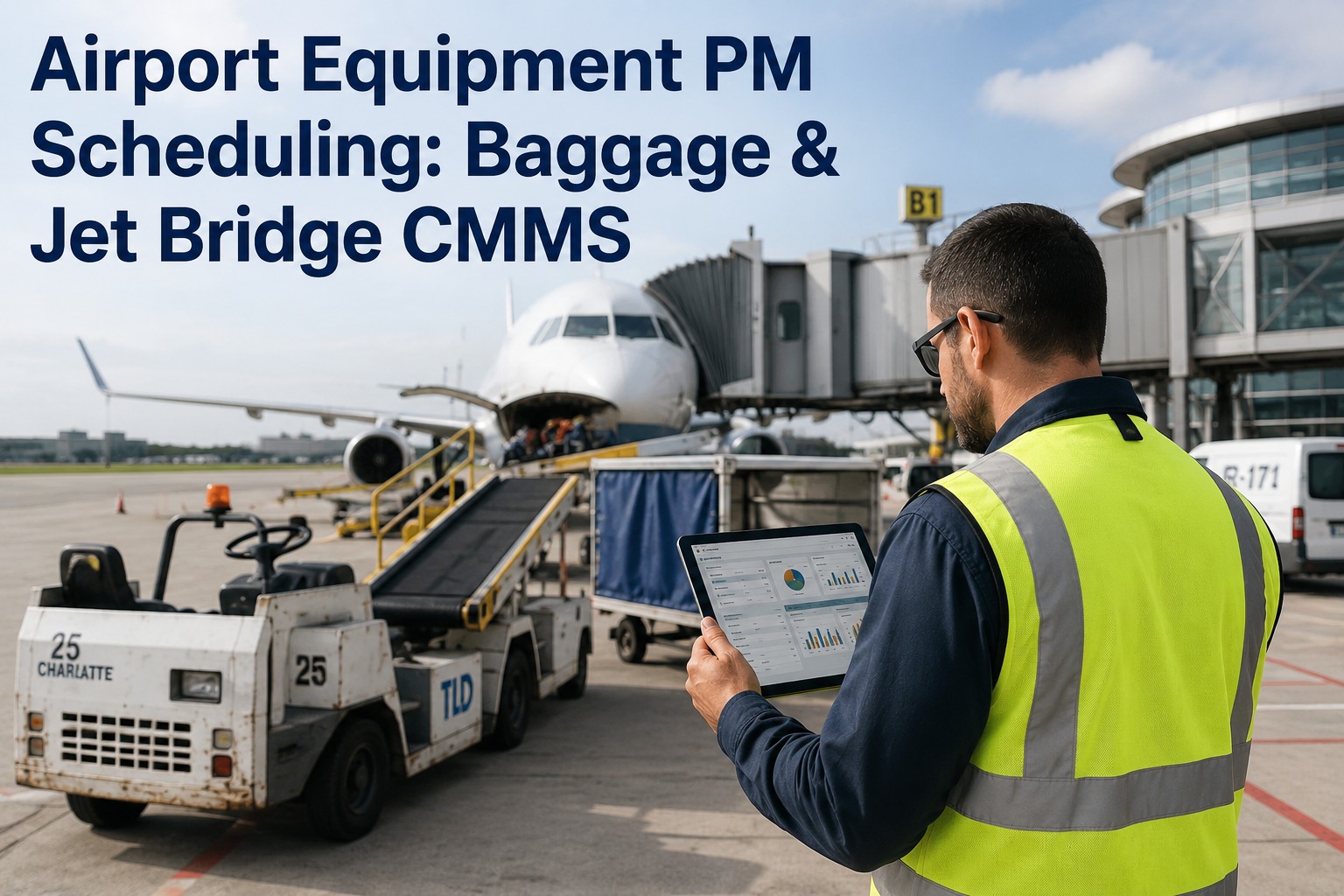
Yes. Oxmaint manages PBBs as part of the airport asset hierarchy alongside ground power units, pre-conditioned air systems, baggage handling equipment, and facility systems. Each equipment type has its own PM schedule, inspection checklist, and compliance requirements — but all roll up into a single dashboard for the airport facilities manager. Multi-site capability means airports with multiple terminals or management groups can share a single platform. Start a free trial to see the full airport asset management view.
Every gate, every bridge, every inspection — one platform for airport equipment reliability
Oxmaint tracks PBB hydraulic condition, drive system health, compliance status, and maintenance cost across your entire terminal — so your team prevents gate closures instead of reacting to them.