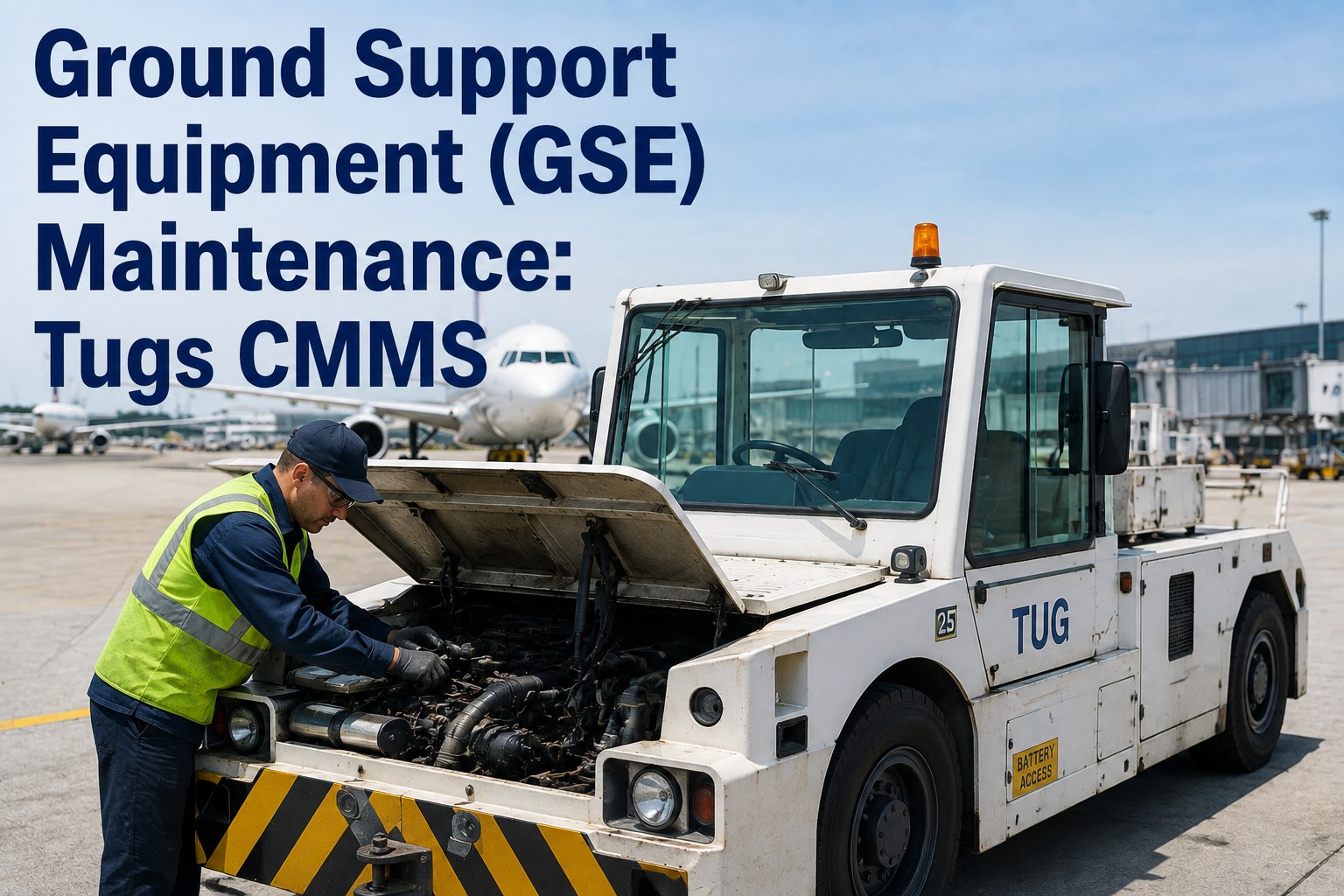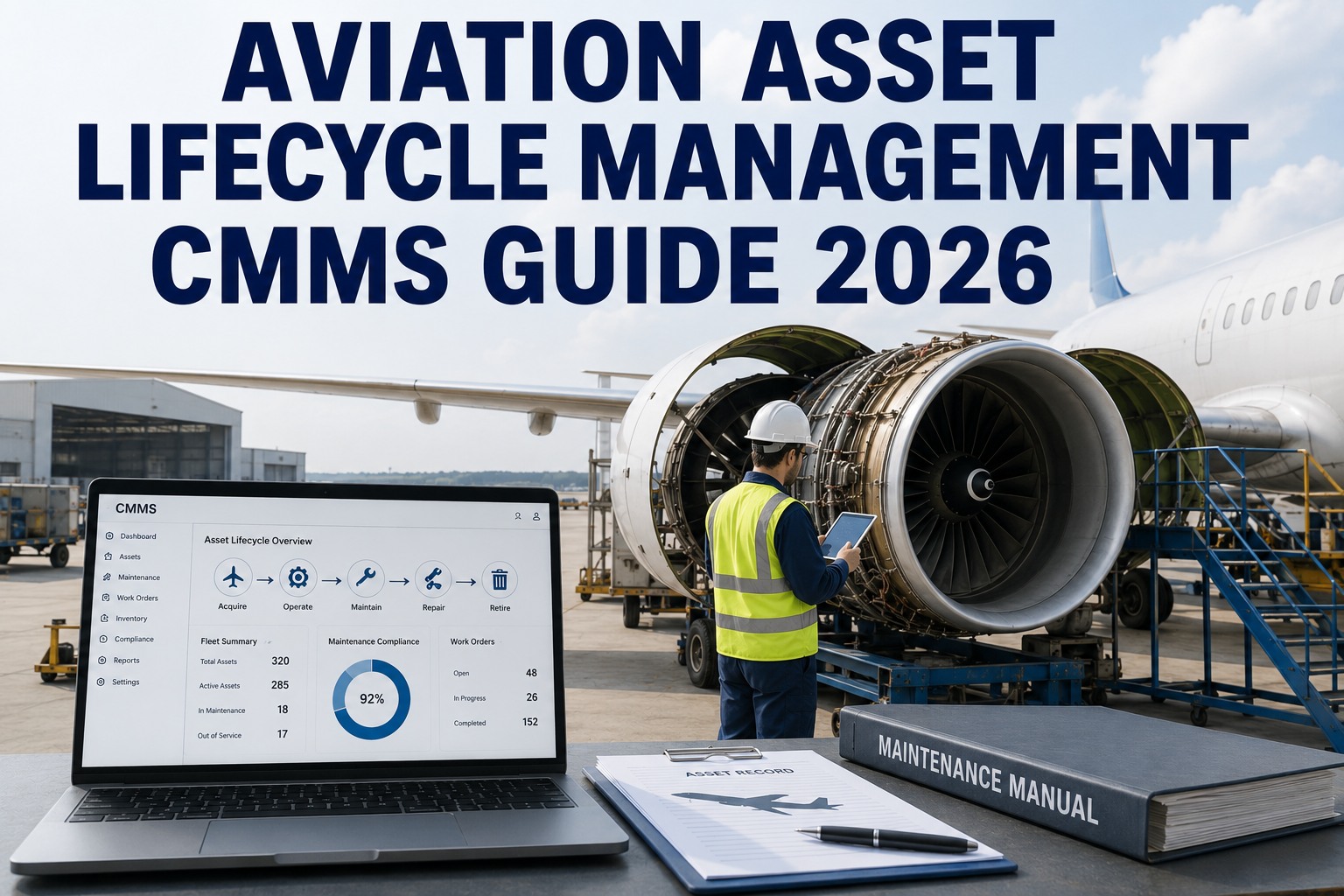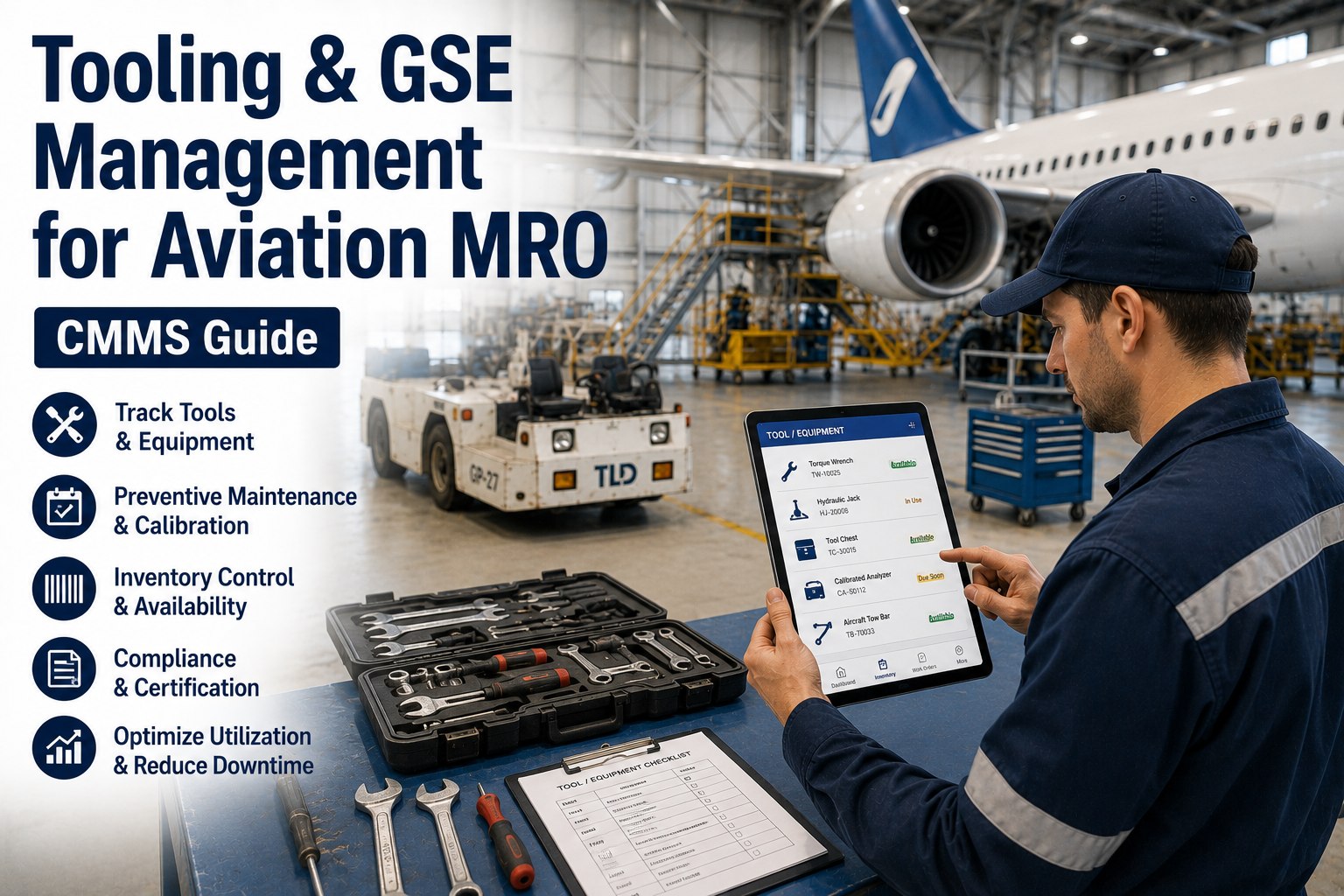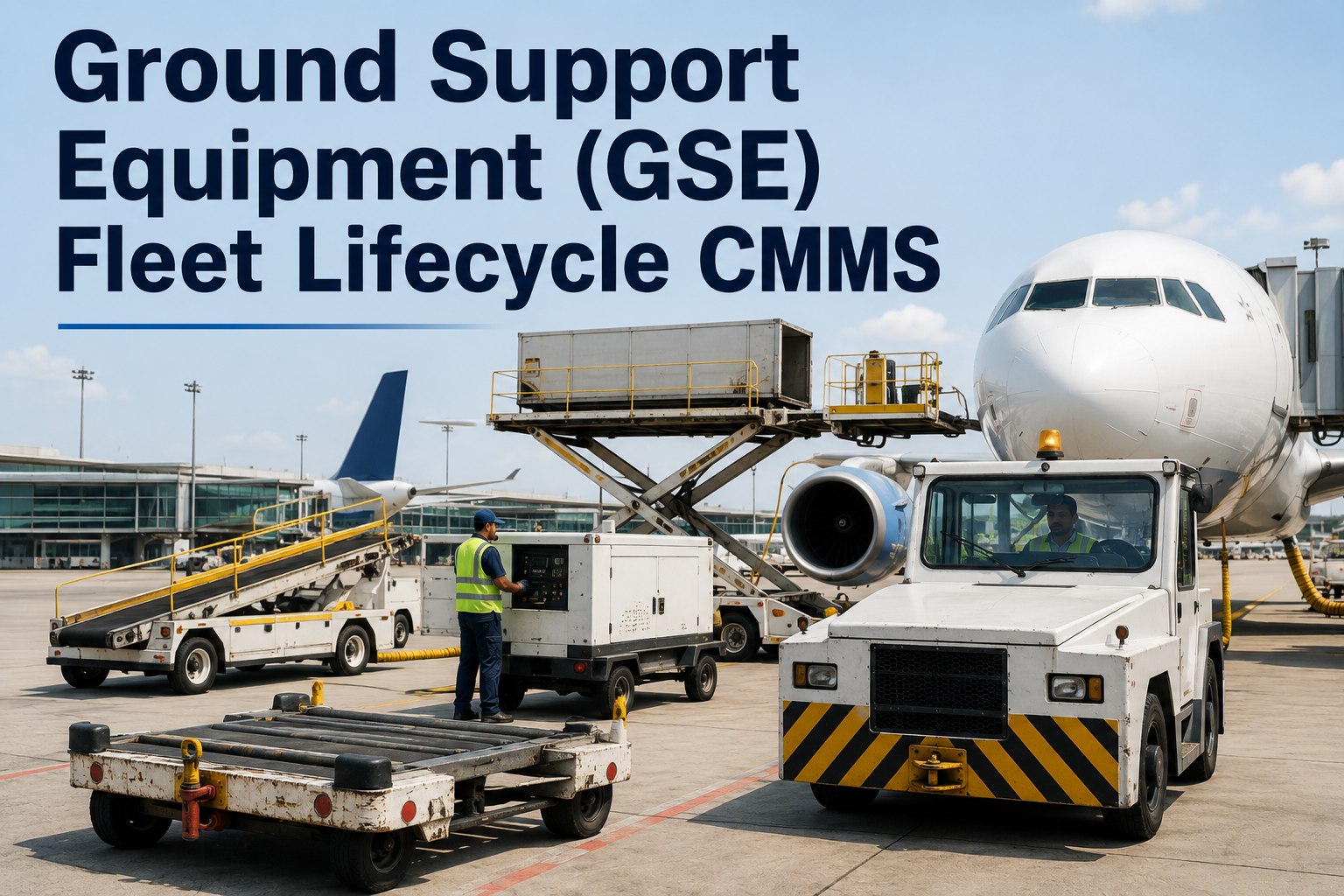
Ground support equipment fleet lifecycle management is the discipline of tracking every tug, belt loader, de-icer, pushback, and GPU unit from acquisition through daily operation, preventive maintenance, mid-life overhaul, and retirement — and a purpose-built CMMS is what turns that lifecycle into measurable cost control. Research from the Airport Cooperative Research Program suggests GSE can represent 15–20% of total ground handling cost, and that reactive, break-fix maintenance inflates that share by 25–40% through AOG delays, missed slots, and premature asset replacement. This guide walks reliability and ground-ops leaders through the five phases of the GSE lifecycle, shows how a modern, AI-powered platform like OxMaint compresses each phase, and gives you the benchmarks, formulas, and replacement-forecasting frameworks to run GSE like a real fleet rather than a scattered collection of vehicles. When you are ready to see it on your own asset register, Start Free Trial or book a personalised walkthrough.
Is your GSE fleet managing you — or are you managing it?
Most ground operations treat GSE as a loose collection of vehicles, reacting to breakdowns on the ramp. A CMMS-driven GSE lifecycle flips that: every tug, belt loader, and GPU is tracked, scheduled, and forecast from acquisition through retirement — cutting unplanned downtime up to 50% and extending asset life by 3–5 years.
What is the GSE fleet lifecycle — and why most ops get it wrong
The GSE fleet lifecycle spans five phases: acquisition, commissioning, operation & PM, mid-life overhaul, and retirement. At each phase a CMMS captures different data, triggers different work orders, and feeds different KPIs back to the asset owner. Skipping any phase — or running it on spreadsheets — is where the 25–40% cost inflation hides.
Acquisition & Registration
Spec evaluation, vendor selection, serial-number capture, warranty start date. The CMMS creates the asset master record here — the single source of truth every downstream phase references. Missing warranty data alone costs fleets 8–12% in recoverable repair costs.
Commissioning & Baseline
Acceptance inspection, baseline condition assessment, PM template assignment, meter/telematics integration. OxMaint ties each asset to its OEM service intervals and regulatory inspection cycle (e.g., FAA AC 150/5210-20 for GSE fire safety) from day one.
Operation & Preventive Maintenance
Daily ramp checks, scheduled PMs, meter-based services, defect rectification, and parts consumption tracking. This is where 70% of lifecycle cost accrues — and where predictive analytics and automated work-order triggers save the most.
Mid-Life Overhaul & Refurb
Engine/drivetrain rebuild, chassis refurbishment, electric conversion, or technology upgrade. A lifecycle CMMS gives you the cost-vs-replace data: if cumulative repair cost exceeds 60–70% of replacement, the asset is a retirement candidate.
Decommission & Replacement
Disposal, trade-in, surplus sale, or cannibalisation for parts. The CMMS closes the asset record, rolls remaining parts inventory forward, and feeds replacement-forecasting models so capital budgets land 12–24 months ahead.
How to track GSE assets and build a PM program that sticks
A GSE asset tracking system is only as good as the data model behind it. Every unit needs a digital twin in the CMMS — serial number, VIN/equipment ID, location/station, meter reading, assigned operator, current PM status, and open defects — updated in real time from the ramp.
Master Data Capture
Record make, model, serial, acquisition cost, warranty terms, and inspection regime for each asset. Tag with QR codes or RFID for ramp-side identification. A clean master record cuts audit prep time by 60%.
Meter-Based PM Triggers
Auto-generate work orders at engine-hour, mileage, or calendar intervals. OxMaint reads telematics feeds or operator-entered meter readings and triggers PMs — eliminating the "we forgot" gap that causes 1 in 3 GSE failures.
Regulatory Inspection Cycle
Schedule and document quarterly safety inspections, annual FAA/ICAO compliance checks, and fire-safety audits. Digital records with photo evidence replace paper binders and survive any audit or insurance review.
Spare Parts Linkage
Each PM template carries a bill of materials — filters, hydraulics, tires, belts — so parts are reserved and picked before the tech reaches the asset. Stockouts that delay GSE returns to service drop by 70%.
A regional ground handler with 340 GSE units was spending $48K/month on reactive repairs and losing 12–15 units per day to unplanned downtime. After implementing OxMaint with meter-based PMs, telematics integration, and a parts-BOM for each asset class, unplanned downtime dropped 38% in 90 days, parts stockouts fell from 22 events/month to 3, and GSE availability rose from 86% to 94%. The payback period on the CMMS investment was under 4 months.
GSE replacement guide: when to overhaul, when to retire
Replacement decisions fail when they rely on gut feel or the loudest operator complaint. A lifecycle CMMS gives you three objective signals — cost ratio, reliability trend, and safety/audit risk — and a simple formula to decide whether a unit earns another overhaul or gets capital-planned for replacement.
| GSE Asset Class | Avg Useful Life | Typical Overhaul Cost | Replacement Cost | RCR Threshold |
|---|---|---|---|---|
| Baggage Tug (electric) | 8–10 years | $8K–$14K | $45K–$65K | 65% |
| Belt Loader (diesel) | 7–9 years | $6K–$12K | $35K–$55K | 60% |
| Pushback Tractor | 12–15 years | $25K–$45K | $180K–$280K | 55% |
| De-Icer Truck | 8–10 years | $15K–$25K | $120K–$180K | 55% |
| GPU (400 Hz) | 10–12 years | $10K–$18K | $60K–$90K | 60% |
| Catering Truck | 8–10 years | $12K–$20K | $110K–$160K | 55% |
Electric GSE transition: what changes in your CMMS
The FAA's Zero-Emissions Roadmap and airline net-zero pledges are accelerating the electric GSE transition, with a target of 50% zero-emission GSE by 2030 at major hubs. Electric tugs, eGPUs, and electric belt loaders change the maintenance profile — fewer moving parts, no oil changes, but battery health, charger infrastructure, and high-voltage safety become the new critical PMs.
- Engine oil & filter every 250 hrs
- Fuel system & injector service
- Transmission fluid & filter
- Exhaust & emissions compliance
- Coolant system & hoses
- Diesel particulate filter regen
- Roughly 18–24 PM touchpoints per year
- Battery state-of-health (SOH) monitoring
- Charger connector wear & calibration
- High-voltage insulation testing
- Thermal management system service
- Regenerative braking system check
- Tire & suspension (heavier battery load)
- Roughly 6–10 PM touchpoints per year
How OxMaint runs GSE as a real fleet — not a collection of vehicles
OxMaint is an AI-powered CMMS and EAM platform built for the realities of ramp-side maintenance. It maps each phase of the GSE lifecycle to automated workflows, predictive insights, and audit-ready records — so your ground-ops team stops firefighting and starts managing assets strategically.
AI-Powered Predictive Maintenance
OxMaint ingests telematics, meter readings, vibration, and battery-health data from every GSE unit, then uses machine-learning models to flag failure signatures 7–21 days before breakdown. Outcome: 30–50% fewer unplanned ramp failures and 15–25% lower emergency repair spend.
Full-Lifecycle Asset Tracking
From acquisition cost and warranty start through every PM, defect, and overhaul — every GSE asset has a single, searchable digital record with QR-scan access on the ramp. Outcome: 60% faster audit prep, zero lost paper work orders, and a defensible asset register for capital planning.
Automated PM & Compliance Work Orders
OxMaint auto-generates meter-based and calendar-based PMs, assigns them to the right technician, reserves parts from the BOM, and escalates overdue work. Outcome: 95%+ PM compliance vs the 65–70% industry average, and no more missed FAA or ICAO inspection deadlines.
Replacement Forecasting & Analytics
Real-time RCR dashboards, MTBF trends, and cost-per-hour analytics rank every asset from "healthy" to "retire now." Outcome: capital budgets justified with hard data, 3–5 years of asset life extended through smarter overhaul timing, and no surprise replacements.
"We went from 12 breakdowns a day to under 4. OxMaint's predictive alerts catch bearing failures on our belt loaders before they strand a gate. The replacement-forecasting dashboard alone justified the purchase — we retired 8 units we were over-maintaining and redirected $140K into new electric tugs."
See OxMaint on your GSE fleet — book a 30-minute demo
Bring your top 20 assets and we will show you exactly how the lifecycle maps, where the cost leaks are, and what predictive maintenance looks like on your ramp data.
GSE fleet lifecycle CMMS — your questions answered
What is a GSE fleet lifecycle CMMS?
A GSE fleet lifecycle CMMS is a computerized maintenance management system that tracks every piece of ground support equipment — tugs, belt loaders, de-icers, GPUs, pushbacks — from acquisition through commissioning, daily operation and preventive maintenance, mid-life overhaul, and retirement. It replaces spreadsheets and paper work orders with automated PM scheduling, real-time asset tracking, parts inventory linkage, and replacement-forecasting analytics, giving ground-ops leaders a single source of truth for every asset's cost, reliability, and compliance status.
How does CMMS software improve GSE fleet management?
CMMS software improves GSE management by automating meter-based and calendar-based preventive maintenance triggers, eliminating missed PMs that cause up to 1 in 3 unplanned breakdowns. It also centralizes asset records, links parts bills of materials to work orders so stockouts drop by 60–70%, and provides real-time dashboards on availability, MTBF, and cost-per-hour. Teams typically see 30–50% less unplanned downtime and 15–25% lower repair spend within the first year. You can see it on your own asset register — Book a Demo to walk through a live configuration.
When should GSE equipment be replaced vs overhauled?
Use the Replacement Cost Ratio (RCR): divide cumulative repair cost over the last 12 months by the replacement cost, then multiply by 100. If RCR is below 40%, continue operating; between 40–65%, evaluate a mid-life overhaul; above 65%, trigger capital replacement planning. Factor in reliability trend (rising MTBF failures) and safety/audit risk alongside the ratio — a unit can be cheap to repair but unreliable enough to justify replacement.
How does a CMMS support the transition to electric GSE?
A CMMS supports electric GSE transition by managing new PM profiles — battery state-of-health monitoring, charger connector wear, high-voltage insulation testing, and thermal management — alongside traditional chassis and brake services. It ingests battery telemetry data per charge cycle, flags cells degrading faster than spec, and adjusts PM intervals for the lower-maintenance electric drivetrain. OxMaint handles both diesel and electric assets in a single register, so you can compare cost-per-hour and plan the transition by real data rather than estimates.
How long does it take to implement a GSE CMMS?
A focused GSE CMMS implementation for a mid-size fleet (200–500 units) typically takes 4–8 weeks: week 1–2 for asset data migration and master-record cleanup, week 3–4 for PM template configuration and parts-BOM setup, week 5–6 for technician training and QR-tag rollout, and week 7–8 for telematics integration and dashboard tuning. OxMaint onboarding is guided end-to-end, and most teams are running live work orders within 30 days. Start with a Start Free Trial to see how fast your data imports.
Run your GSE fleet on data — not duct tape
Join the ground-ops teams using OxMaint to cut unplanned downtime up to 50%, extend asset life 3–5 years, and replace paper binders with audit-ready digital records. Your 14-day trial includes guided onboarding and predictive analytics on your real asset data.
Free 14-day trial · No credit card