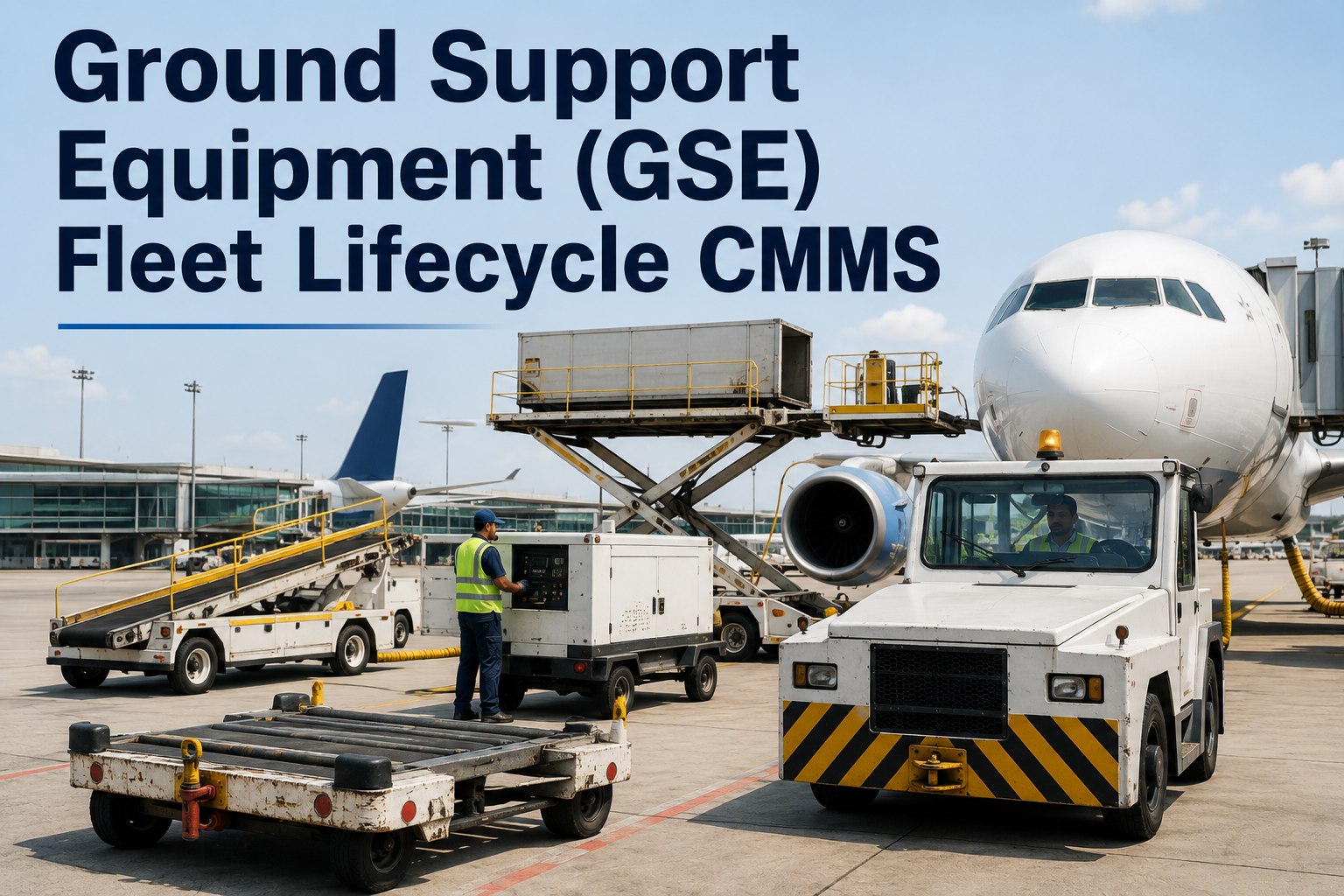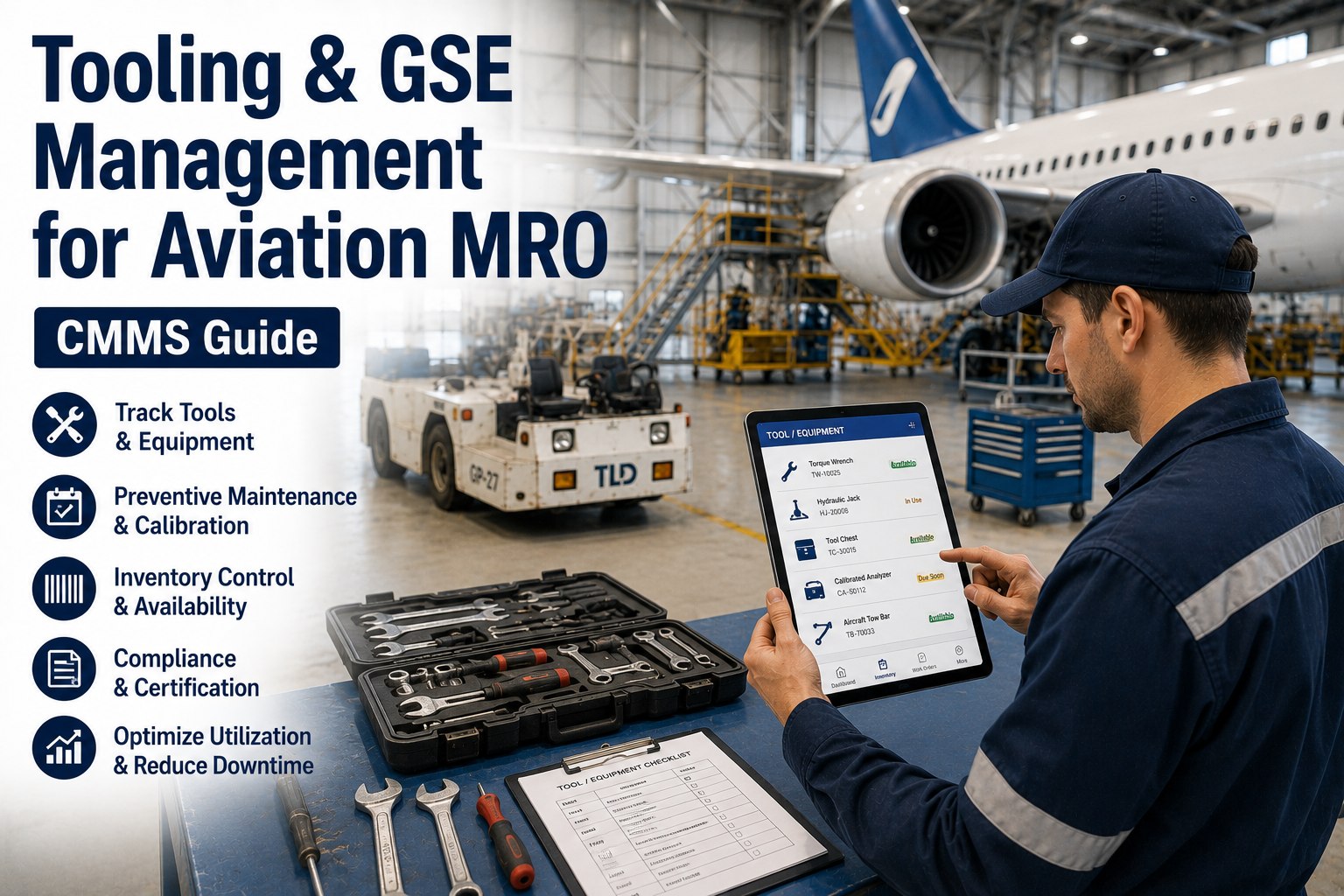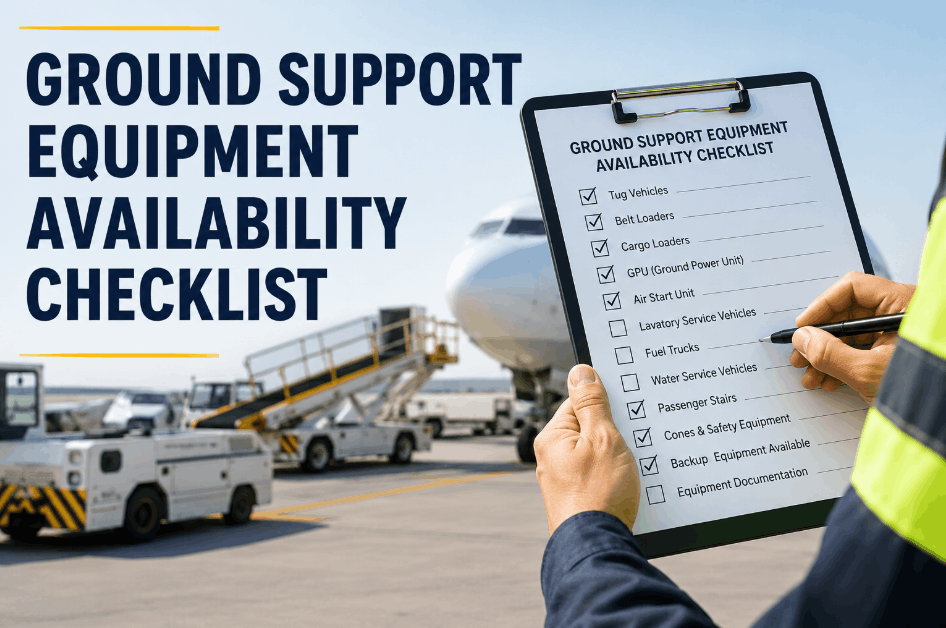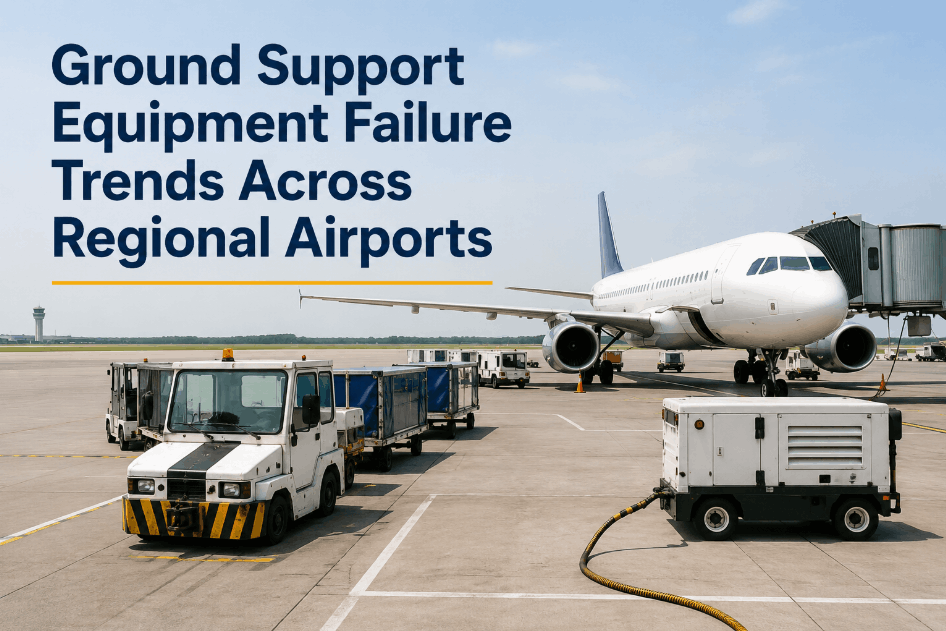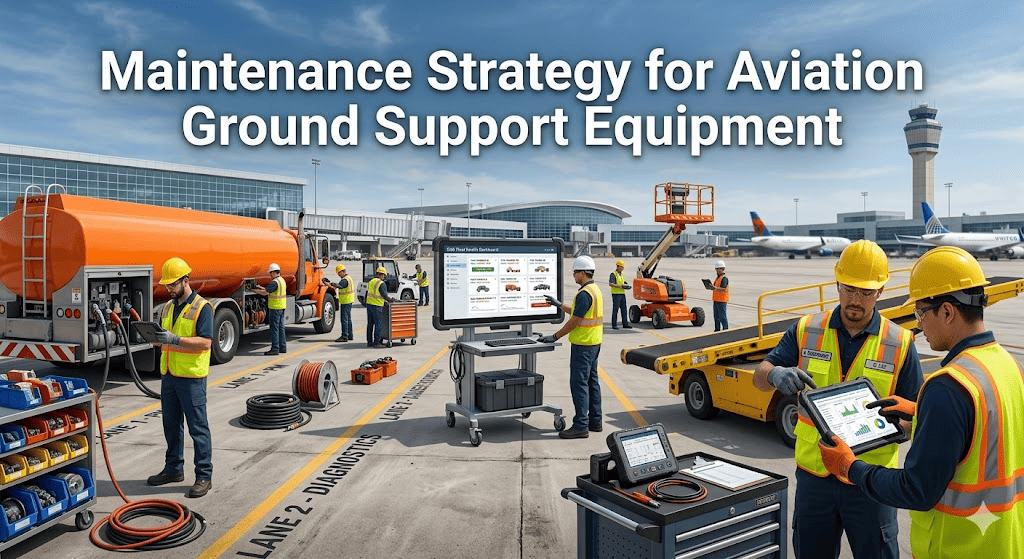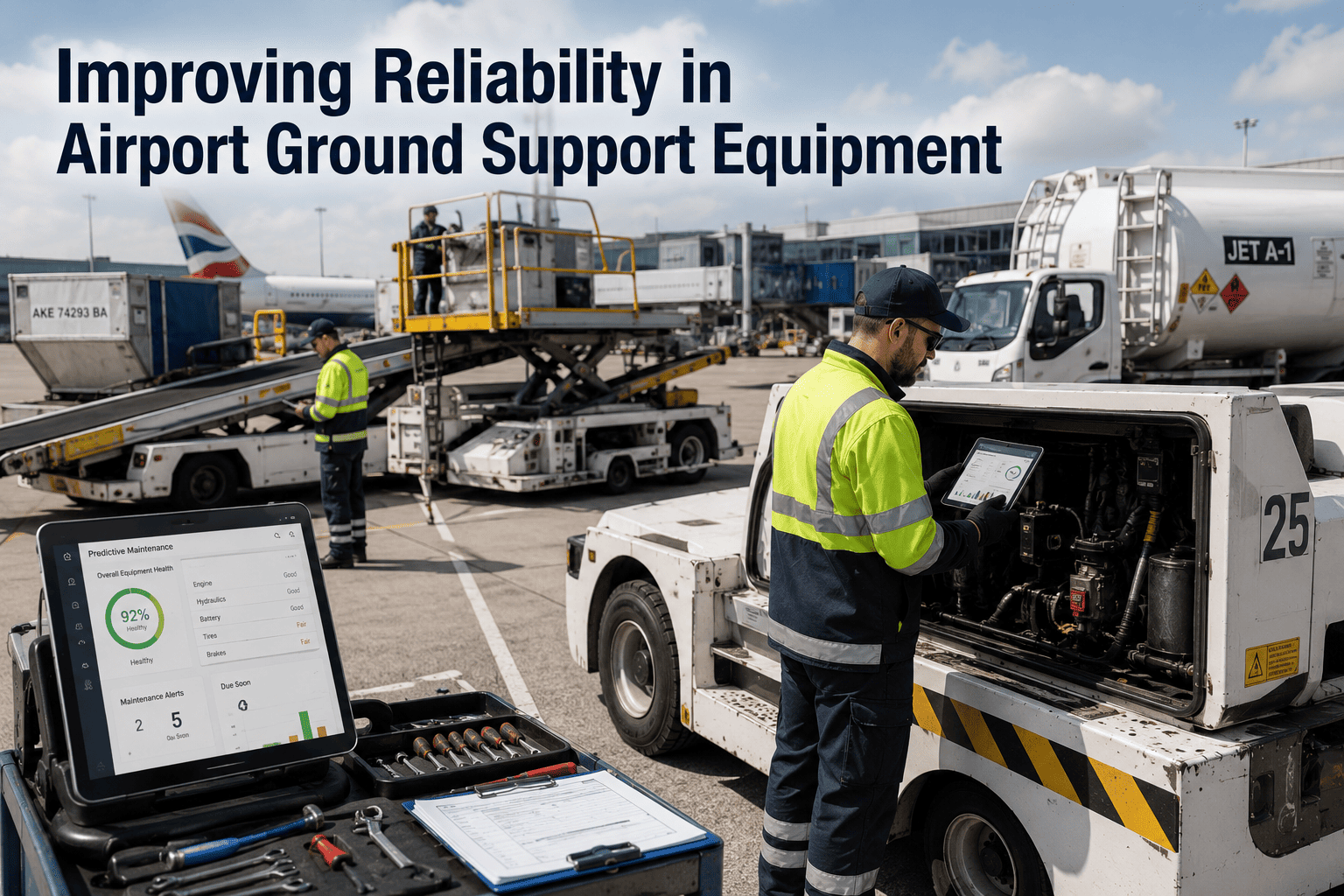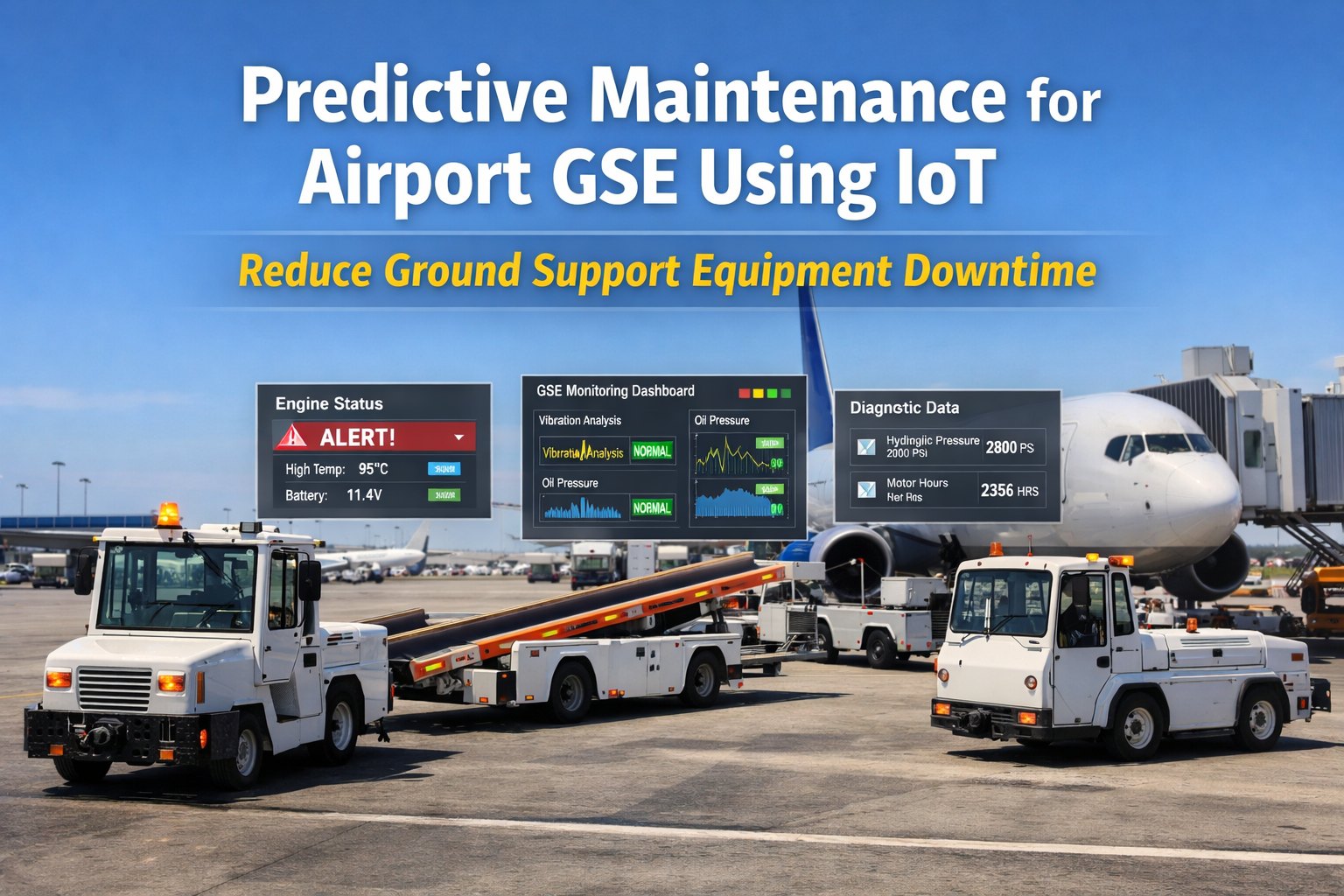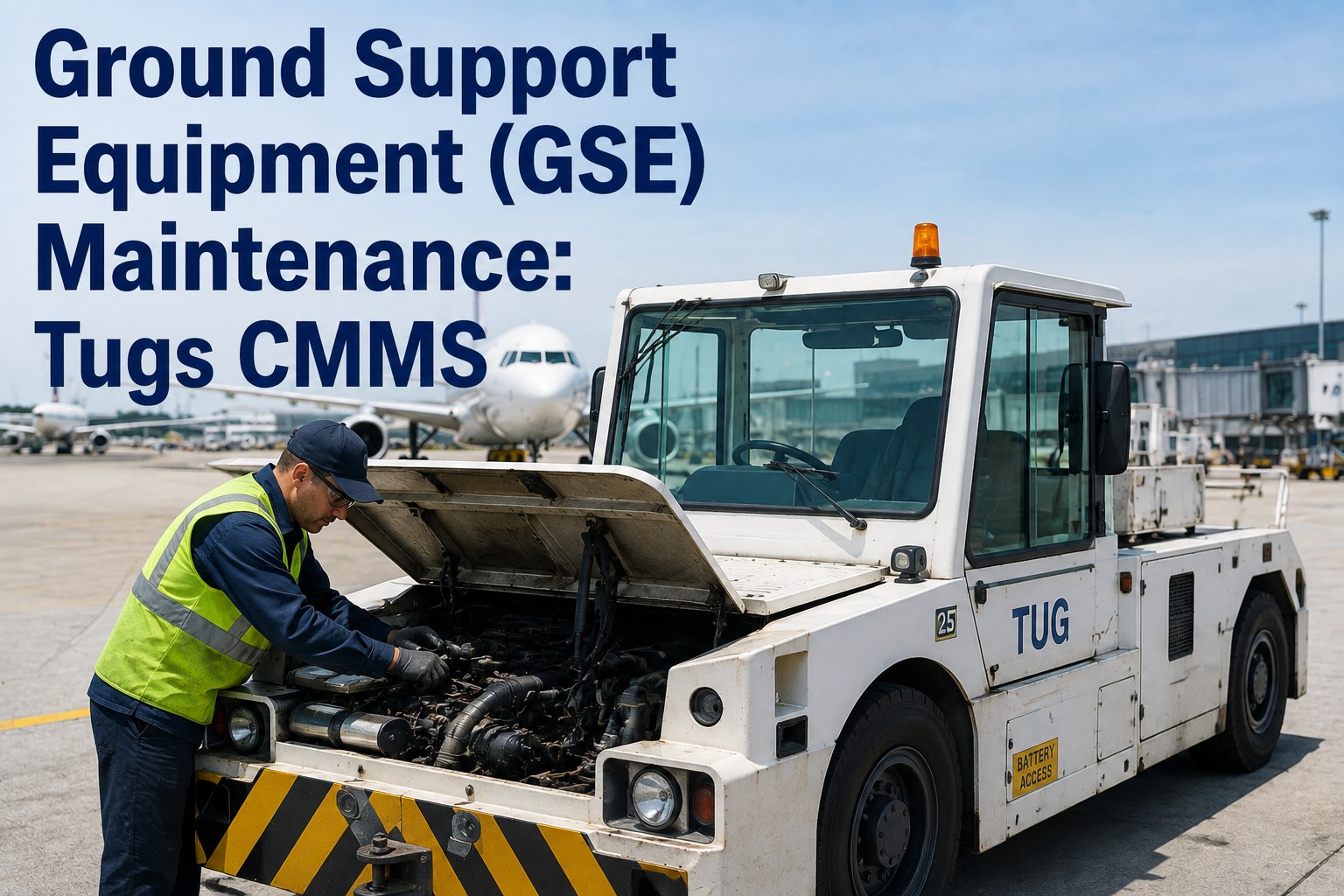
Ground support equipment maintenance is the backbone of every efficient airport ramp — when pushback tugs, belt loaders, GPUs and de-icers go down, flights don't leave on time. This GSE maintenance guide for 2026 walks through preventive maintenance schedules by equipment type, telematics integration, fuel and battery tracking, and damage history management using a CMMS built for aviation operations. Whether you manage a 40-unit tug fleet or hundreds of mixed GSE assets, the right CMMS eliminates paper work orders, prevents hidden downtime, and keeps your ramp moving. Ready to modernize your program? Start Free Trial and see how OxMaint streamlines GSE fleet maintenance in days, not months.
Is Your GSE Fleet Grounding Your On-Time Performance?
A single pushback tug failure can delay a flight by 25 minutes and cost $10,000+ in cascading disruptions. Most GSE programs still run on clipboards and spreadsheets — and they're paying for it in hidden downtime, missed PMs, and audit failures. OxMaint brings every tug, belt loader, GPU and de-icer into one AI-powered CMMS so your ramp never stops moving.
Industry benchmark data shows that over a third of GSE breakdowns trace back to missed or delayed preventive maintenance. OxMaint's automated PM engine eliminates those gaps — scheduling every inspection, fluid check and component replacement by hour-meter, cycle count or calendar interval.
Preventive Maintenance Intervals for Every GSE Asset Class
Not all ground support equipment is built the same — and neither are their PM schedules. Below is a GSE PM guide covering the five most critical asset classes, with benchmark intervals that high-performing ramp operations use to keep fleet availability above 92%.
Pushback Tug Maintenance
- Daily: Walk-around, fluid levels, tire condition, tow hitch inspection, brake check
- 250 hrs: Engine oil & filter, transmission fluid, hydraulic line inspection
- 500 hrs: Coolant system service, alternator/belt check, axle lubrication
- 1,500 hrs: Full drivetrain inspection, brake overhaul, tow coupling NDT
Belt Loader Maintenance
- Daily: Belt tension, roller condition, emergency stop, hydraulic leaks
- 100 hrs: Hydraulic fluid level, belt alignment, drive chain lubrication
- 500 hrs: Hydraulic filter replacement, sprocket wear, electrical harness
- 2,000 hrs: Belt replacement, hydraulic pump rebuild, control panel
Ground Power Unit (GPU) Maintenance
- Daily: Output voltage check, cable insulation, connector wear, fuel level
- 250 hrs: Oil & filter, air filter, battery terminals, fuel filter
- 500 hrs: AVR calibration, cooling fan, alternator brush inspection
- 3,000 hrs: Major overhaul, alternator rewind, fuel injector service
De-Icer Truck Maintenance
- Daily: Spray boom function, fluid concentration, nozzle check, heater
- Weekly: Tank calibration, pump pressure, boom articulation, filter
- 250 hrs: Chassis PM, hydraulic fluid, boom cylinder seals
- Season end: Full flush, long-term storage prep, corrosion treatment
Air Start Unit (ASU) Maintenance
- Daily: Air pressure output, hose condition, connector valves, fuel
- 250 hrs: Engine PM, compressor oil, air filter, intake inspection
- 500 hrs: Compressor valve service, pressure regulator, safety relief
- 2,500 hrs: Compressor overhaul, engine tune, control system
Container / Cargo Loader Maintenance
- Daily: Platform function, safety rails, hydraulic leaks, limit switches
- 100 hrs: Hydraulic fluid, lift chain, platform rollers, outrigger
- 500 hrs: Hydraulic filter, chain tension, electrical sensors
- 3,000 hrs: Major hydraulic service, structural NDT, control upgrade
What a GSE Maintenance CMMS Actually Fixes
A 180-asset GSE fleet running on spreadsheets typically misses 12–18% of scheduled PMs each month, suffers 4–6 unplanned breakdowns per week, and spends 15+ hours weekly on paperwork. Here's how a dedicated GSE maintenance CMMS changes the math.
| Maintenance Capability | Spreadsheets & Paper | OxMaint GSE CMMS |
|---|---|---|
| PM Scheduling | Manual reminders, 12–18% PM miss rate | Auto-triggered by hour-meter, cycles or date — 98%+ PM compliance |
| Work Orders | Paper triplicates, lost in trucks | Digital work orders on mobile, photo capture, e-signature |
| Asset History | Scattered Excel files, incomplete | Full lifecycle per asset — every repair, cost and failure logged |
| Spare Parts | Stockouts, emergency orders, 20% premium | Real-time inventory with auto-reorder at min/max thresholds |
| Telematics Integration | Manual data entry, by days | Live hour-meter & fault-code sync from GSE telematics |
| Audit Readiness | Days of report assembly, gaps | One-click compliance reports for FAA, IATA and airline audits |
How OxMaint Powers Your GSE Maintenance Program
OxMaint is an AI-powered CMMS and EAM platform purpose-built for maintenance and reliability teams. For GSE operations, it maps directly to the four capabilities that drive fleet availability, cost control and compliance.
AI-Driven Predictive Maintenance
OxMaint's AI engine analyzes telematics feeds, fault codes and historical failure patterns to predict component failures 7–21 days before they happen — cutting unplanned GSE downtime by 30–50%.
Automated PM Scheduling Engine
Every pushback tug, belt loader and GPU gets a PM plan triggered by hour-meter readings, cycle counts or calendar intervals. Technicians get mobile alerts, and supervisors see real-time compliance dashboards.
Telematics & IoT Integration
Connect GSE telematics systems directly to OxMaint. Hour-meters, battery state-of-charge, fuel levels and engine fault codes flow in automatically — no manual data entry, no stale records.
One-Click Audit & Compliance Reports
When an FAA, IATA or airline audit hits, OxMaint generates complete PM, inspection and repair histories for any GSE asset in seconds — eliminating days of report preparation and closing audit gaps.
The Real Cost of Reactive GSE Maintenance
A mid-sized GSE operation with 120 assets typically spends $310,000–$420,000 annually on reactive repairs, unplanned downtime and expedited parts. Here's the formula that quantifies what your program is leaving on the table.
That's $223K in avoidable cost — before counting flight delay penalties, passenger compensation or lost gate slots. OxMaint customers typically recover 40–60% of this in year one.
From 71% to 94% Fleet Availability in One Quarter
Asset Registry & PM Import
A regional ground handler imported 180 GSE assets into OxMaint — pushback tugs, belt loaders, GPUs, de-icers and container loaders. All existing PM schedules were digitized and assigned hour-meter triggers.
Baseline: 71% fleet availability, 14% PM miss rateTelematics Integration & Mobile Work Orders
Telematics feeds from 95 tugs and belt loaders were connected to OxMaint, automating hour-meter-based PM triggers. Technicians switched to mobile work orders with photo capture, eliminating paper triplicates.
PM compliance jumped to 91%, paperwork hours cut 70%Predictive Alerts & Parts Automation
OxMaint's AI engine flagged 12 impending failures — alternators, hydraulic pumps and compressor valves — based on fault-code patterns. Spare-parts auto-reorder prevented stockouts during peak ops.
Unplanned breakdowns dropped from 5/week to 2/week94% Fleet Availability — $98K Recovered
By quarter-end, fleet availability hit 94%, PM compliance reached 97%, and the operation recovered an estimated $98,000 in avoided reactive repair and delay costs. The handler expanded OxMaint to a second station the following month.
+23% availability · $98K cost avoided · 97% PM compliance"We went from chasing paper work orders across two terminals to having every tug, belt loader and GPU in one dashboard. OxMaint's PM engine alone cut our unplanned breakdowns nearly in half within the first quarter. The audit prep that used to take three days now takes ten minutes."
See OxMaint on Your GSE Fleet — Book a 30-Min Demo
Watch how OxMaint digitizes PM schedules, connects telematics, and predicts failures before they ground your tugs. Get a live walkthrough tailored to your GSE operation.
GSE Maintenance CMMS — Your Questions Answered
What is a GSE maintenance CMMS and how does it work?
A GSE maintenance CMMS is a software platform that centralizes work orders, preventive maintenance scheduling, asset history, spare-parts inventory and maintenance analytics for ground support equipment. It automatically triggers PMs based on hour-meter readings, cycle counts or calendar intervals, assigns digital work orders to technicians via mobile, and logs every repair and cost against the specific asset — giving supervisors full visibility into fleet health and compliance.
How often should pushback tugs receive preventive maintenance?
Pushback tugs typically require a daily walk-around (fluids, tires, brakes, tow hitch), a 250-hour service (engine oil, transmission fluid, hydraulic lines), a 500-hour service (coolant, alternator, axle lubrication) and a major 1,500-hour inspection (drivetrain, brake overhaul, tow coupling NDT). OxMaint automates these intervals by syncing directly with telematics hour-meter data — see it in action when you Start Free Trial.
Can a CMMS integrate with GSE telematics systems?
Yes. OxMaint connects to major GSE telematics platforms to pull live hour-meter readings, battery state-of-charge, fuel levels and engine fault codes automatically. This eliminates manual data entry, ensures PMs trigger at exactly the right interval, and feeds the AI predictive engine with real-time condition data to flag impending failures before they cause downtime.
How much does GSE maintenance CMMS software cost?
GSE maintenance CMMS pricing typically ranges from $35–$75 per asset per month depending on fleet size, telematics integrations and predictive analytics modules. Most operations recover the full annual cost within 4–6 months through reduced reactive repairs, fewer missed PMs and lower paperwork overhead — a 120-asset fleet can avoid $100K+ in annual reactive maintenance costs. Book a demo for a custom ROI estimate.
How long does it take to switch from spreadsheets to a GSE CMMS?
Most GSE operations are fully live on OxMaint within 2–4 weeks. The process includes importing your asset registry, digitizing PM schedules, connecting telematics feeds, and training technicians on mobile work orders. OxMaint's onboarding team handles data migration and configuration — your team goes live with a working system, not a blank platform. Free 14-day trial available with no credit card required.
Stop Losing Ramp Time to Reactive GSE Maintenance
Join the GSE operations using OxMaint to hit 94%+ fleet availability, 97% PM compliance and $100K+ in annual cost savings. Start free or book a personalized demo today.
Free 14-day trial · No credit card